
Ad Campaigns
Adversioning advertising gains currency

MUMBAI: A national jewellery brand had to reach out to the diverse markets in south India. It needed a solution that would allow it to simultaneously beam on a national television channel different creatives for the diverse markets in the region, each featuring a regional celebrity.
Thanks to technology solutions, the jewellery company could get its different creatives beamed to relevant demographics at the same time on the same channel.
The concept is called adversioning or geo-targeted advertising in the media world.

Technology for such simultaneous telecast of different advertisements on the same channel has been available for a few years now but advertisers have begun to use it on a significant scale only recently.
Advertisers are increasingly making use of geo-targeting. These include fast moving consumer goods major Hindustan Unilever.
The geo-targeted advertisements in value terms now account for about 20 per cent of total ads on television. In the US, the proportion of such ads is almost 40 per cent. According to GroupM, total advertising spend on television in 2013 was Rs 16,860 crore.
But the potential for geo-targeted ads in India is seen to be much, much higher considering the extent of diversity in the country, says SureWaves founder Rajendra Khare. SureWaves is a technology solution provider for geo-targeted advertising and had provided its service to the national jewellery brand but decline to disclose the name of the brand.
Khare says it makes sense for any advertiser to opt for geo-targeted advertising to not only break the language barrier but also to target differently the different the socio-cultural groups across the country with a sharp and direct emotional connect.
So, the next time when you are on a trip to Chennai, don’t be surprised if you come across an ad by Fastrack Cabs on a national channel.
The Indian market is a complicated one. From regional differences to numerous brands, one needs to stand out in a clutter to catch the attention of as many consumers as possible.
Apart from SureWaves, there is amagi Media Labs that offers advertisers and broadcasters solutions for geo-targeted advertising.
Geo-targeting or adversioning is done with the help of a barcode system and cloud-based infrastructure on which TVCs are stored. The technologies solutions then enable playing of different ads in different regions on the same air-time band on a particular channel.
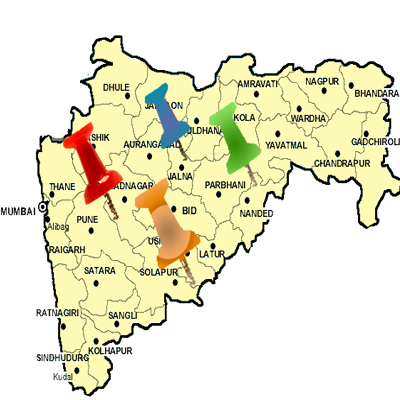
There’s a possibility of making available different solutions to meet different needs. For instance, Carat Media which handles baby products maker Libero’s account, wanted to reach out to non-Marathi female audience in Maharashtra. Amagi’s technology enabled Libero to use channels with a national footprint for the launch campaign of Libero in a specific market like Maharashtra.
Amagi which had to answer a lot of questions when it started out in 2008 feels that those doubts have now been put to rest.
“Today, largest national players like HUL, GSK too want to follow a regional plan and have different communication depending on the region,” says Amagi’s co-founder KA Srinivasan.
Geo-targeting or adverisioning implies customised broadcast of creative communication to different markets in the same ad slot. In other words, it means splitting up of the national beam of a broadcaster into local beams akin to what national newspapers do for their local editions.
‘How can we sell a standardised product to local and different consumers?’ has been a dilemma for most marketers. However, with the adversioning concept, things are supposed to change.
According to GroupM Trading (CTG) south Asia Managing Partner Prasanth Kumar, who is a big votary of adversioning, says, “clients can benefit in multiple ways as spill-over reduces, national channels can be used to run local promotions, the same 30 second slot can be used for multiple creatives (different brands in different markets, different language versions in specific markets). Majority of the clients who have used this availability are local clients.”
There might be companies which don’t feel the need to make an ad locally oriented, but there are a few which opt to geo-target ads. One of the main reasons a brand may geo-target ads is because it only offers services/products within specific areas. There is a huge and compelling demographic component involved with geography that can influence click-through-rate (CTR) and conversion rates as well.
Recalling how cable operators’ years ago would show local advertisements, Havas Media India managing director Mohit Joshi says if we take a look at the southern market, one can see a lot of local players which isn’t the case in the northern part of the country. “The concept makes sense for local clients/marketers a lot as it gives them a chance to target their TG.”
But will the local marketers be able to find their place and compete with national players? Answers Kumar, “Yes. Local advertisers form a large part of the 2,000 plus clients who have tried this concept. They see value in placing their ads on national channels as these channels were earlier much more difficult to afford and local players have specific market requirements.”
On the same lines, Pipal Majik CEO CD Mitra highlights how brands too have been emphasizing on “localisation” and if adversioning helps them achieve it then many will opt for it.
“For example, if a particular tea brand wants to sell its particular blends in certain regions then this is the perfect solution for them to advertise in a certain regional beam of a national channel.”
Talking about the cost of geo-targeted ads, experts say creative production cost is just a small segment of the overall marketing budget a brand allocates.
The credit for the growth of the format and news, movies and GEC channels experimenting with it goes to the fact that vernacular media has been growing at a much quicker pace than the national media, Kumar elaborates.
“The reason for the growing importance of Class B and Class C towns for advertisers, the growing education levels, expansion of vernacular publications into new markets with categories like retail, real estate along with FMCG is fuelling the growth,” he adds.
Khare adds that a marketer needs to utilize both national as well as regional channels to reach out to as many people as possible. “It is not national vs. regional, but how one can utilize both for its benefit. We have to also understand the importance of spot TV which is the most cost effective way for advertisers to market.”
Technology plays an important part of the concept to become a part of life, soon. Joshi says, “If the technology is not there to support the concept then it will surely fall flat in its face. We as an industry will have to invest in it to see it grow and become an integral part of advertising soon.”
Apart from this, industry professionals feel that pricing too plays an important role here. The competition between national and local players will vary and also depend on it. “Broadcasters in the end need money. If they get it from local players or national ones, it doesn’t matter. Hence, stakeholders have to come up with attractive pricing and strategies to make it real,” says Mitra when asked if broadcasters would opt for local marketers over national ones.
Zee TV has been selling ad spots split into regional beams since late last year and has had a good experience with it. Zeel chief sales officer Ashish Sehgal says, “The concept has helped us increase number of clients if we offer them a strategic plan which will help them reach out to their TG better.”
He further says the sum of revenues from a divided ad spot has been higher than the revenue it would have got having sold it as one national beam.
Sehgal says Zee TV has seen an increase in local marketers through geo-targeting. “In the past few months, around 25-30 SMEs have come to us to use the platform.”
Bennett Coleman & Co president corporate development Sunil Lulla says adversionsing is very much a reality now with many brands and broadcasters using it.
However, he says that a broadcaster has to be clear about this with the clients otherwise it can hurt some advertisers who pay for a national beam but sometimes local/regional beams could be sold to another client. “We (broadcasters) have to understand that there is a big (regional) market which can be tapped through this and it will benefit everyone.”









NATIONAL: Amazon Ads has laid out a sharply tech-led vision for the advertising industry in 2026, arguing that artificial intelligence, streaming TV and creator partnerships will combine to turn brand building into a more precise, performance-driven business.
At the heart of the shift, the company says, is the fusion of AI with Amazon’s vast trove of shopping, browsing and streaming signals, allowing advertisers to move beyond blunt reach metrics to campaigns designed around real customer behaviour.
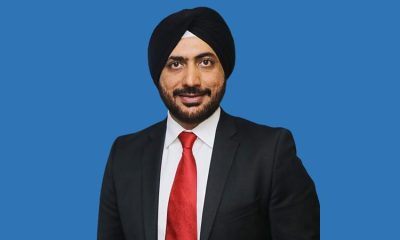
“The future of advertising is not about reaching more people, but the right people with messages that resonate,” said Amazon Ads India head and vice president Girish Prabhu. “By combining AI with deep customer insights, we help brands move from broadcasting campaigns to having meaningful conversations wherever audiences spend their time.”
One of the biggest changes, according to Amazon Ads, will be the collapse of the wall between media planning and creative development. Retail media, powered by first-party data, is increasingly shaping everything from brand discovery to final purchase, pushing marketers to design campaigns around audience insight rather than internal instinct.
AI is also moving from a support tool to a creative engine. Agentic AI, which automates and accelerates production, is expected to make high-quality creative accessible even to small businesses, compressing weeks of work into hours and giving challengers the ability to compete with larger brands on speed and scale.
Behind the scenes, AI-driven analytics will take on a bigger role in campaign optimisation, identifying patterns, spotting opportunities and recommending actions that would previously have required teams of analysts.
Streaming TV is another big battleground. With India’s video streaming audience now above 600 million and connected TV users at 129.2 million in 2025, advertisers are set to treat streaming not just as a branding channel but as a performance engine, measured increasingly by sales, sign-ups and bookings rather than just reach.
Finally, Amazon Ads sees creators and contextual advertising reshaping how brands tell stories. Creators will act less like influencers and more like long-term partners, while scene-aware ads on streaming platforms will allow brands to insert hyper-relevant offers into the flow of what viewers are watching.
Taken together, Amazon Ads argues, these shifts mark a move towards advertising that is both more human and more measurable, where AI handles the complexity, and creativity does the persuading.
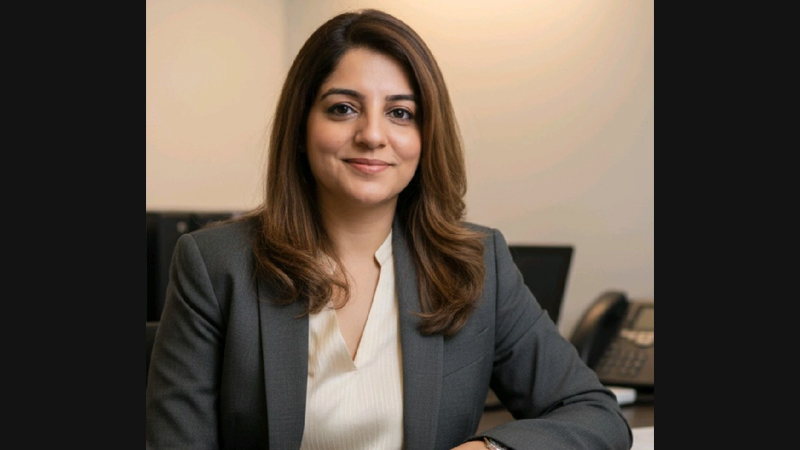
MUMBAI: Publicis Groupe India has appointed Sonal Verma as managing director of Arc Worldwide India, handing the reins of its experiential and shopper marketing business to a leader steeped in live brands and real world storytelling.
Arc Worldwide, the Groupe’s specialist arm focused on experiences that nudge consumers from curiosity to checkout, sits at the intersection of creativity, commerce and culture. Verma’s mandate is to sharpen that edge as brands grapple with shorter attention spans and more complicated buying journeys.
Verma joins from Cheil India, where she spent nearly five years building and leading the brand experience practice, most recently as senior vice president and head of brand experience. Her career reads like a tour of India’s experiential landscape, with leadership roles at Momentum Worldwide, Percept D Mark, Blockkbuster Events and Showtime Events.
She has also held senior activation roles at Radio City and The Times of India, giving her a rare mix of agency, media and on-ground execution experience. The common thread has been simple: turning big ideas into moments people remember and talk about.
At Arc Worldwide India, Verma will focus on expanding the agency’s experiential and shopper capabilities, strengthening client partnerships and keeping the work firmly rooted in consumer behaviour rather than buzzwords.
With Verma at the helm, Arc Worldwide is expected to double down on ideas that live beyond screens and closer to everyday life. For an industry obsessed with clicks and scrolls, this is a reminder that sometimes the strongest connections still happen face to face.
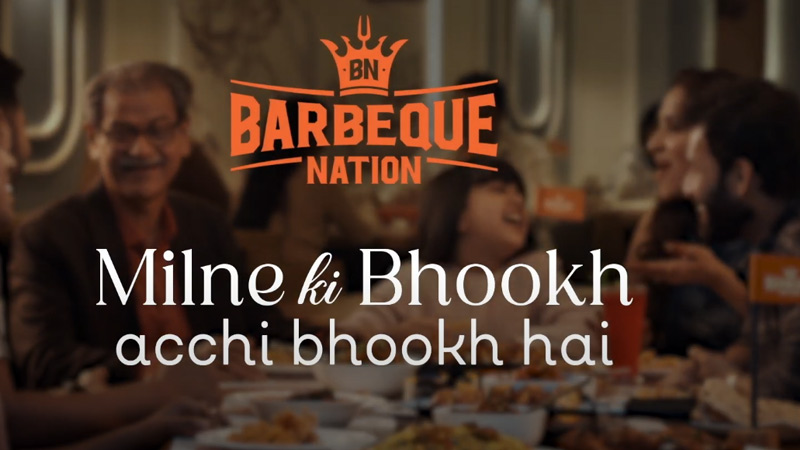
BENGALURU: Barbeque Nation is ringing in the new year with a reminder that some cravings cannot be ordered online. The casual dining chain has rolled out a new film campaign, milne ki bhookh, pitching its restaurants as places to meet, reconnect and linger over food.
Set against a world of constant messages and missed meet-ups, the campaign leans into a simple truth: dining out remains one of the few rituals that still brings people together. Barbeque Nation positions itself as the excuse and the setting for real conversations, shared plates and unhurried moments.
Nakul Gupta, cmo at Barbeque Nation, says the brand has long been about shared celebrations. As the year turns, milne ki bhookh captures what he calls a growing hunger to meet, connect and spend time together, with food at the centre of that experience.
Created by Makani Creatives, the campaign comprises three films built around Barbeque Nation’s signature grills and desserts. The storytelling is deliberately sensorial, designed to spark cravings while nudging diners to step out and meet in person.
Pavan Punjabi, chief integration officer at Makani Creatives, says the idea stems from a familiar contradiction. People are constantly connected, yet meetings with loved ones are endlessly postponed. Milne ki bhookh, he says, is a gentle push to make time for real-life catch-ups, using food as the reason to come together, share a meal and create memories.
The campaign breaks on December 25 with the grilled prawns film and will run for two months, amplified across digital platforms. As the new year begins, Barbeque Nation is betting that the strongest appetite of all is not for food alone, but for each other.


MIB sets OTT accessibility rules, mandates captions and audio description

Boney Kapoor acquires remake rights of Tamil political satire Thalaivar Thambi Thalaimaiyil

Netflix India names Rekha Rane director of films and series marketing

Zabeen signs off from TV9 after shaping the network’s public voice

Dhawan steps up to bat for Delhi’s grassroots sports push

Orient Beverages pops the fizz with steady Q3 gains and rising profits

Cheekatilo shines in the dark with record debut on Prime Video

These ’90s fashion trends are making a comeback in 2017
The final 6 ‘Game of Thrones’ episodes might feel like a full season
According to Dior Couture, this taboo fashion accessory is back
The old and New Edition cast comes together to perform
Phillies’ Aaron Altherr makes mind-boggling barehanded play
Uber and Lyft are finally available in all of New York State
Disney’s live-action Aladdin finally finds its stars
MIB sets OTT accessibility rules, mandates captions and audio description
Boney Kapoor acquires remake rights of Tamil political satire Thalaivar Thambi Thalaimaiyil
Netflix India names Rekha Rane director of films and series marketing
Zabeen signs off from TV9 after shaping the network’s public voice
Dhawan steps up to bat for Delhi’s grassroots sports push
Orient Beverages pops the fizz with steady Q3 gains and rising profits
Cheekatilo shines in the dark with record debut on Prime Video
-

 News Broadcasting5 days ago
Mukesh Ambani, Larry Fink come together for CNBC-TV18 exclusive
-
 I&B Ministry3 months ago
India steps up fight against digital piracy
-

 iWorld1 week ago
Netflix celebrates a decade in India with Shah Rukh Khan-narrated tribute film
-
 iWorld3 months ago
Tips Music turns up the heat with Tamil party anthem Mayangiren
-
 MAM3 months ago
HoABL soars high with dazzling Nagpur sebut
-
 iWorld12 months ago
BSNL rings in a revival with Rs 4,969 crore revenue
-
 MAM5 days ago
Nielsen launches co-viewing pilot to sharpen TV measurement
-

 Film Production1 week ago
UFO Moviez rides high on strong Q3 earnings
