
Gaming
What BlackRock’s Bitcoin Endorsement Really Signals for the Future of Institutional Finance


For years, Bitcoin and crypto were on the fringes of the financial system. More recently, however, this sentiment has shifted dramatically. No longer the domain of retail speculators, crypto is now in the process of institutionalization.
BlackRock’s head, Larry Fink, who once was a Bitcoin skeptic, now calls it “digital gold.” Alongside the financial establishment, some mavericks in the business world have also further strengthened the case for Bitcoin as a mainstream, durable asset.
Namely, Michael Saylor. In recent years, Saylor’s company, Strategy, formerly known as MicroStrategy, has evolved from a software company to a Bitcoin treasury company, effectively becoming a leveraged bet on BTC.
As discussed in a speech given on the first day of the recent Binance Blockchain Week event in Dubai, Saylor argues that “Bitcoin is emerging as digital capital because the U.S. wants to be the crypto capital of the world.” Saylor’s blunt statement fully distills why leaders like Fink are now pro-BTC, and why current trends are likely to continue.
From Skepticism To Signal: BlackRock Steps In
It’s an understatement to say that Larry Fink was a mere Bitcoin skeptic. To be honest, he was more of a staunch Bitcoin critic, associating the cryptocurrency with market speculation, unregulated exchanges, as well as innuendo regarding its use as a means of exchange in illicit activities.
In fairness to Fink, that was previously the establishment’s view of Bitcoin and crypto in general. Since 2024, however, this narrative is no longer being promoted by the financial elite. Fink now talks glowingly of Bitcoin, providing further credence to the asset’s newfound status as an institutional-grade investment.
Beyond just words and op-eds in The Economist, Fink and his firm are also taking action. BlackRock has launched Bitcoin products, such as spot Bitcoin ETFs. The financial services giant has also made a significant move into areas such as the tokenization of real-world assets (RWAs).
BlackRock’s Bitcoin pivot has provided tremendous social proof for the asset. Other institutional investors, from pension funds to wirehouse advisors, are now following its lead. As Saylor put it, “Wall Street has embraced Bitcoin; when we first traded it on our balance sheet, there were no ETFs – now BlackRock’s Bitcoin ETFs are incredibly successful.”
Bitcoin As Digital Capital, Not Just A Trade
With companies like BlackRock now involved, a question on the minds of many is “how much of our portfolios should be allocated to BTC and other cryptos?”
Prior portfolio building models, such as the popular 60/40 stocks-to-bonds model, are falling out of favor. In light of high inflation, institutional investors are seeking greater allocation to alternative investments that can serve as a hedge during such challenging times. Previously, gold was this key alternative, but now Bitcoin is becoming an “alternative” to this alternative.
However, beyond serving as an alternative asset class with returns uncorrelated to the equity and bond markets, Bitcoin and crypto could also serve another function in the traditional financial system. Unlike gold, you can more freely use it as collateral, not to mention slot it into tokenized instruments. Rather than a hard asset sitting in a vault, crypto is raw material for building digital credit markets.
That is where Saylor’s framework lines up with Fink’s pivot. “The world is built on capital but runs on credit; transforming digital capital into digital credit pays yields to investors.”
Conclusion: Inside The System, Not Outside It
BlackRock’s endorsement of Bitcoin is best understood not as a bet on short-term price appreciation, but as recognition that digital assets are becoming embedded within the core architecture of global finance. Larry Fink’s shift, from vocal skepticism to public advocacy, reflects less a change of heart than a response to evolving market realities. Regulated access points now exist, institutional-grade custody has matured, and demand from clients is no longer theoretical. In that context, Bitcoin’s integration was not optional, but inevitable.
What makes this moment distinct from earlier waves of institutional interest is that Bitcoin is no longer being treated as an external hedge or a speculative satellite holding. Instead, it is increasingly being evaluated as a form of digital capital that can interact with credit markets, collateral frameworks, and tokenized financial instruments. BlackRock’s parallel push into tokenization underscores this broader thesis. The future of finance is not simply about owning assets, but about how efficiently those assets can be deployed within programmable, always-on financial systems.
This shift carries meaningful implications for the structure of capital markets. As asset managers, banks, and custodians build regulated crypto products, the boundary between traditional finance and blockchain infrastructure continues to erode. Rather than two competing systems, a single, hybrid financial stack is emerging; one that combines the scale and trust of legacy institutions with the settlement efficiency and transparency of on-chain rails.
For Bitcoin specifically, institutional adoption does not eliminate risk or volatility, nor does it guarantee perpetual upside. What it does change is the asset’s role. Bitcoin is increasingly being positioned not as a fringe trade, but as a durable component of institutional portfolios and a foundational layer for future financial innovation. In that sense, BlackRock’s move is less a signal about where Bitcoin’s price goes next—and more a marker of where it now sits: firmly inside the system it was once built to challenge.
Disclaimer:This article has been published without the journalistic or editorial involvement of indiantelevision.com, IndianTelevision.com Group, or any of its affiliated websites. IndianTelevision.com Group does not endorse, subscribe to, or take responsibility for the content, opinions, or views expressed herein.
Readers are further advised that Online Casino, Betting, Cryptocurrency products, Financial Investments/Engagements, NFTs, and products or calls-to-action related to Health, Booking, Wellness, and Food are largely unregulated and carry significant risk. There may be no regulatory protections or avenues for recourse in the event of financial losses or health-related risks arising from engagement with such products or services.
IndianTelevision.com Group expressly disclaims any responsibility or liability for the information, views, announcements, declarations, or affirmations presented in this article. By choosing to proceed, the reader acknowledges and agrees that they do so at their own discretion and risk, and expressly absolve indiantelevision.com (IndianTelevision.com Group) from any potential legal claims, liabilities, or actions.







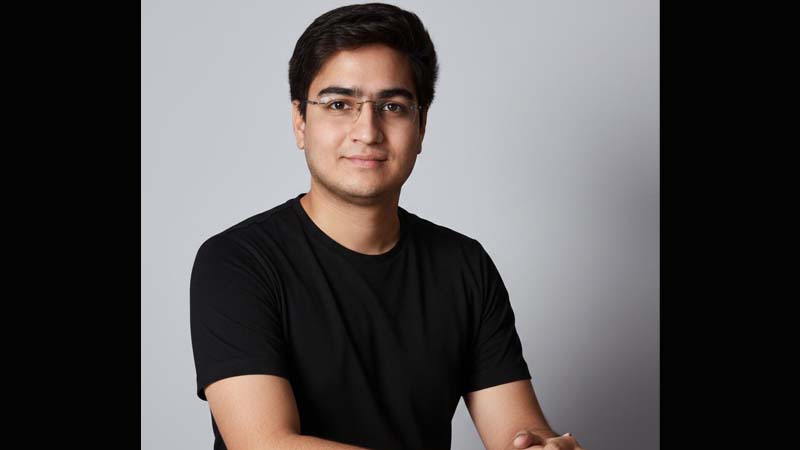
Ahmedabad: MetaNinza, a rewards-first gaming and esports platform, has onboarded Anand Mishra as co-founder and chief of staff, signalling an ambitious push to scale its ecosystem across India and South East Asia.
Anand, a serial entrepreneur with 7+ years in consumer tech, blockchain and gaming, previously founded and led Glazer Labs, where he built Glazer Games and THRYL, a rewards-centric gamer engagement platform. Under his leadership, Glazer Games delivered 400 million+ impressions for 50+ brands, drove 10 million+ user acquisitions, executed hundreds of creator partnerships, and launched new esports IPs. THRYL amassed nearly half a million users in just two months. Anand also founded HECOD Blockchain, serving 400+ B2B clients globally and scaling to 8 million+ active users, with a $4.2 million ARR.
At MetaNinza, Anand will oversee growth, user acquisition, creator ecosystem building, tournaments and rewards distribution, and ensure alignment between product, tech, marketing and operations. His blockchain expertise is expected to strengthen secure, fair and anti-abuse reward systems across the platform.
“MetaNinza is building something truly differentiated by combining competitive esports, rewards-first daily engagement and community-led growth. What drew me most was their clarity of vision: to go beyond tournaments and build a full participation ecosystem where gamers engage meaningfully every day and are rewarded fairly,” said Anand Mishra.
The appointment comes as MetaNinza strengthens its platform foundations and expands its offerings, including tournaments, scrims, quests, coin wallets, offerwalls and anti-abuse frameworks. The company has also launched 16score.com, a global esports news platform aimed at boosting organic community growth. MetaNinza currently serves India-first users but plans to scale across South East Asia, targeting 600 million gaming enthusiasts in the region over the next three years.
“Anand brings a rare combination of ecosystem insight and execution discipline. His experience in building scalable gaming platforms is exactly what we need as MetaNinza enters its next growth phase,” said Sudhansu Sinha, founder and CEO of MetaNinza.
MetaNinza is positioning itself as a full-stack, community-first esports brand, combining competitive tournaments, teams, technology, content and social engagement into one end-to-end platform.
Gaming is no longer just play. With Anand on board, MetaNinza is turning competition, rewards and community into a high-speed growth engine.

MUMBAI: When esports trades club colours for national flags, the stakes get personal. The Esports Nations Cup 2026 is set to make its global debut in Riyadh from November 2 to 29, 2026, adding a fresh, nation-first twist to competitive gaming.
Announced by the Esports World Cup Foundation, the new tournament is designed to sit alongside the club-based Esports World Cup, giving players the rare chance to represent their countries and fans a reason to cheer with identity and pride firmly in play.
The numbers are hard to ignore. ENC 2026 is backed by a $45 million, three-part funding model, aimed at strengthening the entire esports ecosystem. Of this, 20 million dollars will be paid directly as prize money to players and coaches across 16 game titles. A further $5 million has been earmarked as incentives for esports clubs that release their professional players for national duty, with payouts linked to player performance.
Another $20 million will flow through the ENC Development Fund, supporting national teams with logistics, travel, operations, marketing and long-term pathway development signalling that this is as much about future pipelines as present-day podiums.
The competition introduces a placement-based prize framework that keeps things simple and transparent. Every qualified player is guaranteed prize money and at least three matches. A gold-medal finish earns $50,000 per player, silver takes $30,000, and bronze pays $15,000. The same placement pays the same amount across all titles, whether solo or team-based, with team payouts scaling by roster size. Coaches are rewarded alongside players for identical finishes.
“National teams bring a powerful new layer to esports, rooted in identity and pride,” said Esports World Cup Foundation CEO Ralf Reichert, adding that the model is designed to reward performance while remaining fair and sustainable for players, clubs and national programmes alike.
While Riyadh hosts the inaugural edition, the ENC is planned as a biennial event with a rotating host-city format, taking nation-based esports to major cities around the world.
Several titles are already locked in. Mobile Legends: Bang Bang, Trackmania, and Dota 2 have been confirmed for 2026, with more games expected to be announced shortly.
For esports fans, it is no longer just about who plays best but which nation plays proudest.
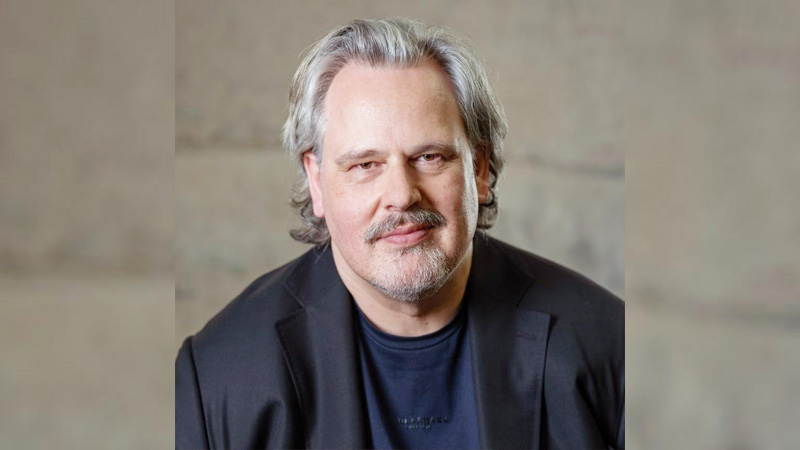
MUMBAI: It seems Amazon’s gaming division has finally met its final boss. After nearly eight years at the helm, Christoph Hartmann is reportedly packing up his controller and heading for the exit. The news, first reported by Bloomberg’s Jason Schreier, marks the end of an era for the man who steered the New World and Lost Ark ships into the choppy waters of the MMO market.
While Hartmann’s departure might look like a simple game over, it is actually part of a massive tactical pivot. Amazon appears to be retreating from the costly, high-stakes world of traditional AAA console and PC development. Instead of chasing the next blockbuster epic, the company is looking skyward by focusing its energy on Amazon Luna, its dedicated cloud gaming service.
This leadership shuffle coincides with a broader wave of 16,000 redundancies across the Amazon empire. For gamers, the most poignant bit of lag is the news that New World: Aeternum is set to go offline permanently in January 2027. It appears the company is no longer interested in building digital worlds from scratch, but rather in providing the cloud-based pipes to stream them.
Hartmann leaves behind a legacy of taking Amazon from a struggling studio to a genuine, if brief, contender in the PC gaming space. Looking forward, the hardware focus is shifting entirely to Luna infrastructure. Rumours suggest the new-look Amazon Games will be heavily bolstered by AI-integrated experiences rather than traditional software. Whether this move is a masterstroke or a massive misclick remains to be seen. For now, the Amazon Games office is looking a little bit emptier, and the cloud is looking a lot more crowded.

Netflix celebrates a decade in India with Shah Rukh Khan-narrated tribute film

Delhivery chairman Deepak Kapoor, independent director Saugata Gupta quit board

Meta appoints Anuvrat Rao as APAC head of commerce partnerships

Brnd.me enters Europe as haircare brands power global expansion

TechnoSport taps quick commerce with launch on Slikk’s 60-minute platform

Jitendra Singh joins Reliance Industries as senior vice president, special projects

Tinder brings real-world dating experiences to North East India

These ’90s fashion trends are making a comeback in 2017
The final 6 ‘Game of Thrones’ episodes might feel like a full season
According to Dior Couture, this taboo fashion accessory is back
The old and New Edition cast comes together to perform
Phillies’ Aaron Altherr makes mind-boggling barehanded play
Uber and Lyft are finally available in all of New York State
Disney’s live-action Aladdin finally finds its stars
Netflix celebrates a decade in India with Shah Rukh Khan-narrated tribute film
Delhivery chairman Deepak Kapoor, independent director Saugata Gupta quit board
Meta appoints Anuvrat Rao as APAC head of commerce partnerships
Brnd.me enters Europe as haircare brands power global expansion
TechnoSport taps quick commerce with launch on Slikk’s 60-minute platform
Jitendra Singh joins Reliance Industries as senior vice president, special projects
Tinder brings real-world dating experiences to North East India
-
 iWorld3 months ago
Tips Music turns up the heat with Tamil party anthem Mayangiren
-
 iWorld12 months ago
BSNL rings in a revival with Rs 4,969 crore revenue
-
 I&B Ministry3 months ago
India steps up fight against digital piracy
-
 MAM3 months ago
HoABL soars high with dazzling Nagpur sebut
-
 News Broadcasting6 months ago
Wion marks Independence Day with global showcase of India’s spirit
-
 iWorld3 months ago
The Night Manager returns with new secrets, new spies and old scars
-
 iWorld2 days ago
Netflix celebrates a decade in India with Shah Rukh Khan-narrated tribute film
-

 iWorld2 weeks ago
Pocket FM brings Marvel heroes to Hindi audio series