
e-commerce
“We are customer obsessed, not competition obsessed”: Amit Agarwal

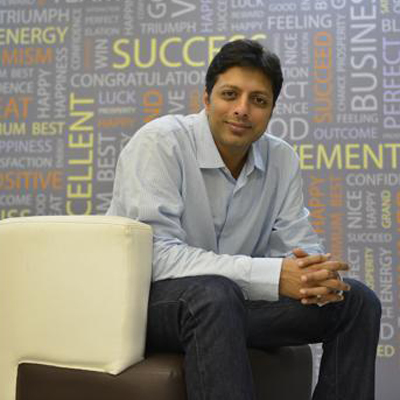
Since its inception over 20 years ago in the United States, Amazon.com has been obsessed with a fervor to serve its consumer and being the ‘earth’s biggest bookstore’. It has grown from a ‘dot-com’ corporation into a king in the domain of internet retail. And now, its Indian arm under the leadership of Amit Agarwal, is looking at achieving the same landmark.
Describing his current role as ‘Bringing Earth’s Biggest Selection to India; building India’s most customer-centric company’ on Linkedin, the new role has countless firsts for Mumbai-born Agarwal, now an American citizen. He has never worked in India in a business-facing role and never headed country operations as well.
The IIT-Kanpur and Stanford alumnus has been with Amazon since 1999. He has worked in various departments in the company including technical advisor to CEO Jeff Bezos between 2007 and 2009, before heading the operations in India.

Born in 1974, Agarwal joined Amazon as a part of its technology team.
Just a year old and Amazon India has already become the biggest threat to the seven-year old Flipkart in the Indian e-retail market. With an action-packed first year, the global online retail giant is gearing up to play a dominant role in the $13 billion Indian e-commerce industry.
In an interview with Indiantelevision.com’s Pranati Deva, Amazon India VP & country manager Amit Agarwal discloses Amazon India’s journey in the Indian e-commerce space and plans for the future.
Excerpts…
What inspired you to finally start an arm in India? Flipkart started in 2007, why did you think 2013 was the right year to jump into the Indian e-commerce space?
We believe that we entered the India market at the right time. Indian e-commerce space is still in a very nascent stage with significant potential for innovation to improve customer experience. We believe that the growth is at an inflection point and there is tremendous opportunity.
We have received a fabulous response from both customers and sellers in the last 14 plus months of our India operations. We launched in India with two departments – Books and Movies & TV Shows – and in these 14 plus months, our total selection now stands at more than 17 million products across 30 departments and hundreds of categories. We have witnessed phenomenal selection growth across several categories and are already the largest store in 12 of the 30 departments that we have on amazon.in including Books, Music, Video Games, Toys, Home & Kitchen, Luggage and Backpacks, Fashion Jewellery, Beauty Products, Movies & TV shows, Men’s inner wear , Sports, Fitness & Outdoors and Pet Supplies.
What is your current strategy in India? And how will your strategy change if the e-commerce sector opens up to FDI?
Our strategy for amazon.in is the same as our global vision to be India’s most customer-centric company by giving customers more of what they want – low prices, vast selection, fast and reliable delivery, and a trusted and convenient experience – and provide sellers a world-class e-commerce platform. The execution of this strategy is local. If you look at the logistics infrastructure, Amazon has built one of the most sophisticated logistics infrastructures that has ever been built to serve sellers and customers
We start with the customer experience and work backwards from it. Building a great customer experience drives traffic; traffic attracts sellers; more sellers drive more selection and this further improves the customer experience.
We have always maintained that opening up this sector to FDI will be good for consumers and Indian businesses as it would allow us to partner with local manufacturers to source products not carried by other sellers in the marketplace, giving Indian consumers unique and wider choices at lower prices. Allowing FDI, also, positively impacts infrastructure development in the country.
The announcement for the $2 billion investment in Amazon India came in just days after Flipkart announced fundraising of $1 billion. Was the announcement strategically placed?
We are customer obsessed and not competition obsessed. We aspire to provide Earth’s biggest selection and the most trustworthy and convenient online shopping experience to our customers in India. And we have been investing aggressively right from the beginning.
Our rapid growth in a short time and the significant opportunity ahead of us makes us very comfortable in making this large additional investment. We are not surprised if our rapid growth and customer experience ambitions have increased investment elsewhere as well.
What areas will you mainly focus on now, after the investment?
We don’t talk about any of our future plans but essentially it will go towards growing our business and enhancing customer and seller experience.
Which categories contribute the most to your revenue?
Categories with the strongest growth are Books, Consumer Electronics, Shoes, Baby Products, and Watches.
To increase your demand in the Indian space, which brands have you associated with recently for their products?
We are witnessing that both brands and SMEs are willing and are excited to use the Amazon India marketplace to reach to consumers nationally. Brands and sellers see a lot of value in their association with us. We not only play a significant role in driving sales but also in building consumer awareness about products and educating them about the benefits of these offerings so that they are able to make smart purchase decisions.
Today several sellers and brands are keenly exploring possibilities of exclusive associations with us. For example Amazon India is the exclusive retail partner for Microsoft’s entire Interactive Entertainment Business portfolio which includes Xbox One, Xbox 360, Kinect, Xbox Live, Xbox Accessories and all Microsoft-published Xbox game titles. Similarly, Philips has made available its new Philips Disney Imaginative Lighting range for kids exclusively on www.amazon.in. In mobiles we have exclusive launch deals with Samsung for the Samsung Galaxy K Zoom, Karbonn, Lava, XOLO, OPPO mobiles, etc.
We are also the exclusive online partner for KitchenAid, a premium kitchen appliances brand from Whirlpool that launched in India in March, for Waterlily LA, a premium leather handbag brand headquartered in Los Angeles that made its India debut on Amazon.in as well as for many more. There are several such examples across the 30 departments that we, at present, have on Amazon.in. We are very excited to see this response from brands and sellers and this stands proof to the value that they see in associating with us.
What is Amazon India doing differently to stay ahead of the competition in India?
In terms of services – we were the first ones in India to introduce premium guaranteed delivery services including the ‘One-Day Delivery’ service for items fulfilled by Amazon. Within a short time we have been able to make available over 300,000 products for next day delivery across hundreds of pin codes in India. More than 60 per cent of our customer demand is already eligible for next-day shipping on products fulfilled by Amazon.
We are investing in making sellers successful; continually looking for ways to do the heavy lifting for them; and enabling them to sell more and make more money. We started with over 100 sellers and today this base has grown to more than 10,000 sellers.
We now have seven fulfilment centres in India with a total storage capacity of half million square feet. All FCs are aimed at meeting fulfilment needs of retailers and small and medium-sized businesses and to help them achieve nationwide scale.
We are the first ones in India to introduce customised, personalised and multi-lingual Amazon.in Gift Cards that enable customers to buy over 15 million products (excludes ebooks) from our marketplace. Customers can purchase the Amazon.in Gift Cards of any value starting from Rs 10 up to Rs 10,000. Available in nine Indian languages including Hindi, Kannada, Marathi, Tamil, Gujarati, Telugu, Malayalam, Bengali and Punjabi in more than 200 designs that celebrate various special and memorable occasions in a person’s life.
Indian Postal Services (IPS) is one of the prime carriers that Amazon India uses as a delivery channel Amazon uses the extensive IPS network to service over 19,000 pin-codes through 140,000 post-offices across all 35 states and union territories in India. Number of deliveries through India Post has increased from 800 (June 2013) to 35,000 (in July 2014)
For us it is always ‘Day 1’ and today we believe we have the right ingredients to entice and delight our customers with a trusted online shopping experience.
Learning points so far about the Indian consumer and the e-commerce market in India?
Our experience of working around the world has shown one thing, that customers around the world are similar. Customers around the world always want a vast selection at low prices and a convenient, reliable and trustworthy online shopping experience. Indian customers are no different. I am yet to come across a customer who will say that they want a smaller selection or higher prices. And we are focused on ensuring that we are able to deliver and raise the bar for online shopping in India.
What are your views about the Indian e-commerce industry and what are your expectations from the sector in the coming future?
Indian e-commerce space is still at a very nascent stage with significant potential for innovation to improve customer experience. The growth is at an inflection point. With increasing internet penetration, both broadband and smartphones, there is an interest and demand from mini metros and smaller towns across the country. We see as a tremendous opportunity and are very excited by it.











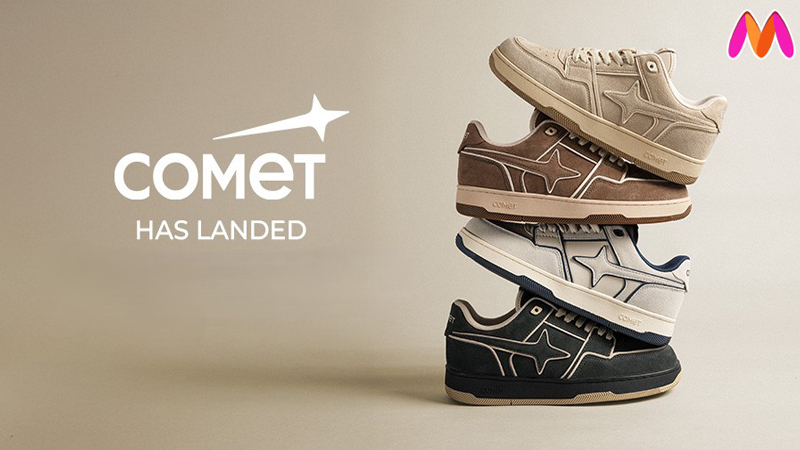
BENGALURU: Culture-first sneaker label Comet has entered Indian e-commerce with its debut on Myntra, bringing over 40 footwear styles to the fashion platform’s 75 million monthly active users. The move marks Comet’s first online retail partnership as it looks to scale beyond its direct-to-consumer roots.
The launch features the brand’s popular ranges including X Lows, Aeon V2 and Alter, alongside an exclusive new design, X Lows Polaris, available only on Myntra. The collaboration strengthens Myntra’s growing sneaker portfolio aimed at Gen Z and millennial consumers drawn to streetwear culture and design-led brands.
Myntra head of category and revenue Ritesh Mishra, said Comet’s sharp design language and community-driven approach aligned with the platform’s focus on trend-forward labels shaping India’s contemporary sneaker culture.
Comet co-founders Utkarsh Gupta and Dishant Daryani said the partnership would help the brand reach a wider audience while staying rooted in its product-first philosophy and close customer engagement.
Built on the ethos “Never shy, never sorry”, Comet has gained traction for bold silhouettes, vibrant colourways and limited-edition drops inspired by cultural nostalgia and storytelling. The Myntra debut signals the brand’s next phase of growth in India’s fast-evolving sneaker and streetwear market.
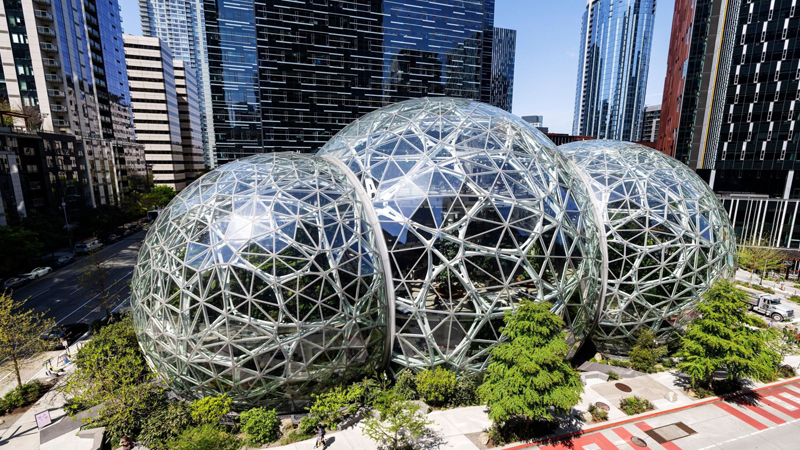
SEATTLE: Amazon has closed 2025 with robust fourth-quarter growth across its core businesses, even as spending on sales, marketing and infrastructure continued to climb. The company reported a 14 per cent rise in Q4 net sales to $213.4 billion, driven by solid momentum in North America, International markets and a sharp acceleration at AWS.
Sales and marketing expenses rose 8.7 per cent year on year to $14.3 billion in the quarter, reflecting sustained investment in customer acquisition and brand reach. For the full year, the bill climbed 7.3 per cent to $47.1 billion.
AWS remained the standout performer, with revenue jumping 24 per cent to $35.6 billion in the quarter, its fastest pace in more than three years. North America sales grew 10 per cent to $127.1 billion, while International revenues climbed 17 per cent to $50.7 billion, aided partly by favourable currency movements.
Operating income rose to $25.0 billion in Q4, up from $21.2 billion a year earlier, though the figure was weighed down by special charges linked to tax settlements in Italy, severance costs and asset impairments tied largely to physical stores. Excluding these, operating profit would have reached $27.4 billion.
Net income increased to $21.2 billion, or $1.95 per share, compared with $20.0 billion a year ago.
For the full year 2025, Amazon posted 12 per cent growth in net sales to $716.9 billion. AWS revenues climbed 20 per cent to $128.7 billion, while North America and International segments grew 10 per cent and 13 per cent respectively. Operating income expanded to $80.0 billion, with AWS contributing more than half of the total.
Cash generation strengthened, with operating cash flow rising 20 per cent to $139.5 billion. Free cash flow, however, fell sharply to $11.2 billion as capital spending surged, largely reflecting heavy investment in artificial intelligence infrastructure.
President and chief executive officer Andy Jassy, said demand across cloud services, advertising, retail and emerging technologies such as AI chips, robotics and low-earth-orbit satellites remained strong. He added that Amazon plans to invest around $200 billion in capital expenditure in 2026 to support long-term growth.
The company also pointed to a wave of new AWS partnerships, spanning clients such as OpenAI, Visa, the NBA, BlackRock, Salesforce, Adobe, HSBC and the London Stock Exchange Group, underscoring cloud demand across industries.
e-commerce
Flipkart elevates Aditya Maheshwari as head of category and P and L for toys, stationery and babycare
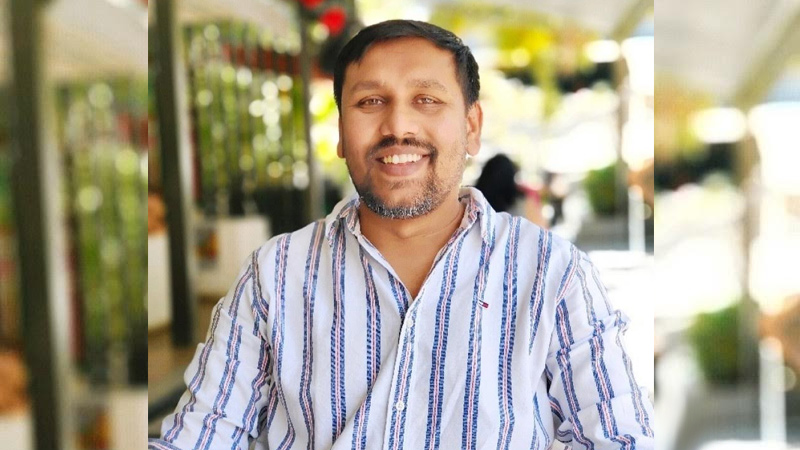
BENGALURU: Flipkart has elevated Aditya Maheshwari to head of category and P and L for toys, stationery and babycare, placing him in charge of end-to-end business strategy and financial performance across the high-growth segments.
The move follows a four-year stint at the e-commerce major, where Maheshwari served as category head for toys and stationery and associate director for beauty and personal care. During this period, he played a key role in strengthening Flipkart’s position across multiple consumer categories through scale-driven portfolio management.
Maheshwari brings deep experience across India’s startup and e-commerce ecosystem. Prior to his current elevation, he previously worked at Flipkart as a category manager and business development lead in the early phase of his career.
He is also the co-founder of Packflea.com and has held leadership roles including head of alliances at Xoxoday and head buyer at Gozefo.com. His early experience in procurement and sourcing spans platforms such as Giftxoxo.com and buytheprice.com.
With a strong track record of managing large P&Ls and building scalable category businesses, Maheshwari is now set to spearhead Flipkart’s strategic expansion in toys and babycare.


MIB sets OTT accessibility rules, mandates captions and audio description

Boney Kapoor acquires remake rights of Tamil political satire Thalaivar Thambi Thalaimaiyil

Netflix India names Rekha Rane director of films and series marketing

Zabeen signs off from TV9 after shaping the network’s public voice

Dhawan steps up to bat for Delhi’s grassroots sports push

Orient Beverages pops the fizz with steady Q3 gains and rising profits

Cheekatilo shines in the dark with record debut on Prime Video

These ’90s fashion trends are making a comeback in 2017
The final 6 ‘Game of Thrones’ episodes might feel like a full season
According to Dior Couture, this taboo fashion accessory is back
The old and New Edition cast comes together to perform
Phillies’ Aaron Altherr makes mind-boggling barehanded play
Uber and Lyft are finally available in all of New York State
Disney’s live-action Aladdin finally finds its stars
MIB sets OTT accessibility rules, mandates captions and audio description
Boney Kapoor acquires remake rights of Tamil political satire Thalaivar Thambi Thalaimaiyil
Netflix India names Rekha Rane director of films and series marketing
Zabeen signs off from TV9 after shaping the network’s public voice
Dhawan steps up to bat for Delhi’s grassroots sports push
Orient Beverages pops the fizz with steady Q3 gains and rising profits
Cheekatilo shines in the dark with record debut on Prime Video
-

 News Broadcasting5 days ago
Mukesh Ambani, Larry Fink come together for CNBC-TV18 exclusive
-
 I&B Ministry3 months ago
India steps up fight against digital piracy
-

 iWorld1 week ago
Netflix celebrates a decade in India with Shah Rukh Khan-narrated tribute film
-
 iWorld3 months ago
Tips Music turns up the heat with Tamil party anthem Mayangiren
-
 MAM3 months ago
HoABL soars high with dazzling Nagpur sebut
-
 iWorld12 months ago
BSNL rings in a revival with Rs 4,969 crore revenue
-
 MAM5 days ago
Nielsen launches co-viewing pilot to sharpen TV measurement
-

 Film Production1 week ago
UFO Moviez rides high on strong Q3 earnings
