
Financials
PCCW Media reports lower half year video numbers, higher OTT numbers

BENGALURU: Hong Kong based telecommunications, media, IT solutions, property development and investment and other businesses group PCCW Limited reported lower numbers for its video operations comprising of NowTV and improved revenue for its ViuTV and its OTT operations for the half year ended 30 June 2017 (H1-17) as compared to the corresponding period of the previous year. Overall, on a consolidated basis, the group’s revenue and operating profits were stable during the current year period as compared to the corresponding year ago period.
For NowTV, the company reported a stable subscriber base of about 1.3 million and lower average revenue per user (ARPU) of HK$186 in H1-17. The company has mentioned ARPU of HK$ 194 for H1-16 and HK$192 for H2-16. Consequently, revenue in the current quarter declined 3 percent to HK$ 1,350 million from HK$ 1,391 million in the corresponding period of last year (H1-16) and from HK$ 1509 million in the immediate trailing half year period (H2-16).
NowTV EBIDTA was HK$ 154 million, HK$ 184 million and HK$ 229 million for H1-17, H1-16 and H2-16 respectively.
For its Free TV business – ViuTV, the company reported revenue in H1-17 of HK$94 million as compared to HK$ 52 million in H1-17, but lower than the HK$ 108 million for H2-17. ViuTV had a higher operating loss (negative EBIDTA) for H1-17 at HK$ 116 million as compared to HK$ 68 million in H1-16 and HK$ 115 million in H2-16.
OTT services revenue increased 24 percent to HK$ 337 million in H1-17 as compared to HK$ 227 million in H1-16 and HK$ 312 million in H2-16. OTT services reported a higher operating loss (negative EBIDTA) of HK$ 125 million in H1-17 as compared to HK$ 109 million in H1-16 and slightly lower than an operating loss of HK$ 126 million in H2-16.

Overall, PCCW Limited core revenue decreased by 5 percent to HK$ 17,576 million due to a slowdown in Mobile handset sales at HKT. Excluding Mobile handset sales, core revenue was steady at HK$ 16,549 million. The Solutions and over-the-top (OTT) businesses showed continued growth momentum with their revenues increasing by 6 percent and 24 percent, respectively, for the six months ended June 30, 2017, compared to a year ago
PCCW Group managing director BG Srinivas said the Group’s strategy was to continue to develop and maintain our leadership in the relevant markets of each of our core businesses of IT solutions, media, and telecommunications, while seeking new growth opportunities.
He said, “With an excellent track record in large-scale IT projects and a global data centre network alliance, PCCW Solutions will continue to benefit from the needs of enterprises and the public sector to go digital. The significant recurring nature of its business and the expanding demand for digital transformation capabilities should lead to a growing contribution from PCCW Solutions.”
“Now TV has consolidated its market leadership in the pay TV industry in Hong Kong while ViuTV has broadened our reach into the TV advertising market. Although the environment in the media industry in Hong Kong has been very dynamic in the past year, we expect the competitive behavior to rationalize and lead to improved profitability. The OTT business has extended our geographic scope beyond Hong Kong and we now have a presence in 24 markets. Our goal is to build the leading digital media service in Asia with the best viewing experience and most relevant content,” added Srinivas.
PCCW raises US$ 110million for video and music streaming
In a press release, PCCW says that it has raised US$110 million to expand its penetration in its existing markets as well as to expand to other high growth markets its range of video and music streaming services. Hony Capital, Foxconn Ventures and Singapore sovereign fund Temasek have taken an 18 percent share in the enlarged issued share capital of PCCW OTT. PCCW Media will remain as the controlling shareholder of PCCW OTT. PCCW OTT is present in over in 24 markets globally. Its services include video streaming services under the Viu and Vuclip brands along with a music streaming service MOOV.
The company says that this strategic investment will strengthen PCCW OTT’s ability to enhance its core value proposition of relevant content including distinctive original productions, and to continue to deploy the latest technologies and leverage its patents in video streaming and encoding to offer the best customer experience.









MUMBAI: It’s time to brief the markets: Page Industries is showing that even when regulations tighten, it can still keep its footing in the innerwear business. The Bengaluru-based apparel major has reported its financials for the quarter ended 31 December 2025, delivering a performance that remains steady and well put together.
The company’s top line showed plenty of elasticity this quarter. Revenue from operations stretched to Rs 1,38,675.71 lakhs, a healthy jump from the Rs 1,29,085.82 lakhs reported in the preceding quarter. Compared to the same period last year, which stood at Rs 1,31,305.10 lakhs, it’s clear the brand’s grip on the market isn’t loosening. Total income for the quarter, including other finance gains, reached a comfortable Rs 1,39,919.03 lakhs.
However, it wasn’t all smooth silk. The Government of India’s new unified Labour Codes, covering everything from wages to social security, officially kicked in on 21 November 2025. This regulatory shift forced Page Industries to account for a one-time “exceptional item” cost of Rs 3,500.42 lakhs to cover incremental employee benefits and related obligations. Despite this Rs 35-crore legislative snag, the underlying business remained robust. Profit before tax stood at Rs 25,625.35 lakhs after the exceptional hit, and without that one-off cost, the figure would have been a more muscular Rs 29,125.77 lakhs. Net profit for the quarter came in at Rs 18,953.64 lakhs.
Total expenses rose to Rs 1,10,793.26 lakhs, driven largely by raw material consumption of Rs 30,162.65 lakhs and employee benefits of Rs 23,310.66 lakhs. Even so, the company’s operational strength ensured the bottom line remained firmly stitched together.
For shareholders, the news is particularly “fitting.” The Board has declared a third interim dividend for 2025-26 of Rs 125 per equity share. The record date has been set for 11 February 2026, with the payment scheduled on or before 6 March 2026. This follows two previous interim dividends of Rs 150 and Rs 125 declared earlier in the financial year, reinforcing the company’s commitment to sharing the spoils of its success.
Looking at the nine-month stretch ending December 2025, Page Industries has amassed total income of Rs 4,04,090.59 lakhs, with total comprehensive income of Rs 58,231.49 lakhs. While the basic earnings per share for the quarter dipped slightly to Rs 169.93, compared to Rs 183.48 in the same quarter last year, the year-to-date EPS remains a solid Rs 524.57.
Auditors at S.R. Batliboi & Associates LLP have given the results a “limited review” thumbs up, reporting no material misstatements. It seems that, as far as Page Industries is concerned, the business remains as well-constructed as its famous Jockey briefs.
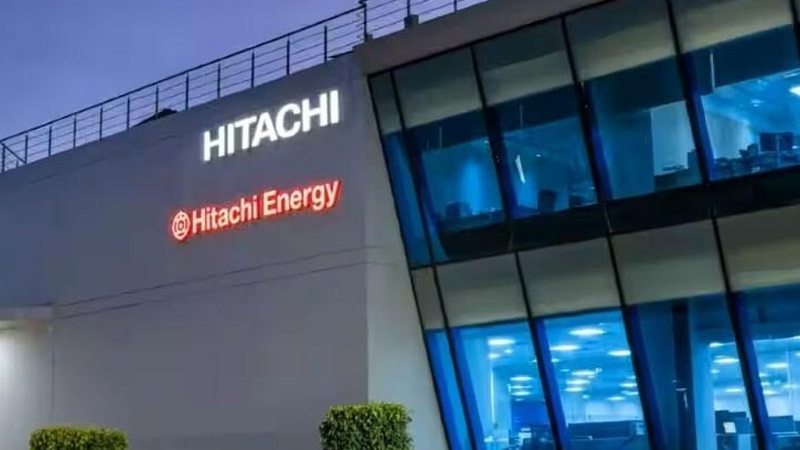
MUMBAI: Power flows may ebb and surge, but Hitachi Energy India Limited clearly had the current on its side in the December quarter. The energy and power technology major reported a sharp jump in profitability for Q3 FY26, riding strong revenue growth and improved operating margins, even as fresh order inflows moderated from last year’s highs.
For the quarter ended December 31, 2025, Hitachi Energy India posted revenue from operations of Rs 2,168 crore, up 29.6 percent year on year from Rs 1,672 crore in Q3 FY25 and 13.2 percent sequentially from Rs 1,915 crore in Q2 FY26. Including other income, total income for the quarter stood at Rs 2,168 crore, reflecting sustained execution momentum across projects and services.
Profitability surged far faster than topline growth. Profit before tax, before exceptional items, more than doubled to Rs 402 crore, compared with Rs 184 crore a year earlier. After accounting for an exceptional charge of Rs 54 crore linked to the impact of new labour codes, profit before tax came in at Rs 348 crore, still up nearly 89 percent year on year. Net profit for the quarter rose 90.3 percent to Rs 261 crore, compared with Rs 137 crore in the same period last year, even as it remained largely flat sequentially.
Margins told an equally strong story. PBT margin expanded to 16.0 percent in Q3 FY26 from 11.0 percent a year earlier, while profit after tax margin improved to 12.1 percent from 8.2 percent. Operating EBITDA jumped 100.4 percent year on year to Rs 338 crore, with margins expanding to 15.6 percent, signalling tighter cost control and operating leverage.
On a nine-month basis, revenue for the period ended December 31, 2025 rose to Rs 5,604 crore, up from Rs 4,520 crore in the corresponding period last year. Profit before tax for the nine months surged to Rs 878 crore, more than three times the Rs 270 crore reported a year earlier, while net profit climbed to Rs 657 crore, compared with Rs 200 crore in the previous period.
The only soft patch came on the order book. New orders in Q3 FY26 stood at Rs 2,478 crore, sharply lower than Rs 11,594 crore in Q3 FY25, when the company had benefited from a large one-off order win. Excluding that outsized contract, management noted that orders actually grew 73.7 percent year on year, underlining steady underlying demand. Sequentially, orders rose 11.7 percent from Rs 2,217 crore in Q2 FY26. For the nine months, total orders edged up to Rs 16,034 crore, broadly in line with Rs 15,983 crore a year earlier.
With revenues accelerating, margins widening and execution staying on track, Hitachi Energy India’s Q3 numbers suggest that while headline order comparisons may flicker, the business is firmly switched on when it comes to profits.

MUMBAI: Tata Motors Passenger Vehicles Limited (TMPVL) had a quarter of two very different moods. Back home, the showrooms were busy, the order books thick, and the festive glow lingered. Overseas, however, a cyber incident at Jaguar Land Rover pulled the plug on profits and dragged the group into the red.
For the third quarter of FY2026, Tata Motors posted a consolidated net loss of Rs 3,483 crore. A year ago, it had reported a profit of Rs 5,485 crore. Revenue also slipped sharply, down 25.8 per cent year on year to Rs 70,108 crore. Earnings before interest and tax fell into negative territory, with margins dropping to minus 4.7 per cent.
Strip away exceptional items and the picture still looked bruised. Profit before tax stood at a loss of Rs 3,136 crore, while earnings per share from continuing operations came in at minus Rs 9.47.
For the nine months to December, the company reported a net loss of Rs 7,255 crore from continuing operations, with revenue down 14 per cent year on year to Rs 2.3 lakh crore. Free cash flow for the quarter was also negative at Rs 17,900 crore.
Most of the damage came from Jaguar Land Rover. The luxury carmaker saw revenue plunge 39.4 per cent year on year to £4.5 billion. Ebit margins slid to minus 6.8 per cent, and profit before tax before exceptional items stood at a loss of £310 million.
The reasons were a perfect storm: a cyber incident that disrupted production, the wind-down of legacy Jaguar models, a weakening China market, and tariff pressures in the United States. The result was a free cash outflow of £1.5 billion for the quarter and net debt rising to £3.3 billion.
Still, the company has held on to its guidance, expecting Ebit margins of 0 to 2 per cent for the full year.
Back home, the domestic passenger vehicle business offered a more cheerful read. Revenue rose 24 per cent year on year to Rs 15,317 crore. Profit before tax before exceptional items stood at Rs 302 crore, while market share climbed to 13.8 per cent, securing the number two spot.
The company’s electric vehicle play also stayed strong, with a commanding 43.6 per cent share of the EV market and cumulative sales crossing the 2.5 lakh mark. The domestic unit ended the quarter with a net cash position of Rs 5,100 crore.
It was also a record quarter on the ground. Tata clocked its highest-ever quarterly wholesales at 171,000 units, up 22 per cent year on year, while retail sales crossed the 200,000 mark for the first time. The Nexon led the charge as the country’s best-selling model for the quarter, supported by the Punch and the newly introduced Sierra.
The quarter carried Rs 1,597 crore worth of exceptional losses. These included Rs 800 crore tied to the JLR cyber incident, Rs 400 crore linked to the new labour code, and another Rs 400 crore in stamp duty charges.
Yet on the restructuring front, the company booked a windfall. The demerger of the commercial vehicles business delivered an exceptional gain of Rs 82,616 crore. That helped push the nine-month net profit, including these gains, to Rs 76,767 crore.
Chief financial officer Dhiman Gupta called the quarter “challenging as anticipated” due to the cyber incident at JLR, while highlighting the domestic business’ revenue growth and margin improvement quarter on quarter. He added that performance is expected to improve significantly in the fourth quarter as JLR recovers.
JLR chief executive PB Balaji said production returned to normal by mid-November after the shutdown triggered by the cyber incident, and the company is now focused on rebuilding momentum.
Meanwhile, TMPVL managing director and CEO Shailesh Chandra pointed to record wholesales and strong festive demand as key drivers of the domestic business.
As of December 31, 2025, the group’s net debt stood at Rs 39,400 crore, with a debt-equity ratio of 0.61 times. Net worth was reported at Rs 1.07 lakh crore.
In short, Tata’s quarter read like a tale of two garages: one humming with orders and electric optimism, the other grappling with a digital breakdown. If the cyber clouds lift and the domestic engine keeps firing, the next quarter could look far less bumpy.


MIB sets OTT accessibility rules, mandates captions and audio description

Boney Kapoor acquires remake rights of Tamil political satire Thalaivar Thambi Thalaimaiyil

Netflix India names Rekha Rane director of films and series marketing

Zabeen signs off from TV9 after shaping the network’s public voice

Dhawan steps up to bat for Delhi’s grassroots sports push

Orient Beverages pops the fizz with steady Q3 gains and rising profits

Cheekatilo shines in the dark with record debut on Prime Video

These ’90s fashion trends are making a comeback in 2017
The final 6 ‘Game of Thrones’ episodes might feel like a full season
According to Dior Couture, this taboo fashion accessory is back
The old and New Edition cast comes together to perform
Phillies’ Aaron Altherr makes mind-boggling barehanded play
Uber and Lyft are finally available in all of New York State
Disney’s live-action Aladdin finally finds its stars
MIB sets OTT accessibility rules, mandates captions and audio description
Boney Kapoor acquires remake rights of Tamil political satire Thalaivar Thambi Thalaimaiyil
Netflix India names Rekha Rane director of films and series marketing
Zabeen signs off from TV9 after shaping the network’s public voice
Dhawan steps up to bat for Delhi’s grassroots sports push
Orient Beverages pops the fizz with steady Q3 gains and rising profits
Cheekatilo shines in the dark with record debut on Prime Video
-

 e-commerce3 weeks ago
Swiggy Instamart’s GOV surges 103 per cent year on year to Rs 7,938 crore
-

 News Broadcasting2 weeks ago
Mukesh Ambani, Larry Fink come together for CNBC-TV18 exclusive
-

 News Headline1 month ago
From selfies to big bucks, India’s influencer economy explodes in 2025
-
 iWorld5 months ago
Billions still offline despite mobile internet surge: GSMA
-

 News Headline2 months ago
2025: The year Indian sports saw chaos, comebacks, and breakthroughs
-

 Applications2 months ago
28 per cent of divorced daters in India are open to remarriage: Rebounce
-

 News Headline1 week ago
JioStar announces biggest ever talent line-up for an ICC event
-
 MAM2 years ago
Costa Coffee becomes official coffee partner of Olympic Games Paris 2024
