
iWorld
Mobile Music Industry – Way to go!

Mobile music has emerged as the most prominent segment in the digital music industry and is a major money making business.
Today, the definite buzzword with Indians is ‘mobile’. Everyone realizes how quickly the world is going digital and how important it is to keep in pace with the changing times.
According to the Soundbuzz Music Analysis (Digital and Physical), in 2007, digital music and more specifically mobile music, will surpass physical music in sales in India. To this estimation, IMI general secretary Savio D’Souza says, “In India, Music-to-Music accounts for Rs 100 crore (Rs 1 billion) and physical music to Rs 600 crore. So, I nowhere see mobile music sales surpassing physical music sales.”
But Universal’s Rajeev Gangal comments, “Not by the end of 2007, but by late 2008 one can expect mobile music sales to exceed, looking at the way the digital segment is booming.”
The Soundbuzz analysis also states that globally, online and mobile sales will represent more than 60 per cent of all music retail sales by 2009. Ringtones, the dominant digital format in terms of sales, will continue to be so through 2009. “Its all about monetizing it rightly,” adds D’Souza. Moreover, it concludes that Asia will generate more than one third of all digital music sales globally in 2009. Whoa!

 Mobile music consisting of ringtones, caller ringback tones, music clippings ringtones, music video downloads, movies and scene downloads has emerged as the most prominent segment in the digital music industry and is a major money making business today. Gangal further adds, “Physical and digital formats are way away from each other. Some tracks are just meant for the digital market. But as far as revenue from them is concerned, they are neck to neck. There isn’t much gap there.”
According to the International Federation of Phonographic Industry (IFPI), with the evolution of the mobile handset, mobile music has become a major revenue stream for the music industry globally, running far ahead of revenues from the conventional music distribution channels. Adds D’Souza, “Mobile music has become a major revenue stream for music industry, but mobile music running far ahead in revenues as compared to conventional music distribution channels isn’t true. Globally, the music industry is a $32 billion business, of which mobile music accounts for 10 per cent, say not more than $2 billion.”
Be it an out-and-out whim or just the exposure to illegal downloads, mobile music is taking over the legal conventional music in India. Statistics prove that where mobile music downloads is growing by over 50 per cent every year; the growth of legal conventional music is more or less pining away.
 |
|
The songs from 2006 blockbuster Dhoom 2 were a smash hit on the music downloads front
|
Adds Gangal, “If illegal distribution of music through mobiles is also included, the size of the mobile music market may be a lot bigger than conventional music. The biggest hindrance to the conventional music industry is piracy. The mobile music segment sees low piracy levels and hence, the industry is benefited more from the digital segment than the conventional one.”
Downloadable ringtones, which already make an annual business of $45 million globally, is all set to grow at double-digit levels in the years to come. Ringtones also generate about 40 per cent of the data revenues for India’s big wireless operators such as Bharti Airtel and Reliance Communications.
India’s entire mobile music market – encompassing monophonic and polyphonic ring tones, true tones, ring back tones and full track mobile downloads – will be worth $800 million by 2009, as predicted by Soundbuzz, which again doesn’t receive a positive nod from D’Souza.
 Today, almost every handset is capable of playing polyphonic or actual music. Cell phones ranging from Rs 2000 – Rs 5000 sell the most in India and thus can avail just the mono or polyphonic tones. Video and song downloads does not come into the picture here. But, mobile music is developing faster due to higher penetration of phones compared to portable players or broadband, and also, due to ease of payment. Almost all operators today have launched an ‘Easy Music’ facility that allows subscribers to choose their favourite music from a huge catalog and download it onto their mobile phones or even iPods at affordable prices. This has helped the mobile music market boom to unexpected levels.
As regards choice, mobile subscribers have a yen for Bollywood hits, devotional music, but international tracks always remain a priority as well.
Adds Gangal, “In the mobile music segment, it’s all about hits. Like if we have the rights to Bryan Adams and a person wants to download Bryan Adams songs, then he will definitely turn to our label. The biggest challenge in this segment is to make music available in the three-inch screen as against other forms of distribution. Here, content and quality both matter a lot.”
Both digital formats have deep content in terms of language and musical genres. Radio on mobile devices as well as Internet radio is also pushing the digital music industry forward.
 Presently, the techno-savvy generation is making use of mobiles in all the possible ways to get the best out of it. By the end of 2007, it is expected that India alone will have around 250 million handsets. Global companies like Nokia, Sony Ericsson, Motorola and Samsung are striving neck-to-neck to come up with handsets loaded with FM radios, MP3 players and a good memory capacity as buyers are showing an edge for such features in their cell phones.
Sony Ericsson is working and promoting its personal digital assistant phones with MP3 players and the popular Walkman phone line. Around 35 per cent of their Indian handset products feature downloadable music applications and the best-selling Walkman phone accounts for 65 per cent of total revenues. Sony has also expanded its chain of Expression Stores, which feature phones and music download stations.
Nokia can’t afford to lag in this rat-race. The handset leader has set up college sponsorship deals and collaborated with music companies to buy the rights for free downloadable songs on some of their handsets to encourage the use of digital music. Some of Nokia’s N-series handsets, with a 3,000 song capacity, offer 100 preloaded songs free; just to make a mark, and money of course, in this segment. Most of the major handset makers have tie-ups with music content sites such as Soundbuzz.com andOnMobile.com as well as revenue-sharing deals with local telcos and music companies.
Comments Hindustan Times (Lucknow) music feature writer Piyush Singh, “India sees a huge potential for digital music. Presently, MP3 songs are heard on PC, phones, web (streaming) etc. About revenue generation, according to me, it is an off-putting task to convince (Indians especially), to buy music online, as music is easily available from peers who might have purchased a CD or downloaded it online using P2P technology.
“If it is economical for people to download, store and write music on CDs and then transfer it to the cell phones; the search for songs from unpaid sources increases. But if paid sources price the song really low, no one would want to undergo this trouble of downloading-storing-writing. Also, the whole process will then look ‘legal’.”
Piracy and transfer of music from one handset to another, for instance transferring music clips via Bluetooth, have reached a volume that is three times the legal route. But such illegal downloads also appear as blessings in disguise as it actually helps the mobile music industry to grow. Comments Gangal, “Rich media usually observes a greater volume of transfers via Bluetooth. At the end of the day, everyone gets their share. 70 per cent of it taken away by Telco and the leftover is distributed.”
Local music companies and content owners often nitpick at the distributors like mobile phone operators and other companies that distribute digital music. They claim that the distributors walk away with a bigger portion of the revenues leaving them with a minimum amount. Says D’Souza, “The accounting of the mobile music business depends on some common denominators taken into consideration and on the parameters against which the market is calculated. Only then can one say how significant the contribution is.
“In India, the mobile piracy business is about Rs 30 crore. If a ringtone costs Rs 10, 15 per cent of the money goes to the government, around Rs 1.75 comes to the music industry. The rest is split amongst the music companies and content owners. Today, Telco accounts for 80 per cent of the business. This segment is bound to grow no doubt. Which distributors dominate the mobile music market is largely dependent on the end product available and negotiation skills.”
Talking of the competition penetrating this segment, Gangal gives a final peg, “We don’t really see a lot of competition and this comes as an advantage. It’s all about how you market your product and what strategies you adapt in order to keep selling. In the next five years or so, Universal will definitely witness an average of 400 million number of unit sales in the digital segment and around Rs 200 million in market prices.”










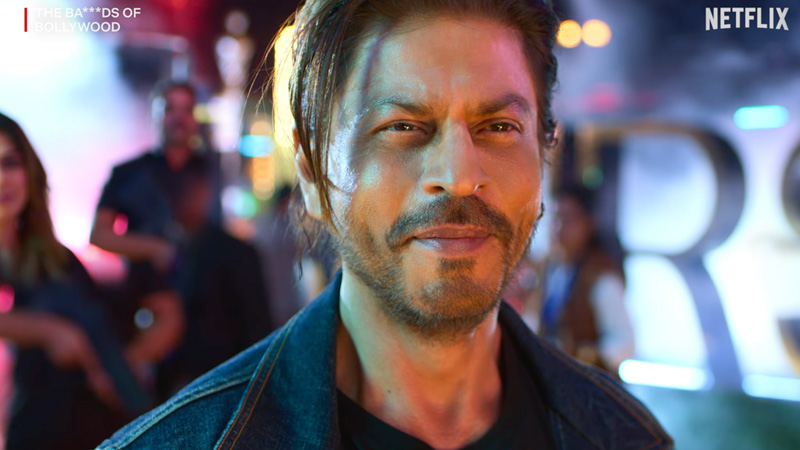
MUMBAI: Netflix is celebrating ten years in India with a slick anniversary film voiced by Shah Rukh Khan, a nostalgic sprint through a decade that rewired how the country watches stories. The campaign doubles as both tribute and reminder: streaming did not just enter Indian homes, it quietly rearranged them.
Roll back to 2016 and television still dictated schedules. Viewers waited weeks, sometimes months, for favourite films to appear on prime time. Family-friendly filters narrowed options further, and piracy often filled the gaps. Then Netflix arrived, softly but decisively, carrying a catalogue of international titles rarely seen in Indian theatres and placing them a click away. Old blockbusters and new releases suddenly coexisted on the same digital shelf.
The platform’s real inflection point came in 2018 with Sacred Games, a breakout series that refused to dilute India’s grit for global comfort. Audiences embraced its unvarnished tone, signalling readiness for stories that did not need box-office validation or censorship compromises. What followed was a steady procession of relatable narratives. Competitive-exam anxiety fuelled Kota Factory. College relationships unfolded in Mismatched. Everyday pressures, not grand spectacle, proved bankable.
Language barriers thinned as foreign series arrived with Hindi, Tamil and Telugu dubbing, expanding viewership beyond urban English-speaking pockets. Marketing mirrored the shift. For global releases such as Squid Game, Netflix leaned on regional creators and influencers to localise buzz and make international content feel native.
The library widened beyond fiction. Documentaries stepped out of festival circuits into living rooms. Stand-up comedians found scale. Established filmmakers, including Sanjay Leela Bhansali with Heeramandi, embraced the platform’s long-form canvas. Subscriber numbers swelled to 12.37 million in India, according to Demandsage, and behaviour followed suit. Late-night binges became routine. Friday release rituals loosened. Watch parties turned solitary screens into social events.
Economics demanded adjustment. Early subscription pricing carried a premium aura that deterred many households. Over time, Netflix recalibrated plans to align with Indian spending sensibilities, conceding that accessibility is as critical as content. To extend momentum around marquee titles, the platform also experimented with split-season releases, stretching anticipation and watch time.
The anniversary film, narrated by Shah Rukh Khan, captures the linguistic shift that mirrors the cultural one: from “Netflix pe kya dekha?” to “Netflix pe kya dekhein?” The question moved from recounting the past to planning the next binge. In ten years, Netflix morphed from foreign entrant to familiar fixture, exporting Indian stories abroad while importing global ones home. The remote no longer waits; it chooses, clicks and moves on. In the streaming age, patience is out, playlists are in, and the next episode is always one tap away.
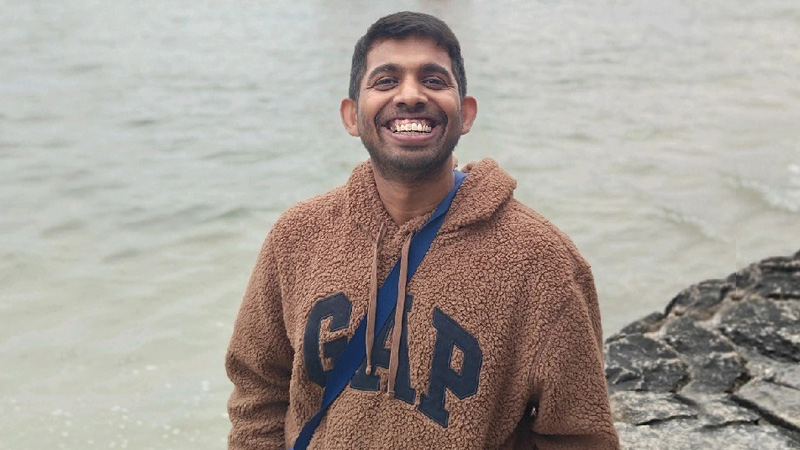
Gurugram: Blinkit has elevated Tulasi Mohan Padavala to associate director, capping a three-year climb inside the quick-commerce firm and signalling confidence in an executive steeped in ecommerce, category management and on-ground sales execution.
Padavala shared the update publicly, saying he was “happy to share” the promotion, a succinct announcement that nevertheless marks a notable step up within one of India’s fastest-moving delivery platforms. The new role follows nearly three years at Blinkit, where he most recently served as senior category manager from February 2023 to January 2026, focusing on strategic sourcing and assortment planning.
The promotion places Padavala in Blinkit’s mid-to-senior leadership tier at a time when the company continues to expand its rapid-delivery footprint and sharpen category economics. His brief tenure as associate director began in January 2026, with responsibilities expected to span category growth, supplier strategy and cross-functional execution.
Before Blinkit, Padavala spent a short but intensive stint as global ecommerce manager at Wholsum Foods, the parent of Slurrp Farm and Millé, between November 2022 and February 2023. There he worked on digital marketplace expansion and online retail operations, adding a direct-to-consumer and international ecommerce layer to his résumé.
A longer stretch at Amazon shaped much of his cross-border commerce experience. As business development manager for Amazon’s India Global Selling programme from February 2021 to October 2022, Padavala helped Indian D2C brands enter the North American market. His remit ranged from seller recruitment and category revenue management to coordination with industry bodies, regulators and logistics partners. Key outcomes included launching more than 50 D2C consumable brands in the United States, driving a cumulative gross merchandise sales figure of $1m in FY21-22, tripling sales for participating brands during Prime Day through marketing and visibility levers, growing the monthly recurring revenue of more than 10 newly launched sellers from zero to an average $20,000 each, and negotiating ecommerce partnerships that reduced initial launch costs by 20 per cent.
Padavala’s earlier career was forged in the field rather than the dashboard. At Coffee Day Group, he spent close to five years across multiple sales leadership roles. As sales manager in the Greater Delhi Area from July 2019 to January 2021, he led vending-machine and consumables sales for small and medium enterprises with a team of more than 15 assistant and territory sales managers, managed over 2,000 clients, drove upselling and cross-selling, maintained channel partnerships and ensured timely collections. Prior to that, he served as area sales manager in Delhi between May 2018 and June 2019, handling south and east Delhi markets, and earlier in Hyderabad from April 2016 to May 2018, where he led Andhra Pradesh sales for the vending division, supervised service and logistics functions and managed a base of more than 600 machines with a four-member team.
His professional arc began with internships that combined analytics and process improvement. At Boehringer Ingelheim in 2015, Padavala analysed the impact of brand extension on the drug Pradaxa, identified key performance indicators through market research and assessed sales forecasts, recommendations that drew positive responses in pilot studies. Earlier, at Genpact in 2014, he automated manual sales-order backlog reporting using VBA and Excel, increasing efficiency by 800 per cent, and worked on benchmarking metrics within supply-chain planning processes.
From automating spreadsheets to scaling cross-border ecommerce and now steering quick-commerce categories, Padavala’s trajectory tracks the evolution of India’s retail economy itself. Blinkit’s bet is clear: blend data, discipline and delivery speed. The promotion formalises what his career already suggests. In the race for instant commerce, experience that moves from warehouse floors to global dashboards is no longer optional. It is the engine.
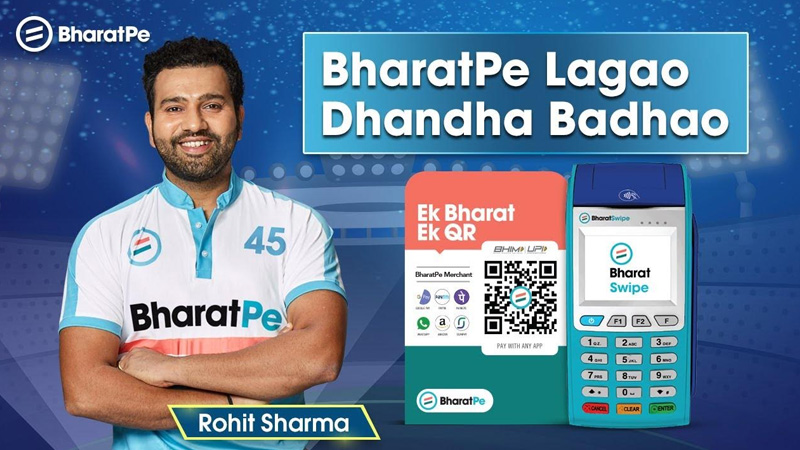
MUMBAI: When the stakes rise and seconds matter, even payments need a match-winning finish. That’s the cue for Bharatpe, which has rolled out Super Over, a nationwide campaign led by Indian cricket captain Rohit Sharma, timed neatly ahead of the ICC Men’s T20 World Cup.
The campaign draws a straight line between the pulse of cricket and the pace of everyday digital payments. A new brand film taps into India’s emotional bond with the game, while positioning UPI as the quiet hero that keeps daily transactions ticking along at match speed.
As part of Super Over, users making payments via Bharatpe UPI can bag daily rewards ranging from match tickets and signed merchandise to a chance to watch a T20 World Cup fixture alongside Rohit Sharma himself. Both consumers and merchants are also assured Zillion Coins on every eligible transaction, adding a little extra sparkle to routine payments.
Behind the scenes, Bharatpe is also batting for safety. The platform is backed by Bharatpe Shield, a fraud-protection layer designed to offer enhanced security, comprehensive coverage and dedicated support aimed at helping users transact with greater confidence as digital payments scale up.
Announcing the campaign, Bharatpe head of marketing Shilpi Kapoor said Super Over mirrors the aspirations of everyday Indians, combining speed, security and instant rewards to make UPI transactions feel both reliable and rewarding.
The campaign will play out across digital platforms, social media and on-ground activations nationwide, staying live through the T20 World Cup season proof that in cricket, as in payments, timing is everything.

Mukesh Ambani, Larry Fink come together for CNBC-TV18 exclusive

Nielsen launches co-viewing pilot to sharpen TV measurement

Netflix celebrates a decade in India with Shah Rukh Khan-narrated tribute film

Delhivery chairman Deepak Kapoor, independent director Saugata Gupta quit board

Meta appoints Anuvrat Rao as APAC head of commerce partnerships

Brnd.me enters Europe as haircare brands power global expansion

TechnoSport taps quick commerce with launch on Slikk’s 60-minute platform

These ’90s fashion trends are making a comeback in 2017
The final 6 ‘Game of Thrones’ episodes might feel like a full season
According to Dior Couture, this taboo fashion accessory is back
The old and New Edition cast comes together to perform
Phillies’ Aaron Altherr makes mind-boggling barehanded play
Uber and Lyft are finally available in all of New York State
Disney’s live-action Aladdin finally finds its stars
Mukesh Ambani, Larry Fink come together for CNBC-TV18 exclusive
Nielsen launches co-viewing pilot to sharpen TV measurement
Netflix celebrates a decade in India with Shah Rukh Khan-narrated tribute film
Delhivery chairman Deepak Kapoor, independent director Saugata Gupta quit board
Meta appoints Anuvrat Rao as APAC head of commerce partnerships
Brnd.me enters Europe as haircare brands power global expansion
TechnoSport taps quick commerce with launch on Slikk’s 60-minute platform
-
 News Broadcasting3 days ago
Mukesh Ambani, Larry Fink come together for CNBC-TV18 exclusive
-
 iWorld7 days ago
Netflix celebrates a decade in India with Shah Rukh Khan-narrated tribute film
-
 MAM3 months ago
HoABL soars high with dazzling Nagpur sebut
-
 MAM3 days ago
Nielsen launches co-viewing pilot to sharpen TV measurement
-
 iWorld12 months ago
BSNL rings in a revival with Rs 4,969 crore revenue
-
 I&B Ministry3 months ago
India steps up fight against digital piracy
-
 iWorld3 months ago
Tips Music turns up the heat with Tamil party anthem Mayangiren
-
 News Broadcasting3 months ago
CNN-News18 dominates Bihar election coverage with record viewership
