
Gaming
India’s Competition Commission Investigates Google’s Real-Money Gaming Policies


With the Competition Commission of India (CCI) launching an investigation into Google’s restrictive policies on real-money gaming (RMG) applications, India’s digital gaming industry is witnessing a regulatory showdown. The incident came to light when a leading Indian gaming platform, WinZO, accused Google of discriminatory policies favoring a few gaming apps while excluding others.
These developments have added to the regulatory challenges Google has faced in India. Earlier, the company was penalized for abusing its dominance in the Android ecosystem by enforcing restrictive policies that favored its own services over competitors.
. In 2022, the European Commission fined Google €4.34 billion ($5 billion) for favoring its search engine and Play Store ecosystem.
. In 2021, South Korea’s Fair Trade Commission fined Google $177 million for anti-competitive Play Store policies.
All About Google’s Gaming App Policy and WinZO’s Complaint
The controversy traces its roots to 2022 when Google revised its gaming app policy and permitted a few RMG apps, mainly fantasy sports and rummy, on its Play Store. However, WinZO’s app, which offers a wide range of games like carrom, puzzles, and racing, was excluded. As a result, the company argued how Google’s selective acceptance has generated a two-tier system that favors some developers while disapproving others.
As per the CCI order, “By granting preferential treatment to select app categories, Google effectively creates a two-tier market where some developers are accorded superior access and visibility while others are discriminated against and thus, left with a competitive disadvantage.” The regulator also stated that Google may have violated Sections 4(2)(a)(i), 4(2)(b), and 4(2)(c) of India’s Competition Act and a detailed investigation was required to look through the issue.
Moreover, WinZO went on to criticize Google for what it calls an “unreasonable and restrictive” approach due to which developers are forced to distribute their apps outside the Play Store through direct downloads via the sideloading method. The company further alleged that when users attempt to make payments, Google begins flagging the platform as risky, thereby warding off potential players.
Regulatory and Market Implications
India’s online gaming industry is at a critical juncture as regulatory uncertainty has clouded its rapid expansion. Despite the Indian government actively working on new regulations introduced in 2023 and 2024, challenges remain.
. India’s gaming market is projected to grow from $3.7 billion in FY24 to $9.8 billion by FY29, reflecting a 20% CAGR, according to a 1Lattice report.
The introduction of 28% GST on gaming transactions in 2023 has added further strain to the industry, significantly impacting revenue streams for major gaming firms.
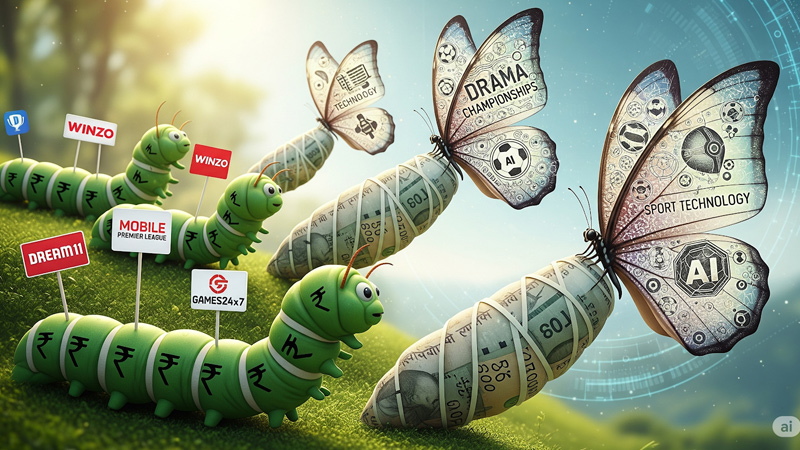
. Reports indicate that leading gaming companies like Dream11 and MPL have experienced revenue declines of 20-30% in FY24-25, driven by the increased tax burden
With both taxation and Google’s restrictions in play, many RMG platforms now struggle to scale their operations in India, leading to slower innovation, investor uncertainty, and a shift toward offshore markets.
Case Study of Alternative Strategies
As regulatory and platform restrictions tighten, many emerging gaming platforms are adopting alternative distribution strategies to circumvent Google Play’s limitations. Brands like Parimatch and other web-based new casinos bypass these restrictions by offering direct APK downloads while leveraging influencer marketing on platforms like Telegram and YouTube to engage Indian players effectively.
Following this approach helps gaming companies to maintain user engagement without relying on Google’s ecosystem. These methods involve distributing APK files directly through their websites, which allows them to avoid Play Store commissions and restrictions on payment processing. Additionally, they can also seek influencer-driven marketing that helps build trust and visibility in a market where digital word-of-mouth plays a crucial role.
Another emerging trend is the development of web-based gaming platforms. Here, games run directly in browsers without requiring a Play Store listing, providing a seamless user experience while bypassing App Store policies altogether.
Next Steps to Watch for in the Investigation
If the CCI enforces regulatory action against Google, it could reshape India’s digital gaming landscape with fair competition and greater accessibility for gaming platforms. Meanwhile, the industry’s swift adaptation to alternative distribution strategies signals that Indian gaming firms are ready to challenge the status quo-whether through legal battles or innovative market approaches.
Simultaneously, we see several gaming platforms already adapting to the situation by utilizing alternative distribution models, exploiting influencer networks, and investing in direct user acquisition strategies.
Disclaimer: This article does not have journalistic/ editorial involvement of indiantelevision.com. india
The reader is further advised that Online Casino, Betting, Online Gaming , Crypto products, Financial Investments/Engagement , NFTs, Products associated with health, wellness, and food are unregulated and can be highly risky. There may be no regulatory recourse for any loss from such transactions or risk associated with health conditions.
Indiantelevision.com group shall not in any manner, be responsible and/or liable in any manner whatsoever for all that is stated in the article and/or also with regard to the views, opinions, announcements, declarations, affirmations etc., stated/featured in the same. The decision to read hereinafter is purely a matter of choice and shall be construed as an express undertaking/guarantee in favour of indiantelevision.com (india






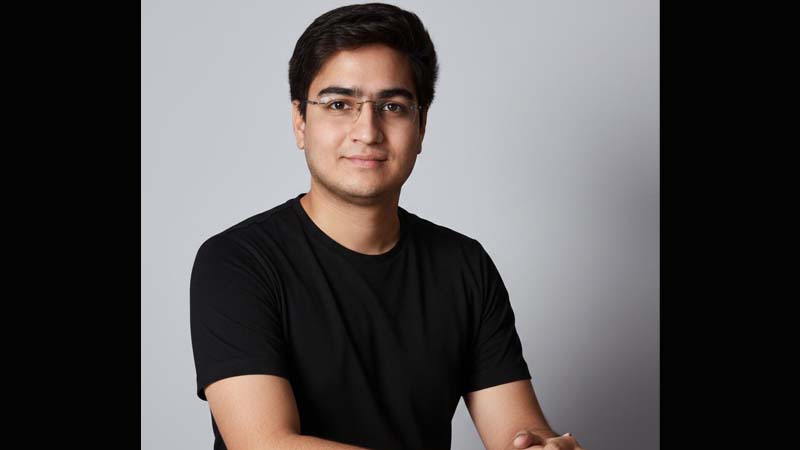
Ahmedabad: MetaNinza, a rewards-first gaming and esports platform, has onboarded Anand Mishra as co-founder and chief of staff, signalling an ambitious push to scale its ecosystem across India and South East Asia.
Anand, a serial entrepreneur with 7+ years in consumer tech, blockchain and gaming, previously founded and led Glazer Labs, where he built Glazer Games and THRYL, a rewards-centric gamer engagement platform. Under his leadership, Glazer Games delivered 400 million+ impressions for 50+ brands, drove 10 million+ user acquisitions, executed hundreds of creator partnerships, and launched new esports IPs. THRYL amassed nearly half a million users in just two months. Anand also founded HECOD Blockchain, serving 400+ B2B clients globally and scaling to 8 million+ active users, with a $4.2 million ARR.
At MetaNinza, Anand will oversee growth, user acquisition, creator ecosystem building, tournaments and rewards distribution, and ensure alignment between product, tech, marketing and operations. His blockchain expertise is expected to strengthen secure, fair and anti-abuse reward systems across the platform.
“MetaNinza is building something truly differentiated by combining competitive esports, rewards-first daily engagement and community-led growth. What drew me most was their clarity of vision: to go beyond tournaments and build a full participation ecosystem where gamers engage meaningfully every day and are rewarded fairly,” said Anand Mishra.
The appointment comes as MetaNinza strengthens its platform foundations and expands its offerings, including tournaments, scrims, quests, coin wallets, offerwalls and anti-abuse frameworks. The company has also launched 16score.com, a global esports news platform aimed at boosting organic community growth. MetaNinza currently serves India-first users but plans to scale across South East Asia, targeting 600 million gaming enthusiasts in the region over the next three years.
“Anand brings a rare combination of ecosystem insight and execution discipline. His experience in building scalable gaming platforms is exactly what we need as MetaNinza enters its next growth phase,” said Sudhansu Sinha, founder and CEO of MetaNinza.
MetaNinza is positioning itself as a full-stack, community-first esports brand, combining competitive tournaments, teams, technology, content and social engagement into one end-to-end platform.
Gaming is no longer just play. With Anand on board, MetaNinza is turning competition, rewards and community into a high-speed growth engine.
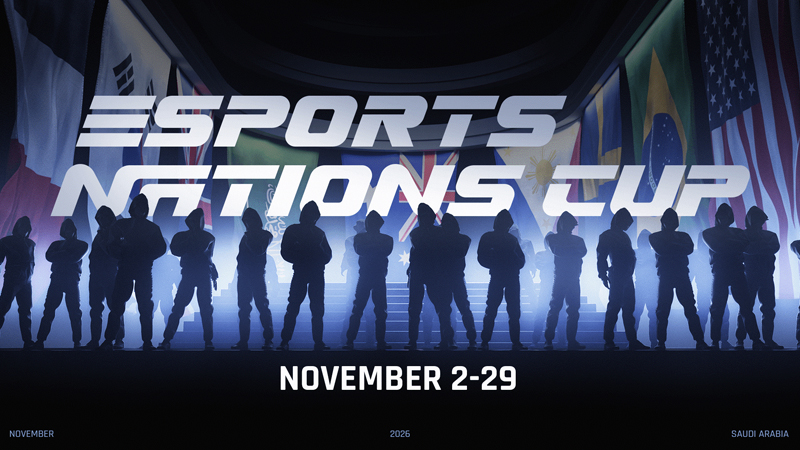
MUMBAI: When esports trades club colours for national flags, the stakes get personal. The Esports Nations Cup 2026 is set to make its global debut in Riyadh from November 2 to 29, 2026, adding a fresh, nation-first twist to competitive gaming.
Announced by the Esports World Cup Foundation, the new tournament is designed to sit alongside the club-based Esports World Cup, giving players the rare chance to represent their countries and fans a reason to cheer with identity and pride firmly in play.
The numbers are hard to ignore. ENC 2026 is backed by a $45 million, three-part funding model, aimed at strengthening the entire esports ecosystem. Of this, 20 million dollars will be paid directly as prize money to players and coaches across 16 game titles. A further $5 million has been earmarked as incentives for esports clubs that release their professional players for national duty, with payouts linked to player performance.
Another $20 million will flow through the ENC Development Fund, supporting national teams with logistics, travel, operations, marketing and long-term pathway development signalling that this is as much about future pipelines as present-day podiums.
The competition introduces a placement-based prize framework that keeps things simple and transparent. Every qualified player is guaranteed prize money and at least three matches. A gold-medal finish earns $50,000 per player, silver takes $30,000, and bronze pays $15,000. The same placement pays the same amount across all titles, whether solo or team-based, with team payouts scaling by roster size. Coaches are rewarded alongside players for identical finishes.
“National teams bring a powerful new layer to esports, rooted in identity and pride,” said Esports World Cup Foundation CEO Ralf Reichert, adding that the model is designed to reward performance while remaining fair and sustainable for players, clubs and national programmes alike.
While Riyadh hosts the inaugural edition, the ENC is planned as a biennial event with a rotating host-city format, taking nation-based esports to major cities around the world.
Several titles are already locked in. Mobile Legends: Bang Bang, Trackmania, and Dota 2 have been confirmed for 2026, with more games expected to be announced shortly.
For esports fans, it is no longer just about who plays best but which nation plays proudest.

MUMBAI: It seems Amazon’s gaming division has finally met its final boss. After nearly eight years at the helm, Christoph Hartmann is reportedly packing up his controller and heading for the exit. The news, first reported by Bloomberg’s Jason Schreier, marks the end of an era for the man who steered the New World and Lost Ark ships into the choppy waters of the MMO market.
While Hartmann’s departure might look like a simple game over, it is actually part of a massive tactical pivot. Amazon appears to be retreating from the costly, high-stakes world of traditional AAA console and PC development. Instead of chasing the next blockbuster epic, the company is looking skyward by focusing its energy on Amazon Luna, its dedicated cloud gaming service.
This leadership shuffle coincides with a broader wave of 16,000 redundancies across the Amazon empire. For gamers, the most poignant bit of lag is the news that New World: Aeternum is set to go offline permanently in January 2027. It appears the company is no longer interested in building digital worlds from scratch, but rather in providing the cloud-based pipes to stream them.
Hartmann leaves behind a legacy of taking Amazon from a struggling studio to a genuine, if brief, contender in the PC gaming space. Looking forward, the hardware focus is shifting entirely to Luna infrastructure. Rumours suggest the new-look Amazon Games will be heavily bolstered by AI-integrated experiences rather than traditional software. Whether this move is a masterstroke or a massive misclick remains to be seen. For now, the Amazon Games office is looking a little bit emptier, and the cloud is looking a lot more crowded.

Mukesh Ambani, Larry Fink come together for CNBC-TV18 exclusive

Nielsen launches co-viewing pilot to sharpen TV measurement

Netflix celebrates a decade in India with Shah Rukh Khan-narrated tribute film

Delhivery chairman Deepak Kapoor, independent director Saugata Gupta quit board

Meta appoints Anuvrat Rao as APAC head of commerce partnerships

Brnd.me enters Europe as haircare brands power global expansion

TechnoSport taps quick commerce with launch on Slikk’s 60-minute platform

These ’90s fashion trends are making a comeback in 2017
The final 6 ‘Game of Thrones’ episodes might feel like a full season
According to Dior Couture, this taboo fashion accessory is back
The old and New Edition cast comes together to perform
Phillies’ Aaron Altherr makes mind-boggling barehanded play
Uber and Lyft are finally available in all of New York State
Disney’s live-action Aladdin finally finds its stars
Mukesh Ambani, Larry Fink come together for CNBC-TV18 exclusive
Nielsen launches co-viewing pilot to sharpen TV measurement
Netflix celebrates a decade in India with Shah Rukh Khan-narrated tribute film
Delhivery chairman Deepak Kapoor, independent director Saugata Gupta quit board
Meta appoints Anuvrat Rao as APAC head of commerce partnerships
Brnd.me enters Europe as haircare brands power global expansion
TechnoSport taps quick commerce with launch on Slikk’s 60-minute platform
-
 News Broadcasting1 day ago
Mukesh Ambani, Larry Fink come together for CNBC-TV18 exclusive
-
 iWorld5 days ago
Netflix celebrates a decade in India with Shah Rukh Khan-narrated tribute film
-
 I&B Ministry3 months ago
India steps up fight against digital piracy
-
 iWorld3 months ago
Tips Music turns up the heat with Tamil party anthem Mayangiren
-
 MAM1 day ago
Nielsen launches co-viewing pilot to sharpen TV measurement
-
 iWorld12 months ago
BSNL rings in a revival with Rs 4,969 crore revenue
-
 MAM3 months ago
HoABL soars high with dazzling Nagpur sebut
-
 News Broadcasting2 months ago
CNN-News18 dominates Bihar election coverage with record viewership