
Financials
FICCI submits its wishlist to Fin Min for M&E sector


NEW DELHI: National industry body Ficci has demanded that the government must give several tax exemptions and holidays to let the animation, gaming and VFX industries, which is growing faster than the overall entertainment industry, realise its full potential.
Ficci has demanded in the budget for 2008, the government must give a 10-year tax holiday, removal of service and sales taxes on the software used for production for 10 years, exemption of import duty on hardware for 10 years, and other facilitating measures.
Interestingly, it says also that as there is no Indian channel with 24 X 7 indigenous animation content, 10 per cent of the time on entertainment channels must be reserved for such content. This will give local content and talent a major boost.
The memorandum from Ficci says that though the animation, gaming and VFX industry is growing in leaps and bounds, the full potential is yet to be tapped, despite the projection that the industry would grow hugely by next year.
Ficci estimates show that the animation industry today stands at Rs 13 billion and is expected to grow to Rs 43 billion by year 2009, with a CAGR of 35 per cent.

Similarly, the gaming industry is expected to grow from Rs 360 million to Rs 13.50 billion by 2009, with a CAGR of 78 per cent.
“The growth rate in these sectors are much higher than overall media & entertainment sector, which is expected to grow at a rate of 19 per cent,” says Ficci. The industry could be a major export revenue earner as well as provide massive employment.
Ficci says that after Information Technology, the biggest export earners for India are Animation, Gaming and VFX, but the overall business model existing at present, which is a low-end BPO approach, is stunting its growth.
The Ficci document stresses: “Exports in this vertical can be looked in two ways: one, a purely outsourcing model in which production houses provide services to overseas studios. This is low-end work in the value chain with more of a BPO approach.
“The other is revenues earned from exporting the finished product (the intellectual property developed in India for domestic / foreign markets) to global audiences.
“Both the models have tremendous potential for foreign exchange earning for India. But it is better in the long term if we move up the value chain and have indigenous content with both domestic and foreign appeal.”
Ficci estimates that in the next five years, India would require more than 30,000 trained animators and gaming professionals.
“If this industry is nurtured properly, it can meet the government‘s objective of employment generation, and the latter should aid in the setting up of centres of excellence on the lines of IITs and IIMs for the animation and gaming industry,” says Ficci.
Ficci feels that the other direct impact of aiding these industries would be building Brand India better, by engaging the country‘s massive talent pool in creating content for Indian as well as global audiences by transferring India‘s 5,000-year-old time- tested legends into the new media.
“Animation could be another way of creating “Brand India” among NRIs / PIOs and other global audiences. Currently when India is increasingly garnering attention in the world arena, it is the right time to reach outwards through this medium,” Ficci says.
Ficci points out to models of Korea, China, Singapore, etc., which enjoyed their respective government support, so much so that 40 per cent of the animated content in the US is Japanese.
“The reason for such a pattern is that countries like Japan and Canada have developed very strong domestic markets, and once a domestic market gets enough consumable content, the same can be routed for exports,” says the memorandum.
Ficci reminds that the Korean government sees animation as the most competitive industry for the 21st century, and has provided massive tax reliefs.
“(Korean) application guidelines specify that companies whose projects have been accepted by a Korean broadcaster can apply for up to 40 per cent of their production budget,” Ficci says, demonstrating the massive support system there.
So far as the animation industry is concerned, Ficci says that it is now covered under Software Technology Parks of India.
The problem, says Ficci, is that this holds good for a BPO nature of work where outsourcing is the main module and most of the studios which are getting benefited from STPI have to make sure of an export commitment of more than 85 per cent.
“As a result many Indian studios wanting to produce original content based intellectual property and use art and talent from India to produce animation stories do not get any such benefits,” explains the memorandum.
Creating original content in India attracts custom duty and also the freshly levied sales tax (VAT) on off the shelf software (12.2 per cent, which might increase further) and further also the income tax component.
“This is leading to more and more studios working on foreign content and a severe lack of animated Indian stories in our domestic television schedules,” laments Ficci.
Hence Ficci‘s key proposals for the animation, gaming and VFX industries are
- Tax holiday for 10 (ten) years, so that cost of creating intellectual property (original content) comes down drastically and the industry becomes viable
- Removal of Service Tax
- Removal of Sales Tax on the Software used for Animation, Gaming & VFX production for a period of 10 years
- Exemption of Import duty on hardware for a period of 10 years
- Market Development Assistance for overseas business promotion
- 10 per cent mandatory local content on the networks to began with
“Finally, we feel there is negligible revenue accruing to the exchequer currently as no new Indian IP is getting created. If a tax holiday is given, revenue will flow into the exchequer funds in a couple of years as the industry will gain impetus and encouragement to grow. In this regard the IT sector can be looked at as a role model,” says the Ficci memorandum.









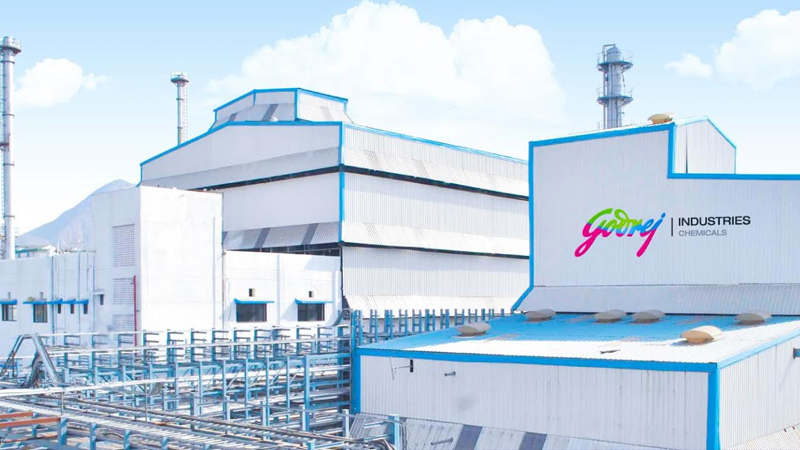
MUMBAI: Godrej Industries’ June quarter numbers read like a mixed-genre script, a drama of losses on the standalone front, but a blockbuster on the consolidated stage. For Q1 FY26, the conglomerate clocked a consolidated net profit of Rs 725.35 crore, up from Rs 640.86 crore in the year-ago quarter and a sharp leap from Rs 416.13 crore in Q4 FY25. The earnings ride was powered by total income of Rs 5,718.97 crore, a 9 per cent rise year-on-year, buoyed by its FMCG, agri-business, chemicals, and real estate subsidiaries.
Segmental muscle showed in the expense sheet too cost of materials consumed stood at Rs 2,420.69 crore, while purchases of stock-in-trade rose to Rs 143.79 crore. Inventory changes delivered a significant positive swing at Rs 3,349.68 crore (credit), compared with Rs 2,011.01 crore last year, cushioning the operating line.
Finance costs came in at Rs 113.53 crore, with depreciation at Rs 576.29 crore. Profit before tax surged to Rs 1,058.56 crore from Rs 872.61 crore in Q1 FY25.
However, on a standalone basis, it was a different story, the company posted a net loss of Rs 29.98 crore, reversing from a Rs 105.26 crore profit a year earlier, hurt by higher input costs and flat revenue growth (Rs 1,018.29 crore versus Rs 986.45 crore in Q1 FY25).
Margins on the consolidated level held strong, with operating margin at 8.90 per cent and net profit margin at 16.26 per cent, an improvement from last year’s 15.09 per cent. Earnings per share stood at Rs 10.37, more than double the Rs 5.44 posted in the March quarter.
With a net worth of Rs 10,137.54 crore and debt-equity ratios steady (gross at 6.42), Godrej Industries appears well positioned for its next growth leg, even if the standalone arm needs a few scenes rewritten.
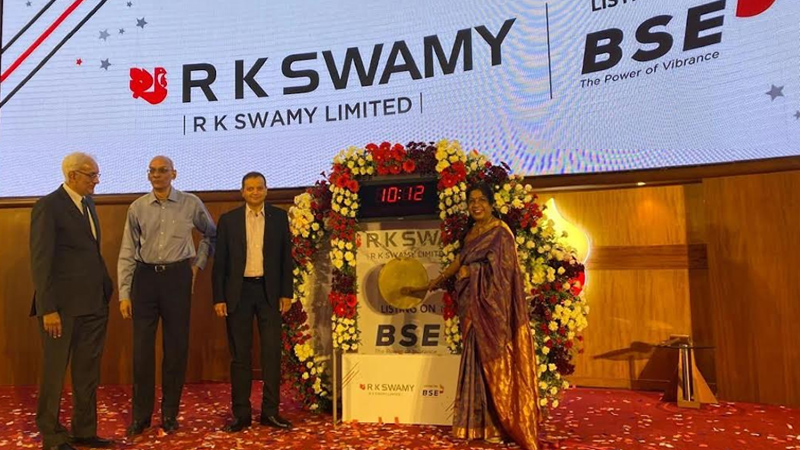
MUMBAI: R K Swamy seems to have found the right script for Q1, a plot with steady revenues, tighter expenses, and a profit scene worth watching. The integrated marketing services player posted a consolidated net profit of Rs 287.46 lakh for the quarter ended 30 June 2025, up from Rs 217.93 lakh in the year-ago period. Revenue from operations stood at Rs 7,756.79 lakh, with total income touching Rs 8,024.81 lakh, powered by Rs 268.02 lakh in other income.
Operational expenses rose to Rs 2,494.25 lakh from Rs 2,173.20 lakh, while employee costs were slightly higher at Rs 3,182.71 lakh. Other expenses climbed to Rs 1,468.53 lakh. EBITDA came in at Rs 879.32 lakh, well ahead of the Rs 703.22 lakh posted last year, though below the March quarter’s Rs 1,972.21 lakh.
Finance costs and depreciation stood at Rs 85.45 lakh and Rs 433.52 lakh respectively, leading to a profit before tax of Rs 360.35 lakh. Total tax expenses were Rs 72.89 lakh.
The quarter also saw Rs 5,400 lakh of IPO proceeds fully deployed for working capital, while Rs 3,626.22 lakh earmarked for general corporate purposes has also been utilised. However, Rs 5,458.43 lakh remains unutilised including Rs 1,098.50 lakh for a planned DVCP Studio, Rs 2,838.20 lakh for IT infrastructure across R K Swamy and its subsidiaries Hansa Research and Hansa Customer Equity, and Rs 1,521.73 lakh for new CEC and CATI facilities.
On a standalone basis, profit for the quarter was Rs 134.16 lakh versus Rs 35.18 lakh last year, with revenue from operations at Rs 3,283.06 lakh.
While adland has seen its fair share of headwinds, R K Swamy’s Q1 suggests the company is positioning itself for a year of expansion with big-ticket infrastructure investments waiting in the wings to take centre stage.
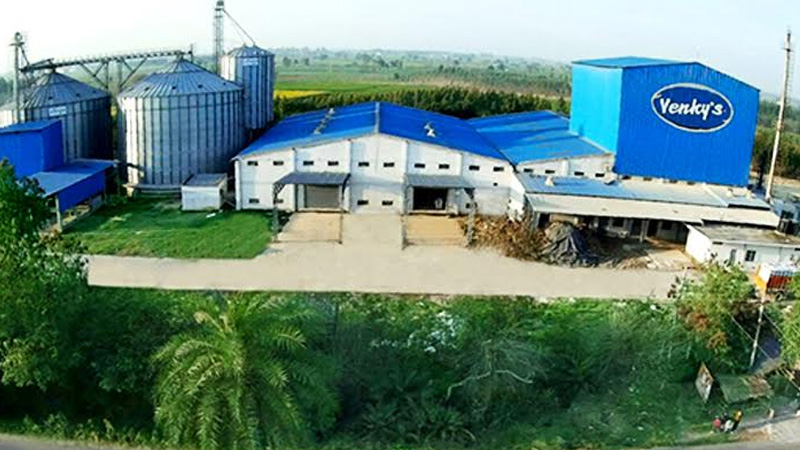
MUMBAI: In the corporate coop this quarter, Venky’s (India) Ltd has laid a golden egg. The poultry-to-oilseed giant reported a consolidated net profit of Rs 15.83 crore for the quarter ended 30 June 2025, up from Rs 15.78 crore a year ago, despite battling feed cost pressures and softer margins in its core poultry segment.
Revenue from operations climbed 7.15 per cent year-on-year to Rs 865.83 crore, compared with Rs 808.02 crore in Q1 FY25. Total income stood at Rs 877.52 crore, buoyed by Rs 11.69 crore in other income.
The company’s poultry and poultry products division remained the main profit roost, bringing in Rs 475.66 crore in sales, followed by oilseed at Rs 318.02 crore and animal health products at Rs 96.98 crore. Segment results showed poultry still feeling the heat with a loss of Rs 5.55 crore, while animal health (Rs 23.18 crore) and oilseed (Rs 10.05 crore) kept the ledger in the black.
Expenses rose to Rs 855.75 crore from Rs 717.63 crore last year, driven by higher material costs (Rs 553.08 crore) and feedstock price volatility. Finance costs edged up to Rs 4.29 crore, while depreciation came in at Rs 9.21 crore.
Earnings per share for the quarter stood at Rs 11.24, compared with Rs 11.24 in the previous quarter and Rs 9.44 a year earlier. On the balance sheet, total assets grew to Rs 2,09,115 lakh, while liabilities were steady at Rs 59,975 lakh.
While the poultry flock faced headwinds, the diversified revenue mix helped Venky’s keep its Q1 nest egg intact proving that in this business, you can still rule the roost if you spread your wings wide enough.


Mukesh Ambani, Larry Fink come together for CNBC-TV18 exclusive

Nielsen launches co-viewing pilot to sharpen TV measurement

Netflix celebrates a decade in India with Shah Rukh Khan-narrated tribute film

Delhivery chairman Deepak Kapoor, independent director Saugata Gupta quit board

Meta appoints Anuvrat Rao as APAC head of commerce partnerships

Brnd.me enters Europe as haircare brands power global expansion

TechnoSport taps quick commerce with launch on Slikk’s 60-minute platform

These ’90s fashion trends are making a comeback in 2017
The final 6 ‘Game of Thrones’ episodes might feel like a full season
According to Dior Couture, this taboo fashion accessory is back
The old and New Edition cast comes together to perform
Phillies’ Aaron Altherr makes mind-boggling barehanded play
Uber and Lyft are finally available in all of New York State
Disney’s live-action Aladdin finally finds its stars
Mukesh Ambani, Larry Fink come together for CNBC-TV18 exclusive
Nielsen launches co-viewing pilot to sharpen TV measurement
Netflix celebrates a decade in India with Shah Rukh Khan-narrated tribute film
Delhivery chairman Deepak Kapoor, independent director Saugata Gupta quit board
Meta appoints Anuvrat Rao as APAC head of commerce partnerships
Brnd.me enters Europe as haircare brands power global expansion
TechnoSport taps quick commerce with launch on Slikk’s 60-minute platform
-
 News Broadcasting3 days ago
Mukesh Ambani, Larry Fink come together for CNBC-TV18 exclusive
-
 iWorld1 week ago
Netflix celebrates a decade in India with Shah Rukh Khan-narrated tribute film
-
 MAM3 months ago
HoABL soars high with dazzling Nagpur sebut
-
 MAM3 days ago
Nielsen launches co-viewing pilot to sharpen TV measurement
-
 iWorld12 months ago
BSNL rings in a revival with Rs 4,969 crore revenue
-
 I&B Ministry3 months ago
India steps up fight against digital piracy
-
 iWorld3 months ago
Tips Music turns up the heat with Tamil party anthem Mayangiren
-

 Film Production1 week ago
UFO Moviez rides high on strong Q3 earnings
