
Gaming
Crypto Industry Collaboration in the Wake of the Bybit Theft


The crypto market is no stranger to major hacks, but the recent Bybit theft set a staggering new record. North Korea-affiliated hackers from the notorious Lazarus Group drained approximately $1.5 billion in ETH from the crypto exchange. Unlike previous disasters involving FTX, Celsius, or Terra, Bybit managed to avoid collapse thanks to swift and coordinated industry collaboration.
Facing a potential liquidity crisis, Bybit secured emergency support from key crypto firms, includingBinance, Bitget, and Galaxy Digital. Through transparency, decisive action, and collective efforts, the company demonstrated how strong industry collaboration could help exchanges weather even the most severe attacks.
Binance CMO Rachel Conlans commented on recent cyber attacks in the crypto industry, “The evolving nature of cyber threats in the crypto industry reinforces the need for exchanges and custodians to continuously strengthen their security frameworks. As threats continue to grow in sophistication, so must our defenses. The recent attack was a phishing attack on the UI system, underscoring the importance of securing all aspects of any exchange’s infrastructure, including user interfaces, to protect against such sophisticated threats. This is a wake-up call for the industry to implement multi-layered security, real-time threat detection, and robust risk mitigation strategies.
Conlan added, “In the crypto world, trust and security are the cornerstones of crypto adoption, and it is critical that platforms work proactively to keep ahead of emerging risks, guaranteeing user safety and safeguarding user accounts remains the top priority.”
How the Bybit Hack Unfolded
In the following sections, we’ll explore exactly how the Bybit hack happened and examine how the crypto exchange navigated the crisis. Let’s dive in!
The Attack
The hack began with a targeted compromise of AWS session tokens belonging to a developer at Safe, Bybit’s multisig wallet provider. Lazarus hackers exploited this access by injecting malicious JavaScript code into Safe’s frontend user interface. According to Safe’s detailed post-mortem report, this compromised interface tricked Bybit’s team into signing what appeared to be a legitimate wallet transaction but was in fact unauthorized.

As a result, Bybit inadvertently approved the transfer of roughly 401,000 ETH—valued at nearly $1.5 billion—to wallets controlled by the hackers. To obscure their trail, the attackers quickly dispersed these funds through numerous intermediary addresses. This strategy, common among sophisticated cybercriminals, aimed to confuse blockchain analysts and hinder tracing efforts.
The hackers then converted portions of the stolen ETH into other cryptocurrencies, such as BTC and DAI. They utilized decentralized exchanges, cross-chain bridges, and no-KYC instant swap services to move assets between different blockchains and obscure transaction paths.
Interestingly, the Lazarus Group initially kept a substantial portion of the funds dormant across multiple wallets. North Korean hackers often use this tactic to avoid immediate detection and strategically delay their laundering operations. However, within just ten days following the theft, they successfully laundered 100% of the stolen crypto—approximately $1.4 billion.
Bybit’s Response
Bybit’s rapid reaction to the hack proved critical. Within minutes of detecting the breach, the exchange isolated the compromised cold wallet, halting further unauthorized transfers. A forensic investigation was immediately launched, involving blockchain analytics firms, cybersecurity specialists, and law enforcement to track the stolen assets.
To prevent similar incidents in the future, Bybit partnered closely with Safe to overhaul its multisig wallet security protocols. The exchange also implemented stricter manual verification processes for high-value transactions and enhanced its wallet infrastructure. These decisive actions helped restore user confidence and stabilize the situation.
Despite the enormous loss, Bybit reassured customers that all funds remained fully backed and accessible. Notably, the exchange kept withdrawals open, sending a strong signal of transparency. This crucial step helped prevent panic and maintained user trust during an uncertain period.
How Industry Collaboration Helped Bybit Survive the Aftermath of the Attack
Collaboration with leading crypto firms was vital in quickly securing Bybit’s financial stability. Within just 72 hours, the exchange raised emergency liquidity, totaling 447,000 ETH through loans and support from Binance, Bitget, and Galaxy Digital. By strategically injecting liquidity rather than purchasing Ether on the open market, Bybit prevented price volatility and rapidly replenished its reserves.
Transparency remained central to Bybit’s recovery efforts. CEO Ben Zhou publicly addressed users through a live-streamed Q&A just 30 minutes after the breach became public knowledge. In the following days, Zhou continued providing daily updates on fund recovery, security enhancements, and internal investigations.
To further reassure users, Bybit completed a full proof-of-reserves audit on February 24. The audit independently verified the exchange’s solvency and confirmed that user assets were backed 1:1. This proactive transparency set a new industry standard for crisis management following major hacks.
Blockchain’s inherent transparency also supported recovery efforts. Public transaction records enabled industry participants and authorities to swiftly trace stolen assets. Through rapid coordination with global exchanges and regulators, more than $40 million worth of the stolen crypto was successfully frozen—highlighting the value of real-time industry cooperation.
This collaboration extended beyond immediate recovery. Bybit continued working closely with law enforcement agencies and cybersecurity experts to seize additional assets and identify the attackers. These unified efforts underscored the crypto industry’s growing maturity and commitment to security.
Ultimately, Bybit’s crisis highlighted the increasing importance of collective action. With hackers becoming more sophisticated, industry-wide coordination, transparency, and swift response capabilities are more critical than ever. Bybit’s survival serves as a powerful example of how effective collaboration can help crypto companies overcome even the most severe security threats.
Disclaimer: This article does not have journalistic/ editorial involvement of indiantelevision.com.indiantelevision.com group or its websites does not endorse/ subscribe to the contents of the article/advertisement and/or views expressed herein.
The reader is further advised that Online Casino, Betting, Online Gaming , Crypto products, Financial Investments/Engagement , NFTs, Products associated with health, wellness, and food are unregulated and can be highly risky. There may be no regulatory recourse for any loss from such transactions or risk associated with health conditions.
Indiantelevision.com group shall not in any manner, be responsible and/or liable in any manner whatsoever for all that is stated in the article and/or also with regard to the views, opinions, announcements, declarations, affirmations etc., stated/featured in the same. The decision to read hereinafter is purely a matter of choice and shall be construed as an express undertaking/guarantee in favour of indiantelevision.com (indiantelevision.com group) of being absolved from any/ all potential legal action, or enforceable claims. The content may be for information and awareness purposes and does not constitute financial advice.



Gaming
Checkmate Goes Digital as Chess Joins Esports Nations Cup 2026
From boards to bytes, chess readies for a nation-first showdown in Riyadh.
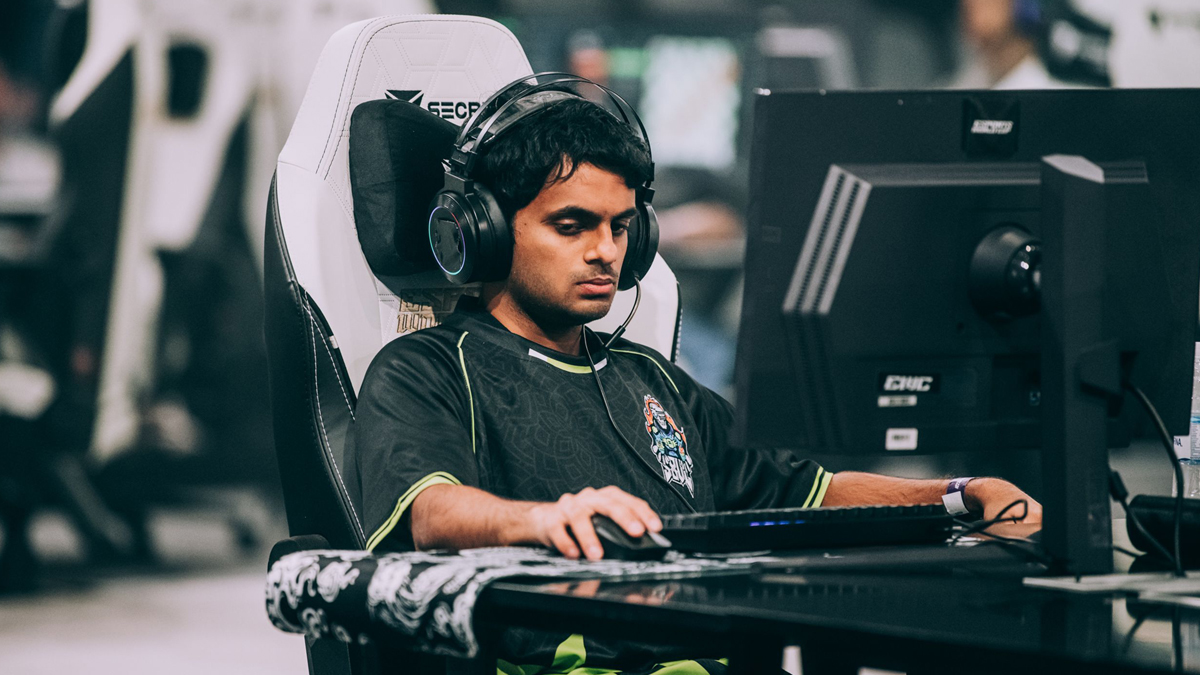
MUMBAI: When pawns meet power plays, the game changes. Chess, the world’s oldest mind sport, is officially stepping deeper into the digital arena after the Esports World Cup Foundation confirmed it as one of 16 titles at the inaugural Esports Nations Cup 2026, set to unfold in Riyadh from 2 to 29 November.
For a game synonymous with quiet halls and ticking clocks, this is a bold move. Chess at ENC 2026 promises scale, spectacle and serious competition, fielding an unprecedented 128 players and opening the board to fresh talent and underrepresented nations as the sport’s esports evolution gathers pace.
The chess competition will run from November 2 to November 8, culminating in a playoff final. The opening phase features 128 players split into 16 round-robin groups of eight, with the top four from each group advancing.
That leaves 64 players battling it out in a single-elimination playoff bracket. Early rounds will be best-of-two, while the quarterfinals onward step up to best-of-four encounters. Deadlocks will be settled via Armageddon tie-breakers, and all matches will be played in a Rapid 10+0 format, designed for speed, tension and drama.
National pride is front and centre. Of the 128 slots, 64 players will receive direct invitations based on Champions Chess Tour rankings, limited to one per nation. Another 56 players will qualify through regional online qualifiers, while eight wildcard spots round out the field.
Qualifiers will be hosted by Chess.com across seven regions, including Middle East + India + Central Asia, with two qualifier windows in June 2026. Each country can field a maximum of two players, ensuring both depth and diversity across the draw.
Chess already tasted esports stardom at the 2025 Esports World Cup, where 20 nations were represented and the intensity surprised even purists. The event ended with Magnus Carlsen lifting the title for Team Liquid, sealing chess’s credentials as a natural fit for high-stakes digital competition.
India’s top-ranked player Arjun Erigaisi called the experience “unlike any chess tournament I’ve played before”, adding that the energy of the esports stage is drawing new audiences into the game.
For commentators and fans alike, the shift to a nation-based format raises the stakes. Chessbase India co-founder Sagar Shah likened the moment to the excitement of the Chess Olympiad, while grandmaster and broadcaster Tania Sachdev said the national format adds “pride, pressure and passion” that pulls viewers in deeper.
From silent calculation to roaring crowds, chess at the Esports Nations Cup 2026 is less about moving pieces and more about moving perceptions. Checkmate, it seems, has gone fully digital.

RIYADH: The Esports World Cup Foundation has launched Road to EWC, a worldwide qualification programme for the Esports World Cup 2026, stitching together more than 230 tournaments across major esports regions into a single global competitive season.
Running from grassroots qualifiers to elite international leagues, the initiative creates a unified pathway for players and clubs to reach the Esports World Cup finals in Riyadh from 6 July to 23 August, 2026. The season integrates publisher-led ecosystems and major circuits into one calendar, offering year-round visibility for fans and structured progression for competitors.
“Road to EWC brings together the journeys that shape competitive esports,” said Esports World Cup Foundation chief product officer Faisal Bin Homran. “It gives players, clubs, publishers and fans a defined season to plan around, building a sustainable and global competitive ecosystem.”
The qualification network spans leading events including the Apex Legends Global Series, Capcom Cup, Chess.com Global Championship, EVO, Free Fire World Series, EA Sports FC Pro, Pubg Global Series, Rocket League Championship Series, Overwatch Champions Series, Tekken World Tour Finals, and official circuits for Call of Duty, League of Legends, Fortnite, Rainbow Six Siege, Trackmania and Valorant.
Open online qualifiers will also run for titles such as Dota 2, Teamfight Tactics, Call of Duty: Warzone and Chess, widening access for emerging talent.
In 2025, more than 2,500 players from over 100 countries qualified through the Road to EWC programme. Highlights included 15-year-old Free Fire player Rasyah Rasyid becoming the youngest champion in event history, EA FC star Manuel Bachoore claiming gold, and Street Fighter icon Zeng “Xiao Hai” Zhuojun securing another major title. Team Falcons captured their second club championship following a dramatic Overwatch 2 victory.
A dedicated Road to EWC hub will track qualification events, schedules and viewing options throughout the season. Ticket sales for the Esports World Cup 2026 are now live, with international partners across the US, Europe, Middle East, India and China.
The Esports World Cup returns to Riyadh next summer, bringing together the world’s top clubs across multiple game titles to compete for the largest prize pool in esports history.
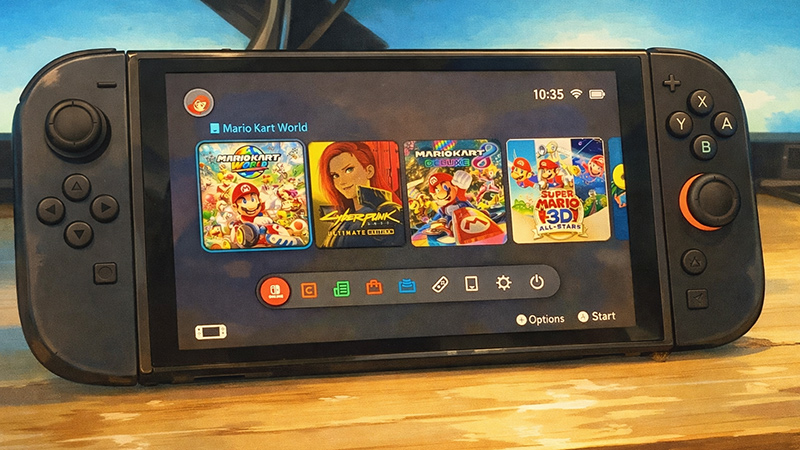
KYOTO: Nintendo shares slid more than 10 per cent on Wednesday, a day after the gaming giant missed market forecasts for quarterly revenue and warned of mounting pressure from a global memory chip shortage, as per media reports.
The company beat profit expectations, posting a 24 per cent year-on-year rise, driven by strong sales of the Nintendo Switch franchise. Revenue surged 86 per cent, with the original Switch now the firm’s best-selling console since its launch in 2017.
Yet rising component costs are weighing on investor sentiment. Nintendo relies heavily on dynamic random access memory (DRAM), a segment grappling with acute shortages as artificial intelligence and data centre demand soak up supply.
Ortus Advisors head of Japanese equity strategy Andrew Jackson, said markets remain uneasy about the impact of higher memory prices on Nintendo’s margins.
President Shuntaro Furukawa acknowledged that while soaring memory costs have not yet dented results for the current financial year, prolonged price pressures could squeeze profitability.
TrendForce estimates that contract prices for conventional Dram chips in the first quarter could jump between 90 and 95 per cent from the previous quarter. A senior semiconductor industry executive recently told CNBC the shortage may last until 2027.
Kantan Games chief executive of consultancy Serkan Toto, said sustained cost inflation could force Nintendo to raise console prices: a risky move for its largely casual user base.
The company’s newest device, Switch 2, launched in June last year and already dominates its console sales mix. But analysts warn that momentum in the first year is critical for any new platform.
Concerns persist over whether Switch 2 can match the runaway success of its predecessor, despite Nintendo holding firm on its full-year sales forecast.
The outlook hinges on upcoming blockbuster releases, including Mario Tennis Fever in February and Pokémon Pokopia in March. Nintendo is also banking on The Super Mario Galaxy Movie, due in April, to replicate the sales boost sparked by its 2023 hit film.
Omdia senior analyst James McWhirter, said 2026 would be a “make-or-break” year as Nintendo seeks broader mass-market appeal for Switch 2.
Nintendo shares are down more than 15 per cent so far this year.



MIB sets OTT accessibility rules, mandates captions and audio description

Boney Kapoor acquires remake rights of Tamil political satire Thalaivar Thambi Thalaimaiyil

Netflix India names Rekha Rane director of films and series marketing

Zabeen signs off from TV9 after shaping the network’s public voice

Dhawan steps up to bat for Delhi’s grassroots sports push

Orient Beverages pops the fizz with steady Q3 gains and rising profits

Cheekatilo shines in the dark with record debut on Prime Video

Swiggy Instamart’s GOV surges 103 per cent year on year to Rs 7,938 crore

These ’90s fashion trends are making a comeback in 2017
The final 6 ‘Game of Thrones’ episodes might feel like a full season
According to Dior Couture, this taboo fashion accessory is back

ATN International brings ATN Bangla to Canada
The old and New Edition cast comes together to perform
Phillies’ Aaron Altherr makes mind-boggling barehanded play
MIB sets OTT accessibility rules, mandates captions and audio description
Boney Kapoor acquires remake rights of Tamil political satire Thalaivar Thambi Thalaimaiyil
Netflix India names Rekha Rane director of films and series marketing
Zabeen signs off from TV9 after shaping the network’s public voice
Dhawan steps up to bat for Delhi’s grassroots sports push
Orient Beverages pops the fizz with steady Q3 gains and rising profits
Cheekatilo shines in the dark with record debut on Prime Video
-
 e-commerce1 month ago
Swiggy Instamart’s GOV surges 103 per cent year on year to Rs 7,938 crore
-
 iWorld1 year ago
Kuku TV transforms India’s OTT space with vertical microdrama boom
-
 News Headline1 year ago
TRAI puts a ‘stop’ to unsolicited calls and messages
-

 News Headline2 months ago
From selfies to big bucks, India’s influencer economy explodes in 2025
-
 Comedy2 years ago
Taarak Mehta Ka Ooltah Chashmah celebrates 4,000 episodes
-
 MAM2 years ago
OpenAI joins C2PA steering committee
-
 News Headline2 years ago
Odisha to host Ultimate Kho Kho Season 2 from December 24
-
 News Headline1 year ago
Abhishek Bachchan joins as co-owner of European T20 Premier League


