
iWorld
CricHQ.com’s grand plan for Indian cricket

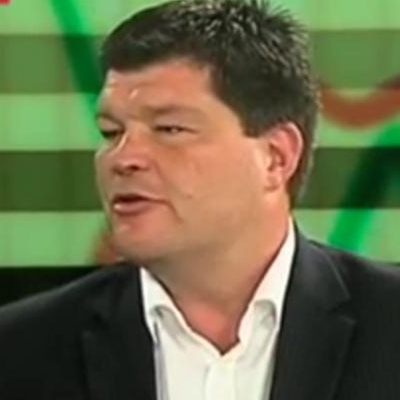
MUMBAI: Kiwi cricketers Stephen Fleming and Brendon McCullum have been the nightmare of many a rival team captain and bowler on the field, thanks to their ability to consistently notch up big totals and fast. But for the past two years, the duo – along with a bunch of other international cricketers, and tech entrepreneur Simon Baker – has been working on CricHQ.com (a technology platform that offers live scoring and competition management solutions via cloud and mobile technologies) which seeks to redefine how cricket is administered, shared, analysed, and followed.
So far their Wellington-headquartered firm CricHQ Ltd has managed to sign up more than 140 official cricket bodies worldwide to its live cricket scoring and competition management solution platform (both cloud and mobile). Partnerships or endorsements have been forged with the International Cricket Council and the Federation of International Cricketers Association. It has also inked agreements with content and distribution partners Samsung, Nokia and Blackberry. And finally, it has attracted more than 750,000 users to its cricket social network globally, of which more than 250,000 are from India.
Thanks to this, it had managed to get a valuation of around $17 million by March 2014 if reports in the New Zealand business press are to be believed. It had even attracted investments to the tune of $8 million from international shareholders including 20 cricketers (Ravi Ashwin, David Hussey, Michael Hussey, George Bailey, Albie Morkel, Faf du Plessis, Brad Hodge feature among them) and the New Zealand government.

For the past three years, CricHQ has been working to get acceptance from various cricket boards, associations and clubs for its technology platform. “We are trying to bring new technology to a very old sport where there is a lot of paper interaction, facisimile, phone calls, ” Baker – who is CricHQ CEO, told Sky News First Business in April this year.
The online competition management dashboard, CricHQ, says, allows administrators to have a single location to create, edit and publish competitions, leagues and draws all of their other administrative duties. Its dedicated scoring apps are fully integrated with its competition management system, so scorers at the ground can download fixture details, broadcast matches live and upload final results with the click of a button.
The advantage of the technology platform, Baker, in an interview to a digital website, revealed is that “it allows one to keep track of even smallest-level of games and players. The network provides comprehensive data, which includes information about non-international cricketing career as well. CricHQ will help identify talents at a very early stage, which wasn’t possible before this. With more cricketing boards joining the platform, CricHQ could be of great help to the game and talents across the country.”
Those who sign up for the tech platform pay a subscription or service fee to the company.
Among its clients figure: the Sri Lankan Cricket Board, New Zealand Cricket, Kerala Cricket Association. The national governing bodies at the ICC, EBC, PCA, Cricket Ireland, USACA, NZCPA, and ACA, are the technologies official endorsers. Partnerships have been formed with ICC Europe, and ICC East Asia Pacific, Cricket Canada, SACA.
Baker is looking to change the pace now that cricket administering bodies have come on to the tech platform. The company has been pursuing plans to raise $5.2 million since April 2014, according to last available reports, in order to fund product development, accelerate its expansion in cricket crazy India, hire more staff and also build brand awareness.
The idea, according to Baker, is to gradually reach CricHQ to fans and associations and clubs in smaller cities in India. Said he: “India is our biggest growth market and we are bullish about the Indian market opportunity. We are building a strong team to take full advantage of the opportunity.”
Currently, it has three offices with 75 staff. This number is slated to go up to 500 within the next three years, according to a PTI report. CricHQ’s corporate office is based in Bengaluru and global development and operations offices are located in Chennai and Kochi respectively.
The company recently appointed Karthik Ramanujam as director of digital sales and marketing in India. He will be leading the company’s go-to-market strategy which includes user acquisition for online and mobile properties in India, and supporting the global sales efforts.
The fact that CricHQ has so many cricketers as shareholders should work in Karthik’s favour as he goes about building the brand along with chief marketing officer Jarred Sewell. During the recently concluded IPL, the company ran a campaign called ‘Meet your Heroes.” Sewell says, “Users could win free match tickets and travel with free VIP transport facilities. One lucky user daily was given the opportunity daily to meet cricket stars.” No prizes for guessing, who these stars were: its shareholders.
While CricHQ.com is available on the web, the major thrust for India is the mobile, because of the vast populace of 800 million plus hand phone users. That means making sure the CricHQ app is downloaded by as many as possible.
So far it has managed to lure 250,000 users in a country, which has more than 100 million Facebook users, 66 per cent of whom are accessing the social network on their feature phones. The CricHQ app is available on Android, IOS, and the Blackberry platforms in India. The company is aiming to take its global cricket fan and user base to 6.5 million by April 2015, most of these coming from India.
The app allows users to follow their favourite players and receive notifications whenever they play cricket or share social updates, just like Facebook.
It works on the premise of following players from international stars to the grassroots level. The app also allows fans to post texts, photos and video updates and offers live cricket scores from around the world with ball-by-ball updates along with statistical insights.
Teams and players in turn can review their performances with run worms, graphs, instant calculations of key stats and visual representations. Most of the uploaded content on the player profiles comes straight off their mobile handsets. The app is currently available only in English.
Baker earlier this year told Sky News First Business that he does not fear running head to head with long-existing cricket providers such as ESPNcricinfo and cricbuzz.com. “They are established big players in terms of the websites around cricket,” he said in the interview. “We are not seeking to be an editorial web site around articles around cricket. We are looking for the social media, networking engagement, the fans, the players and the participants – we are going for a different sort of way of engaging with consuming of content as compared to a traditional web site.”
The CricHQ business model requires revenues to come in courtesy sponsorship and run of site advertising, which hopefully will ramp up as users and their consumption of pages on the site rise. Another revenue stream that it is going to go for is paid subscribers on its social network, which may not be that easy in India. Revenues according to one investor presentation made in April were $631,000 last year. The target for the coming year: $8 million.
It looks stiff indeed. It will be up to cricket fans in India to oblige.






A wave of panic swept through Delhi and Mumbai over the past week as viral social media posts claimed a sudden spike in missing and kidnapped children. The alarm bells proved false. Both cities’ police forces issued categorical denials, pointing fingers at paid promotion and rumour-mongering designed to create public hysteria. The twist: fingers are now pointing at Yash Raj Films, accused of orchestrating the scare as guerrilla marketing for Mardaani 3, its upcoming vigilante thriller about child trafficking.
The episode lays bare a darker truth about India’s social media ecosystem. With smartphone penetration soaring and screen time at record highs, paid promotion tools have become weapons of mass hysteria. A few thousand rupees can boost a post to millions of eyeballs within hours. When that post plays on primal fears like child safety, verification becomes an afterthought. Users share first, question later. The result: manufactured crises that feel real until authorities scramble to debunk them.
Delhi Police took to Instagram 23 hours ago with a blunt message: “After following a few leads, we discovered that the hype around the surge in missing girls in Delhi is being pushed through paid promotion. Creating panic for monetary gains won’t be tolerated, and we’ll take strict action against such individuals.” The post, captioned “Facts matter, Fear doesn’t”, made clear the force’s irritation at being dragged into what it views as a manufactured crisis.
Mumbai Police followed suit, issuing a statement denying claims of kidnappings. “Certain social media handles are misrepresenting data and indulging in rumour-mongering regarding cases of missing and kidnapped children. We categorically deny these claims,” the force wrote. It added that FIRs were being registered against those “deliberately spreading false information and creating public panic.”
The misinformation spread with startling effectiveness. Popular Instagram and Twitter accounts, some with hundreds of thousands of followers, shared alarming statistics and anecdotal reports of vanished children, tagging police handles and demanding action. The posts gained traction quickly, amplified by concerned parents and activists. Only when both police forces traced the origin of the claims did the facade crumble: many of the viral posts were boosted through paid promotion, a telltale sign of coordinated astroturfing rather than organic concern.
Enter Yash Raj Films, the 50-year-old production house behind the Mardaani franchise. The series, starring Rani Mukerji as a no-nonsense cop battling human trafficking rings, has built its brand on gritty, socially conscious thrillers. Mardaani 3 is in production, and online chatter swiftly connected the dots between the missing persons panic and the film’s subject matter. Accusations flew: had YRF seeded fake stories to drum up buzz for its vigilante cop sequel?
YRF issued a furious rebuttal. “Yash Raj Films is a 50-year-old company founded on the core principles of being highly ethical and transparent,” a spokesperson said. “We strongly deny the accusations floating on social media that Mardaani 3’s promotional campaign has deliberately sensationalised a sensitive issue like this and we have immense trust in our authorities that they will share all facts and truths in due course of time.”
The denial is categorical, but scepticism lingers. Guerrilla marketing, viral hoaxes masquerading as public service announcements, manipulated data: these are not unheard of in Bollywood’s playbook, though rarely deployed on such a sensitive issue. Child safety is a third rail; exploiting it for box office returns crosses a line even by the industry’s elastic ethical standards.
Yet the evidence tying YRF directly to the posts remains circumstantial. No smoking gun links the production house to the paid promotions flagged by police. What is clear is that someone paid to amplify posts about missing children at precisely the moment a film about missing children was in the public eye. Whether that someone was a rogue marketing agency, an overzealous publicist, or a bad actor with no YRF connection remains murky.
The fallout is reputational. YRF, which has cultivated a family-friendly, socially responsible image across five decades, now finds itself defending against accusations of weaponising child safety fears. The Mardaani franchise, built on the premise of protecting the vulnerable, risks being tarred as exploitative. Rani Mukerji, the face of the series, has yet to comment.
For Delhi and Mumbai police, the episode is a reminder of social media’s double-edged sword. The platforms amplify genuine crises but also manufacture fake ones with alarming ease. Paid promotion tools, designed to help legitimate businesses reach audiences, can just as easily turbocharge hoaxes. Distinguishing signal from noise requires resources and speed that overstretched forces often lack.
India’s social media consumption has exploded. The average urban user now spends over four hours daily on platforms, doom-scrolling through an endless feed of news, gossip and outrage. Algorithms prioritise engagement over accuracy, pushing emotionally charged content to the top. A post about missing children triggers immediate shares; a dry police denial struggles for traction. By the time fact-checkers mobilise, the lie has circled the country thrice.
Paid promotion supercharges this dynamic. For as little as Rs2,000, anyone can boost a post to lakhs of users, targeting specific demographics and geographies. The tools are legitimate, used daily by small businesses and political campaigns. But in the wrong hands, they become misinformation missiles. A fabricated crisis about child kidnappings, amplified by paid reach, looks indistinguishable from organic concern. Users see friends sharing it, assume it must be true, and hit repost. The cascade is self-reinforcing.
The broader pattern is troubling. Misinformation thrives on emotional triggers: fear for children, distrust of institutions, calls to action. A viral post claiming kidnappings demands immediate sharing; verifying it feels like wasted time when lives might be at stake. By the time authorities debunk the claims, the damage is done. Panic has spread, trust in institutions has eroded, and the original purveyors of the hoax have vanished into the digital ether.
This is the new normal. Every week brings a fresh panic: contaminated food, imminent disasters, communal violence rumours. Most prove baseless. Yet each one finds traction because social media rewards speed over truth. The infrastructure designed to connect people now excels at frightening them. Platforms profit from the chaos; advertisers pay for eyeballs regardless of whether the content is fact or fiction. The incentives are perverse, and there is no fix in sight.
Whether YRF is guilty or merely collateral damage in a misinformation campaign will depend on what authorities uncover in their investigations. The production house insists it has “immense trust” that police will reveal the truth. If that truth exonerates YRF, the studio will still carry the stain of association. If it implicates them, Mardaani 3 will enter cinemas under a cloud that no amount of box office success can dispel.
For now, the message from both police forces is unambiguous: there is no surge in missing children, the panic was engineered, and those responsible will face consequences. Parents can exhale. Social media users might want to pause before hitting share. And Bollywood’s marketers, ethical or otherwise, have been put on notice: weaponising fear for profit will not go unpunished.
A wave of panic swept through Delhi and Mumbai over the past week as viral social media posts claimed a sudden spike in missing and kidnapped children. The alarm bells proved false. Both cities’ police forces issued categorical denials, pointing fingers at paid promotion and rumour-mongering designed to create public hysteria. The twist: fingers are now pointing at Yash Raj Films, accused of orchestrating the scare as guerrilla marketing for Mardaani 3, its upcoming vigilante thriller about child trafficking.
The episode lays bare a darker truth about India’s social media ecosystem. With smartphone penetration soaring and screen time at record highs, paid promotion tools have become weapons of mass hysteria. A few thousand rupees can boost a post to millions of eyeballs within hours. When that post plays on primal fears like child safety, verification becomes an afterthought. Users share first, question later. The result: manufactured crises that feel real until authorities scramble to debunk them.
Delhi Police took to Instagram 23 hours ago with a blunt message: “After following a few leads, we discovered that the hype around the surge in missing girls in Delhi is being pushed through paid promotion. Creating panic for monetary gains won’t be tolerated, and we’ll take strict action against such individuals.” The post, captioned “Facts matter, Fear doesn’t”, made clear the force’s irritation at being dragged into what it views as a manufactured crisis.
Mumbai Police followed suit, issuing a statement denying claims of kidnappings. “Certain social media handles are misrepresenting data and indulging in rumour-mongering regarding cases of missing and kidnapped children. We categorically deny these claims,” the force wrote. It added that FIRs were being registered against those “deliberately spreading false information and creating public panic.”
The misinformation spread with startling effectiveness. Popular Instagram and Twitter accounts, some with hundreds of thousands of followers, shared alarming statistics and anecdotal reports of vanished children, tagging police handles and demanding action. The posts gained traction quickly, amplified by concerned parents and activists. Only when both police forces traced the origin of the claims did the facade crumble: many of the viral posts were boosted through paid promotion, a telltale sign of coordinated astroturfing rather than organic concern.
Enter Yash Raj Films, the 50-year-old production house behind the Mardaani franchise. The series, starring Rani Mukerji as a no-nonsense cop battling human trafficking rings, has built its brand on gritty, socially conscious thrillers. Mardaani 3 is in production, and online chatter swiftly connected the dots between the missing persons panic and the film’s subject matter. Accusations flew: had YRF seeded fake stories to drum up buzz for its vigilante cop sequel?
YRF issued a furious rebuttal. “Yash Raj Films is a 50-year-old company founded on the core principles of being highly ethical and transparent,” a spokesperson said. “We strongly deny the accusations floating on social media that Mardaani 3’s promotional campaign has deliberately sensationalised a sensitive issue like this and we have immense trust in our authorities that they will share all facts and truths in due course of time.”
The denial is categorical, but scepticism lingers. Guerrilla marketing, viral hoaxes masquerading as public service announcements, manipulated data: these are not unheard of in Bollywood’s playbook, though rarely deployed on such a sensitive issue. Child safety is a third rail; exploiting it for box office returns crosses a line even by the industry’s elastic ethical standards.
Yet the evidence tying YRF directly to the posts remains circumstantial. No smoking gun links the production house to the paid promotions flagged by police. What is clear is that someone paid to amplify posts about missing children at precisely the moment a film about missing children was in the public eye. Whether that someone was a rogue marketing agency, an overzealous publicist, or a bad actor with no YRF connection remains murky.
The fallout is reputational. YRF, which has cultivated a family-friendly, socially responsible image across five decades, now finds itself defending against accusations of weaponising child safety fears. The Mardaani franchise, built on the premise of protecting the vulnerable, risks being tarred as exploitative. Rani Mukerji, the face of the series, has yet to comment.
For Delhi and Mumbai police, the episode is a reminder of social media’s double-edged sword. The platforms amplify genuine crises but also manufacture fake ones with alarming ease. Paid promotion tools, designed to help legitimate businesses reach audiences, can just as easily turbocharge hoaxes. Distinguishing signal from noise requires resources and speed that overstretched forces often lack.
India’s social media consumption has exploded. The average urban user now spends over four hours daily on platforms, doom-scrolling through an endless feed of news, gossip and outrage. Algorithms prioritise engagement over accuracy, pushing emotionally charged content to the top. A post about missing children triggers immediate shares; a dry police denial struggles for traction. By the time fact-checkers mobilise, the lie has circled the country thrice.
Paid promotion supercharges this dynamic. For as little as Rs 2,000, anyone can boost a post to lakhs of users, targeting specific demographics and geographies. The tools are legitimate, used daily by small businesses and political campaigns. But in the wrong hands, they become misinformation missiles. A fabricated crisis about child kidnappings, amplified by paid reach, looks indistinguishable from organic concern. Users see friends sharing it, assume it must be true, and hit repost. The cascade is self-reinforcing.
The broader pattern is troubling. Misinformation thrives on emotional triggers: fear for children, distrust of institutions, calls to action. A viral post claiming kidnappings demands immediate sharing; verifying it feels like wasted time when lives might be at stake. By the time authorities debunk the claims, the damage is done. Panic has spread, trust in institutions has eroded, and the original purveyors of the hoax have vanished into the digital ether.
This is the new normal. Every week brings a fresh panic: contaminated food, imminent disasters, communal violence rumours. Most prove baseless. Yet each one finds traction because social media rewards speed over truth. The infrastructure designed to connect people now excels at frightening them. Platforms profit from the chaos; advertisers pay for eyeballs regardless of whether the content is fact or fiction. The incentives are perverse, and there is no fix in sight.
Whether YRF is guilty or merely collateral damage in a misinformation campaign will depend on what authorities uncover in their investigations. The production house insists it has “immense trust” that police will reveal the truth. If that truth exonerates YRF, the studio will still carry the stain of association. If it implicates them, Mardaani 3 will enter cinemas under a cloud that no amount of box office success can dispel.
For now, the message from both police forces is unambiguous: there is no surge in missing children, the panic was engineered, and those responsible will face consequences. Parents can exhale. Social media users might want to pause before hitting share. And Bollywood’s marketers, ethical or otherwise, have been put on notice: weaponising fear for profit will not go unpunished.
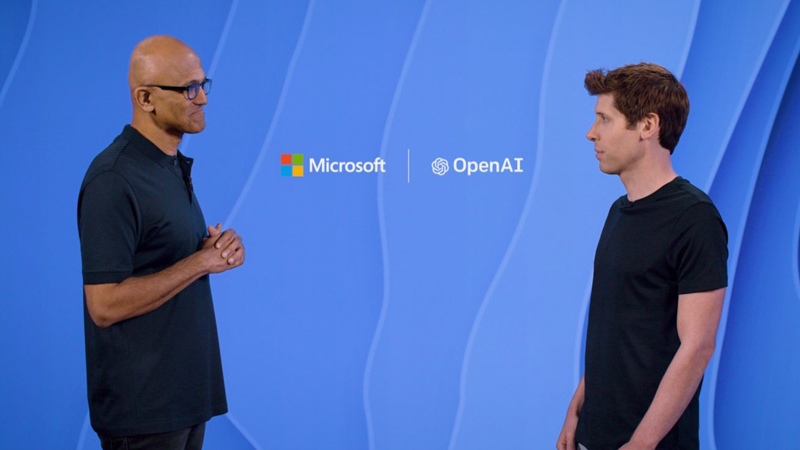
WASHINGTON: At OpenAI, the fight was not about artificial intelligence going rogue—it was about who got the GPUs.
An internal email from Microsoft chief technology officer Kevin Scott, sent on November 19, 2023, offers the clearest account yet of the events that culminated in the sudden firing of Sam Altman as OpenAI’s chief executive. Far from a single ideological rupture, Scott describes a combustible mix of resource wars, bruised egos and a board ill-equipped to manage the world’s hottest AI company.
According to the email, addressed to Microsoft chief executive Satya Nadella, president Brad Smith and other senior leaders, OpenAI co-founder Ilya Sutskever had been “increasingly at odds” with Altman on two fronts.
Read the full email below to find out:
[This document is from Musk v. Altman (2026).]
From: Kevin Scott
Sent: Sunday, November 19, 2023 7:31 AM
To: Frank X. Shaw, Satya Nadella, Brad Smith, Amy Hood, Caitlin McCabe
Frank,
I can help you with the timeline and with our best understanding of what was going on. I think the reality was that a member of the board, llya Sutskever, had been increasingly at odds with his boss, Sam, over a variety of issues.
One of those issues is that there is a perfectly natural tension inside of the company between Research and Applied over resource allocations. The success of Applied has meant that headcount and GPUs got allocated to things like the API and ChatGPT. Research, which is responsible for training new models, could always use more GPUs because what they’re doing is literally insatiable, and it’s easy for them to look at the success of Applied and believe that in a zero sum game they are responsible for them waiting for GPUs to become available to do their work. I could tell you stories like this from every place l’ve ever worked, and it boils down to, even if you have two important, super successful things you’re trying to work on simultaneously, folks rarely think about the global optima. They believe that their thing is more important, and that to the extent that things are zero sum, that the other thing is a cause of their woes. It’s why Sam has pushed us so hard on capacity: he’s the one thing about the global optima and trying to make things non-zero sum. The researchers at OAl do not appreciate that they would not have anywhere remotely as many GPUs as they do have if there were no Applied at all, and that Applied has a momentum all its own that must be fed. So the only reasonable thing to do is what Sam has been doing: figure out how to get more compute.
The second of the issues, and one that’s deeply personal to llya, is that Jakub moreso than Ilya has been making the research breakthroughs that are driving things forward, to the point that Sam promoted Jakub, and put him charge of the major model research directions. After he did that, Jakub’s work accelerated, and he’s made some truly stunning progress that has accelerated in the past few weeks. I think that Ilya has had a very, very hard time with this, with this person that used to work for him suddenly becoming the leader, and perhaps more importantly, for solving the problem that Ilya has been trying to solve the past few years with little or no progress. Sam made the right choice as CEO here by promoting Jakub.
Now, in a normal company, if you don’t like these two things, you’d appeal to your boss, and if he/she tells you that they’ve made their decision and that it’s final, your recourse is accept the decision or quit. Here, and this is the piece that everyone should have been thinking harder about, the employee was also a founder and board member, and the board constitution was such that they were highly susceptible to a pitch by Ilya that portrays the decisions that Sam was making as bad. I think the things that made them susceptible, is that two of the board members were effective altruism folks who all things equal would like to have an infinite bag of money to build AGI-like things, just to study and ponder, but not to do anything with. None of them were experienced enough with running things, or understood the dynamic at OAI well enough to understand that firing Sam not only would not solve any of the concerns they had, but would make them worse. And none of them had experience, and didn’t seek experience out, in how to handle something like a CEO transition, certainly not for the hottest company in the world.
The actual timeline of events through Friday afternoon as I understand them:
Thursday late night, the board let’s Mira know what they’re going to do. By board, it’s Ilya, Tash, Helen, and Adam.
Mira calls me and Satya about 10-15 minutes before the board talks to Sam. This is the first either of us had heard of any of this. Mira sounded like she had been run over by a truck as she tells me.
OAl Board notifies Sam at noon on Friday that he’s out, and that Greg is off the board, and immediately does a blog post.
OAl all hands at 2P to rattled staff.
Greg resigns. He was blindsided and hadn’t been in the board deliberations, and hadn’t agreed to stay.
Jakub and a whole horde of researchers reach out to Sam and Greg trying to understand what happened, expressing loyalty to them, and saying they will resign.
Friday night Jakub and a handful of others resign.

WASHINGTON/NEW YORK: The US Department of Justice is probing whether Netflix deployed anti-competitive tactics around its proposed $82.7bn acquisition of Warner Bros Discovery’s studios and streaming business, the Wall Street Journal reported, signalling early antitrust unease over a deal that could redraw Hollywood’s power map.
In a civil subpoena reviewed by the paper, the department asked another entertainment company to detail “any other exclusionary conduct” by Netflix that could plausibly entrench market or monopoly power. Regulators also sought views on whether rival bids, most notably from Paramount Skydance, could harm competition, and how past studio or distributor mergers have affected bargaining power for creative talent, including variations in talent contracts across studios.
Warner Bros’ appeal is obvious: marquee film and television studios, a deep content vault, and franchises spanning Game of Thrones, Harry Potter and DC Comics’ Batman and Superman. But the scale is precisely what has caught regulators’ attention. The DOJ’s review, the WSJ said, is at an early stage.
The spotlight is not limited to Netflix. The DOJ is also reviewing Paramount’s proposed bid, which Warner Bros’ board has unanimously rejected as “inadequate” and “not in the best interests” of shareholders. Paramount is pressing to wrap up the government’s review within weeks, Bloomberg News reported, citing people familiar with the matter. Once information requests are satisfied, a 10-day waiting period will begin for the DOJ to decide whether to challenge the offer on competition grounds.
Politics is adding heat. Netflix co-CEO Ted Sarandos faced sharp questioning from US senators this week over how the deal might affect competition across entertainment. Overseas, scrutiny is building too: British politicians and former policymakers have urged the UK’s competition watchdog to open a full review, while EU antitrust regulators are expected to examine rival bids by Netflix and Paramount Skydance in parallel.
Markets, for now, shrugged. The S&P 500 rose about 2 per cent and the Nasdaq gained more than 2 per cent.


Hamdard honours changemakers at Abdul Hameed awards

Why the Best Campaigns Today Start With Insights, Not Ideas

Ahmad Muneeb elevated to VP – HR centre of excellence at Zepto

Fans Take Centre Stage as Zee Cine Awards Turns the Spotlight Around

GUEST COLUMN: How content leaders decide what gets greenlit

The man who dubbed Lord of the Rings in 50 languages is stunned by Mumbai traffic

Dell names Aishwarya Sudhakar director of marketing intelligence

These ’90s fashion trends are making a comeback in 2017
The final 6 ‘Game of Thrones’ episodes might feel like a full season
According to Dior Couture, this taboo fashion accessory is back
The old and New Edition cast comes together to perform
Phillies’ Aaron Altherr makes mind-boggling barehanded play
Uber and Lyft are finally available in all of New York State
Disney’s live-action Aladdin finally finds its stars
Hamdard honours changemakers at Abdul Hameed awards
Why the Best Campaigns Today Start With Insights, Not Ideas
Ahmad Muneeb elevated to VP – HR centre of excellence at Zepto
Fans Take Centre Stage as Zee Cine Awards Turns the Spotlight Around
GUEST COLUMN: How content leaders decide what gets greenlit
The man who dubbed Lord of the Rings in 50 languages is stunned by Mumbai traffic
Dell names Aishwarya Sudhakar director of marketing intelligence
-

 News Broadcasting4 days ago
Mukesh Ambani, Larry Fink come together for CNBC-TV18 exclusive
-
 I&B Ministry3 months ago
India steps up fight against digital piracy
-

 iWorld1 week ago
Netflix celebrates a decade in India with Shah Rukh Khan-narrated tribute film
-
 iWorld12 months ago
BSNL rings in a revival with Rs 4,969 crore revenue
-
 iWorld3 months ago
Tips Music turns up the heat with Tamil party anthem Mayangiren
-
 MAM3 months ago
HoABL soars high with dazzling Nagpur sebut
-

 MAM4 days ago
Nielsen launches co-viewing pilot to sharpen TV measurement
-

 Film Production1 week ago
UFO Moviez rides high on strong Q3 earnings
