
IPTV
Canadians will double up on pay-TV


MUMBAI: More than 2.5 million Canadian households will have multiple TV subscriptions, paying for TV through a traditional distributor and at least one other OTT (over-the-top) TV service, up over 150% from 2012 levels. By the end of 2014, the number of households that will pay for a second basket of TV content will be more than 100 times greater than the number of households that have cut the cord in 2013, and cancelled their subscription TV, according to Deloitte’s 2014 Technology Media & Telecommunications (TMT) Predictions report.
For more than a decade, Deloitte’s TMT Predictions have provided advance insights into the implications of what’s to come in technology, media and telecommunications. Deloitte’s TMT Predictions are based on global research including in-depth interviews with clients, industry analysts, global industry leaders and more than 8,000 Deloitte member-firm TMT practitioners.
“As more and more content owners, aggregators and platforms such as cable, telecom and satellite providers make their content available online through subscription, the number of Canadian households with multiple subscriptions will rise,” said Duncan Stewart, Deloitte’s Director of Research for TMT. “So far, at least, the cord-stackers are running far ahead of the cord-cutters. Households will want the best quality and an abundance of content which will have an impact on bandwidth and put upward pressure on monthly download allowances.”
Organizations that offer apps, content and services will have a greater opportunity to win a share of the consumer’s wallet as Canadians double up, or even triple up, on TV subscriptions. With global combined sales of PCs, smartphones, tablets, TVs and computer gaming equipment plateauing in 2014, technology spending may shift from hardware to the software, content and services categories.
Seniors close the smartphone generation gap

Based on current data and projections, Deloitte predicts that market adoption for PCs, tablets, TVs, computer gaming equipment and smartphones may be saturated and global sales for the combined revenues of these top selling devices will level off, but the opportunity for smartphone adoption will be amongst seniors 65 years and older. Currently less than 30% of seniors own a smartphone in the developed world, and the number will rise 50% in 2014. Deloitte also predicts the smartphone generation gap will continue closing and will possibly be non-existent by 2018. But some things may not change: 30% of those over 65 who own a smartphone have never downloaded an app.
“The change in the physical form of the smartphone is key to why seniors will embrace the device more and more,” said Richard Lee, a TMT Consulting Partner. “Smartphone screen sizes have increased from smaller than 3.5-inches to at least 4-inches. The larger screen size provides improved functionality and experience for everyone, especially seniors.”
The appeal of larger screens will also mean growth in the adoption of phablets. Devices boasting screen sizes between 5.0 and 6.9-inches diagonally will represent a quarter of smartphone sales worldwide, but Canadian sales will likely be lower: 15-20% of smartphones, or just over a million phablets out of a 6 million annual smartphone market.
Reduced patient wait times and decreased education and training costs: Deloitte also predicts that technology will reduce patient wait times and decrease the cost of health care by shifting the focus from prevention to early intervention. There will be 75 million eVisits in 2014 in North America, potentially saving over $3 billion compared to in-person doctor visits, and will benefit patients and doctors both for receiving basic diagnoses, and reducing wait times as well as providing better care for remote communities through services like tele-stroke.
There is long-term potential for Massive Open Online Courses (MOOCs) to disrupt the education market as cash-strapped governments and students face costs associated with education, but not until key challenges are overcome. Enrollment in MOOCs in 2014 is expected to increase by 100%, but a surprising 93% or more of MOOC students fail to complete courses they registered for.
“MOOCs are an increasingly attractive method of learning and a suitable education and training model.” said Stewart. “There’s a lot of discussion about their potential for university and college education, but the more exciting near term market is MOOCs for enterprise education and on-the-job training.”
The 10 most important technology, media and telecommunications predictions for Canada:
1) Phablet are not a Phad – The lines will blur as phones and tablets converge. Phablets – part phone, part tablet – are smartphones with a screen size of 5.0-6.9 inches. They’re not doomed because of their size: global sales will be 100% higher than in 2013, with 25% of 2014 smartphone sales, or 300 million units, worth $125 billion.
2) Wearables: the eyes have it – Global sales for all categories of wearable computers in 2014 will exceed $3 billion. Some wearable devices will be better positioned for success than others, with smart glasses likely to sell 4 million units at a price point of about $500, for a $2 billion market.
3) Doubling up on pay TV – By the end of 2014, as many as 50 million homes worldwide will pay for TV through a traditional distributor and have at least one other OTT (over-the-top) TV service.
4) Narrowing the gap: seniors embrace the smartphone – In 2014, the fastest growing demographic for smartphone adoption globally will be individuals who are 65 and older, with 50% increases year-over-year, and resulting in more than 40% of seniors owning a smartphone.
5)eVisits – In 2014, the global health market will be driven by eVisits, which are an alternative to face-to-face appointments that offer cost savings to public and private health systems, opportunities for improved patient experiences and access to care; as well as reduced wait times. 100 million eVisits in 2014, with 75 million in North America, saving as much as $3 billion.
6)MOOCs (short term/long term) – Enrollment in Massive Open Online Courses (MOOCs) will be up 100% compared to 2012 to over 10 million courses, but they will not disrupt the tertiary education market in 2014, with fewer than 5% completing their courses. But the enterprise market looks like it will be an early adopter, both in Canada and globally.
7)Death of the voice call – but only for some – The proliferation of smartphones, data plans and full-featured messaging apps is expected to create a category of voice seldoms. In 2014, the 20% of Canadian cellular customers who log the fewest minutes of voice calls will spend less than two minutes per day talking on their phones. Instead, many are letting their fingers do the talking through various text messaging applications.
8)Those who like TV like it a lot – By the end of 2014, the 20% of English-speaking Canadians who watch the fewest minutes of traditional TV will watch just over 30 minutes per day, down from nearly 60 minutes in 2004. At the same time, the one fifth of English Canadians who watch the most traditional TV are predicted to watch even more: 8.2 hours per day, about the same as in 2004, but up 10% from 2009 levels. This decline amongst the first group and the increase amongst the group who watch the most TV will have virtually no effect on the average English Canadian TV viewing of 3.8 hours per day. Demographic commonalities are found in TV viewing behaviours by age, language and ethnicity and even by income and education, which means that advertisers will have the opportunity to better target the audience they want to reach.
9)The Converged Living Room: a plateau approaches – Global combined sales of smartphones, tablets, PCs, TV sets and gaming consoles have enjoyed remarkable growth since 2003, almost 12% per year, but Deloitte predicts a plateau in growth is imminent. Sales will grow at a slowing rate with a ceiling of about $800 billion a year.
10) TV sports rights: extra premium – The global value of premium sports video rights will increase by 14% in 2014, compared to growth of 5% from 2009-2013. This surge will be led by North American sports leagues, including the recent Canadian NHL announcement, and European soccer.
Deloitte’s TMT predictions will be showcased in a 12-stop Canadian road show with events starting on January 14. Sign up to attend an event here. Visit to learn more about Deloitte’s TMT Predictions 2014.











Swift TV, India’s rapidly growing Free Ad-Supported Streaming Television (FAST) platform, has partnered with Hoichoi, the leading destination for Bengali and Hindi entertainment, to deliver premium regional content absolutely free.
With 800K+ downloads and 130+ live channels in 12+ languages, Swift TV offers an extensive catalog of movies, shows, and live entertainment. This collaboration brings Hoichoi’s acclaimed Bengali and Hindi originals, movies, and series directly to the Swift TV app, at no extra cost.
A major highlight is the exclusive Hoichoi Live Channels—a first-of-its-kind innovation in FAST streaming. The Bengali Hoichoi Live Channel is available internationally (except India), while the Hindi channel is accessible worldwide, including India. This positions Swift TV as the go-to destination for regional entertainment across India, the US, and Canada.
“We’re thrilled to bring Hoichoi’s exceptional content to our audiences,” said a Swift TV spokesperson. “Our bespoke Hoichoi Live Channels set new benchmarks for free, high-quality regional entertainment.”
For Hoichoi, the partnership opens doors to the FAST ecosystem, expanding its reach beyond SVOD audiences while staying true to its mission of celebrating Bengali narratives.
With top partners like Viacom18, Zee, Pitaara, Republic TV, and Bloomberg Originals, Swift TV continues to strengthen its premium content lineup.
Download the Swift TV app today Swift Tv and enjoy Hoichoi’s world-class Bengali and Hindi entertainment—free, accessible, and tailored for every mood, in your language, on your terms.
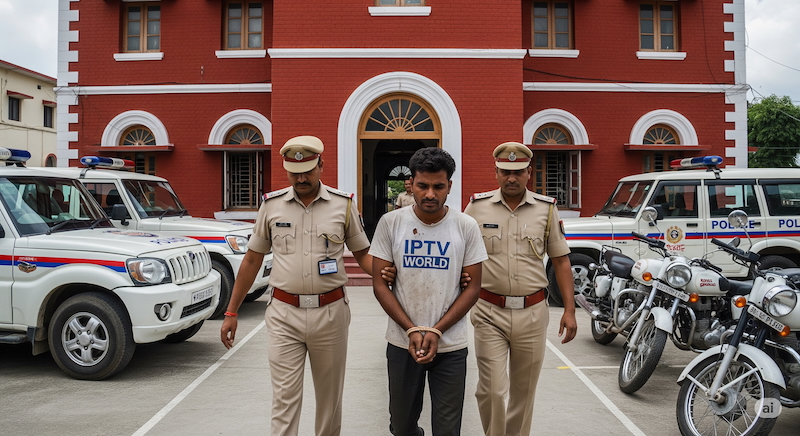
MUMBAI: Indian authorities have dismantled an international television piracy network that streamed over 10,000 channels—including banned Pakistani networks—to customers via WhatsApp groups, in what investigators describe as the first fully exposed cross-border content theft operation.
Police in Ghaziabad registered a case against a 35-year-old businessman accused of running the illicit internet protocol television (IPTV) service in collaboration with handlers across the border, according to StoryBoard18, which first reported the investigation.
The probe began when officers from Tilamod Police Station traced a suspicious WhatsApp group facilitating illegal access to premium television channels. The investigation led to the blocking of 53 domains distributing pirated content under the “IPTV World” brand name.
According to the First Information Report filed on 27 July, the accused illegally streamed copyrighted content from JioStar India Pvt Ltd and its OTT platform JioHotstar without authorisation. The pirated catalogue included popular Indian channels such as Star Plus HD, Star Bharat HD and Colors HD, alongside Pakistani networks Hadi TV and Noor TV—the latter raising national security concerns.
Investigators discovered the accused coordinated with a Pakistan-based pirate, paying in cryptocurrency to obtain copyrighted material. The service reached customers primarily through WhatsApp groups, with payments processed via UPI accounts.
“The modus operandi of the accused was to provide services through WhatsApp groups, which became the key lead in our investigation,” said a senior officer involved in the probe.
The complaint filed by JioStar accused IPTV World of bypassing technical protection measures and hosting pirated content on servers linked to providers including Hostinger and GoDaddy, violating copyright, information technology and criminal laws.
The case represents a breakthrough in understanding digital piracy’s mechanics. JioStar’s John Doe lawsuit before the Delhi high court led to the voluntary appearance of the service provider’s owner, who agreed to a permanent injunction and disclosed the network’s complete operations, including business associates, 300 infringing URLs, and distribution platforms.
These disclosures revealed coordinated cross-border collaboration, cryptocurrency payments, and systematic circumvention of content protection measures. The entire operation—from content sourcing to distribution via WhatsApp and Facebook—was organised from Pakistan.
The investigation marks the first time authorities have fully mapped premium content piracy’s complete lifecycle, from origin to delivery. It exposes how digital platforms initially designed for communication have become conduits for large-scale intellectual property theft.
The case highlights broader challenges facing India’s digital entertainment industry as streaming services proliferate. Content owners face sophisticated piracy networks that exploit encrypted messaging platforms and cryptocurrency payments to evade traditional enforcement mechanisms.
In a related development, police in Rajasthan have registered a separate case against cable operator Hazi Ali for allegedly broadcasting JioStar channels without proper licensing. The ministry of information and broadcasting had cancelled his broadcasting licence in 2024 for regulatory violations, yet he reportedly continued transmitting copyrighted content.
The crackdown reflects heightened enforcement efforts as India’s entertainment industry pushes authorities to tackle digital piracy more aggressively. With streaming revenues at stake and national security concerns over unauthorised Pakistani content, expect more coordinated action against cross-border piracy networks.
Whether these enforcement successes can meaningfully dent the broader piracy ecosystem remains uncertain. As investigators shut down established networks, new operators typically emerge using evolved techniques to evade detection.
The cat-and-mouse game between content owners and pirates continues, now with WhatsApp groups as the unlikely battlefield.

Indian TV is no longer just for Indian households. Viewers from the U.S., UK, Canada, and Australia are tuning in like never before. Shows from Mumbai, Delhi, and Hyderabad are building global fanbases. This isn’t just Bollywood spillover. People are watching daily soaps, thrillers, game shows, and reality series. And they’re sticking around.
So what’s pulling international viewers in? What shows should they watch? This guide answers that. It breaks down the trends, the titles, and how to jump in.
Why Is Indian TV Getting Global Attention?
Streaming platforms made Indian TV easier to find. Netflix, Amazon Prime Video, and Hotstar now offer subtitles, better curation, and global access. Shows that were once stuck behind time zones and language barriers are now front and center.
Viewers Want Emotion and Drama
Western shows often focus on subtlety. Indian shows bring the opposite. Big drama. Strong emotions. Larger-than-life characters. That contrast is refreshing for new viewers.
A UK college student said, “I started watching Anupamaa as a joke with my roommate. Three episodes in, we were crying and yelling at the screen.”
Shows like Yeh Rishta Kya Kehlata Hai and Kundali Bhagya are slow-paced but heavy on relationships and emotion. For some, that’s the point. They want time with the characters.
Stories Feel Personal
Family tension. Cultural values. Sacrifice. Indian TV hits these themes hard. And it turns out, they’re universal. You don’t need to be Indian to connect with a mother trying to support her kids, or a couple fighting family pressure.
A viewer in Toronto explained, “My mom is Egyptian, not Indian. But when we watched Ghum Hai Kisikey Pyaar Meiin, we both got it. The aunties. The guilt. The family drama. It felt like home.”
What Genres Are Popular with International Viewers?
Soap Operas and Dramas
This is the big one. Indian daily soaps are still dominating. Viewers love the long arcs and family themes.
Top choices in 2025:
● Anupamaa (Hotstar)
● Imlie (JioCinema)
● Parineetii (Voot)
These shows air nearly every day in India but are available with subtitles overseas. New fans binge through hundreds of episodes in weeks.
Mythology and History
Viewers want stories they haven’t seen before. Indian TV delivers with epics and historical tales. Shows like Mahabharat and Chakravartin Ashoka Samrat bring Indian legends to life with colorful costumes and massive sets.
Netflix recently added a remastered version of Ramayan and saw a 40% spike in South Asian sign-ups in the UK that month.
Crime and Thriller
This is where Indian TV is gaining new fans fast. Indian police procedurals and crime thrillers are picking up steam. Series like Crime Patrol, Sacred Games, and Delhi Crime bring suspense, corruption, and high-stakes investigations.
Even fictionalized stories like Asur and Rudra offer a mix of culture, mystery, and edge.
One American fan posted, “Asur was way better than most crime shows on HBO. It’s weird, smart, and totally messed up in a good way.”
Reality and Game Shows
People outside India are discovering the chaos and charm of Indian reality TV. Whether it’s cooking, dancing, or singing, the emotion is always on full blast.
Top picks:
● Indian Idol
● Dance Deewane
● Kaun Banega Crorepati (India’s version of Who Wants to Be a Millionaire?)
These shows often go viral on YouTube too. Full clips with subtitles bring in millions of views from outside India.
What Makes Indian TV Different?
Indian TV doesn’t hold back. Characters cry hard, love harder, and argue louder. The sets are colorful. The music is constant. The stakes feel huge even when the plot is small.
New fans enjoy how immersive it is. Watching Naagin might feel like stepping into a whole other world of shape-shifting serpents and epic curses, but that’s exactly why people like it.
Another key difference is the length. Indian series can run for years. Some have thousands of episodes. That’s a lot of screen time, but it also means you get attached.
How Can Overseas Viewers Start Watching?
Use Subtitled Streaming Platforms
The best platforms for Indian TV in 2025:
● Hotstar: Great for StarPlus and Star Bharat shows
● Netflix India: Best for crime, thrillers, and originals
● Amazon Prime Video: Wide mix of drama and comedy
● ZEE5: Strong in regional content (Marathi, Bengali, etc.)
● Sony LIV: Good for soaps and sports
Most of these platforms offer subtitles in English. Some are adding French, Spanish, and Arabic too.
Don’t Start in the Middle
Some shows have long histories. Jumping in at episode 1472 won’t help. Find recap videos or start with new seasons. YouTube channels often post “story so far” clips.
Explore Different Languages
Indian TV isn’t just Hindi. Try Tamil, Telugu, Marathi, or Malayalam shows. Each brings a different style and pace.
One Australian viewer shared, “I watched Koodevide (Malayalam) with subs. I don’t speak a word, but the acting pulled me in. Now I’m learning bits just to follow better.”
What’s the Cultural Impact?
As more people watch Indian TV globally, it’s shaping how India is seen. Not just Bollywood, but real India. Families, food, arguments, humor. This kind of media spreads soft power.
It also boosts language interest. Duolingo reports that Hindi and Tamil enrollments from U.S. users rose 22% year-over-year in early 2025.
And it builds community. Facebook groups, Reddit threads, and TikTok edits connect fans across borders. Some viewers even learn how to remove google search result pages to hide spoilers before watching new episodes.
Final Thoughts
Indian TV is loud, long, and full of life. That’s why global viewers love it. In 2025, it’s not just about watching from afar. It’s about joining the party.
If you’re new, start with Anupamaa or Delhi Crime. Then try a regional language show. Explore genres. Share clips. Get hooked.
Because once you’re in, you’re in. Indian TV doesn’t just tell stories. It pulls you into them.


MIB sets OTT accessibility rules, mandates captions and audio description

Boney Kapoor acquires remake rights of Tamil political satire Thalaivar Thambi Thalaimaiyil

Netflix India names Rekha Rane director of films and series marketing

Zabeen signs off from TV9 after shaping the network’s public voice

Dhawan steps up to bat for Delhi’s grassroots sports push

Orient Beverages pops the fizz with steady Q3 gains and rising profits

Cheekatilo shines in the dark with record debut on Prime Video

These ’90s fashion trends are making a comeback in 2017
The final 6 ‘Game of Thrones’ episodes might feel like a full season
According to Dior Couture, this taboo fashion accessory is back
The old and New Edition cast comes together to perform
Phillies’ Aaron Altherr makes mind-boggling barehanded play
Uber and Lyft are finally available in all of New York State
Disney’s live-action Aladdin finally finds its stars
MIB sets OTT accessibility rules, mandates captions and audio description
Boney Kapoor acquires remake rights of Tamil political satire Thalaivar Thambi Thalaimaiyil
Netflix India names Rekha Rane director of films and series marketing
Zabeen signs off from TV9 after shaping the network’s public voice
Dhawan steps up to bat for Delhi’s grassroots sports push
Orient Beverages pops the fizz with steady Q3 gains and rising profits
Cheekatilo shines in the dark with record debut on Prime Video
-

 News Broadcasting1 week ago
Mukesh Ambani, Larry Fink come together for CNBC-TV18 exclusive
-

 News Headline1 month ago
From selfies to big bucks, India’s influencer economy explodes in 2025
-
 iWorld5 months ago
Billions still offline despite mobile internet surge: GSMA
-

 Applications2 months ago
28 per cent of divorced daters in India are open to remarriage: Rebounce
-

 iWorld2 weeks ago
Netflix celebrates a decade in India with Shah Rukh Khan-narrated tribute film
-

 Hollywood7 days ago
The man who dubbed Harry Potter for the world is stunned by Mumbai traffic
-

 News Headline2 months ago
Game on again as 2025 powers up a record year and sets the stage for 2030
-
 I&B Ministry3 months ago
India steps up fight against digital piracy
