
Financials
STBs apart, industry feels left in the cold

 |
| STBs apart, industry feels left in the cold |
|
NEW DELHI/MUMBAI: While the 2008-09 budget has largely left the media and entertainment industry untouched, Finance Minister P Chidambaram announced some measures that are expected to benefit the cable, direct-to-home (DTH) and IPTV growth in the country. Mixed bag for DTH, Cable Dish TV MD Jawahar Goel feels the DTH industry has something to feel positive about. “At present there is zero duty on import of set top boxes. Now the Finance Minister has also removed duty on import of specified parts of STBs. This will provide leverage and opportunity for DTH players to evaluate the option of manufacturing STBs locally,” he says. Tata Sky MD and CEO Vikram Kaushik, however, doesn’t agree that there is too much for the sector. “The benefits are so insignificant that the impact will be almost homoeopathic,” he says. There is only a relaxation on some of the components for manufacture of the STBs. “We had expected much more, especially significant reduction on excise duty, which has been denied us,” Kaushik adds. The issue of double taxation, with the entertainment industry having to pay both entertainment as well as service tax, has been left unchanged.  Goel, however, gives a more detailed rationale behind being upbeat. He argues that since the CVD (countervailing duty) is reduced from 16 per cent to 14 per cent, the cost of the Consumer Premises Equipment (CPE) will go down and will benefit the DTH operator who are already providing considerable subsidies to consumers. The new provision introduced by FM in Service Tax, stating that any item being provided under the “Right to Use” to the customer but not covered under VAT, will now be covered under ‘right to use.’ This is a move towards the Goods and Service Tax (GST) regime, Goel points out. He says this will partly address the issue of multiple taxation on the DTH industry, where presently along with the service tax, VAT was also being charged on the CPE, though these were being given on rental or lease models. “This will help the DTH industry to give more options to the consumers to acquire the CPE on rental, which has been stipulated by Trai in its Quality of Service requirements. It will benefit the industry by taking the CENVAT credit of the service tax paid, thus positively impacting the cash flow of the capital intensive businesses,” Goel says. The multi-system operators (MSOs) are more cautious. Says Hathway Cable and Datacom MD and CEO K Jayaraman, “It is too early to see how the STB vendors respond to the duty waiver of some components and set up manufacturing bases in India. This will succeed only if the foreign vendors start producing here. Local manufacturers will also feel encouraged but they have to comply with the conditional access vendor.” The MSO Alliance is not happy with the way the demands of the industry have been ignored, especially on the issue of rationalisation of taxes. Says MSO Alliance secretary Avnindra Mohan, “There is marginal benefit on some STB components; it would be of some use only when Indian companies start producing STBs on a large scale. As it is, 90 per cent of the STBs are being imported today,” he holds. The Cable Operators Federation of India (COFI) is deeply dissatisfied with the budget, saying there is nothing in it for the local cable operators. Says COFI president Roop Sharma, “There is no provision of making digital headends cheaper. The marginal help to STB manufacturing would only be good for the DTH players and also of IPTV. But there are only 500000 STBs in the Cas (conditional access system) notified areas. So it hardly makes any difference to us. What the cable industry needed was incentives for digital headends.” Broadcasters feel digitalisation should get the push Broadcasters, on the other hand, feel the budget is positive in what little it has to offer. Says Star India CEO Uday Shankar, “The incentives provided for STB manufacture is a welcome sign. In fact, anything that goes towards digitalisation is good because this country is a victim of choked distribution pipes on analogue systems.” Agrees Global Broadcast News joint MD Sameer Manchanda, “The government has done something for the STBs and also for the convergence equipment. Since this is good for digitalization, it is also good for us as broadcasters.” Sums up INX Media founder and CEO Indrani Mukerjea: “The budget has provided an impetus for growth to the Digital revolution – by reducing the duty on certain specific components of STBs to nil. I am also happy that duty on convergence products related to the media and entertainment industry has been halved. Of course, I wish there had been a reduction in corporate tax rates for the industry too.” Film industry feels left in the cold The film industry has mixed feelings. Speaking for the multiplex operators, E-City Ventures MD Atul Goel has this to offer. “The impact on the entertainment industry would be limited, except for the customs duty reduction on equipment from 10 per cent to 5 per cent. However, we are happy to note, from the Cenvat reduction, that there is a direction towards convergence of indirect tax rates from the existing inefficient regime. We sincerely hope that the Empowered Committee of Finance Ministers recommend a substitution of entertainment tax levied on cinemas with GST (to be rolled out by 2010).” Prime Focus CFO Nishant Fadia feels the Indian film and entertainment industry should have liked special tax concessions and a reduction in corporate tax. But, on the positive side, he says, reduction of CENVAT in import duties and customs duty on equipments are steps in the right direction. Nothing for FM radio FM broadcasters feel the budget has nothing specific to offer to spur the sector’s growth. Says Big FM COO Tarun Katial, “The service tax needed to reduce, especially since the radio industry is at its infancy and has great employment and media opportunities in the semi-urban and rural markets.” Radio City CEO and AROI president Apurva Purohit believes reduction in base rate of excise duty from 16 to 14 per cent is positive for the industry overall. But there is little for the sector. She says, “Development and supply of content for use in advertising purposes has been brought under service tax net. This is likely to see an increase in advertising cost bringing a slowdown in advertisement revenues to broadcasters and print media which will ultimately be passed on to the consumer.” |



MUMBAI: Godrej Industries’ June quarter numbers read like a mixed-genre script, a drama of losses on the standalone front, but a blockbuster on the consolidated stage. For Q1 FY26, the conglomerate clocked a consolidated net profit of Rs 725.35 crore, up from Rs 640.86 crore in the year-ago quarter and a sharp leap from Rs 416.13 crore in Q4 FY25. The earnings ride was powered by total income of Rs 5,718.97 crore, a 9 per cent rise year-on-year, buoyed by its FMCG, agri-business, chemicals, and real estate subsidiaries.
Segmental muscle showed in the expense sheet too cost of materials consumed stood at Rs 2,420.69 crore, while purchases of stock-in-trade rose to Rs 143.79 crore. Inventory changes delivered a significant positive swing at Rs 3,349.68 crore (credit), compared with Rs 2,011.01 crore last year, cushioning the operating line.
Finance costs came in at Rs 113.53 crore, with depreciation at Rs 576.29 crore. Profit before tax surged to Rs 1,058.56 crore from Rs 872.61 crore in Q1 FY25.
However, on a standalone basis, it was a different story, the company posted a net loss of Rs 29.98 crore, reversing from a Rs 105.26 crore profit a year earlier, hurt by higher input costs and flat revenue growth (Rs 1,018.29 crore versus Rs 986.45 crore in Q1 FY25).
Margins on the consolidated level held strong, with operating margin at 8.90 per cent and net profit margin at 16.26 per cent, an improvement from last year’s 15.09 per cent. Earnings per share stood at Rs 10.37, more than double the Rs 5.44 posted in the March quarter.
With a net worth of Rs 10,137.54 crore and debt-equity ratios steady (gross at 6.42), Godrej Industries appears well positioned for its next growth leg, even if the standalone arm needs a few scenes rewritten.
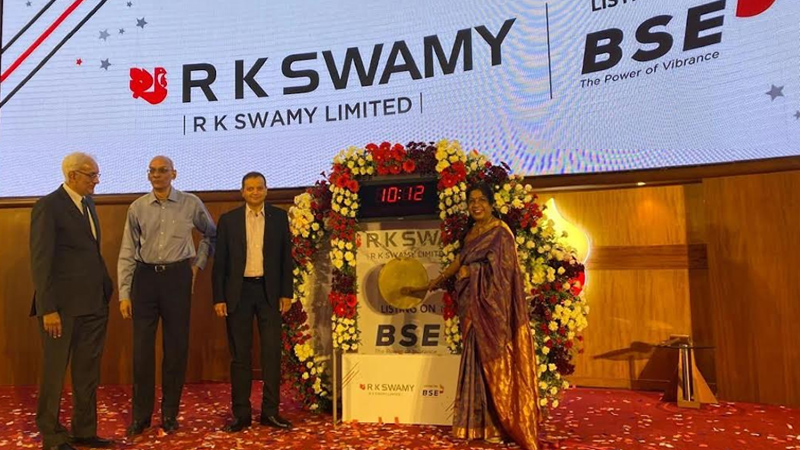
MUMBAI: R K Swamy seems to have found the right script for Q1, a plot with steady revenues, tighter expenses, and a profit scene worth watching. The integrated marketing services player posted a consolidated net profit of Rs 287.46 lakh for the quarter ended 30 June 2025, up from Rs 217.93 lakh in the year-ago period. Revenue from operations stood at Rs 7,756.79 lakh, with total income touching Rs 8,024.81 lakh, powered by Rs 268.02 lakh in other income.
Operational expenses rose to Rs 2,494.25 lakh from Rs 2,173.20 lakh, while employee costs were slightly higher at Rs 3,182.71 lakh. Other expenses climbed to Rs 1,468.53 lakh. EBITDA came in at Rs 879.32 lakh, well ahead of the Rs 703.22 lakh posted last year, though below the March quarter’s Rs 1,972.21 lakh.
Finance costs and depreciation stood at Rs 85.45 lakh and Rs 433.52 lakh respectively, leading to a profit before tax of Rs 360.35 lakh. Total tax expenses were Rs 72.89 lakh.
The quarter also saw Rs 5,400 lakh of IPO proceeds fully deployed for working capital, while Rs 3,626.22 lakh earmarked for general corporate purposes has also been utilised. However, Rs 5,458.43 lakh remains unutilised including Rs 1,098.50 lakh for a planned DVCP Studio, Rs 2,838.20 lakh for IT infrastructure across R K Swamy and its subsidiaries Hansa Research and Hansa Customer Equity, and Rs 1,521.73 lakh for new CEC and CATI facilities.
On a standalone basis, profit for the quarter was Rs 134.16 lakh versus Rs 35.18 lakh last year, with revenue from operations at Rs 3,283.06 lakh.
While adland has seen its fair share of headwinds, R K Swamy’s Q1 suggests the company is positioning itself for a year of expansion with big-ticket infrastructure investments waiting in the wings to take centre stage.
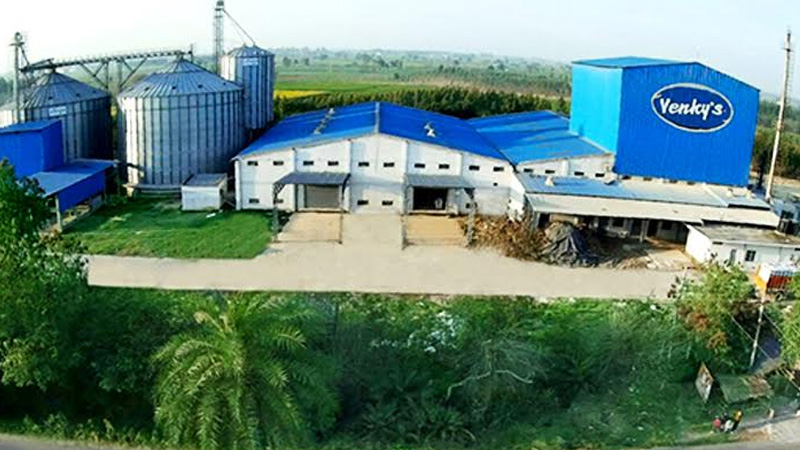
MUMBAI: In the corporate coop this quarter, Venky’s (India) Ltd has laid a golden egg. The poultry-to-oilseed giant reported a consolidated net profit of Rs 15.83 crore for the quarter ended 30 June 2025, up from Rs 15.78 crore a year ago, despite battling feed cost pressures and softer margins in its core poultry segment.
Revenue from operations climbed 7.15 per cent year-on-year to Rs 865.83 crore, compared with Rs 808.02 crore in Q1 FY25. Total income stood at Rs 877.52 crore, buoyed by Rs 11.69 crore in other income.
The company’s poultry and poultry products division remained the main profit roost, bringing in Rs 475.66 crore in sales, followed by oilseed at Rs 318.02 crore and animal health products at Rs 96.98 crore. Segment results showed poultry still feeling the heat with a loss of Rs 5.55 crore, while animal health (Rs 23.18 crore) and oilseed (Rs 10.05 crore) kept the ledger in the black.
Expenses rose to Rs 855.75 crore from Rs 717.63 crore last year, driven by higher material costs (Rs 553.08 crore) and feedstock price volatility. Finance costs edged up to Rs 4.29 crore, while depreciation came in at Rs 9.21 crore.
Earnings per share for the quarter stood at Rs 11.24, compared with Rs 11.24 in the previous quarter and Rs 9.44 a year earlier. On the balance sheet, total assets grew to Rs 2,09,115 lakh, while liabilities were steady at Rs 59,975 lakh.
While the poultry flock faced headwinds, the diversified revenue mix helped Venky’s keep its Q1 nest egg intact proving that in this business, you can still rule the roost if you spread your wings wide enough.


Mukesh Ambani, Larry Fink come together for CNBC-TV18 exclusive

Nielsen launches co-viewing pilot to sharpen TV measurement

Netflix celebrates a decade in India with Shah Rukh Khan-narrated tribute film

Delhivery chairman Deepak Kapoor, independent director Saugata Gupta quit board

Meta appoints Anuvrat Rao as APAC head of commerce partnerships

Brnd.me enters Europe as haircare brands power global expansion

TechnoSport taps quick commerce with launch on Slikk’s 60-minute platform

These ’90s fashion trends are making a comeback in 2017
The final 6 ‘Game of Thrones’ episodes might feel like a full season
According to Dior Couture, this taboo fashion accessory is back
The old and New Edition cast comes together to perform
Phillies’ Aaron Altherr makes mind-boggling barehanded play
Uber and Lyft are finally available in all of New York State
Disney’s live-action Aladdin finally finds its stars
Mukesh Ambani, Larry Fink come together for CNBC-TV18 exclusive
Nielsen launches co-viewing pilot to sharpen TV measurement
Netflix celebrates a decade in India with Shah Rukh Khan-narrated tribute film
Delhivery chairman Deepak Kapoor, independent director Saugata Gupta quit board
Meta appoints Anuvrat Rao as APAC head of commerce partnerships
Brnd.me enters Europe as haircare brands power global expansion
TechnoSport taps quick commerce with launch on Slikk’s 60-minute platform
-
 News Broadcasting3 days ago
Mukesh Ambani, Larry Fink come together for CNBC-TV18 exclusive
-
 iWorld7 days ago
Netflix celebrates a decade in India with Shah Rukh Khan-narrated tribute film
-
 MAM3 months ago
HoABL soars high with dazzling Nagpur sebut
-
 MAM3 days ago
Nielsen launches co-viewing pilot to sharpen TV measurement
-
 iWorld12 months ago
BSNL rings in a revival with Rs 4,969 crore revenue
-
 I&B Ministry3 months ago
India steps up fight against digital piracy
-
 iWorld3 months ago
Tips Music turns up the heat with Tamil party anthem Mayangiren
-

 Film Production1 week ago
UFO Moviez rides high on strong Q3 earnings
