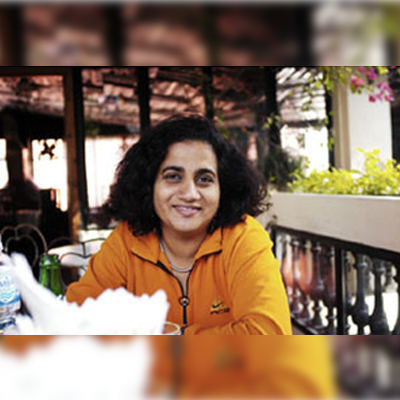
Things are heating up at the Singapore-based television software production house Verite Productions. Established four years ago to provide quality non-fiction programming for television networks in and outside Singapore, it diversified last year into fiction by producing a drama.
Verite is now looking to set up shop in India. The Indian venture is aimed at facilitating productions between Indian, Singapore and other international partners. Promoted by Rehina Pereira, the company expects to hit the $1 million mark in terms of business generated.
The company also claims to have produced about 15 series and 100 hours of local programming for channels and organisations like the Asian Civilisations Museum and the Singapore History Museum.
Through email, indiantelevision.com’s correspondent Ashwin Pinto caught up with Pereira to find out more about her company, its plans as well as the changing trends on television.
Could you talk about the proposed India venture?
My projected timeline for establishing a division in India is December 2004. The plan is keep to our aim of diversifying and expanding our operations. South Asia, especially India, is an exciting market for television and film with an immense talent base and huge potential for growth.
I look forward to doing productions and co-productions of international standards for the Indian market in India and overseas. I am in discussions with some partners on possible collaborations.
|
Could you dwell on the nature of the television shows that your company is planning for India? I believe that Verite Productions is in a unique position to do programming that travels across Asia, America and Europe for the Indian market. Being based in Singapore, it is very easy for me to handle the logistics of such a programme. These programmes will be of interest to a multi-national, multi-cultural audience. Our programmes will not only cater to Asian audiences we have engaged over the last four years; they will also be directed at the large Indian diaspora in the US and Europe. These programmes will not only offer a host of interesting backdrops and locations but will also be varied in terms of content. We also look forward to tapping into the talent base in all these countries that has been largely untapped and unexplored. In fact, Singapore has an open economy with excellent infrastructure and trading links derived from its entrepot history. The Media Development Authority of Singapore is offering attractive incentives to local companies to make Singapore a media hub for Asia and I plan to take advantage of that. |
||
|
Which are the Indian channels that you are talking with for telecasting shows? |
||
|
Are you also looking at doing co-productions with Indian production companies? Basically, it would be a win-win situation for me to get into arrangements with companies who have a base in India and are keen to explore international markets. Singapore is well connected to India and offers a great platform for launching international programming to diverse audiences, both inside and beyond Singapore. Having worked with the media in India and having been a keen observer of trends in Indian television culture, I have a good idea of what clicks – both in terms of audience interest and of management styles and production needs. |
||
|
Besides Hindi would you also look at making shows in regional languages like Tamil? |
||
|
||
|
What recent trends have been noticed in television programming in Singapore and other Asian countries? Indian films, stars and programmes are also of great interest not only to the Indian audiences here but also to the Malay audiences in South East Asia. When we were filming in Central Java early this year we had groups of young people come up to us and sing songs in perfect Hindi! |
||
|
In India, each week the saas-bahu soaps rule the roost. In this kind of an environment what scope do you see for documentaries, travelogues and non-fiction shows which your company specialises in? Indian consumers are becoming increasingly globalised in their tastes. I think there is a large market for travel/cooking shows where the audience (even your afternoon bored housewives) not only get to see different places and cultures but are exposed to cuisines from around the world. Nothing like adding an exotic new Thai salad for the next kitty party, right? |
||
|
How many shows do you have on air at the moment and on which channels? The interesting thing about this show was that we resurrected one of Singapore’s biggest talents called Kumar. He is a gay cross dresser who has his own very popular transvestite cabaret in Singapore. Of course in our programme he is dressed in modest kurtas; after the huge success of this show he has been offered roles in at least 20 different productions. He is incredibly talented and often travels to other countries, including India, to do his gigs. I would love to do a show for the Indian market hosted by Kumar and a popular host from India. We also have a children’s programme for pre-schoolers on MediaCorp TV 12 that combines elements of animation, karaoke songs and puppet stories. In the last four years we have produced travel and cooking programmes shot in South Asia and South East Asia, a children’s programme filmed in India, Singapore, Australia and America. In a pipeline is a drama series (thriller) spanning South and South East Asia. |
||
|
Could you talk about the fictional drama that you produced last year? We are currently working on Life. This is a 13-episode hour-long English drama series for SPH MediaWorks due for telecast in July this year. |
||
|
What are the main challenges you face as a producer? The other challenge is in building lasting relationships with broadcasters and networks. We have build a great working relationship with the networks in Singapore and look forward to forging lasting alliances with media players in India as well. |
||
|
||
|
Could you give me an idea of the size of the production staff and the production facilities at your disposal? This way I keep my overheads low and get very high quality from a skilled group of technicians, writers, producers and directors. At one point I may have as many as 50 people working or as few as 10. While most of my talent comes from Singapore, I also use talent from India, Australia, America and Malaysia. |
||
|
What are the major projects you are currently working on for the international market? |
||
|
What are the new programming genres that you are looking at in fiction and non fiction? |
||
|
India is poised to witness a boom in the kids channel arena with the likes of Animax and Disney poised to enter. What are the main qualities required for a kids programme to work? For a children’s programme to work it has to be simple, not simplistic. It’s the concept that they have to get hooked on to. The writing is very, very important. Music and rhyme always works. Barney, Sesame Street are all very simple concepts that work. Most of our kids watch all these shows. I look forward to the day when kids all over the world will watch Asian children’s programming promoting Asian values, music, art forms and Asian talent. And the business of children’s programming is never just about television. It is also about videos, DVDs, audio CDs, books and merchandise. |
||
| Besides India and Singapore which are the other countries that you are looking at to grow the business? Right now I am looking at Australia, New Zealand, Malaysia and Indonesia. In the next phase it will be the US and Europe. |
||
Leave a Reply