
BBC World
“Satiating viewers’ news curiosity a challenge”

|
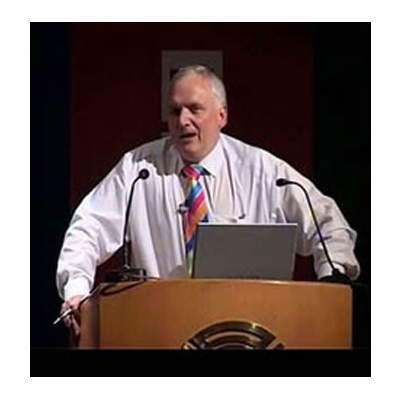
BBC World’s veteran newscaster Nik Gowing is a multi-faceted personality. Not only is he a founding committee member for the Rory Peck Trust, which campaigns for the interests of freelance TV camerapersons, but is a governor of the Ditchley Foundation, and a member of two steering committees – the British-German Konigswinter Committee and the Strategy Committee of the Project on Justice in Times of Transition at Harvard University. From 1996, when he joined the Beebs, to March 2000, Nik was principal anchor for the 90-minute weekday news programme, The World Today, and its predecessor, NewsDesk. He was a founding presenter of Europe Direct and has been a guest anchor on both HARDtalk and Simpson’s World. He is also a regular moderator of the Sunday news analysis programme Dateline London. Nik draws on both his extensive reporting experience over two decades in diplomacy, defence and international security, and his presentation and chairing skills. He has been a main anchor for much of BBC World’s coverage of major international crises, including Kosovo in 1999, and the Iraq war in 2003. Nik was on air for six hours shortly after the twin towers were hit in New York City on 11th September 2001. BBC World’s coverage of the terrorist attacks on the US won the 2002 ‘Hotbird’ Award for the Best News Channel. He fronted coverage of the unfolding drama of Diana, Princess of Wales’ accident in Paris in August 1997 and made the announcement of her death to a global audience estimated at half a billion. He also anchors special location coverage of major international events, and chairs BBC World Debates at the World Economic Forum in Davos and the annual Nobel Awards in Stockholm.
Before joining the BBC, Nik was a foreign affairs specialist and presenter at ITN for 18 years. From 1989 to 1996 he was Diplomatic Editor for the one-hour nightly news analysis programme, Channel Four News, from ITN in London. His reports were aired frequently by the MacNeil/Lehrer NewsHour on PBS, NBC’s SuperChannel and CNN International. His reporting from Bosnia was part of the Channel Four News portfolio, which won the BAFTA ‘Best News Coverage’ award in 1996. Independently of his work for BBC News, Nik has developed a sought-after analytical expertise on the management of information in the new transparent environments of conflicts and emergencies. No wonder, he was called in by the Delhi-based Indian Institute of Mass Communication (IIMC) to lecture journalism students on the tyranny of handling real time information in the age of information super-highway. The lecture was delivered on 8 April, 2005.  An avid outdoor sports enthusiast, Nik spoke to Indiantelevision.com’s Manisha Bhattacharjee during his India visit. Excerpts:
You’ve been delivering lectures recently. What’s the difference between lecturing and presenting NEWS? People watch news channels because they are curious and they want the curiosity answered. We want to articulate questions in viewers’ minds and answer them…I think that’s a big challenge. BBC is unleashing a rebranding strategy. What kind of shows would you be presenting now? Can you share your experience of being with the BBC? Does technology exert pressure on journalists? What are the challenges reporters and presenters face when the channel is in the process of rebranding? Your vast experience ranges from diplomacy, defence and international security, over two decades. How has your experience been as a reporter and a presenter? Was 9/11 a turning point in your life?
Recently, Ficci-Frames 2005 ended in Mumbai and since you’ve chaired sessions at various forums like BBC World debates at the World Economic Forum in Davos and the annual Nobel Prize awards in Stockholm, do you think such fora throw up solutions to any problems? Of course, they do. Yeah…but people can decide not to go to the forums if they don’t want to. Of course, bringing people together is valuable because everyone learns something. There are problems…it is about airing new ideas and being in the business of journalism of reflecting new ideas and new thinking and it is about understanding the ongoing process and being well-informed. This year, the World Debate that I chaired, was about the image of America in the world after 9/11 and after Iraq and it was pretty critical of America. And, look within four weeks President Bush announced his new assistant secretary for public emergency because of his awareness that the American image is too negative. That was exactly what we were reflecting as any good journalist would. We were reflecting the concern around the world about America’s image. How you do perceive broadcast journalism is shaping up in India? A recent survey has shown that CNN has a ‘sexier’ image than the BBC. What do you feel about this? Being a committee member on the Rory Peck Trust, which campaigns for the interests of freelance TV cameramen and women, what kind of interests do you safeguard? No such committee exists in India. DO you find this a serious lacuna? What has been the fallout of the Hutton Report related to the presence of WMD in Iraq and the subsequent attack by the allies of the US, including the UK? Being such a busy journalist your spare time must be a rare commodity. How do you spend these rare moments? |
||
MUMBAI: This is a piece of news that should be of great interest to European companies that advertise on television. BBC World is going from strength to strength in Europe. It announced that it has been the only news or business news channel to grow its monthly audience in the past year in the continent.
The beeb quoted the fifth release of the Europe 2000 series of research data.
The survey showed that BBC World is watched each week by 27 per cent of Europe’s senior business people. This amounts to more than 2.7 million viewers
The survey was conducted by IPSOS-RSL among upmarket adults 25+ across 16 European countries. The universe of 10.05 million represents the top four per cent of the population in this region.
The survey enables advertisers and agencies to plan, optimise and evaluate the performances of campaigns on TV channels, print and in local media across the continent, covering the upscale adult targets unavailable from traditional sources.
Europe 2004 also found that more executives watch BBC World each day (3.1 per cent), week (14.3 per cent) and month (27 per cent) than the two business news channels, Bloomberg and CNBC. Combined their figures are three per cent daily; 11.9 per cent weekly and 21.8 per cent monthly.
BBC World also surpasses those channels’ combined reach among CEOs (19.3 per cent weekly reach against their 16.8 per cent). Viewers to BBC World tuned in 31 per cent longer than they had in 2003. At 33 minutes per day, they now tune in 22 per cent longer than they are to the beeb’s American rival CNN. Viewers also watch BBC World 50 per cent longer than they do Euronews or CNBC.
BBC World airtime sales director Jonathan Howlett said, “Last month, EMS confirmed that BBC World was the fastest growing major news channel and attracts the most loyal audience. Europe 2004 reinforces this, with a significant increase in viewing levels for each viewer, and our highest share of the news audience on any of the five Europe 2000 series surveys.
“We expect the European Business Readership Survey, in which BBC World has invested for the first time, to confirm the trend later this year.”
MUMBAI: BBC World has signed eight significant new sponsorship agreements in India, for its programmes and short-form vignettes. The companies and the programmes with which they are associated are: Wheels – Power, Click Online and Sport Today – Tata Indigo Marina, India Business Report – Microsoft, Suzuki Grand Vitara and Tata, Holiday – Panasonic Ecam, FASTTRACK – Sony Handycam and ICICI Bank, Talking Movies – Hutch and Kenstar, University Challenge – Microsoft and Tata Sumo Victa, The Ultimate vignettes – Airtel Enterprises.
The new series of Wheels is being sponsored by Power for its entire 13-week run this autumn. Wheels has introduced an exciting interactive format with a team of new presenters and new segments.
Commenting on the sponsorship, HPCL manager – business development (retail) Sanjay Grover says, “We are happy to associate with the new series of Wheels for Power, the performance-enhancing petrol from the HPCL brand stable. The fast-paced, exciting and informative programme offers a great platform to communicate with our target audience of discerning vehicle owners who are also the core audience of the show.”
Among the other new sponsorships on the channel is a deal with Tata Indigo Marina, which has recently signed up to sponsor BBC World’s IT show Click Online and Sport Today, the daily round-up of sports news and results for six weeks from mid-October. Microsoft, Suzuki Grand Vitara and Tata are associating themselves with the business programming on the channel’s India Business Report strand until 14 November, while the travel destination show Holiday is being sponsored by Panasonic ECam.
BBC World’s weekly travel news analysis programme for the business and leisure sectors, FASTTRACK, is being jointly sponsored for six weeks by Sony Handycam and ICICI Bank. For three months from 20 October, Talking Movies, the weekly film review and magazine show, is being jointly backed by Hutch and Kenstar. Microsoft and Tata Sumo Victa will continue to sponsor University Challenge until 7 November.
In addition to these agreements around programming, Airtel Enterprises will sponsor The Ultimate, a new series of vignettes, that explore some of the most extravagant and opulent items and experiences available. These range from the world’s most famous diamond and the biggest private jet to the most adventurous safari and the most extravagant yacht.
BBC World India head of advertising sales Seema Mohapatra says, “We are extremely happy with the new sponsorships on BBC World, which reiterate the strong faith our advertisers have in the channel. The unique programming content and clutter-free environment enable advertisers to reach their target audience effectively and consistently. BBC World continues to provide its viewers with the best international news and analysis along with lifestyle programming, and I’m sure that innovative creative solutions for our advertisers within this strong programming environment will reinforce our commitment and long-standing association.”
MUMBAI: BBC World Service is launching a pan-Arab marketing campaign. The aim is to promote its radio service as well as online interactivity in the region.
The campaign kicks off today. The 11-week multi-media ad campaign launches across the Arab world with its core message, “Express your views – you don’t need permission”.
bbcarabic.com’s editor Hosam El Sokkari said that the BBC offers its Arabic-language audiences an opportunity to interact and comment on issues of regional and international importance. “Our interactive programmes cater for different types of audiences, covering issues from hard news and current affairs to youth and sport.
“Together with the Have Your Say section on bbcarabic.com these interactive programmes have turned BBC Arabic into a hub across the Arab-speaking world for a free and open debate and dialogue as people call us, email us and message us.”
The beeb issued a release saying that it used the agency of Young & Rubicam Dubai to produce creative work for the campaign while Mediaedgecia Dubai planned and bought media. The print campaign will appear in key pan-Arabic dailies, weeklies and monthly magazines reaching an estimated three million people. The campaign will also appear – in Arabic and English – on major and specialised online sites, and on BBC Arabic radio trails across the Arab world.



MIB sets OTT accessibility rules, mandates captions and audio description

Boney Kapoor acquires remake rights of Tamil political satire Thalaivar Thambi Thalaimaiyil

Netflix India names Rekha Rane director of films and series marketing

Zabeen signs off from TV9 after shaping the network’s public voice

Dhawan steps up to bat for Delhi’s grassroots sports push

Orient Beverages pops the fizz with steady Q3 gains and rising profits

Cheekatilo shines in the dark with record debut on Prime Video

Swiggy Instamart’s GOV surges 103 per cent year on year to Rs 7,938 crore

These ’90s fashion trends are making a comeback in 2017
The final 6 ‘Game of Thrones’ episodes might feel like a full season
According to Dior Couture, this taboo fashion accessory is back
ATN International brings ATN Bangla to Canada
The old and New Edition cast comes together to perform
Phillies’ Aaron Altherr makes mind-boggling barehanded play
MIB sets OTT accessibility rules, mandates captions and audio description
Boney Kapoor acquires remake rights of Tamil political satire Thalaivar Thambi Thalaimaiyil
Netflix India names Rekha Rane director of films and series marketing
Zabeen signs off from TV9 after shaping the network’s public voice
Dhawan steps up to bat for Delhi’s grassroots sports push
Orient Beverages pops the fizz with steady Q3 gains and rising profits
Cheekatilo shines in the dark with record debut on Prime Video
-
 e-commerce1 month ago
Swiggy Instamart’s GOV surges 103 per cent year on year to Rs 7,938 crore
-
 iWorld1 year ago
Kuku TV transforms India’s OTT space with vertical microdrama boom
-
 News Headline1 year ago
TRAI puts a ‘stop’ to unsolicited calls and messages
-

 News Headline2 months ago
From selfies to big bucks, India’s influencer economy explodes in 2025
-
 Comedy2 years ago
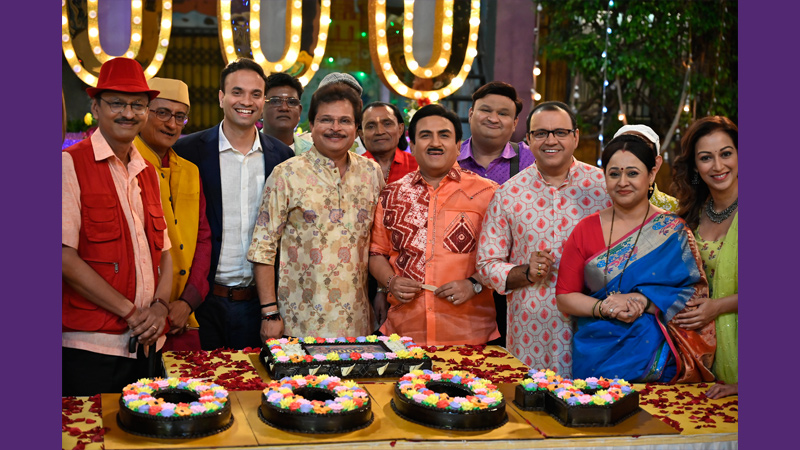
Taarak Mehta Ka Ooltah Chashmah celebrates 4,000 episodes
-
 MAM2 years ago
OpenAI joins C2PA steering committee
-
 News Headline1 year ago
Abhishek Bachchan joins as co-owner of European T20 Premier League
-
 News Headline2 years ago
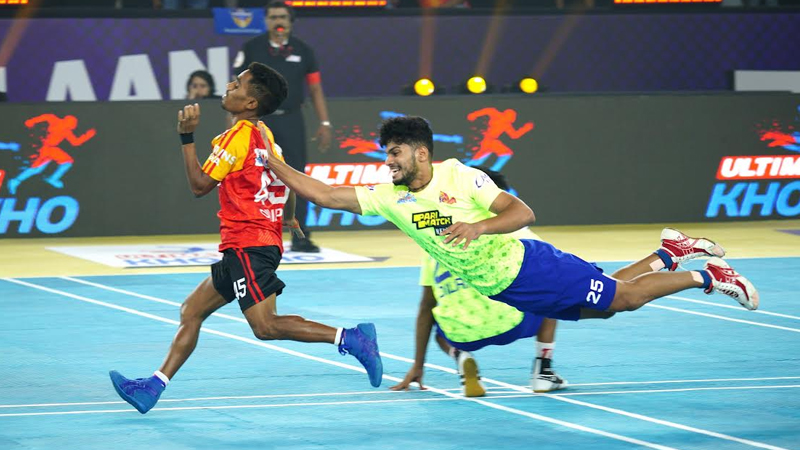
Odisha to host Ultimate Kho Kho Season 2 from December 24


