
DTH
Q2-2016: Indian DTH players replicate improved performance of previous quarters

Over the past two quarters, the DTH segment of the television carriage industry has posted improved performances as has been mentioned by Indiantelevision.com for Q4-2015 and Q1-2016.
The industry seems to have reached an inflection point in Q4-2015, with three players that have a combined market share of about 62 per cent posting improved results. The biggest player among them in terms of revenue as well as number of subscribers, Dish TV with about 27 per cent market share even reported a consolidated profit after tax (PAT) of Rs 34.94 crore in Q4-2015, a figure that helped wipe out the losses reported by the company for the previous three quarters. Dish TV reported consolidated PAT of of Rs 3.14 crore for FY-2015.
As a matter of fact, even Airtel DTH services reported a positive EBIT of Rs 8.1 crore for Q4-2015, as compared to a negative EBIT of Rs 36 crore in Q3-2015 and a negative EBIT of Rs 67.6 crore in Q2-2015. The three players have now reported improved performances for the quarter ended 30 September, 2015 (Q2-2016, current quarter).
Note: (1)100,00,000 = 100 lakh = 10 million = 1 crore.
(2) This paper covers only three of the seven DTH service providers in India (as had the previous two papers) since the other four– Reliance Digital TV, Sun Direct (about 97 lakh subscribers as on 31 March, 2015), Tata Sky and DD Free Dish are not listed directly on the bourses and their financial numbers are not available, unless the principals of these companies/segments chose to reveal them. The three players – Airtel DTH, Dish TV and Videocon d2h have already been covered in our earlier reports mentioned above.

(3) Some of the three players mention their financial as well as subscription numbers in millions in their financial reports/investor presentations and other documents that they make available publically. The financial numbers have been converted to Rs crore to an approximation of a single decimal place, though percentages have been mentioned to the second decimal place approximation.
(4) There could be some ambiguity about the market share of the three players. If one were to go by the latest numbers released by the Telecom Regulatory Authority of India (TRAI) in November 2015 for June 2015. TRAI’s indicator report says that the number of registered DTH subscribers as on 30 June, 2015 was 787.4 lakh. The combined subscription numbers of the three players as on the same day as reported by them individually was 343.12 lakh and hence the market share of these players works out to 45.58 per cent. However, TRAI’s report also says that the number of active DTH subscribers as on 30 June, 2015 was 397.4 lakh. Based on the second TRAI number, the combined total subscribe market share of the three players in this paper works out to 86.34 per cent. The figures of 27 percent and 62 per cent have been taken from Dish TV’s estimates.
(5) Videocon d2h EBIDTA numbers are adjusted – Q4-2015 Adjusted EBIDTA is before accounting for one off securities issue expenses of Rs 10.543 crore and Employee Share based Compensations cost of Rs. 2.974 crore towards provision of ESOP plan of 2014; Q1-2016 and Q2-2016 Adjusted EBITDA is before accounting for Employee Share based Compensations cost of Rs. 2.944 crore towards provision of ESOP plan of 2014
Please refer to the graphs below. Panel A, B and C and D show the Q2-2015, Q1-2016 and Q2-2016 combined performances of the three DTH operators in this report and then in alphabetical order- Airtel DTH, Dish TV and Videocon d2h respectively. Panel E shows the ARPU value trends and Panel F shows the Monthly Subscriber Churn of the three players over 6 consecutive quarters starting Q1-2015 until Q2-2016.
Please refer to Panel A in the graphs below. The combined revenues of the three players in the current quarter grew 16.20 per cent year on year (YoY) to Rs 2149.32 crore as compared to Rs 1849.60 crore and grew 3.12 per cent quarter on quarter (QoQ) as compared to Rs 2084.28 crore. EBIDTA increased 47.96 per cent YoY in Q2-2016 to Rs 680.30 crore (31.65 per cent margin) as compared to Rs 459.8 crore (24.86 per cent margin) and grew 1.90 per cent QoQ as compared to Rs 667.6 crore (31.65 per cent margin). Hence, EBIDTA margin declined slightly in the current quarter as compared to the immediate trailing quarter. Reported Combined Subscription numbers in Q2-2016 grew 12.77 per cent YoY to 351.16 lakh as compared to 311.4 lakh and increased 2.34 per cent QoQ as compared to 343.12 lakh.
All the three DTH operators reported growth in revenue and subscription numbers, both YoY and QoQ. Dish TV and Videocon d2h reported growth in YoY and QoQ EBIDTA, while Airtel DTH reported a YoY increase, but a QoQ drop in EBIDTA and EBIT for Q2-2016. In terms of subscription numbers as well as revenue, Dish TV is the biggest player among the three. While Videocon d2h has a slight edge in terms of subscription numbers over Airtel DTH, the latter has a slight edge over Videocon d2h in terms of revenue.
The average revenue per customer (ARPU) in the case of Airtel DTH increased QoQ to Rs 224 from Rs 222, it was flat in the case of Videocon d2h at Rs 205 and declined to Rs 171 in Q2-2016 from Rs 173 in the immediate trailing quarter in the case of Dish TV.
During the six consecutive quarter period starting Q1-2015 until the current quarter, ARPUs of all the three DTH players show linear increasing trends. Monthly Subscriber Churn also seems to be increasing in case of all the three players as is obvious from the linear broken trend lines in Panel F. As a matter of fact the Monthly Subscriber Churn reported by all the three players in the current quarter – Q2-2016 was the highest during a period spread over six consecutive quarters.

At the cost of repeating some of what has been mentioned above, let us see how these players have performed in Q2-2016.
Airtel DTH
Airtel DTH is a small segment of Indian telecom major Bharti Airtel Limited and its revenues constitute around four per cent of its parent company’s revenues and its EBIDTA is contributes just three per cent to overall EBIDTA. Capex investment however is in the seven per cent region of Bharti Airtel’s overall capex investments.
Please refer to Panel B in the graphs above. Airtel’s DTH segment reported 12.85 per cent YoY growth in its revenue for the current quarter at Rs 706.8 crore as compared to the Rs 623.6 crore in Q2-2015. QoQ, the segment’s revenue grew 3.21 per cent as compared to Rs 684.8 crore.
EBIDTA increased 53.24 per cent YoY to Rs 234.3 crore (33.15 per cent margin) as compared to the Rs 152.9 crore (24.41 per cent margin), but was 2.70 basis points lower than the Rs 240.8 crore (35.16 per cent margin).
Airtel DTH segment reported a positive EBIT of Rs 17 crore (2.41 per cent margin) in the current quarter as compared to a negative EBIT of Rs 67.7 crore in the corresponding year ago quarter. EBIT in the current quarter, however was less than half (declined by 59.04 per cent) as compared to the Rs 41.5 crore (6.06 per cent margin) in the immediate trailing quarter.
The company reported a 10.86 per cent YoY growth in its subscriber base to 105.76 lakh in Q2-2016 as compared to the 95.40 lakh in the corresponding year ago quarter and a 1.58 per cent QoQ growth from 104.12 lakh in the immediate trailing quarter. Monthly subscriber churn however increased to 1.3 per cent in the current quarter as compared to 1.1 per cent in Q2-2015 and 0.8 per cent in Q1-2016.
The company reported a slight increase in Average Revenue per User (ARPU) in Q2-2016 in terms of Indian rupees, but a flat ARPU in terms of the US dollar at $3.5, which means that ARPU in dollar terms declined due to the rise in the price of the dollar in Indian Rupees. ARPU in Q2-2016 increased to Rs 224 as compared to the Rs 220 in Q2-2015 and the Rs 222 in Q1-2016.
Monthly Subscriber churn in Q2-2016 at 1.3 per cent was higher than the 1.10 per cent in the corresponding year ago quarter and the 0.80 per cent in the immediate trailing quarter.
Airtel MD and CEO India & South Asia Gopal Vittal said, “Airtel’s revenue growth in India has accelerated to 13.3 per cent in Q2 on an underlying basis, the highest in the last 12 quarters. Our smaller businesses – home broadband, DTH and our business segment all continue to perform strongly.”
Dish TV
This is the third consecutive quarter that Dish TV has reported growth across important financial and operational parameters including operating revenues (Total Income from operations or TIO), PAT and subscription numbers. During the previous fiscal and its last quarter (year and quarter ended 31 March, 2015, Q4-2015), the Subhash Chandra led Essel group’s Dish TV Limited turned the corner with a consolidated PAT of Rs 3.14 crore and Rs 34.94 crore (margin 4.8 per cent) respectively. The company followed this up with even better numbers in the previous quarter (Q1-2015). Dish TV was probably the first among listed DTH companies in the country in FY-2015 and Q4-2015 to report a profit after tax as opposed to the operating profits reported by a segment of the other Goliaths for whom DTH services is just another small segment or group company.
Please refer to Panel C in the graphs above. For the current quarter ended 30 September, 2015 (Q2-2015), Dish TV has reported Operating revenue of Rs 752.42 crore, hence registering a 15.77 per cent YoY growth as compared to Q2-2015’s number of Rs 649.90 crore and a 2.14 per cent QoQ growth as compared to Rs 736.68 crore.
The company reported PAT of Rs 86.96 crore (11.56 per cent margin) for the current quarter as compared to a loss of Rs 14.2 crore in the corresponding year ago quarter and a whopping 60.41 per cent growth in profit as compared to the Rs 54.21 crore (7.36 per cent margin) in the previous quarter.
EBITDA in the current quarter increased 57.50 per cent YoY to Rs 255 crore (33.89 per cent margin) as compared to Rs 161.9 crore (24.91 per cent margin) and increased 7.69 per cent QoQ as compared to Rs 236.8 crore (32.14 per cent margin).
The company’s subscriber numbers in Q2-2016 increased by 3.38 lakh to touch a subscriber base of 137 lakh as compared to the 133 lakh subscribers reported at the end of the previous quarter (Q1-2016). Monthly Subscriber Churn increased to 0.8 per cent after remaining flat for the previous five consecutive quarters at 0.7 per cent.
Dish TV reported a YoY growth in Average Revenue per User to Rs 171 as compared to the Rs 166, but a QoQ decline from Rs 173 in the previous quarter.
Dish TV chairman Subhash Chandra said, “Dish TV further reinforced its leadership position during the quarter. The company, while being at the forefront of the DTH industry in India, reached out to television viewers with innovative products that promise to enhance their television viewing experience. Dish TV’s improving financial strength coupled with its passion to be ahead of the curve, should be an advantage to further enhance its presence in the vast and still untapped analogue and free-to-air television markets in the country.”
Videocon d2h
Videocon d2h reported sales growth in both subscription revenue and revenue from operations for the current quarter. Subscription revenue increased 24.63 per cent YoY to Rs 629 crore as compared to Rs 504.7 crore, and increased 4.67 per cent QoQ as compared to Rs 599.61 crore.
Please refer to Panel D in the graph above. Total revenue increased 20.35 per cent YoY to Rs 690.1 crore as compared to Rs 573.40 crore and increased 4.12 per cent QoQ as compared to Rs 662.83 crore.
The company reported lower loss in Q2-2016 at Rs 24.6 crore as compared to a loss of Rs 61.4 crore in Q2-2015, but was slightly higher than the loss of Rs 24.4 crore in the immediate trailing quarter.
Adjusted EBIDTA in the current quarter increased 31.72 per cent YoY to Rs 191 crore (27.68 per cent margin) as compared to Rs 145 crore (25.29 per cent margin) and was almost flat (increased 0.53 per cent) as compared to Rs 190 crore (28.67 per cent margin).
The company notched up higher net subscribers at 108.4 lakh in Q2-2016 as compared to 94.6 lakh in Q2-2015 and 106.4 lakh in the immediate trailing quarter. Monthly Subscriber Churn in the current quarter at 1.19 per cent was higher than 0.85 per cent in Q2-2015 and 0.46 per cent in the immediate trailing quarter.
The company reported higher ARPU at Rs 205 in Q2-2016 as compared to Rs 190 in Q2-2015 but was flat when compared to Rs 205 in the immediate trailing quarter.
Videocon d2h executive chairman Saurabh Dhoot said, “I am happy to share that we have achieved EBITDA growth of 30.3 per cent in the first half of the current fiscal as against our guidance of 25 to 30 per cent growth. We are on track to deliver even stronger growth in the second half of this year, in line with the guidance shared earlier. During the quarter, we focused on enhancing our channel offering and added 14 Standard Definition and four High Definition channels. We have recently launched two proprietary services, namely d2h Hollywood HD and Darshan. With more than 500 lakh eye balls we also continue to gain traction on advertising revenue with marque advertisers coming on our platform.”
Speaking on the near term subscriber growth outlook, Videocon d2h CEO Anil Khera said, “We estimate around 500 lakh television homes come under Phase III digitization, of which 240 to 250 lakh television homes are already on the digital platform. Thus, the target market under Phase III digitization is the remaining 250 to 260 lakh television homes that are currently on analog cable.”
End Points
Implementation of Phases III and IV of DAS presented a potential of about 700 to 750 lakh existing television households plus another 200 to 250 lakh new television households for the carriage industry as per industry estimates. How well each of the players in the ecosystem takes advantage of this potential remains to be seen. The DTH players in the country are adding to their net subscription numbers, going by the combined 7.64 lakh net subscriber additions that the three players in this paper have reported for Q2-2016 as compared to the immediate trailing quarter. Reported capex investments to the extent of Rs 250 crore in the current quarter and Rs 211 crore in the previous quarter by Airtel DTH and Rs 246 crore in Q2-2016 and Rs 153 crore in Q1-2016 by Videocon d2h indicate that the DTH players are intent on gaining a large portion of this opportunity.
An Icra Research Services paper of September 2015 on TV Distribution says that DTH players remain well positioned for tapping growth opportunities in Phase III and Phase IV markets due to inherent technology advantage and easier access to cable dark areas. Moreover, incremental investments towards the establishment of infrastructure in the rural markets and relatively high operating costs render it commercially unviable for national MSOs to enter such markets.
The rural markets continue to remain cost sensitive; hence, MSOs and DTH players are also looking at introducing plain vanilla set top boxes (STBs) specifically for these markets to encourage subscribers to migrate. In this direction, Dish TV launched a lower priced STB under the brand name of Zing, the base pack of which is typically 20 per cent lower than a regular Dish TV STB. Amongst other measures, distributors are also evaluating channel packages with focus on regional content. The media consumption in Phase III and Phase IV markets are driven by regional content and hence such packages are expected to help distributors further expand their subscriber universe in these markets says the Icra report.
HD channels is another opportunity that DTH players have sensed. Sensing a strong business opportunity Videocon d2h has started augmenting a new strategy early this year. With the number of HD channels set to increase in the coming years, Videocon d2h, which also manufactures STBs, will be phasing out its Standard Definition (SD) STBs over the next year or so. Videocon d2h is looking at 50 to 60 per cent acquisitions in the HD STB space.
In early May 2015, while speaking at the Asia Pacific Video Operators Summit (APOS) held in Bali, Videocon d2h’s Khera had said, “The cost of difference between SD and HD set top boxes for us is only one and half dollar. In terms of gross adds, the market has been consistently growing and we have seen a growth of eighty to ninety lakh new additions in a year. Net additions has been a challenge, and the industry has been able to get net addition of fifty to sixty lakh. As far as the rotation churn is concerned how one retains customers and provides additional services, is a big challenge.”
This brings forth another challenge-bandwidth allocation with a limited satellite bandwidth available. Projecting that there would be at least a hundred HD channels over the next one and a half year, Khera had then said, “All the Hindi and English general entertainment channels and movie channels will have a HD and SD feed.” That was six months ago.
The cut-off date for DAS Phase III – 31 December, 2015 is less than a month away and for DAS IV – 31 December, 2016 just a little more than a year away. Initially the next 13 months followed by a year or two is the period required by the industry to gain some sort of maturity and have a semblance of stability. The next two to four years are going to be real chaotic and exciting times for the carriage industry. For now, the existing analogue consumers and the new television households, are the real low hanging fruits that can be plucked with relative ease. Post digitisation the game will be different, probably with a different set of unwritten rules (and most probably written rules on the path to market maturity).
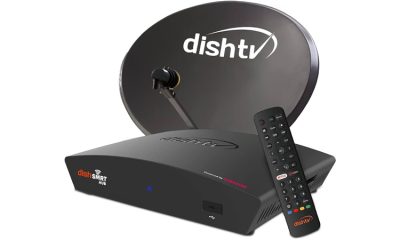









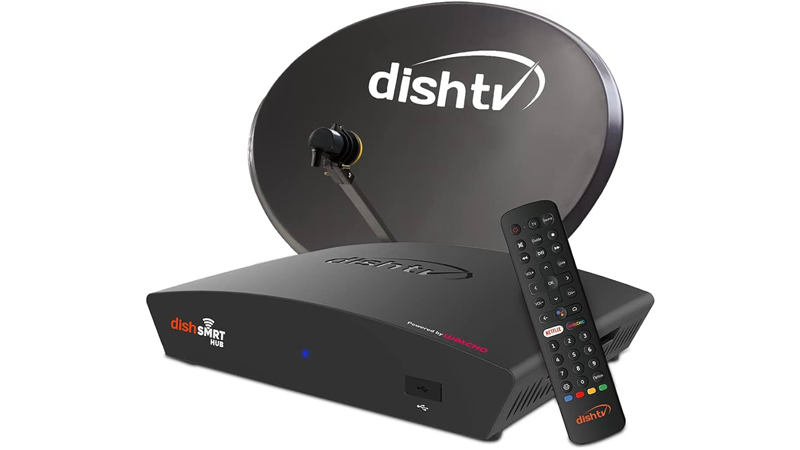
NOIDA: When the remote stops working, you don’t throw it away, you change the batteries. Dish TV is trying something similar. Faced with falling subscription revenues and a fast-shrinking DTH universe, India’s once-dominant satellite broadcaster is flipping channels, betting on smart TVs, OTT aggregation and a hybrid future even as the numbers flash red.
For the quarter ended 31 December, 2025, Dish TV India reported operating revenues of Rs 2,991 million, down 19.8 per cent year-on-year from Rs 3,730 million. Subscription revenues, still the backbone of the business, fell sharply by 32.2 per cent to Rs 2,245 million, reflecting industry-wide cord-cutting and persistent churn. The pain shows up clearly below the line.
Ebitda swung to a loss of Rs 415 million, compared with a profit of Rs 1,227 million a year earlier. Total expenditure climbed 36.1 per cent to Rs 3,406 million, pushing costs to nearly 114 per cent of operating revenues. The quarter closed with a loss before tax of Rs 2,762 million, weighed down further by exceptional items of Rs 700 million. Yet the company insists this is not a business stuck buffering, but one deliberately loading a new format.
Dish TV is repositioning itself from a pure DTH operator into what it calls a connected-home entertainment platform, stitching together live television, OTT apps and smart devices. The centrepiece of that strategy is the nationwide rollout of VZY smart TVs, offering a unified DTH-plus-OTT experience.
Amazon Prime Video has now been integrated across Dish TV’s ecosystem, including Watcho and VZY. Watcho, the company’s in-house OTT super app, has crossed millions of downloads and paid subscribers, aggregating more than 25 content apps.
Fliqs, its creator-driven content platform, is being pitched as a home for premium regional and international programming. Brand visibility has also been boosted through splashy partnerships with Bigg Boss Hindi and Bigg Boss Kannada: high-decibel bets in a crowded attention economy.
“Indian home entertainment is undergoing a structural shift,” said CEO and executive director Manoj Dobhal arguing that Dish TV’s hybrid model improves convenience while keeping customers within a single ecosystem. The revenue mix shows early signs of diversification, even if it is not yet compensating for falling subscriptions.
Marketing and promotional fees rose 27.3 per cent to Rs 399 million, while advertisement income, still small, nearly doubled to Rs 48 million. Other operating income surged 267.6 per cent to Rs 298 million, softening the overall revenue decline.
On costs, the company is tightening the screws. It has renegotiated transponder contracts, rationalised call-centre and general expenses, and improved asset discipline by boosting set-top box recovery beyond 30 days, reducing swap frequency and replacement capex.
New customer activations are being driven through a no-subsidy Rs 999 set-top box, a move management says materially improves unit economics and cash flow. Still, risks remain stubbornly in view. Churn continues to shadow the business, and scaling Watcho while balancing content spend will demand execution discipline.
Cost cuts, the company admits, must not erode service quality: a delicate act in a market where customer loyalty is already thin. For now, Dish TV’s numbers tell a story of strain.

MUMBAI: Tata Play is doubling down on regional loyalty. India’s leading DTH player has launched Tata Play Odia Manoranjan, a new value-added service that corrals Odia entertainment into a single, ad-free destination, available on television and the Tata Play mobile app.
Powered by Sidharth TV, one of Odisha’s most popular Odia-language GECs, the platform serves up a hefty catalogue: over 180 movies, 100+ Jatras, around 20 television shows and a library of more than 12,000 songs spanning devotional, folk, film and non-film genres. From vintage favourites to contemporary titles, the mix is pitched squarely at Odia-speaking households, with particular pull in tier-3 and tier-4 markets.
Subscribers get 24×7, full-screen SD viewing without ad breaks on channel number 1755, with live TV and VOD access across screens. The price point is deliberately sharp: Rs 2 a day.
Pallavi Puri, chief commercial and content officer at Tata Play, framed the move as a bet on language and culture. “India’s strongest viewing loyalties are rooted in language and lived culture. Tata Play Odia Manoranjan brings together the many expressions of Odia entertainment—from films and Jatras to devotional programming and music—into one clearly defined destination. With this launch, Tata Play further elevates its regional content offering by giving Odia audiences a single, definitive home for their stories and traditions.”
For Sidharth TV Network, the partnership is about reach without compromise. Sitaram Agrawalla, owner and chairman, said: “For decades, Odia families have trusted our entertainment platforms for stories that feel like home, and for moments that bring us together. Tata Play Odia Manoranjan builds on this trust by placing a diverse range of Odia films, theatre, devotional music and shows into a single, accessible space. This collaboration isn’t just about wider distribution—it’s about honouring the preferences of Odia viewers with a seamless, ad-free viewing experience that reflects their language, culture and the way they choose to engage with content.”
The new service slots into Tata Play’s expanding portfolio of entertainment and infotainment platform services across genres including entertainment, kids, learning, regional and devotion, catering to all age groups.
In short: one language, one screen, zero ads—and a clear signal that regional is where the real viewing power lies.
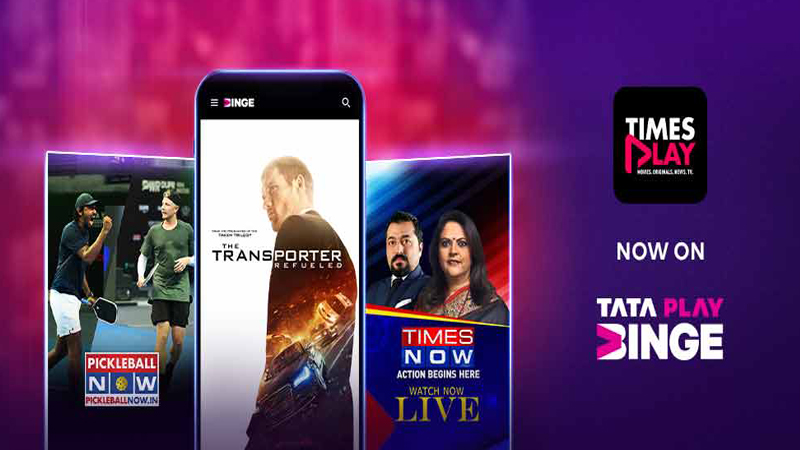
MUMBAI: If streaming had galaxies, Tata Play Binge just opened a wormhole. In its latest move to become India’s most sprawling entertainment universe, the platform has now folded Times Play, Times Network’s digital-first OTT service, into its all-in-one subscription bouquet bringing Hollywood hits, snackable shorts, live news, lifestyle, entertainment, Pickleball and 11 live TV channels under a single roof.
The new addition means subscribers no longer need to hop between apps in Olympic-level finger gymnastics, Binge now pulls Times Network’s entire digital catalogue into one screen, one login, one bill. And in the era of attention overload, that’s practically a public service.
Times Play brings with it a distinctive blend of premium Hollywood cinema, web series, short-format videos, and Times Network’s formidable news muscle. Viewers can flip seamlessly between Romedy Now, Movies Now, MNX, MN+, Zoom, Times Now, Times Now Navbharat, ET Now, ET Now Swadesh, and even Pickleball Now, mirroring the growing Indian appetite for niche sporting entertainment.
On the long-form front, hits like Reunion, India’s Story, True Story of Angeline Jolie, Orphan First Kill, The November Man, Barely Lethal, Southpaw, The Hurt Locker, Transporter Refueled, and The Holiday sit alongside Times Network factual and current-affairs staples including Frankly Speaking, Sawaal Public Ka, and News Ki Paathshaala.
Describing the partnership, Tata Play chief commercial and content officer Pallavi Puri, said the aim remained unchanged to make content discovery effortless and reduce the modern curse of app overload. She noted that integrating Times Play enriches Binge’s already deep catalogue with a broader mix of premium films, originals and news programming “without juggling multiple apps or subscriptions”.
Times Network echoed the sentiment, calling the collaboration a natural extension of its mission to deliver credible entertainment and journalism at scale. It emphasised Tata Play’s reach, reliability and reputation as a key driver in bringing Times Play’s digital catalogue to diverse Indian households.
With the addition of Times Play, Tata Play Binge now boasts 30 plus OTT platforms on a single interface, a list that includes Prime Video, JioHotstar, Zee5, Apple TV+, Lionsgate, SunNXT, Discovery+, BBC Player, Aha, Fancode, ShemarooMe, Hungama, ManoramaMax, Nammaflix, Tarang Plus, Travel XP, Animax, Fuse+, ShortsTV, Curiosity Stream, and DistroTV, among others.
Notably, Netflix remains available as part of combo packs for DTH subscribers, while Amazon Prime Video can be unlocked as an add-on for Binge users with a Tata Play DTH connection. And for large-screen loyalists, all 30 plus apps can be streamed via LG, Samsung and Android Smart TVs, the Tata Play Binge+ set-top box, Amazon FireTV Stick – Tata Play edition, or through TataPlayBinge.com.
The expansion comes on the heels of recent integrations, including WAVES by Prasar Bharati and BBC Player, reinforcing Tata Play Binge’s ambition to remain India’s most diverse, most unified, and most fuss-free entertainment destination.
With Times Play now in the mix, Binge isn’t just aggregating content, it’s quietly aggregating the future of how India watches.


MIB sets OTT accessibility rules, mandates captions and audio description

Boney Kapoor acquires remake rights of Tamil political satire Thalaivar Thambi Thalaimaiyil

Netflix India names Rekha Rane director of films and series marketing

Zabeen signs off from TV9 after shaping the network’s public voice

Dhawan steps up to bat for Delhi’s grassroots sports push

Orient Beverages pops the fizz with steady Q3 gains and rising profits

Cheekatilo shines in the dark with record debut on Prime Video

These ’90s fashion trends are making a comeback in 2017
The final 6 ‘Game of Thrones’ episodes might feel like a full season
According to Dior Couture, this taboo fashion accessory is back
The old and New Edition cast comes together to perform
Phillies’ Aaron Altherr makes mind-boggling barehanded play
Uber and Lyft are finally available in all of New York State
Disney’s live-action Aladdin finally finds its stars
MIB sets OTT accessibility rules, mandates captions and audio description
Boney Kapoor acquires remake rights of Tamil political satire Thalaivar Thambi Thalaimaiyil
Netflix India names Rekha Rane director of films and series marketing
Zabeen signs off from TV9 after shaping the network’s public voice
Dhawan steps up to bat for Delhi’s grassroots sports push
Orient Beverages pops the fizz with steady Q3 gains and rising profits
Cheekatilo shines in the dark with record debut on Prime Video
-
 e-commerce3 weeks ago
Swiggy Instamart’s GOV surges 103 per cent year on year to Rs 7,938 crore
-

 News Headline1 month ago
From selfies to big bucks, India’s influencer economy explodes in 2025
-

 News Broadcasting2 weeks ago
Mukesh Ambani, Larry Fink come together for CNBC-TV18 exclusive
-
 iWorld5 months ago
Billions still offline despite mobile internet surge: GSMA
-

 News Headline2 months ago
2025: The year Indian sports saw chaos, comebacks, and breakthroughs
-

 Applications2 months ago
28 per cent of divorced daters in India are open to remarriage: Rebounce
-

 News Headline2 months ago
Game on again as 2025 powers up a record year and sets the stage for 2030
-
 MAM2 years ago
Costa Coffee becomes official coffee partner of Olympic Games Paris 2024
