
DTH
DTH – not so near but coming into view

As uncertainty continues to swirl around the rollout of conditional access systems in the country, the belief that it might be better to wait for direct to home (DTH) broadcast is gaining ground. But just how close at hand really is DTH? Is it worth the wait? A status report.
Year: 1997. Venue: The Oberoi, Delhi. Occasion: a press conference by Star to unveil its ambitious, approximately $500 million direct-to-home (DTH) television service for India through a pizza-sized dish antenna. Senior executives from the Hong Kong-based broadcasting company explain what it all means, complete with a live demo from Hong Kong.
A few months down the line, the United Front government slaps a ban on selling or dealing in equipment capable of receiving TV signals over 4,800 Mhz-frequencies in which the strong KU-band TV signals are beamed – from a satellite.
Cut to November 2000. At another crowded press conference, (then) information and broadcasting minister Sushma Swaraj announces the government has decided to allow and open (KU-band) DTH broadcasting services in the country, albeit with various restrictions factored in. “A positive step has been taken, a step towards convergence,” she proclaims at the press conference.
 Will this sight soon become a reality in India? |
If Swaraj wanted to impress her audience, she had failed. No one popped the champagne then, none are in a position to do so even now, three years later. That’s because communication technology has changed so fast between 1997 and now, especially with the Internet, that DTH has lost much of the excitement it generated in the mid-nineties when Star introduced this new lexicon, DTH, into Indian vocabulary. “There’s no point in legislating because new technologies and businesses can become obsolete almost tomorrow,” says a former country head of a US cable firm that has packed its bags and exited India after years of hope that the cable industry would get more corporatised and professional in India and there would be place enough for players like them.
But the transition from direct-to-nowhere to direct-to-home has, however, not sorted out all the past problems. The issue, as one senior executive of a foreign broadcasting company pointed out, was never DTH or its so-called impact on national security, but of government control. How much and how far is still the question. Ask both Star and the Subhash Chandra-controlled ASC Enterprises Ltd., the two companies that have been given conditional letters on DTH — a few steps away from a formal licence — by the I&B ministry only recently and they’ll vouch for this fact.

The amount of correspondence that has been exchanged between Space TV, a company through which Star had applied for a DTH licence last year, and India’s information and broadcasting ministry would be a rag picker’s delight in terms of sheer volume of paper. All because a certain section of the government, at times driven by bureaucrats who think they know it all, still considers DTH as something that will threaten the country’s security and will also pollute Indian minds, which anyway is exposed to more smut on the Internet than any DTH service provider can dream of providing, if at all such a move were to be made by them.
PRESENT TENSE
 Jawahar Goel – Can he afford to wait and watch? |
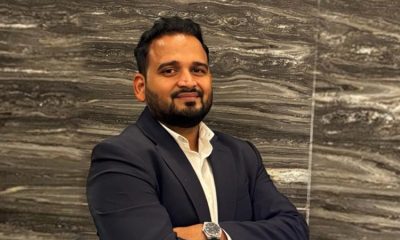
Sitting amidst a plethora of TV monitors at what would serve as the facility for Zee’s proposed DTH service and HITS project, Zee Telefilms additional vice-chairman and one of the younger brothers of company promoter Subhash Chandra, Jawahar Goel, says, “If this is not the right time for introducing (KU-band) DTH service in India, then there will be none better available in the future.”
Who are the likely players in today’s context? The Essel Group, the omnibus entity under which Chandra carries out his various business ventures through relevant companies, which also includes ASC Enterprises, and Space TV are the only two who have shown serious interest in DTH, but both seem to be still in the process of fine tuning, despite noises being made in the media.
“We may start the DTH operations later this year and 15 August looks a nice date to do so,” Zee’s Goel says optimistically. But the company is so busy grappling with the issue of conditional access system and its implementation that a lot of work on DTH that should have been completed by now, if the August deadline is to be adhered to, lies incomplete.
 Puneet Goenka – where is the content to attract viewers to DTH? |
Foremost is the content. Because a service that, even after subsidisation, would be more costly than normal cable TV has to have enough attractive content to lure the viewers. Agrees ASC Enterprises group president and chief executive Puneet Goenka, “We need to have more channels in the DTH bouquet and in the first phase are looking at between 48-60 channels, some of which would be third-party channels.” But ask his uncle Goel and he rues the fact that CAS has been taking up so much of his time that he has not been able to sit down with his colleagues to finalise the channels that would form part of the company’s DTH bouquet.
The other player Star is still trying to come to terms with the fact that one of its biggest challenges still remains just that, a big challenge. After having raised the issue of proprietary technology, in contrast to the open architecture that had been insisted upon by the government, several times, Star has to reconcile itself to the fact it would have to have an open architecture, which means that the boxes that would be needed for a DTH service would have to be flexible to accommodate the smart card of another service provider if the customer wishes to try out another one apart from Star.
Though Star India seldom speaks officially on its proposed DTH venture, a senior executive of the company admitted that interoperability would take away a lot of sheen from a DTH service in India as it would mean absolute premium stuff cannot be offered to Indian subscribers because any company would think twice before investing in premium programming unless it is guaranteed a captive audience. Open architecture theoretically would not provide that comfort.
But who’ll convince the government or even the Bureau of Indian Standards, which sets the technical specifications for boxes and other such similar things? Considering that after months of deliberating on the issue, the BIS is yet to come out with the specifications for boxes for DTH is ample indication to the fact that continued lobbying for and against DTH guidelines has given rise to indecisiveness.
 The Bureau of Indian Standards is yet to formulate specifications that will govern DTH |
The contrast in the thinking in the government is apparent. While former I&B minister Swaraj had admitted that globally DTH works better under a monopoly or at best a duopoly, incumbent Ravi Shankar Prasad feels that even in DTH, market forces should give the consumer freedom to choose and more players should be encouraged in this area.
Of course, there is a third player too, or somebody that has not yet got beyond making grand announcements. India’s pubcaster Prasar Bharati recently did say that it would start a DTH service to cover those areas where traditional cable or terrestrial TV is unable to penetrate. Still, after that nothing much has happened. Says SY Quraishi, director-general of Doordarshan, the television arm of Prasar Bharati, “We have set up a committee on DTH and that is looking into various aspects of the project, including whether non-DD channels can be brought on to the platform.”
PAST IMPERFECT?
Why was the reception of KU-band signals banned in 1997? The present government offers an explanation through a background paper: “Keeping in view the sensitive nature of this service, particularly its implications for national security, cultural influence, moral and social values, etc, as it directly reaches the viewers’ home without any intermediary, the reception and distribution of TV signals in KU-band was prohibited by a notification dated July 16, 1997.”
A senior TV company executive suggests that this is a spurious argument. If the government was really worried about anti-national activity through a DTH service, it could have easily neutralised the threat at the ground level. After all, he points out, any DTH company will have to collect subscription money from its subscribers within India, so the government can easily block repatriation of this money if the DTH company and channels prove to be errant.
Off the record, it is said that the real reason for government intransigence lay elsewhere. Bureaucrats at the time harboured strong antipathy towards some of their ilk (former Star India CEO for South Asia Rathikant Basu being one) who had left the government for lucrative private sector jobs with foreign media companies.
So why was the ban finally lifted? The background paper makes a bland reference to “rapid changes in information technology and a sea change in the broadcasting and communication scenario in the last few years.”
More relevantly, though, it adds: “Further, DTH is a superior technology which offers an alternative for distribution and reception of TV programmes both to the programme providers as well as to the consumers.”
That’s a telling statement – especially since it took the government more than three years to realise that DTH was a superior technology, that consumers could benefit and that safeguards could easily be put in place.
The green signal in November 2000 followed the deliberations of a group of ministers, which was constituted on 31 January 2000. Headed by home minister LK Advani, the group included the then ministers from information and broadcasting (Arun Jaitley), information technology (Pramod Mahajan), finance (Yashwant Sinha), defence (George Fernandes), communications (Ram Vilas Paswan) and law (Ram Jethmalani). Of the lot, only Fernandes currently retains his portfolio.
This was actually a group that was reconstituted from an earlier group that had been formed in January 1999 and had almost given Doordarshan the go-ahead to exclusively start a DTH platform in India.
The 2000 group’s deliberations were reportedly acrimonious. After much wrangling, it came up with the following recommendations – said to be “unanimous”:
* A DTH licence should not be given exclusively to any agency, whether private or public, to avoid monopoly in the sensitive areas of information and programme distribution (“Even a monopoly by Doordarshan is bad,” Swaraj concedes);
* Since DTH is an alternative to cable for distribution of TV programmes, the vertical integration of these two services should be guarded against to avoid monopoly in distribution services.
* Vertical integration and monopoly between DTH operators and TV channels should be avoided to ensure fair competition and a level playing field for all TV channels.
* Programmes/channels distributed through a DTH platform should be uplinked from India to ensure that they comply with programming and advertising codes and allay concerns about “national security”.
Based on these recommendations came the government’s broad policy decision.
* Total foreign investment, including FDI/NRI/OCB/FII, not to exceed 49 per cent.
* Control of the DTH company was to rest with resident Indians.
* Broadcasting and/or cable company holding was limited to 20 per cent
* An entry fee of Rs 100 million, plus annual revenue sharing with the government on a 10 per cent basis.
* A bank guarantee of Rs 400 million for 10-year licence period
* Mandatory uplinking from India
* DTH providers would be given a year’s time to set up an earth station in India.
* The licensee was to ensure a single SMS (subscriber management system) and an open architecture set-top box.
THE LIKELY BUSINESS MODEL
This is the part that most are cagey about discussing. Says Zee’s Goel, “Why should I discuss the business model in the media? That’s something that would be done internally.” Star India, of course, is more diplomatic when it counters that it is too early to discuss a business model as things are still being fine-tuned.
Therein lies the catch: the business plans are not being talked about as openly today because the players are still not sure of the business mechanics and how they will play out in a country like India that is so price sensitive that people are still hesitant to invest even Rs 2,600 (as refundable security) in a set-top box for pay channels in a post-CAS regime.
Points out ad agency TBWA’s Gopinath Menon, “The advertising fraternity is not looking at a DTH service in the immediate future as it’d be a niche service.”
 Rupert Murdoch – are good times just round the corner? |
But, what is the likely market for DTH? In its early days, Rupert Murdoch’s Star had said it would be happy to garner a subscriber base of a couple of million over a period of three to five years in India and the venture would take between five to eight years to break even considering the level of investment that would be needed. Murdoch’s British pay television venture BSkyB bled for many years before turning profitable for him in the late 1990s.
Not much has changed from that outlook. According to Goel, “Initially DTH would be a rich man’s toy, though our effort is to bring it down to the level of the common masses.” The level of an average common man, as per Zee’s estimates, is approximately Rs 15,000 where the box would cost slightly more than the one needed for CAS, which is being imported by Zee for a price between $ 42-$ 48.
With the subsidies being extended to the consumer, it would also take Zee anything between four to six years to break even, considering it has already sunk in about Rs 4000 million in setting up a facility on the outskirts of Delhi that can be used for DTH and its headend in the sky project. And more would be needed if the service is to expanded and marketed.
But that does not mean DTH is completely passé. Neither Murdoch, nor Subhash Chandra think so. Global trends are encouraging, but may not be applicable immediately to India.
According to Cahners In-Stat Group, a sister company to Multichannel News, although cable continues to make digital inroads, the direct-to-home industry will continue to outpace its competitor ‘over the next several years’ on that front. In-Stat predicted that DBS (direct to broadcast service) or DTH will own 95 million digital customers by the end of 2004, well ahead of cable’s 48 million.
At the end of 2000, there were 36 million digital DBS subscribers and 11.7 million digital-cable subscribers worldwide, In-Stat said in the report, ‘Worldwide Digital Satellite & Cable TV Services.’ The transition to digital — which allows service providers to offer more channels and serves as the base point for advanced services such as interactive television and video-on-demand — is expected to drive more revenue for both camps.
But if the Indian government was allegedly worried about such issues as moral turpitude from DTH players and threats to national security, the 40,000-odd strong cable operator community was worried about whether they’d be driven out of business. Now it has become clear that the costs alone preclude this happening in the near future in India, though Zee’s Goel throws a hint that for his company to upgrade a CAS customer to DTH will cost the subscriber an additional $ 12-14.
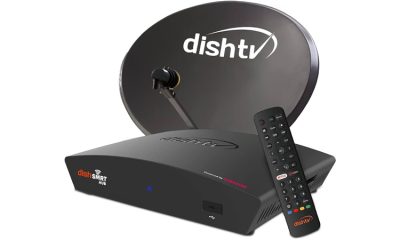






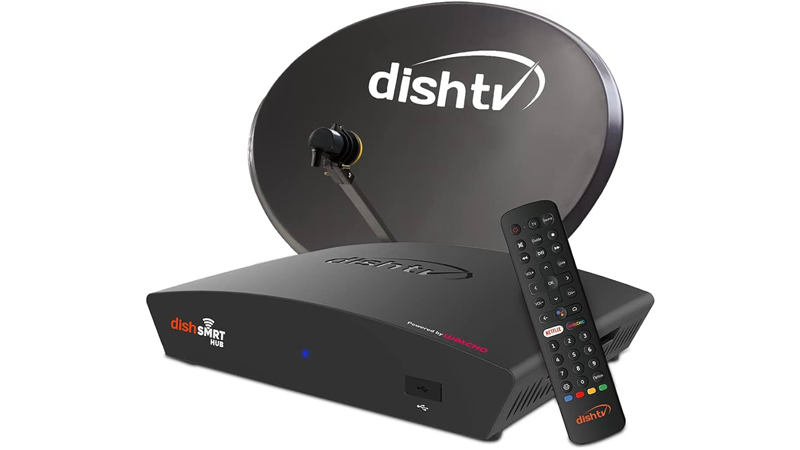
NOIDA: When the remote stops working, you don’t throw it away, you change the batteries. Dish TV is trying something similar. Faced with falling subscription revenues and a fast-shrinking DTH universe, India’s once-dominant satellite broadcaster is flipping channels, betting on smart TVs, OTT aggregation and a hybrid future even as the numbers flash red.
For the quarter ended 31 December, 2025, Dish TV India reported operating revenues of Rs 2,991 million, down 19.8 per cent year-on-year from Rs 3,730 million. Subscription revenues, still the backbone of the business, fell sharply by 32.2 per cent to Rs 2,245 million, reflecting industry-wide cord-cutting and persistent churn. The pain shows up clearly below the line.
Ebitda swung to a loss of Rs 415 million, compared with a profit of Rs 1,227 million a year earlier. Total expenditure climbed 36.1 per cent to Rs 3,406 million, pushing costs to nearly 114 per cent of operating revenues. The quarter closed with a loss before tax of Rs 2,762 million, weighed down further by exceptional items of Rs 700 million. Yet the company insists this is not a business stuck buffering, but one deliberately loading a new format.
Dish TV is repositioning itself from a pure DTH operator into what it calls a connected-home entertainment platform, stitching together live television, OTT apps and smart devices. The centrepiece of that strategy is the nationwide rollout of VZY smart TVs, offering a unified DTH-plus-OTT experience.
Amazon Prime Video has now been integrated across Dish TV’s ecosystem, including Watcho and VZY. Watcho, the company’s in-house OTT super app, has crossed millions of downloads and paid subscribers, aggregating more than 25 content apps.
Fliqs, its creator-driven content platform, is being pitched as a home for premium regional and international programming. Brand visibility has also been boosted through splashy partnerships with Bigg Boss Hindi and Bigg Boss Kannada: high-decibel bets in a crowded attention economy.
“Indian home entertainment is undergoing a structural shift,” said CEO and executive director Manoj Dobhal arguing that Dish TV’s hybrid model improves convenience while keeping customers within a single ecosystem. The revenue mix shows early signs of diversification, even if it is not yet compensating for falling subscriptions.
Marketing and promotional fees rose 27.3 per cent to Rs 399 million, while advertisement income, still small, nearly doubled to Rs 48 million. Other operating income surged 267.6 per cent to Rs 298 million, softening the overall revenue decline.
On costs, the company is tightening the screws. It has renegotiated transponder contracts, rationalised call-centre and general expenses, and improved asset discipline by boosting set-top box recovery beyond 30 days, reducing swap frequency and replacement capex.
New customer activations are being driven through a no-subsidy Rs 999 set-top box, a move management says materially improves unit economics and cash flow. Still, risks remain stubbornly in view. Churn continues to shadow the business, and scaling Watcho while balancing content spend will demand execution discipline.
Cost cuts, the company admits, must not erode service quality: a delicate act in a market where customer loyalty is already thin. For now, Dish TV’s numbers tell a story of strain.
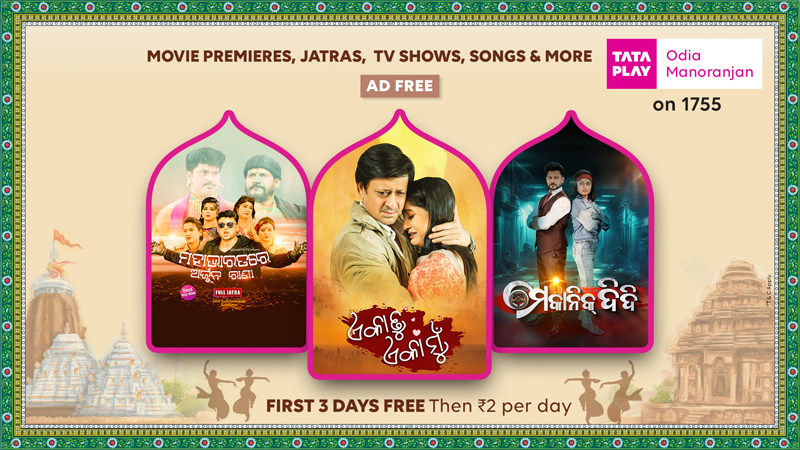
MUMBAI: Tata Play is doubling down on regional loyalty. India’s leading DTH player has launched Tata Play Odia Manoranjan, a new value-added service that corrals Odia entertainment into a single, ad-free destination, available on television and the Tata Play mobile app.
Powered by Sidharth TV, one of Odisha’s most popular Odia-language GECs, the platform serves up a hefty catalogue: over 180 movies, 100+ Jatras, around 20 television shows and a library of more than 12,000 songs spanning devotional, folk, film and non-film genres. From vintage favourites to contemporary titles, the mix is pitched squarely at Odia-speaking households, with particular pull in tier-3 and tier-4 markets.
Subscribers get 24×7, full-screen SD viewing without ad breaks on channel number 1755, with live TV and VOD access across screens. The price point is deliberately sharp: Rs 2 a day.
Pallavi Puri, chief commercial and content officer at Tata Play, framed the move as a bet on language and culture. “India’s strongest viewing loyalties are rooted in language and lived culture. Tata Play Odia Manoranjan brings together the many expressions of Odia entertainment—from films and Jatras to devotional programming and music—into one clearly defined destination. With this launch, Tata Play further elevates its regional content offering by giving Odia audiences a single, definitive home for their stories and traditions.”
For Sidharth TV Network, the partnership is about reach without compromise. Sitaram Agrawalla, owner and chairman, said: “For decades, Odia families have trusted our entertainment platforms for stories that feel like home, and for moments that bring us together. Tata Play Odia Manoranjan builds on this trust by placing a diverse range of Odia films, theatre, devotional music and shows into a single, accessible space. This collaboration isn’t just about wider distribution—it’s about honouring the preferences of Odia viewers with a seamless, ad-free viewing experience that reflects their language, culture and the way they choose to engage with content.”
The new service slots into Tata Play’s expanding portfolio of entertainment and infotainment platform services across genres including entertainment, kids, learning, regional and devotion, catering to all age groups.
In short: one language, one screen, zero ads—and a clear signal that regional is where the real viewing power lies.
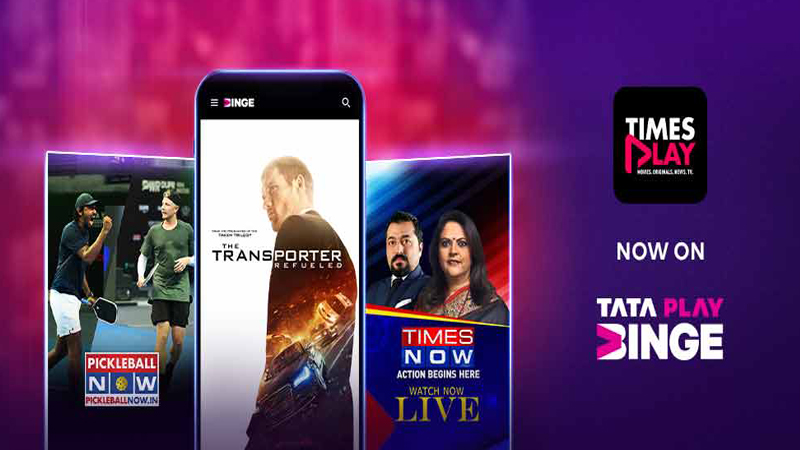
MUMBAI: If streaming had galaxies, Tata Play Binge just opened a wormhole. In its latest move to become India’s most sprawling entertainment universe, the platform has now folded Times Play, Times Network’s digital-first OTT service, into its all-in-one subscription bouquet bringing Hollywood hits, snackable shorts, live news, lifestyle, entertainment, Pickleball and 11 live TV channels under a single roof.
The new addition means subscribers no longer need to hop between apps in Olympic-level finger gymnastics, Binge now pulls Times Network’s entire digital catalogue into one screen, one login, one bill. And in the era of attention overload, that’s practically a public service.
Times Play brings with it a distinctive blend of premium Hollywood cinema, web series, short-format videos, and Times Network’s formidable news muscle. Viewers can flip seamlessly between Romedy Now, Movies Now, MNX, MN+, Zoom, Times Now, Times Now Navbharat, ET Now, ET Now Swadesh, and even Pickleball Now, mirroring the growing Indian appetite for niche sporting entertainment.
On the long-form front, hits like Reunion, India’s Story, True Story of Angeline Jolie, Orphan First Kill, The November Man, Barely Lethal, Southpaw, The Hurt Locker, Transporter Refueled, and The Holiday sit alongside Times Network factual and current-affairs staples including Frankly Speaking, Sawaal Public Ka, and News Ki Paathshaala.
Describing the partnership, Tata Play chief commercial and content officer Pallavi Puri, said the aim remained unchanged to make content discovery effortless and reduce the modern curse of app overload. She noted that integrating Times Play enriches Binge’s already deep catalogue with a broader mix of premium films, originals and news programming “without juggling multiple apps or subscriptions”.
Times Network echoed the sentiment, calling the collaboration a natural extension of its mission to deliver credible entertainment and journalism at scale. It emphasised Tata Play’s reach, reliability and reputation as a key driver in bringing Times Play’s digital catalogue to diverse Indian households.
With the addition of Times Play, Tata Play Binge now boasts 30 plus OTT platforms on a single interface, a list that includes Prime Video, JioHotstar, Zee5, Apple TV+, Lionsgate, SunNXT, Discovery+, BBC Player, Aha, Fancode, ShemarooMe, Hungama, ManoramaMax, Nammaflix, Tarang Plus, Travel XP, Animax, Fuse+, ShortsTV, Curiosity Stream, and DistroTV, among others.
Notably, Netflix remains available as part of combo packs for DTH subscribers, while Amazon Prime Video can be unlocked as an add-on for Binge users with a Tata Play DTH connection. And for large-screen loyalists, all 30 plus apps can be streamed via LG, Samsung and Android Smart TVs, the Tata Play Binge+ set-top box, Amazon FireTV Stick – Tata Play edition, or through TataPlayBinge.com.
The expansion comes on the heels of recent integrations, including WAVES by Prasar Bharati and BBC Player, reinforcing Tata Play Binge’s ambition to remain India’s most diverse, most unified, and most fuss-free entertainment destination.
With Times Play now in the mix, Binge isn’t just aggregating content, it’s quietly aggregating the future of how India watches.



MIB sets OTT accessibility rules, mandates captions and audio description

Boney Kapoor acquires remake rights of Tamil political satire Thalaivar Thambi Thalaimaiyil

Netflix India names Rekha Rane director of films and series marketing

Zabeen signs off from TV9 after shaping the network’s public voice

Dhawan steps up to bat for Delhi’s grassroots sports push

Orient Beverages pops the fizz with steady Q3 gains and rising profits

Cheekatilo shines in the dark with record debut on Prime Video

Swiggy Instamart’s GOV surges 103 per cent year on year to Rs 7,938 crore

These ’90s fashion trends are making a comeback in 2017
The final 6 ‘Game of Thrones’ episodes might feel like a full season
According to Dior Couture, this taboo fashion accessory is back
The old and New Edition cast comes together to perform
Phillies’ Aaron Altherr makes mind-boggling barehanded play
Uber and Lyft are finally available in all of New York State
MIB sets OTT accessibility rules, mandates captions and audio description
Boney Kapoor acquires remake rights of Tamil political satire Thalaivar Thambi Thalaimaiyil
Netflix India names Rekha Rane director of films and series marketing
Zabeen signs off from TV9 after shaping the network’s public voice
Dhawan steps up to bat for Delhi’s grassroots sports push
Orient Beverages pops the fizz with steady Q3 gains and rising profits
Cheekatilo shines in the dark with record debut on Prime Video
-
 e-commerce1 month ago
Swiggy Instamart’s GOV surges 103 per cent year on year to Rs 7,938 crore
-
 iWorld1 year ago
Kuku TV transforms India’s OTT space with vertical microdrama boom
-
 News Headline1 year ago
TRAI puts a ‘stop’ to unsolicited calls and messages
-

 News Headline2 months ago
From selfies to big bucks, India’s influencer economy explodes in 2025
-
 MAM2 years ago
OpenAI joins C2PA steering committee
-
 Comedy2 years ago
Taarak Mehta Ka Ooltah Chashmah celebrates 4,000 episodes
-
 News Headline2 years ago
Odisha to host Ultimate Kho Kho Season 2 from December 24
-
 News Headline1 year ago
Abhishek Bachchan joins as co-owner of European T20 Premier League


