Category: TV Shows

  • Another comic roast raises a storm

    Another comic roast raises a storm

    MUMBAI: Comic Roasts can backfire. Ask the AIB guys. And now you can ask the cast of Comedy Nights Bachao. In an episode that is yet to be telecast, the cast of the Krushna Abhishek-Bharati Singh-led show on Colors resorted to some leg-pulling of an actress during a film promotion on it. The leg-pulling was around the tanned actress’ skin colour. And, it got her goose. So much so, that it has become an issue with women’s organisations getting behind the actress and the channel and the artistes having to issue an apology.

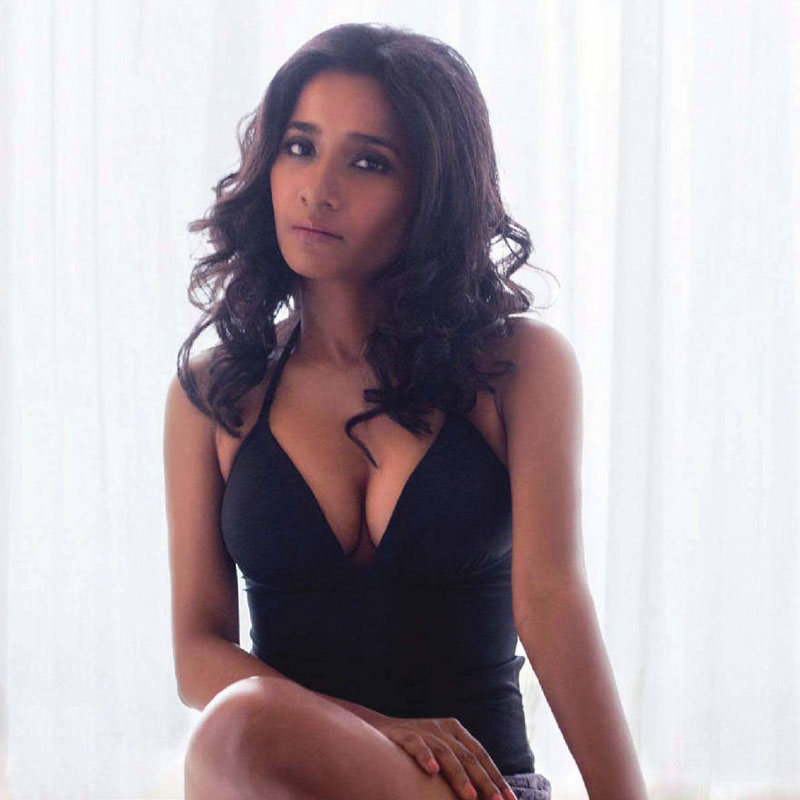
    ‘Parched’ actress Tannishtha Chatterjee was the butt of the skin tone joke during a show to be aired on Colors. “She had no clue about ‘Comedy Nights Bachao’, says the show’s host Krushna Abhishek who has now apologised for the ‘racist’ comments. Both, Krushna and Colors have since apologised to Tannishtha after she expressed disappointment with how her skin tone was made fun of on “Comedy Nights Bachao.” Comedian Krushna defended the programme that he co-hosts, after Tannishtha rued its “blatant and regressive racist” ways of finding humour in her “dark skin tone”.

    Issues with colorism and race are not new in India. The degradation of dark color and the privileges of whiteness in a post-colonial era is endless. And, jokes on a popular show only help to reinforce the stereotype that dark skin is a subject of ridicule.

    Krushna was not present on the sets of the show when Tannishtha was “roasted” on the show. She was accompanied there by her ‘Parched’ team members — director Leena Yadav and actress Radhika Apte. Soon after shooting for the show,Tannishtha took to social media to criticise the format for its racist attack.

    The creative professionals on the Colors shows believed that calling someone ‘kaali kalooti’ or asking if eating jamuns (blackberries) as a kid is the reason why she is dark-skinned is amusing.

    The National Commission for Women (NCW) has slammed the comedy show for allegedly making fun of the skin tone of the actress, and said it is exploring avenues to initiate action on the “unfortunate episode”.

    After sitting through two segments of the show, the National Award-winning actress walked out of the shoot when jokes like ‘kaali kalooti, baingan looti’ didn’t stop. In the post, Tannishtha wrote, “…in a country where we still sell Fair and Lovely/Handsome and show adverts where people don’t get jobs because of their complexion, where every matrimonial advert demands a fair bride or groom and the colour bias is so strong, in a society which has a deep-seated problem with dark skin, which also has deep roots in our caste system, in a country where dark skin is marginalised — making fun of it is not a roast. Even considering that dark skin is a joke comes from that very deep prejudice”.

    An apologetic Krushna later reacted: “If she (Tannishtha) feels offended by something, I apologise from our side. We never want to hurt anyone deliberately. “Comedy Nights Bachao” is of a roast format. Roast doesn’t mean that we say just anything to anyone… I had asked Tannishtha, if she has seen the show, she said she doesn’t watch TV as such. So, she has no clue about the show. So, I took another example and asked her if she had seen AIB Roast? And she hadn’t seen that either. I told her that since it’s a roast, there will be some leg-pulling, but we don’t insult. Had we been insulting, the show won’t have come so far.”

    The actress has said that she had some idea of a roast through “Saturday Night Live” show, and that with “Comedy Nights Bachao”, she was anticipating to be ‘roasted’ as her perception was that a roast is “a celebratory humour at someone’s expense” and “a mock counter to a toast”.

    Pointing out that the only thing they could roast about a dark-skinned actress was “of course her dark skin”, she said in a Facebook post: “This was an entirely novel understanding of roast that equates itself with bullying. And to my utmost horror, I soon realised that the only quality they found worth roasting about in me was my skin tone. It began with, ‘Aap ko jamun bahut pasand hoga zaroor…?’”

    Krushna said there are actors who take roasts sportingly. “When Varun Dhawan came for ‘Dilwale’, Varun himself came up to me and said that he is very excited and looking forward to the roast. Even Shah Rukh Khan chose to come to our show for ‘Fan’. “I don’t know what hurt Tannishtha, because I wasn’t performing then. But I apologise if it has hurt her, though it wasn’t a deliberate attempt,” he added.

    A PTI report quoted NCW chief Lalitha Kumaramangalam as saying it was “deplorable” and “pathetic” that the TV show “stooped to such a low level to garner TRPs”.

    “This was wrong on so many levels, in gender construct and social construct and it sets a very bad precedent. It is in bad taste and condemnable. In the name of freedom of expression, one should not and cannot allow perpetuation of social prejudice,” Kumaramangalam told PTI, adding NCW has taken cognisance of the incident and is “consulting lawyers” to determine a “course of action.”

    The NCW proposes to issue a letter to the apex authority on monitoring of the broadcast media content to bring to their notice the episode, according to the wire news service report.

    This is not the first time comedians and TV shows have come under scrutiny for content that has been described as objectionable by some.

    Meanwhile, a media report from Karnataka said that a High Court judge made some critical comments on film, TV and print media content.

    Justice Gowda, who has given time to the Central government till 4 October 2016 to respond to a petition, was reported as observing on a case regarding a film content, “In the midst of news, some objectionable contents are introduced on television. Even newspapers carry advertisements about jewellery and lingerie, which are sometimes indecent.”
  • Another comic roast raises a storm

    Another comic roast raises a storm

    MUMBAI: Comic Roasts can backfire. Ask the AIB guys. And now you can ask the cast of Comedy Nights Bachao. In an episode that is yet to be telecast, the cast of the Krushna Abhishek-Bharati Singh-led show on Colors resorted to some leg-pulling of an actress during a film promotion on it. The leg-pulling was around the tanned actress’ skin colour. And, it got her goose. So much so, that it has become an issue with women’s organisations getting behind the actress and the channel and the artistes having to issue an apology.

    ‘Parched’ actress Tannishtha Chatterjee was the butt of the skin tone joke during a show to be aired on Colors. “She had no clue about ‘Comedy Nights Bachao’, says the show’s host Krushna Abhishek who has now apologised for the ‘racist’ comments. Both, Krushna and Colors have since apologised to Tannishtha after she expressed disappointment with how her skin tone was made fun of on “Comedy Nights Bachao.” Comedian Krushna defended the programme that he co-hosts, after Tannishtha rued its “blatant and regressive racist” ways of finding humour in her “dark skin tone”.

    Issues with colorism and race are not new in India. The degradation of dark color and the privileges of whiteness in a post-colonial era is endless. And, jokes on a popular show only help to reinforce the stereotype that dark skin is a subject of ridicule.

    Krushna was not present on the sets of the show when Tannishtha was “roasted” on the show. She was accompanied there by her ‘Parched’ team members — director Leena Yadav and actress Radhika Apte. Soon after shooting for the show,Tannishtha took to social media to criticise the format for its racist attack.

    The creative professionals on the Colors shows believed that calling someone ‘kaali kalooti’ or asking if eating jamuns (blackberries) as a kid is the reason why she is dark-skinned is amusing.

    The National Commission for Women (NCW) has slammed the comedy show for allegedly making fun of the skin tone of the actress, and said it is exploring avenues to initiate action on the “unfortunate episode”.

    After sitting through two segments of the show, the National Award-winning actress walked out of the shoot when jokes like ‘kaali kalooti, baingan looti’ didn’t stop. In the post, Tannishtha wrote, “…in a country where we still sell Fair and Lovely/Handsome and show adverts where people don’t get jobs because of their complexion, where every matrimonial advert demands a fair bride or groom and the colour bias is so strong, in a society which has a deep-seated problem with dark skin, which also has deep roots in our caste system, in a country where dark skin is marginalised — making fun of it is not a roast. Even considering that dark skin is a joke comes from that very deep prejudice”.

    An apologetic Krushna later reacted: “If she (Tannishtha) feels offended by something, I apologise from our side. We never want to hurt anyone deliberately. “Comedy Nights Bachao” is of a roast format. Roast doesn’t mean that we say just anything to anyone… I had asked Tannishtha, if she has seen the show, she said she doesn’t watch TV as such. So, she has no clue about the show. So, I took another example and asked her if she had seen AIB Roast? And she hadn’t seen that either. I told her that since it’s a roast, there will be some leg-pulling, but we don’t insult. Had we been insulting, the show won’t have come so far.”

    The actress has said that she had some idea of a roast through “Saturday Night Live” show, and that with “Comedy Nights Bachao”, she was anticipating to be ‘roasted’ as her perception was that a roast is “a celebratory humour at someone’s expense” and “a mock counter to a toast”.

    Pointing out that the only thing they could roast about a dark-skinned actress was “of course her dark skin”, she said in a Facebook post: “This was an entirely novel understanding of roast that equates itself with bullying. And to my utmost horror, I soon realised that the only quality they found worth roasting about in me was my skin tone. It began with, ‘Aap ko jamun bahut pasand hoga zaroor…?’”

    Krushna said there are actors who take roasts sportingly. “When Varun Dhawan came for ‘Dilwale’, Varun himself came up to me and said that he is very excited and looking forward to the roast. Even Shah Rukh Khan chose to come to our show for ‘Fan’. “I don’t know what hurt Tannishtha, because I wasn’t performing then. But I apologise if it has hurt her, though it wasn’t a deliberate attempt,” he added.

    A PTI report quoted NCW chief Lalitha Kumaramangalam as saying it was “deplorable” and “pathetic” that the TV show “stooped to such a low level to garner TRPs”.

    “This was wrong on so many levels, in gender construct and social construct and it sets a very bad precedent. It is in bad taste and condemnable. In the name of freedom of expression, one should not and cannot allow perpetuation of social prejudice,” Kumaramangalam told PTI, adding NCW has taken cognisance of the incident and is “consulting lawyers” to determine a “course of action.”

    The NCW proposes to issue a letter to the apex authority on monitoring of the broadcast media content to bring to their notice the episode, according to the wire news service report.

    This is not the first time comedians and TV shows have come under scrutiny for content that has been described as objectionable by some.

    Meanwhile, a media report from Karnataka said that a High Court judge made some critical comments on film, TV and print media content.

    Justice Gowda, who has given time to the Central government till 4 October 2016 to respond to a petition, was reported as observing on a case regarding a film content, “In the midst of news, some objectionable contents are introduced on television. Even newspapers carry advertisements about jewellery and lingerie, which are sometimes indecent.”
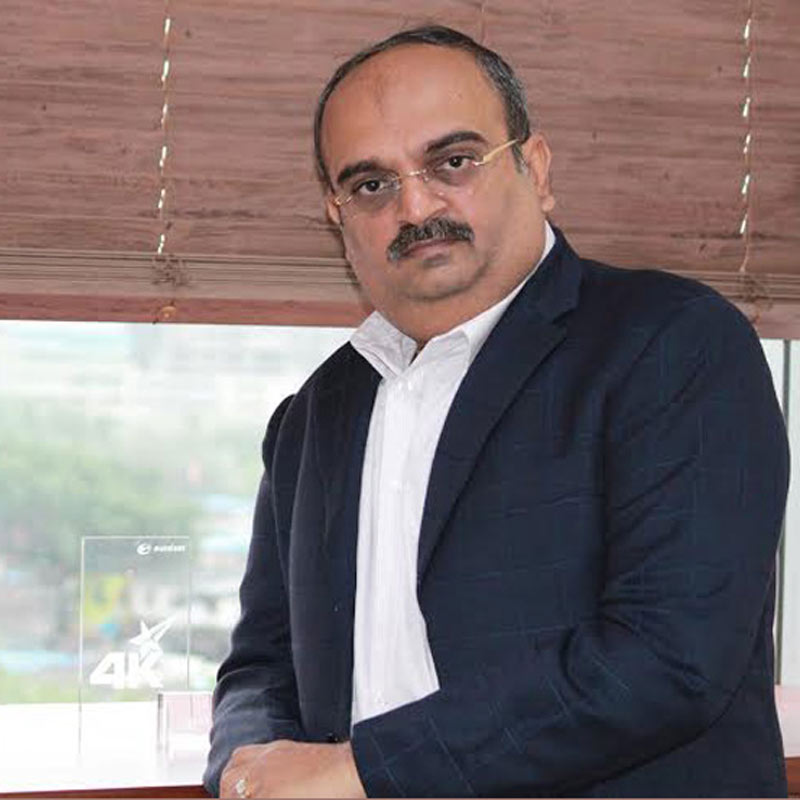
  • Star India’s Gaurav Banerjee’s take on ‘P.O.W. – Bandi Yuddh Ke’

    Star India’s Gaurav Banerjee’s take on ‘P.O.W. – Bandi Yuddh Ke’

    MUMBAI: It has been labeled as the pioneer of saas bahu sagas. But, the leadership trio — Uday Shankar-Sanjay Gupta-Gaurav Banerjee — at the Twenty First Century Corp-owned Hindi GEC Star Plus — has over the past few years been working at breaking down this myth. The mantra has been create differentiated content with the help of real, relevant Indian stories and series. And, Star Plus’ latest effort, the Nikhil Advani-directed Israeli-show Hatufim Khatufim adaptation, P.O.W.- Yudh Ke Bandhi, is once again a reflection of that philosophy.

    ‘P.O.W. – Bandi Yuddh Ke’ is very Indian though it is adapted from leading Israeli format licensing house Keshet International’s successful 2010 series; it was also made into the runaway global hit ‘Homeland’, courtesy US cable network Showtime.

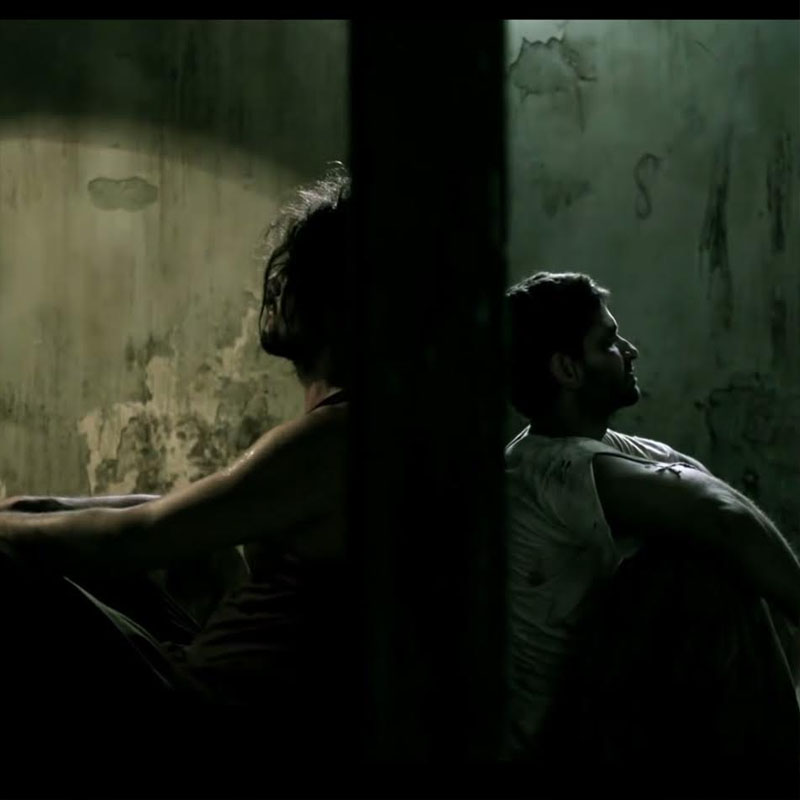
    The Indian version works as a large-scale high-octane family drama with a thriller backdrop. The story takes us through the journey of the lives of the two couples Harleen–Sartaj, Nazneen-Imaan and the aftermath of the return of the war heroes after 17 years, over 126 episodes.

    Two Indian PoWs Sartaj and Imaan — declared missing in action (MIA) after the Kargil war ends in 1999 — are rescued from the Indo-Pakistan border after escaping from captivity. They work to overcome the trauma of torture and captivity while settling back into their interrupted family lives.

    An ensemble cast of discerning actors like Purab Kohli, Sandhya Mridul, Amrita Puri, Satyadeep Mishra and Manish Chaudhari have teamed up for the project with Nikkhil Advani. While Purab plays a naib subedar in the Indian army, Mishra will be seen as an air force officer. And, the editor from the channel’s side is Saugata Mukherjee.

    Banerjee and his team chose the Israeli version created by Gideon Raff, which focuses on the emotional upheaval that the two soldiers and families face on their being locked away for 17 years and on their return to their homeland. The US adaptation worked more in the space of a thriller, and questioned whether the protagonist is a terrorist or not.

    Nikkhil Advani, whose company Emmay Entertainment is producing ‘P.O.W. – Bandi Yuddh Ke’, has been quoted in the media as saying: “I realised the real prisoners of war are the soldiers’ wives and families. The wives haven’t been able to move on with their lives…they have this sense of guilt that’s holding them back. They think, ‘What if he comes back?’…The story has a lot of emotions. Homeland is a little cold for Indians. Indians inherently love emotion.”

    Indiantelevision.com had an interaction with Star India deputy chief creative officer Gaurav Banerjee yesterday and he had his own take on the show. Said he: “P.O.W is a deeply emotional story. But, we have thriller dimensions as well. I think for us the difference is that this an Asian story but it was set up in Israel. We found a very strong Indian context in it and also the story in itself is very different. It’s s an art — a challenging art — writing a fresh story and adapting a great story in the current context and in an Indian milieu. We have worked hard on the story over two years.”

    Banerjee admitted that a decision on the time slot and exact launch date for the show has yet to be taken. But, sources expect the airdate to be late October, late prime and that it will run from Monday to Saturday.

    ‘P.O.W. – Bandi Yuddh Ke’ has been under development for two years. And, both Advani and the channel consulted army experts to help maintain accuracy in the writing and while shooting. Filming started earlier this year in locales in Punjab and Mumbai. In all, 36 episodes of the show have been canned. “We have used a proper balance of real-life locations, special effects and VFX,” said Banerjee.

    The channel has roped in two brands Tiago and Patanjali Kesh Kanti as co- powered by sponsors. One can expect some amount of brand integration of the two in the show as is the practice on television these days.

    Highlighted Banerjee: “It’s a big Diwali launch for us and you can expect us to be little ambitious about this. Since, it’s a finite series, we started with the trailer. It will be followed by more glimpses of the characters as we go along. The music has played a very good role in grafting the story and that is important as we set up the marketing of the show. Also we want all kinds of media to be a part of it but moreover we believe in the story.”

    Banerjee is hopeful that Indian viewers will celebrate P.O.W with Star Plus. He stated: “Star Plus is known for great stories. One of the big things for us is to be the platform where viewers gets the best stories, concepts and content. Sixteen years ago, we started with ‘Kaun Banega Crorepati’, which was the first format we adapted from the US and, last year, we did the show ‘Sumit Sambhal Lega’ which was also an adaptation of the big Hollywood iconic show Everybody Loves Raymond. We always want to be the platform for India’s best stories. Therefore, our goal is to bring original stories and also some great stories from the world to the larger Indian audience.”

    Says a media observer: “What could work in Star Plus’ favour is the timing of ‘P.O.W –Yudh Ke Bandhe.’ Indo-Pak relations are at near boiling point following the massacre of Indian soldiers in Uri by Pakistan-backed terrorists, and the incidents and debate thereafter has captured the minds and hearts of Indians. Emotions are running high as most in India want a resolution of the decades-long conflict between the two nations. The story could well strike an emotional cord with Indians who want to see some action from India’s side.”

    Banerjee laughed off the insinuation that show was fortuitous in its timing. “You would like us to believe that,” he said.

    But, in his heart of hearts, he probably knows that the airdate for ‘P.O.W. – Bandi Yuddh Ke’ could not have been timed better, and Star Plus may well have cottoned on to a winner.

  • Star India’s Gaurav Banerjee’s take on ‘P.O.W. – Bandi Yuddh Ke’

    Star India’s Gaurav Banerjee’s take on ‘P.O.W. – Bandi Yuddh Ke’

    MUMBAI: It has been labeled as the pioneer of saas bahu sagas. But, the leadership trio — Uday Shankar-Sanjay Gupta-Gaurav Banerjee — at the Twenty First Century Corp-owned Hindi GEC Star Plus — has over the past few years been working at breaking down this myth. The mantra has been create differentiated content with the help of real, relevant Indian stories and series. And, Star Plus’ latest effort, the Nikhil Advani-directed Israeli-show Hatufim Khatufim adaptation, P.O.W.- Yudh Ke Bandhi, is once again a reflection of that philosophy.

    ‘P.O.W. – Bandi Yuddh Ke’ is very Indian though it is adapted from leading Israeli format licensing house Keshet International’s successful 2010 series; it was also made into the runaway global hit ‘Homeland’, courtesy US cable network Showtime.

    The Indian version works as a large-scale high-octane family drama with a thriller backdrop. The story takes us through the journey of the lives of the two couples Harleen–Sartaj, Nazneen-Imaan and the aftermath of the return of the war heroes after 17 years, over 126 episodes.

    Two Indian PoWs Sartaj and Imaan — declared missing in action (MIA) after the Kargil war ends in 1999 — are rescued from the Indo-Pakistan border after escaping from captivity. They work to overcome the trauma of torture and captivity while settling back into their interrupted family lives.

    An ensemble cast of discerning actors like Purab Kohli, Sandhya Mridul, Amrita Puri, Satyadeep Mishra and Manish Chaudhari have teamed up for the project with Nikkhil Advani. While Purab plays a naib subedar in the Indian army, Mishra will be seen as an air force officer. And, the editor from the channel’s side is Saugata Mukherjee.

    Banerjee and his team chose the Israeli version created by Gideon Raff, which focuses on the emotional upheaval that the two soldiers and families face on their being locked away for 17 years and on their return to their homeland. The US adaptation worked more in the space of a thriller, and questioned whether the protagonist is a terrorist or not.

    Nikkhil Advani, whose company Emmay Entertainment is producing ‘P.O.W. – Bandi Yuddh Ke’, has been quoted in the media as saying: “I realised the real prisoners of war are the soldiers’ wives and families. The wives haven’t been able to move on with their lives…they have this sense of guilt that’s holding them back. They think, ‘What if he comes back?’…The story has a lot of emotions. Homeland is a little cold for Indians. Indians inherently love emotion.”

    Indiantelevision.com had an interaction with Star India deputy chief creative officer Gaurav Banerjee yesterday and he had his own take on the show. Said he: “P.O.W is a deeply emotional story. But, we have thriller dimensions as well. I think for us the difference is that this an Asian story but it was set up in Israel. We found a very strong Indian context in it and also the story in itself is very different. It’s s an art — a challenging art — writing a fresh story and adapting a great story in the current context and in an Indian milieu. We have worked hard on the story over two years.”

    Banerjee admitted that a decision on the time slot and exact launch date for the show has yet to be taken. But, sources expect the airdate to be late October, late prime and that it will run from Monday to Saturday.

    ‘P.O.W. – Bandi Yuddh Ke’ has been under development for two years. And, both Advani and the channel consulted army experts to help maintain accuracy in the writing and while shooting. Filming started earlier this year in locales in Punjab and Mumbai. In all, 36 episodes of the show have been canned. “We have used a proper balance of real-life locations, special effects and VFX,” said Banerjee.

    The channel has roped in two brands Tiago and Patanjali Kesh Kanti as co- powered by sponsors. One can expect some amount of brand integration of the two in the show as is the practice on television these days.

    Highlighted Banerjee: “It’s a big Diwali launch for us and you can expect us to be little ambitious about this. Since, it’s a finite series, we started with the trailer. It will be followed by more glimpses of the characters as we go along. The music has played a very good role in grafting the story and that is important as we set up the marketing of the show. Also we want all kinds of media to be a part of it but moreover we believe in the story.”

    Banerjee is hopeful that Indian viewers will celebrate P.O.W with Star Plus. He stated: “Star Plus is known for great stories. One of the big things for us is to be the platform where viewers gets the best stories, concepts and content. Sixteen years ago, we started with ‘Kaun Banega Crorepati’, which was the first format we adapted from the US and, last year, we did the show ‘Sumit Sambhal Lega’ which was also an adaptation of the big Hollywood iconic show Everybody Loves Raymond. We always want to be the platform for India’s best stories. Therefore, our goal is to bring original stories and also some great stories from the world to the larger Indian audience.”

    Says a media observer: “What could work in Star Plus’ favour is the timing of ‘P.O.W –Yudh Ke Bandhe.’ Indo-Pak relations are at near boiling point following the massacre of Indian soldiers in Uri by Pakistan-backed terrorists, and the incidents and debate thereafter has captured the minds and hearts of Indians. Emotions are running high as most in India want a resolution of the decades-long conflict between the two nations. The story could well strike an emotional cord with Indians who want to see some action from India’s side.”

    Banerjee laughed off the insinuation that show was fortuitous in its timing. “You would like us to believe that,” he said.

    But, in his heart of hearts, he probably knows that the airdate for ‘P.O.W. – Bandi Yuddh Ke’ could not have been timed better, and Star Plus may well have cottoned on to a winner.

  • Discovery & AIM Television bring Netaji docu on air on 18 July

    Discovery & AIM Television bring Netaji docu on air on 18 July

    MUMBAI: A lot of curiosity has arisen about what really happened to Netaji Subhash Chandra Bose and the declassification by the Modi government of files concealed for decades has heightened interest in it.

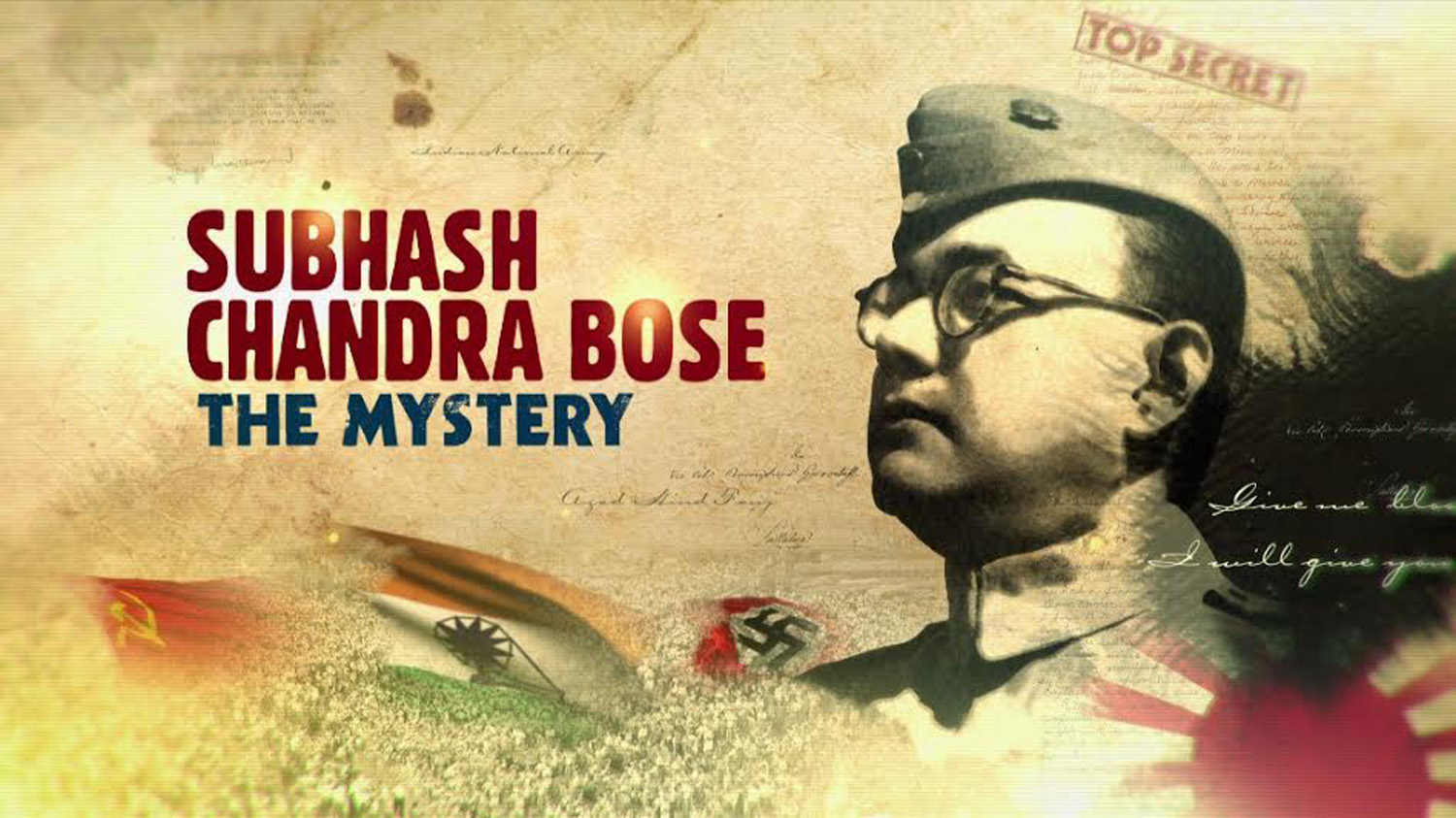
    Now here to add to material on the subject is Discovery Channel which is all set to air Subhash Chandra Bose: The Mystery on 18 July at 9 pm. The documentary has been produced by Iqbal and Anu Malhotra’s AIM Television and seeks to track what happened to Netaji.

    The enduring question spans a complex web of characters, places and international politics. Did Bose die in a plane crash in Taipei as officially accepted? Is it true that Bose returned to India and lived incognito as a wandering monk? Why did the Government of India kept the files relating to his death secret for 70 years? What’s in the files declassified in January 2016?

    Shot in three counties, including Russia, India and the UK by a crew of 12 , the film is focused on the mystery post Netaji’s disappearance and it documents many of his personal stories and experiences.

    Says Subhash Chandra Bose: The Mystery chief assistant director Meghna Talwar: “The challenge while starting the project was the enormous information available on him, to filter out and find the right leads from available information was the first task.”

    The documentary follows an enterprising young NRI, Sidhartha Satbhai who commissioned Neil Millar, a former veteran of the Royal Signals Regiment of the British Army, to conduct an image analysis on video and photographic material supplied to him by an internet group, Anonymous. The footage pertains to an individual referred to as ‘The Tashkent Man’, who was present during the Indo-Pak Tashkent Declaration of 10 January 1966. Through modern scientific and facial analysis, the investigation points to the possibility that the bespectacled man could be Netaji. The report also infers that if Netaji was present in the Tashkent Declaration in 1966, he could not have died in the plane crash on August 18, 1945, as officially reported.

    The film then reveals the story of Leon Prouchandy, a forgotten chapter in the history of the Indian National Army. His story told by his grandson Prashant More raises yet another question in the enduring mystery of Subhash Chandra Bose. According to author and historian Prashant More, the day Bose supposedly died in the plane crash in Taipei, he was at the Prouchandy Mansion in Saigon (present day Vietnam). He believes that Bose entrusted the INA’s substantial finances to Leon Prouchandy, one of the key figures in Bose’s operations in South East Asia.

    The documentary then brings in Purabi Roy, Author and Visiting Professor at Moscow State University and Major General Alexandr Kolesnikov, Retired Major General of the Warsaw Pact, who draw upon critical information from Russian archives regarding Netaji’s presence in Post-World War II Russia.

    Further in the film, Prathama Banerjee, Historian and Associate Professor at The Centre for the Study of Developing Societies (CSDS) sheds light on the rise of secret societies in pre-Independence India, their influence, the leftist leanings of Bose as President of the Indian National Congress and his association with members of the Communist party.

    The film also interrogates Netaji’s associates and his family including his grandnephews Ashish Ray and Abhijit Ray. Abhijit retraces Netaji’s steps and narrates his meticulous and planned escape in 1941 from his ancestral house at Elgin Road, Calcutta to Berlin under a new Italian identity and further raising a Regiment in the German Army, the Wehrmacht.

    The production team has also recreated few of incidents and has shown a photographic collection.

    Putting various perspectives in one frame, Subhash Chandra Bose: The mystery underlines various controversies and surmises if the Bose mystery is an International conspiracy of silence or does the Indian government already has the answers?

    Shot in English, it is also likely that it will be shown with a Hindi, Tamil. Telugu and Bengali dub. The repeat is also scheduled on July 19 2016 at 9AM, July 23 at 3PM, and July 24 at 8PM.

    Malhotra is expecting the film to get popular among scholars, researchers, students and experts, since it compiles information from various sources. And he expects it to get Bengal viewers to tune in to it, considering Netaji’s huge cachet in the region.

  • Discovery & AIM Television bring Netaji docu on air on 18 July

    Discovery & AIM Television bring Netaji docu on air on 18 July

    MUMBAI: A lot of curiosity has arisen about what really happened to Netaji Subhash Chandra Bose and the declassification by the Modi government of files concealed for decades has heightened interest in it.

    Now here to add to material on the subject is Discovery Channel which is all set to air Subhash Chandra Bose: The Mystery on 18 July at 9 pm. The documentary has been produced by Iqbal and Anu Malhotra’s AIM Television and seeks to track what happened to Netaji.

    The enduring question spans a complex web of characters, places and international politics. Did Bose die in a plane crash in Taipei as officially accepted? Is it true that Bose returned to India and lived incognito as a wandering monk? Why did the Government of India kept the files relating to his death secret for 70 years? What’s in the files declassified in January 2016?

    Shot in three counties, including Russia, India and the UK by a crew of 12 , the film is focused on the mystery post Netaji’s disappearance and it documents many of his personal stories and experiences.

    Says Subhash Chandra Bose: The Mystery chief assistant director Meghna Talwar: “The challenge while starting the project was the enormous information available on him, to filter out and find the right leads from available information was the first task.”

    The documentary follows an enterprising young NRI, Sidhartha Satbhai who commissioned Neil Millar, a former veteran of the Royal Signals Regiment of the British Army, to conduct an image analysis on video and photographic material supplied to him by an internet group, Anonymous. The footage pertains to an individual referred to as ‘The Tashkent Man’, who was present during the Indo-Pak Tashkent Declaration of 10 January 1966. Through modern scientific and facial analysis, the investigation points to the possibility that the bespectacled man could be Netaji. The report also infers that if Netaji was present in the Tashkent Declaration in 1966, he could not have died in the plane crash on August 18, 1945, as officially reported.

    The film then reveals the story of Leon Prouchandy, a forgotten chapter in the history of the Indian National Army. His story told by his grandson Prashant More raises yet another question in the enduring mystery of Subhash Chandra Bose. According to author and historian Prashant More, the day Bose supposedly died in the plane crash in Taipei, he was at the Prouchandy Mansion in Saigon (present day Vietnam). He believes that Bose entrusted the INA’s substantial finances to Leon Prouchandy, one of the key figures in Bose’s operations in South East Asia.

    The documentary then brings in Purabi Roy, Author and Visiting Professor at Moscow State University and Major General Alexandr Kolesnikov, Retired Major General of the Warsaw Pact, who draw upon critical information from Russian archives regarding Netaji’s presence in Post-World War II Russia.

    Further in the film, Prathama Banerjee, Historian and Associate Professor at The Centre for the Study of Developing Societies (CSDS) sheds light on the rise of secret societies in pre-Independence India, their influence, the leftist leanings of Bose as President of the Indian National Congress and his association with members of the Communist party.

    The film also interrogates Netaji’s associates and his family including his grandnephews Ashish Ray and Abhijit Ray. Abhijit retraces Netaji’s steps and narrates his meticulous and planned escape in 1941 from his ancestral house at Elgin Road, Calcutta to Berlin under a new Italian identity and further raising a Regiment in the German Army, the Wehrmacht.

    The production team has also recreated few of incidents and has shown a photographic collection.

    Putting various perspectives in one frame, Subhash Chandra Bose: The mystery underlines various controversies and surmises if the Bose mystery is an International conspiracy of silence or does the Indian government already has the answers?

    Shot in English, it is also likely that it will be shown with a Hindi, Tamil. Telugu and Bengali dub. The repeat is also scheduled on July 19 2016 at 9AM, July 23 at 3PM, and July 24 at 8PM.

    Malhotra is expecting the film to get popular among scholars, researchers, students and experts, since it compiles information from various sources. And he expects it to get Bengal viewers to tune in to it, considering Netaji’s huge cachet in the region.

  • Travelxp and Prashant Chothani’s  4K drive

    Travelxp and Prashant Chothani’s 4K drive

    MUMBAI: Prashant Chothani is a man on a mission. The veteran cable TV professional-turned-Zee TV-associate-turned TV broadcaster has marked two dates in his calendar – October 2016 and February 2017. The founder and CEO of Travelxp- the Indian travel lifestyle channel  – has set his sights on launching his channel in 4K globally in order  to engage even international viewers by one of those two dates.

    Says Chothani:  “We have shot 100 hours of UHD (Ultra High Definition) 4K content and need another 50 hours of content to launch a full fledged 4K channel.”

    It’s almost as if a race is on. And it’s a race he has ventured into by himself. Ever since he started dabbling in filming travel and lifestyle shows in 4K  and got pole-vaulted into an elite group of 4K content pioneers thanks to MipTV and Mipcom  in Cannes, the format has been coursing through his veins and keeping him awake night and day.

    So much so that he has invested around $2 million in producing his shows in 4K over the past year or so.  That kind of investment – when the entire channel Travelxp is turning over an estimated $3 million in revenues (both advertising and subscription)  –  shows his commitment and optimism about the future of UHD  content and to be a pioneer.

    “The process of 4K is long and time consuming and one needs a lot of investment and patience for this transition. We were amongst the first to begin the shift from Standard Definition to High Definition. And now we are all up for new age of 4k. As an Indian production company, we are setting the standards for 4K. We are very proud of that,” says  Chothani excitedly.

    He and his Travelxp team have shot in about 10 countries including a series in India with a plan to produce more indigenous content.  4K TV productions cost about four times more than a HD shoot. Travel shows take about six to eight months to complete with a crew of six to eight once again.  

    Chothani has invested a few million dollars in the 4K production pipeline. Travelxp owns Sony F5S cameras with Canon lenses. Colour grading is done on DaVinci Resolve machines. 4K requires terabytes of storage and processing the content requires high speed machines  for rendering. The in-house production team at Travelxp is using Apple Pro modified machines to process the heavy raw footage.

    He reveals that he challenge lay in selecting the right equipment which would allow him to maintain image and video quality in natural light. He and his team have done what Indians are known for “juggad” or innovating to get things working in the Indian ecosystem.

    “We are the first ones to attempt this, so the learning was on the job. We made our mistakes, but learned as we went along,” says Chothani “The HD to 4K transformation is not easy for anyone. It will take undoing what is done and unlearning what production houses already know. Old infrastructure is not compatible for such a change.”

    The advantage of 4K is the color quality, picture depth and image sharpness it offers to viewers. The viewer feels like he is experiencing each frame live with his naked eyes. One can see every inch of detail from blossoming flowers to morning dew and each merging shade of rainbow on one’s screen. Sports and travel and lifestyle content come out best when viewed in 4K.

    Chothani has been filming keeping in mind the evolution of UHD standards set by the UHD Alliance recently. These state that for a production to be labeled as High Dynamic Range (HDR) 4K, it has to be shot at a 10 bit rate at 50 frames per second (fps) and 2100 REC with the pixel set at 3,840 X 2,160 and 16:9 format. But he and his team have filmed their 100 hours of content at 4K SDR (standard dynamic range) with the bitrate at 16 and at 50 fps. This Chothani states will allow all the content to be upgraded to 4K HDR rather easily. Says he: “We have kept the shooting quality with both the SDR and HDR options being open to us.”

    It’s not as if the 4K HDR road is going to be easy and paved with gold.  An estimated 30 million 4K TV sets or receivers have been purchased by TV viewers globally.  But these are SDR sets and most will have to be replaced or use Hybrid Log Gamma tech to allow viewers to enjoy the better picture quality that HDR yields. And brands like Sony and Videocon have started manufacturing TVs matching the new 4K HDR standards.

    Then there is the question of distribution via satellite. Each 4K channel requires 25 Mbps of bandwidth on a transponder. That means expenses. Chothani is in talks with satellite capacity providers such as with SES, Eutelsat, Measat and Hispasat. He says 20 distribution platforms worldwide have already agreed to carry Travel Xp 4K once it begins telecasting.

    According to Chothani, it took some time and tedium for the industry and viewers to shift from standard definition to high definition viewing.  Around 50 channels in India out of the 800 odd are beaming in HD, making it an eight to 10 per cent  ratio.  Chothani predicts that 8-10 per cent of HD channels will also likely transition to 4K in the short run.  “The challenge is truly big, but change indeed is the only constant,” he says with a shrug of his shoulders.  “And I indeed want to be ahead of the curve.”

    Spoken like a true pioneer.

  • Travelxp and Prashant Chothani’s  4K drive

    Travelxp and Prashant Chothani’s 4K drive

    MUMBAI: Prashant Chothani is a man on a mission. The veteran cable TV professional-turned-Zee TV-associate-turned TV broadcaster has marked two dates in his calendar – October 2016 and February 2017. The founder and CEO of Travelxp- the Indian travel lifestyle channel  – has set his sights on launching his channel in 4K globally in order  to engage even international viewers by one of those two dates.

    Says Chothani:  “We have shot 100 hours of UHD (Ultra High Definition) 4K content and need another 50 hours of content to launch a full fledged 4K channel.”

    It’s almost as if a race is on. And it’s a race he has ventured into by himself. Ever since he started dabbling in filming travel and lifestyle shows in 4K  and got pole-vaulted into an elite group of 4K content pioneers thanks to MipTV and Mipcom  in Cannes, the format has been coursing through his veins and keeping him awake night and day.

    So much so that he has invested around $2 million in producing his shows in 4K over the past year or so.  That kind of investment – when the entire channel Travelxp is turning over an estimated $3 million in revenues (both advertising and subscription)  –  shows his commitment and optimism about the future of UHD  content and to be a pioneer.

    “The process of 4K is long and time consuming and one needs a lot of investment and patience for this transition. We were amongst the first to begin the shift from Standard Definition to High Definition. And now we are all up for new age of 4k. As an Indian production company, we are setting the standards for 4K. We are very proud of that,” says  Chothani excitedly.

    He and his Travelxp team have shot in about 10 countries including a series in India with a plan to produce more indigenous content.  4K TV productions cost about four times more than a HD shoot. Travel shows take about six to eight months to complete with a crew of six to eight once again.  

    Chothani has invested a few million dollars in the 4K production pipeline. Travelxp owns Sony F5S cameras with Canon lenses. Colour grading is done on DaVinci Resolve machines. 4K requires terabytes of storage and processing the content requires high speed machines  for rendering. The in-house production team at Travelxp is using Apple Pro modified machines to process the heavy raw footage.

    He reveals that he challenge lay in selecting the right equipment which would allow him to maintain image and video quality in natural light. He and his team have done what Indians are known for “juggad” or innovating to get things working in the Indian ecosystem.

    “We are the first ones to attempt this, so the learning was on the job. We made our mistakes, but learned as we went along,” says Chothani “The HD to 4K transformation is not easy for anyone. It will take undoing what is done and unlearning what production houses already know. Old infrastructure is not compatible for such a change.”

    The advantage of 4K is the color quality, picture depth and image sharpness it offers to viewers. The viewer feels like he is experiencing each frame live with his naked eyes. One can see every inch of detail from blossoming flowers to morning dew and each merging shade of rainbow on one’s screen. Sports and travel and lifestyle content come out best when viewed in 4K.

    Chothani has been filming keeping in mind the evolution of UHD standards set by the UHD Alliance recently. These state that for a production to be labeled as High Dynamic Range (HDR) 4K, it has to be shot at a 10 bit rate at 50 frames per second (fps) and 2100 REC with the pixel set at 3,840 X 2,160 and 16:9 format. But he and his team have filmed their 100 hours of content at 4K SDR (standard dynamic range) with the bitrate at 16 and at 50 fps. This Chothani states will allow all the content to be upgraded to 4K HDR rather easily. Says he: “We have kept the shooting quality with both the SDR and HDR options being open to us.”

    It’s not as if the 4K HDR road is going to be easy and paved with gold.  An estimated 30 million 4K TV sets or receivers have been purchased by TV viewers globally.  But these are SDR sets and most will have to be replaced or use Hybrid Log Gamma tech to allow viewers to enjoy the better picture quality that HDR yields. And brands like Sony and Videocon have started manufacturing TVs matching the new 4K HDR standards.

    Then there is the question of distribution via satellite. Each 4K channel requires 25 Mbps of bandwidth on a transponder. That means expenses. Chothani is in talks with satellite capacity providers such as with SES, Eutelsat, Measat and Hispasat. He says 20 distribution platforms worldwide have already agreed to carry Travel Xp 4K once it begins telecasting.

    According to Chothani, it took some time and tedium for the industry and viewers to shift from standard definition to high definition viewing.  Around 50 channels in India out of the 800 odd are beaming in HD, making it an eight to 10 per cent  ratio.  Chothani predicts that 8-10 per cent of HD channels will also likely transition to 4K in the short run.  “The challenge is truly big, but change indeed is the only constant,” he says with a shrug of his shoulders.  “And I indeed want to be ahead of the curve.”

    Spoken like a true pioneer.

  • Content Tokyo: A doorway for Indian companies into Japan

    Content Tokyo: A doorway for Indian companies into Japan

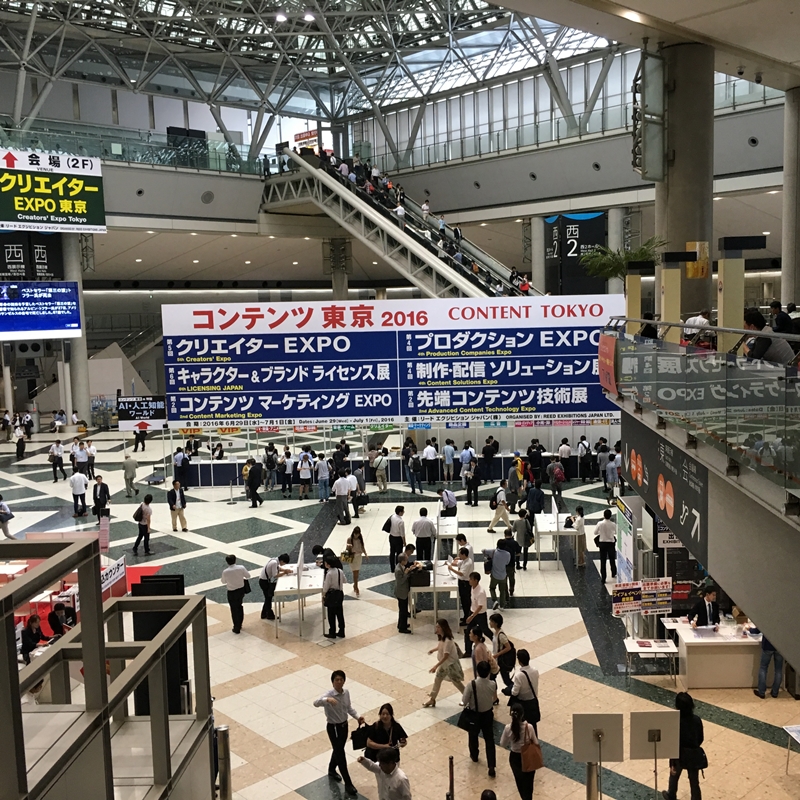
    MUMBAI: Your breath is sucked out of your lungs as you walk through the sky walk from the 800 room Washington Ariake Hotel and set your eyes upon The Big Sight in the Ariake district of Tokyo. Home to some of the largest exhibitions in Tokyo, it is Japan’s largest and most impressive exhibition and convention centre; its scale is something we Indians are not quite used to.

    From the outside it looks like two gigantic inverted funnel cones have been placed side by side and connected easily and invisibly. Its geometry grabs you and makes you look again and again.

    And when you step into its portals, its scale is what grabs you and then you hear that there is the east side and the west side to the Big Sight. How much bigger than that can you get? Indiantelevision.com and Animationxpress were the sole Indian invitees to Reed Exhibitions Content Tokyo, which took place over last weekend over three days between 29 June and 1 July.

    A very Japan focused event, Content Tokyo had six different exhibitions under its umbrella – Production Companies Expo, Creators’ Expo, Licensing Japan, Advanced Content Technology Expo, Content Solutions Expo and Content Marketing Expo. An amazing number of showcases from game creators, licensors and merchandising companies, virtual reality producers, artificial intelligence ventures, content marketing online, animation studios brand solutions for digital advertisers, artists, photographers, illustrators, caricaturists, game creators, comic artists, Japanese majors such as Panasonic, Nissan Motor Co, NTT Communications, Sony Music and Akamai, and event exhibition solutions providers made the event extremely interesting.

    Altogether some 1,530 exhibitors, of which about 100 were from other Asian countries from South Korea, Thailand, Taiwan, Vietnam, China, Indonesia had pitched their stands over the two floors of Big Sight. The three day event had 40,000 footfalls from qualified business visitors, and Reed Exhibitions Japan director, group VP, international, sales and marketing division Hajime Suzuki says that there was a 25-30 per cent hike in attendance this year. And that the international visitors are around 8-10 per cent.

    There was something for everybody in the various zones which included: The Video/CG Zone, Video Marketing Zone, Marketing Technology Zone, Anime/Manga Zone, Web/App Zone, Advertising/Design Printing Zone, Music/Sound Zone, the Robot Zone, Management/Dsitribution solution Zone, Content Business Supporting Zone, the local government zone, Content Production Tool Zone, ebook/epublishing zone, the Art &Design Café, and the Taiwan Pavilion.

    The massive Creators Expo had more than 700 local Japanese creative professionals exhibiting their talents – designers, music/sound creators’ zone, video/animation/CG creator zone, Photographer zone, Author/Writer Zone, Calligrapher Zone, Game Centre Zone, Manga/Comic Artist Zone, Art Zone and the Picture Book Zone.

    A standout was the virtual reality games solutions and software/Artificial Intelligence area where companies tested their new offerings, offered content production and data analysis and prediction services. The Licensing Zone attracted 220 exhibitors and the characters which were looking for licensees included: Godzilla, Detective Conan, Rilakkuma, Hanakappa, Kanahei’s Small Animals, Monchhichi, Peko, The PowerPuff Girls, The Smurfs, Beavis and Butthead, Where’s Wally, Ghostbusters, and Rody. Nissan, Rover, Japan Airlines, Hershey’s, Laura Ashley, Lamborghini, and Jeep were some of the brands offering licensing partnerships.

    The Creators’ Zone with its mind warping display of Japan’s emerging talent in every creative space kept you engrossed and left you open mouthed. Reed Exhibitions’ Suzuki revealed that this zone offered the talented creators an opportunity to get in direct contact with clients and has been growing annually.

    So does it make sense for Indian – and South Asian – entertainment companies to attend Content Tokyo? From our perspective, Indiantelevision.com will definitely go again. Even exhibit, if possible. If there is a short coming of Content Tokyo, it is the fact it is very Japan focused, but given Suzuki’s intention to attract more international players that could change over time. The positive of the Japan focus is that it will help South Asian or Indian companies to get a deep dive into the Japanese entertainment market. However, they would do well to have an interpreter or someone with Japanese proficiency along. Almost 90 per cent of exhibitors and attendees speak Japanese and sparing English, though more of them are hiring an interpreter themselves to accelerate the internationalization that’s set to hit Content Tokyo.

    Suzuki explained that he has been tasked with the responsibility of bringing in more international participation and he is quite bullish about India.

    “Animation, gaming companies from India and Japan can work together,” he said. “Indian studios should take advantage of this opportunity and exhibit here. India and Japan are working closely together in many sectors. The media and entertainment sector could be given closer collaborative attention by companies from both countries.”

    Will his intention become a reality? It’s over to industry now.

  • Content Tokyo: A doorway for Indian companies into Japan

    Content Tokyo: A doorway for Indian companies into Japan

    MUMBAI: Your breath is sucked out of your lungs as you walk through the sky walk from the 800 room Washington Ariake Hotel and set your eyes upon The Big Sight in the Ariake district of Tokyo. Home to some of the largest exhibitions in Tokyo, it is Japan’s largest and most impressive exhibition and convention centre; its scale is something we Indians are not quite used to.

    From the outside it looks like two gigantic inverted funnel cones have been placed side by side and connected easily and invisibly. Its geometry grabs you and makes you look again and again.

    And when you step into its portals, its scale is what grabs you and then you hear that there is the east side and the west side to the Big Sight. How much bigger than that can you get? Indiantelevision.com and Animationxpress were the sole Indian invitees to Reed Exhibitions Content Tokyo, which took place over last weekend over three days between 29 June and 1 July.

    A very Japan focused event, Content Tokyo had six different exhibitions under its umbrella – Production Companies Expo, Creators’ Expo, Licensing Japan, Advanced Content Technology Expo, Content Solutions Expo and Content Marketing Expo. An amazing number of showcases from game creators, licensors and merchandising companies, virtual reality producers, artificial intelligence ventures, content marketing online, animation studios brand solutions for digital advertisers, artists, photographers, illustrators, caricaturists, game creators, comic artists, Japanese majors such as Panasonic, Nissan Motor Co, NTT Communications, Sony Music and Akamai, and event exhibition solutions providers made the event extremely interesting.

    Altogether some 1,530 exhibitors, of which about 100 were from other Asian countries from South Korea, Thailand, Taiwan, Vietnam, China, Indonesia had pitched their stands over the two floors of Big Sight. The three day event had 40,000 footfalls from qualified business visitors, and Reed Exhibitions Japan director, group VP, international, sales and marketing division Hajime Suzuki says that there was a 25-30 per cent hike in attendance this year. And that the international visitors are around 8-10 per cent.

    There was something for everybody in the various zones which included: The Video/CG Zone, Video Marketing Zone, Marketing Technology Zone, Anime/Manga Zone, Web/App Zone, Advertising/Design Printing Zone, Music/Sound Zone, the Robot Zone, Management/Dsitribution solution Zone, Content Business Supporting Zone, the local government zone, Content Production Tool Zone, ebook/epublishing zone, the Art &Design Café, and the Taiwan Pavilion.

    The massive Creators Expo had more than 700 local Japanese creative professionals exhibiting their talents – designers, music/sound creators’ zone, video/animation/CG creator zone, Photographer zone, Author/Writer Zone, Calligrapher Zone, Game Centre Zone, Manga/Comic Artist Zone, Art Zone and the Picture Book Zone.

    A standout was the virtual reality games solutions and software/Artificial Intelligence area where companies tested their new offerings, offered content production and data analysis and prediction services. The Licensing Zone attracted 220 exhibitors and the characters which were looking for licensees included: Godzilla, Detective Conan, Rilakkuma, Hanakappa, Kanahei’s Small Animals, Monchhichi, Peko, The PowerPuff Girls, The Smurfs, Beavis and Butthead, Where’s Wally, Ghostbusters, and Rody. Nissan, Rover, Japan Airlines, Hershey’s, Laura Ashley, Lamborghini, and Jeep were some of the brands offering licensing partnerships.

    The Creators’ Zone with its mind warping display of Japan’s emerging talent in every creative space kept you engrossed and left you open mouthed. Reed Exhibitions’ Suzuki revealed that this zone offered the talented creators an opportunity to get in direct contact with clients and has been growing annually.

    So does it make sense for Indian – and South Asian – entertainment companies to attend Content Tokyo? From our perspective, Indiantelevision.com will definitely go again. Even exhibit, if possible. If there is a short coming of Content Tokyo, it is the fact it is very Japan focused, but given Suzuki’s intention to attract more international players that could change over time. The positive of the Japan focus is that it will help South Asian or Indian companies to get a deep dive into the Japanese entertainment market. However, they would do well to have an interpreter or someone with Japanese proficiency along. Almost 90 per cent of exhibitors and attendees speak Japanese and sparing English, though more of them are hiring an interpreter themselves to accelerate the internationalization that’s set to hit Content Tokyo.

    Suzuki explained that he has been tasked with the responsibility of bringing in more international participation and he is quite bullish about India.

    “Animation, gaming companies from India and Japan can work together,” he said. “Indian studios should take advantage of this opportunity and exhibit here. India and Japan are working closely together in many sectors. The media and entertainment sector could be given closer collaborative attention by companies from both countries.”

    Will his intention become a reality? It’s over to industry now.