Category: Animation

  • 16 brands line up to ‘Find Dory’ in India

    16 brands line up to ‘Find Dory’ in India

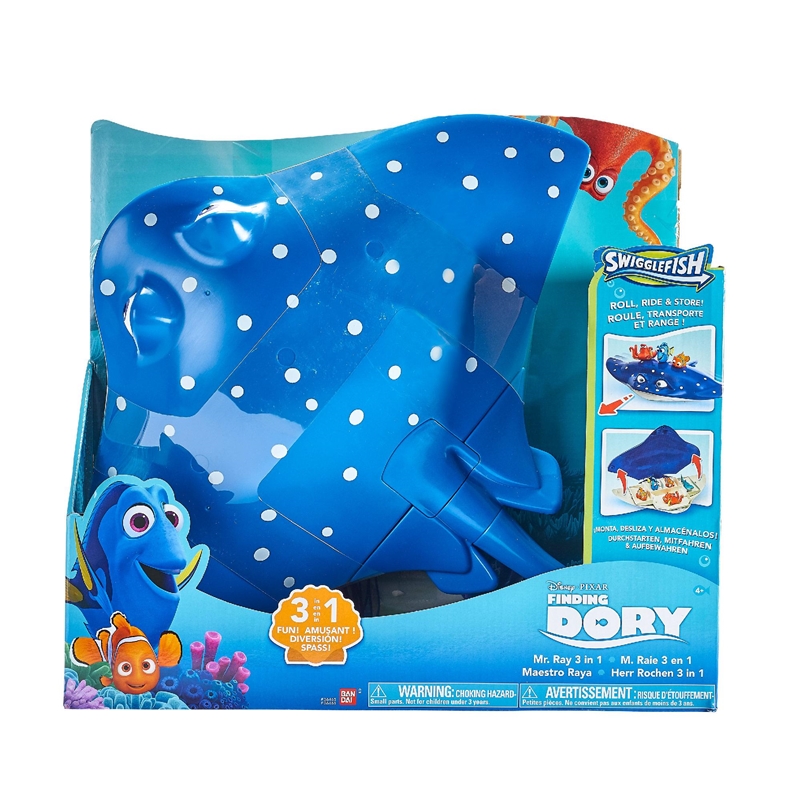
    MUMBAI: It’s not just the Finding Nemo fans who are impatiently waiting to throng the theatres for its sequel Finding Dory, several brands are equally excited for the latest animated delight from Pixar and Disney that will release on 17 June in Hindi and English in 2D, 3D and IMAX formats across 600 screens in India.

    Including Myntra, Bioworld, Trucare, Hamleys, Gingercrush, Firstcry,  Colgate and Yakult — as many as 16 Indian brands have come on board to celebrate the animated adventures Nemo, Dory and Marlin. As per Disney India, that is the highest number of brand integrations that any animated movie has achieved in India. 

    Which doesn’t come as a surprise given the increasing importance of kids in purchase decisions in families as per industry recognised Turner’s New Generations report 2016. With the growing popularity of animated movies in India amongst kids, brands too are paying keen attention and increasing their visibility.  

    Explaining why Finding Dory would strike a chord with a larger audience, Disney India consumer products head and VP Abhishek Maheshwari said, “Finding Nemo was one of the most successful Disney and Pixar movies and we are very confident that the then younger audience, who are now grown up to be young adults or parents will come watch Finding Dory and at the same time introduce the franchise and its lovable characters to their kids, nephews and nieces.”

    Apart from the usual brands that are believed to have kids as their primary TG, Finding Dory has seen media promotions and merchandising deals across a wide range of categories.  While Myntra, Bioworld and Trucare have signed merchandising deals for its apparel range , brands My Baby Excel, Frank and  Rowan have struck merchandising deals to launch for the new Finding Dory toys product line. 

    Excited about launching an apparel collection for the much anticipated Disney film, Myntra Fashion Brands head Abhishek Verma said, “The in-house brand, YK (Yellow Kite) has specially associated with Disney for a fun filled Finding Dory kids wear collection. We are extremely excited about our collaboration and look forward to its success”.

    In the household segment, Essfil is producing special Finding Dory themed frames and mugs, while Raghuvir Lifestyle  is weaving bedsheets with the colourful characters on. 

    For the consumer electronics segment, Macmerise and Hamee have signed deals for their power banks and mobile covers.

    Retail and eCommerce players didn’t lose out either in making the most of the eyeballs the movie promises to grab with Hamleys, Gingercrush and  Firstcry on board as brand partners. 

    “Activations around movies gives us a good opportunity to engage with the customers and create lasting impressions, especially if there is good movie merchandise available. Finding Dory is one such successful story where we are seeing a lot of traction on the sales front with animatronic models of Dory, Nemo and others selling as hot cakes in our stores even before the movie hits the theatres. We are planning multiple activities across our stores in association with Disney over the next two weeks to promote the movie and the merchandise,” shared Hamleys head of products Manu Sharma on how associating with animated films that targets kids is a significant marketing move for brands.

    The media spends for the movie’s promotion are in the range of between Rs 75 lakh to Rs 1 crore approximately for each media association, while the merchandising deals for toys and apparels  etc., start at Rs 50 lakh and go up to Rs 1 crore as well.  As per industry estimates, these brand associations amount to between Rs 15and 18 crore worth of media value for the studio. 

    Going by insights from media management agencies, brands like Hamleys and Yakult with kids as their TG would predominantly spend on kids channels for media promotions of the movie, followed by English GEC channels to target young parents. 

    Apart from the media promotional deals that the studio has signed with Colgate and Yakult, Disney has focused the film’s marketing strategy on two key points — firstly, it reached  out to Finding Nemo fans and built affinity towards Dory among kids; and secondly by creating a local relativity in the market by inducing local elements.

    The film was dubbed in Hindi with dialogues written by Mayur Puri. Puri and his team of writers along with the extraordinary voice cast have given a unique twist to the Hindi dubbed version of Finding Dory, by giving the characters special localized accents – such as the Nawabi Sea Lions as seen in the Hindi trailer.

    Speaking of his association, Puri said, “After The Jungle Book and Captain America: Civil War, this is my third project with Disney India and I cannot think of a better project to complete our ‘hat-trick’. It has been a learning experience as well as a joyride to bring Dory, Nemo and a host of new adorable characters to life. I’m extremely proud of the Hindi version which keeps the essence of the original intact but is more relatable for the Indian audience.”

    Disney India had earlier used the same strategy which successfully worked for its popular international release The Jungle Book. 

    Disney’s marketing strategy further included tie-ups with media houses to host special ‘Bring your kids to work’ activities wherein kids were treated to fun Dory related activities to build affinity towards the character.

    In addition, Disney India has partnered with PVR cinemas for on ground activities like  ‘Doryminders’, reminding people of movie going etiquette and the ‘Finding Dory’ treasure hunt, which allows lucky moviegoers to win exciting prices. Disney has also partnered with Imagica and Hamleys for Dory centric activities and photo opportunities with interactive standees.

  • DQ Entertainment revenue up, reports profits in FY-16

    DQ Entertainment revenue up, reports profits in FY-16

    BENGALURU: The Tapas Chakravarti led DQ Entertainment (International) Limited (DQEIL) reported 8 percent growth in total income from operations (TIO) for the fiscal ended 31 March, 2016 (FY-16, current year) as compared to the previous year. The company has reported Profit after tax (PAT) of Rs 29.94 crore (14.2 percent PAT margin of TIO) in FY-16 as compared to a loss of Rs 19.71 crore in FY-15. The company reported TIO of Rs 210.39 crore in the current year as compared to Rs 194.80 crore in the previous year.

    Note: The unit of currency in this report is the Indian rupee – Rs (also conventionally represented by INR). The Indian numbering system or the Vedic numbering system has been used to denote money values. The basic conversion to the international norm would be:
    (a) 100,00,000 = 100 lakh = 10,000,000 = 10 million = 1 crore.
    (b) 10,000 lakh = 100 crore = 1 arab = 1 billion.

    Segment Performance

    The company’s Animation segment reported an operating profit of Rs 72.94 crore in FY-16 from operating revenue of Rs 164.29 crore as compared to the operating profit of Rs 70.27 crore from operating revenue of Rs 142.34 crore in FY-15.

    The company’s distribution segment reported an operating loss of Rs 13.57 crore on operating revenue of Rs 46.11 crore in FY-116 as compared to an operating profit of Rs 13.67 crore on operating revenue of Rs 52.46 crore in FY-15.

    Let us look at the other numbers reported by DQEIL

    Total Expenditure in FY-16 increased 25.3 percent to Rs 164.50 crore (78.2 percent of TIO) from Rs 131.31 crore (84. percent of TIO) in the previous year.

    The company’s finance expense in FY-16 increased 38.3 percent at Rs 59.09 crore (28.1 percent of TIO) as compared to the Rs 42.73 crore (21.9 percent of TIO) in FY-15.

    DQEIL Production expense (PE) in FY-16 reduced 48.9 percent to Rs 11.06 crore (5.3 percent of TIO) from Rs 21.63 crore (11.1 percent of TIO) in the previous year.

    The company’s Employee Expense (EBE) in FY-16 at Rs 54.13 crore (25.97 percent of TIO) reduced 15 percent from Rs 63.71 crore (32.7 percent of TIO) in FY-15.

    Company speak

    The company in its earnings release says, “Our drive is to improve the collections from customers even if it leads to short term reduction of revenue. We see that with the market improving worldwide we will be able to meet the dual objective of reducing debtors while securing good orders from the customers. We have a strong visibility of orders for production for the next 18-24 months.”

    “In order to map our specialized offerings better with the market opportunities, we have streamlined our business divisions into Animation including VFX and Licensing and Distribution including digital media. 

  • DQ Entertainment revenue up, reports profits in FY-16

    DQ Entertainment revenue up, reports profits in FY-16

    BENGALURU: The Tapas Chakravarti led DQ Entertainment (International) Limited (DQEIL) reported 8 percent growth in total income from operations (TIO) for the fiscal ended 31 March, 2016 (FY-16, current year) as compared to the previous year. The company has reported Profit after tax (PAT) of Rs 29.94 crore (14.2 percent PAT margin of TIO) in FY-16 as compared to a loss of Rs 19.71 crore in FY-15. The company reported TIO of Rs 210.39 crore in the current year as compared to Rs 194.80 crore in the previous year.

    Note: The unit of currency in this report is the Indian rupee – Rs (also conventionally represented by INR). The Indian numbering system or the Vedic numbering system has been used to denote money values. The basic conversion to the international norm would be:
    (a) 100,00,000 = 100 lakh = 10,000,000 = 10 million = 1 crore.
    (b) 10,000 lakh = 100 crore = 1 arab = 1 billion.

    Segment Performance

    The company’s Animation segment reported an operating profit of Rs 72.94 crore in FY-16 from operating revenue of Rs 164.29 crore as compared to the operating profit of Rs 70.27 crore from operating revenue of Rs 142.34 crore in FY-15.

    The company’s distribution segment reported an operating loss of Rs 13.57 crore on operating revenue of Rs 46.11 crore in FY-116 as compared to an operating profit of Rs 13.67 crore on operating revenue of Rs 52.46 crore in FY-15.

    Let us look at the other numbers reported by DQEIL

    Total Expenditure in FY-16 increased 25.3 percent to Rs 164.50 crore (78.2 percent of TIO) from Rs 131.31 crore (84. percent of TIO) in the previous year.

    The company’s finance expense in FY-16 increased 38.3 percent at Rs 59.09 crore (28.1 percent of TIO) as compared to the Rs 42.73 crore (21.9 percent of TIO) in FY-15.

    DQEIL Production expense (PE) in FY-16 reduced 48.9 percent to Rs 11.06 crore (5.3 percent of TIO) from Rs 21.63 crore (11.1 percent of TIO) in the previous year.

    The company’s Employee Expense (EBE) in FY-16 at Rs 54.13 crore (25.97 percent of TIO) reduced 15 percent from Rs 63.71 crore (32.7 percent of TIO) in FY-15.

    Company speak

    The company in its earnings release says, “Our drive is to improve the collections from customers even if it leads to short term reduction of revenue. We see that with the market improving worldwide we will be able to meet the dual objective of reducing debtors while securing good orders from the customers. We have a strong visibility of orders for production for the next 18-24 months.”

    “In order to map our specialized offerings better with the market opportunities, we have streamlined our business divisions into Animation including VFX and Licensing and Distribution including digital media. 

  • VIZ Media To Develop Original Animated Kids Series GAKKIMALS

    VIZ Media To Develop Original Animated Kids Series GAKKIMALS

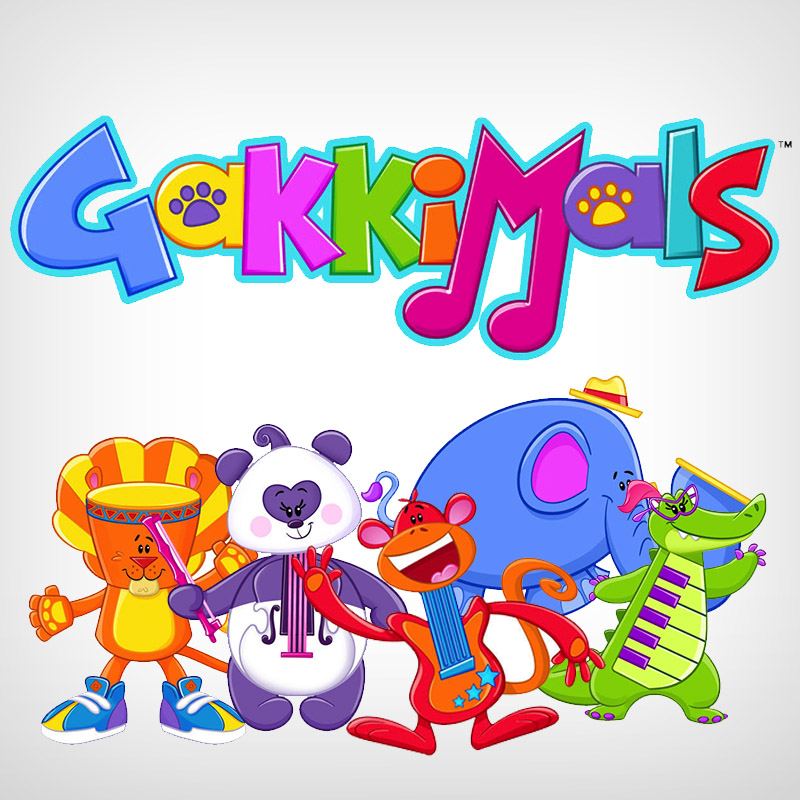
    SAN FRANCISCO /PRNewswire/ — VIZ Media, LLC (VIZ Media), a premier company in the field of publishing, animation distribution, and global entertainment licensing, has acquired the production and licensing rights to develop an original animated series based on the Japanese children’s property, GAKKIMALS.

    The series will be produced under license from ShoPro, a subsidiary of three of Japan’s largest publishing houses, Shogakukan Inc., Shueisha Inc. and Hakusensha Inc., that focuses on licensing and merchandising the properties owned by Shogakukan Inc. GAKKIMALS is based on an original concept created by Japanese production duo, PecanNuts.

    Welcome to the wonderful adventures of the GAKKIMALS, where madcap mash-ups of musical instruments and animals combine to bring happiness and harmony to their fun-filled world.

    “The acquisition of GAKKIMALS represents an important step in our initiative to develop new and engaging global content in partnership with our creative partners in Japan,” says Brad Woods, CMO, VIZ Media. “GAKKIMALS is a truly unique children’s property that combines the evergreen appeal of music and animals into a vibrant environment that inspires early childhood learning with a fun cast of endearing characters. We look forward to working closely with our partners at ShoPro to develop this exciting new show.”

    For more information on GAKKIMALS and other titles available from VIZ Media, please visit www.VIZ.com

  • VIZ Media To Develop Original Animated Kids Series GAKKIMALS

    VIZ Media To Develop Original Animated Kids Series GAKKIMALS

    SAN FRANCISCO /PRNewswire/ — VIZ Media, LLC (VIZ Media), a premier company in the field of publishing, animation distribution, and global entertainment licensing, has acquired the production and licensing rights to develop an original animated series based on the Japanese children’s property, GAKKIMALS.

    The series will be produced under license from ShoPro, a subsidiary of three of Japan’s largest publishing houses, Shogakukan Inc., Shueisha Inc. and Hakusensha Inc., that focuses on licensing and merchandising the properties owned by Shogakukan Inc. GAKKIMALS is based on an original concept created by Japanese production duo, PecanNuts.

    Welcome to the wonderful adventures of the GAKKIMALS, where madcap mash-ups of musical instruments and animals combine to bring happiness and harmony to their fun-filled world.

    “The acquisition of GAKKIMALS represents an important step in our initiative to develop new and engaging global content in partnership with our creative partners in Japan,” says Brad Woods, CMO, VIZ Media. “GAKKIMALS is a truly unique children’s property that combines the evergreen appeal of music and animals into a vibrant environment that inspires early childhood learning with a fun cast of endearing characters. We look forward to working closely with our partners at ShoPro to develop this exciting new show.”

    For more information on GAKKIMALS and other titles available from VIZ Media, please visit www.VIZ.com

  • DreamWorks Animation to launch live-action TV unit; taps Katie O’Connell Marsh as head

    DreamWorks Animation to launch live-action TV unit; taps Katie O’Connell Marsh as head

    MUMBAI: DreamWorks Animation has appointed Katie O’Connell Marsh as head of global live-action television, a role in which she will oversee the expansion of DWA’s television business into the live-action genre. 


    Marsh will be based at the company’s Glendale headquarters and begin her duties in January 2016.


    “Television has quickly grown into one of our most successful businesses and, as the demand for kids and co-viewing content continues to rise, extending the DreamWorks Animation brand to live-action TV in a strategic and financially disciplined way will spur even further growth. Katie’s proven track record of developing hit live-action television programming, coupled with her success in quickly building television businesses from the ground up, makes her the perfect executive to lead us into this new genre,” said DreamWorks Animation CEO Jeffrey Katzenberg.


    “Our move into live-action will enable DWA to further capitalize on the evolving television landscape by creating new opportunities on both traditional and emerging platforms for our branded series. Moreover, live action will give us yet another creative lens with which to explore our library of rich storytelling and memorable characters that have resonated with audiences for the past two decades,” added DreamWorks Animation president Ann Daly. 


    “When Jeffrey and Ann approached me, I was impressed by the endless possibilities and unique specificity of the opportunities that lie ahead, as I have always admired the iconic and global DreamWorks Animation brand The existing library of brands, coupled with a desire for original content, makes this opportunity incredibly special. I look forward to working with Jeffrey, Ann and everyone at DWA,” said Marsh.


    Marsh joins DreamWorks Animation, having served since 2010 as the CEO of Gaumont International Television (GIT), a division of Gaumont SA she built from the ground up. Previously, she was an executive at NBC, where she first served as SVP of development in New York. Marsh was ultimately elevated to EVP of drama programming.


    Prior to NBC, Marsh was EVP of development and current programming at Imagine Television, where she developed numerous comedy and drama projects.

  • Assemblage Entertainment strengthens team with three key hires

    Assemblage Entertainment strengthens team with three key hires

    MUMBAI: Indian 3D animation studio Assemblage Entertainment has strengthened its leadership team across the CGI process verticals.


    The company has hired three new professionals namely animation veteran Vivek Ram as CG supervisor, Saswat Sahoo as technical director & pipeline supervisor and Rakesh Patil as studio producer.


    Assemblage Entertainment COO Milind D. Shinde said, “We are proud to be in company of such esteemed talent. Being one of the largest congregation of Indian animation industry’s marquee talent, we at Assemblage are not only confident of designing and delivering world-class quality projects; but more importantly, are focused to carve a formidable niche in the global arena in the coming years. In doing so, I am sure our leaders in the organisation, including the new members – Vivek, Saswat and Rakesh will play a key role.”

     
    Ram has 15 years of experience as a senior industry veteran and VFX Supervisor with extensive experience across the CG animation process. He was engaged in projects such as Madagascar, Madagascar 3, Penguins of Madagascar, Alvin and the Chipmunks and The Incredible Hulk amongst others. He has also worked with studios such as DreamWorks Animation and Rhythm, and Hues.

     
    Sahoo holds more than a decade’s experience as senior technical director and CG pipeline architect. He has been associated with various projects including Puss in Boots, Madagascar, How to Train Your Dragon, Incredible Hulkand The Golden Compass, which won his team an Academy award. Previously, he has worked at studios such as DreamWorks Animation, Rhythm & Hues, and Prime Focus.


    Patil is armed with a decade of experience in the animation industry as a production supervisor focusing on resource management and planning. He has previously worked with DreamWorks and Crest and has played a significant role in animated movies such as Puss in Boots, Madagascar, Dragons, Scared Shrekless and Casper.

     
    Assemblage recently appointed PMV Ramana as art director as well as Rahul Nair and Vaibhav Shah as the lighting and modeling supervisors respectively.

  • Q2-2016: DQ Entertainment PAT up 45.6%

    Q2-2016: DQ Entertainment PAT up 45.6%

    BENGALURU: The Tapas Chakravarti led DQ Entertainment (International) Limited (DQEIL) reported 45.6 per cent YoY higher Profit after Tax (PAT) for the quarter ended 30 September, 2015 (Q2-2016, current quarter) at Rs 21.02 crore (43.9 per cent margin) from Rs 14.43 crore (27.4 per cent margin). The company had reported loss of Rs 12.65 crore in the immediate trailing quarter.


    Note: (1) 100,00,000 = 100 Lakhs = 10 million = 1 crore

    (2) All numbers are consolidated unless stated otherwise.


    Segment Performance


    The company’s Animation segment reported an operating profit of Rs 20.66 crore in Q2-2016 from operating revenue of Rs 39.41 crore as compared to the operating profit of Rs 23.63 crore from operating revenue of Rs 39.94 crore in Q2-2015 and an operating profit of Rs 2.08 crore from operating revenue of Rs 23.93 crore in the immediate trailing quarter.


    The company’s distribution segment reported an operating loss of Rs 0.15 crore on operating revenue of Rs 8.45 crore in Q2-2016 as compared to the operating profit of Rs 12.02 crore on operating revenue of Rs 12.71 crore in Q2-2015 and an operating loss of Rs 6.51 crore on operating revenue of Rs 1.80 crore in Q1-2016.


    Let us look at the other numbers reported by DQEIL:


    DQEIL reported 9.1 per cent YoY reduction in total income from operations (TIO) in Q2-2016 to Rs 47.85 crore from Rs 52.64 crore, but an 86 per cent QoQ increase from Rs 25.73 crore.


    Total Expenditure in Q2-2016 increased 12.9 per cent YoY to Rs 28.50 crore (59.6 per cent of TIO)  from Rs 25.24 crore (47.9 per cent of TIO) but reduced 3.8 per cent QoQ from Rs  Rs 29.62 crore (115.1 per cent of TIO).


    The company’s finance expense in Q2-2016 was almost double (increased 98.1 percent) at Rs 14.86 crore (31.1 per cent of TIO) as compared to the Rs 7.50 crore (14.2 per cent of TIO) in Q2-2015 and increased 2.1 per cent QoQ from Rs 14.56 crore (56.6 per cent of TIO).


    DQEIL Production expense (PE) in Q2-2016 reduced 6.1 per cent YoY to Rs 1.67 crore (3.5 per cent of TIO) from Rs 1.78 crore (3.4 per cent of TIO) and reduced 55.5 per cent QoQ from Rs 3.75 crore (14.6 per cent of TIO).


    The company’s Employee Expense (EBE) in Q2-2016 at Rs 14.30 crore (29.9 per cent of TIO) reduced 6.8 per cent YoY from Rs 15.34 crore (29.1 per cent of TIO), but increased 7.5 per cent from Rs 13.30 crore (51.7 per cent of TIO) in Q1-2016.

  • FIPB rejects Irish animation firm’s proposal to set shop in India

    FIPB rejects Irish animation firm’s proposal to set shop in India

    NEW DELHI: The Foreign Investments Promotion Board (FIPB) has rejected the proposal by Irish animation firm DW Animation Ireland Limited for setting up of an LLP in India.


    The proposed FDI (foreign direct investment) was of a mere Rs 99,980 amounting to $1,587 contributing 99.98 per cent of the capital of LLP by DW Animation Ireland Limited; and Rs 10 amounting to $0.16 contributing 0.01 per cent of the capital of LLP by Robert Alan Kelly.


    The FIBP also rejected the proposal by Atria Convergence Technologies for 100 per cent transfer of shares from existing shareholders to new Foreign Investors Argan (Mauritius) Limited and TA FVCI Investors Limited. 


    On the other hand, the Finance Ministry on the recommendation of the FIPB accepted a proposal by International Trade and Exhibitions India for proposed expansion of the scope of its business activities in printing, publishing and circulating or otherwise, dealing in all types of books, scientific and technical magazines, specialty journals, periodicals and other publications but not in any manner dealing with news and current affairs. However, this proposal does not involve any FDI.

  • ‘Augmented reality will become a big part of the film marketing & promotions:’ Merzin Tavaria

    ‘Augmented reality will become a big part of the film marketing & promotions:’ Merzin Tavaria

    Anything is possible” is the powerful thought that Prime Focus co-founder & chief creative director Merzin Tavaria lives by. His colorful career, which spans over almost two decades took a different turn when he partnered with Prime Focus founder and CEO Namit Malhotra, and co-founders Prakash Kurup and Hufeza Lokhandwala to set up the digital solutions provider that brought about a creative revolution within Bollywood and the entertainment industry in India before moving on to become an international success.


    Tavaria has donned several roles through his journey with Prime Focus, though his biggest contribution to the company and to the world of entertainment remains as a creative leader. His ability to think out of the box allowed him to experiment with the technology was available two decades ago to push the boundaries of special effects on screen. He was instrumental in guiding Prime Focus through its many phases — starting from editing TVCs in a small garage in Mumbai to packaging for channels like MTV and Channel [V], to making India cinema more familiar with motion control technology… the list goes on. Today Prime Focus is a key provider of visual effects and digital conversion solutions globally.


    Their work on film projects like Gravity, Guzarish, Ghajini, Avatar and Blue speak highly of the quality and handwork that Prime Focus puts in them, and there is no question about Tavaria’s role as a creative genius in their success. 


    In a free wheeling conversation with Indiantelevision.com’s Papri Das, Tavaria speaks on recent projects, the ever changing landscape of technology as well as on the emerging trends in VFX in India and Hollywood.


    Excerpts:


    Take us through Prime Focus’ journey and how the company became an international name?


    The big change that happened in the usage of visual effects in Indian cinema was in 2006. From 50 to 100 shots per film, we jumped to 1500 shots. VFX became a part of the entire film making process rather than coming in only during post production. However when recession hit in 2008, the entire progress that we had made till then, came to a stand still. With budget cuts, visual effects dropped low on filmmakers’ priority list. That’s when we started our foray into the international market and things started looking bright for us as a digital solutions provider. We were proud to be part of Avatar in 2008, and by 2010, we had established our market abroad.


    The year 2010 saw us introducing the concept of conversion, from 2D to 3D and that opened up a myriad of new opportunities for us. Before that movies were shot in 3D but after Avatar, filmmakers in Hollywood wanted to explore conversions.


    What are the current international trends in visual effects?


    3D is pretty big internationally and it is going hand in hand with virtual reality. That would be the next big thing. Augmented reality too is picking up pace, not just in movies but in many other different arenas. Augmented reality combined with virtual reality can work wonders for films. It was a phase that came in a few years back and quietened down but I think augmented reality is going to make a huge come back as we have seen it emerging in a big way this year.


    Virtual reality will push the budget of the films up by quite a few notches as well as it’s a new medium that needs to be explored. That said, augmented reality will become a big part of the film marketing and promotions, and bring it into your house, in malls or just outside theatres. It will add another way to engage the consumers and so the entire landscape needs to be changed to prepare for its wide range of applications.


    What new is happening with 3D in Indian cinema?


    Unfortunately, emerging trends in 3D are mostly global. Nothing interesting is really happening in the Indian landscape. I feel bad about that because there is so much we can explore with 3D and filmmakers must realise that it’s not just about releasing movies in the 3D format. 3D is a very immersive experience and some of our action films can greatly benefit from it wherein viewers can become part of the whole experience. I don’t see that happening in India soon but I hope the situation changes.


    What is the current demand for VFX in Indian cinema? 


    India has always been a try and test market, before going forward. We have seen a big change in the last two years when it comes to demand, specially in mainstream blockbusters like Bang BangKick and even recently released films like Bajrangi Bhaijaan and Phantom. All these movies have started using technology in a big way. Brothers is another big example where without the use of visual effects, the movie would not have been what it is. Technology played a huge part in the production and narrative process. The crowd that is seen in the film was not just about crowd multiplication but crowd stimulation, which was done through Computer Graphics (CG). It was a big project for us to use VFX at that scale and volume.


    How far behind is Indian cinema from its international counterparts? Are you happy with the kind of budgets Indian films set aside for VFX?


    It is unfair to compare the two because one is an Indian audience and the other is global. When you are making films for a global audience, your opportunity and footprint is much wider so the final revenue cannot be compared to that of India. 


    However, I feel that we need to do a bit of rationalisation and work on how producers locate their resources including VFX within their available budget. We are working with certain filmmakers and producers to create awareness for visual effects and the many ways that they can use it to enhance their films. They also need to budget for visual effects upfront rather than at the end, so there are no hidden surprises as far as cost is concerned.


    On the brighter side, filmmakers are starting to acknowledge the role VFX that plays in a film’s success. For example, scenes that were supposed to be shot in Shimla in Bang Bang, were actually shot in Delhi. It would have taken a huge hit on the film’s budget to shoot the entire thing in Shimla. The complete landscape had to be changed to make Delhi look like Shimla. We had to place mountains and rivers and the entire terrain needed to be changed. There was definitely a monetary benefit in it for the film’s producers.


    What are types of VFX that are popularly being used in India now?


    Right now whats popular is embedding VFX in scenes, specially to enhance action sequences. We are also seeing demand for the type of technology that we used for Brothers


    In general, there are two primary ways in which VFX is used in films. One would be the ‘in your face’ visual effects that we are so used to seeing in sci-fi and superhero movies. The other, which is increasingly becoming more popular in India, is visual effects blended in the narrative to enhance the entire look and feel of the film.


    The reason why we don’t see the other type more often is simply because we are not making too many films like AvengersIron Man, or Gravity here. Of course, when films like Ra.One or Krrish are made, we do use in-your-face VFX. But those films are rare and come out after long intervals unlike in Hollywood. If you take their summer line-up for 2015, there were multiple VFX and CG heavy films like Ant Man, Jurrasic World, Avengers and Transformers amongst many others. India is more into action and dramas.


    Why do you think India shies away from producing movies like Ant Man or Jurassic World? Do you think India picking up?


    It’s an evolution that needs to happen. Hats off to Rakesh Roshan, who reinvented himself to do projects like that. We need more pioneering people like him in the industry to actually attempt that type of filmmaking. We also need the right kind of script that supports such visual effects. It can’t be forced into a script, which has no room for such effects.


    We have enough super hero characters in our mythology, which haven’t really used to their potential. Baahubali would be a good example, and those films need to be taken seriously going forward. We haven’t been able to cash in on that yet but there is scope for sure. It takes investment of money and time, and the minute you short circuit that, the outcome isn’t that good. Filmmakers immediate knee jerk into thinking that those type of films don’t work, when in reality you need more patience for the formula to work. It just takes someone to do that.


    Why do you think Indian cinema are obsessed with mythology? Why don’t we make enough sci-fi films?


    Writers need to think big and make a story that is fit for sci-fi like visual effects. It starts with storytelling without which you can’t move forward in that direction. With mythology, they have a ready script and a story, which has worked for ages and their characters are ready as well. Our filmmakers like the tried and tested formula route and shy away from experimenting. We often hear people saying that India doesn’t have the technology to do so, which is wrong. If we had a ready script that allowed us to use special effects in a more futuristic way, we would absolutely love to do that for India. If we can do it for the rest of the world, why can’t we do it for India?


    Can you see VFX playing a role in Indian television?


    Visual effects plays a big role in television globally. I am not happy with its use in India though. There is so much more that producers can do with it. It requires the same seriousness, which they give to producing a show in general. Once we get used to a certain quality and see that it has worked, we often don’t want to put in an effort to upgrade.


    Visual effects and CG on international television has grown by leaps and bounds as compared to India. There are so many TV shows that cater to the super hero genre and sci-fi, like Star Trek. India isn’t looking at those kind of projects and therefore there is no opportunity to bring in such technologies to television here. Additionally, the narrative of technology is also limited because of the kind of stories we consume on television, if you consider just fiction.


    Tell us about Prime Focus’ new production facility in Mumbai?


    That is the part of our whole expansion measure. Through out last year we have been consolidating our visual effects team with Double Negative in London, which is one the leading studios in the world. Everything from Terminator to Avengers have done by Double Negative. The idea has always been to do some of that high end work and bring that to India. The merger deal we did with film city also brought up this property that we aim on redoing for launching this studio. We will be using Double Negatives technology and experience of years on the bigger Hollywood projects


    Which movies according to you have made good use of visual effects?


    There are quite a few that have caught my eye and it is always a learning experience to see our others use VFX. Transformers, for example, is a beautiful movie and use of CGs is completely mind blowing. Michael Bay is a an amazing story teller and he has done a good job with VFX too. Then there’s the new Star Trek that comes out as well as the new Avengers. They just keep surprising you with new ways to use visual effects. The icing on the cake was Dawn Of The Planet of Apes, which brings reality so close to you that you forget after five minutes into the movie that the characters are all created in CG.


    What are the upcoming projects that Prime Focus is working on?


    We are working on quite a few projects both here and internationally. However, I can’t name some of them due to non disclosure agreements.


    We completed working on Mission Impossible 5 and we should be working on Snow White and the Hunstmen Part II as well as on Inferno, which is the part three of The Da Vinci Code.


    In India, we have a whole line up of releases, one of them being the Shahid Kapur and Alia Bhatt starrer Shandaar. We also worked on the recently released Katti Batti and Hero. There are many more to come.