Category: Animation

  • Green Gold, TV Asahi to co-create new Ninja Hattori episodes

    Green Gold, TV Asahi to co-create new Ninja Hattori episodes

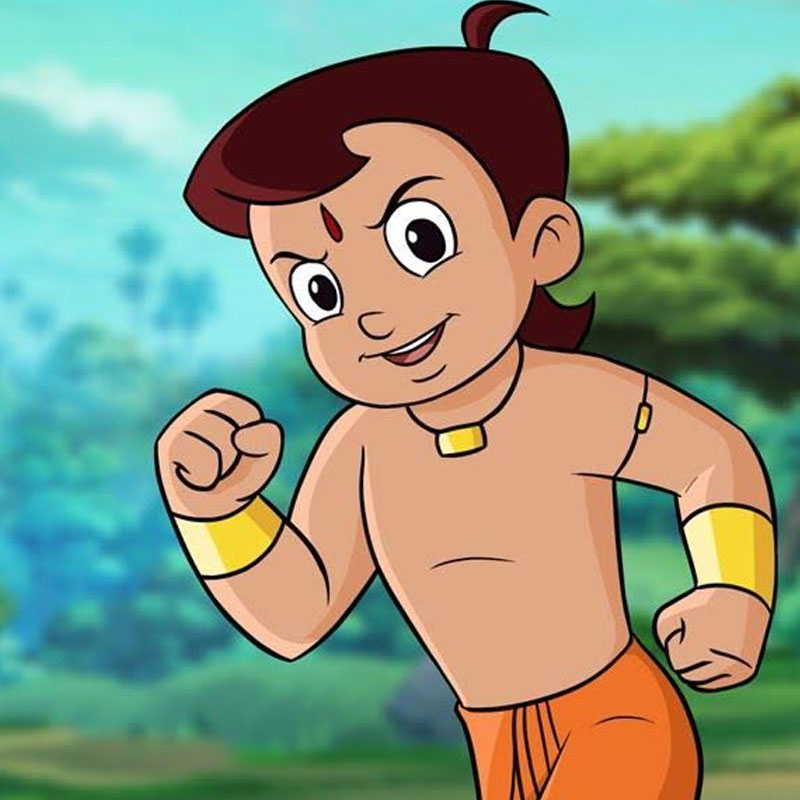
    MUMBAI: The creator of India’s largest animated character is going abroad. Green Gold Animation, the company behind Chhota Bheem, is collaborating with Japanese broadcaster TV Asahi and its animation production arm Shin-ei Animation to produce new episodes of a show that’s also popular in India, Ninja Hattori. Though TV Asahi has all rights to make creative calls, Green Gold can contribute in cultural or custom-oriented inputs to the script.

    Green Gold Animation content sales VP Bharath Laxmipati says, “Japanese flavour is something that we never had. Doraemon is not today’s time; it is from the 70s time. So, as of now, it is very important for the artists to always learn multiple styles and the collaboration with Japanese production house— Shin-ei will help them understand storytelling in very different lines. So that’s one of the reasons, apart from the strategic reasons, to produce Japanese content.” The new episodes of Ninja Hattori will be created in 2D-HD through a digitally mastered process. 

    While some say Japanese content was used as fillers when the price to produce home-grown content was steep. But Laxmipati objected that it is unfair to slot that content as such. He says, “If you see viewership ratings, Japanese content is doing well. Of course, localised content like Chhota Bheem and others are today’s flavours but there are also places where Japanese content are still working well with the audiences.”

    TV Asahi will hold the IP rights for the new series. When asked about retaining the IP rights for a production house’s creation, Laxmipati says that most broadcasting houses want to retain the IPs. “We are taking the initial risk of investing into IPs, so the production houses if they turn into pure production houses without the thought of having an output from the IP outrage broadcast, will die down because they don’t have the incentives to perform better and to further invest in creative energies.”

    He suggested that there has to be a win-win model for both. The broadcasters and the studio producing their IPs should come together where it shouldn’t be 'my way or the highway', it should be a new way, where both are winning this process where some territories will be with the broadcasters, a few of them will be given to the production houses. He added that there has to be a certain limit to hold on and a certain extension of the property that will be given to exploiting like licensing or merchandising, product or promotional and among others. “So there are a lot of things on the table that the studios and the broadcasters can come together on, but this is only possible if the IP is successful,” he concludes.

  • 20 years later, ‘The Powerpuff Girls’ still breaking stereotypes

    20 years later, ‘The Powerpuff Girls’ still breaking stereotypes

    MUMBAI: Home-grown animation is finally finding its way to Indian kids’ TV channels but the fact remains that most of the cartoons are predominantly male-oriented. Whether it is a storyline revolving around boys or about a male protagonist, the number of stories about girls is limited. Indian channels are replete with examples such as Chhota Bheem, Pokemon, Doraemon, and Popeye (wherein Olive Oyl is constantly in the need of being rescued).

    One show, which has been the bastion of Cartoon Network (CN) for more than two decades, is The Powerpuff Girls. Produced by Cartoon Network Studios with Nick Jennings as executive producer and Bob Boyle as co-executive producer; it has earned more than $2.5 billion in retail sales in its lifetime. The cartoon was dubbed in various languages such as Japanese, Korean, Brazilian Portuguese, European Portuguese, Finnish and Danish.

    It was in 1995 when the heroic girls got their first animation showcase on a programme called What a Cartoon! Only in 1998 did The Powerpuff Girls get taken seriously with the final episode concluding on 25 March 2005. Blossom, Bubbles and Buttercup weren’t merely cartoons but an image of women empowerment to every girl on the planet. The popularity soared among girls who could finally connect with avatars that represented their inner ambitions of making the world a better place.

    Come February, the network is celebrating its 20th anniversary with the global rollout of new episodes, events and products that will continue till 2019. The fourth sister, Bliss, will also return throughout the year.

    In most shows around that time, and even now, male characters were given the more masculine qualities like strength, valour, courage and the tag of being the ‘rescuer’ while the females were restricted to roles of the humble daughter or girlfriend or a side character (Misty in Pokemon, Shizuka in Doraemon). The transformed world hasn’t impacted these characters from being named as ‘all-time favourites’. The vast differences in the personality traits between the strong, funny, deceitful, greedy, smart, charming male characters against the humble, soft-spoken, dependent female characters frame the plot of these shows.

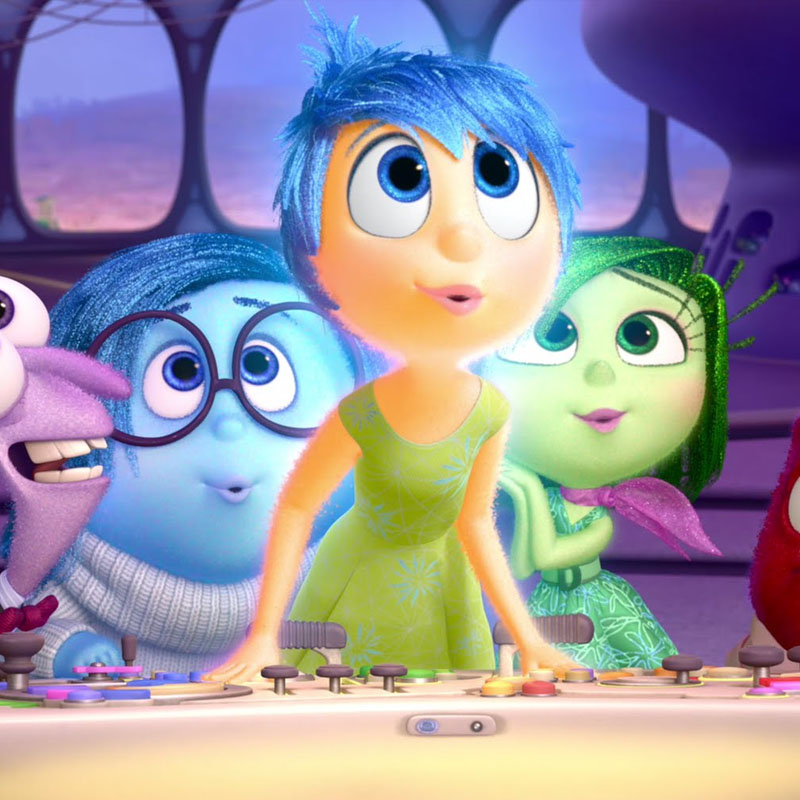
    Today efforts are being made to show female characters without the sexism implicit of earlier times. The cases in point are Merida from Brave, Princess Elsa from Frozen and Princess Riley from Inside OutKim Possible was also a groundbreaking show aired in 2002-2007 that showed the life and adventures of a teenage girl.

    Kids imitate what they see and especially characters they fall in love with. These early-age behaviours mould their adulthood as well, making it a strong case for producers to create a balance and indulge in enforced role-reversal.

    Also Read:

    NICK & Motu-Patlu films most watched kids channel & programme in BARC week 13

    Kids today watch more animated content than ever

  • Emerald Media buys controlling stake in Cosmos-Maya

    Emerald Media buys controlling stake in Cosmos-Maya

    Mumbai: Cosmos-Maya, the market leader in IP-led Indian kid’s animation content, has received a shot in the arm as it now tries to cast the net wider in the global market. Emerald Media, the Pan-Asia company backed by global investment firm KKR, has acquired a controlling stake in Cosmos-Maya through a combination of primary and secondary stake acquisition. The capital from this investment will help the animation company with strategic growth initiatives and creating global IPs to further increase its footprint across the world.

    Promoted by filmmakers Ketan Mehta and Deepa Sahi, Cosmos-Maya has been one of the pioneers in the art and technology of animation and visual effects in India.  Over the last five years, the company has produced more than a 1000 half-hour segments of animated content. It has multiple ongoing productions with major television and digital platforms, including Viacom18, Disney Networks, Turner International, Sony Pictures Network, Discovery Networks, Netflix, Amazon Prime Video and ALT Balaji.

    The creators of the Motu Patlu animation series, a popular Indian kids’ show, Cosmos-Maya has a line-up of nine TV shows on air, including Shiva, Eena Meena Deeka, Kisna, ViR – The Robot Boy, Guru Aur Bhole, Chacha Bhatija, Tik Tak Tail and Selfie with Bajrangi. 

    Cosmos-Maya founder and managing director Ketan Mehta said, “The vision for Cosmos-Maya has always been to become a cutting-edge media technology company creating quality Indian content for the global market. The company will benefit greatly with a partner like Emerald Media, which has a strong understanding of the entertainment, broadcast and the OTT space. Through the capital infused, the company intends to develop international projects while leveraging the media relationships of Emerald to expand its global footprint.”

    The company is also working on three international co-productions—Captain Cactus, Atchoo! and Help me Ganesha—in different stages of production and development. Cosmos-Maya targets audiences globally through its own YouTube channel, WowKidz, which has already become one of the fastest-growing channels for kids’ content with more than 2 million active subscribers and over 2 billion cumulative views since its launch in 2016.

    “Cosmos-Maya has created and owns the content for some of the most popular kids’ shows and, hence, has its finger on the pulse of a very captive and influential audience. With the company now focused on the development of content, that crosses geographies, it is poised for growth on a global stage—not to mention the added opportunity of brand expansion and merchandising for its properties. This investment is a great addition to Emerald Media’s growing portfolio as it aligns with our vision of creating an ecosystem that caters to audiences of all age groups,” said Emerald Media managing director Rajesh Kamat.

    Cosmos-Maya CEO Anish Mehta added, “With its successful and sizeable IP bank, strong business associations, a passionate team and the constant quest for quality—combined with the capital, domain knowledge and management bandwidth that Emerald Media brings on board—Cosmos-Maya is now poised for a global 360-degree approach to grow and monetise its brands through content, media, marketing, distribution, licensing and retail to markets, for kids across the world.”

  • Original Indian kids’ animation content is the need of the hour

    Original Indian kids’ animation content is the need of the hour

    MUMBAI: There is a dire need for creating home-grown content when it comes to kids’ entertainment. The scope for reducing the dependence on acquired content is immense especially since India has loads of unexplored talent.

    Brand extension, merchandising and marketing sponsors’ products are compelling reasons to produce original Indian shows and for this intellectual property (IP) rights are crucial. Shaktimaan was probably the first Indian superhero on TV but today’s popular figures are Chhota Bheem and Motu Patlu.

    “The amount required for one single episode of animation content production abroad will suffice for making the entire series in India,” says Toonz Media country business head development Kishor Chandra Shrivastav, who was speaking on a panel recently.

    A big boost to India’s animation industry came when recently Netflix announced it will be creating a spinoff of Green Gold Animation’s popular show Chhota Bheem as Mighty Bheem.

    Animation production is expensive in comparison to a general entertainment channel (GEC) shows with the former requiring Rs 25-28 lakh an episode as against Rs 5-6 lakh for the latter. The advertising rates, however, commanded by the two are inversely proportional according to estimates.

    The type of content and the investment in it also attracts the right kind of sponsors. ICOM Global vice chairman and South Asia Kushal Sanghvi says that low budget content will only get a handful of sponsors while big budget and sponsors will require the storyline to be universal. He gives the example of Disney’s Jungle Book that was a hit in India.

    Sanghvi also highlighted that Indian shows lack merchandising power with the notable exception of Chhota Bheem. For great quality content and merchandising, investment needs to touch Rs 40-50 lakh an episode.

    Punnaryug Artvision founder Ashish Kulkarni differed in his opinion. He said, “I don’t agree completely. In India, there are characters which get licensed. Sometimes, just the character is licenced and not the content. We do not have interesting brands for Indian cinema.”

    The supply of India-produced shows is very limited compared to the unlimited growth of Japanese and other foreign language cartoons such as Doraemon and Shinchan. Since Japan has 15-20 years of headstart over India, their library is massive. In 2016, Cartoon Network had 91.61 per cent foreign shows, Pogo had 82.67 per cent while Disney had 60.61 per cent shows from abroad.

    Licensing can happen only if the character is extremely popular for which it needs to be present on both TV and OTT.

  • Pogo launches indigenous slapstick comedy Andy Pirki

    Pogo launches indigenous slapstick comedy Andy Pirki

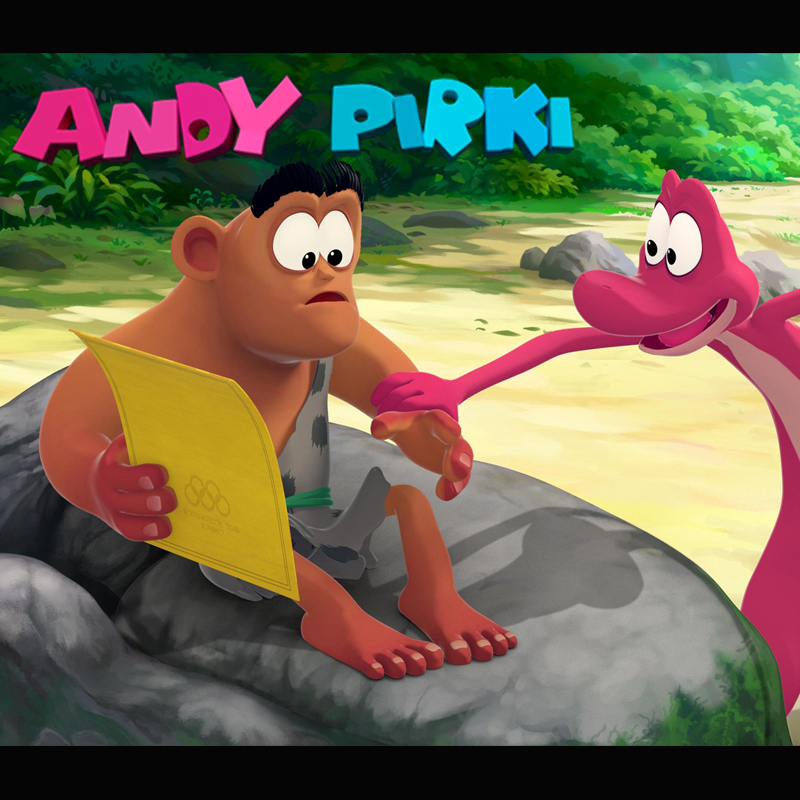
    MUMBAI: Pogo is all set to roll out a new show – Andy Pirki – a slang word in the Tulu language (a language spoken on India’s southwest coast) which means ‘mad cap’. It is a silent slapstick comedy series launching from 3 December 2017, created by Mangaluru based AUM animation studios. The series will be telecasted every Sunday at 9.30 am.

    The studio came up with the idea for the show in 2009, but as a small studio, it lacked experience and budget. By 2013, the studio was producing an episode every two months. The story’s main characters include Andy, a pink dinosaur and Pirki a caveman who develop an inimitable bond because of their unique circumstances.

    Turner executive director and network head-kids South Asia Krishna Desai said that the channel decided to create a silent slapstick comedy was to ensure it has a universal appeal without language barriers or political or demographic distinctions. He added, “Since there are no dialogues, the original show is emphasised. Every show has 50 per cent visual and 50 per cent audio content; here we can deliver great audio experiences as well.”

    Andy Pirki will have 80 episodes and Pogo has planned production for 2-3 years. It is using only open source software like Blender and Krita.

    Desai said that when it comes to watching television, kids prefer light-hearted content. “Six or seven years ago there were many genres like drama and history. They were quite popular then, but now we have funny and light-hearted content that is becoming popular.”

    The production house and the network co-own the intellectual property rights (IP). It was the production house AUM animation that approached the network first a year and a half ago, showing up the rough drawings of the characters and then impressed by them, the deal got finalised.

    AUM Animation Studios MD Shreekaanth Dass said, “The initial idea to produce Andy Pirki came to us in the inception year of AUM Animation Studios in 2009. Andy Pirki has already won multiple industry awards for best animation in India and international markets.”

    Talking about the viability of the show, especially when the audience is shifting to over the top (OTT) platforms, Desai said that it is a growing trend, but as of now, it is urban-centric which can change in the long run. “In the short term, we don’t see television viewership getting affected by OTT. In long-term, anything can happen. If OTT is growing, we make sure our franchise is available digitally and it is available on linear TV as well.”

    As far as the quality of Indian content versus foreign ones is concerned, Desai says that kids don’t understand this concept and enjoy things they like.

    Awards won by Andy Pirki

    FICCI FRAMES ‘BAF’ award 2015, 2016 and 2017 – Category: Best animated episode (National)

    FICCI FRAMES ‘BAF’ award 2015 and 2017 – Category: Best animated episode (International)

    DIGICON6 India awards 2015 – Category: NextGen India

  • How Faceware became Contiloe’s ‘Vighnaharta’

    How Faceware became Contiloe’s ‘Vighnaharta’

    While it may seem extremely cool to don a helmet with a head-mounted camera and shoot, motion capture is a technique that involves an entirely different level of complexity. James Cameron’s Avatar beautifully used the technology for the CGI created characters of the Na’vi tribe; and the Planet of the Apes series exploited the technique successfully with Andy Serkis’ Ceaser becoming the most memorable character in the film.

    With the amount of research, training and skilled execution that comes with using this technology, it is an equal amount of dare to execute it for a TV show. And this dare has been taken up by Abhimanyu Singh’s Contiloe Pictures for their upcoming mythological TV show Vighnaharta Ganesh, making it the first TV show in India to use motion capture.

    Why Motion Capture (mocap)

    “Whenever Ganpati has been shown on screen, you will see makeup done to convert his human face to an elephant face,” said Contiloe Pictures CEO Abhimanyu Singh. “It looks odd,” he added, and argued that the form of an elephant’s face cannot be done just by applying makeup on human’s face. “That is why we have used mocap.”

    The technique is used for the elephant head of Ganesh in the show, and will be seen from the third or fourth episode.

    For detailed story, read here:

    Exclusive: Contiloe recreates the elephant-lord in ‘Vighnaharta Ganesh’ with MOCAPtivating technique

  • Chhota Bheem-makers launch Golden Robot Animation

    Chhota Bheem-makers launch Golden Robot Animation

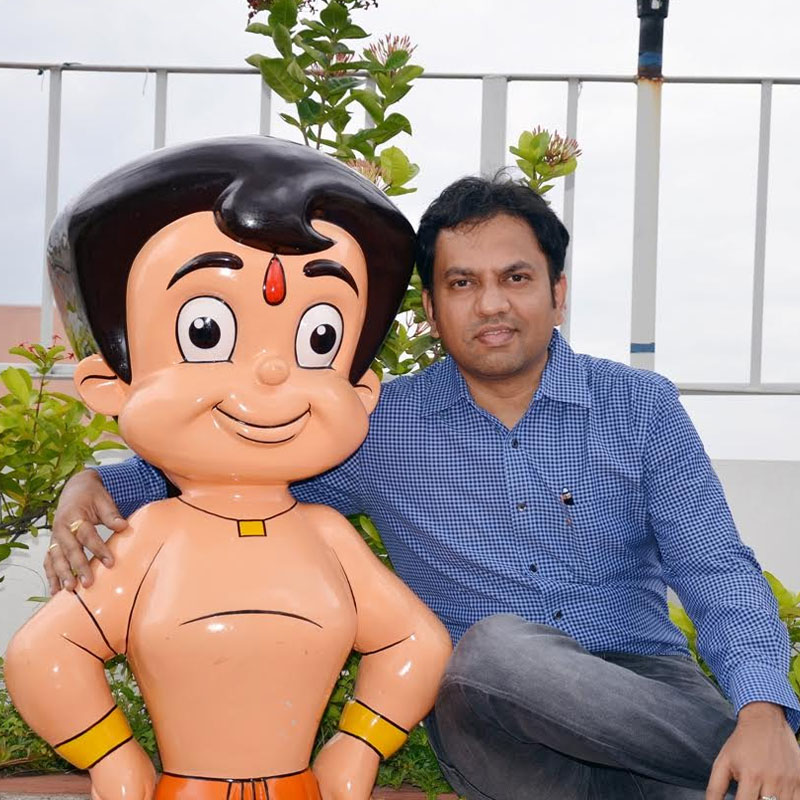
    MUMBAI: Green Gold Animation Pvt. Ltd, the multi-award winning animation studio, has embarked upon aggressive expansion plans. It has announced the launch of its brand new studio in Mumbai. The new entity ‘Golden Robot Animation’ will operate as a sister concern to Green Gold Animation with a common management structure.

    With plans to cater to the burgeoning global demand for animation content and with the aim to strengthenthe team, an animation studio in Mumbai is a clear cut shot in the arm for Green Gold Animation, the creators and producers of superhit series – Chhota Bheem and Mighty Raju.

    “Green Gold is amongst the leaders in the animation industry today in India. Launching Golden Robot Animation in Mumbai is a big realisation, which will help promote leading-edge expertise in the production of animated shows. This investment acknowledges the talent, creativity and quality of Mumbai’s team,” says Green Gold Animation MD Rajiv Chilaka.

    The senior leadership of Golden Robot comprises industry veterans with a proven track record. RK Chand will head business development along with Ritesh Kumar and Abhishek Chandra heading the creative and animation departments, respectively, at Golden Robot Animation.

    The strong leadership and creative team at Golden Robot boasts of a cumulative rich experience of 15 years along with more than thousand minutes of animation content, which makes Golden Robot,a formidable entrant in the industry to network and generate business with leading production houses and broadcasters in India and across the globe.

    The brand new full service studio facility, set in the heart of the city boasts of world class infrastructure which will be able to cater to diverse markets, wide scaled and complex projects. The animation teams comprising of senior artists and department heads have already joined and are working towards ramping up to a robust strength of 200 artistes.

  • Prime Focus turns around

    Prime Focus turns around

    BENGALURU: Prime Focus Limited (PFL) has reported robust financial performance, including consolidated profit after tax (PAT) for the period ended 31 March 2017 (quarter – Q4-17 and current quarter, current fiscal; year FY-17 and current year) as compared to the corresponding year ago periods – Q4-16 and FY-16 respectively. PFL reported consolidated PAT for FY-17 at Rs 1,397.39 million as compared to a consolidated loss of Rs 3,168.29 million in fiscal 2016. For the current quarter, PFL reported consolidated PAT of Rs 457.66 million as compared to a consolidated loss of Rs 2,648,86 million in FY-16.

    The company’s consolidated total revenue from operations (TR) in FY-17 increased 55.7 percent to Rs 21,536.25 million from Rs 13,828.15 million in the previous year. Consolidated total Income in the current year increased 52.5 percent to Rs 21,780.76 million from Rs 14,283.57 million in the previous year.

    In its investor presentation, PFL says that strong growth across businesses drove consolidated income growth of 14 percent primarily led by encouraging growth in Creative Services driven by additional capacity and deliveries from India. Creative and Tech/Tech Enabled services contributed 78 percent and 16 percent, respectively. The company’s three main businesses are Creative Services – it works on Hollywood Blockbusters; Technology Services; and Films and Media Services (FMS) where it works mainly with Indian films.

    PFL’s adjusted EBIDTA for FY-17 increased 50 percent to Rs 5,014 million from Rs 3,348 million in FY-16.

    Total Expenditure in FY-17 increased 29.2 percent to Rs 21,261.99 million from Rs 1,6454,04 million in FY-16. Employee benefits expense in FY-17 increased 41.5 percent to Rs 12,163.23 million from Rs 8,596.69 million in the previous year. Technicians fees in FY-17 increased 49.4 percent to Rs 368.92 million from Rs 246.95 million in FY-16. Technical Services cost in the current year increased by 28.5 percent to Rs 591.61 million from Rs 460.37 million in FY-16. Employee Stock Options or ESOP costs in fiscal 2017 increased by almost six-fold in FY-17 to Rs 256.69 million as compared to Rs 42.83 million in the previous year.

    Finance cost in FY-17 reduced 51.2 percent to Rs 1,278.73 million from Rs 2,620.21 million in FY-16.

    Other Expenditure in the current year increased 54.1 percent to Rs 3,841.70 million as compared to Rs 2,492.55 million in fiscal 2016.

  • India among A-PAC leaders as animation software market expands at 16% CAGR

    India among A-PAC leaders as animation software market expands at 16% CAGR

    MUMBAI: A-PAC is a swiftly growing segment in the animation design software market, with countries such as China, India, and Japan leading this growth. The rising interest toward 3D animations among the younger demographics is boosting the demand from the market, says Technavio.

    Analysts forecast the global animation design software market to grow to USD 4,288.94 million by 2021, at a CAGR of more than 16% over the forecast period, according to their latest report. Global animation design software market to grow to USD 4,288.94 million by 2021, posting a CAGR of over 16%.

    The research study by Technavio on the global animation design software market for 2017-2021 provides a detailed industry analysis based on the end-users (media and entertainment (M&E) industry and gaming industry) and geography (the Americas, EMEA, and APAC).

    Animation design software is a tool for creating images that appear to be moving. It also creates visual effects with the aid of computer graphics. The media and entertainment industry are the largest end-users for this software, where it is used for movies, television programs, print media, concerts, award shows, advertisements, M&E videos, and Internet media.

    Technavio analysts highlight the following three factors that are contributing to the growth of the global animation design software market:

    1. Increased use of animation design in movies and video games
    2. Use of animation design software for TV commercials
    3. Rise in demand from APAC
    &
    4.Increased use of animation design in movies and video games

    “The use of animation design in the film and television industry is rapidly increasing, driven by the rising popularity of animated movies such as Cars, Toy Story, and The Incredibles. The enhanced graphics, clarity and quick rendering of frames drives the popularity of the software,” says Ishmeet Kaur, a lead analyst at Technavio for enterprise application research.

    The demand for games with animated characters and imageries is another key factor driving the market growth. The gaming industry is a major end-user in the global animation design software market, where they use the software to create stunning animation effects in 3D and complex animations.

    Use of software for TVCs

    The increased use of design and animation in television commercials is a major growth driver for the global animation design software market. Companies across the globe are integrating the best marketing tools to differentiate themselves from their competitors and establish a strong market foothold. Companies are producing 3D animated commercials to provide potential customers with advertisements animation and design software. LG, Rolls-Royce, and Motorola are among the major brands that implemented 3D animation techniques in their product advertisements.

    Rise in demand from APAC

    “APAC is a swiftly growing segment in the animation design software market,” says Ishmeet.

    A notable investment of USD 3.05 million in the Anime Consortium was made in Japan by Kodansha, Shogakukan, Shueisha, KADOKAWA, Bushiroad, Good Smile Company, and Toei Animation. This investment and the collaboration with anime studios and game developers helped Anime Consortium add more value-added anime content in its projects.

  • DreamWorks Animation to cease India operations early next year?

    DreamWorks Animation to cease India operations early next year?

    MUMBAI: A pall of gloom has been cast over the Indian animation industry. Late last evening,  an announcement was made in the Technicolor facilities in Whitefiled, Bengaluru which house the DreamWorks Dedicated Unit (DDU) by general manager Damien de Froberville. Sources say that de Frobeville addressed the 300-odd assembled artists and animators and regretfully announced that the DDU would be ceasing operations come early -2017. At least that’s what he had been informed by the company’s headquarters in the US.

    Shock went through those in attendance for some of the artists and animators worked on Puss in Boots, Penguins of Madagascar, Kung Fu Panda 3 and the recently released Trolls. And on some other popular TV shows which DreamWorks Animation churned out from its Bengaluru outpost.

    The highly anticipated animated feature film The Boss Baby that’s set to release on 31 March, 2017 is one of the projects being worked upon currently at DDU. It’s said that the employees have been told to wrap up the project they have been currently working on.

    It was on 22 August 2016 that the company’s acquisition by Comcast NBCUniversal was completed and the company now functions as a division of Universal Filmed Entertainment Group. Initial reports were that after the take over Jeffrey Katzenberg would cede control of the studio to Illumination Entertainment CEO Chris Melendandri and the two studios would focus on producing four animation features between them. However, that did not come to pass, and the two remained independent with Bonnie Arnold and Mireille Soria being retained as presidents of the DreamWorks Feature Animation division with Margie Cohn leading the television animation division.

    Folks have been expecting change to happen at the studio ever since Jeffrey Katzenberg exited DreamWorks Animation with the acquisition. But no one expected it to happen so suddenly. It was not too long ago that DreamWorks Animation had announced that it would be lopping off 200 jobs from its Glendale unit. And now the news has emerged that the Indian dedicated DreamWorks Animation unit would get the axe.

    The exact date of the cessation of the DDU’s operations is not known but speculation is that it could be either 31 January 2017 or 2 February 2017.

    DreamWorks Dedicated Unit, studio manager, Adi Shayan said that he was not the right person to say anything. “However all I can say is it’s not that black and white and there’s more to it,” he stated.

    We tried reaching out to de Froberville on several occasions telephonically. Late at night, he responded with a short but curt message: “DDU is not shutting down. I do not have any comments.”

    Only time and a rolling out of announcements will reveal whether this is true, but sources at the meeting, insist that the unit is being wound up. It’s possible that some of the artists could be absorbed by Technicolor, it’s “partner” in India.

    On 20 December 2007, Technicolor India partnered with DreamWorks Animation to assist in the recruitment, training and development of top-tier animation talent. From producing just animated commercials to TV specials to first full-length feature Penguins of Madagascar, DDU had come a long way.

    Portions of the financially successful movie Kung Fu Panda 3 were also worked upon by the Bengaluru artists which included work mainly on the Panda village and market sequences. Animation, character FX, FX and lighting were the key areas worked upon by them.

    Source indicated that the Indian Technicolor management was awaiting official word from Comcast’s NBCUniversal and Dreamworks’ headquarters before deciding on the way forward.

    In the past, DreamWorks Animation used to renew its contract every three years, sources told AnimationXpress.com. “So three rounds of contracts had been renewed,” says an industry veteran. “But this time DreamWorks did not reach out to Technicolor, so even the renewal of the contract is yet to be initialed by the two parties.”

    We reached out to Technicolor, country head, Biren Ghose to no avail. He chose not to comment on any queries. ”We will be making our announcement either tomorrow or next week,” is all he expressed.

    This article was first published in Indiantelevision.com’s sister publication Animationexpress.com