Category: Viewership

  • Identify safe places to shoot, Maharashtra CM tells industry delegation

    Identify safe places to shoot, Maharashtra CM tells industry delegation

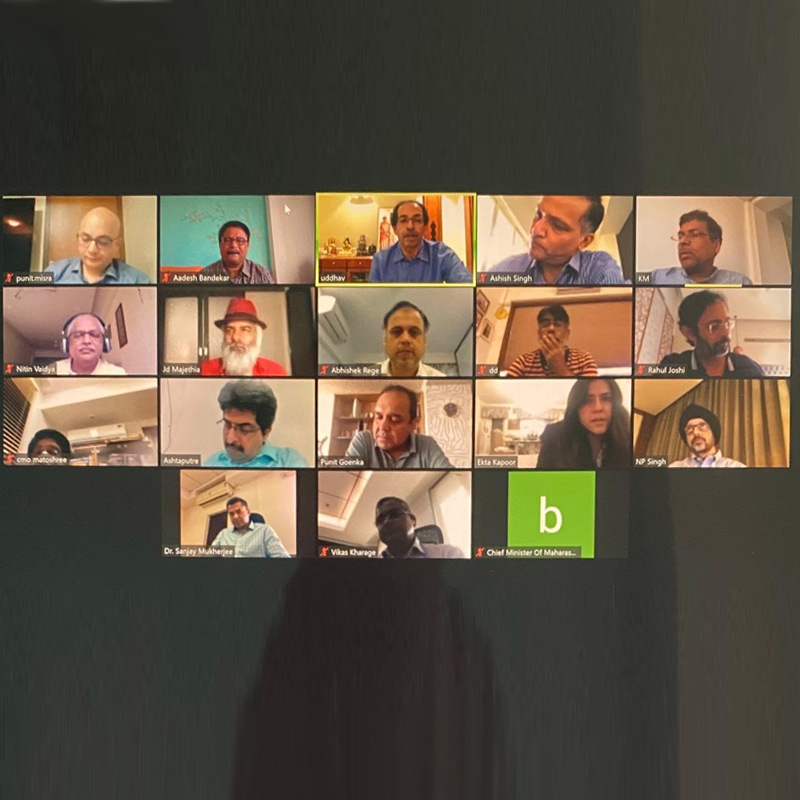
    MUMBAI: A 12-member delegation of television producers and broadcasters on Friday interacted with Maharashtra chief minister Uddhav Thackeray who asked them to find safe and secluded places for resuming shooting.

    In the zoom call, Thackeray responded positively to the delegation’s concerns and demands and assured them that shooting can restart soon. He asked them to identify green zones/safe areas for resuming shooting.

    The delegation apprised the chief minister the huge losses the industry has been incurring since the lockdown was imposed in March. The leaders shared with him the concerns of job losses and the industry’s wish to restart shooting with utmost care and by adhering to SOPs.

    He quickly addressed all issues and asked his team to set up a committee and work out the possibilities to start shooting at the earliest. The industry has to find out studios away from civilization, list of necessary precautions to be taken and spacious post production studios where social distancing can be maintained.

    Once this is done, the permission for the maintenance of sets, monsoon sheds, fire safety measures, etc. can be obtained. The shooting has to be conducted with minimum crew. Government officials will also be visiting Goregaon film city to examine its safety.

    Those who attended the meeting included: Zee Entertainment Enterprises managing director and chief executive officer Puneet Goenka, Sony Pictures Networks managing director and chief executive N P Singh, Network18 MD Rahul Joshi, Star & Disney India head K Madhavan,  Zee Entertainment Enterprises CEO Punit Misra, Endemol Shine India CEO Abhishek Rege, TV producer Ekta Kapoor, Banijay Asia founder-CEO Deepak Dhar, actor-producer Adesh Bandekar, Dr Sanjay Mukharji, Vikas Gharelu, Sudhir Naik, IFTPC managing member Nitin Vaidya, and jd Majethia.  

    jd Majethia informed that the chief minister posed for a picture of the video conference meeting. “I was very happy to discover a hidden streak of our beloved CM’s sense of humour which kept everyone in the meeting comfortable. The chief minister concluded the meeting by asking us all to be positive and hopeful with a line of a song from film chhoti si baat “Aanewala pal jane wala hai,” said Majethia.

    After several weeks of uncertainty, the television and broadcasting industry can finally heave a sigh of relief. Though an exact date has not been fixed yet, it is certain that production activities can resume soon. 

    Follow Tellychakkar for the consumer facing news & entertainment

  • Covid2109: Entertainment industry to lose $160 billion over five years

    Covid2109: Entertainment industry to lose $160 billion over five years

    MUMBAI: The global entertainment sector will lose $160 billion of growth due to the Covid2109 pandemic in the coming five years, according to research by Ampere Analysis.

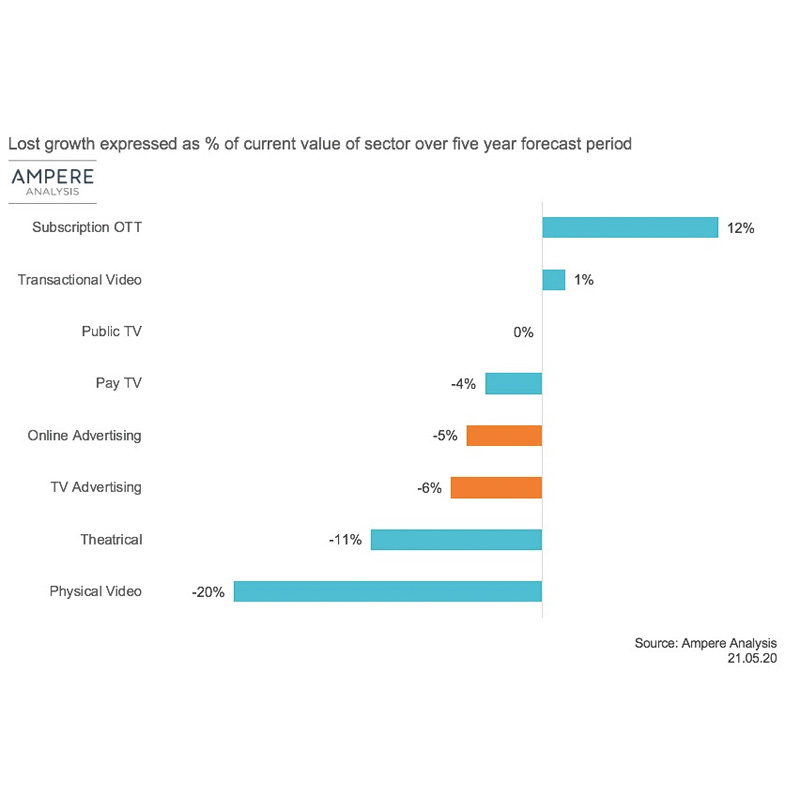
    "While the biggest impact will be felt in 2020 and throughout 2021, growth will be reduced each year for the duration of the five-year forecast period. While gross loss (the total amount of lost growth in dollar terms) will be greatest for the advertising sector, it’s also important to look at the relative impact pegged to the size of the sector. On that basis, theatrical will be hardest hit, set to lose $24.4 billion over the next five years, with its revenue growth down more than 11 percent over Ampere’s previous forecasts," says Ampere Analysis.

    The TV and online advertising market will lose almost $40 billion of revenue growth and $43 billion next year. Though a recovery can be expected in the year 2022, the figures will not come near the previous forecasts made by Ampere Analysis.

    Ampere Analysis research director Guy Bisson said that advertising has been hit the hardest. "The interconnected nature of the entertainment value chain means that will have a number of effects in other areas of the value chain. Some of which will not be fully felt for several years to come," he said.

    Shut theatres will have a direct bearing on theatrical revenues. However, the long-term effects “mean a glut of movies vying for release windows next year could ultimately lead to a slowdown in film production that impacts content acquisition and distribution further down the line," said the report.

    Streaming winner  

    Streaming, however, will remain the big winner with viewers relying on such platforms heavily. Streaming will achieve 12 per cent more revenue growth in the next five years, says the research firm. Lockdown across the world have led to an exponential increase in “streaming consumption and new subscriptions, benefiting subscription video-on-demand, broadcaster video-on-demand and other catch-up services."

    Pay TV, which has already gone through huge losses due to the lack of live sports, will be losing “significant value in what was already a challenging market structurally, representing around four per cent of its previously forecast value," says the research firm.

    Scripted TV to suffer

    The firm predicts disruption in the supply and release of new content for a year due to delays in production caused by Covid2019.

    While the unscripted market will likely to easily withstand the pandemic, the scripted TV sector will be affected, and its effects remaining so for the rest of the year and even into 2021. This will remain so even if production resumes by June.

    “There is one certainty among the current uncertainty – that the Covid2019 pandemic will change the TV production industry far beyond the end of the lockdown. Initially, we expect delays to cause gaps in scripted TV release schedules, which broadcasters and streaming players will have to fill with other content. However, as delayed productions begin to fill out content gaps in later months, these gaps will begin to close. But this has further ramifications. The knock-on effect of delayed releases is a likely depression of the number of new commissions for some time after the shutdown ends, as commissioners look to fill schedules with delayed projects they have already invested in before signing off new ones,” says Ampere Analysis senior analyst Fred Black. 

    Follow Tellychakkar for the consumer facing news & entertainment

  • Maharashtra CM assures support to TV, film fraternity to resume shooting

    Maharashtra CM assures support to TV, film fraternity to resume shooting

    MUMBAI: Maharashtra chief minister Uddhav Thackeray on Wednesday interacted with artistes and producers from the entertainment industry, especially Marathi film, theatre and television series, via video conferencing.

    He assured the members that the state will consider any action plan proposed by them for reviving shooting and post-production activities provided they exercise physical distancing norms and other precautions.

    The chief minister tweeted about the virtual meeting that the state government will stand firmly with the technicians, backstage artistes, workers, folk artistes and performers in this crisis. He also said that rent concessions for those who have erected sets at the Film City will be considered.

    The film and television producers and actors promised full support to all the decisions that will be taken by the state government.

    The chief minister has sought a draft proposal from the creative fraternity on what are all precautions they would take while filming. He assured them that he would think over their proposal.

    He informed that only after taking necessary precautions in green and red zones, production of films will be possible. Production shouldn't be in the containment zone. People involved in the production process, their stay and food requirements, and other things are also matters of concern.

    He said that the entertainment industry not only entertains, but also teaches us, and hence assumes significance. Since movie theatres are places where people do come in large numbers, it's difficult to give immediate relaxation.

    The other day the Federation of Western India Cine Employees appealed to the chief minister to grant permission to resume the post-production work of the media and entertainment industry. The federation sought the chief minister’s permission to continue with the post production activities, such as editing, sound recording, etc. of such projects nearing completion, so that it will give relief to the industry. It assured the chief minister that necessary guidelines pertaining to the health, safety and security of the workers involved in such post-production activities will be adhered to.

    Follow Tellychakkar for the consumer facing news & entertainment

  • BARC continues to service panel operations in green zones

    BARC continues to service panel operations in green zones

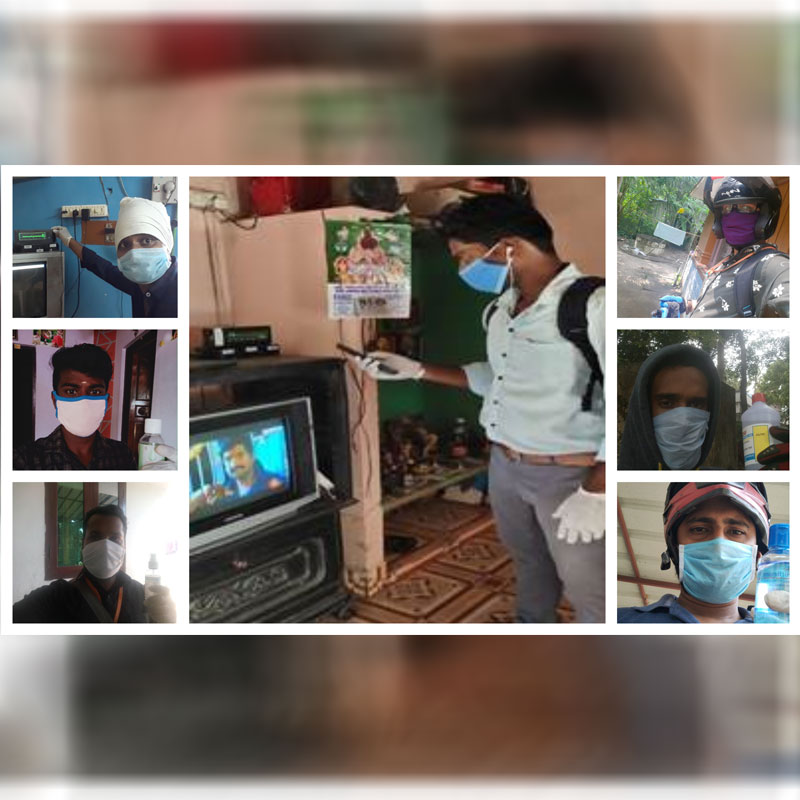
    MUMBAI: Broadcast Audience Research Council (BARC) India and Meterology Data Pvt Ltd (MDL), that manages panel homes and operations, have resumed the servicing panel homes in areas classified as ‘green zones’ by the government across India.

    Built on the back of robust technology, BARC India continued to measure ‘what India watches’ even during the lockdown without disruption. Extending maximum support, BARC India continues to release data on a weekly basis to help agencies, brands and broadcasters plan effectively during this unprecedented and uncertain period, said a BARC press release.

    BARC and MDL are ‘active on the field’, wherever permitted, ensuring its service is ‘always on’ for the industry. It has resumed its on field operations in green zones following mandated precautions for the Panel Homes and the on-field executive.

    To ensure smooth operations and minimal disruption going forward, training is being imparted to household members in case a meter requires servicing or maintenance remotely. BARC India and MDL are committed to serving the industry and will continue to resume servicing of panel homes in areas that continue to get classified as ‘green zones’. Equipped with Aarogya Setu app and PPE kits, the team is always vigilant to not visit unsafe (red/orange) zones and are taking time to ensure panel homes are trained on safety measures it can take amid the crisis.

    Follow Tellychakkar for the consumer facing news & entertainment

  • SAB TV beats lockdown blues with new show

    SAB TV beats lockdown blues with new show

    MUMBAI: When the going gets tough, the creative ones get more creative! That’s what Optimystix Entertainment and SAB TV have joined together and did. A humorous entertainment programme to beat the lockdown blues. The show, #KuchSmilesHoJayeinWithAlia, started airing on SAB TV from 18 May. The programmes were shot entirely from the TV artists’ homes remotely.

    “People are curious to know what their favourite characters are doing. The whole idea was to make people laugh,” said Optimystix Entertainment founding chairman and MD Vipul D Shah.

    “All the people who watch SAB TV are our audience. Basically all SAB TV characters are having fun with each other in this programme. The main idea is that our characters should be able to communicate with our audiences during lockdown,” he said.

    And was it difficult to shoot in the middle of Covid2019? “I won’t say it was difficult but it was an entirely new experience for us. The director used to direct them over the phone. He was guiding them with the proper frame and lighting. He gave directions remotely about the positioning of the actors in their own houses. It was a very remote video call direction. The coordination part was a little challenging as the artists used to record the show and send us. After that we looked at other aspects of the shoot and if correction was required we used to coordinate with them again. Our director used to guide them with script and punch lines.”

    Asked how many episodes they have planned, he said: “We now have 16 episodes in the bank; we will analyse how it goes and after that we can think if we want to shoot more episodes. Entire shooting was done indoor in people’s respective houses with zero human contact from the production side.”

    He informed that the channel is re-running the show Sajan Re Jhuth Mat Bolo and many other shows like that. “But from our end we are keeping the script ready. As soon as the government decides to lift the lockdown we want to be ready with ideas and scripts as there will be huge content consumption. People will start watching TV more than ever.”

    “We have created the bank for existing shows as well as new shows. Generally, we create humorous shows so we are planning to subtly introduce Covid2019 situations into our writing. One day everything will be back to normal but can you erase these memories from people’s mind? It is not possible. Maybe we will introduce things in a humorous way or a dramatic way,” he said.

    Optimystix Entertainment creative producer Nikul Desai said that right now they are only testing the show and analysing the responses. “If it works we will go for a longer run. As of now we will run four to eight episodes and then based on the response we will see if there is a need to make more episodes.”

    Regarding the duration of shoot, he added: “It took one day to just shoot the episode. Lot of coordination was involved. There were a lot of reshoots; sometimes quality went for a toss. Because actors are not equipped to shoot in the right direction, or lighting and there was certain footage that we had to reconsider. So for the one episode including shoot and edit it took four to five days. Ensuring every actor is on time was a task as everyone cannot be present at the same time. We created a lot of games and videos like Tik Tok; then there are anthems that we have produced ourselves.”

    The credit for ideation and creation goes both to Optimystix Entertainment and SAB TV.

    Regarding the challenges in making the programme, he said:  “From the telecast point of view you at least need bare minimum quality of audio and video. Then we sanitised the entire equipment and ordered actors to keep it at least for 72 hours before using it. We were monitoring shoots via video conferencing and advising them what to do and what not to do. I think largely technicality was the major issue.”

    Balraj and Alia are anchoring the show so there were a lot of midnight rehearsals through video conferencing. They used to do script reading, figured out the rules of the games, etc. “Also, there are short montages in the show. So we told the artists about the time duration of their dialogue. On top of that there was a time constraint to finish the episode in a certain time. We followed the basic safety measure and hygiene at every stage to safeguard our people,” he said.

    Promotions are largely going to take place on social media and on air promotions.

    “We will cover one topic in every episode supposedly. One topic is about how people are going through these food challenges, how people are doing exercises to stay fit. One episode will be about interpersonal chemistry between the characters. Our main focus is to bring joy into people's lives,” he concluded.

  • Major FTA channels to pull out of DD Free Dish as hope for carriage fee waiver dims

    Major FTA channels to pull out of DD Free Dish as hope for carriage fee waiver dims

    MUMBAI: Businesses have been struggling to stay afloat since the Covid2019 pandemic has broken out in the country. A number of TV channels have since then been in dire straits as productions have paused, leading to a shortage of fresh content coupled with falling advertising revenue. While pay channels can still look at subscription revenue, free-to-air (FTA) channels are running out of options to chalk out a sustainable business model. As the appeal to waive off carriage fee for the public broadcaster-run DD Free Dish has fallen on deaf ears, the chances of FTA channels pulling out of the free DTH platform rise.

    While Free Dish has been an inevitable part of FTA channels' strategy, the platform has also generated over Rs 400 crore of revenue on the back of these channels. After a good phase of increased reach post the new tariff order, FTA channels have entered a dark phase due to the pandemic. A consortium of those channels appealed to the ministry of information and broadcasting (MIB) to waive off carriage fee at least for a quarter.

    Even after repeated requests, Prasar Bharati has stated that a channel can avail of deferment from the requirement of paying the carriage fee in an advance monthly statement, up to three months, subject to it furnishing separate bank guarantees towards the amount of each instalment amount with interest after availing of this deferment for three months n a letter/email dated 17 May. It has also offered to pay 67 per cent of the carriage fee for three months. But the latest notification clearly shows the pubcaster’s firm decision of not waiving off carriage fee to these troubled businesses.

    FTA channels are of the view that this move will not help them in the crisis. “The expense remains the same for the channels but advertising revenue comes down at 15-20 per cent that covers only minimum expenses. It does not even cover the full salary of employees while we have decided to pay full salary to our employees. Even if the payment is deferred for three months, we don’t know from where the revenue will come. We don't want the loan but a waiver of the carriage fee. I think it won't help anyone although it depends on sustaining capacity,” Happii Digital and Broadcasting Network director Kailash Adhikari says.

    “The decision of Prasar Bharati remains the same; now it's upon the broadcasters. Two to three channels are also suspended from the platform,” he adds. Asked about their plan, he says that they don’t want to withdraw currently. But he adds that if this situation prolongs, then it is a mammoth exercise for everybody in the industry.

    “The new notification says they will offer deferment instead of waiver which will offer some liquidity for the short term but the main issue is after three months the burden increases. It’s small support and I think it is not going to make any material impact on the decision or business as such,” a spokesperson of a large FTA broadcaster says. He also mentions that after seeing the latest notification, it might stick to the decision of pulling out from DD Free Dish this month.

    He also adds that two to three channels have already gone off. Even if some channels pay now, they can go off later after observing the situation for one month, he adds.

    “This move of deferred payment and charges of interest is not something FTA channels were looking at. However, I believe the government is also under pressure to completely waive off because this was through an e-auction that was considered. Under the e-auctions and the policies, only the PMO or a minister at a higher level can take a call on this and I believe it is still unnoticed and unheard at that level,” a spokesperson from a Marathi FTA channel adds.

    He notes that if advertising revenue does not fall back in proper books by the month of June, then it will become difficult for people to survive. “We are observing the situation and we believe the lockdown won’t extend beyond 31 May because it is already about 60-plus days that Maharashtra has been under lockdown. So a lot of people will try to kickstart and resume the activity as early as possible because the economy needs to be pushed,” he reflects a gleam of hope.

    Notably, Swami Films Entertainment Pvt Ltd which runs two FTA channels on DD Free Dish moved the Telecom Disputes Settlement and Appellate Tribunal (TDSAT) against Prasar Bharati for interim relief against disconnection of the channel from its DTH platform. The state broadcaster offered two more alternatives to the broadcaster. The tribunal noted that it was a fair stand with more alternatives being offered to the broadcaster.

    Swami Films requested for some more time to consider the alternative reliefs as a final solution and even as an interim arrangement. TDSAT did not pass any interim order till the next date of hearing. 

  • Writing in the time of pandemic

    Writing in the time of pandemic

    MUMBAI: The outbreak of Covid2019 has transformed life in a way that we have never imagined. Everything is at standstill; we’re confined to our homes and the future seems very uncertain. So how does it feel to be a writer at a time like this?

    We at indiantelevision.com spoke to a few scriptwriters belonging to the film and television industry and found out that almost every writer is in a way overwhelmed with assignments and deadlines. While film and TV producers are waiting to start the production, writers are busy creating content to meet the consumption demand once the lockdown is lifted.

    According to them, production houses will need scripts more than ever. It is a kind of blessing in a disguise for writers.

    Screen Writer Association member Satyam Tripathi said: “I am currently busy working on pending projects. Another good thing that has happened is I don’t have to travel; so a lot of time is saved there. Most of the meetings are happening over Zoom calls and other apps.”

    Tripathi believes a writer's experience is not something very different; the only thing is we are locked in our own houses without our will which sometimes creates anxiety. However, pandemic has turned out to be a good opportunity to work on new skills, research new topics.

    Asked if the current situation affects their way of writing, Tripathi said as humans we are affected by this crisis. Sometimes it is very difficult to focus.

    Tripathi is currently busy working on a project for Disney+ Hotstar and is also a helping hand for members of SWA. He is trying to help them financially and emotionally. During this period he is also doing events on mental health. There is also a line-up of events in the coming month where writers can talk about their challenges, experiences and much more.

    About the content lineup post lockdown, he added, “There is going to be an altogether different expectation from audiences once lockdown is lifted. So it would be really difficult to understand their mood and create content. It cannot be predicted now.”

    However stressful or anxious this period is, it is a good opportunity for writers to refresh their creative energies.

    Writer of Chhapaak and Guilty Atika Chohan said: “Today I am in the eighth week of the lockdown. My initial few weeks were very disturbing. It was not a wilful isolation which generally writers enjoy. In the beginning it challenged everything that I knew as a human being. I was guilty for not doing enough for people around me. Because I was grappling with all the issues; my productivity was not that great. I couldn’t write for a few days.”

    Chohan considers herself privileged for getting work during these testing times. She mentioned that there was a lot of work commissioned to her much before the lockdown. She adds: “I have my deadlines and my goals pretty clear. So, currently I am not worried about what consequences with respect to my work. In that term, you can definitely say I am privileged. But after constantly fighting with my thoughts I decided that I need to get myself off from tracking the news. Because it is not helpful.”

    Chohan is utilising this time to get better and learn more which otherwise was not possible. This lockdown gave her the time to reflect on new ideas. She says it is a great time for her to get inside her den and come up with new stories.

    Once the lockdown is lifted the economy will need massive push and Chohan wants to be ready in order to contribute to it. Instead of being a liability she believes in becoming an asset.

    As to whether this lockdown will have an influence on her writing in the upcoming future, she said: “It definitely will, I think all my new stories and subjects that have interested me in the past will change to adapt to this world. Cognizant is the new normal. In both situations as a writer and a writer who works in a certain market with a certain business model. I think I am cognizant of both of these aspects. Now, I definitely want to discuss more about the subjects that deal with the environment, human consumption and human greed.”

    Atika Chohan is currently writing an Indo-Pak war film. The writer said the project is in the development stage.

    The writer of Mann Ki Awaaz Pratigyaa, Rishton Se Badi Pratha, and Ishq Ka Rang Safed Shanti Bhushan feels that just like any other person this pandemic has equally affected writers. The only advantage is they have a certain time in hand to introspect new story ideas. He mentioned that generally writers don’t have enough time to do their homework.

    Sharad Tripathi is busy creating episodic banks of 10 to 15 episodes for his shows like Shakti, Nati Pinky Ki Lambi Love Story and Santoshi Maa. He is also working on a new project for Jay Mehta productions. He is trying his hand at writing  the lyrics for a new rap single. It is for an LA-based production company named Sharad and Sapra production which Tripathi co-owns.

    Elaborating more on the impact of pandemic Sharad says: “Being a writer you go through so many emotions and situations; such things don’t affect you to that extent. But you might get inspired to write different stories on different scenarios. During this Covid2019 there are so many heart-wrenching as well as heart-warming stories. It depends on what scenario you are going to get inspired from.

    According to Sharad, writer is not someone who just creates story; a writer derives inspiration from every form which exists.
  • Total TV viewership grows by 24% in week 18: BARC India & Nielsen

    Total TV viewership grows by 24% in week 18: BARC India & Nielsen

    MUMBAI: Total TV viewership has grown by 24 per cent in week 18 over pre- Covid2019 period and recorded 1.1 trillion viewing minutes. The highest viewership was recorded in week 13, post which there has seen a gradual drop, though it’s still significantly higher than Pre COVID levels. TV viewership is still higher than pre-Covid levels, according to the edition 8 of BARC India & Nielsen.  
    Individuals watching TV all seven days a week was 239 million in pre-Covid2019 period. It peaked 363 million in week 15 and is at 332 million in week 18.

    Prime-time viewing has come down in week 18, most prominent dip being in south.
     
    For the Hindi GEC segment, the viewership share of top three channels has dropped vs peak levels attained in week 13, courtesy the lack of original programmes. However, viewership share is stable for Hindi news and Hindi movies.

    Genre-wise, news and movies share started to stabilize but continues to operate at higher levels. The drop in viewership is more in markets with lower presence of red zones.

    While non-primetime continues to grow, primetime viewership is 7 per cent lower than pre-Covid levels (an effect of no original programming). Decline in PT viewership is more pronounced in the South.

    For Hindi GEC, the viewership share of top three channels has dropped vs. peak levels attained in week 13 (an effect of no original programming.)
    In week 18 overall FCT dropped by 9 per cent and there has been a seven per cent decrease in advertiser count.

    Smartphone consumption continues to be at 4 hours per day, 14 per cent higher versus pre-Covid.  

    Optimism high 

    Indian optimism has remained steady since April. People are showing confidence in India’s economic recovery. 
    Individuals watching TV all seven days in a week was 239 mn in pre-Covid. During week 18, total TV consumption increased by 24 per cent, all India. 

    Advertising trends

    The dip in overall FCTs continued in week 18 as well, reveals the fresh batch of BARC-Nielsen data on media behavior during the COVID19 lockdown. As compared to week 17, a dip of 9 per cent was witnessed in overall FCTs, taking the number from 205 lakhs to 187 lakh. 

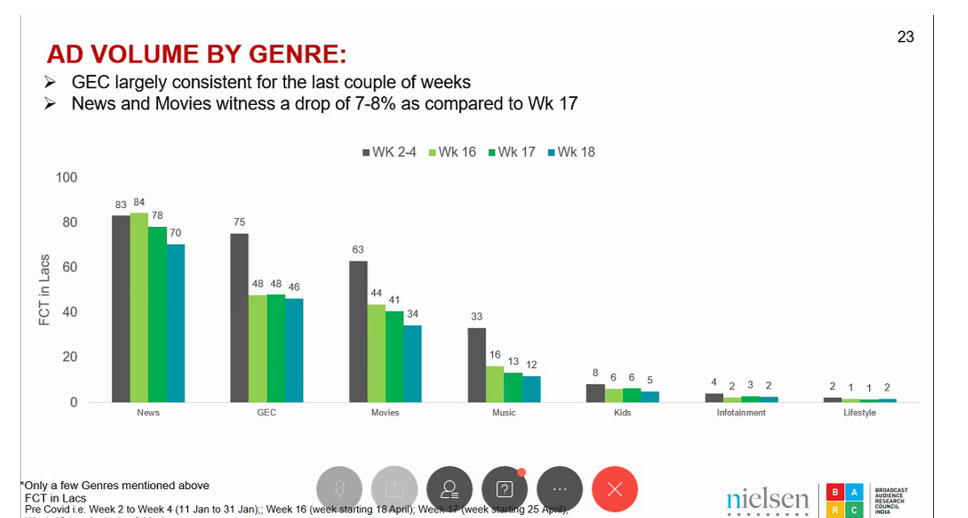
    Ad volumes while remained consistent across GEC  for the last couple of weeks, News and Movies recorded a dip of seven-eight per cent as compared to the last week.

    The drop in news has come mostly from Hindi language channels while regional languages and English channels remain stable. Kannada and Gujarati channels, in fact, witnessed a slight improvement in FCT. 

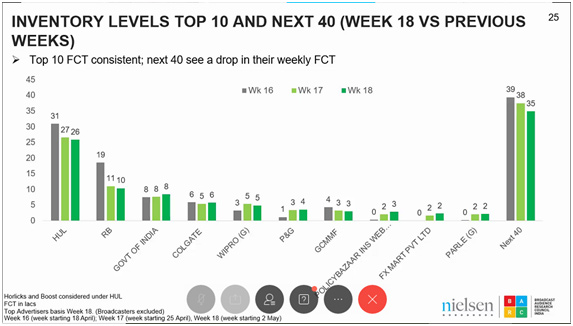
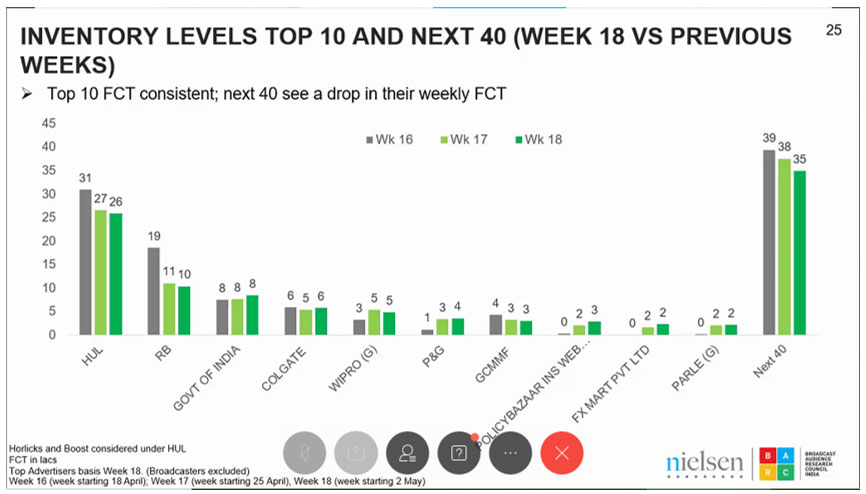
    The previous week had seen a dip in the inventories by top 10 advertisers and an increase of 9 per cent by the next 40. This week witnessed a dip in FCT of next 40 as well, while the top 10 mostly remained consistent. 

    After a spike in the number of new brands on TV in the past week, this week saw a massive slump. The numbers dropped from 395 to 274. A 7 per cent dip in advertiser count was also witnessed. 


  • TV FCT continues to dip in week 18: BARC-Nielsen

    TV FCT continues to dip in week 18: BARC-Nielsen

    NEW DELHI: The dip in overall FCTs continued in week 18 as well, reveals the fresh batch of BARC-Nielsen data on media behavior during the COVID19 lockdown. As compared to week 17, a dip of 9 per cent was witnessed in overall FCTs, taking the number from 205 lakhs to 187 lakh. 

    Ad volumes while remained consistent across GEC  for the last couple of weeks, News and Movies recorded a dip of seven-eight per cent as compared to the last week. 

    The drop in news has come mostly from Hindi language channels while regional languages and English channels remain stable. Kannada and Gujarati channels, in fact, witnessed a slight improvement in FCT. 

    The previous week had seen a dip in the inventories by top 10 advertisers and an increase of 9 per cent by the next 40. This week witnessed a dip in FCT of next 40 as well, while the top 10 mostly remained consistent. 

    After a spike in the number of new brands on TV in the past week, this week saw a massive slump. The numbers dropped from 395 to 274. A 7 per cent dip in advertiser count was also witnessed. 

    Follow Tellychakkar for the consumer facing news & entertainment

  • Total TV viewership grows by 24% in week 18

    Total TV viewership grows by 24% in week 18

    MUMBAI: Total TV viewership has grown by 24 per cent in week 18 over pre- Covid2019 period and recorded 1.1 trillion viewing minutes. The highest viewership was recorded in week 13. TV viewership is still higher than pre-Covid levels, according to the edition 8 of BARC India & Nielsen.  

    Individuals watching TV all seven days a week was 239 million in the pre-Covid2019 period. It peaked 363 million in week 15 and is at 332 million in week 18.

    During week 18, total TV consumption increased by 24 per cent all India.  

    Prime-time viewing has come down in week 18, most prominent dip being in the south.

    For the Hindi GEC segment, the viewership share of top three channels has dropped vs peak levels attained in week 13, courtesy the lack of original programmes. However, viewership share is stable for Hindi news and Hindi movies. 

    Genre-wise, news and movies share started to stabilize but continues to operate at higher levels.

    Lockdown impact on consumer sentiment

    The pandemic is having an impact on public sentiments. According to the report, 85 per cent of Indians are extremely concerned about personal or family's safety. And 82 per cent are concerned about overall public health.

    Follow Tellychakkar for the consumer facing news & entertainment