Category: Viewership

  • Suriya’s 2D Entertainment strengthens partnership with Prime Video

    Suriya’s 2D Entertainment strengthens partnership with Prime Video

    Mumbai: Amazon Prime Video India has signed an exclusive deal with Suriya’s 2D Entertainment. As part of this collaboration, the next four Tamil movies from 2D Entertainment will premiere directly on Prime Video worldwide over the next four months.

    2D Entertainment’s upcoming titles will mark their direct-to-service world premieres on Amazon Prime Video.

    The line-up includes titles like ‘Jai Bhim’ (November 2021) – a legal drama starring Suriya along with Prakash Raj, Rao Ramesh, Lijomol Jose, Rajisha Vijayan and Manikandan. ‘Udanpirappe’ (October 2021) – a family drama starring Sasi Kumar, Jyotika, Samudrakani, Soori, Kalaiyarasan, Niveditha Sathish and Siddhu. ‘Raman Aandalum Ravanan Aandalum’ (September 2021) – a satire comedy drama starring Ramya Pandian, Vani Bhojan, Mithun Manickam and Vadivel Murugan.  ‘Oh My doG’ (December 2021) – a kid’s film starring Arnav Vijay, Arun Vijay, Vijay Kumar, Mahima Nambiar and Vinay Rai.

    “At Prime Video, we have one of the largest libraries of Tamil movies in the country,” said Amazon Prime Video director and head of content, Vijay Subramaniam. “This association comes on the back of the incredible love that 2D Entertainment’s Soorarai Pottru and Ponmangal Vandhal received from audiences worldwide. Our local language movies, over the past year, have broken viewership records to register 50 per cent of audiences outside their home state. International viewers accounted for up to 20 per cent of total audiences of local language direct-to-service films.”

    2D Entertainment, founder and producer, actor, Suriya said, “The past year has been transformative. Given unprecedented circumstances, we innovated on different models of release. Amazon emerged as the chosen streaming service for 2D’s latest film launches. We are happy to take this collaboration even further with Amazon Prime Video.”

  • Wurl takes celebrity news channel Hollywire to India on Samsung TV Plus

    Wurl takes celebrity news channel Hollywire to India on Samsung TV Plus

    Mumbai: Wurl has partnered with celebrity news channel Hollywire to distribute and provide monetisation services for the digital channel globally.

    Most recently, Wurl has secured distribution for the service on Samsung TV Plus India, adding to previous launches facilitated by Wurl on Samsung TV Plus platforms in the United States, Mexico and Brazil.

    Hollywire is a global, 24/7 celebrity news channel that includes Bollywood news coverage, celebrity interviews, and red carpet event coverage for its channel on Samsung TV Plus India, which launched on 28 July.

    “WURL offers an incredible team that has helped Hollywire expand internationally and grow to heights we didn’t know were possible,” said Hollywire CEO Tony Moras. “Their company is constantly educating us and providing Hollywire with worldwide business opportunities that have encouraged our business development effectively and easily!”

    “Hollywire is a great success story. This celebrity news channel has parlayed its social media, Snapchat and YouTube fueled popularity into a full-fledged OTT digital channel,” said Wurl, SVP Business Development, Craig Heiting “Through our Wurl Network, we are taking Hollywire to the next level, expanding upon its brand’s success to bring it to an international audience.

    India will have one billion video screens by 2024, 85 per cent of which will be broadband ready, according to Media Partners Asia. AVOD revenues are expected to be $2.4B by 2026.

  • Smart TV ownership to surpass 50% of homes globally by 2026, says report

    Smart TV ownership to surpass 50% of homes globally by 2026, says report

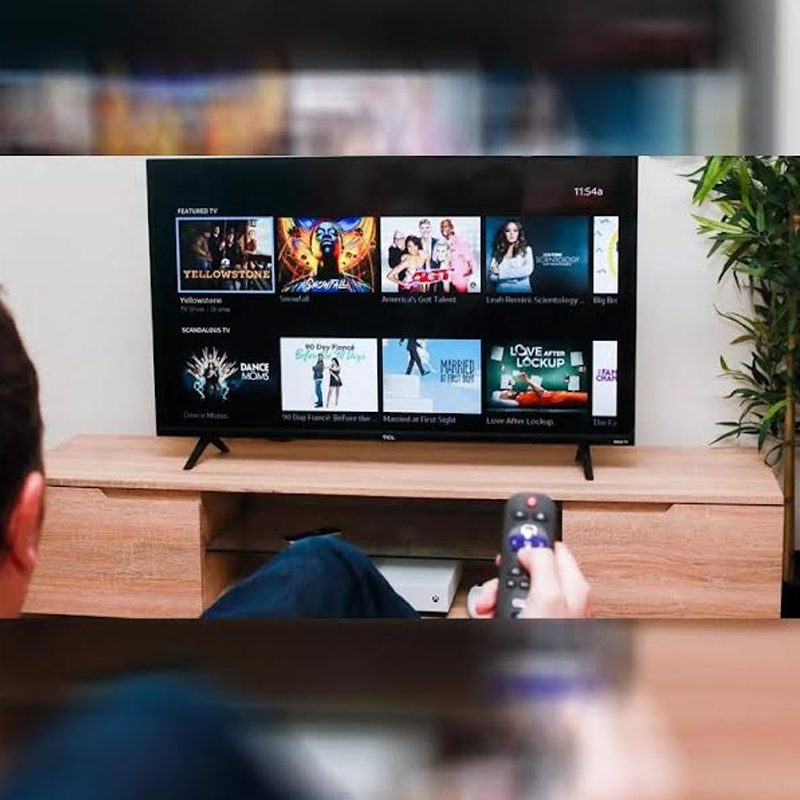
    New Delhi: Over 665 million global households owned a Smart TV by the end of 2020 accounting for 34 per cent of the total households, said the US- based firm Strategy Analytics in its latest report.

    According to the report, ‘Global Smart TV Forecast for 88 Countries 2011-2026′, the penetration of Smart TV is set to rise to 51 per cent by 2026 when Smart TV ownership will reach 1.1 billion homes. While the demand for smart TVs was growing anyways, the pandemic-induced lockdown accelerated the sale further. As per the data collected by the firm, annual shipments reached 186 million units during 2020 representing 79 per cent of all TVs shipped worldwide. The shipments are expected to break through 200 million units per year in 2022 it stated further.

    The strongest growth was witnessed in North America. According to the report, this could also be due to the government stimulus cheques which helped to drive an increase in spending on home entertainment products as consumers found themselves spending more time at home due to Covid-19 related restrictions.

    Samsung, TCL and LG emerged as the world’s leading smart TV brands and represent over 40 per cent of the market between them, up from 33 per cent in 2015. Samsung led in terms of annual sales units for the ninth straight year in 2020 while TCL climbed above LG and into second place for the first time. Meanwhile, the Smart TV market continues to coalesce around a handful of TV streaming platforms or operating systems.

    The report found that Samsung’s Tizen leads the way but major third-party software platforms such as Android TV and Roku TV OS have made strong gains in recent years.

    “Smart TV is a standard fit feature of most flat panel TVs sold today and so smart TV household penetration will inevitably continue to grow as consumers replace old sets with new modern smart-enabled versions,” said Connected Home Devices senior analyst, Edouard Bouffenie. “As smart functionality is no longer a point of differentiation but has become a checkbox necessity, smart TV manufacturers have had to make a choice between maintaining their own software and application ecosystems or licensing a software platform from a third-party partner.”

    While many have decided to partner with the likes of Google’s Android TV and Roku in order to avoid the ongoing costs of maintaining their own platform, others like Samsung, Vizio and LG are going alone to capitalise on the fast growing Connected TV advertising business.

    “However, the current Connected TV landscape in the home is incredibly complex and consumers may have multiple devices in multiple configurations to choose from”, said Media and Intelligent Home Practice, vice president, David Watkins. “Factor in different viewing habits amongst different members of the household and it’s clear that TV streaming platform providers face a significant challenge in driving engagement and ensuring that TV viewers remain on their platform and do not switch to another source. Smart TV OS providers must look to influence the TV viewer’s journey through improved content discovery capabilities, advanced analytics and advertising platforms and the development of an intuitive and user-friendly UI.”

    The report forecasts global smart TV shipments, installed base, households and household penetration by six major regions and 88 countries from 2011 to 2026.

  • TV ad volumes for June 2021 surpasses 2019, 2020 levels: BARC

    TV ad volumes for June 2021 surpasses 2019, 2020 levels: BARC

    Mumbai: TV advertising continues to remain resilient, despite the onslaught of the second wave of the pandemic. According to Broadcast Audience Research Council (BARC) India’s latest THINK report, the TV ad volume in June, 2021 has surpassed the ad volume recorded during the corresponding period in 2019 and 2020.

    As many as 1,839 advertisers and 3,074 brands chose Television as a medium for advertising in June, at par with 2020 showed the data. In fact, June 2021 recorded a six per cent growth in ad volume compared to the pre-pandemic levels in June, 2019.

    The report titled – ‘TV Ad Volumes Insights – The Mid-Year Analysis’ released on Thursday also found that TV advertising performed much better during the H1 2021 and witnessed a 12 per cent higher growth compared to ad volume in H1 2019. While, the growth was 37 per cent higher compared to H1 2020.

    “Ad volumes for H1 2021 are promising and encouraging for the industry as a whole. The number of active advertisers and brands are also picking pace. Data for the first half of 2021 reinstates that while new advertisers have turned to television for widespread reach, existing ones continue to increase their attention to the medium,” says BARC India, head- client partnership and revenue function, Aaditya Pathak.

    FMCG continues to lead TV ad volume

    There was also a sharp increase in ad volumes from the top three advertisers. “While FMCG continues to dominate by share, the e-commerce category continues to see strong growth year on year. The auto sector has also made a comeback despite the impact of the second wave,” added Pathak.

    FMCG continued to lead the share in H1 2021 with 566 mn seconds, a growth of 40 per cent over H1 2019. HUL, Reckitt Benckiser, P&G, Pepsi have shown maximum growth over previous years. Seven of the Top 10 brands are Reckitt and two are HUL.

    After a dip in June 2020, the auto sector made a strong comeback in June 2021 by registering a growth of 74 per cent. With 3.94 million seconds in June 2021, the auto sector is at par with the ad volumes it registered in June 2019.  More impressively, the sector achieved 128 per cent growth over May 2021.

    Likewise, ad volumes for the Telecom sector almost doubled in June 2021 over May 2021 and has registered 2x growth in June 2021 over June 2019. 

    With 15.4 million seconds in June 2021 alone, ad volumes for the E-commerce sector have registered a whopping growth of 56 per cent when compared to June 2019. Currently at all-time high, the category constitutes a 12 per cent share in the total ad volume pie.

    Building sector registered 30.7 mn seconds of Ad Volumes; a 24 per cent growth in H1 2021 versus H1 2019. ad volumes for the BFSI sector grew by 7 per cent over H1 2019 with 14.5 mn seconds in H1 2021. 

  • Friends: The Reunion set for Indian TV premiere on 1 August

    Friends: The Reunion set for Indian TV premiere on 1 August

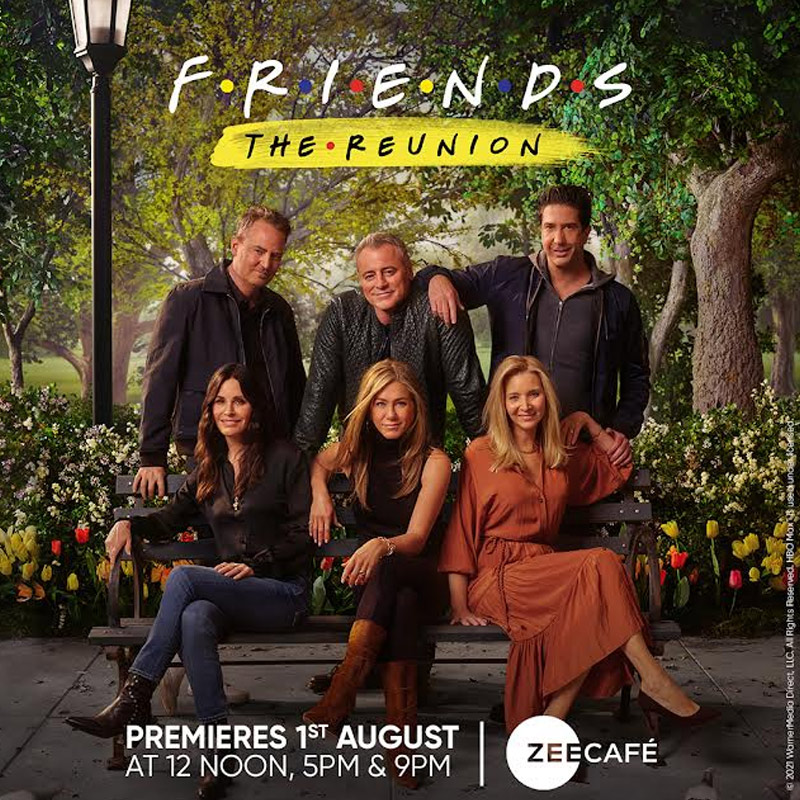
    New Delhi: This International Friendship Day, Zee English cluster is set to delight its viewers and stir nostalgia with one of the most popular TV shows. The much-anticipated reunion- FRIENDS: The Reunion will air across several channels of the ZEE network on Sunday, 1 August.

    According to the announcement, the show will premiere across 12 ZEE channels – Zee Cafe, &flix, &PriveHD, Zee TV HD, Zee Cinema HD, &Pictures HD, &xplorHD Zee Marathi HD, Zee Telugu HD, Zee Bangla HD, Zee Kannada HD and Zee Keralam HD.

    Audiences will be able to watch it on Zee Cafe, &flix and &PrivéHD at 12PM, 5PM and 9PM on Zee Café and 1PM and 9PM on &flix and &PriveHD.

    ZEEL, business head, premium channels, Kartik Mahadev said, “Circa early 2000, Zee Cafe was amongst the first few English English GEC channels and ‘FRIENDS’ grew in its popularity in India with Cafe. Today, FRIENDS returns home with this iconic reunion. It brings us immense joy to present the Indian TV premiere of FRIENDS: The Reunion. It’s a show that has stood the test of time, grown in popularity, it’s iconic moments passed on through generations as it truly reunites friends and peers to spend quality we-time together. We couldn’t be more delighted to bring This content as part of the Friendships Day block on Zee Cafe.”

    For a generation and after, Friends, which ran from 1994 to 2004,  had a massive following. To date, it is one of the more popular series on Netflix, even after almost 27 years since its first episode was aired on TV.

    This May, the cast of the show- Jennifer Aniston, Courteney Cox, Lisa Kudrow, Matt LeBlanc, Matthew Perry, and David Schwimmer had reunited for a special celebration of the beloved comedy series for the first time in 17 years. The show honors the iconic series with a hilarious and heartfelt night full of laughter and tears. Taped on the original soundstage, FRIENDS: The Reunion finds the cast and a star-studded roster of special guests as they relive the show’s unforgettable moments. There are special appearances from David Beckham, Justin Bieber, BTS, James Corden, Cindy Crawford, Lady Gaga, Elliott Gould, Kit Harington, Larry Hankin, Mindy Kaling, Tom Selleck, Reese Witherspoon and Malala Yousafzai.

    Making the wait worthwhile, the ZEE English cluster has also announced an exciting two-week Friendship fiesta leading up to D-Day. On Zee Café, prepare to hang out with Seinfeld and his friends in the show about nothing starting 1 July, weeknights at 7. From 19 to 25 July every day at 7PM, &flix and &PriveHD will present a special friendship-themed curation that features tales that are sure to take you on a trip down memory lane. Closer to the premiere of FRIENDS: The Reunion, the English movie channels will air a special curation of movies featuring the cast of FRIENDS such as Easy A, The Whole Nine Yards, The Bounty Hunter, Charlie’s Angels and more!

  • BARC Week 27 : STAR Plus and Sun TV slug it out for top slot

    BARC Week 27 : STAR Plus and Sun TV slug it out for top slot

    New Delhi: The Broadcast Council of India (BARC)’s week 27 viewership chart witnessed a close contest between STAR Plus and Sun TV, with the former emerging on top yet again in the All-India ratings.

    STAR Plus recorded a weekly average minute audience (AMA) of 2991.78, slightly ahead of south major Sun TV which clocked an AMA of 2708.41. The two channels were followed by STAR MAA, STAR Utsav and SONY SAB in that order for week 27 (3 July to 9 July).

    Colors found itself on the sixth spot with an AMA of 1990.56, followed by STAR Vijay, Colors Rishtey, Zee Telugu and Sony Pal. The list was yet again dominated by STAR India network. (Data: All India 2+)

    However, Colors performed much better in the mega cities especially Delhi where it clinched the top slot. Overall, STAR Plus led the viewership chart across mega cities, followed by Colors, Sun TV, SONY SAB and STAR Vijay. (Source: Mega Cities 2+)

    In the southern market, Sun TV continued to dominate the viewership ratings with an AMA of 2702.35, followed by STAR Maa, STAR Vijay, Zee Telugu and Zee Kannada.

    The scenario was slightly different in the regional markets. While STAR Pravah and Zee Marathi topped the list in Maharashtra/Goa, Zee Bangla remained most viewed in West Bengal, Zee Kannada in Karnataka, and STAR Utsav in Rajasthan, Uttar Pradesh and Uttarakhand, and Tarang in Odisha.

  • Global ad market to top $700 bn in 2022: WARC Data

    Global ad market to top $700 bn in 2022: WARC Data

    New Delhi: Global advertising spend is expected to rise 12.6 per cent during 2021 as a whole to reach $665bn, according to WARC Data’s report tracking global ad-spends. This is a sharp increase from the 6.7 per cent initially forecast, and would result in all of 2020’s losses being recouped, contrary to previous expectations.

    The new report signals renewed optimism in the situation getting better for the overall market as it recovers from the severe impacts of the pandemic. According to WARC Data, a further growth of 8.2 percent is predicted for next year, with the global advertising market to be worth more than $700 billion. While it took six years to move from $500bn to $600bn, it has now taken just four years to reach $700bn. This is in no small part due to rapid investment in online formats, which has doubled in the last five years, it stated.

    India, too, will see strong growth in advertising spend over the next two years, but 2021 investment will not fully recover 2020’s losses, said WARC Data in its latest report, tracking 100 markets worldwide. According to the report, India’s growth is up 16.1 percent to $8.2 billion in 2021.

    Regional advertising investment in the Asia Pacific is forecast to increase by 12.8 percent this year to top $200 billion for the first time. This will be driven by the Chinese ad market, which is expected to grow by 16.3 percent to exceed $100 billion for the first time.

    WARC’s quarterly research also finds that advertising spend in the second quarter rose 23.6 percent to $157.6 billion, marking a new high for a Q2 period and the strongest rise in over a decade. This growth was mainly driven by online formats, which collectively saw spend rise 31.2 per cent versus the previous year. eCommerce was the star performer with growth of 59.5 per cent, though offline media – most notably linear TV saw 11.5 per cent growth – also fared well.

    Linear TV to grow 7.1 per cent in 2021

    For linear TV, spend is projected to grow 7.1 percent to $168.1 billion this year, equal to a quarter (25.3 percent) of the global ad market. Investment is expected to rise by a further 2.7 percent in 2022, though this means just 60 percent of 2020’s losses will be recovered by 2022.

    “The 2020 downturn was felt disproportionately among legacy media owners. While online ad investment rose 9.4 per cent last year, mostly to the benefit of a few pure players, brand spend on legacy media such as print, TV, radio, outdoor and cinema fell by $63bn. Data show that this loss was on a par with the Great Recession,” as per WARC.

    The forecast suggests, legacy media will see two consecutive years of growth in 2021 (8.8 per cent) and 2022 (3.1 per cent) for the first time in a decade, but budgets will continue to move online. More than 60 per cent of spend is expected to be on digital media in 2022, an increase in share from 50 per cent before the pandemic in 2019.

    “New quarterly research, collated from 100 markets worldwide, shows for the first time the true extent of the digital shift in response to the coronavirus outbreak last year. Growth in online adspend has typically tracked some 20 percentage points ahead of offline media, but in the final quarter of 2020, this leaped to a remarkable 41 points—an absolute difference of $41 billion,” WARC Data, managing editor and author of the report, James McDonald.

    “Investment in offline media fell by $63 billion worldwide in 2020, marking the worst year in living memory for the majority of media owners. All media are forecast to record growth this year, with most sustaining this into 2022. Yet, as has been seen before, it is the online platforms that are set to benefit most from the ad market’s recovery.”

    All consumer-facing product sectors are expected to increase advertising spend this year. The travel sector, however, will take more than two years to lift spend back to pre- pandemic levels, it added.

  • Business Today onboards Anirban Roy as online editor

    Business Today onboards Anirban Roy as online editor

    Mumbai: India Today Group-owned Business Today magazine is all set for a digital revamp. The Group also announced the appointment of Anirban Roy, formerly with The Wall Street Journal and Reuters, as Business Today’s online editor.

    Roy commands more than 20 years of experience in multi-media, multi-platform, and multi-language newsrooms across international and Indian media houses. Roy was the founding digital editor and news editor for The Wall Street Journal India, where he and his colleagues won the SOPA Award for Excellence in Multimedia News Presentation. Prior to that, he was India digital editor at Reuters. He has also been the Group editor for social platforms at Network18.

    “Business Today has always led the discourse on business journalism in India and now with its move towards a digital-first, multimedia-led coverage, it is poised to lead the way for storytelling in the digital age. I look forward to showcasing stories about India’s new economy and how it is being shaped by the ongoing tech revolution,” Roy said on his new role at the ITG.

    In another key announcement, the Group named leading financial journalist and anchor Aabha Bakaya as the co-host of its upcoming Business Today TV show.

    A career business journalist, Bakaya has more than 15 years of rich experience in financial news television at leading channels in the country. She was a consultant anchor at ET NOW, hosting its flagship “The Market” and “Closing Trades” shows. Bakaya was a founding team member at NDTV Profit and ET NOW. In a previous role, she anchored stock market opening and closing shows at Bloomberg TV. 

    “I look forward to being a part of the India Today family. I am thrilled to join the team at Business Today and bring my knowledge along with the expertise to cover the markets and decode important business news daily for the audience,” Bakaya said on her new role at the ITG.

    Ever since its inception in 1992, it has set new benchmarks in business reporting. Today, Business Today commands the highest readership among all business magazines in India.

    Last month, the India Today Group announced the appointment of Udayan Mukherjee, the country’s biggest and undisputed icon in business journalism, as its Global Business Editor and host of a daily business show premiering on India Today air from August 1.

    Earlier in July, the network named one of India’s most prominent magazine editors, Sourav Majumdar, as the new Editor of the Business Today Magazine, and Siddharth Zarabi, an award-winning journalist and former editor of Bloomberg TV, as the Managing Editor of Business Today TV.

  • TV ad spend touched Rs 35, 015 crore in 2020 despite pandemic

    TV ad spend touched Rs 35, 015 crore in 2020 despite pandemic

    New Delhi: Despite the pandemic’s devastating blow to businesses worldwide, the Indian media and entertainment sector showed ‘remarkable resilience’, according to PwC’s Global Entertainment and Media Outlook 2021-2025.

    TV advertising continued to expand in 2020 as the country emerged from the onslaught of the first wave and reached Rs 35, 015 crore, making India the fourth-largest market globally after the US, China, and Japan. Further expansion at a 7.6 per cent CAGR is likely to take TV ad revenues to the level of Rs 50,660 crore in 2025, according to PwC.

    The outlook for India suggests, multichannel advertising will account for nearly 92 per cent of the total TV advertising market in 2025. Online TV advertising will make modest inroads in the forecast period, with broadband penetration likely to remain extremely low at 7.3 per cent of households.

    The pandemic hit the industry hard, and according to PwC, the total global M&E revenue fell 3.8 per cent year on year in 2020, by far the most significant drop in revenue ever. While sectors like cinema, live music, and trade shows suffered unprecedented setbacks, the persistent growth of digitisation softened the blow for the broader industry.

    Amid all this uncertainty, PwC’s outlook suggests that India’s M&E industry is likely to reach Rs 412656 crore by 2025 at 10.75 per cent CAGR. A significant part of this growth story will be written by demand for great, localised content, increased internet penetration, and the creation of new business models. Technology and internet access will continue to influence the way Indians consume content, says the report.

    The report also shed light on how India is emerging as the fastest-growing Internet advertising market in the world at a CAGR of 18.8 per cent during 2020-2025. Around the world, pandemic lockdowns made home entertainment effectively the only choice, with internet access an essential. Growth in mobile ad revenue overtook wired revenue in 2019 and is expected to be 74.4 per cent of the total internet advertising revenue of Rs 30471 crore by 2025. In 2020 revenue from mobile internet advertising in India was Rs 7331 crore and will rise to Rs 22350 crore in 2025 – increasing at a 25.4 per cent CAGR.

    “This makes India the fastest-growing mobile ad market in the world, reflecting the growth potential, with over half the population yet to take up a mobile Internet subscription in 2020,” says the report.

    One of the worst impacts was seen on the cinema industry, which saw a 70.4 per cent collapse in revenues. With theatres shut, and movies heading to the OTTs, the box-office revenues in India plunged by 75 per cent year-on-year in 2020 to Rs 2,653 crore. However, according to PwC, the box-office revenue is expected to recover and grow at a CAGR of 39.3 per cent grossing up Rs 13,857 crore by the end of 2025.

    “The overall segment comprising box-office and cinema advertising is predicted to grow back to pre-covid level by mid of 2023,” says the report, providing a glimmer of hope to the industry.

    Meanwhile, the gaming market in India continues to enjoy exceptional growth and shows enormous potential. Video games and esports revenue reached Rs 11250 crore in 2020 and is set to expand to Rs 24212 Cr in 2025, at 16.5 per cent CAGR. India’s gaming market is dominated by the social/casual category, which accounted for 77 per cent of all video games and esports revenue in 2020.

    “India’s esports market is small but as awareness grows and, crucially, the mobile esports offering becomes stronger, this sector will see rapid expansion, at a 31.6 per cent CAGR over the forecast period,” it says.

  • Azaad TV aspires to be the most credible platform for rural India: Bharat Kumar Ranga

    Azaad TV aspires to be the most credible platform for rural India: Bharat Kumar Ranga

    New Delhi: Even as the fast-growing network of Over the Top (OTT) platforms take the media industry by storm, television continues to hold its position as the preferred screen choice for a majority of Indians. And, a vast section of this audience lives in rural India. In fact, the ownership of TV sets in rural India has outpaced growth in urban pockets, shows the latest data from the Broadcast Audience Research Council (BARC).

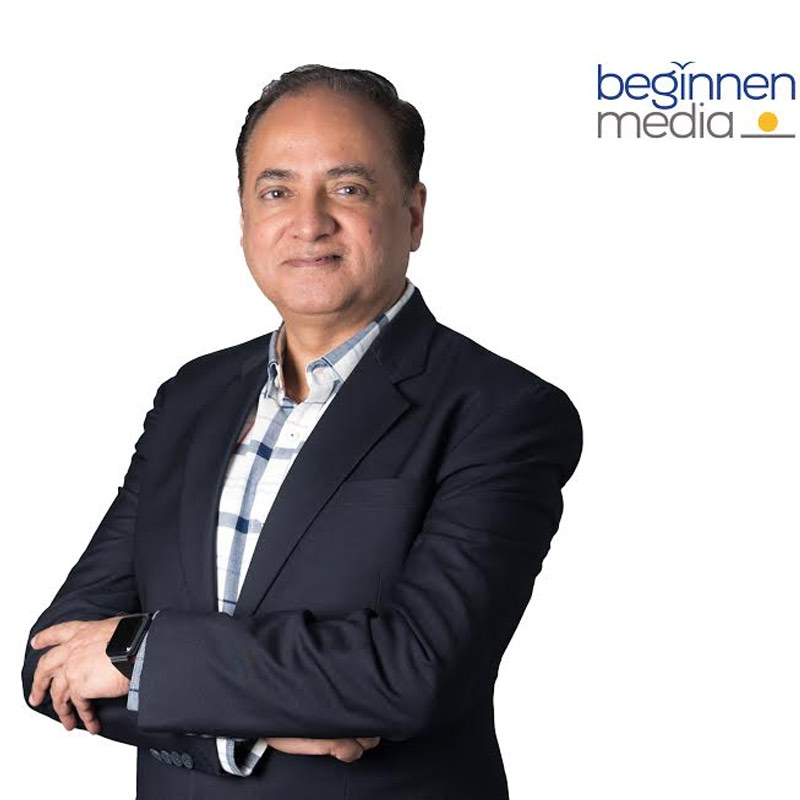
    With this, has come a paradigm shift, where consumers have once again taken the centre stage in determining how traditional broadcasters decide their content offerings. While there may be a plethora of content for urban viewers, there aren’t still enough choices for the rural audience. It is this vast market that Mumbai-based Beginnen Media is keen to tap into, with its new Hindi GEC- Azaad TV. The channel with its philosophy – ‘People First, Rural First’ hit the airwaves in May and caters exclusively to people in rural India. It’s currently available on DD Free Dish and select DPOs.

    In an exclusive interaction with Indiantelevision.com, Beginnen Media, managing director Bharat Kumar Ranga talks about his vision for the new channel, its financial model, content offerings, and introduces for the first time, the newly formed team that helped build the brand.

    Edited excerpts:

    On the decision to focus on rural India

    At Beginnen Media, we wanted to relook at the media and entertainment sector with a fresh perspective. We believe that the real transition is not from broadcasting to individual casting or TV to digital, but from being from creative/content-centric to being consumer-centric. We found a great opportunity in the rural segment. While the urban segment has been over-serviced by TV and digital platforms, consumers in rural India are still under-serviced with content that was originally created for urban viewers. They weren’t really considered primary consumers. So, we thought that there was an opportunity for us to see them as primary consumers and create stories exclusively for them.

    On how the target audience was identified

    We put most of our energies into identifying our target audience. We saw that rural people have a certain mindset, and we decided to focus on that. No matter which place they migrate to, they will carry that mindset with them. Though our content will cater to the Hindi-speaking audience, it will also try to reach out to Hindi-understanding markets like parts of Gujarat, West Bengal, Punjab, Maharashtra, where people may not speak Hindi, but they do understand the language. We want to design our content in such a way that people from across states relate to it. We have also hired specialist agencies that work on consumer products, like the Delhi-based agency- Futurebrands, which is led by Santosh Desai to provide us with data and insights.
    On the decision to go Free-to-air (FTA) and growth opportunities in the rural market

    In terms of distribution, the TV consumption in rural India is largely through DD Free Dish, and you cannot be on DD Free Dish if you are a Pay channel. So, we chose FTA so that we could reach out to that audience. Since we are the first rural GEC, we thought it makes much more sense to reach out to people quickly, and start building on that connection.

    Generally, people tend to confuse Free-to-air (FTA) with rural. While it is fair to say that most people who consume FTA channels are in rural India, and that is the market that we are entering into. But a significant part of the rural audience is also watching pay platforms, other than on DD Free Dish. So, we are venturing into a new category, where we are competing with not just the FTA channels, but also the Pay channels in the rural segment. FTA channels are also available in more households than Pay TV. It’s just that the FTA market has not unlocked its full potential yet. The over-supply of acquired content on these channels does not seem to be working anymore. The audience understands that the channels are recycling content, and they want something new, so that is why we hope that our rural model might work.

    On the content offerings and original shows

    Our original shows got delayed because of the pandemic. But since we had to start the channel distribution, we went ahead with the soft launch. We started building a connection with the audience. Now, our new shows are also under production and we hope that we will be able to sustain and keep the process running in case there’s a third wave too.

    In terms of content, we have put in a huge amount of energy to determine what our rural audience will like to watch. On the face of it, our content might not look different, but the larger differentiation is in the point of view of the people, that we will try to reflect in the shows. Currently, stories on pay platforms are set up in rural areas, but they are told to an urban audience. We wish to tell stories that reflect their point of view irrespective of where they are based.

    On the financial model and opportunities for advertisers

    As a rural entertainment channel, we need to have all kinds of revenue- subscription-based, advertising-based, as well as digital revenue. In terms of advertising revenue, we are looking at some sort of premium around the environment that we are giving to our advertisers- ‘digital virtues in a TV business’.  Firstly, we are providing a focussed target audience. For instance, if a campaign runs on any FTA channel, the advertiser may not know if it’s reaching the urban or rural audience. But, in the case of Azaad, the focus is entirely on people with a rural mindset. Secondly, the programming environment. If an advertisement is put on YouTube, it’s difficult to identify the content/genre that the consumer is watching. However, we will offer brand safety in terms of content that aligns well with the values of the brand. Advertisers will be interested in an entertainment platform that is consumer-focussed. We already have some regular advertisers like HUL on board. But the main exercise will begin once we launch original shows.

    On the distribution plans for the channel

    Simple to our plan, we have looked at all the MSOs. We began with DD Free Dish, where the channel is currently being aired. Then we identified some 50 individual distribution cable operators in rural areas. We are also in talks with 15 more such operators who are working in the outskirts of these areas. They may be lesser-known but attractive to us. We are also in touch with some top DTH and MSOs, but our priority is rural India and we will stick to that.

    Rural is a super mass category. We want to create a little space for ourselves, and we understand that it will take some time for us to create a relationship with the audience. We want to become the most credible platform for rural audiences.

    On the team that leads Beginnen Media

    Director – project & operations: Mohan Gopinath 

    A media and broadcast veteran, Gopinath carries nearly 25 years of work experience. He worked with Zee Entertainment Enterprises Ltd (ZEEL) for 18 years, turned entrepreneur, and co-created Bhu Entertainment in 2015. He also helped Viacom launch its first movie channel, Rishtey Cineplex.

    Chief marketing officer – Rachin Khanijo

    Khanijo carries over 17 years of extensive MarComm experience, during which he has worked at Eros Now as vice president, marketing, and COLORS as associate director – marketing. He has also worked as marketing head at &TV and brand director – Filmfare, Femina, and GoodHomes. At Beginnen Media, he handles marketing, corporate communications, on-air promotions, research & distribution.

    General manager, product: Doris Dey

    Dey spearheads Business Development, Programming & Content Strategy, Product Innovation, Content Creation, and Curation. In a career spanning 18 years, she has worked as a writer, creative director, and even Independent Producer (OTT). In her previous stint at Essel Group, she envisaged and launched &TV.’

    Chief revenue officer, Johnson Jain

    Jain carries over two decades of experience in the Media & Entertainment industry and specialises in advertising revenue. He has worked with leading media conglomerates including ZEEL, Sony Network (SET India) & 9x Group. He has played a key role in relaunching Zing in 2016.

    Chief financial officer, Dinesh Bhutra

    An associate member of the Institute of Chartered Accountants of India, Bhutra has more than a decade of experience in various sectors like Airlines, Telecom, Entertainment, Education, Finance, Media, Data Centre and Refinery including Jet Airways, Reliance Jio, Essel Corporate, MT Educare Ltd, ISSL.  At Beginnen Media, Bhutra also heads Commercial, Administration & Human Resources as its chief finance officer.