Category: Viewership

  • Star Plus continues to lead the tally in BARC Week 32

    Star Plus continues to lead the tally in BARC Week 32

    Mumbai: As per BARC TV viewership data for Week 32 (7 August to 13 August 2021), Star Plus was the most viewed channel registering an average minute audience of 2747.77 (000s) AMA. The Hindi GEC was at the top position last week as well with 2899.7 (000s) AMA.

    Regional GECs Sun TV and Star Maa continued to battle it out for the next two spots for the third consecutive week. With 2710.62 AMA the Tamil major Sun TV bagged the second position (2690.63 AMA in Week 31). Star Maa (Telugu) finished third at 2701.4 AMA (2719.88 AMA in Week 31).

    Maintaining last week’s status quo at the fourth to eighth positions were Colors, Star Utsav, Sony SAB, Star Vijay, and Zee Telugu. FTA Hindi movie channel Dhinchaak was displaced from the ninth spot by ZEE Kannada this week. Zee Anmol retained the tenth position with 1565.1 (000s) AMA.

    In the Mega Cities Star Plus was toppled from the first spot by Sun TV (452.33 AMA). Colors stood second with 435.74 AMA. Sony SAB and Star Vijay bagged the fourth and fifth place.

    The South market was dominated by Sun TV (2703.77 AMA), Star Maa, Star Vijay, Zee Telugu and Zee Kannada in that order.

    Among the regional markets, Maharashtra/Goa was led by Star Pravah at1359.68 AMA, West Bengal by ZEE Bangla (1029.19 AMA), Odisha by Tarang (429.26 AMA), Karnataka by ZEE Kannada (1593.04 AMA), Rajasthan by Star Utsav (257.52 AMA) and UP/Uttarakhand by Zee Anmol (368.38 AMA).

  • Tele-wise Marathi to demystify Marathi Television Landscape

    Tele-wise Marathi to demystify Marathi Television Landscape

    Mumbai: Indiantelevision.com is organising a virtual summit, ‘Tele-wise Marathi: The Power of Television’ on Friday, 20 August. The initiative will bring together Marathi channel, production, and brand advertising executives to discuss how television continues to be the best medium for home entertainment as well as for advertising.

    Presented by COLORS Marathi, the media partners for the summit include Animation Xpress.com, TellyChakkar, and radioandmusic.com

    With 115 million TV viewers, the Marathi television landscape is very different from others in the south or in the east. While 70 per cent of the state’s viewers have an overlap with Hindi TV channels, 30 per cent opt for pure Marathi entertainment and news. The state of Maharashtra is also different from others in that there are many other urban centres apart from Mumbai, the economic capital of India. There’s also Pune, Nashik, Kolhapur, Nagpur, Solapur, Jalgaon, Akola and Aurangabad.

    More than 35 Marathi language TV channels are scrambling for a piece of the Rs 800-900 crore advertising pie in genres including general entertainment, news, movies and music. Both local and national brands have been using the communication opportunities these channels offer to target the Marathi audience. Keeping in line with the rush into regional languages by mainline and independent broadcasters, the Marathi segment has seen a flurry of launches over the past five years.

    At the ‘Tele-wise Marathi’ summit prominent personalities will share their perspective on various facets of the Marathi Television industry across six sessions. The day-long virtual event will begin with a welcome note by Indiantelevision.com founder, CEO and editor-in-chief, Anil Wanvari.

    Speaking on the ‘Television Landscape in Maharashtra’ in the first session, Barc India’s head – client partnership and revenue Aaditya Pathak will set the tone for the rest of the event. This will be followed by an insightful discussion between top management executives from ZEEL and COLORS Marathi and several well-known creative professionals during the session titled ‘Marathi: Stories, Stories and More’

    Next, Kantar, director (specialist businesses) –South Asia Insights Division, Puneet Avasthi will shed light on the ‘Consumer Profile for the Marathi Market’. The fourth session will see leading media agency (Mindshare, Zenith, dentsu X India) executives sharing their views on ‘Media Planning and Buying for the Marathi Viewer’.

    Lined up after that is another interesting conversation where brand custodians from Rambandhu (EFSL), Amul (GCMMF), Edelweiss Asset Management, Godrej Tyson Food, and Maruti Suzuki India will demystify ‘Marketing to the Marathi TV Viewer’.

    The last session ‘News and Movies: Bright Spark’ will be presided by senior executives representing Waman Hari Pethe Jewellers, Parle Products, ZEE Media Corporation, and Shemaroo Entertainment.

    The event will be live-streamed on YouTube, Facebook and Twitter 3:00 p.m. onwards.

    To register : https://indiantelevision.com/events/telewise-marathi/

  • ‘Pyaar Tune Kya Kiya’ returns with season 12 on Zing

    ‘Pyaar Tune Kya Kiya’ returns with season 12 on Zing

    Mumbai: Zing is all set to showcase season 12 of its hugely popular show “Pyaar Tune Kya Kiya” (PTKK) starting 14 August every Saturday at 7 p.m. 

    The show will present 15 new-age love stories filled with friendship, drama, and romance. The idea behind this season’s theme emerges from the insight that the definition of love has evolved for GenZ, said the channel.

    PTKK is among the most successful IPs at the channel and has been running for the past seven years.

    Commenting on the launch of the latest season, ZEEL’s deputy business head – music cluster, Pankaj Balhara said, “It has been a wonderful journey for us with PTKK. The show has hit all the right chords with the viewers from the first season. We are glad that we have a dedicated audience base that is connected deeply with the show. Like every season, even this time we have taken a theme that is relevant to Gen Z and their relationships today, making the content extremely relatable. We are confident that this season, like every other season, will strike a chord with our audience.”  

  • Television welcomes over 850 new advertisers in July 2021: BARC India

    Television welcomes over 850 new advertisers in July 2021: BARC India

    Mumbai: The ad volumes for July 2021 registered 23 per cent growth vis-à-vis July 2019 and 14 per cent growth over July 2020, according to BARC India’s THINK report titled ‘July ’21 Ad Volume Analysis’. Followed by the strong positive trend for television ad volumes in H1 2021, July 2021 re-affirms advertisers trust in the medium, it said. 

    July 2021 witnessed 15 per cent growth against June 2021, recording the highest growth for the period June to July, since 2018. With 869 new advertisers in July 2021, 2153 advertisers and 3558 brands were actively advertising on television, resulting in a total of 145 million seconds of ad volumes.

    “Ad volumes for July are promising, and this has further fueled growth for the industry,” said BARC India head for client partnerships and revenue, Aaditya Pathak. “Owing to a significant increase in the number of new brands and advertisers turning to television, the share of new entrants in the overall pie is the highest in July 2021 over the last three years. Moreover, combined ad volumes for January to July 2021 are also the highest since 2018, with 1019 million seconds. Data continues to encourage the market’s confidence in TV as one of the most trusted mediums for advertisers.”

    E-commerce, education, and agriculture categories have registered the highest ad volumes in July 2021, over the same period for 2019 and 2020.  Ad volumes for auto, retail, telecom products, and computers categories continue to revive steadily. With 2.01 million seconds ad volumes, Delhi Skill & Entrepreneurship University, a new entrant, found itself a spot in the top 10 advertisers for July 2021. While all language genres have registered positive growth, Punjabi, Assamese, English, and Southern languages genres led this growth in July over June 2021.

  • STAR Plus retains top position in BARC Week 31

    STAR Plus retains top position in BARC Week 31

    Mumbai: Retaining its hold on the top position in BARC’s week 31 (31 July – 6 August) viewership ratings, STAR Plus recorded an average minute audience (AMA) of 2899.7. The channel has registered 2940.4 (000s) AMA in week 30.

    STAR Maa and Sun TV exchanged places with the former bagging the second spot this time with 2719.88 AMA (2650.87 in week 30). Sun TV finished third at 2690.63 AMA (2693.6 in week 30).

    The top three channels were followed by COLORS, STAR Utsav, Sony SAB, STAR Vijay, ZEE Telugu, Dhinchaak, and ZEE Anmol in that order. Dhinchaak moved one place up from the tenth position last week, while ZEE Anmol made an entry at the last spot, knocking off Sony Pal which was at the ninth position in week 30.

    In the mega cities, STAR Plus topped the chart with 481.52 (000s) AMA, followed by COLORS, Sun TV, Sony SAB, and STAR Vijay.

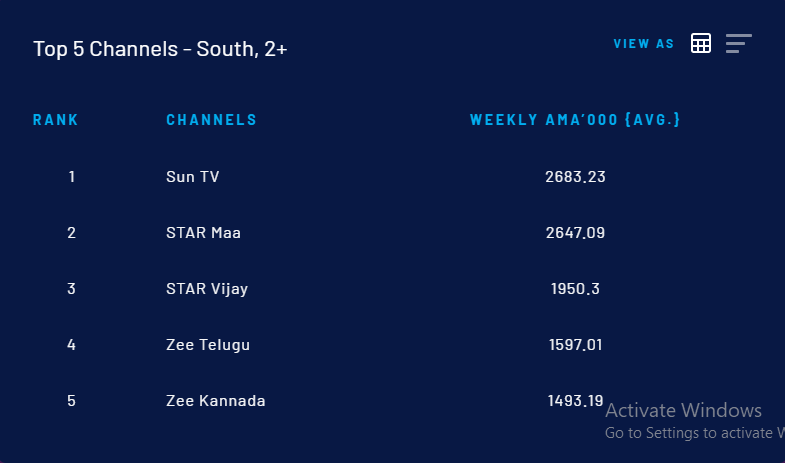
    The South market was dominated by Tamil GEC, Sun TV (2683.23 AMA). STAR Maa (Telugu), STAR Vijay (Tamil), ZEE Telugu, and ZEE Kannada followed.   

    In the regional markets, Maharashtra/Goa showed a clear preference for STAR Pravah which clocked 1460.2 (000s) AMA. STAR Jalsha was the most viewed channel (1032.4) in West Bengal, Tarang (421.88) in Odisha, ZEE Kannada (1479.08) in Karnataka, STAR Utsav (246.6) in Rajasthan, and ZEE Anmol (402.48) in UP/Uttarakhand.

  • ShowBox rebrands to connect with young India

    ShowBox rebrands to connect with young India

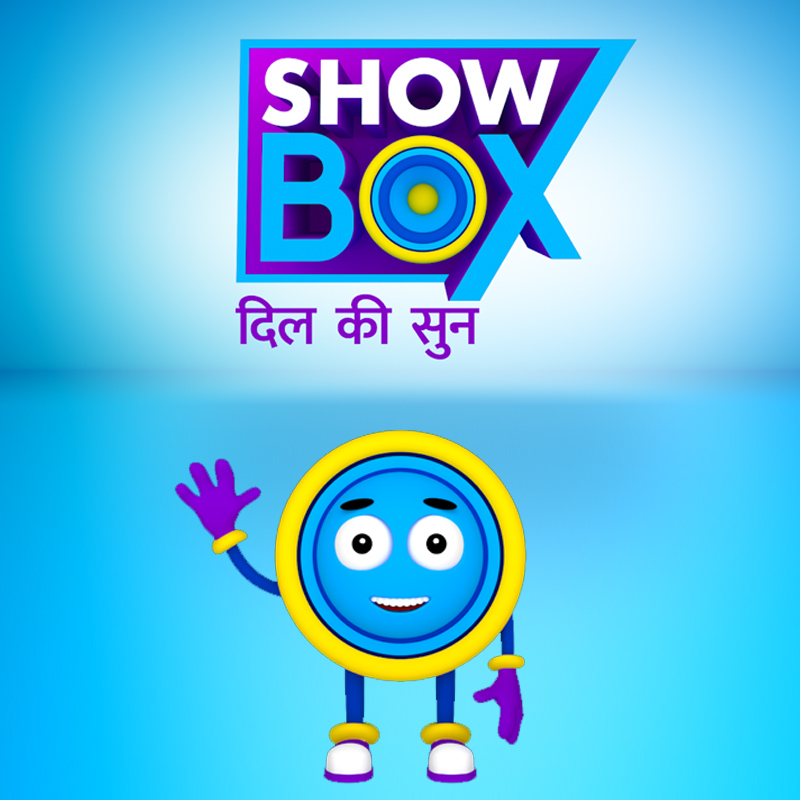
    New Delhi: ShowBox, the music channel from the house of IN10 Media Network has unveiled its new logo and brand identity to reflect the channel’s evolution.

    The new identity – ‘a music channel for young India which follows its heart’ – will be reflected on the channel and social media starting 16 August. The new logo and the tagline, Dil Ki Sun, mirrors a rising young India that’s high on expressing themselves and represents the emotion of following one’s heart.

    “Today’s generation is very expressive and believes in two-way communication with no bars held back. ShowBox caters to this target group and hence, it was important to resonate that in our programming. Our new identity directly represents our vision of non-stop entertainment to music lovers and our limitless ability to inspire people,” said ShowBox vice president, programming and strategy, Clyde D’Souza.

    Keeping this in mind, the music channel will launch two new interactive shows: Luv U Zindagi, where viewers can vote and comment live on topics related to love and relationships. The love songs and topics are handpicked by the team scanning the social media and viral videos.

    The second show is ‘Reel Top 10’ – A countdown for the Instagram generation where the show will count down the top 10 songs and top 10 reels of the week.
    In the pipeline are many more shows with new packaging and dynamism. The channel also revealed a mascot called ‘Showman’, who will take the viewers through all that’s new on the channel while entertaining them in a different way.

  • What can viewers expect from Indian Idol’s 12-hour grand finale?

    What can viewers expect from Indian Idol’s 12-hour grand finale?

    Mumbai: Sony Entertainment Television is all set to host the grand finale of Indian Idol season 12 on this Independence Day. The gala event is expected to showcase over 40 acts spanning 12 hours, from noon till midnight.

    There are six contestants – Pawandeep Rajan, Arunita Kanjilal, Sayli Kamble, Shanmukhpriya, Nihal Tauro, and Mohd Danish who have come this far to lift the coveted Indian Idol trophy.

    Popular musical maestros from the Indian music industry will come together to encourage the finalists. “There will be scintillating performances not just by the top six contestants of this season, but also some of India’s top-rated singers. Aditya Narayan will be joined by Jay Bhanushali as co-anchor for the finale,” the channel said in a statement.  

    The event will commemorate the occasion of the country’s Independence Day with a tribute to the armed forces. Himesh Reshammiya and Sonu Kakkar will be seen performing on stage. As the evening progresses, a special host will make the contestants play a trivia game, according to the channel.

    “At Sony Entertainment Television, we are delighted with how this season of Indian Idol has kept the audience engaged and entertained during trying times. Celebrating the legacy of the show with a power-packed grand finale seemed like a perfect fit,” said Sony Entertainment Television and digital business, head – content, Ashish Golwalkar. “We are delighted to flag the celebrations of the 75th year of our country’s Independence with this musical extravaganza. First, we will be showcasing a 12-hour star-studded finale with highly entertaining and engaging performances and we are looking forward to maximising viewer engagement. The top six finalists have had an incredible journey through the season and we want this last mile to be a memorable one – not just for the contestants but for the audience alike.”

    “The 12-hour ‘greatest grand finale’ of Indian Idol season 12 is a testament to celebrating music in the most entertaining manner,” said Himesh Reshammiya. “It’s a tough choice between the top six finalists and I can’t wait to see who finally lifts the trophy this season.”

    “I have been a contestant myself on a reality show in my early days and I can relate to the struggle and the anticipation that comes with it,” said Sonu Kakkar. “Watching some of the contestants standing strong through their tough life yet aiming to fulfill their singing dreams from such close quarters, has been most heart-warming for me.”

  • Aiming to produce 50 % of content outside of traditional non-fiction space: Gaurav Gokhale

    Aiming to produce 50 % of content outside of traditional non-fiction space: Gaurav Gokhale

    An accomplished professional with an MBA from INSEAD (France/Singapore), and over a decade-long experience in the industry, Gaurav Gokhale has been at the forefront of handling the day-to-day operations for Endemol Shine India since October, 2018. The content production company has been credited with the success of several large format shows including Bigg Boss, Khatron Ke Khiladi, and MasterChef India in multiple languages. As the chief operating officer (COO), Gokhale is also responsible for the long-term strategy and P&L of the content production company.

    In his career spanning over 13 years, Gokhale has worked with several organisations including BCG India, where he helped organisations solve strategic issues and improve business performance. Later on, he went on to work with Nimbus Communications as head of strategy and business development. In his previous stint at Star India, he handled the strategic mandates across sports and distribution businesses. He also played a pivotal role in launching the Indian Super League and Hockey India League, and was instrumental in managing the business transition of Star Sports.

    As the OTT boom brings a content revolution in the media and entertainment industry, Indiantelevision.com got into a freewheeling conversation with Endemol Shine India, COO, Gaurav Gokhale to understand how the company is gearing up for this evolution. Gokhale also delved upon the challenges in meeting the burgeoning demand for content, growth opportunities in regional markets, and how the company is executing multiple scripted productions in parallel.

    Edited excerpts

    On the OTT boom and how it has changed the consumption patterns of viewers? Also elaborate on new opportunities that it offers in terms of content production.

    We’re seeing more of a big-bang moment in the OTT space rather than a boom. Digital content consumption is going through an exponential expansion phase. At one end, cheap data and entry-level smartphones have made streaming content easily accessible. Today, we have about 800 million smartphones in India priced from Rs 1,000 onwards. One hour of watching streamed content consumes about 500-700 MB of data and costs around Rs 7. Monthly, that’s around Rs.210, which is the average cable TV bill in the country. We can say that watching quality streaming content has now become truly democratised in India.

    Moreover, consumption of content on personal mobile devices offers better privacy and convenience over communal TV viewing. At the delivery end, streaming services and OTT platforms are bettering their streaming infrastructure and content supply to meet this burgeoning demand. A billion-dollar industry today, the OTT content ecosystem is estimated to grow 15X in the next nine years! These numbers are indicative and convey an upward move in demand and supply. As creators of content, we are happy to ride the wave and do what we do best – churn out quality content to satiate the rising consumption.

    On how media entertainment companies can meet this burgeoning demand for fresh, high-quality content, and the underlying challenges

    We need to re-invent ourselves constantly to feed this burgeoning demand and keep making investments into the sector. Media companies, producers and broadcasters need to re-think their existing models and come up with more efficient work-flows to accelerate content creation. Unlike a manufacturing process, AI and Robots cannot replace human creativity. One machine cannot substitute 10 writers and create 10X output. The only way to scale up production in a human-intensive industry such as ours, is to quickly build skills and efficiency and try and shorten the turnaround timelines.

    On the production setup, there are genuine supply-side constraints. There are a limited number of trained writers, technicians, artists and HODs who can work on OTT shows. It’s a problem the Indian IT industry faced 20 years back, and they solved it with concerted skilling initiatives across over two decades. By 2025, it is projected to become a $100 billion industry contributing in excess of five to seven per cent GDP. We need to push ourselves and aspire to reach there one day. This requires fresh thinking in the way we plan shows, the turnaround times for development, the post-production cycle and so on. These are real challenges today and over time, we need to find ways to optimise them.

    On Endemol Shine India’s plan for TV, OTT and cinema going forward

    As a production house, we produce quality content agnostic of form-factor and medium of consumption. Over the last decade, we have produced shows for TV – both fiction and non-fiction and in the last few years, we have ramped up our production for OTT platforms. We are also steadily building our films slate and have announced a few interesting collaborations in this space.

    On the balance between non-fiction factual, drama, dailies and cinema

    We have historically been known for our large format non-fiction shows such as Bigg Boss, MasterChef and Khatron ke Khiladi. These shows have given us the experience and expertise of delivering big productions in tight timelines and to a budget. Platforms prefer us for this proven track record, our audit transparency and clean operations — an emerging new factor for international platforms as they commission marquee scripted shows in India. That is a natural extension to our existing skill-sets.

    Over the last couple of years, we put in place a very efficient modular setup for executing multiple fiction productions in parallel. This year alone, we have more than 10 fiction shows on the floor. Over the next few years, our ambition is to produce 50 per cent of content outside of the traditional non-fiction space.

    On the growth opportunities in regional markets

    Regionalisation is critical for all content creators. OTT has made content language-agnostic and as we have seen from shows like Money Heist and Narcos. Good content finds its takers all around, irrespective of the language in which they are created. We must also remember that in India, nearly 40 per cent of TV viewership comes from regional markets. Over time, regional budgets have also gone up and today we have streaming services and OTT platforms dedicated to regional content. We are currently producing five versions of Bigg Boss for the regional markets (Tamil, Telugu, Marathi, Kannada, Malayalam), four regional versions of MasterChef and four regional daily fiction shows. We are producing both theatrical and finite fiction content in Tamil. There is a lot of talent and creativity in regional that is waiting to explode and the potential is huge.

    On whether co-production will become the new norm, and if yes, then the kind of financial structuring deals we might see coming in this area.

    If you look at the macro trends, we have a roughly Rs. 25,000 crore TV content industry growing at 10-12 per cent annually, and a nascent Rs. 2,000 crore OTT content industry growing at over 30-40 per cent annually. To fuel this kind of future growth in volumes of production, we need to create content hubs and content factories that can churn out shows on a large scale. This will require innovative ways of working and new kinds of investments and partnerships that bring together different individuals and entities with diverse and complementary skill-sets. In such a ‘co-production’, idea-generators join hands with execution experts like us to pitch and create multiple shows. The ‘creative producer’ then takes over development and the overall creative onus while the ‘line producer’ takes on execution onus and delivers the financial target. Such a partnership is based on implicit trust between the stakeholders but if done well, the synergies can yield hugely positive outcomes and most importantly, faster turn-arounds.

    Apart from the traditional commissioning model where platforms fund development and production and are deeply involved in creating a platform original, we are seeing a growing demand from platforms for ready-for-sale shows that help fill content gaps at relatively lower costs, especially given the longer turn-around of commissioned shows. A natural need-gap situation has emerged and offers a very interesting opportunity for an institutionalised fund play.

    Today, wealth managers and funds in India are sitting on undeployed capital and need a differentiator to sell to their HNI clients. Now, if done right, here is an opportunity to invest in a low-risk vehicle with fairly guaranteed returns and a fundamentally strong demand cycle and with an implicit X-factor. With the right production partner to bet on, I see a lot of organised financial investors wanting to participate in this asset class.

    On whether Endemol Shine India is looking at the studio model too, wherein it will work as an aggregator and distributor for smaller producers

    Strategically, our interest lies in producing shows we can actively shape. While tactical distribution opportunities may arise due to our strong relationships with platforms, our core business is to develop and produce shows that we strongly believe in, with talented writers and accomplished show-runners.

    On the company’s positioning in India

    Endemol Shine India is today an end-to-end content production powerhouse. We produce premium fiction and non-fiction shows; regional daily fiction shows and also factual content. We manage some of the largest shows produced in India and our USP is managing large productions within agreed timelines and budgets. We are well positioned to take advantage of the growing demand for more original fiction content from India. We are producing shows for all leading platforms – Netflix, Amazon, Disney+ Hotstar, Lionsgate, MX Player, Discovery Plus and AltBalaji.
  • Our branded content business has grown three-fold: Discovery’s Shaun Nanjappa Chendira

    Our branded content business has grown three-fold: Discovery’s Shaun Nanjappa Chendira

    Mumbai: The ‘great reset of 2020’ had the media and entertainment industry witnessing one of the most peculiar anomalies ever in history where the burgeoning demand and consumption of content was accompanied by an unprecedented fall in advertising revenues.

    While the English infotainment genre also benefited by the overall growth in viewership, Discovery India registered a near 50 per cent dip in advertising in AMJ 2020 owing to the slump in both ad volumes and ad rates, which, according to Discovery Inc, head of advertising, sales, South Asia, Shaun Nanjappa Chendira “reduced to a trickle” in that period. However, with the picking up of the economy around August-September 2020, the scenario began to ease out. Despite the second wave earlier this year, the entertainment brand has reached a near normalisation of business riding on the back of two strategy pillars – branded content and the hybrid business model.

    Spotting Early Revival Trends – Branded Content & the Hybrid Business Model

    Shaun Nanjappa Chendira was promoted as the head of advertising, sales, South Asia, Discovery Inc in October 2020. That was the time when industries across the board, M&E included, were showing signs of recovery and the opportunities opened up by the pandemic had taken precedence over the challenges posed by it. As the economy began to revive, people resorted to revenge buying giving a much-needed fillip to business across categories. While the spurt in FMCG was expected, two-wheelers and other auto brands were also able to drive sales despite the pandemic. Segments such as telecom and handsets assumed greater relevance.

    “The difference this time around was that brands weren’t looking for visibility alone; they wanted better engagement with the consumers. Because branded content works wonderfully well in that space, we saw our branded solutions business grow by leaps and bounds. Clocking in a three-fold growth since 2019, today it contributes 25-30% of Discovery’s overall revenue,” stated Chendira.

    Commenting further on whether there were new advertisers coming in after the pandemic, he added, “Our client base undergoes a change every year with new categories coming onboard. Recently edtech, pharma and BFSI brands have been quite active on our OTT as well as linear platforms. Another trend we witnessed was that of deeper penetration happening in each category. If there were one or two mobile handset brands advertising earlier, today there are three or four of them.”

    Discovery has created branded content with a number of start-ups, one of the most noteworthy examples being ‘Discovery School Super League with BYJU’S’. It has also undertaken similar projects with Mi India (Feelin Alive Season 2), Oppo (Life Unscene), Hyundai (Emission Impossible) and more.

    The demand for high-impact formats and India-centric content, led Discovery to bringing one of its largest IPs ‘Into The Wild With Bear Grylls” into play during the pandemic. The new episode with Akshay Kumar helped the channel in “getting five or six new clients from across categories on board, thus scaling ad revenues.” Chendira shared that ‘Into the Wild’ has consistently helped Discovery in growing its advertising base.

    Also coming in handy for the media brand was the timely launch of its OTT platform. “We launched discovery+ in March, just before the pandemic hit. From a business perspective, it gave us an opportunity to offer linear plus digital solutions to marketers, bundled as one. The success of this hybrid model has made it a norm for us today and we will continue to push forward in this direction,” asserted Chendira. “However, we do believe that TV is still irreplaceable as the only way of catching a mass audience in the shortest period of time. The large-screen family viewing experience cannot be replicated on digital, which is more about solo viewership, catch-up TV and watching anywhere.”

    The Road Ahead – Recovery and Growth

    Chendira is hopeful of achieving pre-pandemic revenue levels by the end of 2021. By September, Discovery Inc had started seeing a growth trajectory of 5 per cent which soon jumped to 10 per cent, and the channel was able to recoup a lot of the actual pandemic-hit very fast, driven by the market recovery as well as its product and business propositions.

    “A combination of these helped us in stabilising revenues. The trend carried on until March end, when the second wave and lockdowns came into force. However, with consumers and marketers having learnt to innovate and adopt in response to the challenge, this time the recovery has been fairly quick. There was marked improvement in June and July, and we are expecting things to further normalise in August,” he said, while taking a look at the recovery so far.

    Going ahead, India-centric content, sports, and regional will be the added focus for Discovery India. On the business front, the efforts will be directed towards ‘working more closely with clients and not just agencies’, said Chendira.

    “Discovery’s strength has been in the direct-relationship it has nurtured with brands which has resulted in building credibility and mutual respect over a period of time. This played out to our advantage during the tough times. When marketers started to advertise, we were able to leverage this relationship and thus we could bounce back almost instantly. Our proposition to our partners will continue to evolve in accordance with the market trends,” Chendira signed off.

  • BARC India’s new campaign reinforces importance of TV in Indian households

    BARC India’s new campaign reinforces importance of TV in Indian households

    Mumbai: Building on the famous saying, “People hear statistics, but they feel stories”, Broadcast Audience Research Council (BARC) India has launched its latest ad campaign called ‘#MeasuringMoments – Where Data Does the Storytelling’ to reaffirm the importance of television in Indian households.

    The campaign, conceptualised and executed by BARC India’s internal team and its agency partner AGENCY09, showcases the accuracy in viewership trends through a series of narratives backed by data and insights.

    The campaign also highlights the fact that while BARC is capturing data to ‘What India Watches’ report, this data is also measuring and is reflective of moments that touch viewers’ lives and emotions and further reinforces the fact they are deeply connected and engaged with the medium. 

    “BARC India is an organisation that is deeply rooted in measurement science and technology and over the last six years we have been able to ascertain the fact that television continues to be the screen of the household,” BARC India, MarComm, Rafiq Gangjee said. “While the result of all we do lies in the dependable weekly currency we deliver to the industry, there are always greater stories to tell that depict the power that television has over viewers. Our campaign reflects these numerous stories that lie within various folds of data and insights. We hope to bring life to these moments and establish a deeper connection with viewers.”

    The campaign is currently live on BARC India’s social media channels.


    A post shared by BARC India (@barcindia)