Category: Viewership

  • Zee TV to air its four fiction shows seven days a week!

    Zee TV to air its four fiction shows seven days a week!

    Mumbai: Zee TV has announced that four of its popular fiction shows will now air seven days a week, starting Sunday, 16 October.

    The four popular shows, Meet, Main Hoon, Aparajita, Pyaar Ka Pehla Naam Radha Mohan, and Bhagya Lakshmi, will air at the same time, i.e., from 7 p.m. to 8:30 p.m.

    For three decades, the channel has consistently placed a premium on providing the best and most popular programming.

    Throughout the week, viewers will be able to catch their favourite actors in action, including Ashi Singh as Meet Hooda, Shagun Pandey as Meet Ahlawat from Meet, Shweta Tiwari as Aparajita and Manav Gohil as Akshay from Main Hoon Aparajita, Shabir Ahluwalia as Mohan and Neeharika Roy as Radha from Pyaar Ka Pehla Naam Radha Mohan, and Aishwarya Khare as Lakshmi and Rohit Suchanti as Rishi from Bhagya Lakshmi.

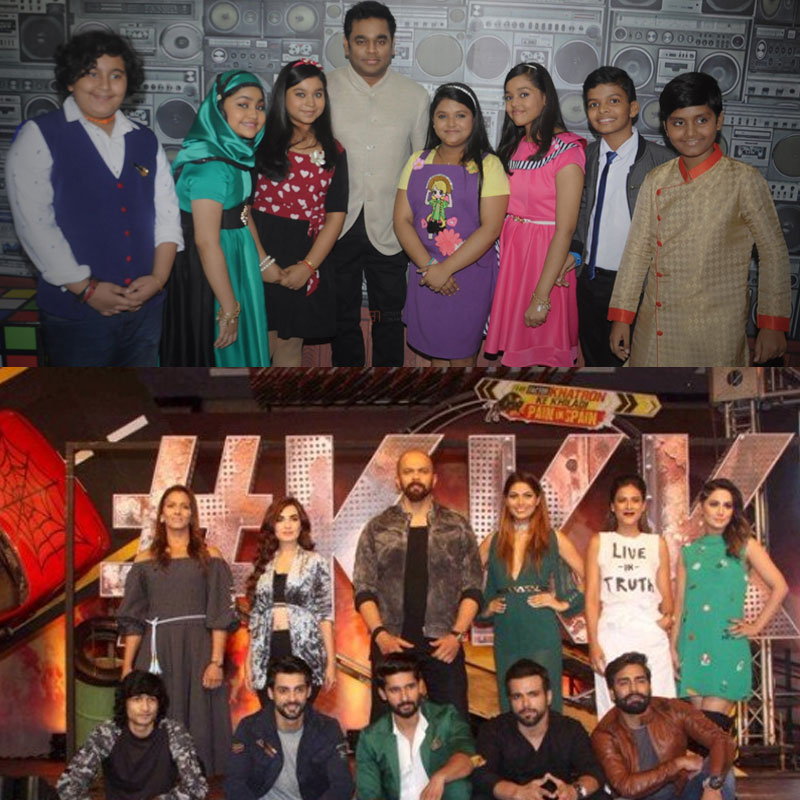
    Viewers can look forward to the Sa Re Ga Ma Pa Li’l Champs season nine, every Saturday and Sunday, starting 15 October.

  • Hindi news tops news genre’s ad volumes in H1 FY’22: TAM Media report

    Hindi news tops news genre’s ad volumes in H1 FY’22: TAM Media report

    Mumbai: TAM media research’s subdivision AdEx India has released the half-yearly report for advertising in the new genre. According to recent data, Hindi news tops with more than 20 per cent share for ad volumes in H1 FY ’22, and observed indexed growth of 33 per cent.

    As per the data recorded last year for the same period, ad volumes grew by 33 per cent as compared to H1 FY ’20 and five per cent growth was reported as compared to H1 FY 2021. The month of March 2022 saw the highest ad volume share of 19.5 per cent.

    H1 FY ’20 saw the highest share of ad volumes, that is, 31 per cent followed by H1 FY’22 and H1 FY ’21 with 28 per cent share each.

    The prime time slot is the most preferred band, followed by the afternoon and morning in the news genre, and during H1 FY ’21 and H1 FY ’22, for each slot Hindi news topped with a 20 per cent share of ad volumes.

    Three out of the top five subgenres, which include Hindi news, Bengali news, Tamil news, Telugu news, and others, have retained their ranks in H1 FY ’22. During H1 FY ’21 and H1 FY ’22, the top five subgenres accounted for more than 55 per cent of the ad volume.

    The number of news genre categories increased by four per cent in H1 FY ’22 as compared to H1 FY ’21. The spices category led with a three per cent share of ad volume in H1 FY ’22.

    The top ten list included two categories each from the food & beverage, building, industrial, and land materials/equipment industries.

    Corporate/brand image, range of OTC products, building materials/systems, and pan masala were the new entrants among the top 10, out of which seven categories observed positive rank shifts.

    The service industry topped with a 17 per cent share of the news genre’s ad volumes, followed by F&B with 14 per cent.

    Corporate/brand image saw the highest increase in ad seconds with 74 per cent, followed by ecom-gaming three times during H1 FY ’22 as compared to H1 FY ’21.

    In terms of growth per cent among the top 10 categories, vocational training institutes topped with the highest growth of 3.9 times, followed by face wash with 3.2 growth.

    Reckitt Benckiser, GCMMF (Amul), and LIC were the top three advertisers in H1 FY’22. Ultratech Cement, Mahashiya Di Hatti, and Think & Learn were the new entrants among the top 10. Ultratech Cement moved up by 24 positions to achieve the seventh rank.

    Roop Mantra cucumber herbal face wash and Lizol All-in-One are the latest brands in the list, with Hari Bhoomi Communications being the top exclusive advertiser, followed by ITV Network.

    The report further mentioned that in H1 FY ’22, 20 to 40 seconds witnessed a 10 per cent growth in ad volumes compared to H1 FY ’21. Advertising commercials of 20 to 40 seconds were most preferred for advertising on news channels during both periods.

    More than 3,200 advertisers advertised exclusively in the news genre from H1 FY ’22. 2,800 plus advertisers & 4.5K+ brands exclusively advertised in the news genre during Jan-Jun’22. Playgames 24×7 and Roop Mantra Cucumber Herbal Face Wash were the top exclusive advertisers and brands, respectively, during H1 FY ’22 compared to H1 FY ’21.

  • Barc Wk36 – Wk39: News18 leads in HSM

    Barc Wk36 – Wk39: News18 leads in HSM

    Mumbai: Network18 group’s News18 has been having a safe and stable ride with its national Hindi as well as English news channels leading the show for several months in a row. It has now claimed leadership across all key Hindi-speaking markets (HSM).

    According to Barc data in Wk36–Wk39,TG: 15+, News18 Network has a 15.4 per cent market share, making it the country’s largest TV news network.

    News18 Bihar Jharkhand is the number one news channel in the state with a market share of 97.7 per cent. News18 UP & Uttarakhand, too, has topped the charts with a market share of 28.6 per cent, as compared to ABP Ganga’s market share of 26.2 per cent.

    News18 Rajasthan is the leading channel in the state with a market share of 57.9 per cent compared to 1st India News’ 31.6 per cent and India News Rajasthan’s 9.6 per cent.

    News18 Punjab/Haryana has claimed the key position too, with a market share of 32.1 per cent, compared to PTC News, Living India News, and MH One Prime’s 30.6 per cent, 22.1 per cent and 10.8 per cent respectively.

    Launched almost 45 days ago, News18 JKLH too has grabbed the top slot with a market share of 39.2 per cent compared to JKL 24×7 News and Gulistan News’ 36.1 per cent, and 24.7 per cent, respectively. 

    Commenting on the viewership data, Network18 CEO of Hindi news Karan Abhishek Singh said, “News18 India has been the number one national Hindi news channel for several months now. Now, News18 regional channels have claimed leadership across all key Hindi-speaking markets. It’s a message of great trust that our viewers have placed in us.”

    According to Barc ratings, News18 India bagged a 15.8 per cent market share in weeks 36–39, HSM-urban+rural, as compared to the 13 per cent share of TV9 Bharatvarsh and Aaj Tak’s 12.7 per cent.

    In the prime time slot of 2100-2200 hours (TG: 15+, HSM), News18 India’s Kishore Ajwani is ahead of Aaj Tak by 3.5 per cent with a 17.9 per cent market share in comparison to Aaj Tak’s Sudhir Chaudhary, who holds 14.4 per cent.

    Going strong on its leadership, CNN-News18, the English news channel of the Network18 group, has also fortified its position as the primary English news channel in the country by securing a market share of 31.6 per cent, as per Barc data (Wk36 – Wk 39, TG: 15+, HSM). Meanwhile, Republic TV holds the second slot with 26.6 per cent, and Times Now is in the third position with a 26.1 per cent market share.

    Even on the digital front, the News18 brands have been garnering solid traction, with their views increasing steadily across YouTube and other social media platforms.

    News18 has been heavily investing in technology and editorial resources to ensure that its content and presentation remain uniquely curated for the audience and far ahead of the competition.

  • Zee and Sun TV likely to witness opportune times as ad revenue growth returns this festive season: Report

    Zee and Sun TV likely to witness opportune times as ad revenue growth returns this festive season: Report

    Mumbai: Despite facing an adverse impact in the wake of the covid pandemic last year, the media & entertainment industry witnessed some respite in ad revenues for the current quarter-on-quarter (QoQ). According to a report published by Elara Securities (India), in comparison to other traditional media, the television industry has reported healthy growth in the post-covid era. The report also indicated a positive outlook for ad revenues in the upcoming festive season.

    TV Segment: Some respite (QoQ) in ad revenue, led by festive season 

    Traditional advertisers such as fast-moving consumer goods (FMCG) continue to spend on ads, while new-age players such as edtech, fintech, and gaming have chosen to reduce their ad spending. The CPG and automobile industries, as stated in the report, continue to maintain their ad spending, the report highlighted.

    The report noted that Zee group and Sun TV are likely to expect better ad revenue of 3.5 per cent and 6.4 per cent, respectively, while ad revenue may be flat for TV Today. This growth will be driven by some stability in ad spending and the start of the festive season.

    Zee’s subscription revenue, as noted by the report, may decelerate by 1.2 per cent, whereas Sun TV is likely to expect a growth of 4.2 per cent.

    Sun TV reported a growth of 12 per cent as compared to the pre-covid period or FY2020, which also witnessed the absence of income generated from IPL and movies, and stood at 7.4 per cent year-on-year (YoY) of Rs 8,899 million.

    Meanwhile, Zee and TV Today reported 3.7 per cent and 1.1 per cent YoY revenue declines, respectively.

    Zee’s earnings before interest, taxes, depreciation, and amortisation (Ebitda) QoQ margin is expected to rise by 85 basis points (bps), while Sun TV and TV Today to fall by 100 and 535 bps, respectively.

    According to the report, expect margin to be under pressure on content investments for Zee and Sun TV, driven by programming initiatives in Tamil and other genres, and TV Today, on lower YoY revenue and digital segment development, which may also witness the same strain.

    Zee’s and TV Today’s YoY profit after tax (PAT) is estimated to decelerate by 46 per cent and 25 per cent, respectively. TV Today, as the report noted, is estimated to grow by nine per cent.

    Exhibitors – Subdued Q2 hit by weak content

    Multiplexes can experience a series of downgrades due to poor Bollywood content. Large-scale films with poor box office results like Laal Singh Chadha, Raksha Bandhan, Shamshera, and Ek Villain Returns were expected to drive strong Q2FY23 performance, but their failure hit revenue growth for mega-multiples operators PVR and Inox.

    According to the report, Hindi box office revenue has noted a decline of 47 per cent compared to pre-covid levels in Q2FY23, as no film performed except Brahamastra (which recorded Rs 256.25 crore in domestic ticket receipts).

    Domestic box office collections are expected to fall 41.5 per cent and 42 per cent sequentially, respectively, and 35 per cent and 34 per cent as compared to Q2FY20 for PVR and Inox.

    Average ticket price (ATP) and spend per head (SPH), driven by premium content traction, have already outperformed Q2FY20 by 22 per cent and 24 per cent, respectively, in Q1FY23. On low-quality content, ATP/SPH may start getting soft, the report said.

    It further highlighted that ad revenue recovery is delayed and may only revive to a pre-covid level in FY24 and added that this recovery is expected to recover to 60 per cent of pre-pandemic levels of Q2FY20.

    PVR and Inox (including INDAS) are expected to have Ebitda margins of 11.6 per cent and 11 per cent, respectively, in Q2FY23, as screen additions may pick up in H2FY23.

  • Zeel’s Ashish Sehgal’s positive ad outlook for Q1’23

    Zeel’s Ashish Sehgal’s positive ad outlook for Q1’23

    Mumbai: Ouch! Speak to any senior advertising or media agency official or even a broadcast sales executive, and they all seem to be yelping in pain, courtesy the evaporation of premium ad spends by innovative and new age digital startups. Forced by investors to tidy up their operations and balance-sheets, the latter have been focusing on consolidation, rather than going berserk spending big on giddying growth through advertising and marketing.

    However, this is not causing broadcast major Zee Entertainment Enterprises Ltd (Zeel) chief growth officer of ad sales Ashish Sehgal to have any sleepless nights. A sales veteran, he’s witnessed the ups and downs that the media industry goes through periodically – needless to say, he’s seen it all.

    Sehgal believes that the silver lining of the advertising drought is that the fast moving consumer goods (FMCG) category has to an extent, come to the rescue and is cushioning some of the blows. He estimates that TV ad spends during the festive season, which is on currently, will show a growth of seven to eight per cent.

    Those used to the heady growth figures of 10-20 per cent may consider this too low, but one has to remember that this growth is coming in at a time of economic upheaval, crashing of global currencies, high fuel costs and rising inflation.

    “The way things have been while it was good, the festive season could have been better. The absence of new clients has made a difference. E-commerce has also reduced spending a bit. While inventory has been going jam-packed, the premium money has not come in the festive season. This has been made up for by the FMCGs to an extent, and TV will see an ad revenue growth during the festive season. This is a good sign as this category will continue to spend even beyond the festive season.”

    He also notes that the TV industry has gone in for a rate hike across the board, which was long overdue. TV viewership was affected in June and August. But post August, the number of eyeballs glued to TV has grown, which is why the FMCG category is spending a lot more.

    Sehgal highlights that general entertainment channels (GECs) are starting to get the reach that they were delivering earlier. Categories like beauty will count on the festive season heavily with the top five advertisers on TV coming in from FMCGs. He feels that the latter’s contribution to overall TV adex could rise by five per cent this festive season compared to the previous year.

    The scenario for 2023

    Sehgal believes that the situation can only improve going forward in Q1 ’23 with spends going up for television advertising and overall ad expenditure. “Every category may come back,” he reiterates.

    He says there are enough signals emanating from the market. Amongst them, the expected spurt in marketing spends by the automobile sector will fire more in the coming months.  “Demand was high during the festive season but supply was low due to the earlier supply issues. So they did not advertise much,” he declares. “They will spend some money in November and December to sell the remaining inventory. That may be a small burst. But now that production capacity has gone up, they will have new launches in Q1’23. That is when they will spend it.”

    “Also, for some new age categories, D2C companies like ed-tech could have digested their heady growth by then. Of course, the banking, financial services and insurance (BFSI) category – say companies like Policybazaar – will be strong in Q1’23, so some of the premium money that was missing in the festive season could come in then,” Sehgal asserts.

    Then, the funding tap for startups could once again open and start flowing by January 2023.

    “This year they have been trying to balance out their bottom line. How long will they continue to do that? They will have to look at growth as well. Hopefully, they will start triggering spends in Q1 ’23,” he says.

    According to him, with FMCG input costs going down, companies will be forced to pass on the benefits to customers through price cuts and promotions. “So they will have to advertise more to promote that,” he says. “A lot will hinge on FMCGs implementing price cuts and promotions. Right now, that has not happened, maybe due to a fear of raw material inflation returning.”

    But he says the FMCG companies would benefit immensely if they slash prices. “Consumer sentiment will bounce back. More consumption will happen. Things look good for Q1’23 as long as no adverse issues come from Europe and America.”

    Sehgal discloses that while travel and tourism ad spends have risen now, most of those are going into print and social media. “TV, too, will get some state tourism ad spend money whether it is on news media, GECs or on regional channels,” he says.

    He feels that while ad spend on OTT platforms is growing, it is seen as an add-on to TV – especially in entertainment. “Whenever there is a TV campaign, the same person likes to also advertise on OTT. OTT helps them add on to their TV reach. It is not an either-or situation,” he explains.

    For the industry’s sake and his too, here’s hoping Sehgal’s forecast does come true!

  • Disney+ Hotstar brings all new season of ‘Aashiqana’

    Disney+ Hotstar brings all new season of ‘Aashiqana’

    Mumbai: Disney+ Hotstar announced the highly-anticipated second season of director Gul Khan’s romantic thriller, Aashiqana. The new season, which premieres on October 10, will introduce viewers to a new chapter in Chikki and Yash’s romance. The series stars Zayn Ibad Khan and Khushi Dubey in leading roles.

    Taking off from the first season’s cliff-hanging finale, where Yash and Chikki reluctantly enter into marriage, their love continues to grow as they help each other out of respect and history.


    Producer and series director Gul Khan, said, “We are entering into a brand new chapter of Chikki and Yash’s life and the tables have turned. In season 2, they will be seen treading paths they had never imagined before. With power-packed action and romance, Aashiqana Season 2 on Disney+ Hotstar will reach a new crescendo as the duo face new thorns in their lives.”

    Disney Star, Disney+ Hotstar & HSM entertainment head of content Gaurav Banerjee said, “Aashiqana’s first season saw a phenomenal response from viewers as they fell in love with the series’ enigmatic characters and its riveting plot. The romantic thriller is a shining example of Disney+ Hotstar’s constant pursuit of exploratory storytelling. As the show enters its second season under Gul Khan’s expert directorial lens, viewers can expect the unexpected in this all-new chapter.”

  • CCI approves Sony-Zee merger ‘with certain modifications’

    CCI approves Sony-Zee merger ‘with certain modifications’

    Mumbai: On Tuesday, the Competition Commission of India (CCI) announced the amalgamation of Zee Entertainment Enterprises (ZEE) and Bangla Entertainment (BEPL) with Culver Max Entertainment (CME), formerly known as Sony Pictures Networks India.

    The amalgamation has been approved “with certain modifications,” the commission said in an official release.


    According to a statement, CCI stated, “The proposed combination relates to (i) amalgamation of each of Zee and BEPL with and into CME; and (ii) preferential allotment of certain shares by CME to Sunbright International (earlier known as Essel Holdings), and Sunbright Mauritius Investments.”

    Also read: NCLT seeks shareholder nod for Zeel-Sony merger

    Commenting on this development, Sony Pictures Network India said “We are delighted to receive CCI approvals to merge ZEEL into SPN. We will now await remaining regulatory approvals to finally launch the new merged company. The merged company will create extraordinary value for Indian consumers and eventually lead the consumer transition from traditional pay TV into the digital future.”

    In December, Sony and Zee agreed to merge their television channels, film assets, and streaming platforms to form a powerhouse in a key growth market of 1.4 billion people, challenging rivals such as Walt Disney Co.

  • Ficci Frames 2022:  Experts discuss the evolving trends in M&E across segments

    Ficci Frames 2022: Experts discuss the evolving trends in M&E across segments

    Mumbai: The media and entertainment industries have evolved over the years, and post-pandemic growth has been shared across segments.

    In a recently organised session on ‘M&E Consumption: Evolving Trends Across Segments’ at Ficci Frames 2022 discussed how media has evolved and new emerging trends are helping or affecting business. The panel discussion was moderated by EY LLP media and entertainment advisory services partner Ashish Pherwani.

    The expert panellist included Viacom18 youth, music and English entertainment head Anshul Ailawadi, International Media Acq (IMAC) CEO Shibasish Sarkar, Indian music industry president & CEO Blaise Fernandes, Pocket Aces CEO & co-founder Aditi Shrivastava and Amazon Prime Video head & SVoD business head Sushant Sreeram. 

    Starting the discussion, Anshul Ailawadi shared insights on how MTV has reached every corner of the country and helped youth have an audiovisual experience. 

    “There are two specific needs: the discovery of the channel and an audio-visual experience, and we try to give them to the audience.” He also expressed that each platform has its unique role.

    Shibasish Sarkar shared, “We have seen a substantial amount of growth in digital consumption. This discussion happens whenever there is a new emerging medium, and will it end the cinema? But it has survived, and even after a pandemic, people are watching movies in theatres.” 

    He further added that in these two years, there has been a substantial level of quality content consumption that has happened by the audience across all video platforms.

    “Today, Hindi language consumers have been consuming the best of Korean, Tamil, Telugu, and Spanish language content, so the consumer’s expectation for good quality content is higher,” he said.

    “Storytelling does not necessarily always need to be expensive. He added that it has to be in touch with the audience with the thought, “What will the audience like?”

    Blaise Fernandes expressed that music is not regional anymore and any music can be consumed in any part of the world; creators just need to choose the right platform.

    When talking about user-generated content, Aditi expressed that “audience is a god, content is a king, and distribution is a queen.”

    Audiences are starting to understand the business of content. And that is opening up possibilities for creators and platforms.

    She said, “Earlier, audience creation was restricted to putting something out. They’re trying to become obsessed, and some of them are becoming influencers. Brands are ditching celebrities and collaborating with digital influencers and micro-influencers to promote the product.”

    “UGC is going to move in the direction where people will buy things and make money based on content,” she added.

    She believes 80 per cent of big influencers and 20 per cent of small influencers will be in the ratio. “You will see digital avatars are beginning to participate in metaverse concerts,” she said.

    Anshul, agreeing with Aditi, said, “New monetisation opportunities, new sorts of avenues, and new platforms will emerge in coming years.”

    Sushant Sreeram talked about content on Amazon Prime where he said, “We programme to an extremely heterogeneous customer expectation across languages, across accessibility, across price points, and across an infrastructure and streaming simplicity.”

    He further added, “We absolutely continue to explore all forms of collaboration. In our journey over the last six years, we have explored a variety of models to work with producers, studios, and theatres.”

    While discussing TV vs OTT, Aditi expressed that it’s important to define because TV is just a device now and its content is consumed on mobile phones as well. Anshul talked about how the audience has done demarcation between OTT, TV, social media, and their functions.

    Aditi further talked about how her company is focusing more on short formats and engagement with the audience rather than how many views they have got.

    “We would like to see content increase across platforms. We would like to be a content provider. Now we are working on engagement. Distribution is very important. But it’s also very expensive to build. The way we are building distribution is by having channels across platforms. We have put out content that our marketing spend and we believe in organic growth.”

    While talking about price and content, Shibasish expressed that the audience won’t pay if they don’t like the content. He believes that good content will make audiences pay irrespective of the medium, and that all mediums will co-exist if they serve good quality content.

    Sushant agreed with Shibasish and talked about how international content on Amazon Prime is consumed not only by the Indian diaspora but also by natives of those countries because of quality content.

    Sushant suggested three things to keep in mind: customer delivery, collaboration with creators, and empowering the creative economy. Aditi advised to drop the elitism when it comes to content, Shibasish asked creators to understand the audience, Blaise stressed that only subscriptions could help creators  while Anshul emphasised how audiences can hate or love but can’t ignore creators.

  • Mipcom Cannes Diversify TV Awards announces nominations and host

    Mipcom Cannes Diversify TV Awards announces nominations and host

    Mumbai: RX France (formerly Reed Midem) has announced the nominations and host for the sixth Mipcom Cannes Diversify TV Awards.

    The awards celebrate, champion and promote diversity and inclusion through exemplary representation in television series and entertainment programmes internationally. A record 190 submissions were received this year from 27 countries. 10 winners will be awarded.

    Billed as ‘the mother of all entertainment content markets,’ the 38th International Co-Production & Entertainment Content Market (17-20 October) is set to welcome over 10,000 delegates from 96 countries. The ceremony, now firmly established as a highlight of the conference programme, will this year be hosted by international anchor and diversity advocate Femi Oke and staged on 19 October 2022 in the Palais des Festivals’ Grand Auditorium.

    Over four decades, Oke has reported, produced and presented for broadcasters including CNN International, Sky, National Geographic, NPR and the BBC, and been a regular moderator at global forums and conferences, facilitating on behalf of the United Nations, World Bank, and European Commission. Currently host of The Stream on Al Jazeera English, Oke is also the co-founder of Moderate The Panel, an agency dedicated to sourcing diverse event hosts.

    The nominations were reached by a short list jury composed of leading professionals committed to diversity and inclusion. The winning programmes in each category will again be chosen by a final round jury made up of advocacy organisations and specialised publications that campaign for equality and inclusion, including The Anne Frank Trust, APF France handicap, Fondation Mozaïk, Gadim, GLAAD, the Minority Rights Group, ODA, Scope and Stonewall. 

    Mipcom Cannes, MipJunior director Lucy Smith said, “Our approach with DiversifyTV and the awards has been to elevate those already making an impact to inspire our industry internationally. If nominated, that impact has been recognised not only by peers but by specialists and advocacy groups in the diversity and inclusion area, an extraordinary and meaningful accolade that also stands as an example of what’s possible in TV. I wish all the nominees the very best of luck for what will be an inspirational event.”

    The awards are organised in collaboration with founding partner DiversifyTV, and in association with founding presenting partners A+E Networks & Netflix, and returning awards partners Telefilm Canada, Canada Media Fund and All3Media International and D.I.M.E.S., among other supporting partner companies and organisations.

    The nominations are: 

    Representation of Race and Ethnicity – Scripted

    Bangla – The Series
    Original Broadcaster: RAI Fiction
    Distributor: Fandango
    Produced by: Fandango in collaboration with RAI Fiction

    Che Peruvian (“Che Peruano”)
    Original Broadcaster: Personal (Argentina), Flixxo
    Distributor: Flixxo
    Produced by: Ernesto Rowe & Niko Chiesa / TeveLab

    Pour toi Flora
    Original Broadcaster: Radio-Canada
    Distributor: Attraction Distribution
    Produced by: Nish Media

    Representation of Race and Ethnicity – Non-Scripted

    Our African Roots
    Original Broadcaster: SBS Australia
    Distributor: Abacus Media Rights
    Produced by: Chemical Media

    Race Around Britain
    Original Broadcaster: YouTube Originals
    Distributor: YouTube Originals
    Produced by: Expectation, Munz Made It

    Unheard
    Original Broadcaster: Amazon Prime Video
    Distributor: LADbible Group
    Produced by: LADbible Group Australia

    Representation of LGBTQIA+ – Scripted

    Heartstopper
    Original Broadcaster: Netflix
    Distributor: Netflix
    Produced by: A See-Saw Films Production for Netflix

    (S)he
    Original Broadcaster: TF1
    Distributor: Newen Connect
    Produced by: And So On Films

    Sort Of
    Original Broadcaster: CBC/HBO Max
    Distributor: Abacus Media Rights, Sphere Media Distribution
    Produced by: Sphere Media Toronto (Formerly Sienna Films)

    Representation of LGBTQIA+ – Non-Scripted

    Freddie Mercury: The Final Act
    Original Broadcaster: BBC Two
    Distributor: BBC Studios
    Produced by: Rogan Productions

    LA (A Queer History)
    Original Broadcaster: PBS
    Distributor: PBS, A+E
    Produced by: L.A. Queer History Inc x 4Mat Factory

    Queens To The Rescue
    Original Broadcaster: ATRESplayer PREMIUM
    Distributor: Atresmedia Televisión
    Produced by: Atresmedia Televisión with the collaboration of Estudios Buendia 
    Representation of Disability – Scripted

    Audrey’s Back
    Original Broadcaster: Quebecor/Club Illico
    Distributor: Beta Film
    Produced by: Pixcom in collaboration with Quebecor Content

    Dodger
    Original Broadcaster: CBBC and BBC iPlayer
    Distributor: NBCUniversal Global Distribution
    Produced by: Universal International Studios, a division of Universal Studio Group

    Exceptional
    Original Broadcaster: Kan 11
    Distributor: Armoza Formats
    Produced by: Eight Productions

    Representation of Disability – Non-Scripted

    Ellie Simmonds: A World Without Dwarfism
    Original Broadcaster: BBC One
    Distributor: Keshet International
    Produced by: Flicker Productions

    Speechless
    Original Broadcaster: RTÉ
    Distributor: RTÉ Programme Sales
    Produced by: Firebrand Productions

    We Don’t Play Dolly
    Original Broadcaster: Mediacorp Singapore
    Distributor: Mediacorp
    Produced by: The Moving Visuals Co.

    Representation of Diversity in Kids Programming – Pre-school

    CBeebies Presentation
    Original Broadcaster: CBeebies and BBC iPlayer
    Distributor: BBC
    Produced by: BBC

    Lili & Lola
    Original Broadcaster: Oznoz
    Distributor: Big Bad Boo Studios
    Produced by: Big Bad Boo Studios

    Proud To Be Me
    Original Broadcaster: CBC
    Distributor: CBC
    Produced by: CBC

    Representation of Diversity in Kids Programming – Older Children

    First Day
    Original Broadcaster: Hulu, ABC ME
    Distributor: Australian Children’s Television Foundation
    Produced by: Epic Films in association with KOJO Studios

    Jamie Johnson Series 6 – Episode 8 – ‘The Right Thing’
    Original Broadcaster: BBC
    Distributor: BBC Studios
    Produced by: Short Form Film

    Onyx Family Dinner
    Original Broadcaster: YouTube Originals
    Distributor: YouTube Originals
    Produced by: pocket.watch

    Premio MIP Cancun (New for 2022 in partnership with MIP Cancun)

    Because Victoria
    Original Broadcaster: Amazon Prime Video
    Distributor: VIS
    Produced by: VIS, Oficina Burman

    Che Peruvian (“Che Peruano”)
    Original Broadcaster: Personal (Argentina), Flixxo
    Distributor: Flixxo
    Produced by: Ernesto Rowe and Niko Chiesa / TeveLab

    Grandes Mujeres Latinoamericanas (“Great Latin American Women”)
    Original Broadcaster: YouTube/BILLIKEN
    Distributor: Billiken
    Produced by: Billiken, NutsMedia

    The recipient(s) of the new Behind The Scenes Impact Award will also be announced at the event.
     

  • India’s M&E industry needs to focus on incredible creative endeavours: Disney+ Hotstar’s Gaurav Banerjee

    India’s M&E industry needs to focus on incredible creative endeavours: Disney+ Hotstar’s Gaurav Banerjee

    MUMBAI: Delivering an address at a session of Ficci Frames Fasttrack 2022 called ‘The Magic of Online Curated Content (OCC)’, Disney+ Hotstar head content Gaurav Banerjee said that the time is now for India’s media and entertainment industry to focus on incredible creative endeavours. 

    “We need to do better when it comes to incredible creative endeavours. The time for us to crack the code of creating incredible stories that travel all over the world is now. It is up to all of us to do better, to equip ourselves better. We must note that this is what our potential is. That is when massive success for all of us will follow,” Banerjee added.

    He gave an example of Korean content. The movie “Parasite” won multiple Oscars including best picture, director and screenplay. Recently, a Korean actor won an Emmy. It was a Korean show on Netflix that got incredible followership all over the world.

    He also said that the entertainment industry choosing to do things for profit or a larger social cause is a false choice. “We must do both.” 

    He gave the example of Satyamev Jayate, a show that Star did. When the show returned, he took the decision not to market other shows. Only this show was marketed. Interestingly, nobody complained. Instead, the fact that the show took a position against female infanticide was greatly appreciated. His company always wanted to be part of a large cause. That was when greater success followed. He added that there were two components in the media and entertainment industry – artists and fans. “They want us to do more and do the right thing.” This, he said, had massive business benefits. And even if doing the right thing does not always produce big benefits one must still do it.

    In his address, he mentioned the media and entertainment are accountable to society. “Creativity works in the service of society.” Disney, he said, believes in this contract. When it has followed the reward has happened. But equally, when it didn’t follow there were punishments. In terms of Disney Star’s curated content journey, he said it is notable for how women have been treated over the years. 

    This was never the case earlier even though cinema had existed for decades. The first phase for him was the early 2000s with the K serials and other shows like Sanjivani. The decision was taken to put women at the centre of storytelling. It was not just about entertaining people. This was a big massive change happening at scale. “The impact was massive and significant.” He pointed to a study done by two American scholars from the University of Chicago. They went to homes before they got satellite TV and went back to the same homes three years later after they got exposed to those shows from Star India and other companies. As a result, women’s preference for male children fell by 20 per cent. Women’s tolerance for abuse decreased by 10 per cent. 8 per cent of girls between the ages of 6-10 went to school. “There was a lot of power in this room. Sometimes, we lost sight of it.”

    The Chicago study was phase one. This second phase came around 10-11 years later. The broadcaster decided that it was not enough to just put women at the centre. They need to work and become successful professionals. They were backed by their husbands and in-laws. Star did a show. 

    On TV, people were told that there is no job that a woman cannot do. However, at that time some things were sacred like marriage. This changed with the third phase in 2020. The show Anupama questioned marriage. The storyline, he noted, was powerful. If a woman was taken for granted, was that worth it? At 45, she could start a new life cheered by India.

    When asked a question on TV versus OTT he noted that the creativity paths were similar. All content on Star’s TV channel is put first on OTT. So for example new episodes of Anupama come first to Disney+Hotstar at 6 a.m. Creativity answers are the same. A good show is a good show. The same logic applies to movies. But he also acknowledged that distribution channels make a difference in digital because people use mobile content to watch solo. So edgier themes and shorter stories are more convenient. He added that his team watches a lot of content. They watch Youtube, OTT and TV. Often they call creative people like filmmakers about the possibility of working together. The best way to get a yes in terms of working with Disney+Hotstar is if he calls.

    The keynote address was delivered by the Ministry of Information & Broadcasting (MIB) joint secretary (P&A) Vikram Sahay. He was in favour of the government keeping itself away from the area. Online content curation must have self-discipline and grow. There is self-certification. He noted that people are taking advantage of the low Internet costs. “Today online, curated content is the big thing in terms of reach, popularity. OTT is here to stay. We have been producing some very good original, value-based content.” He added that actors, screenwriters, etc., who were not getting a chance in films now got a space. More people can showcase their talent. He noted that six months back the MIB ministry had developed a mobile game on India’s freedom struggle and this was done with Zynga. It is in English and Hindi. There are prizes to incentivise children. For promotion, a 30-second rap song was created. 

    “Now the game has been launched globally.” While the government around a year and a half back introduced a three-tier system, a grievance mechanism where people can voice their complaints about digital content, he said that this has not inconvenienced any of the OTT platforms. That is because most people are happy when their grievance is heard and they get a response. “We have not heard a single OTT platform complain about the grievance system. Nobody will be inconvenienced or be burdened.”

    During a panel discussion on being asked how the journey of The Viral Fever (TVF) started, Head- TVF Originals Shreyansh Pandey said, “TVF came into existence because a unique set of audience who were not getting entertained from the television or let’s say the shows which were being run at that time – they wanted something fresh, they wanted something new.”

    The actor Divya Dutta, on being asked how it has been for an actor when OTT is booming, said, “It’s a good time for actors. It is the layer of characters now. You get that time when it comes to a series vis-à-vis a short film or a feature film.”

    The filmmaker Nikhil Advani talked about the lack of pressure in creating content and the freedom which follows. He said, “On OTT, the shelf life is longer. The word of mouth stays for a longer time. The pressure to get stars the numbers vis-à-vis a story…this is easy when you have OTT.”

    The actor Sohum Shah also talked about the reach of OTT and its rising popularity. “Films like Tumbbad have reached more audiences because of OTT. As an actor, it also allows you not to get typecast and work like a chameleon. It is also good, especially for female actors. Talent is flourishing because of OTT,” he added.