Category: Viewership

  • Salman Khan to appear on Star Sports’ ‘Cricket Live’

    Mumbai: Star Sports, official television broadcasters of the TATA IPL 2023, is all set to enthral viewers and fans across the country by bringing together the best of entertainment and cricket. This weekend, Bollywood superstar Salman Khan will make a special appearance on Star Sports show ‘Cricket Live’ to talk cricket with his beloved fans and gear up for the launch of his movie ‘Kisi Ka Bhai, Kisi Ki Jaan’, set to release on the big screens on 21 April, 2023.

    A fun filled BTS segment of the promo featuring Salman Khan provides a glimpse of the actor sharing interesting anecdotes and never-heard-before stories about his latest film and his love for the Incredible Premier League. The BTS also showcases Salman Khan speaking about his favourite cricketer MS Dhoni and is seen bantering with the young kids.

    As part of the larger association, the Bollywood superstar will be interacting with kids, instilling them with life’s valuable lessons through short inspiring tales from IPL. Salman Khan will be sharing the values of hard work and perseverance by using the story of Virat Kohli, importance of chasing one’s dreams through lens of Hardik Pandya, “true love knows no boundaries” by showcasing the bond of CSK fans with MS Dhoni and the team-work and unity ingrained in the DNA of the Mumbai Indians. At the end of each segment, he talks about how that lesson is also reflected in the story of his upcoming movie ‘Kisi ka Bhai, Kisi ki Jaan’. Fans across India can watch all these segment playouts exclusively on Jindal Panther Cricket Live pre-shows on Star Sports Network from 15 to 18 April 2023. 

    With the weekend’s games set to provide high octane drama and action, Bhai jaan’s presence during the build-up is sure to add to the excitement of the matches as he raises the ‘Shor’ for the TATA IPL 2023.

    Watch Salman Khan exclusively feature on Star Sports ‘Cricket Live’ on 15 April, 16 April, 17 April and 18 April 2023.

  • IPL: Digital’s concurrent viewership touches 2.3 crore; TV continues to struggle

    Mumbai: The BARC data for the first ten matches show that the sixteenth season of Indian Premier League continues to see a declining viewership trend on TV. On Digital, however, the viewership has seen a major uptick.

    While IPL ratings grew on TV between 2018 to 2020, the ratings have seen a continuous decline, dropping to as low as 3.68 TVR last season. The 4.72 TVR achieved this season is the second lowest in the last six seasons, despite telecasting matches on FTA. (TVR = Percentage of target audience who viewed the matches, averaged across match duration).

    In terms of reach, IPL Season 16 has reached 274 Million viewers out of which 25 Million viewers were added from OOH and FTA channel. Without OOH & FTA viewers, IPL Reach is the 2nd lowest in the last six seasons.

    Whereas on digital, IPL is turning out to be a totally different story with record breaking numbers. On Wednesday, Chennai Super Kings vs Rajasthan Royals TATA IPL 2023 match on Digital (JioCinema) clocked the highest ever concurrent viewership of 2.3 crore viewers. The previous record is 1.86 crore viewers on Disney Hotstar during the finals of 2019 season.

    As per TAM & BARC, advertisers on TV during IPL have also reduced by over 40 per cent dropping from 64 advertisers last year to 35. Whereas, The digital streaming of IPL has got a record 23 sponsors and hundreds of advertisers.

    Whereas, free streaming of IPL on digital for all viewers in India has resulted in a record-breaking number of views in the first week – over 550 Cr. This followed a robust first weekend which amassed 147 Cr. views, yet another record for being the highest-ever opening weekend for the TATA IPL on digital.

  • Viacom18 announces partnership with Reliance, Bodhi Tree Systems and Paramount Global

    Mumbai: Viacom18 has announced that following the sanction by NCLT Mumbai, the Scheme of merger of Reliance Storage Limited with itself has become effective and Viacom18 has allotted shares to Bodhi Tree Systems and RIL group entities as consideration for the Scheme of merger. Upon consummation of this merger, (i) the integration of JioCinema into Viacom18 has been completed; and (ii) Viacom18 has access to Rs 15,145 crore of cash for its planned growth, comprising Rs 10,839 crore contributed by RIL group entities and Rs 4,306 crore contributed by Bodhi Tree Systems. Qatar Investment Authority (QIA), the sovereign wealth fund of the State of Qatar, is an investor in Bodhi Tree Systems.

    As a consequence of the closing of the transactions noted above, the shareholding of Viacom18 will be: 

    a.    Equity: TV18 – 50.994 per cent; Paramount Global – 48.994 per cent; Bodhi Tree – 0.011 per cent

    b.   CCPS: RIL group entities – 82.2 per cent; Bodhi Tree – 17.8 per cent

    c.   Fully diluted basis: RIL group entities – 60.37 per cent; TV18 – 13.54 per cent; Bodhi Tree – 13.08 per cent; Paramount Global – 13.01 per cent

    The partnership will enable Viacom 18 to innovate and disrupt the M&E sector, with Uday Shankar and James Murdoch providing strategic and operational guidance to Viacom 18, leveraging their track-record of building iconic media businesses. Shankar has been appointed to the Board of Viacom18. Paramount Global will continue as a shareholder and supply Viacom18 its premium global content. This unique partnership brings together India’s biggest conglomerate, two of the most recognised media industry veterans and a global media and entertainment company. 

    Viacom 18’s digital-focused strategy is already paying rich dividends with IPL’s first weekend viewership on JioCinema crossing the digital viewership recorded in the entire season last year. The platform set several new records with 2.5 crore+ app downloads in a single day, 147 crore video views on the opening weekend and a peak concurrency of 1.6 crore for the first match.  This strong viewership was driven by JioCinema’s extensive fan-centric unique features like 4K feed, 12-language coverage, 16 unique feeds, hype mode, and multi-cam setup, among others. 

  • Barc Wk 14′ 23: STAR Sports 1 Hindi tops all India market

    Mumbai : Broadcast Audience Research Council (Barc) India has released currency data for week 14, i.e. first April to seventh April 2023. As per data for the all India 2+ target group, STAR Sports 1 Hindi is the most watched channel in India with an average minute audience (AMA) of 2732.5(000). It was followed by Sun TV at 2370.17(000) AMA, STAR Maa at 2354.62(000) AMA, Star Plus at 2174.2(000) AMA, and Dangal at 2111.2(000) AMA.

    The average minute audience (AMA) is defined as the number of individuals within a target audience who viewed a televised “event,” averaged across minutes. In the Hindi speaking market (HSM), STAR Sports 1 Hindi emerged as the most watched channel at 2694.86(000) AMA, followed by STAR Plus at 2107.95(000) AMA, Dangal at 2103.87 (000) AMA, Goldmines at 1737.09(000) AMA and Sony Sab at 1496.39(000) AMA.

    In the South market, Sun TV was the most watched channel at 2351.98(000) AMA, followed by STAR Maa at 2286.51(000) AMA, Zee Telugu at 1619.45(000) AMA, STAR Vijay at 1287.04(000) AMA and Zee Kannada at 1285.85(000) AMA.

    In the Maharashtra/Goa market, Star Pravah was the most watched channel at 1375.32(000) AMA , followed by STAR Sports 1 Hindi at 700.02(000) AMA, Zee Marathi at 416.89(000) AMA, SONY Sab at 380.04 (000) AMA and Colors Marathi at 371.0(000) AMA.

    In the West Bengal market, Star Jalsha was the most watched channel with 925.8(000) AMA, followed by Zee Bangla at 772.97(000) AMA, STAR Sports 1 Hindi at 214.0(000) AMA, Jalsha Movies at 166.87(000) AMA and Sony Aath at 126.78(000) AMA.

    In the megacities market, including Mumbai, New Delhi, Kolkata, Bengaluru and Chennai, STAR Sports 1 Hindi was the most watched channel at 433.43(000) AMA followed by Sun TV at 378.87(000) AMA, STAR Plus at 348.81(000) AMA, Colors at 285.7(000) AMA and SONY Sab at 275.39(000) AMA.

  • Korean dramas in South languages by OTMC- first time in India

    Mumbai: With increasing popularity of Korean dramas in India, viewers are experimenting with their entertainment in a big way. One Take Media has been at the forefront in identifying the entertainment gap and bridging this by bringing popular Korean dramas to India. These K-dramas are not only in Hindi but also in south regional languages – Tamil Telugu, Kannada. One Take Media boasts of a vast library of Korean shows for the Indian audience to consume.

    One Take Media brings award-winning k-dramas like Flower of Evil, Goblin, I’m Not a Robot, Kill Me Heal Me, Hidden Identity and many more available in Tamil, Telugu and Kannada languages along with Hindi and Korean with English subtitles. Alongside popular shows like My Secret Terrius, 365 Repeat the Year, Find Me in Your Memory and many more in the library.

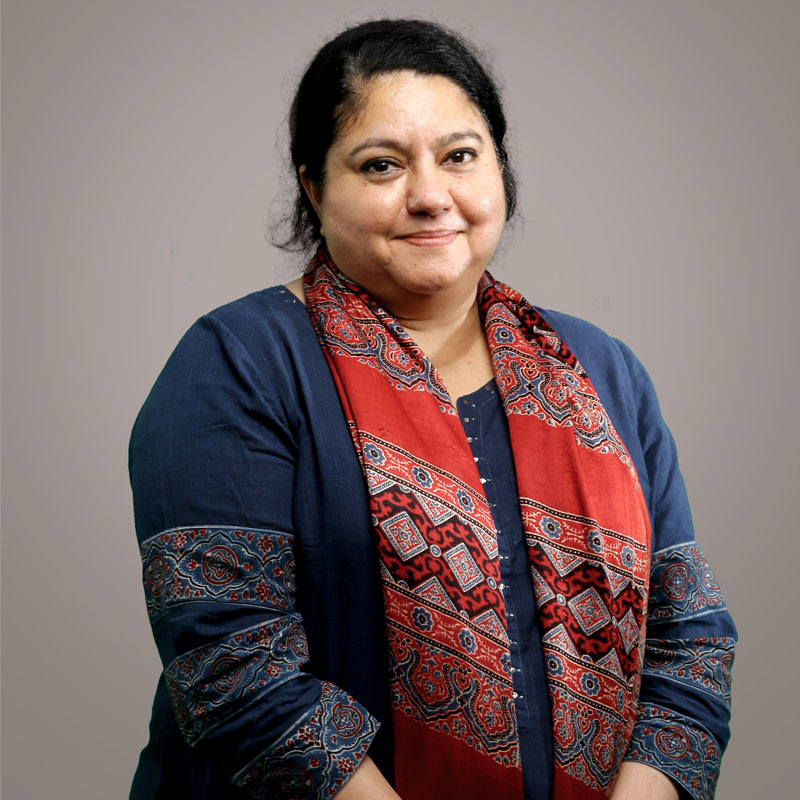
    Talking about making Korean dramas in south languages, One Take Media joint managing director Dr. Shamoly Khera said, “We are elated to lead the Korean wave in India with stories that are exciting for the Indian audience. We understand how important it is for an Indian viewer to watch content in his own language and this is the liberty we want to give to the south of India. We aim to bring the best Korean dramas dubbed in south languages for our multilingual audience.”

    All of these contents can now be accessed on Playflix – a content-streaming OTT app by One Take Media Co. It is one of the first apps in India to offer entertainment content in 11 Indian regional languages and is available to download from the Google play store as well as IOS App store.

    Apart from Korean dramas, OTMC also offers a wide library of Kids Animated shows, Animated movies, International shows, Hollywood dubbed movies and more.

    For enquires: info@onetakemedia.in

  • IPL TV viewership returns to pre-pandemic levels as viewer fatigue wears away

    Mumbai: The Indian Premier League (IPL) has seen a significant increase in TV viewership for its season opener between Gujarat Titans and Chennai Super Kings. According to BARC data, the opening fixture clocked a total of 8.7 billion minutes of consumption on TV, which is 47 per cent more than last year and the highest ever, other than IPL editions played during the pandemic-induced lockdown. Reliance-owned Jio Cinema claimed a peak concurrency of 1.6 crore and six crore viewers overall for the first match of IPL 2023.

    However, recent reports suggest that the IPL’s TV ratings have declined in the past couple of years due to viewer fatigue. Star Sports recorded a TVR of 5.6 for the opening fixture in 2022, the lowest in the last six editions. As viewers returned to their TV screens for the sixth time in three years, they found other distractions when India returned to a more normal way of life after a nearly 21-month lockdown, leading to a decline in TV viewership. The TVR for the opening fixture saw a decline from 2020 (10.36) to 2021 (8.25) and further to 2022 (5.6).

    The entertainment industry is not alone in experiencing sharp rises and falls due to the pandemic. The travel and hospitality industry has seen a sharp decline in revenue and demand due to travel restrictions and lockdowns. However, with the easing of restrictions and the return of normalcy, many businesses in this sector have seen a surge in demand.

    Similarly, the e-commerce industry has seen a significant increase in demand as more people turned to online shopping during the lockdowns. With the rise in vaccination rates and the gradual return of normalcy, this sector has also seen a decline in demand and now gradually returning to pre-pandemic levels. 

    However, the recent season opener’s TVR of 7.29 indicates that IPL fatigue is now behind us, and the TV viewership in 2023 has returned to a more normal level. This TVR is comparable to 8.0 in 2019 and 7.2 in 2018. As per the information received, the average time spent per viewer watching IPL on TV in 2023 is the second-highest if one were to exclude the peak Covid-19 years of 2020 and 2021. Time spent per viewer in 2023 was 76 minutes compared to 78 minutes in 2019. In 2020 and 2021, the average time spent per viewer stood at 81 minutes and 79 minutes, respectively.

    Disney Star sports head Sanjog Gupta, in a statement in response to the opening day viewership said, “We are humbled with the overwhelming response that #IPLonStar has received from fans across the country. The massive growth in viewing time is a testament to the success of our campaign, focus on building virtues of Star Sports’ broadcast, continuing dominance of linear Television as the preferred platform for uninterrupted viewing of live cricket and most of all, the deep relationship we share with cricket fans.”

    The IPL’s TV viewership has returned to pre-pandemic levels after initially dropping due to viewer fatigue. With the recent increase in TV viewership and time spent per viewer, it remains to be seen whether the IPL can sustain this trend throughout the current season.

  • Ghulam Nabi Azad to appear on ‘Aap Ki Adalat’ on 8 April.

    Mumbai: Ex-J&K chief minister and Democratic Azad Party (DAP) chairman Ghulam Nabi Azad will take stand on the headline-making show “Aap Ki Adalat’ on 8 April. Azad will be seen responding to the questions of India TV editor-in-chief Rajat Sharma, who has returned with the new episodes of his longest-running TV show. 

    In this power-packed episode, the former union minister, who resigned from the Congress party last year, will touch upon several topics including his exit from India’s oldest political party, the DAP’s roadmap in J&K, and the upcoming 2024 general election. Ghulam Nabi Azad has been a confidant of Indira Gandhi and Rajiv Gandhi. In this episode, Azad will reveal inside stories of Gandhi family including Sonia Gandhi, Rahul Gandhi and Priyanka Gandhi.

    Azad will appear on Rajat Sharma’s show, just days after the release of his autobiography titled ‘Azaad’, where he openly criticizes the Congress Party and several of its senior leaders. He condemned them for the downfall of the party that started with the exit of ex-Congress leader Himanta Biswa Sarma in Assam.

    Once part of the nucleus of the Congress and entrusted with key responsibilities, Azad parted ways after 50 years. A month after his exit, the former J&K chief minister floated his own party at 71, in his native region. The DAP chief was also honored with the Padma award, one of the highest civilian awards in the country, last year under the NDA regime.

    ‘Aap Ki Adalat’ is one the longest-running interview shows with a legacy of over two decades. Since its inception in 1993, the headline-making show hosted by seasoned journalist Rajat Sharma has featured more than 1,000 prominent personalities. From powerful politicians to movie superstars, leading athletes to spiritual gurus, nobody has been able to escape questions, Sharma. 

    With its unique content, the show has been able to maintain its position as the number one news show in its timeband. The show is aired on India TV at 10 pm on Saturday and is repeated at 10 am and 10 pm on Sunday.
     

  • TV viewership numbers for IPL’s opening match: BARC

    Mumbai: As per the Barc data, Barc ratings released for the opening match of the Indian Premier League (IPL) 2023, the broadcaster garnered a reach of 22 per cent (Barc, M15+ AB India Urban), compared to 18.3 per cent reach recorded for IPL 2022 and 23.1 per cent recorded for IPL2021. If one were to take the data for OOH and FTA channel (Star Utsav Movies) out of the equation, then the reach for the opening match of IPL Season 16 is 19.9 per cent, which is the second lowest in the last six seasons.

    As far as engagement for the opening match of IPL 16 is concerned, at 33 per cent it is the second lowest TVS in the last six seasons of the T-20 tournament (Barc, M15+ AB India Urban). IPL 15 had registered a lower TVS of 30 per cent.


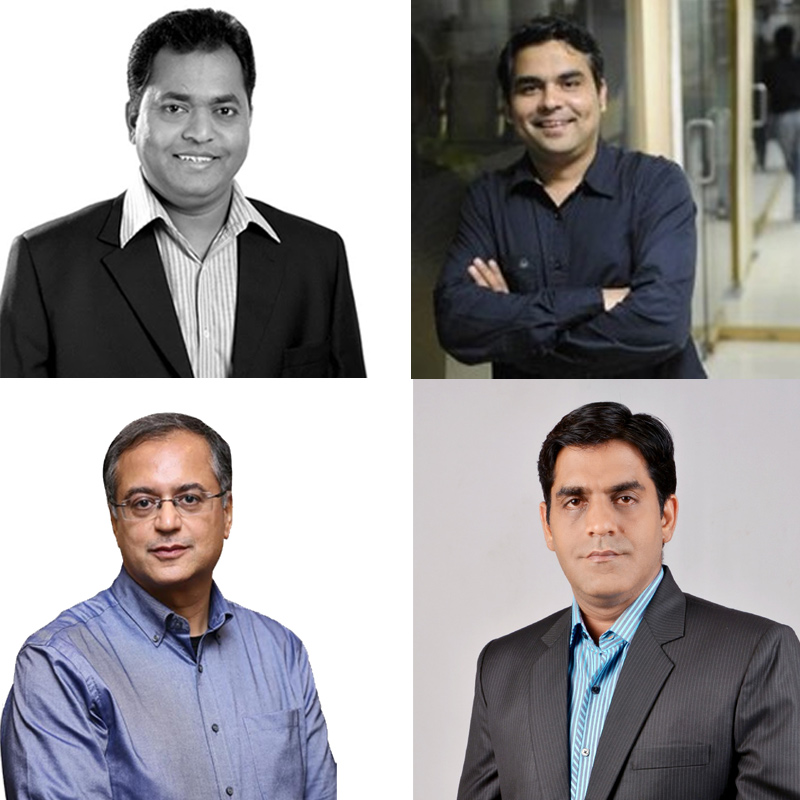
  • PLANETCAST has a global reach which is getting stronger, and we are building on it already: Sanjay Duda – CEO – PLANETCAST Media Services

    Mumbai: PLANETCAST Media Services Limited is a key market player in providing technology-led managed services to the broadcasting industry in India & neighbouring countries with rapidly growing footprint across Southeast Asia.

    PLANETCAST provides comprehensive, customized solutions across content management operations (including content storage, enrichment and automated play-out) and distribution (including satellite broadcasting/ up-linking, digital streaming and cloud distribution). We are proud that we are held in high esteem in the outsourced distribution and play-out services segment in India. Also provide end-to-end solutions across key segments of the broadcast content delivery chain. With a robust track record of nearly two successful decades, they have been offering most agile and state-of-the-art services to broadcasters. We are driven by a passion to help business units build stronger and innovative services.

    PLANETCAST enables global enterprises make their operations as efficient and cost-effective as possible, thereby unleashing new potential across organizations. Our uniqueness lies in our ability to assist customers meet complex technical and operational challenges, and thereby enhance productivity. Their ability to conceptualize, architect and implement new and expanded capabilities allows clients take their business to the next level.

    Indiantelevision.com in conversation with Sanjay Duda – CEO, Planetcast Media Services and Venugopal Iyengar, COO – Digital – Planetcast Media Services on their recent acquisitions, their performance in the domestic market, expansion plans in 2023 and much more…..

    Edited Excerpts……

    On the association with Desynova and how is it going to propel Planetcast’s expansion into cloud-based content management capabilities? 

    Sanjay – We are number one, and we are working with several large broadcasters. The Desynova product is used largely by Star and Disney. We are trying to see how we can use Contido and our systems to provide a complete unified solution and give a complete service with playout, with content management and delivery. We have a global reach which is getting stronger, and we are building on it already. We will use that network to take control of the product as it is, as well as along with our playout to broadcasters to give a bigger piece of the pie.

    On the domestic front, how are you performing? 

    Sanjay: In the domestic market we continue to work as we did. Markets are changing slowly, going into the cloud. There are linear channels that are still running and growing – not tremendously but they’re not declining. So, we are busy with that part as well. But a lot of our customers are now moving to cloud-based playouts or cloud-based workflows. Let me clarify a few things. When I say cloud-based, it does not necessarily mean public hyper-scale cloud-based. It also means cloud as in a private cloud, a data centre cloud, a smaller cloud, and micro media clouds.

    There is a lot of resistance to moving into public clouds. I think everybody is slowly moving to IP-based playouts. The minute you’re on an IP workflow, your infrastructure has to be converted into a basic IT server with the software on top, which means you are ready for any cloud. So that’s what is happening. The smaller broadcasters want to go for the cloud because, for them, it’s almost synonymous with lower costs. The bigger broadcasters are more careful because they want to understand what is to be gained out of it and then will they make a choice. But definitely, there is a move towards IP-based workflows and cloud-based workflows. 

    We do many things like transcoding, streaming, acquisition, distribution and playing out content. We do similar things for SonyLiv or for Voot where we get a stream, then we put in our breakers, put some ads in, and then just pass the stream on forward after transcoding. This is also pretty close to playing out. But in playing out, you switch between the server or recorded feed, as well as a live feed. We used to do a lot of content movement, acquiring from the field, getting DSNG live feeds and then distributing on the telephone that we still do, but we have added a whole piece of services in between, which is post-production, content management, and for some time also OTT. 

    Our intent of going into post-production and content management has been totally in the new workflow style. We are mostly cloud-based, and we have largely automated AI/ ML-based. Also, there is a requirement for doing physical edits, and edit rooms, because the creative is done by the editor and we have 2 edit stations in our Dubai facility. But largely what we do is content curation and workflow curation, which is completely light on infrastructure and mostly cloud-based. Prime Focus is one of the largest media services companies in the business. They were early birds, with an initial focus on movies, before entering television; whereas our focus has always been on television and OTT. 

    We have the MAM.C, which is a media asset management solution. Recently, we strategically invested in a company called Desynova, which actually has a similar product and it’s completely cloud-based – Contido. It is built completely on AWS, but it can work on different clouds. Star is also one of their marquee customers. It gives us a very quick and bigger look into this part of the world which is one of our key focus areas for growth.

    On fine-tuning Desynova for the local market 

    Sanjay: This is a very recent acquisition. We’ve known the people there for many years, and it is great to be on the same side of the table. We are working together already trying to get some quick wins under the belt by using our common resources. They have been managing their company very well. So we are letting them do things and adding whatever help they need in terms of infrastructure, backup support, additional people on the field and additional feet on the ground. So, we are helping them and we see this as a part of a bigger solution. 

    Our objective is to provide end-to-end solutions starting right from acquiring content, doing whatever needs to be done – localization, post-production, content, curation – and then converting into various forms of consumable media. It could be VOD, clips, linear channels, streams, and then delivering them to various consumption platforms. Eventually, the next step would be monetization, helping in monetizing this content at the other end. In this entire journey, there’s an entire suite of services. Content management and curation is the first and most important part. It helps to create the touch point with the customer at the very early stage of the contract and then we have the other sets of solutions to provide them. 

    The idea is to take Contido and Desynova solutions globally because our focus has been for almost a year to build an international team and take our solutions out in the world. Now the cloud allows us to do everything – there are no borders. So, we are very excited that we will be able to take this great solution out to other customers globally. These guys haven’t been able to do any of that yet.

    On the advantages Planetcast can offer to their customers

    Experience is what we bring to the table. Today, if you are a big broadcaster, looking to economise, and at the same time have a workflow which allows you to make more money with what you’re doing with the content that you’re producing — you need to look at your options. 

    You will want to know: Who are they working for? What are their credentials? So, I think that’s what we bring to the table. I mean, we have a fantastic working relationship with some of the biggest broadcasters, Disney Star, Viacom, Sony and ZEE. So, with that kind of experience and those kinds of customers that we have, we feel that we give a lot of confidence to our customers. 

    Everything is a commodity, all technology is a commodity or it will be soon. So, the idea is to have more touch points, have a long relationship and have a lasting relationship with the players in the market. Given the fact that tomorrow, technology will keep changing, but as long as you are trusted, I think they will know that you can help them to cross beyond a point where things are unknown. Broadcasters want to be with someone they can trust and who has been with them for a while.

    Venu: Another thing is DAMs (digital asset management) which can also become commoditized. They represent the gateway through which you can integrate many other functions like post-production, which is something that arose as a business because a lot of customers asked us for it. It can easily be brought in under MAM or DAM, for that matter. Similarly, playout can be floated under a MAM, and it can help you provide a front-end interface that can connect all of your multiple business verticals, so even starting with simpler stuff like QC or other on-going, regular requirements.

    On not offering cloud rendering.

    Venu: No, we’re not, but I’m saying that if a MAM or a DAM helps you integrate all of those as a sort of a one-stop workflow management process and that’s relevant still – yes, it can happen on two levels. It can happen offline, we offer your timing and our transport solution through MAM. Or it can also happen on our MAM, which is a much more elaborate longer-term outlook.

    Sanjay: It is all about being there in this space. We can foresee some of the things that will happen, and we can’t foresee the rest. But once you’re there and closer up to the area where the action is happening, you will soon see more, and have visibility to more stuff, and then you can take those decisions as they come. 

    So, the idea is, while we have a lot of infrastructure as well in India, we are getting onto the IP workflows and cloud-based workflows and technologies. Because every year things are changing. Already, a lot of editing has started happening on the cloud. There are solution providers who had their initial problems, but they are slowly ironing them out. The idea is to have a platform where you can easily embrace and bring those people onto your platform very quickly so that if a customer, broadcaster or publisher wants that, they should be able to get that. 

    Again, another very important factor is that they’re all erstwhile manufacturers of appliances, who are now trying to very quickly rebrand themselves as solution providers, which is a good thing. But there’s a lot to do with the DNA. Also, you have to be very light and nimble. You can’t be a big organisation and suddenly have to operate in the cloud or these service layers, providing services at that technology front, you need to be very nimble and quick to respond and react to the market and technology and tools.

    On live events

    Sanjay: We have developed a great deal of experience in handling multiple formats, SRT, RTMP, HLS. Also, some technical know-how on how to make sure that if the incoming feeds are slightly slow and there are some problems, what do you do at the cache server end to make this experience better as we transport and deliver to the end user? Are we looking at the lowest latency or are we looking at the best quality – we need to see what the customer wants.

    Also, we have automation, which has been built over several years and tested through Star’s rigorous requirements, like switching between live and recorded. We have achieved this in a big way and we can switch within two seconds. So, you can play a two-second or a three-second ad in between, and we can help monetize better through this process. So, technology is one side, the other is also how you give the rights owner better value for that. 

    We also have special switchable internet connections through IP schemes, where if one IP fails, we can automatically switch with the same public IP which is front facing, but we will switch to a different ISP at the back. So, at the user end, you cannot tell the difference. Those kinds of arrangements make an immense difference to deliver 99.9% good quality streaming. 

    On free ad-supported streaming TV 

    Venu:  FAST channels have taken off, especially now in Western markets. The pressures and the conditions for growth are faster and more conducive. There is already a certain level of subscription fatigue, the levels of what Netflix experienced in the US versus when they came in here. They realised that it was not that easy-going. They had to give the Indian consumer a ₹199 package and at times even free. So, these conditions do exist abroad. There is a certain level of subscription fatigue, coupled with a critical mass of connected TVs and major channels addressing that platform itself. 

    FAST has been very interesting over the last couple of years, and it has grown well. And even for us, it’s an extension of what we’re doing already with our playout. So, it made a lot of logical sense to offer our customers that service. We’ve tied up with Wurl who is a global major in ad insertion and ad technology. They are also integrated with all the streaming platforms in the US, Europe and Latin America. They help us get our customers quickly onboarded and onto the platform. 

    On OTT in India slowly going off in the next 7-10 years

    Venu: I wish we could look that far out. But you’re right in the sense that people are trying to establish control over the access points. And that’s still a very up-in-the-air kind of thing. Now set-top boxes, trying to offer a converged service and connected devices doing it, the TV manufacturers themselves now stepping in and saying, let’s manage that front-end access point; it is a bit of a toss-up. For us, one of the temptations is to look at OEMs, especially screen OEMs, but they have taken their time. Connected TVs are not a new thing. But actually getting connected to the Internet has taken ages, especially in India and Asia, even now. So, one doesn’t know how fast they can be able to jump this up, they haven’t shown that level of speed. 

    So far, connected devices took off quickly with Fire TV and made a lot of progress. Selling additional hardware to the always value-seeking Indian customer is a massive challenge — whether it’s 3,000 bucks, or 10,000 bucks. But we still managed to make strides. But now almost everyone is trying that, with the set-top box guys coming in with a dongle and offering services, and it’s a fair fight. Where I disagree with the statement you made is the experience of the last mile might still be controlled by them. But you still need the OTT services to be able to bring in that. So, what I’m seeing probably is that people are going to start economising on how much they spend on that experience because that’s going to be managed in a pretty shared manner between OEMs and OTT, and the second is going to be a distribution that’s getting impacted tremendously, bundling between Telco’s, ISPs and providers. 

    Almost every OTT platform now has a hybrid distribution strategy. At one point, you thought: “People know my brand, I just need to go out there, put it out and get my subscriptions”, to now saying, “I could do with a little help”. I mean, if someone’s sitting there with a 100 million – 200 million subscriber cache, why don’t I ride on that to find the right value? So, distribution is getting impacted tremendously. And with that level of experience management for the last mile owner, whether it is a Jio or Tata Sky or Airtel. How do you manage a diverse experience of applications and content services coming together on your platform in a way that’s not painful for your end user? I think that’s an area that a lot of people will be paying attention to.

    I’m sure you’re hearing this and reading this a lot more. But the seriousness with which in the SVOD versus AVOD battle that’s been going on for a while, where if you look at five, seven years ago, western markets didn’t even consider AVOD to be a serious option. Now they are looking at AVOD a lot more seriously and figuring out how to make this work. 

    The western markets are a little easier in that sense because of the CPMs being where they are. It’s such a tough proposition to crack. If you’re on a premium connected device, it’s not even pressing $2 at that kind of level, so for everyone to collaborate and make money is a tough proposition, but one that will need to be cracked, because pretty much all of Asia, Africa alone or the growing markets are going to take it a lot more seriously and that’s how it will survive. Audience sizes will remain small, and the Indian market has shown that they don’t mind waiting a little bit. They don’t mind a little bit of compromise and user experience. 

    On plans for NAB Show 2023?

    Sanjay: At NAB Show we are going to have a few things to show to that part of the world, engaging with our target respondents and prospects to see our product portfolio. Also, we have been addressed or approached by a lot of bigger players in the West in different regions. They are liking the idea of economising and I think India is now being seen increasingly as an option where you can get very good and high-quality services at reasonable prices. So, we are going to be meeting some big broadcasters and big platforms from that perspective as well. Other than that, we are always looking for partners who can add value to the services the entire platform offers. 

    On the expansion plans in 2023 – and in terms of technology, where are you with ATSC 3.0 that is set to be launched soon?

    Sanjay: I wish I could answer that, there are projections and plans. We are hoping that we will have a 25–30% growth. We haven’t scaled down for sure. I mean, we have tried not to scale up that way in terms of people, but I think at the end of the day, we might have added a few more, maybe a couple of per cent in terms of the number of people.

    It is difficult to answer. But I can tell you that a lot of things have to come together for ATSC 3.0. Two things have to happen for it to take off. The idea is great, but you need infrastructure, In the US it has taken off because it’s largely market-driven there, you need a lot of regulatory clearances, so it’s never going to be that easy. Doordarshan has the infrastructure end and private broadcasters at the consumer end, and in between, you need somebody like us who knows the services to make things happen in a proper way to manage content. But infrastructure is a big question and Doordarshan has to play a role. I’m sure broadcasters will be excited to add city channels and things like that. To me, it looks like a good idea. But as I said, a lot of players have to come together, which sometimes takes much longer.

    At NAB Show, which are the markets you are looking at? 

    Sanjay: We are trying to concentrate on the USA, South America and Southeast Asia. There are a few opportunities which have cropped up in Europe too and we are happy to address them. In Southeast Asia, of course, we are already there. 

    Venu: We are also upgrading through agency partnerships for markets like LATAM where it is early days for us. Hopefully, by the end of this fiscal year, we’ll be looking at a stronger presence there. Leads are coming up and we want to service them quickly.

  • Barc Wk 13′ 23: STAR Maa tops all India market

    Mumbai : Broadcast Audience Research Council (Barc) India has released currency data for week thirteen, i.e. 25 March to 31 March 2023. As per data for the all India 2+ target group, STAR Maa is the most watched channel in India with an average minute audience (AMA) of 2505.87(000). It was followed by Sun TV at 2370.6(000) AMA, STAR Plus at 2233.14(000) AMA, Dangal at 2219.16(000) AMA, and Goldmines at 2111.39(000) AMA.

    The average minute audience (AMA) is defined as the number of individuals within a target audience who viewed a televised “event,” averaged across minutes. In the Hindi speaking market (HSM), Dangal emerged as the most watched channel at 2211.9(000) AMA, followed by STAR Plus at 2169.32(000) AMA, Goldmines at 2084.85(000) AMA, STAR Pravah at 1511.79(000) AMA and Sony Sab at 1457.42(000) AMA.

    In the South market, STAR Maa was the most watched channel at 2433.76(000) AMA, followed by Sun TV at 2351.55(000) AMA, Zee Telugu at 1607.71(000) AMA, STAR Vijay at 1518.64(000) AMA and Zee Kannada at 1273.31(000) AMA.

    In the Maharashtra/Goa market, Star Pravah was the most watched channel at 1498.26(000) AMA , followed by Zee Marathi at 511.91(000) AMA, Colors Marathi at467.7(000) AMA, SONY Sab at 381.72(000) AMA and Goldmines at 334.95(000) AMA.

    In the West Bengal market, Star Jalsha was the most watched channel with 917.41(000) AMA, followed by Zee Bangla at 815.04(000) AMA, Jalsha Movies at 180.12(000) AMA, Colors Bangla at 117.96(000) AMA and Enterr 10 Bangla at 117.9(000) AMA.

    In the megacities market, including Mumbai, New Delhi, Kolkata, Bengaluru and Chennai, Sun TV was the most watched channel at 382.02(000) AMA followed by STAR Plus at 345.98(000) AMA, STAR Vijay at 310.81(000) AMA, Colors at 280.48(000) AMA and Zee Telugu at 267.21(000) AMA.