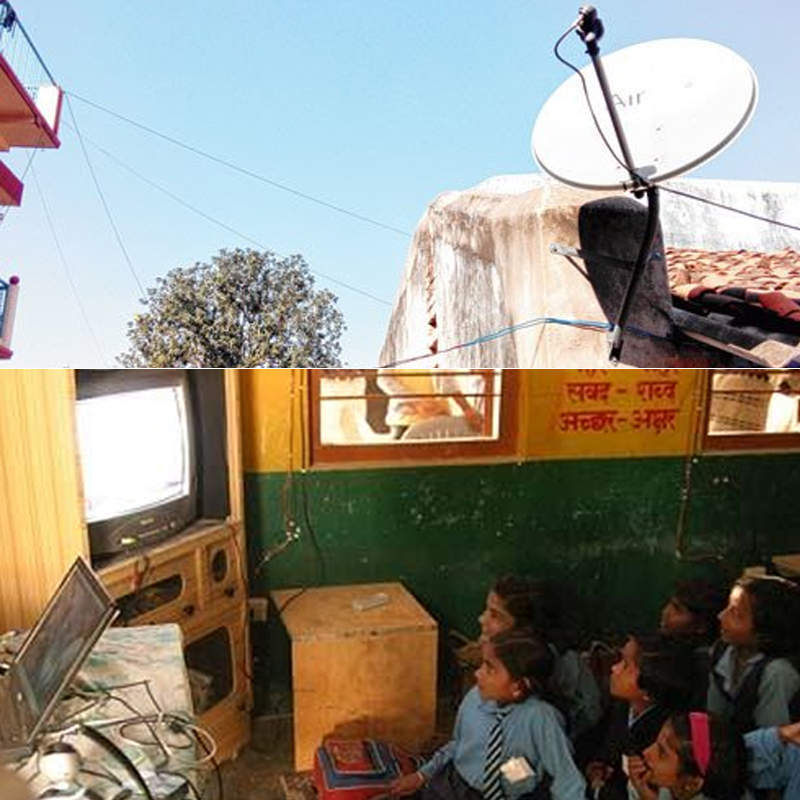
Category: Viewership

  • BARC India & Israeli company explore customised digital measurement tools

    BARC India & Israeli company explore customised digital measurement tools

    NEW DELHI: The Broadcast Audience Research Council of  India (BARC India) is said to be in talks with an Israeli media technology company to customise for it tools for digital measurement, which is likely to be rolled out in phases from sometime in 2017 or early 2018 and could go on to make BARC India an organisation measuring TV+digital eco-systems.

    After having issued Request for Information (RfI) for digital measurement in December 2015 and having received responses from 11 leading vendors from across the world, BARC India had come out last year Request for Proposals for the same.

    BARC India is presently working on digital proof of concept that will help it in testing different technologies, methodologies and potential capabilities of the shortlisted vendors.

    The companies that had responded to the RfI included agencies such as Kantar Media, IMRB, ComScore, Nielsen, MediaMetrie, Gracenote (in December 2016  it entered into an agreement to be acquired by Nielsen), Informate, GfK, Accenture, EY, eywa Media, Gemius and Verto Analytics.

    It was in October 2015 that BARC India CEO Partho Dasgupta had announced at a panel discussion on new TAM models at CASBAA Convention in Hong Kong that the audience measurement organisation was looking at launching digital measurement and will float a global tender for vendor(s).

    Industry sources indicated that the Israeli company could be Actus Digital, a global provider of broadcast media and video technologies, and that the exploratory talks between the company and BARC India could be revolving around customising measurement tools for India instead of simply re-deploying universal tools generally used by big companies for digital data collection.

    However, it must be admitted that Indiantelevision.com could not independently confirm the name of the Israeli company from either BARC India or the company concerned till the time of writing this report.

    The barely two-year-old BARC India, which initially focussed on measuring TV viewing habits via BAR-O-Meters through watermarking technology, is now expanding into the digital realm.

    BARC India is jointly promoted by the Indian Broadcasting Foundation (IBF), the Indian Society of Advertisers (ISA) and the Advertising Agencies Association of India (AAAI) with the latter two organisations holding 20 per cent each, while the broadcasting body holds 60 per cent.

    ALSO READ:

    BARC issues RFP for playout monitoring and DB system

    BARC India eyes digital measurement; calls for global RFIs

    BARC India ropes in Nielsen’s Jamie Kenny as DAM head


  • BARC India & Israeli company explore customised digital measurement tools

    BARC India & Israeli company explore customised digital measurement tools

    NEW DELHI: The Broadcast Audience Research Council of  India (BARC India) is said to be in talks with an Israeli media technology company to customise for it tools for digital measurement, which is likely to be rolled out in phases from sometime in 2017 or early 2018 and could go on to make BARC India an organisation measuring TV+digital eco-systems.

    After having issued Request for Information (RfI) for digital measurement in December 2015 and having received responses from 11 leading vendors from across the world, BARC India had come out last year Request for Proposals for the same.

    BARC India is presently working on digital proof of concept that will help it in testing different technologies, methodologies and potential capabilities of the shortlisted vendors.

    The companies that had responded to the RfI included agencies such as Kantar Media, IMRB, ComScore, Nielsen, MediaMetrie, Gracenote (in December 2016  it entered into an agreement to be acquired by Nielsen), Informate, GfK, Accenture, EY, eywa Media, Gemius and Verto Analytics.

    It was in October 2015 that BARC India CEO Partho Dasgupta had announced at a panel discussion on new TAM models at CASBAA Convention in Hong Kong that the audience measurement organisation was looking at launching digital measurement and will float a global tender for vendor(s).

    Industry sources indicated that the Israeli company could be Actus Digital, a global provider of broadcast media and video technologies, and that the exploratory talks between the company and BARC India could be revolving around customising measurement tools for India instead of simply re-deploying universal tools generally used by big companies for digital data collection.

    However, it must be admitted that Indiantelevision.com could not independently confirm the name of the Israeli company from either BARC India or the company concerned till the time of writing this report.

    The barely two-year-old BARC India, which initially focussed on measuring TV viewing habits via BAR-O-Meters through watermarking technology, is now expanding into the digital realm.

    BARC India is jointly promoted by the Indian Broadcasting Foundation (IBF), the Indian Society of Advertisers (ISA) and the Advertising Agencies Association of India (AAAI) with the latter two organisations holding 20 per cent each, while the broadcasting body holds 60 per cent.

    ALSO READ:

    BARC issues RFP for playout monitoring and DB system

    BARC India eyes digital measurement; calls for global RFIs

    BARC India ropes in Nielsen’s Jamie Kenny as DAM head


  • India News exits, News Nation enters in Hindi News Urban: BARC week 53

    India News exits, News Nation enters in Hindi News Urban: BARC week 53

    MUMBAI: The channels in the English News space observed a hike in ratings this week except BBC World News. Times Now continued to dominate the genre.

    According to the week 53 ratings data of Broadcast Audience Research Council (BARC) India, the players in the English Business News space witnessed mixed ratings.

    Aaj Tak remained as the number one channel in the Hindi News space both in rural and urban markets. The players in the Hindi News space witnessed mixed ratings this week. In the Hindi News Urban data, India News exited and made way for the entry of News Nation.

    The channels in the Hindi Business News genre noted a decline in ratings this week.

    English News

    Times Now with an increase in its ratings continued to dominate the genre with 558 Impressions (000s) as compared to 546 Impressions (000s) in week 52. NDTV 24×7 sustained its second slot with 224 Impressions (000s) while India Today Television took the third position with 202 Impressions. CNN News18 with 175 Impressions (000s) and BBC World News with 59 Impressions (000s) took the fourth and fifth position, respectively.

    English Business News

    CNBC TV18 continued to lead with an increase in ratings from 227 Impressions (000s) in week 52 to 257 Impressions (000s) this week. ET Now was at the second spot with 149 Impressions (000s). NDTV Profit and NDTV Prime continued to be at the third position with 34 Impressions (000s). BTVi was on the fourth spot with 19 Impressions (000s). CNBC TV 18 Prime HD sustained at the fifth place with 3 Impressions (000s).

    Hindi News mixed

    Aaj Tak observed a decline in the ratings and stood at the first spot with 160276 Impressions (000s) as to 165306 Impressions (000s) in last week followed by ABP News at the second position with 133863 Impressions (000s). India TV took the third position with 132185 Impressions (000s) followed by Zee News at the fourth position with 118976 Impressions (000s). India News took the fifth position with 89858 Impressions (000s).

    Hindi News Rural

    Aaj Tak with a decrease in the ratings dominated the rural market with 74184 Impressions (000s). ABP News was at the second slot with 63853 Impressions (000s) followed by India TV at the third place with 60463 Impressions (000s). Zee News took the fourth place with 49794 Impressions (000s) followed by India News with 48936 Impressions (000s) at the fifth position.

    Hindi News Urban

    Aaj Tak stood at the number one position with 86092 Impressions (000s) followed by India TV at the second position with 71722 Impressions (000s). ABP News took the third position with 70011 Impressions (000s) followed by Zee News at the fourth position with 69182 Impressions (000s). News Nation took the fifth position with 43678 Impressions (000s).

    Hindi Business News

    CNBC Awaaz witnessed a decrease in ratings though it continued at the number one position with 1058 Impressions (000s) as compared to 1146 Impressions (000s) in week 52. The second spot was taken by Zee Business with 901 Impressions (000s).

  • India News exits, News Nation enters in Hindi News Urban: BARC week 53

    India News exits, News Nation enters in Hindi News Urban: BARC week 53

    MUMBAI: The channels in the English News space observed a hike in ratings this week except BBC World News. Times Now continued to dominate the genre.

    According to the week 53 ratings data of Broadcast Audience Research Council (BARC) India, the players in the English Business News space witnessed mixed ratings.

    Aaj Tak remained as the number one channel in the Hindi News space both in rural and urban markets. The players in the Hindi News space witnessed mixed ratings this week. In the Hindi News Urban data, India News exited and made way for the entry of News Nation.

    The channels in the Hindi Business News genre noted a decline in ratings this week.

    English News

    Times Now with an increase in its ratings continued to dominate the genre with 558 Impressions (000s) as compared to 546 Impressions (000s) in week 52. NDTV 24×7 sustained its second slot with 224 Impressions (000s) while India Today Television took the third position with 202 Impressions. CNN News18 with 175 Impressions (000s) and BBC World News with 59 Impressions (000s) took the fourth and fifth position, respectively.

    English Business News

    CNBC TV18 continued to lead with an increase in ratings from 227 Impressions (000s) in week 52 to 257 Impressions (000s) this week. ET Now was at the second spot with 149 Impressions (000s). NDTV Profit and NDTV Prime continued to be at the third position with 34 Impressions (000s). BTVi was on the fourth spot with 19 Impressions (000s). CNBC TV 18 Prime HD sustained at the fifth place with 3 Impressions (000s).

    Hindi News mixed

    Aaj Tak observed a decline in the ratings and stood at the first spot with 160276 Impressions (000s) as to 165306 Impressions (000s) in last week followed by ABP News at the second position with 133863 Impressions (000s). India TV took the third position with 132185 Impressions (000s) followed by Zee News at the fourth position with 118976 Impressions (000s). India News took the fifth position with 89858 Impressions (000s).

    Hindi News Rural

    Aaj Tak with a decrease in the ratings dominated the rural market with 74184 Impressions (000s). ABP News was at the second slot with 63853 Impressions (000s) followed by India TV at the third place with 60463 Impressions (000s). Zee News took the fourth place with 49794 Impressions (000s) followed by India News with 48936 Impressions (000s) at the fifth position.

    Hindi News Urban

    Aaj Tak stood at the number one position with 86092 Impressions (000s) followed by India TV at the second position with 71722 Impressions (000s). ABP News took the third position with 70011 Impressions (000s) followed by Zee News at the fourth position with 69182 Impressions (000s). News Nation took the fifth position with 43678 Impressions (000s).

    Hindi Business News

    CNBC Awaaz witnessed a decrease in ratings though it continued at the number one position with 1058 Impressions (000s) as compared to 1146 Impressions (000s) in week 52. The second spot was taken by Zee Business with 901 Impressions (000s).

  • Movies Now 2 enters; Zee Studio exits: BARC week 53

    Movies Now 2 enters; Zee Studio exits: BARC week 53

    MUMBAI: Movies Now 2 made a comeback this week with the exit of Zee Studio. The players in the English Movies genre witnessed mixed ratings in this week’s data.

    Star World continued to dominate the English Entertainment space with a hike in its ratings. Though, the rest of the channels in the genre observed mixed ratings.

    In the Infotainment space, History TV18 sustained its number one position whereas the players in the factual entertainment genre observed a substantial decline in its viewership.

    According to the week 53 ratings data of Broadcast Audience Research Council (BARC) India, channels in the Lifestyle space saw mixed ratings. Living Foodz dominated the genre with a decrease in its ratings.

    English Entertainment

    Star World with an increase in its ratings sustained at the number one position with 329 Impressions (‘000s) as compared to 238 Impressions (‘000s) in week 52. Zee Cafe was at the second place with 164 Impressions (‘000s) followed by Comedy Central at the third spot with 130 Impressions (‘000s). AXN stood at the fourth position with 111 Impressions (‘000s) whereas Colors Infinity SD maintained itself on the fifth rank with 106 Impressions (‘000s).

    English Movies

    Sony Pix with a decrease in the ratings continued to dominate the genre with 2770 Impressions (‘000s) as to 2736 Impressions (‘000s) last week. Star Movies with 2671 Impressions (‘000s) stood at the number two position. Movies Now with 2452 Impressions (‘000s) grabbed the third position followed by HBO at the fourth position with 1591 Impressions (‘000s). HBO took the fifth place with 1605 Impressions (‘000s).

    Infotainment

    History TV 18 with a decline in the ratings continued to rule the genre with 4857 Impressions (‘000s). Discovery Channel was at the second spot with 4572 Impressions (‘000s). National Geographic with 3155 Impressions (‘000s) and Animal Planet with 2919 Impressions (‘000s) took the third and fourth position, respectively. Nat Geo Wild stood at the fifth position with 2446 Impressions (‘000s).

    Lifestyle

    Living Foodz with a decrease in its ratings sustained its number one position with 1611 Impressions (‘000s) as compared to 1801 Impressions (‘000s) in week 52. Fox Life took the second berth with 944 Impressions (‘000s) followed by Food Food with 755 Impressions (‘000s). FYI TV 18 with 493 Impressions (‘000s) and TLC with 435 Impressions (‘000s) bagged the fourth and fifth position, respectively.

  • Movies Now 2 enters; Zee Studio exits: BARC week 53

    Movies Now 2 enters; Zee Studio exits: BARC week 53

    MUMBAI: Movies Now 2 made a comeback this week with the exit of Zee Studio. The players in the English Movies genre witnessed mixed ratings in this week’s data.

    Star World continued to dominate the English Entertainment space with a hike in its ratings. Though, the rest of the channels in the genre observed mixed ratings.

    In the Infotainment space, History TV18 sustained its number one position whereas the players in the factual entertainment genre observed a substantial decline in its viewership.

    According to the week 53 ratings data of Broadcast Audience Research Council (BARC) India, channels in the Lifestyle space saw mixed ratings. Living Foodz dominated the genre with a decrease in its ratings.

    English Entertainment

    Star World with an increase in its ratings sustained at the number one position with 329 Impressions (‘000s) as compared to 238 Impressions (‘000s) in week 52. Zee Cafe was at the second place with 164 Impressions (‘000s) followed by Comedy Central at the third spot with 130 Impressions (‘000s). AXN stood at the fourth position with 111 Impressions (‘000s) whereas Colors Infinity SD maintained itself on the fifth rank with 106 Impressions (‘000s).

    English Movies

    Sony Pix with a decrease in the ratings continued to dominate the genre with 2770 Impressions (‘000s) as to 2736 Impressions (‘000s) last week. Star Movies with 2671 Impressions (‘000s) stood at the number two position. Movies Now with 2452 Impressions (‘000s) grabbed the third position followed by HBO at the fourth position with 1591 Impressions (‘000s). HBO took the fifth place with 1605 Impressions (‘000s).

    Infotainment

    History TV 18 with a decline in the ratings continued to rule the genre with 4857 Impressions (‘000s). Discovery Channel was at the second spot with 4572 Impressions (‘000s). National Geographic with 3155 Impressions (‘000s) and Animal Planet with 2919 Impressions (‘000s) took the third and fourth position, respectively. Nat Geo Wild stood at the fifth position with 2446 Impressions (‘000s).

    Lifestyle

    Living Foodz with a decrease in its ratings sustained its number one position with 1611 Impressions (‘000s) as compared to 1801 Impressions (‘000s) in week 52. Fox Life took the second berth with 944 Impressions (‘000s) followed by Food Food with 755 Impressions (‘000s). FYI TV 18 with 493 Impressions (‘000s) and TLC with 435 Impressions (‘000s) bagged the fourth and fifth position, respectively.

  • ‘Interconnexion’ for transparent broadcaster-MSO deals launched

    ‘Interconnexion’ for transparent broadcaster-MSO deals launched

    MUMBAI: Chrome Data Analytics and Media has launched Chrome Interconnexion for broadcasters and distribution service-providers.

    Chrome Interconnexion is an unprecedented, exclusive database of distribution interconnections across urban India. It is an online application which has been designed to depict feed tracking for each headend, from the parent headend till the last headend.

    The tool delivers the following range of actionable insights for broadcasters and distribution service providers:

    Tracking of Parent/ Same Feed

    Areas of Operations Audit

    Headend Count by Subscriber

    Registered MSO Names(MIB)

    Subscriber Revenue as per Ground

    Speaking at the launch, Chrome DM founder and CEO Pankaj Krishna said, “The objective of offering such a comprehensive platform to broadcasters is to ensure transparent deals in the broadcaster-MSO ecosystem. With Chrome Interconnexion, broadcasters will be able to track source feed of fluctuations and take prompt corrective action.”

    Also Read:    TRAI order: Chrome has new method of analyzing impact on broadcasters

  • ‘Interconnexion’ for transparent broadcaster-MSO deals launched

    ‘Interconnexion’ for transparent broadcaster-MSO deals launched

    MUMBAI: Chrome Data Analytics and Media has launched Chrome Interconnexion for broadcasters and distribution service-providers.

    Chrome Interconnexion is an unprecedented, exclusive database of distribution interconnections across urban India. It is an online application which has been designed to depict feed tracking for each headend, from the parent headend till the last headend.

    The tool delivers the following range of actionable insights for broadcasters and distribution service providers:

    Tracking of Parent/ Same Feed

    Areas of Operations Audit

    Headend Count by Subscriber

    Registered MSO Names(MIB)

    Subscriber Revenue as per Ground

    Speaking at the launch, Chrome DM founder and CEO Pankaj Krishna said, “The objective of offering such a comprehensive platform to broadcasters is to ensure transparent deals in the broadcaster-MSO ecosystem. With Chrome Interconnexion, broadcasters will be able to track source feed of fluctuations and take prompt corrective action.”

    Also Read:    TRAI order: Chrome has new method of analyzing impact on broadcasters

  • Advertisers target rural north & south zone on serials & film-based content: BARC

    Advertisers target rural north & south zone on serials & film-based content: BARC

    MUMBAI: None realised the importance of rural market until BARC India started monitoring viewing habits in the countryside. After the TV audience measurement system gave its ratings, the industry woke up to the potential of this market.

    A recent newsletter released by BARC India emphasises on the viewing habits of the viewers on different fronts.

    From one front,  this research explores the advertisers and marketers targeting north and south zone on serials and film-based content to reach their respective audience.

    On an overall level for rural India, serial-based programmes secure the highest share, followed by film-based programmes. This pattern is consistent across zones with the exception of south India. Viewership for serials is driven majorly by the north zone while film-based programmes have maximum viewership in the south zone, which does not come as a surprise.

    public://barc6_0.jpg

    Most of the programme themes are driven by south zone. The only exception is music which is driven almost entirely by the north zone. For broadcasters in the serials and music genre, north rural market is the key.

    For advertisers and marketers targeting north and south zone, serials and film-based content will be the ‘Holy Grail’ to reach their audience respectively as over 30 per cent of the viewership is attributed to each of these content types across zones.

    For marketers targeting west or east zone, frequency-based plans yield results easily. On the other hand, for those targeting north, reach-based plans may be more achievable.

    On an overall level, the south zone registers the highest reach and ATS ( Average Time Spent) among the four zones in rural market. Looking at the west zone, ATS is the second highest after south zone. However, it has relatively lower reach. This shows that audience in the western rural market has lower reach but they spend a high amount of time consuming television content. Conversely, the north zone has the lowest ATS but has a comparatively better reach. One can infer that audience in the north zone does not stick to television viewing for as long as those in other zones.

    The rural viewership pattern

    Urban and rural India follow distinctly different viewing patterns across the day. Rural India starts its day much earlier than urban India around 5am, and continues to have higher viewership until 9am.

    Post 9am, urban India’s viewership catches up and has higher viewership than the rural India throughout the afternoon and evening. Both, urban and rural India see a marginal peak during 2-230pm. However, rural India sees an early spike for prime time as compared to urban India. The highest viewership in rural India is generated during the time-band 830-9pm followed by the time-band 8-830pm.

    Viewership starts declining around 1030pm hinting at an early wrap-up for the day for the rural audience.

    If one compares all the four zones in the rural market, it seems like the viewership is driven by southern rural market followed by the west zone. The lowest viewership in rural market can be observed in the north zone which has the lowest average rating percentage for the entire day.

    public://barc10_0.jpg

    public://barc9_0.jpg

    If one looks at the zone-wise viewership, both weekdays and weekends are driven by the south zone followed by west zone. Overall viewership for weekends is marginally higher than weekdays for rural India. At the zone level, this increase for weekend viewership is the maximum for the west zone and the least for the east zone.

    public://barc8_0.jpg

    public://barc7.jpg

    Viewership differs during prime time

    Millennials in rural India could be the next big target for broadcasters and advertisers to hold on to.

    Viewership in India during prime time is equally divided among both the genders. However, if compared by the four zones, north and west zone have a higher percentage of male viewers (51 per cent  and 52 per cent, respectively) and Millennials (age-group 15-30) form the largest percentage of audience in rural India. The pattern is the same among all the four zones with the exception of south where Gen X (age group 31-50) forms the largest percentage of the audience.

    NCCS C (New Consumer Classification System) has the highest share of viewership among all zones in rural India. While the west zone and the east zone display a composition similar to rural India, the north zone and south zone have some variations. The north zone has a substantially higher composition of NCCS A & NCCS B, while the contribution of NCCS C is lower than the rural India average. Conversely, in the south zone, the contribution of NCCS A is low.

    public://barc5_0.jpg

    Surprisingly, film-based programmes, which have the maximum reach during prime time, have one of the lowest stickiness across rural India for all the four zones. Game/talk/quiz and lifestyle-based programmes can hold the audience for long as they have a healthy ratio for reach to fidelity. In rural India, stickiness for serial-based programs is the highest across programme themes.

    Surprisingly, it is driven mostly by south zone, which had the lowest reach among all zones for this content. Interestingly, if one compares this to the audience composition analysed above, north zone and west zone, which have a higher percentage of male audience, also see higher stickiness for sports programmes. Lifestyle-based content in terms of stickiness has much better ratio of reach to fidelity across zones.

    public://barc4_0.jpg

    public://barc3_0.jpg

    Ad sector popularity

    The top ad sectors by viewership during prime time in rural India are personal care/hygiene, food & beverages, hair care and services etc.

    Personal care/hygiene and hair care sector have a higher share in the north zone. This can also be seen while comparing all the zones for the ‘personal healthcare’ category, where again the north zone takes the lead.

    On the other hand, the south zone is more inclined towards categories such as food and beverages, auto, durables and personal accessories.

    public://barc2_1.jpg

    Switching pattern for GEC & movie genre

    Since most of the TV viewership is generated by GEC and the movie genre, it would be interesting to understand the switching pattern of rural India on a day-part level.

    public://barc1_1.jpg

    As observed in the paragraphs above, throughout the day, most of the switching to or from a channel genre happens due to audience switching the TV on or not. However, it declines during the later time-bands. The only exception is 6pm to 12 midnight where switching between movies and GEC is higher than viewers switching TV on during that time-band (with movies as reference). On comparing switching from movies to GEC genre, switching percentage remains almost comparable throughout the day.

    On the other hand, switching from GEC to movies declines during later time-bands. On an overall level, switching from GEC to movies is seen more often that the switching from movies to GEC.
  • Advertisers target rural north & south zone on serials & film-based content: BARC

    Advertisers target rural north & south zone on serials & film-based content: BARC

    MUMBAI: None realised the importance of rural market until BARC India started monitoring viewing habits in the countryside. After the TV audience measurement system gave its ratings, the industry woke up to the potential of this market.

    A recent newsletter released by BARC India emphasises on the viewing habits of the viewers on different fronts.

    From one front,  this research explores the advertisers and marketers targeting north and south zone on serials and film-based content to reach their respective audience.

    On an overall level for rural India, serial-based programmes secure the highest share, followed by film-based programmes. This pattern is consistent across zones with the exception of south India. Viewership for serials is driven majorly by the north zone while film-based programmes have maximum viewership in the south zone, which does not come as a surprise.

    public://barc6_0.jpg

    Most of the programme themes are driven by south zone. The only exception is music which is driven almost entirely by the north zone. For broadcasters in the serials and music genre, north rural market is the key.

    For advertisers and marketers targeting north and south zone, serials and film-based content will be the ‘Holy Grail’ to reach their audience respectively as over 30 per cent of the viewership is attributed to each of these content types across zones.

    For marketers targeting west or east zone, frequency-based plans yield results easily. On the other hand, for those targeting north, reach-based plans may be more achievable.

    On an overall level, the south zone registers the highest reach and ATS ( Average Time Spent) among the four zones in rural market. Looking at the west zone, ATS is the second highest after south zone. However, it has relatively lower reach. This shows that audience in the western rural market has lower reach but they spend a high amount of time consuming television content. Conversely, the north zone has the lowest ATS but has a comparatively better reach. One can infer that audience in the north zone does not stick to television viewing for as long as those in other zones.

    The rural viewership pattern

    Urban and rural India follow distinctly different viewing patterns across the day. Rural India starts its day much earlier than urban India around 5am, and continues to have higher viewership until 9am.

    Post 9am, urban India’s viewership catches up and has higher viewership than the rural India throughout the afternoon and evening. Both, urban and rural India see a marginal peak during 2-230pm. However, rural India sees an early spike for prime time as compared to urban India. The highest viewership in rural India is generated during the time-band 830-9pm followed by the time-band 8-830pm.

    Viewership starts declining around 1030pm hinting at an early wrap-up for the day for the rural audience.

    If one compares all the four zones in the rural market, it seems like the viewership is driven by southern rural market followed by the west zone. The lowest viewership in rural market can be observed in the north zone which has the lowest average rating percentage for the entire day.

    public://barc10_0.jpg

    public://barc9_0.jpg

    If one looks at the zone-wise viewership, both weekdays and weekends are driven by the south zone followed by west zone. Overall viewership for weekends is marginally higher than weekdays for rural India. At the zone level, this increase for weekend viewership is the maximum for the west zone and the least for the east zone.

    public://barc8_0.jpg

    public://barc7.jpg

    Viewership differs during prime time

    Millennials in rural India could be the next big target for broadcasters and advertisers to hold on to.

    Viewership in India during prime time is equally divided among both the genders. However, if compared by the four zones, north and west zone have a higher percentage of male viewers (51 per cent  and 52 per cent, respectively) and Millennials (age-group 15-30) form the largest percentage of audience in rural India. The pattern is the same among all the four zones with the exception of south where Gen X (age group 31-50) forms the largest percentage of the audience.

    NCCS C (New Consumer Classification System) has the highest share of viewership among all zones in rural India. While the west zone and the east zone display a composition similar to rural India, the north zone and south zone have some variations. The north zone has a substantially higher composition of NCCS A & NCCS B, while the contribution of NCCS C is lower than the rural India average. Conversely, in the south zone, the contribution of NCCS A is low.

    public://barc5_0.jpg

    Surprisingly, film-based programmes, which have the maximum reach during prime time, have one of the lowest stickiness across rural India for all the four zones. Game/talk/quiz and lifestyle-based programmes can hold the audience for long as they have a healthy ratio for reach to fidelity. In rural India, stickiness for serial-based programs is the highest across programme themes.

    Surprisingly, it is driven mostly by south zone, which had the lowest reach among all zones for this content. Interestingly, if one compares this to the audience composition analysed above, north zone and west zone, which have a higher percentage of male audience, also see higher stickiness for sports programmes. Lifestyle-based content in terms of stickiness has much better ratio of reach to fidelity across zones.

    public://barc4_0.jpg

    public://barc3_0.jpg

    Ad sector popularity

    The top ad sectors by viewership during prime time in rural India are personal care/hygiene, food & beverages, hair care and services etc.

    Personal care/hygiene and hair care sector have a higher share in the north zone. This can also be seen while comparing all the zones for the ‘personal healthcare’ category, where again the north zone takes the lead.

    On the other hand, the south zone is more inclined towards categories such as food and beverages, auto, durables and personal accessories.

    public://barc2_1.jpg

    Switching pattern for GEC & movie genre

    Since most of the TV viewership is generated by GEC and the movie genre, it would be interesting to understand the switching pattern of rural India on a day-part level.

    public://barc1_1.jpg

    As observed in the paragraphs above, throughout the day, most of the switching to or from a channel genre happens due to audience switching the TV on or not. However, it declines during the later time-bands. The only exception is 6pm to 12 midnight where switching between movies and GEC is higher than viewers switching TV on during that time-band (with movies as reference). On comparing switching from movies to GEC genre, switching percentage remains almost comparable throughout the day.

    On the other hand, switching from GEC to movies declines during later time-bands. On an overall level, switching from GEC to movies is seen more often that the switching from movies to GEC.