Category: Viewership

  • DishTV India launches ‘Hollywood Indie Active’ on DishTV and D2h platforms

    Mumbai: In a continuous endeavour to provide unique and quality entertainment to its customers, India’s leading DTH company – Dish TV India Ltd has announced the launch of a new Value-Added Service (VAS) ‘Hollywood Indie Active’ on both its DishTV and D2h platforms. Acknowledging the growing popularity of subscribers viewing content in their own language, the company has joined hands with One Take Media to showcase popular and finest Hollywood movies dubbed in four languages – Hindi, Tamil, Telugu, and Marathi. Movies on this service can be watched without any ad-break on both DishTV and D2H platforms at a nominal price of Rs. 45 plus taxes per month. 

    The Indian market has seen a spate of releases in regional languages that have been huge box office hits. Leading Hollywood production houses have also been quick to catch on to this trend, releasing marquee titles in languages that the Indian customer can relate to. However, not all Hollywood movies are dubbed, neither are they dubbed in all regional languages, nor is there a single destination for one movie in various languages. Dish TV’s internal research showed that there is a clear gap of availability of hugely demanded dubbed international content and viewers want to watch content in their choice of language. The customer wants relatability and ease, and this is the core insight that Dish TV addresses with this service by filling this gap and fulfilling viewers’ needs by providing international content in their own preferred language.

    On the introduction of new services Dish TV India Ltd CEO Anil Dua said, “In sync with our ethos of providing the best and varied entertainment content to our viewers, we have introduced ‘Hollywood Indie Active’ on our platform to provide ad-free Hollywood content in four languages. We have a large subscriber base that watches Hindi, Marathi, Tamil, and Telugu content on our platform, and that is the reason we chose to launch this service dubbed in these four languages. Hollywood Indie Active is meant for viewers who also want to watch International content in their preferred language. Hollywood movies is a segment that our audience has an increasing appetite for, and this service is meant for people that need this. With the new service, the customer will be able to enjoy over 100 Hollywood titles in their own languages at an affordable cost”.

    Hollywood Indie Active will showcase over 100 Hollywood titles and replenish many more titles every month from a variety of genres such as action, adventure, crime, thriller, mystery, sci-fi, suspense, horror, and more. The service is available on channel number 337 on DishTV and 320 on D2H.

    Launched in 2019, Watcho Exclusives offer many original shows, including web series like Manghadant, Avaidh, Explosive, Aarop, Wajah, Tara Bhaiya Zindabad, The Morning Show, Happy, Bauchare-E-Ishq, Gupta Niwas, Jaunpur, Papa Ka Scooter among others. That’s not all, Watcho also offers Korean Drama and various other international shows. Watcho has recently forayed into the OTT aggregation business with its signature Rs. 253 per month plan. Featuring 11 popular OTT apps, it is fast becoming the go-to destination for an all-in-one OTT subscription. Watcho also features a unique platform for user-generated content called Swag where people can create their own content and discover their potential. Watcho can be accessed on a variety of devices (including Fire TV Stick, Dish SMRT, Android, and iOS cellphones, and D2H Magic devices) or online at www.WATCHO.com

  • Barc Wk 18′ 23: Sun TV dominates South market

    Mumbai : Broadcast Audience Research Council (Barc) India has released currency data for week 18, i.e. 29 April to 5 May 2023. As per data for the all India 2+ target group, STAR Sports 1 Hindi is the most watched channel in India with an average minute audience (AMA) of 2831.86(000). It was followed by STAR Maa at 2324.73(000) AMA, Sun TV at 2315.38(000) AMA, STAR Plus at 2262.15(000) AMA, and Dangal at 1879.06(000) AMA.

    The average minute audience (AMA) is defined as the number of individuals within a target audience who viewed a televised “event,” averaged across minutes. In the Hindi speaking market (HSM), STAR Sports 1 Hindi emerged as the most watched channel at 2785.39(000) AMA, followed by STAR Plus at 2188.26(000) AMA, Dangal at 1872.11(000) AMA, Goldmines at 1597.82(000) AMA and Sony Sab at 1524.16(000) AMA.

    In the South market, Sun TV was the most watched channel at 2296.04(000) AMA, followed by STAR Maa at 2267.58(000) AMA, Zee Telugu at 1666.75(000) AMA, STAR Vijay at 1405.79(000) AMA and Zee Tamil at 1154.59(000) AMA.

    In the Maharashtra/Goa market, STAR Pravah was the most watched channel at 1339.34(000) AMA , followed by STAR Sports 1 Hindi at 769.54(000) AMA, Colors Marathi at 412.84(000) AMA, SONY Sab at 395.44(000) AMA and Zee Marathi at 371.13(000) AMA.

    In the West Bengal market, STAR Jalsha was the most watched channel with 887.23(000) AMA, followed by Zee Bangla at 768.74(000) AMA, STAR Sports 1 Hindi at 228.38(000) AMA, Sony Aath at 130.51(000) AMA and Jalsha Movies at 129.49(000) AMA.

    In the megacities market, including Mumbai, New Delhi, Kolkata, Bengaluru and Chennai, STAR Sports 1 Hindi was the most watched channel at 480.45(000) AMA followed by Sun TV at 387.1(000) AMA, STAR Plus at 362.26(000) AMA, Colors at 295.24(000) AMA and STAR Vijay at 291.13(000) AMA.

  • Nishit Vora joins Viacom18 Media as head – marketing, brand & digital

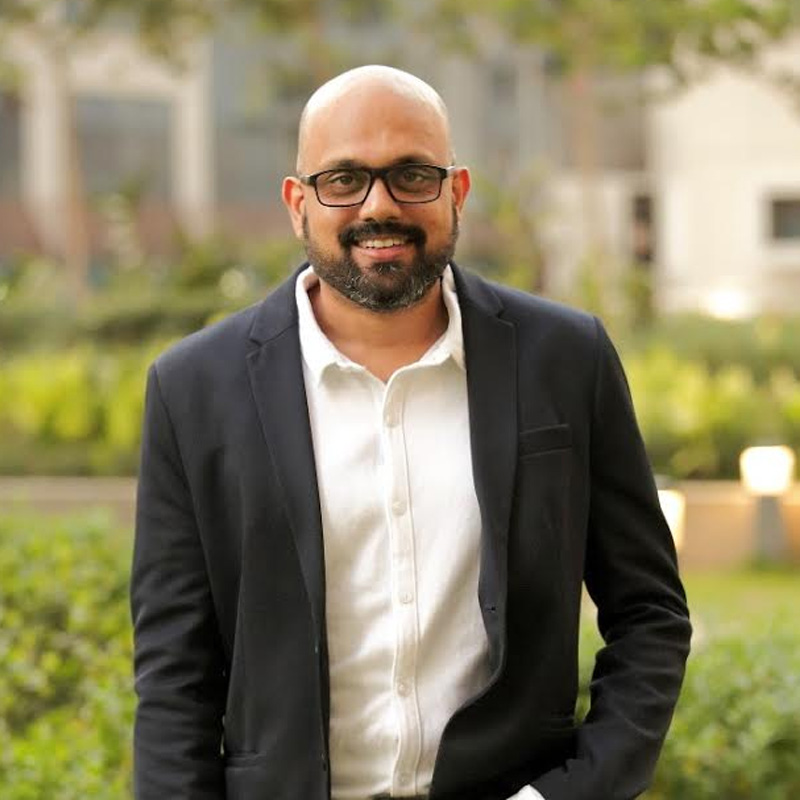
    Mumbai: Nishit Vora has joined Viacom18 Media as head – marketing, brand & digital. His post on LinkedIn read, “It’s hammer time as I kick-off my new adventure as Head – Marketing, Brand & Digital at Viacom18 Media Private Limited ‘s Integrated Network Solutions.”

    Vora is an advertising and marketing professional with more than a decade of strong and diverse experience.

    Prior to joining Viacom18 Media he was working with Think9 Consumer Technologies Pvt Ltd as VP, wherein he was leading brand growth and strategy. Prior to that, he was associated with Future Group India as lead – digital marketing.

    In 2015 Vora joined FoxMoron as digital strategy manager. He was later elevated to the position of group account manager. In his career, he has also worked with Rohit Shetty Productions – Singham Returns, KarmYog Education Network – Indian Idol Academy, FCB Ulka and PhoCusWright Inc.

  • Barc Wk 17′ 23: STAR Sports 1 Hindi tops HSM market

    Mumbai : Broadcast Audience Research Council (Barc) India has released currency data for week 17, i.e. 22 April to 28 April 2023. As per data for the all India 2+ target group, STAR Sports 1 Hindi is the most watched channel in India with an average minute audience (AMA) of 2849.95(000). It was followed by STAR Maa at 2377.93(000) AMA, Sun TV at 2204.23(000) AMA, Star Plus at 2164.28(000) AMA, and Dangal at 1883.28(000) AMA.

    The average minute audience (AMA) is defined as the number of individuals within a target audience who viewed a televised “event,” averaged across minutes. In the Hindi speaking market (HSM), STAR Sports 1 Hindi emerged as the most watched channel at 2802.8(000) AMA, followed by STAR Plus at 2102.97(000) AMA, Dangal at 1877.79(000) AMA, Goldmines at 1582.58(000) AMA and Sony Sab at 1493.92(000) AMA.

    In the South market, STAR Maa was the most watched channel at 2314.8(000) AMA, followed by Sun TV at 2187.39(000) AMA, Zee Telugu at 1560.56(000) AMA, STAR Vijay at 1393.31(000) AMA and Zee Kannada at 1220.02(000) AMA.

    In the Maharashtra/Goa market, Star Pravah was the most watched channel at 1318.56(000) AMA , followed by STAR Sports 1 Hindi at 781.16(000) AMA, Zee Marathi at 391.63(000) AMA, SONY Sab at 389.8(000) AMA and Colors Marathi at 379.7(000) AMA.

    In the West Bengal market, Star Jalsha was the most watched channel with 892.88(000) AMA, followed by Zee Bangla at 792.71(000) AMA, STAR Sports 1 Hindi at 234.11(000) AMA, Jalsha Movies at 136.1(000) AMA and Sony Aath at 122.85(000) AMA.

    In the megacities market, including Mumbai, New Delhi, Kolkata, Bengaluru and Chennai, STAR Sports 1 Hindi was the most watched channel at 479.2(000) AMA followed by Sun TV at 366.38(000) AMA, STAR Plus at 334.92(000) AMA, Zee Telugu at 284.44(000) AMA and Colors at 284.41(000) AMA.

  • Govt supportive of M&E sector efforts to expand globally: Piyush Goyal

    Mumbai: Piyush Goyal, Minister of Commerce & Industry, Consumer Affairs & Food & Public Distribution and Textiles, Government of India today said, “The Government is supportive to all the efforts by the media & entertainment industry to expand the frontiers of the sector globally.”

    Addressing the 23rd edition of FICCI FRAMES, Goyal said that India is on the pathway to become a developed nation by 2047. “As we enter the Amrit Kaal, the next 25 years which will be the defining years for India, I’m sure, our entertainment & media industry will make a mark that will be matchless. Your (industry’s) commitment to take Indian cinema on the global map, will help the industry to succeed.”

    Lauding FICCI FRAMES – the congregation of stakeholders of Media & Entertainment sector, the Minister said, “I’m delighted to be a part of the event, which has the theme ‘inspire, innovate & immerse’, which is relevant to the current times. It also reflects the vibrancy that the media industry demonstrates as a key pillar to India’s cultural heritage.”

    Goyal added that the theme also resonates with our belief that creativity can indeed enhance commerce. The M&E industry is today the cultural ambassador of the country and has given a unique identity to India, he noted.

    “The Media & Entertainment industry can showcase to the world, the New India of today, boosting the economy, helping the country reach a new audience, influencing opinions, and spreading positivity,” asserted Goyal.

    Appreciating the industry for adopting modern technologies, Goyal said, “We are looking at a proliferation of technology in the media and entertainment industries. With digital platforms coming up, I believe this industry will grow by leaps and bounds.”

    Praising the recent Oscar wins for the ‘Naatu-Naatu’ song and the ‘Elephant Whisperers’ the Minister said this achievement showcases India’s emerging contribution in the field of entertainment.

    “We gave a social message that sustainability is at the core of our thinking and comes naturally to Indians. We also gave a message of Naari Shakti that Indian women of substance are defining the New India,” he added.

    “The skill, innovation & technology of the industry is nurturing talents and hard work. Let’s together build an industry which entertains, empowers, enlightens & inspires the whole nation, in this journey of progress & prosperity,” he emphasized.

    Jyoti Deshpande, Chair, FICCI M&E Committee; CEO, Viacom 18 Media and President – Media & Content Business, Reliance Industries Ltd and Shailesh K Pathak, Secretary General, FICCI also shared their perspective on the Indian media and entertainment sector.

  • FICCI Frames 2023- Digital Media: What is the right revenue model?

    Mumbai: FICCI Frames 2023, the mega event on the Indian media and entertainment industry flagged off on 3 May at Westin, Powai, Mumbai.

    Despite India being a price-sensitive market, consumers demand quality content. There is a lot of debate on the right revenue model for OTTs – one that aligns with their target audience while balancing business goals. The panel will deliberate on the viability of existing business models available for OTTs – AVOD, SVOD, hybrid, and aggregation – and the prospects of new ones.

    Chrome Data Analytics and Media founder & CEO Pankaj Krishna opened the session to all the panelists and questioned, “Customer acquisition is the killer in the OTT business and the costs are huge so is it SVOD, AVOD or hybrid etc, what models work in your experience.”

    To which Arré co-founder Ajay Chacko answered, “ If you look at what had happened in the last seven to eight years since the boom in OTT in India and digital media seen overall, the business models have changed two or three times, it started with this all SVOD and AVOD thing. So if you look in the mirror and say as a player, at a cross section of the industry, what is the revenue model, they will say its advertising or subscription. But if you look at the business models, that’s where the real disruption has happened.”

    Playbox TV Founder & CEO Aamir Mulani shared, “What I really feel as India is getting OTT every two months, three OTTs are getting launched. Everybody is fighting for the same consumer, but everybody has a certain set of content requirements. I have also seen some players spending Rs 2000 to acquire a Rs 500 customer because the price of the content is so low that you can’t sustain on that model. So as the number of players are increasing, the cost of digital advertising is also going up.”

    Krishna asked Warner Bros Discovery APAC director, retention engagement & growth strategy, DTC marketing Praveen Chaudhary, “ There is a lot of India commissioned content that we see in your platform that seems to be great production. Is it really viable and are you getting the numbers from that kind of production.”

    Chaudhary said, “Yes there are short term challenges that all OTT players face, but I think things have improved dramatically in the last two to three years. There have been some industry level improvements for e.g. every Indian now has UPI at their fingertips so they can make the transactions more easily. And we can already have reached a stage where we can see the business model becoming profitable on an incremental basis.”

    Lions Gate executive VP Amit Dhanuka commented, “ I think it is a little bit more nuanced. I think there is a hybrid model that’s there in the market with VOD platforms. There’s a subscription model too. Within the subscription model it evolved into aggregation models because eventually you want to go where the customer is consuming content.”

    Krishna further questioned aha vice president & head- non subscription revenue Nitin Burman about his platform’s content and told, “So when we started aha, we also wanted to start for the entire South market and when you look at all the national platforms, when they release any content of South, its not Telugu, Tamil, Malayalam and Kannada. But when you actually deep dive, these are four different European countries. Telugu for us is a 100 million user base, and from that we already have 30 million app downloads, three million paid subscribers on our app which actually raise eyes on all big platforms that there is one small regional player who came from nowhere and is suddenly making waves.”

    Balaji Telefilms Ex Group CEO Nachiket Pantvaidya shared his view, “The biggest investment in content in digital today, which is the IPL, is being given away free. So my view is if you want your business to upscale you would go for advertising.”

    Pratilipi business head audio & studio Ambesh Tiwari concluded by saying, “The way brands are reaching consumers have changed today. If you look at what is the biggest disruption in global digital, Google share has been dramatically eaten up by Amazon, because that’s the most effective form of advertising.”

  • Indian M&E sector to touch three trillion in 2025: FICCI-EY Report

    Mumbai: Ministry of Information & Broadcasting & Govt of India Secretary Apurva Chandra, has shared that the government is working to soon bring an Animation, Visual Effects, Gaming and Comic (AVGC) policy and create an AVGC Mission.

    Addressing the 23rd edition of FICCI FRAMES, Chandra said, “Animation, visual effects and graphics are areas which have tremendous potential. With the establishment of the AVGC Task Force and the creation of a national policy for AVGC, India will be well on its way to becoming a global leader in the AVGC industry.”

    Highlighting the untapped potential of the Indian Media and Entertainment industry, the Secretary asserted, “There is still a world left to be captured by the Indian Media and Entertainment industry. The world is interested in Indian stories and Indian culture.”

    He further assured the industry of support from the government and stated, “The government would like to be facilitators and supporters of the media and entertainment industry so that it reaches the world stage. We would like to work with the industry to set up more and more institutes so that more manpower comes on board in the industry.”

    Chandra added that the government is in the works to set up a National Centre for Excellence operational in Mumbai by next year.

    Underlining the role of National Film Development Corporation of India (NFDC), Chandra said, “Through NFDC we need to finance projects and give support to young film-makers who don’t have access to funds otherwise. We plan to come up with NFDC’s own OTT as a platform to showcase those films that don’t get space in the market so that young talent gets a chance to showcase its talent.”

    Commenting on the Cinematograph Act, the Secretary said, “The Cabinet has recently approved the revamp of the Cinematograph Act so that strict actions can be taken against piracy. The act is likely to be introduced in the Monsoon Session of the Parliament. We hope to get it passed soon.”

    “This (Cinematograph Act) will give direct powers to the government to take action against websites showing pirated films,” shared the secretary.

    Telecom Regulatory Authority of India (TRAI) chairman Dr PD Vaghela said, “With the way technology is changing and the way new players are coming, we must ensure a level playing field for all. We should not impose regulations or restrictions on the new players; less regulation is the best regulation.”

    FICCI president Subhrakant Panda said, “Media & Entertainment industry in India is growing at a CAGR of 10.5 per cent and is expected to reach Rs 2.86 trillion in 2025, underscoring both its importance and resilience. Internet access even in remote areas, low cost of data and smartphone penetration has contributed to the growth of digital media.”

    Panda further stated, “Given the rapidly changing landscape, industry participants must be agile and respond to evolving trends. Conductive policies have led to M&E becoming an integral part of the economy, it’s not just in terms of creativity and entertainment, but also job creation. FICCI is committed to working with all stakeholders for the growth of the Indian M&E industry and supporting its global ambitions.”

    Viacom 18 media & president – Media & Content Business & FICCI M&E Committee CEO Jyoti Deshpande said, “With disruptions and an imminent equally disruptive entertainment launch, a digital-forward economy has already seen content and data consumption levels reach monumental proportions by global standards. Indians now consume nearly 20GB data per month on an average, No. 1 in the world already, and expected to reach 46 GB by 2027.”

    “The proliferation of Smartphones, Connected TV, advent of 5G and affordable data rates all contribute to the fulfilment of the Digital India dream. Propelled by double digit growth, by 2025 we are set to become a Rs 2.86 trillion industry,” added Ms Deshpande.

    Highlighting the global recognition of the Indian film industry, actor Ayushmann Khurana said, “The more local we go, the more global we reach. Our film industry is at the cusp of global greatness. India is now being looked at as a creative juggernaut and our industry is being welcomed globally.”

    FICCI Secretary General Shailesh K Pathak said, “The art of storytelling that Indians across the country have is amazing. In 2030, when India will be the 3rd largest economy, our Media & Entertainment sector will be one of the largest in the world.”

    FICCI-EY report titled ‘Windows of opportunity – India’s media & entertainment sector maximizing across segments’ was also launched at the FICCI FRAMES 2023. Sharing salient outcomes of the report, EY India partner – media & entertainment Ashish Pherwani stated, “The Indian M&E consumer base is large but heterogenous, hungry for content but willing to pay only for value, and more than ready to experiment with technology, be it streaming, digital payments, online education, virtual experiences, e-commerce, social media, or gaming. The diverse consumer base, coupled with favorable macroeconomic and demographic factors, have translated into a very exciting time for the sector.”

    Highlights of the FICCI-EY Report:

    •  Indian M&E sector grew 20 per cent in 2022, touching the highest ever mark of Rs two trillion
    • It is expected to grow a further Rs 734 billion to reach Rs 2.83 trillion in 2025
    • Advertising grew 19 per cent and crossed Rs one trillion for the first time
    • Digital media grew by INR132 billion to reach Rs 571 billion, and now comprises 27 per cent of the Indian M&E sector and 48 per cent of all advertising revenues
    • Except for TV subscription, all M&E segments grew in 2022
  • FICCI-EY: Indian M&E sector grew 20% in 2022 to reach Rs 2.1 trillion

    Mumbai: The FICCI-EY report ‘Windows of opportunity – India’s media & entertainment sector maximizing across segments’ was launched on 3 May at the FICCI FRAMES 2023 which was held at Westin, Powai,Mumbai.

    The key trends in the report speak about the various facets of the media & entertainment industry, the most important being that the Indian M&E (Media & Entertainment) sector grew 20% in 2022 to reach INR2.1 trillion. It grew by Rs 348 billion (19.9%) to reach INR2.1 trillion (US$26.2 billion), 10% above its pre-pandemic 2019 levels

    While television remained the largest segment, digital media cemented its position as a strong number two segment, followed by a resurgent print.

    The filmed entertainment segment recovered as theatrical releases doubled, and reclaimed the fourth position overtaking online gaming.

    The share of traditional media (television, print, filmed entertainment, OOH, music, radio) stood at 58 per cent of M&E sector revenues in 2022, down from 71 per cent in 2019.

    The M&E sector is expected to grow 11.5 per cent in 2023 to reach Rs 2.34 trillion (US$29.2 billion), then grow at a CAGR of 10 per cent to reach INR2.83 trillion (US$35.4 billion) by 2025.

    Analyzing the Rs 348 billion growth

    Except for TV subscription, all M&E segments grew in 2022

    Digital media grew the most at INR132 billion and consequently, increased its contribution to the M&E sector from 16% in 2019 to 27% in 2022. If one were to include data charges associated with digital consumption in sizing, its share would stand at 50% of the total M&E sector

    Experiential (outside the home) segments recovered in 2022, and consequently, filmed entertainment and live events segments recovered by INR79 and INR41 billion, respectively

    Overall, half the growth was driven by traditional media, and the balance by digital, online gaming and VFX segments.

    Segmental performance in 2022

    Television – Television advertising grew 2% to end 2022 just behind its 2019 levels, on the back of volume growth. Subscription revenue continued to fall for the third year in a row, experiencing a 4% de-growth due to a reduction of five million pay TV homes and stagnant consumer-end ARPUs. While linear viewership declined 7% over 2021, 8 to 10 million smart TVs connected to the internet each day, up from around 5 million in 2021.

    Digital advertising – Digital advertising grew 30% to reach Rs 499 billion, or 48% of total advertising revenues. Included in this is advertising by SME and long-tail advertisers of INR180 billion and advertising earned by e-commerce platforms of Rs 70 billion.

    Digital subscription – Digital subscription grew 27% to reach Rs 72 billion. 99 million paid video subscriptions across almost 45 million Indian households generated Rs 68 billion, an amount which is over 60% of broadcasters’ share of TV subscription revenues. Due to a plethora of free audio options, just 4 to 5 million consumers bought music subscriptions, generating Rs 2.2 billion while online news subscriptions generated Rs 1.2 billion.

    Print – Advertising revenues grew 13% in 2022 as print remained a “go-to” medium for more affluent and non-metro audiences. Subscription revenues grew 5% on the back of rising cover prices and has stabilized at 15% to 20% below the pre-COVID-19 levels. Digital revenues remain elusive for most newspaper companies.

    Film – The segment grew 85% to reach 90% of its 2019 levels as theaters re-opened. Over 1,600 films were released in 2022, theatrical revenues crossed Rs 100 billion, and fewer films released directly on digital platforms. 335 Indian films were released overseas.

    Online gaming – New players, marketing efforts, specialized platforms and brand ambassadors all worked to grow the segment 34% in 2022 to reach Rs 135 billion. Regulatory clarity improved, and this could lead to more FDI in this segment. There were over 400 million online gamers in India, of which around 90- 100 million played frequently. Real money gaming comprised 77% of segment revenues.

    Animation and VFX – As content production resumed, service demand – both domestic and exports – increased, resulting in the segment growing 29% and crossing Rs 100 billion for the first time.

    Live events – The fastest growing segment of 2022, organized events grew 129% over a depleted base as weddings, corporate events and activations, government initiatives, and large marquee IP with international participation took place after a gap of almost two years.

    OOH – OOH media grew 86% in 2022 and reached 94% of 2019 levels. Capacity utilization improved in 2022, but rates remained challenged. Digital OOH screens increased to around 100,000 and contributed 8% of total segment revenues.

    Music – The segment grew by 19% to reach Rs 22 billion. Film music, which had reduced during the pandemic, returned at scale. 87% of revenues were earned through digital means, though most of it was advertising led, there being around only 4 to 5 million paying subscribers despite streaming reach of over 200 million.

    Radio – Radio segment revenues grew 29% in 2022 to INR21 billion but were still just 66% of 2019 revenues. Ad volumes increased by 25% in 2022 as compared to the previous year, though ad rates remained 20% below their 2019 levels. Many radio companies are looking at alternate revenue streams to grow faster.

     Advertising growth continued to outperform Indian GDP growth

    In 2022, when India’s nominal GDP grew 15%, advertising recovered 19%.

    Advertising is usually around 2x to 2.5x of real GDP growth, which is expected to be 7% for FY2023.

    However, when GDP is impacted, the discretionary nature of the M&E sector results in a disproportionately higher contraction, as was seen in 2020.


  • FICCI Frames 2023: Jyoti Deshpande & Apurva Chandra touch upon various topics

    Mumbai: FICCI Frames 2023, the mega event on the Indian media and entertainment industry flagged off on 3 May at Westin, Powai, Mumbai.  

    Viacom18 CEO Jyoti Deshpande opened the event with a welcome speech wherein she spoke about how India is proudly leading the charge, taking the mantra of Make in India and showing it to the world.

    Deshpande said, “In 2015 Jio started a digital revolution to connect everyone and everything, everywhere.  Indians now consume nearly 20GB of data per month on an average, No. 1 in the world already, and expected to reach 46 GB by 2027.

    The proliferation of smartphones, connected TV, the advent of 5G and affordable data rates all contribute to the fulfilment of the Digital India dream. Propelled by double-digit growth, by 2025 we are set to become an Rs 2.83 trillion industry.”

    Government of India Ministry of Information & Broadcasting secretary Apurva Chandra pointed out, “There was a growth of 20 per cent in the media & entertainment sector in 2022; the media & entertainment industry has reached $26 billion – we are still less than one per cent of the world. The world is interested in Indian stories and culture. The success of Indian movies and music at the Oscars, the rise of OTT content and the box office speak volumes.”

    He added, “We have become the most populous country in the world, but there is a lack of manpower. The National Centre for Excellence should be functional in Mumbai by next year. Participation of media & entertainment in films, OTT, broadcast and AVGC – participation of films – film production, film funding, heritage films and children films is being taken care of.”

    Speaking about films, he mentioned, “On the film heritage mission, we have already given about Rs 500 crore work to be done and to be executed at a fast pace. People and fans will pay for films to be restored and will be saved for posterity.

    We need to give support to young filmmakers who don’t get support in the larger market, and young filmmakers get a chance to showcase their talent.”

    “There will be a tender for the Film Facilitation website which will be released within a month, so that we take up film shootings, events, etc.

    Also, there will be strict action taken against piracy,” Chandra went on.

    About broadcasting, he brought out, “The new uplinking and downlinking guidelines came up a couple of months back. We are looking at India becoming the uplinking centre for many countries.”

    “About OTT – it is more of a self-regulatory mechanism, the government has kept a soft touch approach. I believe OTT is quite happy with that, the system is working well. Self-regulation should be exercised. We would like this sector to grow fast and not be bogged down by regulation.”

    He concluded, “The world is out there for us to capture. We need to catch up with the world in content creation, gaming, visual effects, etc. We also need to create the best infrastructure – the best of studios, dubbing stations, movie theatres.”

  • Content, Commerce & Community – The Future of Indian Media & Entertainment

    Mumbai: A very good morning, to the respected dignitaries here today, both physically and digitally…

    Shri Piyush Goyal, Hon’ble Minister of Textile, Commerce and Industry, Consumer Affairs, Food and Public Distribution, Govt. of India

    Shri Apurva Chandra, Secretary, Ministry of Information & Broadcasting, Govt. of India

    Mr Subhrakant Panda, President, FICCI and MD, Indian Metals & Ferro Alloys Ltd.

    Mr Shailesh K Pathak, Secretary General, FICCI

    And to our own Ayushmann Khurana and very good morning to everyone here in the audience.

    It is an honour and pleasure to be here today, looking into the future of a powerful and dynamic industry. These are exciting times for content, commerce, and community, which are the perennial pillars of the media and entertainment industry, growing exponentially fuelled by technological innovation. India is proudly leading the charge, taking our mantra of Make in India and showing it to the world.

    The rich and diverse history of our stories has evolved over the last 90 years from Alam Ara – the first Indian talkie to now the Elephant Whisperers – a story from our nation’s heartlands making waves internationally. Quite literally the world dances to the tune of our Naatu Naatu as India’s voice rings proudly in the global entertainment landscape.

    In 2015 Jio started a digital revolution to connect everyone and everything, everywhere. This dovetails with Digital India, the flagship programme of the Government of India with a vision to transform India into a digitally empowered society and knowledge economy.

    With disruption such as Free digital IPL on Jio Cinema, and an imminent equally disruptive entertainment launch, a digital forward economy has already seen content and data consumption levels reach monumental proportions by global standards. Indians now consume nearly 20GB data per month on an average, No. 1 in the world already, and expected to reach 46 GB by 2027.

    The proliferation of Smartphones, Connected TV, advent of 5G and affordable data rates all contribute to the fulfilment of the Digital India dream. Propelled by double digit growth, by 2025 we are set to become an INR2.83 trillion industry. I won’t reveal any more and steal the thunder of the Report launch.

    We were told that the Indian content production industry was extremely fragmented, and that we can never scale it. Just last month, Jio Studios unveiled its powerful slate of 100-plus stories of movies and web series across languages, a case study in the Jiofication of the content industry.

    It would be my dream to see us smash through these forecasts as we lead the digital forward way to the world – be it through the democratisation of the creator economy or disruption in digital distribution. No one innovates like India. No one can implement it on an unimaginable scale like India.

    With that, I would like to thank the entire M&E fraternity for coming together and working as one to realise this vision. I would also like to thank the I&B Ministry for their progressive approach towards policy and regulation. Lastly, the entire FICCI team and our partners who have researched, written and put together this much-awaited report.

    Thank you all again for participating in this wonderful 3 days of ideas and knowledge exchange.

    – Jyoti Deshpande, CEO – Viacom18