Category: Terrestrial

  • DD telecasts live launch of India’s maritime communications satellite GSAT-7

    DD telecasts live launch of India’s maritime communications satellite GSAT-7

    NEW DELHI: Doordarshan telecasts the launch of GSAT-7 maritime Communications Satellite live from Kourou in French Guyana.

    The live telecast on the national channel was from 02:00 am till the end today. A recording of the launch will be repeated from 10.00 am.

    The launch from the European space consortium, Arianespace will be India’s 71st satellite developed by the Indian Space Research Organisation (ISRO) since 1975.

  • Doordarshan  should run a kids channel

    Doordarshan should run a kids channel

    MUMBAI: Like its counterparts in UK and Australia, why doesn‘t India boast of a channel targeted at kids? That was the theme of a panel discussion at Ficci Frames 2013.

    Prasar Bharati CEO Jawhar Sircar, who was expected to take part in the panel discussion, was conspicuous by his absence. The session that was supposed to discuss and deliberate upon the importance of a public kids‘ broadcaster went without government representation.

    The panelists comprised CFSI chairman Amol Gupte, Graphiti Multimedia chairman Ram Mohan, and International Advertising Association-India Chapter (IAA-IC) Secretary at Monica Tata. Graphiti Multimedia COO Munjal Shroff was moderator of the session.

    Tata, who was earlier with Turner International and was managing kids channels Cartoon Network and Pogo, said it was imperative for the government to enter the kids broadcasting space as part of its larger social responsibility.

    According to Tata, Doordarshan, the television arm of Prasar Bharati, with its huge reach through terestrial cable will go a long way in reaching kids who don‘t have access to quality content.

    Graphiti Multimedia chairman Ram Mohan, also known as father of Indian animation, felt a public-private partnership would go a long way in making this initiative a success.

    He also felt that a public-owned kids broadcaster would also give a fillip to Indian animation industry besides serving the larger social good – that of helping kids to develop life skills.

    The panelists agreed that the first step was to convince the government to launch such a channel. The content of the channel can be decided later.

    Tata believes that the channel should have content that is educating but also entertaining at the same time.

    CFSI chairman Amol Gupte feels that the time has come for the government to put its foot down and get working on the channel.

    Children, he noted, are exposed to all sorts of crass content that is having a negative impact on them. A DD kids channel would go a long way in plugging that need gap.

    Bennett Coleman and Company Limited (BCCL) Director AP Parigi feels the government should provide the highway to create centres of excellence in kids‘ broadcasting.

    He also reckoned that the government should have a incubation period of at least five years for the channel before it becomes viable. The curriculum of government-run schools should have synergy with the kids channel.

    While saying that the public kids channel should be a viable option, Tata felt that viability is a subjective term when it comes to a public enterprise.

    Graphiti‘s Munjal Shroff pointed out that the Ficci Media & Entertainment committee has been lobbying for the last four years with the Prasar Bharati to launch a kids channel without much success.

    Shroff also revealed that Sircar has promised to look into the issue. The plan, he further revealed, was to have a dedicated slot on DD which would later be spun-off into a full-fledged channel.

    The panelists urged the small gathering to take the issue up with the government to get them to fast-track the process of launching a children-centric channel.

    Gupte said, "We need advocacy groups to tell the government that this kind of a channel is the need of the hour as part of its larger social responsibility."

    The panelists also felt that a Sesame Street kind of an initiative to give children from under-privileged background a platform to learn skills should be replicated in India. Sesame Street is a long-running American children‘s television series. In India it airs on Cartoon Network as well as on DD.
  • ‘The only thing that supercedes creativity is accountability’ : Laurence Boschetto – DraftFCB president & COO

    ‘The only thing that supercedes creativity is accountability’ : Laurence Boschetto – DraftFCB president & COO

    It was in June that media conglomerate Interpublic combined its Draft and Foote Cone & Belding (FCB) units around the world to create a channel-neutral agency model DraftFCB. Heading DraftFCB as its president-COO is Laurence Boschetto, previously president-COO of Draft.


    Hardly has Boschetto had time to gather his breath on the ramifications of the new entity has come an even more radical announcement. Which is that Interpublic is reorganizing its media operations with Initiative becoming aligned within DraftFCB and Universal McCann coming under McCann Worldgroup.


    The reorganisation came just ahead of news that the newly integrated DraftFCB has been awarded the account of retail behemoth Walmart worth an estimated $570 million. That the monster win came on top of new business that DraftFCB had won from Citigroup, Merrill Lynch and Atari has been more than a validation for Boschetto and the team at DraftFCB.


    In conversation with Indiantelevision.com, Boschetto, who over the last three weeks “has been on the road to every single region introducing them to the new model”, throws some light on just what’s happening at DraftFCB, as too the vision thing with IPG.


    Excerpts:

    Is it fair to say that IPG’s reorganization of its media operations represents the most significant example of support for those against the unbundling of media that we have witnessed over the last 20 years or so? And extending that posit, can we then argue that making media and creative interdependent is the best way forward?

    Over the last decade we stripped everything out of an agency, we have taken strategic planning, we stripped away media and now they have basically become interchangeable parts, the ‘value has been devalued.’ So what we are doing right now is we look at the client, we look at the demands and pressures that they have, we look at the environment that their end user works in and we say ‘how do we change the game.’


    This might look like the old model but it’s packaged in the new model formulation, an offering of complete integration of products and services but not doing it syllogistically under the model.


    What we are saying is that there is one management team, there’s one P&L and the palette consists of all the different skill sets, so the clients don’t have to manage all those relationships and the agency can come back with a business solution orientation based on the real business issues rather than the disciplines that they are confident in.


    Today we often hear clients say, ‘I want channel agnosticism and discipline neutrality.’ Yet there isn’t really any channel agnosticism. We didn’t build organizations in the industry that way, we have people that are proficient in strategic planning, in branding, in advertising, in PR and in retail. Now they are asking for renaissance marketing communications people, that’s what this whole model is about, it’s about building another class of business builders in the marketing communication field.

    The new media strategy represents the third major organizational change Interpublic has instituted this year. What is the broad direction that IPG is taking with all this?

    When you take a look at the advertising industry, you cannot ignore client structuring and their constituent parts because this tends to have a ‘domino effect’. The environment that the customer lives in has radically changed, technology has changed they way that they live and breathe, how they interact and connect with each other, this has created one basic phenomena ‘immediacy’.


    Technology has changed the way we work and engage. This has put tremendous pressure on the CMOs, as they also live in an environment and at a time when their CEOs are demanding performance in their books. It is estimated that every CMO has a life expectancy of roughly 24 months. However, if they have to produce they will have to figure out how to navigate through a company, what the alliances are, who their end user is and quarter after quarter their performance based on real business metrics will determine what their life expectancy will be.

    Over the last decade we stripped everything out of an agency, we have taken strategic planning, we stripped away media and now they have basically become interchangeable parts, the ‘value has been devalued’

    If you say that a CMO has an average 24 month life cycle, what happens if he continues to deliver what the client demands?

    As defined, stage I is to develop a way of operating to deliver that media and channel neutrality and agnosticism and that’s by bringing together not just one person to lead the business but all the discipline leaders at a round table, to form a team for the client.

    Now, if one client is more strategic in nature then they may have a strategic person in the key position, while someone else who is more data driven might have the data person heading it, but the way we think through the issues are holistic. The goal is that over time we are not expecting that someone who is highly proficient in strategic planning and database modeling to be interchangeable. But the person who heads up strategy must be able to think more holistically, so that when they come to a business situation they determine what’s right for the client.

    But will these individuals continue to function within their respective units?

    The goal is to make sure that the purity and the authority of every discipline still resides in an agency so that we never lose that foothold. In the process of giving clients that ‘channel agnosticism’, the days of only the account person holding that relationship, we are saying that before we get there we need to have a team consisting of media, strategic planning, account services and a creative database all sitting at the table and having an equal voice in determining how to solve a business issue.

  • DD’s new revenue mantra: big films

    DD’s new revenue mantra: big films

    NEW DELHI: Indian pubcaster Doordarshan has decided to attempt maximizing revenue through its film slots by showing as many blockbuster films as possible during the remaining part of the year.

    This assumes importance in view of the fact that DD does not have exclusive cricket telecast rights, which brought in sizeable revenue during the previous years.

    A high level committee headed by Prasar Bharati CEO Brijeshwar Singh has been formed to ensure smooth implementation of the rejuvenated film policy.
    The other members of the panel are Doordarshan DG L D Mandloi and Rajat Bhargava, additional DG (finance).
    DD has five film slots in a week — the Friday night feature film, Saturday night feature film, Retrospective of Sunday Afternoons, Bio-Scope serialized feature film slot and the slot on Hindi belt network.

    The films will be marketed by Prasar Bharati’s marketing divisions in Mumbai and Delhi and will be largely procured through National Films Development Corporation.
    Prasar Bharati has chosen films to be the revenue growth engines as ananalysis of revenue flow has shown that they have the maximum potential to deliver net revenue.

    For example, Friday feature film is a clear winner. Besides being the most watched feature film on television in all TV homes with ratings of 7 and above (as per TAM data), it also fetches net revenue in excess of Rs 8 million per film.

    The Saturday feature film is a close second with a net revenue realization of approximately Rs 7 million. Retrospective on Sundays, which saw films of eminent artistes, have a niche audience appeal, yet manages to draw sizeable revenue.

    Since last one and a half years, Doordarshan has been showing blockbuster films on its national network on a regular basis.

    Earlier, the frequency was once a month, which was interspersed with other new/ recent films. Gone are the days when DD scheduled only old movies.

    An internal analysis by Prasar Bharati, which manages DD, has also shown that whenever blockbuster films were scheduled, they not only managed to garner higher revenue, but also attracted a sizeable C&S home audience.

    Shah Rukh Khan starrer Swades and Akshay Kumar-Priyanka Chopra starrer Aitraz being some recent examples.

    The blockbusters offer DD another plus. They helped promote other serials and programmes of the national broadcaster, especially offering a sample to those C&S home visitors to DD.

    Last financial year ended 31 March 2006, Doordarshan earned revenue of Rs 9.6 billion. The present effort is to gear up the national broadcaster to meet the challenges and repeat its good performance this year too.

    Giving effect to the new film strategy, DD has scheduled following hit films in the forthcoming days: Munnabhai MBBS on 29 September 2006, Jism on 30 September, Hum Saath Saath Hain on 1 October on Hindi belt network and Swades on 2 October being a Dussehra / Gandhi Jayanti holiday.

    To mark the occasion of birth anniversary of Father of the Nation, DD will also be showing Gandhi Se Mahatma Tak as part of serialized film slot, Bio Scope, on Monday, Tuesday Wednesday (2-4 October).

    Koi Mil Gaya, Mujh Se Shaadi Karoge, Virudh are among other big films lined for October.

  • ‘Zee Telefilms to see ad revenue growth of 12 – 15% in FY07’ : Rajiv Garg – Essel Group CEO of corporate strategy and finance

    ‘Zee Telefilms to see ad revenue growth of 12 – 15% in FY07’ : Rajiv Garg – Essel Group CEO of corporate strategy and finance

    Cable and direct-to-home (DTH) is where Zee Telefilms Ltd (ZTL) chairman Subhash Chandra is planning to put the accelerator on. Wire and Wireless India Ltd (WWIL), the cable outfit, will enjoy an investment of Rs 5 billion to lay out a digital platform, gear up for triple play and expand in value-added services. And to fight Tata Sky in the DTH business, he will pump in Rs 2.5 billion over two years.

    Zee News Ltd. (ZNL), which will have news and regional channels under its umbrella, is looking at a turnover of Rs 2.5 billion this fiscal. The listing of these demerged companies is expected to be in September-October.

    In an interview with Indiantelevision.com’s Sibabrata Das, Essel Group CEO of corporate strategy and finance Rajiv Garg talks about the reasons for the demerger and the expansion plans of these separate entities.

    Why did Zee Telefilms Ltd (ZTL) decide to demerge its businesses into separate entities?
    The driving argument for demerger was that all these businesses had become big in themselves. Huddled together under Zee, they were not given the right strategic focus as the company was very broadcast-oriented. In cable, for instance, we felt that we were not doing justice to its growth potential. Also, in certain lines of activity the government regulations were impinging upon the growth prospects of the company. The idea was to see if we could create that focus and comply with the government guidelines. With so many technological advances taking place, we felt it was the right environment to carry this out. We decided to create independent governing structures and managements, delink cable from broadcasting, and put together certain news-bearing channels into an independent entity.

    Why was the direct-to-home (DTH) business housed in complex structures which did not allow for tax efficiencies?
    The idea was to provide specialist services in specific entities. As the competencies lay in them, the DTH business was spread across three outfits. Integrated Subscriber Management Systems Ltd, for instance, has an expertise in such areas like subscriber billing. Siticable has been negotiating content from the time the cable industry began in India. New Era Entertainment formed the marketing and ad sales arm. The aim was to create a revenue-sharing arrangement with ASC Enterprises Ltd (Ascel), the DTH license holder. When we did this structuring, there was no service tax applicable to the industry which was introduced later. We did not anticipate taxation developments to happen so quickly and cause financial inefficiencies. Besides, demerger will provide clarity of structure and add value to shareholders.

    Since regulation allows for a broadcast cap of 20 per cent, why didn’t ZTL hold stake in the DTH business?
    It would have happened in due course. We were in no hurry as we wanted to present the DTH platform as broadcast neutral. The internal intention was to acquire equity once the key relationships came in.

    What does the demerger process in the DTH business involve?
    In the first stage, Siticable will hive off its cable TV business into Wire and Wireless India Ltd (WWIL). The residual Siticable and its wholly owned subsidiary New Era Entertainment Network Ltd will then merge with Ascel, thus consolidating all the DTH operations under one company. Zee Telefilms shareholders will get 23 shares of Ascel for every 10 shares held.

    How did you arrive at this exchange ratio and why did you prescribe for a subsequent cancellation of shares?
    It is the independent valuer (Deloitte Haskin & Sells) who came up with this ratio. As for cancelling three of every four shares held in Ascel, this is to bring back the capital base to the pre-merger level. The paid-up equity of Ascel would have bloated to around Rs 1.66 billion after the merger, up from the base of Rs 411 million. This would have been too large an equity for a company of this size. So we wanted to compress the capital base. We could have given a predetermined base, but didn’t know the ratio the valuer would arrive at.

    DTH revenues will touch Rs 8 billion in FY08 as subscribers rise to 3.15 million and ARPU to Rs 310

    Zee’s operating revenues from the DTH line of business was Rs 818 million in FY06 while losses stood at Rs 790 million. What is the investment plan and how do you see subscribers and average revenue per user (ARPU) size up over the next two years?
    The net expense for DTH operations so far is Rs 3.8 billion. We are planning to pump in a further Rs 2.5 billion over the next two years. But we are sitting on a dynamic model and if Tata Sky and us are aggressively competing, there is a possibility of the subsidy amount further increasing. It is a factor of what strategies we adopt to develop our subscriber base. By the end of FY06, we reached close to one million subscribers. We project a gross revenue of Rs 3.2 billion in FY07 on a subscriber base of 2.4 million and an ARPU of Rs 250 (up from Rs 190) mainly because of the launch of value-added services. And in FY08, we see ourselves growing to a revenue of Rs 8 billion as subscribers rise to 3.15 million and ARPU to Rs 310.

    When do you expect to sign up with Sony and how do you see content growing?
    We expect Sony to happen within a month. Gradually, the content kitty is filling up. We are also looking at creating new DTH channels. Our plan is to expand to 200 channels.

    Will transponder space be a limitation?
    We will have to find space. We may have NSS when Doordarshan’s DD Direct vacates the satellite to move to Insat 4B. We are also talking to Isro (Indian Space Research Organisation) to launch a dedicated satellite for us.

    Are your Korean set-top vendors planning to set up a manufacturing facility in India?
    I don’t think it is viable at this stage. The volumes are too small for us to ask our STB vendors to manufacture in India. When we scale up to five million (boxes a year), then it may be a feasible project.

    Which do you think will attract investors first, the DTH or cable company?
    Both have attractive growth paths. We are looking at a mix of debt and funding coming from strategic or private equity investors.

    Are you looking at a small dilution initially of up to say 26 per cent?
    It all depends on what is the offer. Yes, if you initially dilute a small stake you have the advantage of discovering value as the company grows. But we have a flexible approach and it all depends on how lucrative the proposal is.

    Have you started talking to investors?
    We have been approached by many, but nothing is imminent yet.

    Will WWIL infuse massive capital towards digitisation of cable and triple play?
    We know the cable business has a lot of undiscovered value and will be giving it a big push. WWIL has a business plan which would take in an investment of Rs 5 billion over three years to drive digitisation, broadband and triple play rollout. It is a classic example of how the focus has been lacking and we have not taken advantage of the technology advances. We are looking at a million digital cable subscribers in the first year as we bundle service and hardware together in some form of subsidy. We also plan to make the network available to telecom operators for voice. Valuation of the cable business can only go up as the industry is badly suppressed. Conditional access system (CAS), digitisation and triple play will liberate the industry and growth in revenues can be rapid.

    How much debt you will raise to fund the expansion?
    We are looking at a debt-equity ratio of 1:1. The net worth of the company currently is not that strong to support that size of debt. We are, after all, planning to pump in Rs 5 billion to expand the business.

    What was the need for restructuring Zee News again?
    The restructuring started a couple of years ago when the uplinking guidelines were changed. Since we had a substantial foreign holding in ZTL, broadcasting of news and news-bearing channels were placed on a separate footing. Gradually as a response we shifted news gathering and uplinking to a separate company, Zee News Ltd, which was in compliance with the guidelines.

    But in the last few months, we have been mutilating this model as we found that there is a lot of strategic gap or clarity between the thinking of the producer (Zee News), the distributor (Zee Telefilms) and the team that exploits the commercial rights (Zee Telefilms) to such channels. So we thought we would close the gap and put everything in an entirely separate entity. All strategic decisions should be taken in an integrated manner by one team – be it production, news gathering, programme slotting, distribution or commercial exploitation.

    So what were the strategic gaps?
    The differences sprung because there was a revenue sharing arrangement between the two, but I can’t give you the minute details. It is not a good idea tactically to unite even if both of them are part of the same family.

    Zee news and regional channels had a combined turnover of Rs 2 billion in FY06. Were regional channels brought under Zee News Ltd (ZNL) because they could add to the company’s topline growth?
    The main reason for this kind of arrangement is that they are news-bearing channels; the regional channels have a strong component of current affairs and news programming. One of the consequences of this combination, of course, can be fattening of the topline. We are projecting a revenue of Rs 2.5 billion in FY07 and Rs 2.9 billion in FY08.

    As part of the restructuring, 137 ZNL shares will fetch 100 shares in ZTL. But with the total foreign shareholding in ZTL at 54.69 per cent, how does ZNL fall within the regulatory cap of 26 per cent?
    ZTL chairman Subhash Chandra will be transferring his foreign holdings (22.77 per cent is foreign promoters holding in ZTL) to an investment company in India. Also, foreign institutional investors (FIIs) will be given preference shares to bring the cap under limit (FIIs hold 31.51 per cent in ZTL).

    When are you planning the launch of Tamil and Malayalam language channels? How much are the new southern channel launches consuming as investments?
    The two channels should see launch in the current fiscal and in FY08. Along with the Kannada launch, the total investments would be in the region of Rs 350 million.

    With the demerger, won’t the topline of core Zee Telefilms see an erosion?
    Even after physically transferring the topline out, there is enough of a mandate to register growth. We have the number two and three (Zee Cinema and Zee TV) channels in the country. If they continue to focus on the products they have, their growth path is mandated. The flagship channel, Zee TV, is seeing a surge in ratings and ad rates.

    For core ZTL (after demerged businesses), we expect an advertising revenue growth of 12-15 per cent in FY07. While international business will sustain its 10-12 per cent growth (adding of channels and gain from Middle East), domestic subscription will stay steady. Overall, the core ZTL (after demerged businesses) will see a growth of 10 per cent in the current financial year.

    Will the bottomline look healthy after hiving off the loss-making businesses?
    The pullout is of minor loss-making businesses. The impact will largely even out as Zee News and the regional channels were profit-making. Still, there will be some positive outcome.

    How will Zee Sports play out on ZTL’s bottomline, particularly after bagging at a whopping price of $219.15 rights to 25 offshore cricket matches over five years?
    Zee Sports is at a development stage and there will be investments made for the long term development of the channel. There is a particular sequence in which we have to pay and the outgo for the first year will be $5.04 million per match. That will give us reasonable time to drag on the investments and build the channel. Besides, we will be bidding for other major sports properties including the ICC World Cup which is coming up for grabs.

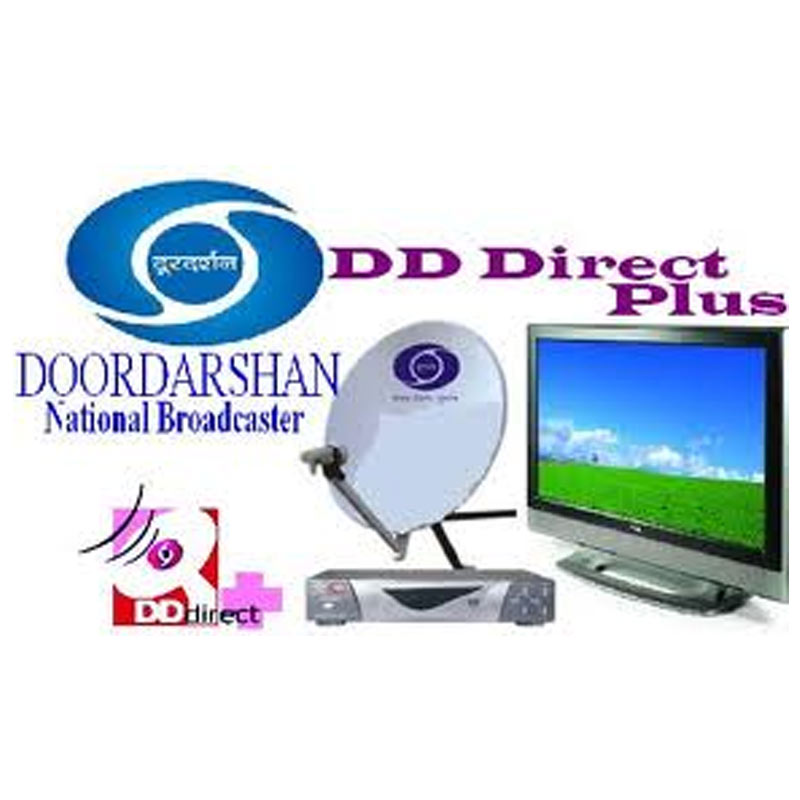
  • DD Direct Plus sets to be installed free of cost in low terrestrial density

    DD Direct Plus sets to be installed free of cost in low terrestrial density

    MUMBAI: Targeting the areas wherein the terrestrial coverage is negligible, the free-to-air direct-to-home (DTH) service of Doordarshan — DD Direct Plus will soon be available to states including — Chattisgarh, Gujarat, Himachal Pradesh, Karnataka, Madhya Pradesh, North-East Region, Rajasthan and Uttaranchal.

    The Information & Broadcasting and parliamentary affairs minister P R Das Munshi has announced that 10,000 DTH receive systems including the dish and the set-to-box (STB) will be distributed free-of-cost.

    In an official statement issued, the free distribution of DTH sets is targeted to the states where the terrestrial coverage is lower than national coverage.

    This was done through public institutions viz. Anganwadis, Schools, Public Health Centres, Panchayats, Youth Clubs, Cooperative Societies, etc. The free distribution of DTH sets is targeted to the States where the terrestrial coverage is lower than national coverage.

    So far, 8,465 DTH receive units have been installed in the uncovered villages of above States and North-East Region.

    The DD Direct Plus platform includes the Doordarshan channels, private TV channels and audio channels of All India Radio. Prasar Bharati will provide 100 television channels and 50 radio channels by the end of this year (2006). The service is available on the high power transponders of NSS-6 satellite.

  • DD calls for producers to bid

    DD calls for producers to bid

    It’s show time folks. Doordarshan has called for bids from television producers for three time slots on DD- Metro (DD-2): 7:55 am, 5:25 pm, and 6:55 pm. The time slots are of five minutes duration each and involve the creation of film trailer based shows. Producers can pick up the application forms between 6 and 13 March (11 am to 1 pm) from the respective Metro stations.

    Bids are to be submitted between 13 and 15 March between 11 am and 2 pm along with an earnest money deposit of Rs 50,000 and a non-refundable processing fee of Rs 5,000. The bids will be opened on 15 March at 3:30 pm. DD officials have fixed the minimum guarantee at Rs 50,000 per weekday.

  • Bangalore DD Kendra expects revenues to cross Rs 150 million

    Bangalore DD Kendra expects revenues to cross Rs 150 million

    BANGALORE: DD Kendra Bangalore has recorded revenues of Rs 135.4 million during the 10-month period March 2005 to January 2006.

    These are figures for the revenues generated by the DD Karnataka marketing team alone and do not include the revenues generated on a national level at Delhi for the ads beamed by the Bangalore Kendra during programs supplied by Delhi.

    Speaking to indiantelevision.com, DD officials claimed that the revenue figure for the ten-month period was very much in line with the last fiscal’s revenues of approximately Rs 150 million. The officials expressed confidence that this could be surpassed by a small percentage when the current fiscal comes to an end.

    One of the major contributors to DD Bangalore’s revenue stream is the state lottery run by the Directorate of Small Savings and Lotteries of Karnataka. The telecast of the Karnataka Lottery results fetches the regional pubcaster Rs 7.8 million annually.

    DD Bangalore’s annual expenditure is estimated to be around Rs 100 million, which includes salaries and wages and costs for running the Kendra. This makes DD Bangalore one of the few Kendras that actually have a surplus of income (probably the highest across all Kendra’s in India) over expenditure, the officials assert.

    In 2005, DD Bangalore’s achievements were recognised by the industry with the Indian Telly Awards for the Best DD Kendra.