Category: Terrestrial

  • Broadcasting woes

    Broadcasting woes

    If we are to transform India, a realist or ‘Patelist’ engagement with the rest of the world is what we must implement; engaging the world from strength while recognising reality for what it is, foreswearing hubris and belligerence”, remarked Shiv Shankar Menon during the Patel Memorial Lecture of All India Radio last year. India in effect continues with Sardar Patel appreciation against taking the Kashmir issue to the United Nations and has been successful in averting international manipulation in our internal affairs.  In the recent past, reports appeared in sections of the press that our neighbours are active in rolling controversies and possible resentment for rehabilitating surrendered militants via Nepal. Yasin Bhatkal’s revelation of Nepal remaining the favoured nation for transiting members of the Indian Mujahideen further fuelled diplomatic irritation.


    The most disturbing vilification campaign alleging torture of Nepalese people whipping up local sentiments and a number of FM stations with content paid up by vested interests and mixing attractive Bollywood stuff in Nepal are psy weapons that merit the nation’s intervention. Gorkhas of Nepalese origin have shared triumphs and sorrows battling in all theatres of operations as part of the glorious Indian Army. As of today, there seems to be no coordinated trans-border broadcast policy to air either views or the stand point of the nation. India’s National Public Broadcaster, Prasar Bharati, continues to be sub-optimally utilised.


    After Independence and up to the eighties, the External Services Division of AIR functioned in close coordination with MEA through External Publicity Division with greater interaction between the two keeping in view foreign policy requirements, dynamics of foreign relations, and priorities set from time to time.


    Due to its colonial links with England, AIR entered the domain of external broadcast in 1939 purely as a tool for propaganda for the allies during World War II with service in Pushto language in order to counter German Radio blitzkrieg and complement the efforts of the BBC in this region.  When the theatre of operation expanded to South East Asia and East Asia by 1945, External Services Division had a total of 22 language services.  The importance waned once the War ended, plummeting from 22 to just 10 languages. The capacity of ESD remains to cover 100 countries with coverage of 75% of world population in 16 foreign and 11 Indian languages with a targeted audience of 9 neighbouring countries comfortably.


    But gone are the days of diplomatic bags overflowing with letters addressed by radio audiences from all over the world to External Service Division of AIR. The Urdu Service widely popular among Pakistan and at home is in a state of disarray and listeners’ feedback has become a trickle. Chinese domination in the visual and audio medium is of concern since a substantial Arunachalee tribal population living in East Syong, Tirap, Changlong, Ajnow, Lohit, Upper and Lower Dibang Valleys could access Chinese TV channels of  High Power Transmissions from Chinese territory whereas our own Doordarshan, Itanagar, covers a few kilometres through Low Power Terrestrial Transmission. However there being no impediment to satellite TV through DTH, the case for Set Top Boxes for DD free Dish is indispensable if Prasar Bharati has to prudently cover the North East. It is our national duty to reach inaccessible terrain inhabited by tribal Indians in and around Tawang who witnessed chaotic battle scenes during the 1962 operation and upper reaches near Leh, Ladakh.


    In the changing scenario of popularity of FM channels compared to Medium Wave and Short Wave transmissions, the country needs to shift its primary broadcast to FM radio with relevant content retaining its own and traditionally loyal trans-border audience. There are more than 150 independent Radio Stations operating in Nepal. If India has to retain audience base in Nepal, augmentation of transmission power and number of FM stations is necessary as of yesterday.  As far as Bhutan, English added on to Dzonka could cover the whole population with increased presence of FM.  In times of crisis, it is AIR, BBC or Indian satellite channels which are tuned into in Pakistan for credible news; Maj Gen Mohd Azam Asif of PAK Army observed once, substantiating the relevance of AIR.


    Coverage of regional content, news and current events for external audience could only succeed with local dialect and flavour. There is all round apathy about external radio broadcast of ESD among all stakeholders including MEA, resulting in progressive decline of our broadcast as an instrument of diplomacy relegated to the background, adversely impacting its performance, notwithstanding the historic role played.  It is unfortunate and ironic that our external broadcast is touching the nadir at a time worldwide efforts are on to re-invent the importance of external broadcast expanding and consolidating their position, adopting the newest of technologies including new media to meet the changing realities of international politics.


    Complete dismantling or discontinuation of external broadcast may not be in the larger national interest and may turn out to be throwing the baby with the bucket of water. Credible assessment of external audience indicates decline in short wave and medium wave, suffers clarity due to concrete congestion and sky scrapers in Urban India and the neighbourhood. Simulcasting in FM, web streaming, proliferation in internet and availability in hand held devices would rejuvenate AIR. Unless ESD functions with regular interaction from stakeholders like MEA, MoD, MHA, meeting the needs of foreign policy and priorities, the vast infrastructural wealth of the nation in the hands of Prasar Bharati will continue to be wasted, risking its painful death. The nation has a duty and great opportunity to revisit and formulate an integrated policy on our external broadcast which is in the Government domain.


    (These are purely personal views of the writer and do not represent the official views of Prasar Bharati and indiantelevision.com does not subscribe to these views)
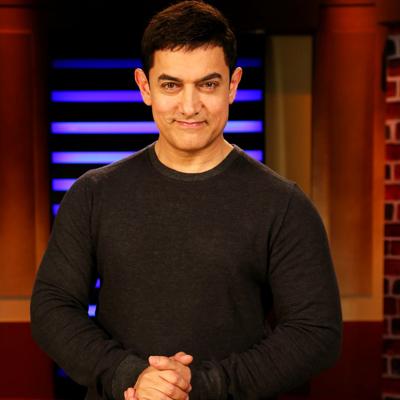
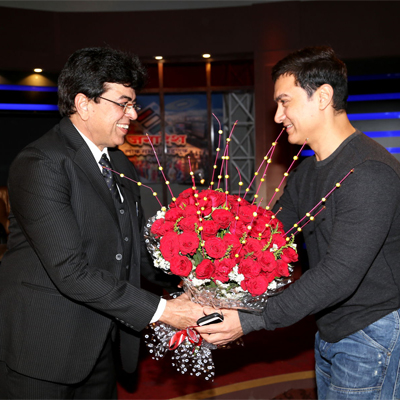
  • Aamir Khan – The National Icon of ECI for 2014 General Elections

    Aamir Khan – The National Icon of ECI for 2014 General Elections

    MUMBAI: The Election Commission of India has nominated Actor, Aamir Khan as the National Icon of Election Commission of India in connection with the upcoming National Elections in 2014.


    The National Broadcaster’s of India – Doordarshan is entrusted with the job of making this campaign and in this regard a shoot was organized to record Actor, Aamir Khan’s message at Doordarshan’s Mumbai Kendra on 27th April 2014, under the guidance of Shri Mukesh Sharma – Addl. Director General Programming, West Zone.


    This campaign makes voters aware to realize value of their invaluable vote for strengthening democracy.It highlights, The Right to vote and the exercise of this franchise by eligible citizens which is the pulse of every democracy.


    It is focused on bringing a positive change in our country by voting  the right person and makes an appeal not to mortgage your interest nor to sell your vote.It potrays a sense of pride to be a citizen of  India, the largest democracy of the world,which holds this right as the most precious attribute of the Indian Parliamentary democracy.

  • Doordarshan Sahyadri Sahyog Sindhu awards 2014

    Doordarshan Sahyadri Sahyog Sindhu awards 2014

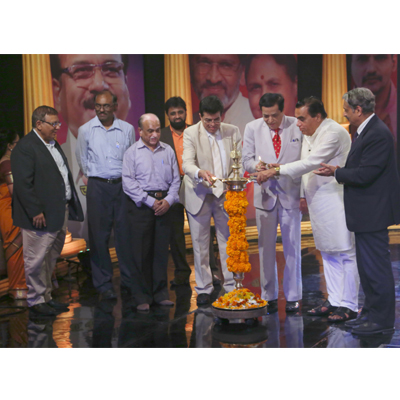
    MUMBAI: The National Broadcaster, Doordarshan in association with the Sahyog Foundation organized the SAHYADRI SAHYOG SINDHU AWARDS -2014 at Doordarshan Mumbai Kandra to felicitate the eminent personalities from Sindhi Community who had done extraordinary work in their respective fields.


    Today, commendably, Sindhis are truly a world community, with a Sindhi present in over 200 countries all over the globe. Earlier Sindhis were recognized as successful businessmen only, but Sindhis of today have excelled in all walks of life – industry, medicine, cinema, learning and letters, technology, computers, journalism, finance and banking – in short in every conceivable vocation.


    Sahyog Foundation is a Socio-Cultural-Educational Organization formed in 1988 which have played an important role in uniting the “SINDHI COMMUNITY” present all over the globe. It also strives for the uplift of downtrodden apart from launching a tirade against social evils such as dowry menace, drug abuse etc. Under the stewardship of Chairman Ram Jawhrani, Sahyog Foundation focused on helping widows with sewing machines for self occupation and supporting the sick and ailing persons with doles, medicines and free treatment, besides encouraging art and culture through stage shows and programmes.


    Doordarshan’s – Western Division Convenor ADG, Mukesh Sharma presided over the event and Film Star Jitendra graced the occasion as the Chief Guest for this evening. The icing on the cake was the presence of  Actor, Amir Khan to felicitate Smt. Shobha Kapoor in this prestigious award event.


    The eminent personalities from Sindhi Community to receive “Sahyadri Sahyog Sindhu Awards” were:


    ?  Dr. Ram Buxani – Excellent Contribution towards Sindhyat

    ?  Shri Danish Nawaz – Promotion of Sindhi Publication

    ?  Shri Ramesh Taurani – Services rendered to Film Production & Music

    ?  Shri Aftab Shivdasani- Services rendered as a Film Artist

    ?  Smt. Suman R. Tulsiani- Services rendered as a Philanthropist

    ?  Shri J. C. Prakash – Excellent Contribution  in Social Services

    ?  Dr. Kanayala Lekhwani – Services rendered to Sindhi Literature

    ?  Ms. Manju Nichani – Services rendered in the field of Education

    ?  Shri Lachmandas Chellaram – Services rendered to Spiritualism

    ?  Smt. Shobha Kapoor – Services rendered to T.V. & Film Industry

    ?  Shri Prem Matlani – Services rendered in the field of Research


    The event enlightened in the presence of dignitaries like Actress Jacqueline Fernandes, Dr. Jagannathrao Hegde, Shri Anil Sharma, Dr. Rajan M. Welukar,  Director Anil Sharma, Shri Kiran Shantaram, Smt. Kiran Juneja, Shri Pahlaj Nahlani, Shri Jayantilal Gada & Ms. Sanjeevani Bhelande.

  • “Sahyadri Sanjeevani – feliciating rural medicos”

    “Sahyadri Sanjeevani – feliciating rural medicos”

    MUMBAI: Doordarshan, television network of Prasar Bharati, Broadcasting Corporation of India, launched World’s biggest health campaign ‘Swasth Bharat‘ (Healthy India) supported by the Union Government in 2012.  The audiences welcomed the five-days-a-week telecast of Swasth Bharat program from 30 TV stations which continue to educate, explore and lead a healthy – bright INDIA till today.


     “SAHYADRI SANJEEVANI SANMAN SOHALA” is the brainchild of Shri Mukesh Sharma, Additional DG of DD Sahyadri to felicitate and acknowledge the outstanding work done by the medicos in the rural areas and to the under privileged. DD Sahyadri honors these “COMMUNITY LEADERS” through the visual medium, applauds their dedication and untiring service to the have-nots. Such initiative will encourage/motivate the young medicos to go the rural areas and work for the masses in the villages.


    The Ten Doctors felicited during the SAHYADRI SANJEEVANI SANMAN SOHALA:


    • Dr.Prakash Amte & Dr. Mandakini Amte were honored with the Magsasay Award for “Commnity Leadership” towards their philanthropic work in the form of Lok Biradari Prakalp among the Madia Gonds in Gadchiroli district of Maharashtra. Dr. P. Amte has written Marathi books like “Prakashvata” & “Negal” and believes that his family is passionately engaged in social work, considering that they have been doing it for three generations now.              


    • Dr. Vikas Mahatme & Dr. Sunita Mahatme in 1987 established “Mahatme Eye Bank & Eye Welfare Charitable Trust and is government recognized eye bank with maximum corneal retrieval & usage in Nagpur. What began as his one room, one man operation has now evolved into one of the most extensive charitable ophthalmic hospitals in the country.


    • Dr. Uday Bodhankar a renowned senior pediatrician has been elected as the President of COMHAD(Commonwealth Association for Health & Disability) which links professionals across the commonwealth and advocated prevention of brain damage due to birth asphyxia, childhood blindness, epilepsy. It also runs a joint programme with WHO on early childhood psycho-social development.


    • Dr. Narendra Vaidya developed the first ever Emergency Medical Service in India at Lokmanya Hospital (Pune). He initiated Golden Hour project where the patient met with an accident will be attended in an hour for reducing mortality which saved around 40,000 lives until now. “Rashtriya Ratna” award winner for his contribution towards rescue of earthquake victims at Anjar, Gujrat 2001 and the first orthopedic surgeon to establish a comprehensive spine care centre in PCMC (Pune) area.


    • Dr. Smita & Dr. Ravindr Kolhe (MD) devoted their lives for providing health services to tribal’s especially pregnant women and children’s living in remote. They were also in forefront to create awareness about women’s health, child education, developing food chains, power generation and minimum wages at Melghat region of Vdharbha & Buiragarh in Dharni Taluka, Maharashtra.


    • Dr. Abhay Bang & Dr. Rani Bang have revolutionized healthcare for the poorest and have overseen a programme that has substantially reduced infant mortality rates. They founded SEARCH – a nonprofit organization in Gadchiroli district of Maharashtra which is involved in rural health service/research and have established a tribal friendly hospital with experienced health workers.


    • Dr. Suresh V. Adkar one of the pioneers in creating “ASTITVA” an organization dedicated to the development of disabled. The first Govt. recognized “Sheltered Workshop” was his brainchild which aims at enhancing vocational training, theoretically & practically to the disabled of particular profession.The students, after training, can engage themselves in activities like making envelopes, card board boxes, Book binding, stitching, knitting etc. In group activities, they can make chalks, candles, incense sticks etc. 


    • Dr Rekha Davar, head of obstetrics – gynecology at JJ Hospital and working tremendously for controlling the incidences of babies born with HIV – positivity she is the head of PPTCT which aims to prevent the prenatal transmission of HIV from an HIV infected mother to her newborn.


    • In the Kokan region of Maharashtra lies Mahad, this obscure place is home to Dr. Himmatrao S. Bawaskar, India’s internationally acclaimed physician and a well known authority for his research and treatment for Scorpion poisoning to the patients where healthcare was once non-existent.


    • Dr.Ulhas Wagh has been providing free clinical services by medical camps to the poor and needy people particularly villagers, adivasis who neglect oral health care and can’t afford the dental treatment since last 34 years. He also worked tremendously towards the reduction of HIV/AIDS prevalence among Female sex workers through effective intervention at Indira Nagar, Bhiwandi sex-workers brothel based area since last 15 years.


    SPECIAL MENTION & FELICIATION: In the year 2013 -14 “Shree Siddhivinayak Ganapati Temple Trust” contributed eight crore rupees financial aid for heath related services and towards the upliftment of the underprivileged in 32 districts of Maharashtra. Also a grant of Rs.25000/- to the needy patients suffering from Kidney, Heart and Brain related ailment.


    “SAHYADRI SANJEEVANI SANMAN SOHALA” will telecast on DD Sahyadri Channel on Sunday, 6th April 2014 from 4:00 p.m. onwards and repeat on same day at 10:00p.m.

  • Govt approves Rs 3,500 cr broadcasting infrastructure development plan

    Govt approves Rs 3,500 cr broadcasting infrastructure development plan

    NEW DELHI: Doordarshan will expand the capacity of its free direct-to-home television service DD Direct Plus to 250 channels by 2017.


    The public broadcaster is already working on a plan to increase the number of channels it offers on DD Direct Plus to 97 from 59 channels currently.


    The Cabinet Committee on Economic Affairs has approved a Rs 3,500 crore proposal from the Information and Broadcasting Ministry on the 12th five year plan for All India Radio (AIR) and Doordarshan – Broadcasting Infrastructure and Network Development.
     

    The scheme covers continuing schemes of the 11th Plan and new schemes of the 12th Plan that ends in March 2017. The continuing schemes of AIR and Doordarshan are at different stages of implementation and are scheduled to be completed in phases by 2015-16 by Doordarshan and by 2016-17 by AIR.


    Under the new schemes, eight television terrestrial transmitters are also proposed along the Indo-Nepal border and these are targeted to cover 65 per cent of the population of Nepal.

    This will ensure sustainability of DTH and increase revenue of Prasar Bharati. During the 11th Plan, 40 digital terrestrial transmitters were sanctioned and these are under implementation.


    In the 12th Plan, 23 additional DTTs are proposed to be installed. Provisions have also been made for modernisation of existing equipment /facilities in studios and satellite uplinks which are essential to sustain ongoing activities and also for high definition television (HD TV) studio facilities at Chennai and Kolkata.


    AIR FM expansion at 118 locations besides eight FM broadcasting set ups along the Indo-Nepal border, replacement of old FM transmitters at 77 locations and replace six MW transmitters with FM Transmitters, digitalisation of 29 studios and creation of archival facility at Guwahati are envisaged. Strengthening of training facilities, R&D and introduction of e-Governance with limited application of enterprise resource planning (ERP) are also envisaged in this scheme.

  • DD launches woman-centric drama series

    DD launches woman-centric drama series

    Mumbai: Empowerment of women and woes related to them have been a topic of debate and concern for years now.

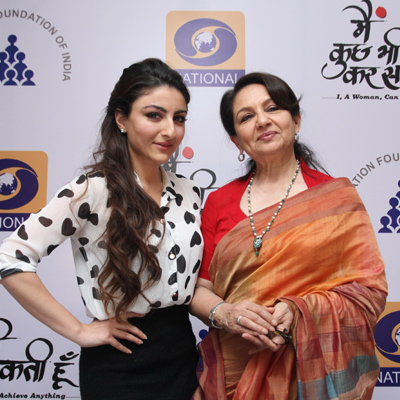
    Many attempts are made to showcase the strong women in our society to bring about a change. Following the trend, Doordarshan and All India Radio has launched a trans-media drama series, Main Kuch Bhi Kar Sakti Hoon (MKBKSH). The series seek to promote strong women characters was launched by the Population Foundation of India (PFI).

    Marking the spirit of International Woman’s Day, the series premieres on 8 March on Doordarshan and will run every Saturday and Sunday at 7:00 pm. In an effort to challenge deep rooted social issues like child marriage, early pregnancies and sex selection in our society, mother-daughter duo Sharmila Tagore and Soha Ali Khan have came together to support the serial and shared their views at the launch.

    “Main Kuch Bhi Kar Sakti Hoon has the potential of being a catalyst for change–the amount of research that has gone in the preparation of this initiative is extraordinary! Real life stories have informed and guided Feroz and PFI in developing the scripts – they are the testimony that change is happening, it just needs to be amplified,” said Soha Ali Khan.

    ”The reality is that women have moved beyond stereotypical images and are increasingly seen in workplaces. We see them as police officers, politicians, scientists and entrepreneurs. Main Kuch Bhi Kar Sakti Hoon has in its lead role an inspiring young woman, from a small town. A doctor by profession, she represents the aspirations of many young women today. She is bold, stands up for what she believes is right, takes her decisions,” Sharmila Tagore added.

    PFI hopes that MKBKSH will contribute to behaviour change for empowerment of women, delayed age at marriage, delayed age at first pregnancy and spacing between births, and promote gender equality and improved health seeking behaviours. The serial will also be disseminated through other media channels, including the Internet, mobile space, and radio to maximize reach.

    The serial revolves around the inspiring journey of Dr. Sneha, representing the young Indian woman of today, who thrives on challenges. The series has been produced and directed by Feroz Abbas Khan, an eminent theatre and film director and the creative force behind Main Kuch Bhi Kar Sakti Hoon. It is a venture close to his heart where his aesthetic sensibilities and deep commitment to social causes come together.

    Commenting on his experience, Feroz Abbas Khan said, “I feel delighted that PFI has taken this phenomenal step to bring an entertaining drama series on Doordarshan, which will reach out to millions of viewers with very important messages. In today’s context of a renewed commitment to women’s issues this serial will amplify ordinary women’s voices and stories. Immense research and effort has gone into the making of this serial, and I am confident that it will be a force of change.”

    Doordarshan, has consistently supported socially relevant soap operas and has lent its full support to the series.

    Speaking on the occasion Doordarshan director general Tripurari Sharan said, “This series will be highly entertaining with a captivating storyline that will touch the mind and hearts of the audeinces. Not only will the serial entertain the audiences but it will make people think and question social norms and behaviors.”

    PFI executive director Poonam Muttreja said, “Changing social norms and behaviour is certainly not an easy task. We believe that the media plays a critical role to reach audiences and challenge existing attitudes and practices. This game changing serial will lay the ground work for a better future for Indian women.”

  • 2014-15 Interim Budget: Prasar Bharati gets enhanced grants-in-aid

    2014-15 Interim Budget: Prasar Bharati gets enhanced grants-in-aid

    NEW DELHI: The grants-in-aid for Prasar Bharati has been raised marginally to Rs 2,331.58 crore for 2014-15 from the revised estimates of Rs 2,089.56 crore in 2013-14. There is no separate investment by the government in the pubcaster for the second year in a row.


    In the interim budget (vote-on-account) for 2014-15 presented in Parliament in view of general elections later this year, the government has made a provision of Rs 200 crore from Internal and Extra-budgetary resources for Prasar Bharati and the total plan outlay for broadcasting of Rs 641.58 crore.


    The explanatory memorandum says the grants-in-aid are for meeting the salary and salary-related expenditure of Prasar Bharati. Prasar Bharati sources told indiantelevision.com this had been done to meet the extra expenditure on salaries which has fallen on the shoulders of the Government since all Prasar Bharati employees who were in employment as on 5 October 2007 have been given deemed deputation status.


    The allocation under ‘Secretariat – Social services’ covering centenary of cinema celebrations and digitisation of cable television among other things has gone up to Rs 129.55 crore from revised estimates of Rs 79.72 crore in the current year. Other subjects under this head include the National Film Heritage Mission, anti-piracy measures, promotion of Indian cinema overseas, production of films and documentaries, and setting up a centre of excellence for animation, gaming and visual effects. The explanatory note says Secretariat – Social services also covers expenses on development of community radio, and development support to the north-east as well as Jammu and Kashmir and ‘other identified areas’.


    The total budget of the Information and Broadcasting Ministry has been raised to Rs 3,216 crore for 2014-15 from the revised budget of Rs 2,855.03 crore (against the initial allocation of Rs 3035.65 crore) for the year 2013-14.


    The allocation under the Film Sector has, unlike last year, been increased to Rs 135.81 crore for 2014-15. The budget for the film sector for 2013-14 was Rs 117.17 crore while the revised estimates had put this figure at Rs 116.42 crore. There is an additional outlay of Rs 7.18 crore towards certification of cinematographic films.


    For the fifth year in a row, the government has not announced any investment in the National Film Development Corporation.


    The allocation for Press Information Services which includes grants to the Press Council of India has been marginally increased to Rs 65.44 crore from last year’s revised estimates of Rs 57.56 crore to meet the expenses for the Press Information Bureau, the Press Council of India, and to the Press Trust of India for running the non-aligned countries news pool.


    The allocation to the Electronic Media Monitoring Centre has been increased to Rs 13.75 crore for 2014-15 from the revised estimates of Rs 7.17 crore in 2013-14. The EMMC was set up for monitoring television and radio channels for violation of programme and advertising codes.


    The allocation for advertising and visual publicity has been lowered to Rs 227.37 crore against the revised estimates of Rs 241.6 crore and budget allocation of Rs 239.06 crore for 2013-14, covering expenditure incurred by the Directorate of Advertising and Visual Publicity for publicity campaigns through advertising and other printed materials, as well as through radio, television, exhibitions and other outdoor campaigns.


    Interestingly after several years, the allocation for research and training in mass communication has been doubled to Rs 33.54 crore as against the revised estimates of 15.91 crore and the budgetary allocation of Rs 17.85 crore for 2013-14. This covers the Indian Institute of Mass Communication and the Research and Reference Division of the I and B Ministry which collects and collates basic information on subjects of media interest for providing assistance to the Ministry and to its media units, Indian missions overseas, and newspapers and news agencies.


    There is a major increase in the lump sum provision for projects/schemes for development of North-eastern areas including Sikkim to Rs 90.5 crore for 2014-15. The budgetary allocation had been the same in the 2013-14 but had come down in the revised estimates to Rs 74 crore.

  • Psychological series ‘Mind Matters’ to commence on DD Bharati in 78 episodes

    Psychological series ‘Mind Matters’ to commence on DD Bharati in 78 episodes

    NEW DELHI: Doordarshan’s cultural channel DD Bharati has commenced the telecast of Mann ki Matters (Mind Matters), a seventy-eight episode series on mental health awareness and stigma reduction which earlier had successful runs on both DD National as well as DD India.


    The series in Hindi was made by Mind Vision Enterprises, developed by Dr Avdesh Sharma (consultant psychiatrist) and Dr Sujatha Sharma (consultant clinical psychologist) for DD National, reaching about 95 per cent television households in India. The series was beamed to about 140 countries all over the world. 


    The series consists of episodes of in-depth discussion of a particular issue with experts in the field and an in house expert, computer graphics for take home points, case stories and interviews with international and national experts. The topics are relating to Mental Health and Psychosocial Issues laying emphasis on self-help, early intervention, social support, holistic management and relapse prevention. The series involves inputs of more than 100 mental and social health experts.


    The series is slated to start from 17 February everyday at 12 midnight, 8 am and 4 pm. Each day would have a new episode. Various subjects will be covered including solutions of stress relating to society, children at home and school, adolescence with parents, adolescence with peers and so on; managing negative emotions; abnormal behaviours and mental illness; myths of mental illness; stigma of psychological issues like anxiety, fears and phobias (Social phobias), depression and suicide, psychosomatic illnesses; psychology of pain; sleep and dreams; tobacco and smoking; alcohol and drugs; and addictions of internet/gaming/chatting/social networking.

  • Pitroda Committee: Prasar Bharati should be free of govt hold

    Pitroda Committee: Prasar Bharati should be free of govt hold

    NEW DELHI:  A high-level committee under veteran technocrat Sam Pitroda set up to review the working of Prasar Bharati has stressed the need for constituting a Parliamentary Committee, as originally envisaged in the Prasar Bharati Act 1990 to ensure that the pubcaster discharges its duties in accordance with the provisions of the Act and Government defined duties.


    In the report submitted today to the Information and Broadcasting (I&B) Minister Manish Tewari, it has recommended reorganisation of the pubcaster Board to make it a professionally managed body and make it more effective in guiding the organisation.


    Noting that Prasar Bharati’s vision must be to become a genuine ‘public broadcaster’ as against a ‘government broadcaster’, Pitroda told a press meet after submission of the report that he would be meeting both Tewari and I&B Secretary Bimal Julka next week to finalise those steps in the report which can be put into effect immediately.


    The report said there is need to bring in complete transfer of ownership and management of assets and Human Resource to Prasar Bharati ‘to make the organisation administratively and financially autonomous of Government’.


    A Regulatory Body has to be set up to ensure public accountability of Prasar Bharati with respect to all content broadcast on its television and radio networks. The Regulatory Body should be a sub-committee of the Prasar Bharati Board.


    Interestingly, the Committee has suggested setting up of Prasar Bharati Connect (PBC) as the third arm of the public service broadcaster, independent of Doordarshan and All India Radio, to expand the social media. PBC should be mandated to manage the various Social Media initiatives of all the wings of Prasar Bharati. It also wants a Social Media Strategy of Prasar Bharati.


    The Committee was set up on 28 January last year and had decided to put in place eleven working groups on different issues and has come out with a report on eight main areas: governance and organisation, funding, human resource, content, technology, archiving, social media and global outreach.


    It has said that in addition to the public broadcasting function, there is a distinct requirement for the State to broadcast messages and accomplishments of public interest which can be met by using existing Public and Private broadcaster infrastructure.


    The Committee suggests amending the 1990 Act where necessary so as to impart genuine and effective autonomy to the organisation.


    Apart from Pitroda, who is Advisor to the Prime Minister of India on Public Information Infrastructure & Innovation and Chairman of the National Innovation Council, the other members of the committee included additional secretary and nominated Prasar Bharati Board member J S Mathur, National Innovation Council member Shekhar Kapur, former I&B Secretary Asha Swarup, Vikram Kaushik who is a business strategist and brand advisor and part-time member on the Prasar Bharati Board; Prof M P Gupta from the Indian Institute of Technology in Delhi, Dr B K Gairola who is Mission Director (e-Governance), and Prasar Bharati CEO Jawhar Sircar who was the Convenor.


    Pitroda said that about 110 persons gave time to the working groups on various issues. There are 26 main recommendations in the two–volume report.


    Referring to Funding, the report says there is need to undertake a professional study to develop a funding mechanism for Prasar Bharati that addresses the need for autonomy with financial accountability. Such a funding model should include government funding, internal resource mobilisation and private investment. There is need to monetise all available archival and other assets of Prasar Bharati as soon as possible to enhance funding, and augment funding of social messaging through cross-subsidising such content through entertainment-led programming and by co-opting industry through their CSR budgets.


    However, Pitroda said in reply to a question that the time of licensing TV or radio sets as was being done around five decades earlier could not be revived as it was an old concept.


    Referring to Human Resource, he said the pubcaster should be enabled with the power to frame rules and regulations for its employees without seeking prior approval of the Government.


    When it was pointed out that a similar announcement has been made several times since 1997 when the Act was operationalised, Sircar said the pubcaster cannot frame its own rules.


    There was need to undertake a comprehensive manpower audit and HR planning exercise to map workforce requirements for the future in line with Prasar Bharati’s mandate.


    It was necessary to supplement manpower audit with a re-deployment plan that addresses training, re-skilling and promotion of existing manpower through an institutionalised modern appraisal system.


    The committee said there was need to create an effective recruitment system to attract the best talent and allow the hiring of skilled professionals, and encourage and initiate steps for absorption of Government employees as fulltime employees of Prasar Bharati, after an appropriate screening process. The ones who remain in Government may be considered for absorption in other departments within the government as is done in other cases.


    Referring to content, he stressed the need to scale up allocation of funds for content generation to 50 per cent of the total expenditure within a period of 5 to 7 years. The Committee wants a review of all existing channels and content of DD and AIR, based on their relevance, output and viability and phase out those where there is sub-optimal utilisation of resources.


    There should be encouragement of outsourcing of content creation to external producers to attract high quality and diverse programming and creation of distinct brand identities for different TV and Radio channels, and define the content strategy for each.


    Referring to technology, the Committee wants expansion of the satellite and digital cable TV operations to meet the obligation of public service broadcasting. There is need to digitalise the present AM radio system to a new digital radio transmission after due evaluation subject to cost and availability of DRM receivers. In the transition period, FM may be expanded according to demand.


    It stressed the need to selectively digitalise terrestrial TV operations based on commercial viability.


    Any further expansion of and investment in digital terrestrial telecast should be suitably evaluated after field reviews and assessment of developments in the telecom sector, it said.


    Interestingly, the Committee wanted involvement of the private sector to expand the broadcasting market with a view to effectively utilise the infrastructure being built by Prasar Bharati to enable faster growth in the receiver ecosystem.


    On archives, it recommended state-of-the-art digital archives for consolidating and preserving DD and AIR’s content: both existing as well as that being currently generated. There is expansion of scope to make it the National Audio-Visual Archives so as to consolidate and support all other government initiatives.


    The Committee wants the creation of dedicated, multi-platform channels for dissemination of Prasar Bharati’s archival products: for both open access and monetisation.


    Referring to global outreach, it wanted the creation of a world-class broadcasting service benchmarked with the best in the world using next-generation opportunities, technologies, business models and strategies.


    When pointed out that DD India was already working as an international channel, Pitroda said the platform should be designed for new media first and then extended to conventional TV.


    There was need to outline an effective content strategy for Prasar Bharati’s global platforms (TV and Radio) focused on projecting the national view rather than the narrow official viewpoint.


    In a covering note to the Minister, the Committee said: “Today, we have a unique window of opportunity to transform our broadcasting service (both All India Radio and Doordarshan) into a cutting-edge platform capable of delivering its commitment to public service in the best possible manner, while keeping pace with the competitive needs of the 21st Century.  However, as our report suggests, this transformation will require a bold, clear vision, a focus on generational change, and new models and approaches in every aspect of the public service broadcaster’s activities.

  • DD Sahyadri plans special programmes for R-Day

    DD Sahyadri plans special programmes for R-Day

    MUMBAI: On the occasion of 65th year of Republic Day DD Sahyadri is presenting special programs saluting the Indian constitution and the democracy which we all enjoy as the citizen of India.

    The day 26th January, 2014 will begin with the telecast of Republic Day Ceremony live from The India Gate at 9.00 am followed by a program “Shiladaar Rashtrya Nirmiteche” – Contributors in the Nation Building at 11:30 am in which Doordarshan applauded dignitaries from various fields who have played an important role in their own field and contributed their part in the nation building process. This galaxy of stars consisted Padma Awardees, Broadcasters, Filmmakers, Doctors, Maharashtra Police Chief, Cultural & Film – Radio Celebs.

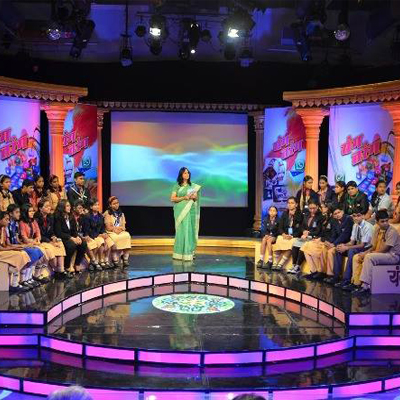
    The main attraction of the day is a brand new debate show on DD Sahyadri at 4:00 pm “YOUNG TARANG” conceptualized by Shri Mukesh Sharma – ADG, Mumbai Doordarshan Kendra which is an attempt to bring the young talent under one roof to enhance their knowledge and explore their world on the current issues through a healthy debate.