Category: Terrestrial

  • Amitabh Bachchan denies contract with DD to endorse Kisan TV

    Amitabh Bachchan denies contract with DD to endorse Kisan TV


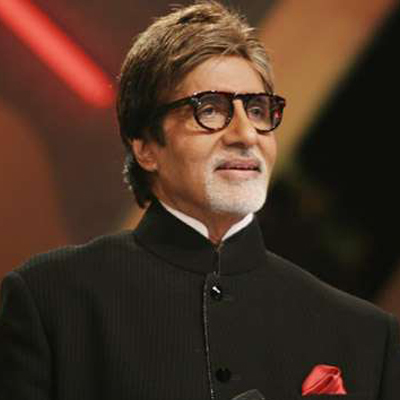
    MUMBAI: Actor Amitabh Bachchan has denied signing any contract with Doordarshan for endorsing its recently launched television channel Kisan TV.


    In an official statement, Bachchan denied a media report, which stated that he had taken a sum of Rs 6.1 crore to endorse the channel.


    “I wish to state that I have not entered into any contract with Doordarshan, on the endorsement of their channel DD Kisan, and neither have I received any money from them. I worked with the advertising agency Lowe Lintas on the campaign for DD Kisan, and have not entered into any contract with them either, nor have I received any money from Lintas, as being stated,” the statement read.


    “My ‘deliverables’ on this campaign have been executed by me many days ago.


    I work pro bono on various issues and DD Kisan Channel is one of them. If there is any evidence or proof to the contrary, please forward them to me for verification,” Bachchan’s statement further read.


    It may be recalled that Doordarshan’s Kisan TV was launched by Prime Minister Narendra Modi earlier this year on 26 May.


  • Prasar Bharati doesn’t need a Green or White Paper, it needs action & implementation

    Prasar Bharati doesn’t need a Green or White Paper, it needs action & implementation

    If you think you know what your purpose is, but can never seem to gain satisfaction from it, then it’s probably not the purpose you’re destined for.”


    Perhaps these lines by Canadian author who penned the fantasy series Morningstar aptly sums up the confused state of Prasar Bharati, which will be completing two decades in the next two years having been operationalised in 1997.


    For although the Government keeps claiming Prasar Bharati is a fully autonomous public service broadcaster, it interferes whenever it wants including in senior level appointments, which should have been left to the Prasar Bharati Board the moment the Corporation was operationalised in September 1997.  But irrespective of the political party ruling the nation, the state of the public broadcaster has not changed.


    In comparison, the British Broadcasting Corporation (BBC) – arguably having the most diverse, exciting and long history – keeps examining and re-examining its role as a public service broadcaster and independently takes its decisions about changes it wishes to make to reach out to more and more viewers in an era of increasing competition from private broadcasters.


    Once again, the BBC, which will be marking its centenary in 2022 has come out with a Green Paper that examines whether it is failing audiences, whether it should be advertisement-funded or take licence fee as it has been doing, and even whether it should be putting on air certain shows that have drawn the ire of the general public.


    Not merely that, but the 86-page document has been made public for the viewers to react as that would help it to decide its future course.


    In India, although there were some reports on autonomy of the public broadcasters Doordarshan and All India Radio even before the Prasar Bharati Act of 1990, there has been just one report after the pubcaster was operationalized: the Sam Pitroda Committee Report.


    Unfortunately, this report came out with nothing new that was not already being done by the broadcaster or had not been said by the Parliamentary Standing Committee in report after report, year after year. However, the real test is whether the Sam Pitroda Committee’s recommendations have been implemented. And there, sadly, the answer is in the negative. Because the biggest stumbling block to the pubcaster moving ahead is the government, which does not leave it free to move on its own and instead believes in the general principal of he who pays the piper plays the tune.


    If there has been any movement within Prasar Bharati – like the recent appointment of a number of fresh talent to fill the huge number of vacancies or putting some popular radio channels on FM – it has been due to the individual action of the different CEOs or the chairmen of the Board.  


    At a time when the country has around 800 operational television channels and around 245 private FM radio channels – with the auctions for a massive 900+ beginning soon – it is necessary for the pubcaster to wake up and smell the coffee.


    Doordarshan and All India Radio cannot be complacent by just telling themselves that they are the most seen and heard broadcasters in the country – particularly since their viewers are rural and they have failed to make much headway in urban areas, except for the FM radio channels.


    Even after the media keeps pointing out these failures, DD for example has still not been able to ensure that the private DTH players or even its own FreeDish carries the name of the programme and a basic summary – something which the DTH players do for all the major private broadcasters.


    In its report, the BBC has asked whether it is failing audiences and notes, “The BBC remains highly valued and well-used by the majority of people within the UK. But there are variations across different groups and there are particular challenges in reaching black, Asian and minority ethnic audiences and in meeting the needs of younger age groups who increasingly access content online, rather than via the traditional platforms of television and radio. There is also variation across the nations and regions of the UK. Charter Review will consider the extent to which the BBC is meeting the needs of these different segments of the domestic audience.”


    Surely, if the oldest broadcaster is worried by such concerns, the younger pubcasters like Prasar Bharati need to wake up. The Naxal or Marxist movements or separatist movements in some states, could be curbed if the pubcaster played its role well.


    BBC’s Green Paper admits that although there are funding options like advertisement-funded, licence fees, funding through general taxation, or a universal household levy, or mixed public funding and subscription fee, “no funding option is perfect and all involve trade-offs.” The Green Paper even discusses whether licence fee can be shared with private broadcasters.


    Unfortunately, this aspect has never been discussed in detail in India for the simple reason that the majority of Prasar Bharati employees want government funding as that ensures them pensions etc. In India, the concept of licence fee was given up sometime in the late sixties.


    While the Green Paper suggests some core values that the BBC must have, and undoubtedly the Prasar Bharati Act and Programme and Advertising Codes in India also swear by this, the core value that prevails is a rosy picture of the political party in power – at least as far as Doordarshan goes. 


    In fact, the Paper also discusses the issue of whether and how BBC should be regulated. 


    A close look at the Prasar Bharati Act would show that successive governments have deliberately failed to look at the clauses relating to a Broadcasting Council or a Committee of Parliament, as that would not suit the ruling party at the centre.


    Unlike BBC, India has far more complex problems in view of the number of competing private channels, the large number of languages, and the cultural values, which change almost every fifty kilometers.


    However, this does not mean that Prasar Bharati should sit comfortably, waiting for the Ministers or Secretaries to dole out instructions.


    What Prasar Bharati needs is a serious look at the Sam Pitroda Committee recommendations to find out why these recommendations were not implemented when they were under consideration much before the Committee came on the scene, and also to radically examine the relationship of Prasar Bharati with the Government or the ruling party. 


    Additionally, the rule of the Indian Administrative Service babus has to stop with professionals from the Indian Broadcasting (Programme) Service or – since this service never really took off – of the Indian Information Service till the IB(P)S officers can take over!  

  • BBC on the boil; some lessons for Prasar Bharati

    BBC on the boil; some lessons for Prasar Bharati

    BBC, the public broadcaster who benchmarks broadcasting audio and video signals all over the world, seems to be under siege. The British government has launched a Consultation paper to decide on the future of BBC’s Royal Charter.


    A number of questions and ideas have rolled from non existence of ‘Codified set of values’ to ‘not reaching out to youngsters’ the world over who shifted to on line accessing from fixed TV viewing. The Green paper points out that the last Royal Charter is one of the most tumultuous and numerous issues have arisen placing BBC’s people and practices to a great deal of scrutiny.


    “BBC is a public broadcasting organisation and it is right that it’s values should reflect the views of public. This charter review presents the opportunity to consult on what a potential set of values might be.”


    BBC’s several headlines making failures from “excessive severance payments” to a “cancelled report on Jimmy Savile” have called into questions of BBC’s governance itself. A model based hence on the Trust, which presently chaired by Ms Rona Fairhead with more powers to censure BBC as also withhold funds, a new stand alone regulatory organisation like Public Service Broadcasting Commission are being considered.


    There are some major lessons from the Green Paper for our own pubcaster Prasar Bharati (PB), which is many times bigger in infrastructure and manpower compared to the BBC but on whose model the Prasar Bharati Act 1990 was enacted. With some of the provisions yet not acted upon, the checks and balances originally intended by the framers of the Act remain inoperative till date making PB a polio child despite of its huge work force and wasteful expenditure on its obsolescent terrestrial network, which even rural India is not interested in.


    An important provision like public funding through license fees does not exist in India whereas huge public funding continues to pay to the tune of about Rs 1500 crore annually on pay and related expenses of the huge establishment, which the government conveniently handed over to a presumably autonomous PB in 1997. 


    The major plan expenditure is on maintaining thousands of ineffective terrestrial TV and less effective AM and SW radio towers. But not a single practical Board resolution of PB like leveraging dormant assets to fund content, power to hire and fire with flexible recruitment rules for creative professionals and an Independent Servicing Body have seen the light since successive governments continued to administer PB as an adjunct of government. As far as the word autonomy goes, it is an ‘oxymoron’ that does not exist in real life as one of our former MOS, I&B once remarked.


    BBC spends 97 per cent of its programme funding on children whereas PB spends only about eight per cent of its total expenditure on content itself across all its TV channels. The efforts on kids’ programme by PB is negligible. With its strong creative capabilities, BBC developed numerous programmes and sold off to the world commercially like Strictly Come Dancing, which fetched ?20 million giving no space to other commercial channels. 


    PB is yet to commercialise any programme worth its name and pose a challenge to commercial channels in the recent past for a variety of reasons. Despite huge infrastructure and equipment, there is no vibrant audit and monitoring mechanism on utility of its huge inactive studios and mobile camera units. The commercial codes and guidelines of course are self restrictive, inhibiting any novel initiative in PB. 


    It is time the government has a closer look at the Sam Pitroda Committee report, which has some workable suggestions. The government needs to review PB with objectivity as the functions to ‘educate, inform and entertain’ also needs lead funding for quality content. PB caters to the citizens of the nation and other commercial audio and TV channels to the consumers, but the pubcaster yet needs to net more eyeballs for passing public service messages and codified set of values enshrined in section 12 of the PB Act.


    As the Green Paper on BBC voices concern on reaching the youth that accesses anything on line at the time of their choosing, PB needs to revolutionise web streaming its content of all its audio and video channels as of yesterday. For TV, it is DTH and for radio, it is FM in India today, but the survival depends more on content, the king.


    The potential values British government looks forward to for the Royal Charter are, independence, impartiality, high quality, efficient value for money, transparency, distinctive status, diversity and representative of the views of public. All these imperatives are aptly applicable to our Public Broadcaster too. The best that could happen to PB is a strong professional and truly independent Board with an efficient monitoring mechanism and powers to intervene along with an executive set up with ‘real’ powers to handle this mammoth organisation with complete verticals viz. Technical, Marketing and International Relations in addition to Personnel, Finance and Accounts.


    Less Government and more efficient Governance by PB itself could set the pubcaster right.


    Note: The author of this article is former member (personnel) of the Prasar Bharati Board. 

    Disclaimer: The views expressed here are purely personal views of the author and Indiantelevision.com does not necessarily subscribe to them.

  • DD completes first phase of automating commercial ops

    DD completes first phase of automating commercial ops

    MUMBAI: Doordarshan (DD) has successfully implemented the first phase of automating its commercial operations in the first week of July this year.


    It may be recalled that last year DD decided to upgrade from its semi-integrated software that handled its different departments manually, to Broadcast Air Time Scheduling System (BATS) software provided by Media Nucleus, which integrates all the departments online.


    Indiantelevision.com was the first one to report that in June 2014, DD had officially launched the BATS traffic and billing software, which would connect its Delhi and Mumbai offices. The pubcaster was looking at completing the integration in three phases.


    Speaking about the completion of the first phase, Doordarshan deputy director general CK Jain says, “Phase one was to implement the DD channels and automating the entire commercial operations. The first phase has been completely implemented and by the end of this month we are going to start rolling out the second phase.”


    The aim of phase one was to complete the integration of all 67 DD kendras.


    The benefits from phase one are as follows:


    .  Less of manual intervention.


    .  Able to release bills on time. 


    .  Promptly reconcile receipts of dues and payments. 


    .  Enable agencies to make online payments.


    .  Generate reports in multiple ways.


    According to Jain, it has built a strong Management Information System (MIS), which helps generate reports in a convenient manner. It also helps the network to analyse its revenue pattern and Twitter forecast etc. 


    “We can generate revenues as per our convenience. For instance, we can generate how much revenue we have earned from a particular show or total revenue earned in a particular week or month. It has made our lives much easier,” asserts Jain.


    The network, which was supposed to implement its commercial operations in the month of February this year had to face problems leading to the delay of the launch. “We started working from June last year. There were some issues, which were unexpected and changes were required with the customisation of software with the agencies we work with. Whatever we wanted to improvise, we implemented in phase one, as we have different operations as compared to private broadcasters. That’s one of the reasons why it took us longer than usual to implement the first phase,” informs Jain.


    Moreover, DD had to undergo a lot of changes due to agencies’ requirements as well. “Every agency issues their Receiving Order (RO) in a different format, so we had to work with different agencies to ensure that their RO format was similar. They are also quiet excited about the changes,” he says


    He further adds that while the completion of phase one does not see any improvement in the network’s financials, but it does however improve the satisfaction level of the agencies with whom the network works. “Sometimes a few agencies were dissatisfied with the services that we offered, so this kind of operation will make the advertisers happy,” he says.


    Future of the second phase


    The network plans to start the second phase of automating its commercial operations by the end of July. It plans to implement the remaining five national channels – DD Urdu, DD News, DD Bharti, DD Sports and DD Kisan – in their respective cities, eight remaining commercial revenue divisions (CRDs) and 15 regional channels. 


    The network also plans to automate its commercial operations of its 22 channels, except for DD National in the second phase.


    For the record, the aim of the BATS software is to provide satisfactory services to the pubcaster’s clients and advertising agencies. Inaugurated by Prasar Bharati chairman Dr A Surya Prakash, the application will integrate all the departments of scheduling, sales and billing, which were earlier being handled manually causing delays and several disputes with agencies.


    The decision of upgrading the backend was taken since Doordarshan, with its wide network of kendras and regional channels across the country, was facing difficulty to monitor its outstanding revenue initially, as it was done manually.

  • Archival Neglect

    Archival Neglect

    It is a matter of prime cultural concern in any nation of heritage to preserve its invaluable assets of antiquity and inherited monuments of fine arts that pass through generations of artistic brilliance.   Traditionally, a culture rich nation plans and preserves its monuments of immense cultural value with pride, adequate funds and a sustainable infrastructure.  Alas! India has hundreds of so-called protected monuments, but in fact have none to actually guard and protect them and prevent unruly defacing of artefacts that once laboriously were sculptured by efficient hands devoting weary long years.


    A population which does not realise the intrinsic value in cultural terms does not even object visitors writing their names or of their loved ones indiscriminately on the walls of our monuments. Our predecessors could not prevent the Portuguese soldiers from using the statues and carvings of immense historic value and elegance as targets for shooting practice in the Elephanta Caves without remorse and defacing cultural treasures on stone preserved for centuries.


    The criminal disintegration and powdering of Bamiyan Buddhas in Afghanistan by Taliban rebels could not be averted even by a well meaning and civilised world community.  Stealing of deities in stone from the sanctum sanctorum of celebrated Indian temples for money continues even today.  India in fact is fortunate to get back its famous dancing Bronze Nataraja Statue of Chola era from the Australian Museum illegally smuggled by cultural traffickers.


    India is replete with examples of events missed in history running to thousands of years due to our national character not giving due importance to preservation of invaluable historic cultural works and monuments for varieties of religious and reasons of cultural conflicts. We owe rediscovery of most of our treasures to British pathfinders and inquisitive soldiers, be it Ajanta, Ellora or so many monuments of Buddhist origin. 


    With preservation of our historical assets not being our national priority and character, we already have lost substantial works of wisdom of our ancestors in Indigenous Medicines, Astronomy, Mathematics and other applied sciences.  But the present scientific tools that enable easy preservation of great monuments through chemical and mechanical means and digitisation of potential audio and video materials are being fruitfully utilized the world over.  The information technology with its current scientific leap has immensely enabled the world community to preserve great works in print through digitisation instead of managing huge libraries of printed books.


    The advent of new media and possibility of preservation of digitised content in cloud form has eased archiving process with excellent networking and retrieval arrangements.  Given the wealth of skilled human resource in IT available in our own country, the delay in archiving assets of audio and video content of Prasar Bharati is inexplicable. 


    The sound archives of All India Radio (AIR) came into existence in April 1954 and can well be termed as the National Audio Archives of the nation being the treasure house of precious recordings in more than 53,000 tapes comprising music and spoken words. 


    The library has invaluable collection of prayer speeches of Mahatma Gandhi recorded in 1947 at Sodepur Ashram, Kolkata and in 1948 at Birla House, Delhi in addition to his famous broadcast from the Broadcasting House, New Delhi on 12.11.1947.  All India Radio has recordings of all the Presidents and Prime Ministers of India besides important voice recordings of eminent personalities like Gurudev Rabindranath Tagore, Constitutional architect, Dr. B.R. Ambedkar, Bismarc of India, Sardar Vallabhbhai Patel and Nightingale of India Ms Sarojini Naidu and many others.


    The library is further enriched with numerous radio drama features, documentaries, memorial lectures and radio autography of eminent personalities from various walks of life.  Although release of archival materials of All India Radio started in April 2002 under the banner ‘Akashvani Sangeet’, only 76 Albums containing legends of Hindustani and Carnatic Classical and light music have been released so far. This despite AIR holding the richest cachet of sound recordings of almost of all genres of Radio Broadcasting including the rare recordings of freedom fighters, unforgettable and resounding voices of great maestros like Bade Ghulam Ali Khan, Abdul Karim Khan, Krishna Rao Shankar Pandit, Begum Akhtar, Siddeshwari Devi, Rasoolan Bai, Ariayakkudi, Chembai Vadyortha Bhagavatar and others.


    On instrumental music, there are invaluable recordings of Pandit Pannalal Ghosh, Dwaram Venkataswamy Naidu, Pandit V.G. Jog, T. Chowdiah, Pandit Nikhil Banerjee and the like preserved for posterity.  There are oral histories which provide direct insight into lives and creative process of great writers and artists.  In the realm of dramatics, the greatest contribution of radio is Radio play which evolved into an independent creative genre in the hands of very eminent directors and writers.


    As of today, AIR has been able to digitize only 6,000 hours since 2002 out of a total of 75,000 hours of archival materials available with Prasar Bharati.  The archives have rare collections of speeches by Quaid-I-Azam Muhammad Ali Jinnah and sensational addresses during ‘Bangladesh Liberation’ by Bangabandhu Sheikh Mujeebur Rahman and Ms Indira Gandhi.


    Doordarshan archives started in 2003 involving digital restoration, preservation, digitisation of the content, creation of meta-data for easy access and retrieval of archived programmes.   The laborious process of cleaning and finally preserving digitised content in file format through Media Assets Management (MAM) saving files on Linear Tape Open (LTO-4) format is on for a very long time.


    Doordarshan has digitised programme in 38 subjects to include animation and puppetry, ballot, documentary series, environment and ecology, fair and festival, game show, interview and conversation, light music, literature and poetry, variety entertainment, etc.  Out of 21,000 hours of digitised content, Doordarshan is able to bring out only 77 DVDs so far.


    The process of digitisation is painfully slow with no technical road map, finalised plan for marketing digitised content as also making free accessibility of speeches by great national leaders to the world at large as decided by Prasar Bharat Board. 


    Other developed nations which have successfully archived their contents like NHK, Japan and Deutche Welle, Germany in High Definition have their Central Archives networked with programme generating facilities dealing with a single or couple of languages with few dialects. But India suffers from a complex need to document archival materials available in multiple languages and hundreds of dialects in stations and kendras spread over the length and breadth of the nation as also link them up.


    Learning from its experience, Prasar Bharati needs to create meta-data at the time of programme production itself, secure produced content online and avoid piracy with a central archive in New Delhi networked with regional centres of rich cultural content.  It would be worthwhile for Prasar Bharati either to create a vertical for archives or expedite digitisation of its archival content of historical and monetary value by outsourcing to reputed media houses or facilities with domain experts without any further delay to save on precious tapes from open wooden shelves and gunny bags exposed to vagaries of adverse weather conditions.


    While Prasar Bharati Board has conceptually cleared creation of a well-networked data house on the programmes of AIR and DD stations all over India, procurement of equipments connected to MAM needs to be compatible.  Piecemeal procurements due to lack of funds should be avoided at all costs and avert resultant obsolescence of technology.  Aggressive strategy and an action plan to promote products released by AIR and DD could earn huge dividends and benefit Prasar Bharati monetarily.


    The revenue receipts of DVDs and footage sale of Doordarshan has declined by 70 per cent in the year 2015.  Despite its rich archival content, Prasar Bharati has been able to earn about only Rs 50 lakh in the last financial year compared to its revenue of Rs 1.5 crore in 2012. 


    Fast tracking of digitisation and archiving of its audio and video content is workable by an active national level steering committee duly monitored by Prasar Bharati Board on monthly basis for speedy accomplishment of digitisation of born content as also legacy content in gramophone records and analogue magnetic tapes.


    Prasar Bharati does not have a recruitment mechanism and in the absence of a statutory body, Prasar Bharati Recruitment Board, there is an emergent need to put dedicated personnel in place to supervise handling of invaluable archival content with inherent security even if outsourced for digitisation to private players.


    Establishing an exclusive web portal for AIR and DD archives with a payment gateway for purchase of archived programmes and expeditiously installing digital kiosks of Prasar Bharati in airports and railway stations to access its popular archival content would enable Prasar Bharati Archives self sustain. Prasar Bharati Board on its part had already cleared development of ‘Leaders of India’ website with facility to download famous video clippings and sound byte free of cost.


    Training of staff at grass root level with proficient archival procedures would enable Prasar Bharati to achieve its archival goals in a shorter duration. The nation could expect speedy action on the archival front especially with an ex-Secretary of Culture, Jawhar Sircar, CEO who initiated the process and is leading from the front. 


    (The views expressed here are purely personal views of Prasar Bharati principal advisor, personnel and administration VAM Hussain and Indiantelevision.com does not necessarily subscribe to them.)
  • AIBMDA announces 2nd Broadcast and Media Technology Exhibition in Chennai

    AIBMDA announces 2nd Broadcast and Media Technology Exhibition in Chennai

    MUMBAI: Broadcast & Media Technology 2015, second International Exhibition on Broadcast Equipment & Technology, will be held on 17 & 18 July at ITC Grand Chola, Chennai. Organised by All India Broadcast Manufacturers and Distributors Association, the exhibition is approved by ITPO and supported by FICCI, Prasar Bharati, Audio Engineering Society India and many other Indian and foreign organisations. Over 100 companies from 20 countries will showcase the latest products and technologies related to radio and TV broadcasting as well as film in the exhibition. Jawhar Sircar, CEO, Prasar Bharati will inaugurate the exhibition on 17 July.


    Addressing a press conference in New Delhi recently, Satish Aggarwal, President, AIBMDA said the response to the exhibition was very encouraging and most leading equipment manufacturers and distributors including AGIV India, Aditya Infotech, Barbizon Lighting, BECIL, Black Magic Design, CAT-5 Broadcast, CDM Technologies, Canara Lighting, Canon, Carl Zeiss, Cineom Broadcast, Comcon Technologies, Datapoint Impex, Datavideo, Delta4cast, Digital Solutions, Dolby, Essel Shyam, Falcon Technologies, FOR-A, Hansa Cine Equipments, Harman International, Hytech Communications, Ideal Broadcasting, Lamhas Satellite, MediaGuru, Modi Digital, Netweb Technologies, Panasonic, Pranav Mediatech, Primetech Communications, Real Image, Rohde & Schwarz, Ross Video, SRSG Broadcast, Sconce Global, Semyung India, Setron India, Singh World and Visual Technologies India had confirmed their participation in the exhibition while many others like  Vitec and Yasuka Corporation were in the process of doing so.


    S. C. Oberoi, Secretary , AIBMDA added that Broadcast & Media Technology 2015 was the biggest  broadcast technology show in South India. The show this year would be 40% bigger than the one held last year. He said arrangements were being made to invite engineers and professionals working in the broadcast and film industry including  AIR and Doordarshan from Chennai, Hyderabad, Bangalore, Kochi and Thiruvananthapuram  to the exhibition. Care is being taken to provide good value for money to exhibitors by creating an atmosphere conducive for fruitful interaction between buyers and sellers during the exhibition.


  • Surya Prakash becomes first Prasar Bharati chairman to get salary

    Surya Prakash becomes first Prasar Bharati chairman to get salary

    NEW DELHI: For the first time since the Prasar Bharati came into existence in 1997, the chairman of its board has been made a full-time member with a fat salary of Rs 1lakh a month.


    Until now, the chairman like other part-time members received an allowance every time he attended a board meeting, and were not entitled to a salary. In the case of the chairman, he received Rs 5000 for each meeting.


    Under the new notification issued on 5 June, the chairman Dr A Surya Prakash who is a veteran journalist is entitled to receive Rs 10,000 per day subject to the overall monthly ceiling of Rs 1 lakh per month, for those days in a month when he is required to “perform any official work or duty” in the discharge of his functions as chairman of Prasar Bharati, including attending meetings.


    Interestingly, the notification amending the “Prasar Bharati Salary, Allowances, and other conditions of the chairman, whole-time and part-time members rules 2000” has been made retrospective from the day Prakash was appointed chairman on 29 October 2014. It is learnt that a senior official of Prasar Bharati had in fact written a letter to the Ministry in this connection on 20 January this year.


    The amendment says the payment of daily allowance will be for those “days when he is required to perform any official work or duty in the discharge of his functions as chairman of Prasar Bharati, including the attendance of the meeting of the Prasar Bharati Board or its committees.”


    The amendment makes it clear that meeting allowance will be admissible for the Prasar Bharati Board or its committees.


    Prasar Bharati sources said this was because he was the first chairman – a government appointee from the Vivekananda Foundation – who had been attending office almost daily even before the notification.


    Furthermore the sources said that although the board has had a journalist – Mrinal Pande – as chairperson before, this is the first time that the pubcaster has a journalist who has experience in electronic media.


    When contacted, Prakash told indiantelevision.com that it would not be appropriate for him to say anything about this since it is a government decision.


    Prakash will now also be entitled to an official vehicle, something no earlier chairman has had, although Prasar Bharati source said that the courtesy of pick and drop was always extended to the chairman and part-time members for the board meetings.


    While the Prasar Bharati (Broadcasting Corporation of India) Act was passed in 1990, it was notified only in September 1997.


    The Board shall consist of a chairman; one executive member; one member (Finance); one member (Personnel); and six part-time members.


    In addition, the Directors-General of All India Radio and Doordarshan are ex-officio members. The board has one representative of the Information and Broadcasting Ministry to be nominated by that Ministry; and two representatives of the employees of the Corporation, of whom one shall be elected by the engineering staff from amongst themselves and one shall be elected by the other employee from amongst themselves. 

  • Modi to address ‘Mann ki Baat’ on 28 June

    Modi to address ‘Mann ki Baat’ on 28 June

    NEW DELHI: The next installment of Prime Minister Narendra Modi’s ‘Mann ki Baat’ will be broadcast by All India Radio on 28 June.


    This is the ninth edition of the radio programme in which PM shares his thoughts with the citizens.


    The Prime Minister in a message also invited citizens to share their thoughts and ideas for the programme on the Open Forum of MyGov.in: https://mygov.in/group-issue/give-your-inputs-prime-ministers-mann-ki-baat. 


    Different stations of Doordarshan and some private channels are also expected relay the broadcast.

  • DD to deploy 23 cameras, have LCD screens for live Yoga Day coverage

    DD to deploy 23 cameras, have LCD screens for live Yoga Day coverage

    NEW DELHI: With India aiming to get into the Guinness Book of World Records with the largest number of people performing Yoga at a single venue on the International Day of Yoga, Doordarshan will telecast the event live from Rajpath on the morning of 21 June.


    The Delhi Kendra of Doordarshan has deployed around 23 cameras by linking together three OB vans with microwave and OFC cables to cover this mega event.


    The live coverage of the event is touted to be totally different from that of the Republic Day Parade that Doordarshan brings annually to India and the world as this would encompass a panoramic view of the happenings at Rajpath.


    The logistics involved in the live telecast of upcoming International Day of Yoga are complex, as the area involved stretches for almost 1.5 kms from Rafi Marg to India Gate and will encompass the entire lawns to the north and south of Rajpath. 


    The 23 Doordarshan cameras being used for the coverage have been placed in strategic positions to cover all the 40,000 participants, and guests led by Prime Minister Narendra Modi.


    Doordarshan will use 13 raisers of five feet and ten feet height, which have been covered aesthetically with yoga motifs to place the cameras. Three Jimmy jip cameras, which can provide an aerial view from a height of 40 meters will also be used to add to the visual impact of the coverage. 


    One of the cameras has been additionally placed at the halfway point on a hydraulic lift, which can go up to about 50 feet high. This camera is at the junction between Rajpath and Janpath and can give the viewer an aerial perspective, covering participants at both ends of the venue. In addition, two cameras will be placed on top of India gate and will give panoramic shots of the central vista.  


    The coverage will also include the production of a small stage; instructional yoga by experts will be shown by using three cameras and by deploying a fourth OB Van. The output of this OB van will be provided by Doordarshan to the organisers for display on giant LCD screens, adding to the visual impact of the event.


    The event will start at 6.20 am with a nine-minute introductory film, welcoming all to the world of yoga and will go on up to 7.45 am or till the end.


    Producer Shanti Swaroop Bhakoo from Doordarshan Kendra Delhi, who is heading the team has extensive experience in live OBs like the Republic Day Parade and the Independence Day celebrations. 


    Over a hundred staff from the programme, engineering, scenic and administrative side are working round the clock to ensure a coverage befitting international standards. All technical operations are being supervised by S.N. Singh, DDG (Engineering). 


    Doordarshan additional director general Dr Mahesh Joshi will hold overall charge of this historic mega live coverage. 

  • DD Sahyadri Cine Awards 2015 unveils nominations

    DD Sahyadri Cine Awards 2015 unveils nominations

    MUMBAI: Sahyadri Cine Award is the most respected Marathi Film Awards that honours the best of work in Marathi Cinema. The 6th Sahyadri Cine Award is to be held on 30 June, 2015 at 7:00 pm, in association with the national brand Godrej at Ravindra Natya Mandir, Prabhadevi, Mumbai. 
     

    Addl. Director General, Doordarshan – Mukesh Sharma while announcing the nominations of this year’s 6th Sahyadri Cine Award said that out of the 66 films produced by the Marathi film industry last year, 29 are in contentions for the awards. Sahyadri Cine Award is very special for the entire Marathi Film Industry, because of its credibility as it is presented by the National Broadcaster, Doordarshan.


    Chetan Gore, Executive Vice President Marketing – Personal Care, Godrej Consumer Products Limited, “The medium of film entertainment was introduced to us through Dadasaheb Phalke and it has evolved consistently. Marathi cinema has come a long way since then and today is at par with any other film fraternity when it comes to impactful performances, the art of storytelling and cinematic brilliance. We at Godrej believe in motivating and felicitating talent and this belief has extended into a strong association with Sahyadri Cine Awards for 6 years in a row now. This year we have also introduced a new category of award called ‘Godrej Expert Rich Cr?me Oh My God Performance’ which will celebrate the outstanding performance of an artist and his commitment to the industry. Godrej Expert Rich Creme and Sahyadri Cine awards will continue to motivate talent which will deliver the best and take the Marathi film industry to the next level.”


    The Jury of these awards is totally independent which has representation from Film, Critique and Senior Film Journalists. The independent Jury comprised of Film Producer & Director – Samruddhi Porey & Vidhyadhar Pathare, Producer-Director-Senior Journalist Ramesh Salgaonkar, Senior Journalist – Sudhir Nandgaonkar & Dilip Thakur, Veteran Marathi Actress -Maya Jadhav, Retd. Doordarshan Producer – Raviraj Gandhe and Music Composer, Singer – Milind Joshi. This year’s nominations have been chosen from a long list of popular and critically lauded movies. The competition promises to be stiff but that only means a thrilling awards evening that will live up to every expectation.


    Click here for the list of nominees