Category: Terrestrial

  • Prasar Bharati & Digital TV Russia ink alliance to exchange programmes & technology, initiate co-productions

    Prasar Bharati & Digital TV Russia ink alliance to exchange programmes & technology, initiate co-productions

    NEW DELHI: Prasar Bharati and Russia’s top pay television broadcaster Digital TV Russia (DTR) have collaborated on high quality production, marketing and distribution of content related to art, culture, trade and science, research and technology.


    The memorandum of understanding on cooperation between the two broadcasters will also entail joint production and exchange of TV programmes and related services, which will give audiences in both countries an unprecedented access to a rich variety of thematic entertainment and factual content.


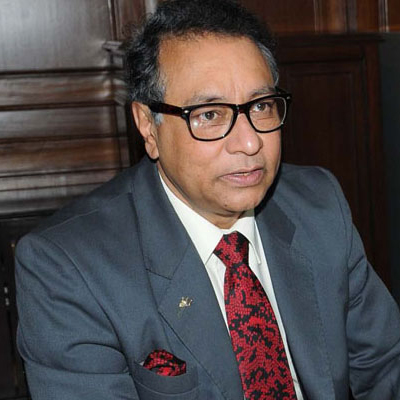
    The MoU was signed by Prasar Bharati CEO Jawhar Sircar and DTR representatives Dmitry Mednikov along with Ayuna Badmaeva. Prasar Bharati chairman Surya Prakash was also present.


    The joint productions will particularly be in the areas of music, opera, theatre, film-based programmes, cartoons and animation based on epics of both countries, literary classics, folk tales, science fiction, circus and so on. In addition children’s programmes, tourism promotion, sports and gymnastics will also be covered.


    The MoU will include re-packaging, re-purposing and dubbing popular or iconic TV programmes produced by one party for use by the other party.


    There will be unique exchange of programmes between the two broadcasters and cooperation in research and development for technical modernization and capacity building in the areas of TV programming.


    There will also be cooperation in manpower training by augmenting each other’s training facilities through mutual cooperation. 


    Marketing of each other’s programming will be another area, and this will include the rich archival programmes.


    Digitization of audio-visual materials of rich value for preserving them for posterity by sharing technical and scientific knowhow and best practices is another field of concentration.


    The two broadcasters will cooperate in promoting consumer products and ad sales of respective countries through their TV channels.


    Prakash said the MoU was a natural corollary of the ancient ties between the two countries. He also referred to the fact that Bollywood was the only answer to Hollywood, even though productions in India cost one-tenth of those in Hollywood.


    Jawhar said this partnership will cross-promote each nation’s unique culture and traditions through cooperation in all areas in the media arena. From adaptation of iconic TV programmes in each broadcaster’s library, right up to the sharing of best practices, this coming together will not only benefit viewers in India and Russia, but will also inspire media executives in both countries to explore new and exciting ways of communicating their stories.  


    He added that the tie-up had tremendous potential for developing synergies between the two broadcasters.


    He said, “A new vibrant India looks forward to a robust partnership with Russian Television and Radio, as represented by VGTRK and DTR. India and Russia have a long tradition of mutual respect and have enjoyed decades of meaningful partnership in many industrial, scientific and cultural domains. Through this new MoU, we look forward to a reassertion of our historic bonds and seek to know each other’s country, people and advancements even better. We intend to come even closer through better appreciation of our positions.”


    Russia TV and Radio Deputy CEO Dmitry Mednikov said DTR is committed to developing local content in India for distribution by local players, and will re-invest their revenues into local content. He said, “We are here to launch and build meaningful business in partnership with India’s programmers, content producers’, distribution platforms. Our key principle is to invest into local content production, state-of-the-art technologies and to develop local talents.”


    Answering questions, he said there was no problem about dubbing or sub-titling programmes in English. He also said DTR being a pay channel did not create any problems as it also had some FTA channels. 


    Doordarshan’s Lalrosanga said that this MoU was one of many new initiatives being taken by the public broadcaster.


    Russia’s leading journalists will be in India next month to produce TV programmes on Indian economy, technology and culture. This series will be aired in Russia’s highly rated FTA channels Russia 1 and Russia 24.


    DTR deputy CEO and GM of International Networks Ayuna Badmaeva said, “We provide smart and innovative programs that entertain, educate audiences across all demographics and on all platforms. Our philosophy in creating local brands and local formats ensures that these channels will resonate with the local viewers. Especially with a market like India where there are many regions and languages.” 


    Veena Jain who heads DD News said the channel would like to educate viewers about Russian arts and culture. DD ADG Deepa Chandra who is in charge of the national channel said music and dance always attracted viewers.

  • I&B asks TV channels to carry DD’s sign language interpretation of I-Day celebrations

    I&B asks TV channels to carry DD’s sign language interpretation of I-Day celebrations

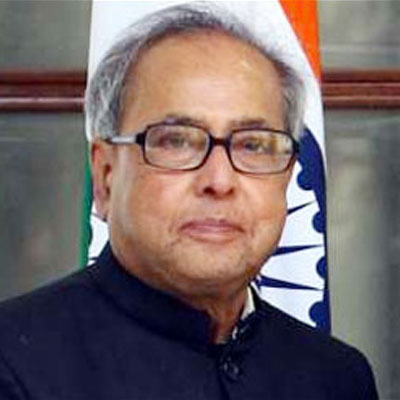
    NEW DELHI: President Pranab Mukherjee will address the nation tomorrow (14 August) at 7 pm on the eve of Independence Day.


    The broadcast will be carried live on all major channels of Doordarshan including DD National, DD News; and regional channels; and all major channels of All India Radio in the national hook-up including Indraprastha and its FM channels.


    This will be followed both on DD and AIR by Hindi translations and later the regional language translations from respective regional channels.


    The broadcast of Prime Minister Narendra Modi’s address to the nation from the ramparts of Red Fort on 15 August will commence at 7.05 am both on DD channels and All India Radio.


    Later, DD will also telecast the report of celebrations in other parts of the country. DD News will carry an analysis of the announcements made by Modi.


    Meanwhile, Information and Broadcasting Ministry has asked all television channels carrying reports of the Independence Day celebrations to access free of cost the simultaneous commentary through sign language for the hearing impaired being carried by Doordarshan.


    The Ministry said it had been getting requests from members of the civil society to facilitate access to people with hearing impairment to the telecast of the Independence Day Ceremony and commentary accompanied with sign language interpretation on TV channels so that such people can be part of the ceremony.


    The advisory said all TV channels interested in carrying the live telecast of the Independence Day ceremony and commentary may carry the signals of DD News with sign language interpretation so that people with hearing impairment can also enjoy the telecast of Indian Independence Day celebrations.

  • Doordarshan re-hauls programming; to launch 5 new shows

    Doordarshan re-hauls programming; to launch 5 new shows

    MUMBAI: Independence Day will herald the launch of several new television serials on Doordarshan National with different shows across different genres. The pubcaster has lined up at least five new shows and will also be putting in a concerted effort to promote them across platforms. The move is seen as an attempt to regain eyeballs and also keep up with the changing taste of viewers.


    DD National ADG Deepa Chandra says, “Our aim behind the launch of fresh programming is to attain a renewed and appealing look. This time the prime time band is not just focused on women-oriented programmes, but also bringing shows of different genres in three phases to allure masses.”


    What makes these shows different from Doordarshan’s earlier programming is the quality of content. “The earlier shows were not a high value production. We are spending at least five times more than what we used to spend on these shows. Each program is going to cost us somewhere around Rs 8 – 8.5 lakh per episode, which is a big number for a public service broadcaster. However, our aim was to first concentrate on content, which will only come if we are willing to shell out good money. The presentation and the type of stories are also very different from what we have so far attempted,” shares Doordarshan Mumbai additional director general Mukesh Sharma.

    When it comes to marketing, Sharma admits that Doordarshan’s purse size is limited and the pubcaster cannot spend in the way privately owned entertainment channels do. “The marketing is mostly controlled from the Delhi Kendra, and they do have some idea. The fact remains that unless you have a sustained marketing effort, the results won’t show. You cannot have a thrust of marketing at the launch, which gradually dies out when the show progresses. So that is one of our concerns, which we plan to deal with. Another issue is that we are a public broadcaster, we cannot just hire anyone for our marketing efforts. There are tenders and quotations involved and after that I have to go for the lowest rates available. So there is a limitation as to what all we can try with our publicity,” points out Sharma.

    Having said that, Doordarshan has nonetheless put in place a planned and systematic effort for marketing its shows, starting with press conferences, hoardings and print media.

    “I have personally called at least eleven editors of print media and asked for their support in promoting our shows. And I plan on further promoting the shows through various other reality shows we host at DD Sahyadri. Apart from that, we are putting up hoardings across cities at the right places. We are trying to do radio publicity on FM channels and through the mediums available to Prasar Bharati,” informs Sharma.

    The five new shows come as breath of fresh air, and will be the first amongst the channel’s steps to re-haul its programming to suit the changing taste of viewers. The step is also an effort to redeem the channel’s falling position on the ratings chart.

    When asked whether the new shows were a conscious effort to boost its failing BARC ratings, Sharma says, “In a government organisation nothing can happen in a jiffy. We had plans to launch fresh content with good production value for a while now and after these five shows, more will follow. It is a mere coincidence that the shows are launching after a few weeks of the BARC ratings releasing.”

    Aimed at audience of a varied age group; from non-fiction talk show to romance drama series meant for the super prime time slot, the new shows comfortably fit to entertain both the young and old in a family.

    The story of the independence struggle is brought out through the story of Ranbheri, a newspaper that not only played a significant role in the freedom struggle in the 1940s but also joined the different voices of the freedom fighters who were slowly and stealthily working towards the overthrow of the tyrannical British Rule. The one hour show scheduled to start from 15 August at 8 pm, will be telecast on Saturdays and Sundays to tell the unheard stories of unsung heroes of the freedom struggle and how media had played a major role during the independence struggle in India.

    Starting from 16 August, DD National has scheduled a chat show called Koshish Se Qamyabi Tak at 10:30 am, to be telecast every Sunday, anchored by the veteran Kiran Juneja who herself got a major break in DD through Buniyaad. She will take viewers through a journey of the lives of cine stars, from their struggles to their successes. The stories would feature notable faces from Bollywood like Madhur Bhandarkar, Parineeti Chopra and Ayushmann Khurrana amongst others.

    This is followed by Dil Ko Aaj Fir Jeene Ki Tamanna Hai from 17 August at 9 pm, Monday to Friday. The show is a soft, sentimental and tasteful love story of a small town girl from Patiala and a city bred boy who meet through a musical reality show where the girl’s dreams intertwine with the boy’s ambitions and thus unfolds their journey of love through many twists and turns.

    Beti Ka Farz is the story of a married woman who is an ideal daughter in law till she decides to fulfill her duty and responsibility as a daughter of her ailing and needy parents. Thus starts the never ending struggle and trial of this daughter-in-law. The show asks many pertinent questions about the rights of a daughter who wishes to help and care for her parents just like any other son even after she gets married and goes to her husband’s home. This daily unconventional show will be telecast from 24 August at 10 pm, Monday to Thursday.

    On the other hand, Annu Kappor brings to Doordarshan National his ‘slice of life’ story of people over forty, tracing their angst, frustrations, emotions, ambitions, dreams and struggles. The show takes the viewers through the experiences of a few such men, that are ‘ realistic’ and ‘heart touching’ and every person in the viewers would relate to their emotions portrayed in this daily show. 40 Plus begins from 31 August at 8 pm, Monday to Friday.

    Apart from Koshish Se Qamyabi Tak, which is entirely home produced by Prasar Bharati, the rest of the four shows have been commissioned to well known production houses including BBC Worldwide Productions India.

  • No contracts with any celebrity to endorse DD Kisan: Rathore

    No contracts with any celebrity to endorse DD Kisan: Rathore

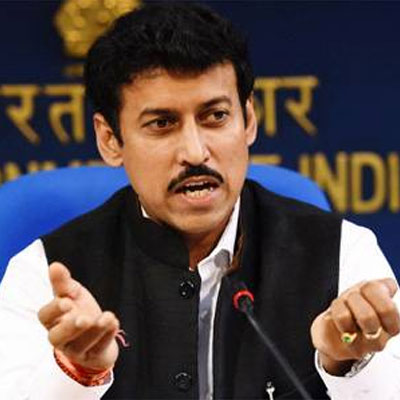
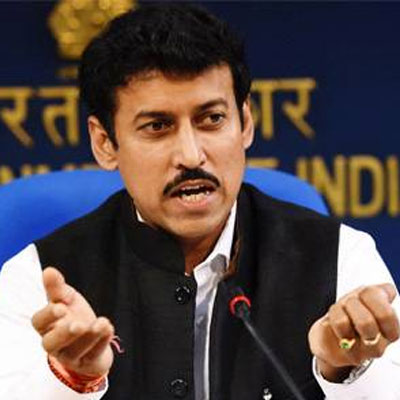
    NEW DELHI: In the wake of news doing the rounds pertaining to Amitabh Bachchan’s endorsement fees for Doordarshan’s Kisan Channel, Minister of State for Information and Broadcasting Rajyavardhan Rathore has said that the channel has not entered into any contract with any artist for celebrity endorsement.


    The clarification came from Rathore in reply to a question during Question Hour in the Rajya Sabha today.


    It may be recalled that last month, Bachchan had issued a statement denying media reports, which claimed that the actor had charged Rs 6.31 crore for endorsing DD Kisan.


    Later, the ad agency Lowe Lintas that represents the channel said that it had learnt only on 20 July of the 72-year old actor’s decision to work pro-bono or free of cost for it.


    A Lowe Lintas spokesman said, “We received formal communication from his office this afternoon, that upon reviewing the work-in-progress contract with his team, Bachchan has taken a decision on principle that he will not charge any fee on issues involving social causes and those that are in the best interest of the nation. In light of today’s development, we have initiated the process of refund to our client, DD Kisan, for the amount collected for Bachchan’s celebrity endorsement.”

  • ITV threatens legal action if pvt channels brought under BBC licence fee ambit

    ITV threatens legal action if pvt channels brought under BBC licence fee ambit

    NEW DELHI: British commercial broadcaster ITV has threatened to go to court in case the government implements its proposals to force digital catch-up TV users to purchase a TV licence.


    The proposals are part of plans to overhaul the funding of BBC, which has recently issued a Green Paper to discuss various issues on how it could improve.


    As per a Sky News report, ITV CEO Adam Crozier had written to the government expressing concerns over the proposals that will impact broadcasters with a public service broadcasting remit.


    The terrestrial TV industry as subscription-based services such as Netflix and Amazon Prime Video will be exempt from the rules.


    A commercial broadcasting executive told reporters it was ‘wholly unreasonable’ for users of ITV catch-up services to fund the BBC and accused the government of creating an ‘unlevel playing field.’


    The Green Paper said the BBC’s licence fee will be under severe pressure come 2020-21.

  • DD Urdu relies on consultants in absence of programme executives posts

    DD Urdu relies on consultants in absence of programme executives posts

    NEW DELHI: A sum of Rs 10.16 crore including Rs 9.38 crore for commissioned and the balance Rs 78.05 lakh on in-house programmes was spent for Doordarshan’s Urdu channel during 2014-15, the Rajya Sabha was told on 4 August.

    Even as there is no sanctioned post of Urdu programme executive in Doordarshan Kendra Delhi, three consultants (retired programmers) and one external consultant conversant with Urdu have been taken in to help the production work of DD Urdu channel.

    Information and Broadcasting (I&B) Minister Arun Jaitley and Minister of State Rajyavardhan Rathore said in replies to different questions that there are other programme executives in DDK Delhi but Prasar Bharati had informed that no post of programme executive had been sanctioned for DD Urdu and DD News Urdu.

    Programme executives are also called on tour as and when required to meet additional requirements, Jaitley said.

    The work of DD News Urdu is being looked after by assistant director (news) who is fully conversant with Urdu language. Urdu programmes of DDK, Delhi, are produced by existing programme executives. The channel is run by the in-house staff of Doordarshan as well as contractual staff hired as required.

    Rathore said DD Urdu had been refurbished with new content through commissioning of programmes under different genres apart from increasing in-house productions.

    Ten news bulletins in Urdu are also being telecast daily on DD Urdu channel. Programmes of specific interest to the Urdu speaking audiences like minority issues, Government schemes for minorities, events in the neighbouring countries, etc. have also been launched to give a new look to DD Urdu channel.

    DD Urdu has an updated website as a part of Doordarshan. Promos about DD Urdu are also loaded on YouTube and Facebook, he added.

                           Amount spent on DD-Urdu programmes in the last 3 years

  • Doordarshan partners SBI to launch payment gateway for ad agencies

    Doordarshan partners SBI to launch payment gateway for ad agencies

    NEW DELHI: In a pioneering move, Doordarshan today became the first Indian television channel to introduce an online payment gateway for advertisers that will ensure greater efficiency and transparency.


    Under the system, each advertiser dealing with Doordarshan will have its own page through which it will not only be able to know its status of payments but also make these payments. 


    Although set up in collaboration with the State Bank of India, the system permits advertisers to transfer the payments through their own banks using the gateway. 


    Doordarshan automated its commercial operations for DD National channel in the Phase-I in January this year. The process for DD’s other channels is under implementation. The move has helped integrate various steps involved in executing commercials from booking to scheduling and billing. 


    However, the last step of payment receipt is still manual. Doordarshan has integrated the payment gateway and with its traffic and billing system would facilitate all clients and agencies to make online payment by directly going to Doordarshan’s portal from the place of their convenience at any time of the day. 


    The new system was inaugurated today by Prasar Bharati member (finance) Rajeev Singh in the presence of DD director general C Lalrosanga, Engineer-in-Chief CBS Maurya, ADG (CRD) Mukesh Sharma, ADG (commercial & sales) Inderjeet Kaur, ADG Deepa Chandra, ADG PA Naidu, and DDG (commercial) CK Jain, who also explained the system along with State Bank of India main branch chief manager (e-banking) DN Sharma.


    Jain said the first phase would cover Delhi and Mumbai, whereas the second phase will cover other centres. It will also facilitate an Online Deal and Release Order Booking System (ODROBS).


    Sharma said the multi-operating payment system could be used for sending payments from other banks as well. Each ad agency would have a name and password to log on through the DD portal and then go on with checking status or making payments. This facilitates collection of fees from ad agencies and is completely automated with options of NEFT, RTGS, and draft with provision for updating etc. 


    Doordarshan has so far been facing huge problem of reconciling its accounts because of entire manual operations, which leave a lot of agencies and clients dissatisfied. This has also resulted in several disputes and also in arbitrations with agencies. 


    It was pointed out on the occasion that Prasar Bharati CEO Jawhar Sircar has also been emphasising on use of IT in both Doordarshan and AIR for bringing efficiency into the system. 

  • DD spent Rs 300+ crore for infrastructure digitisation during last 3 years: Rathore

    DD spent Rs 300+ crore for infrastructure digitisation during last 3 years: Rathore

    NEW DELHI: Doordarshan incurred a sum of Rs 301.45 crore during the last three years towards digitisation of its infrastructure.


     This included expenditure incurred on digitisation of studios, transmitters and High Definition TV (HDTV).


     The Parliament was informed by Minister of State for Information and Broadcasting Rajyavardhan Rathore that digitisation in Doordarshan results in better quality of program production thereby ensuring a better quality of service to the viewers.


    HDTV picture quality is five times the resolution of Standard Definition (SD) picture. 


    Digital television offers new possibilities to viewers and broadcasters with the improved technical quality of picture and sound, additional programmes and additional reception modes (portable and mobile).

  • Prasar Bharati CEO Jawhar Sircar pooh-poohs ‘budget hike’ reports

    Prasar Bharati CEO Jawhar Sircar pooh-poohs ‘budget hike’ reports

    NEW DELHI: The Indian pubcaster has been a soft target since time immemorial. In the light of media articles citing ratings data by the Broadcast Audience Research Council (BARC) India, which say that Doordarshan’s viewership has been poor despite a hike in budget and hiring of expert consultants, Prasar Bharati CEO Jawhar Sircar pooh-poohs it all. 


    In an exclusive interaction with Indiantelevision.com, Sircar informs that the pubcaster has not even received full reimbursement of government salaries for employees recruited prior to October 2007.


    Sircar goes on to point out that as per a decision by the then Group of Ministers (GoM), which was looking into the financial status of Prasar Bharati, it had been decided during the tenure of the previous government that the Central Government will bear the salaries and other allowances of all employees in service as on 5 October, 2007.


    Sircar says, “As a result, our own revenue funds that are meant for ‘Content’ have gone to meet this salary gap.” He said that Prasar Bharati had been stressing this fact for the past three years. However, it seems like its voice fell on deaf ears.


    At the outset, Sircar says, “I still cannot understand why some people are always raising this question of “hike in budget”? What budget? All the money we get is for paying salaries of 29,000 government servants, who were recruited by the Information and Broadcasting Ministry some 30 to 35 years ago. The government has to pay their salaries as long as they are in service and Prasar Bharati is mainly their administering body and the Ministry passes this salary bill on to Prasar Bharati, who had to engage these persons to disburse their government-scale salaries, without any leeway or choice.”


    He added that while the Ministry used to set aside a sum of approximately Rs 80 – 100 crore for several years for creating content for “special areas,” this funding had also stopped, leaving behind several liabilities. 


    With the choked fund pipeline for content, Sircar asks, “How does content improve? One way out is to offer our ‘time bands’ to external producers provided they cover our costs.” 


    “We are waiting patiently for our funds to be returned. Since these issues are coming out publicly through vague terms like ‘an I&B Ministry official said,’ I would welcome an open debate on this question though we prefer to discuss these matters across the table. But after all, DD is a public institution and it is ready to face any public scrutiny,” Sircar opines.


    No longer in a mood to take things lying down, Sircar posed a few pertinent questions:


    1) Can we cut down costs on the huge infrastructure, some of which appears to be meaningless?


    2) Do we really need to have analogue TV transmission in this satellite age?


    3) Why do we spend so much to strengthen short wave and medium wave radio, when it is FM that is in demand?


    “I have raised these questions as no one was raising them and many in this organization are not happy at all,” he adds.


    Specifically referring to the media reports, he says, “If the programmes that DD has paid for (‘Commissioned’ or ‘SFC’ in DD’s language) do not appear to be attracting enough eyeballs, then we have to reach out to better producers like we used to do for MahabharatRamayan and Buniyaad, etc. DD did not produce its own programmes then or did not decide to pay or commission producers to make programmes for DD. We are seriously thinking about it. But we will have to go over this option very carefully.”


    Drawing a comparison between the British Broadcasting Corporation (BBC) and the Indian pubcaster, Sircar says, “There is a box in the news that advises DD to stay out of the numbers game and become a popular brand distinction like BBC. Do you have any idea of what this means? Every British citizen pays Rs 15,000 per year for the BBC’s quality programmes. But in India, Prasar Bharati struggles to earn its ‘content funds’ through content generated revenue against fierce competition.”


    According to Sircar, as per calculations done by the Sam Pitroda Committee, in India the cost per person works out to a mere 31 cents or approximately Rs 20 by way of support to Doordarshan and All India Radio (AIR). “BBC gets Rs 35,000 crore per year from the exchequer,” he adds. 


    Signing off, Sircar says, “So why do we make such meaningless comparisons and indulge in wishful thinking?”

  • Govt. in favour of a fully autonomous Prasar Bharati: Rajyavardhan Rathore

    Govt. in favour of a fully autonomous Prasar Bharati: Rajyavardhan Rathore

    NEW DELHI: Minister of State for Information and Broadcasting Rajyavardhan Rathore today said that the government was in favour of Prasar Bharati becoming “fully autonomous.”


    Rathore expressed satisfaction that the pubcaster was keeping public service ahead of commercial gains and reaching the nook and corner of the country, adding that it was a broadcaster, which could not be compared to any other broadcaster in the world or within India.


    Prasar Bharati had also encouraged new talent from every part of the country including tribal and rural areas.


    The Minister, speaking at a symposium on the ‘Role of different communication media in emergence of a new India,’ organized by All India Radio to mark Indian Broadcasting Day.


    Broadcasting began in July 1923 with programmes by the Radio Club of Mumbai and other radio clubs. According to an agreement of 23 July, 1927, the private Indian Broadcasting Company Ltd (IBC) was authorised to operate two radio stations: the Mumbai station began on 23 July, 1927, and the Calcutta station followed on 26 August, 1927.


    On 1 March, 1930, however, the company went into liquidation. The government took over the broadcasting facilities, beginning the Indian State Broadcasting Service (ISBS) on 1 April, 1930 (on an experimental basis for two years, and permanently in May 1932). On 8 June, 1936, the ISBS was renamed All India Radio. 


    The Minister said radio was a non-intrusive medium, which had become a part of every Indian. In fact, it increased the efficiency of the listener without intruding. Every Indian got information and entertainment from the medium as it was neutral and unbiased.


    He welcomed the entry of FM and community radio, as these could fill the communication gaps.


    Rathore also noted that persons like Jasdev Singh and Ameen Sayani had got recognition because of the medium.


    Prasar Bharati chairman A Surya Prakash said that people could swear by news on All India Radio and Doordarshan as they were more credible than any other channel. However, he added that Prasar Bharati would not lose track of its role as a public service broadcaster. He said it was this consciousness that had led to its major contribution in making India polio free, and the pubcaster was now playing a similar role in Swachh Bharat.


    Prasar Bharati CEO Jawhar Sircar said that radio continued to be a vibrant non-intrusive medium, which has brought emotional and linguistic bondage in the country, broadcasting in thirty languages.


    “Millions of Indians today understand the nuances and importance of classical music because All India Radio has kept this alive in the face of the more popular film music,” Sircar said.


    He also referred to the role of AIR in 1923 in the era of princely states and provinces when it provided leadership, but said the real challenges came after independence.


    Member of Parliament and journalist Tarun Vijay said radio has been the informer from childhood and AIR taught him the nuances of language. “FM Gold and the AIR channels continue to stand out in the cacophony of private FM channels which had ruined values and language,” Vijay said.


    Vijay also commended Prime Minister Narendra Modi for giving a new vitality with his ‘Mann Ki Baat.’ “The credibility of AIR remains higher than any other channel – be it television or radio,” he said.


    Referring to the deterioration of the print media, he said that it was difficult to differentiate news from editorials. “The editor has no importance in today’s age,” he lamented, adding that most newspapers today had become “ad rags.”


    Calling out to AIR to start a World Broadcasting Channel in order to reach out to the diaspora and the world, Vijay said he wanted Prasar Bharati to strengthen the infrastructure to reach out to countries in south east Asia.


    Senior journalist Madhukar Upadhyay regretted that AIR appeared to have become complacent because it had the largest reach. He also asked why private FM channels should not be permitted news when television channels could do so.


    Senior journalist Amit Baruah suggested the introduction of licence fee as he felt “that gives us all a stake in the broadcaster.” Mediaperson Pranjal Sharma said AIR has to keep in view the fact that social media is free with no bondages.


    Eminent litterateur Anamikas said that AIR had helped the unity of the country through language and noted that Hindi which had accepted words from other languages had now become a truly Indian language.