Category: Terrestrial

  • E-auction for DD Freedish slots on 28 July, reserve price remains at Rs 4.3 crore

    E-auction for DD Freedish slots on 28 July, reserve price remains at Rs 4.3 crore

    NEW DELHI: With Indian conditional access system (iCAS) helping it to carry more channels, the 28th e-auction to fill up vacant slots on Doordarshan’s direct-to-home Freedish will be held on 28 July.

    The reserve price is Rs 4.3 crore for the slots on the country’s only free to ar DTH platform. The reserve price which had been Rs 3.7 crore was raised to its present level for the 25th e-auction in January.

    indiantelevision.com had learnt that the bid amount went up to Rs 4.7 crore in earlier e-auctions. The reserve price in the 15th e-auction was Rs three crore and was raised to Rs 3.7 crore in the 16th auction.

    DD sources refused to divulge the number of slots being auctioned to prevent bidders forming consortia to bid or resort to other malpractices. The platform at present has space for eighty channels including its own channels and Lok Sabha and Rajya Sabha TV and also carrues 24 All India Radio channels.

    These sources told indiantelevision.com that Freedish is being encrypted to keep a tab on the number of subscribers, but it would remain free-to-air.

    The e-Auction will be conducted by M/s. C1 India Pvt. Ltd., Noida which also conducted the first stage of the FM Radio Phase III auctions on behalf of Prasar Bharati.

    The eligibility terms and conditions including other relevant details for this e-Auction are displayed on DD website: www.ddindia.gov.in.

    The participation amount (EMD) in the e-Auction is Rs.1.5 crore which will be deposited in advance before or by 12 noon on 28 July along with processing fee of Rs.10,000 (Non-refundable) in favour of PB (BCI) Doordarshan Commercial Service, New Delhi.

    Incremental amount for the auction will be Rs 10 lakh and the time for every slot e-auction will be of fifteen minutes duration. This may be extended by five minutes if a bid is received before the closing time.

    Of the reserve price, Rs 1.1 crore will be deposited within one month of placement and another Rs 1.1 crore within two months along with service tax of 14.5 per cent on the bid amount.

    The balance bid amount will be deposited within six months, failing which the deposited amount will be forfeited and the channel discontinued after a 21-day discontinuation notice.

  • BARC week 27: English News viewership drops; CNBC TV 18, Aaj Tak and CNBC Awaaz leads

    BARC week 27: English News viewership drops; CNBC TV 18, Aaj Tak and CNBC Awaaz leads

    MUMBAI: According to week 27 of BARC rating, English News and English Business News saw a drop in overall ratings, Times Now and CNBC TV 18 topped respective spaces. Aaj Tak was the leader in Hindi News space and Hindi Business News was topped by CNBC Awaaz but with a decline in rating.

    English News

    Times Now grabbed the top spot with 215 Impressions (000s) but saw a drop in rating, comparing to 346 Impressions (000s) of week 26. NDTV 24×7 improved by two ranks and secured second position with 97 Impressions (000s) in comparison to its fourth position last week. India Today Television dropped a position and ranked third spot with 94 Impressions (000s), also with a heavy drop in rating from 128 Impressions (000s) last week.

    CNN News18 with 63 Impressions (000s) held fourth spot, followed by News X on last rank with 54 Impressions (000s).

    English Business News

    CNBC TV 18 remained on its first spot with 74 Impressions (000s), followed by ET Now on second rank with 56 Impressions (000s).  NDTV Profit and NDTV Prime bagged third position with 22 Impressions (000s). Bloomberg TV with 3 Impressions (000s) held on fourth position.

    Hindi News

    Aaj Tak maintained number one position with 65077 Impressions (000s). India TV bagged the second rank with 54378 Impressions (000s), followed by India News on third position with 45734 Impressions (000s).

    ABP News grabbed on fourth spot with 40806 Impressions (000s) and News Nation with 40556 Impressions (000s) on fifth birth.

    Hindi Business News

    CNBC Awaaz ranked number one with decline in rating from 695 Impressions (000s) last week to 567 Impressions (000s) in week 27. Zee Business also saw a further dropped rating of 441 Impressions (000s) in comparison to 485 Impressions (000s) in week 26.

  • BARC week 27: English News viewership drops; CNBC TV 18, Aaj Tak and CNBC Awaaz leads

    BARC week 27: English News viewership drops; CNBC TV 18, Aaj Tak and CNBC Awaaz leads

    MUMBAI: According to week 27 of BARC rating, English News and English Business News saw a drop in overall ratings, Times Now and CNBC TV 18 topped respective spaces. Aaj Tak was the leader in Hindi News space and Hindi Business News was topped by CNBC Awaaz but with a decline in rating.

    English News

    Times Now grabbed the top spot with 215 Impressions (000s) but saw a drop in rating, comparing to 346 Impressions (000s) of week 26. NDTV 24×7 improved by two ranks and secured second position with 97 Impressions (000s) in comparison to its fourth position last week. India Today Television dropped a position and ranked third spot with 94 Impressions (000s), also with a heavy drop in rating from 128 Impressions (000s) last week.

    CNN News18 with 63 Impressions (000s) held fourth spot, followed by News X on last rank with 54 Impressions (000s).

    English Business News

    CNBC TV 18 remained on its first spot with 74 Impressions (000s), followed by ET Now on second rank with 56 Impressions (000s).  NDTV Profit and NDTV Prime bagged third position with 22 Impressions (000s). Bloomberg TV with 3 Impressions (000s) held on fourth position.

    Hindi News

    Aaj Tak maintained number one position with 65077 Impressions (000s). India TV bagged the second rank with 54378 Impressions (000s), followed by India News on third position with 45734 Impressions (000s).

    ABP News grabbed on fourth spot with 40806 Impressions (000s) and News Nation with 40556 Impressions (000s) on fifth birth.

    Hindi Business News

    CNBC Awaaz ranked number one with decline in rating from 695 Impressions (000s) last week to 567 Impressions (000s) in week 27. Zee Business also saw a further dropped rating of 441 Impressions (000s) in comparison to 485 Impressions (000s) in week 26.

  • DD India and DD Sports moved to different satellites from today

    DD India and DD Sports moved to different satellites from today

    NEW DELHI: Doordarshan’s international channel DD India will be available from today (5 July 2016) on Satellite INSAT-4B (93.5°E).

    The Downlink parameters are Frequency: 3925 MHz, Pol:H, FEC:3/4, Symbol Rate:27.5 MSPS.

    The satellite for DD Sports is also being changed and it will now be available on Satellite GSAT-10 (83°E).

    Until now, DD India was beamed from GSAT 10.

    The Downlink parameters Frequency: 3885 MHz, Pol:V, FEC: 3/4, Symbol Rate: 27.5 MSPS.

    Earlier this year, DD had from 1 February moved its direct-to-home Freedish to the new satellite GSAT 15 from INSAT – 4B.

    DD sources said this was part of a move to shift all channels to new satellites to ensure better viewer experience.

    Meanwhile, the source said all DD channels have always been on Indian satellites.

  • DD India and DD Sports moved to different satellites from today

    DD India and DD Sports moved to different satellites from today

    NEW DELHI: Doordarshan’s international channel DD India will be available from today (5 July 2016) on Satellite INSAT-4B (93.5°E).

    The Downlink parameters are Frequency: 3925 MHz, Pol:H, FEC:3/4, Symbol Rate:27.5 MSPS.

    The satellite for DD Sports is also being changed and it will now be available on Satellite GSAT-10 (83°E).

    Until now, DD India was beamed from GSAT 10.

    The Downlink parameters Frequency: 3885 MHz, Pol:V, FEC: 3/4, Symbol Rate: 27.5 MSPS.

    Earlier this year, DD had from 1 February moved its direct-to-home Freedish to the new satellite GSAT 15 from INSAT – 4B.

    DD sources said this was part of a move to shift all channels to new satellites to ensure better viewer experience.

    Meanwhile, the source said all DD channels have always been on Indian satellites.

  • Prasar Bharati’s monopolistic-era mind-set has to change: CEO Jawhar Sircar

    Prasar Bharati’s monopolistic-era mind-set has to change: CEO Jawhar Sircar

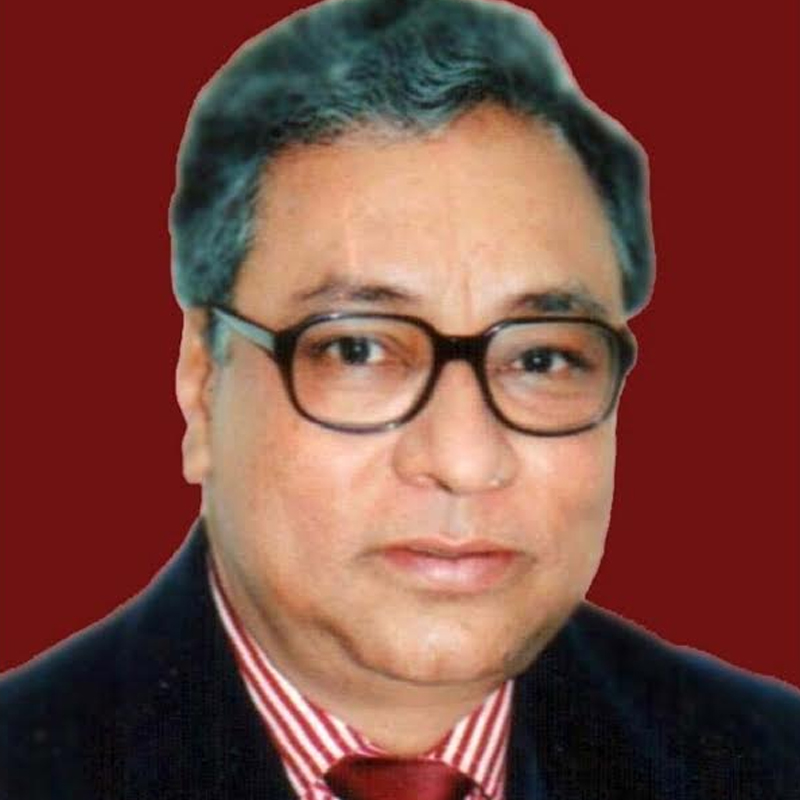
    Jawhar Sircar, the 60-something chief executive of India’s public broadcaster Prasar Bharati, is bubbling with ideas and energy —- in sharp contrast to the organisation’s headquarters that gives a casual visitor a sense of life in slo-mo.

    Prasar Bharati is the parent organisation of 57-year-old Doordarshan and 86-year-old All India Radio, the country’s public broadcasters who claim to cover almost the whole of this vast country stretching from Kashmir to Kanyakumari — and a little beyond to a few islands in the Indian Ocean.

    Critics say age and a semi-lethargic attitude of the over 40,000-strong workforce impede both the organisations from being nimble footed in an age when technology has vastly changed the speed and mode of delivery of video and voice. Add to these government controls (via annual funding from taxpayers’ money to bridge the gap between revenues and expenditure) and Prasar Bharati continues to function as a moribund government organisation despite an autonomous status.

    The chief executive of Prasar Bharati, who joined the organisation in 2012 after serving in the government for over 30 years, is not shy to admit that some fundamental problems stop it from being `India’s BBC’ or `India’s NHK’. He goes a step ahead to say (with tongue firmly in cheek) that functionaries of Prasar Bharati “are living in a time warp” — in a world of their own that could be a zillion years behind reality.

    Even if you give full marks to the tech and social media-savvy Sircar for being candid, it cannot be wished away that both DD and AIR will continue to be an extension of the government’s PR division unless there’s a radical change in the thought process of India’s ruling class and policy-makers.

    Sitting in his office, in New Delhi’s PTI Building, amidst files and colleagues, many of them keep trooping in and out for advise and suggestions, the multi-tasking Sircar, is completely at ease conversing with Indiantelevision.com’s consulting editors B B Nagpal and Anjan Mitra on a wide range of subjects. Edited excerpts from the interview:

    Q: What could be the five guiding principles that you have etched out for Prasar Bharati’s possible reform?

    JS: Having joined the organisation in 2012, I don’t have much time left now, but I am still trying to (a) bring about transparency (b) prioritise our objectives as a public broadcaster (c) get the organisation adjusted to competition (d) get the organisation to look at non-terrestrial and satellite-based transmission and (e) strengthen the FreeDish platform.

    Q: Do you think all of these could be achieved; especially as majority of Prasar Bharati workforce seems to still live in a pre-Independence era?

    JS: Sadly, the majority mindset is a big hurdle in moving forward in an era where technology is changing fast and competition (from private sector) reacts faster to changing situations and ground realities. Many of my colleagues still believe they are in a monopoly era when DD and AIR were the only source of entertainment and news for Indians. Such a mentality needs to change if we are to be in the race as a viable and relevant organisation.

    Moreover, I and the board of Prasar Bharati, have been functioning with inadequate human resources at senior levels too. There had been no Member-Finance for a long time and regular Director-Generals for DD and AIR are yet to be put in place.

    However, I also believe that with some change in mindset and additional revenue, which can accrue from infrastructure sharing with private sector players and better use of under-utilised existing infrastructure, Prasar Bharati can be more relevant as an organisation and to the Indian public.

    Q: Can you give an example of monopolistic era mindset that, probably, tries to be immune to technological advances?

    JS: (Smiles) During the first few years of my tenure nobody here understood what OTT (over the top) stood for and how it’s relevant to our services. Another example is that of adoption of MPEG-4 broadcast technology. It had been cleared one and a half years back, but procedural delays hampered quick adoption.

    Q: Now that we are talking about new technologies, what would your reaction be if digital terrestrial TV (DTT) is thrown open to private sector players by the government?

    JS:  Prasar Bharati approved DTT over a year back. We were told to come up with a plan but no base paper could be prepared as there was some resistance internally from certain quarters. And, Prasar Bharati is not afraid of private players’ entry into DTT… we are quite open to the idea. Rather we’d support any such move if the government some time allows private players in DTT.

    Q: What can Prasar Bharati gain by supporting private players’ entry in an arena that had been a monopoly of the pubcaster?

    JS: Changing with the times makes you relevant. Why should DTT be Prasar Bharati’s monopoly? By allowing others, Prasar Bharati can earn additional revenue as we can lease out our infrastructure to private players who, otherwise, would have to make huge investments in setting up infrastructure. Let a private sector (content) aggregator come forward with a business plan. DD, anyway, is investing on DTT infrastructure.

    Q: You earlier talked of bringing about transparency in Prasar Bharati. In what way do you feel the proposed e-auction system will be an improvement on the systems adopted until now to obtain content?

    JS: The proposed e-auction would be a completely transparent method and a step towards overall transparency in the organisation to acquire content for DD. It will also put the onus on the successful bidder to ensure good content.

    Q: But, before the current SFC system of self-financed commissioned programmes, DD had a system of sponsored programmes whereby good programmes where especially produced for DD. How is e-auction going to be an improvement over the sponsorship scheme?

    JS: That kind of system had led to monopolization… with a few big names dominating the entire prime time of the public broadcaster. Ultimately, the same big names from Bollywood made serials for Doordarshan and left little scope for fresh talent.

    In fact, I had initially faced internal resistance to the plan for e-auction of prime time slots too, and it took serious convincing on my part for the idea to sink in with others. DD has already announced that this is being done on an experimental basis and may be extended to its other channels if the scheme is accepted.

    I am confident that audience loyalty, national sentiment, and the vast reach of  Doordarshan would help to make the scheme a success.

    Q: You referred to giving a push to FreeDish, which is the country’s only free-to-air KU-band service. What are the plans and what would be the present subscriber base of FreeDish?

    JS: As the antennas are available in the market (at a nominal one-time price ranging between Rs 3,000-4,000) and no monthly subscription is paid, it is difficult to know how many television households have FreeDish. This audit will become easier when we complete the process of encryption of FreeDish while keeping it free to air.

    Exact figures may be difficult in our case as even the Telecom Regulatory Authority of India admits there is a gap between the number of active and registered subscribers of private DTH operators. But it is understood (from feedback from market and sale of antennas) that there are around 15 million households hooked to FreeDish.

    In recent times, FreeDish has got some very good response from private TV channels…many of them, including the big names, want to hop onto FreeDish’s platform for wider reach of their products. We have plans to increase the number of FTA television channels on the platform so a consumer gets more choice.

    Q: There were plans to upgrade FreeDish to MPEG 4 to increase its capacity to carry more signals. But there has been no report on the progress in this regard.

    JS: It is not possible to implement MPEG 4 and the new Indian Conditional Access System (iCAS) together at the same time. But the commitment of FreeDish is to reach the rural areas and also cover all the areas not reached so far by television.

    Q: After initial protests by Prasar Bharati, Broadcast Audience Research Council had begun to give rural data separately. Are you satisfied with the audience measurement system?

    JS: We at Prasar Bharati have had some issues with BARC, which we would prefer to raise directly with the organisation. But our understanding is that DD covers a large part of India via its terrestrial and satellite services.

    Q: Why is it that Prasar Bharati cannot function like BBC or other public service broadcasters in the world?

    JS: The move to greater professionalism is eventually bound to happen, but some hurdles have to be crossed including those relating to budgets.

    Public funding on the public broadcaster in India is just Rs 2,400 crore as compared to Rs 51,653 crore in Germany, Rs 39,800 crore in the United Kingdom, Rs 34,097 crore in Japan. The amount spent on Prasar Bharati was even lower than those spent on pubcasters in Canada, Australia, and Korea.

    The per capita funding in India on the pubcaster is only Rs 19 as compared to UK and Germany where it is approximately Rs 6,000 to Rs 7,000. Even Malaysia has a per capita funding of Rs 350.

    Q: What are the constraints on acquiring good content for Doordarshan? 

    JS: The expenditure on content in India is a mere six per cent as compared to 75 per cent by NHK in Japan and 71 per cent by the BBC.
     The Indian Government gives 62 per cent as compared to 100 per cent in Russia, 98.2 per cent in Malaysia, 97 per cent in Germany, and 83 per cent in the UK. So, this should answer your question.     
  • Prasar Bharati’s monopolistic-era mind-set has to change: CEO Jawhar Sircar

    Prasar Bharati’s monopolistic-era mind-set has to change: CEO Jawhar Sircar

    Jawhar Sircar, the 60-something chief executive of India’s public broadcaster Prasar Bharati, is bubbling with ideas and energy —- in sharp contrast to the organisation’s headquarters that gives a casual visitor a sense of life in slo-mo.

    Prasar Bharati is the parent organisation of 57-year-old Doordarshan and 86-year-old All India Radio, the country’s public broadcasters who claim to cover almost the whole of this vast country stretching from Kashmir to Kanyakumari — and a little beyond to a few islands in the Indian Ocean.

    Critics say age and a semi-lethargic attitude of the over 40,000-strong workforce impede both the organisations from being nimble footed in an age when technology has vastly changed the speed and mode of delivery of video and voice. Add to these government controls (via annual funding from taxpayers’ money to bridge the gap between revenues and expenditure) and Prasar Bharati continues to function as a moribund government organisation despite an autonomous status.

    The chief executive of Prasar Bharati, who joined the organisation in 2012 after serving in the government for over 30 years, is not shy to admit that some fundamental problems stop it from being `India’s BBC’ or `India’s NHK’. He goes a step ahead to say (with tongue firmly in cheek) that functionaries of Prasar Bharati “are living in a time warp” — in a world of their own that could be a zillion years behind reality.

    Even if you give full marks to the tech and social media-savvy Sircar for being candid, it cannot be wished away that both DD and AIR will continue to be an extension of the government’s PR division unless there’s a radical change in the thought process of India’s ruling class and policy-makers.

    Sitting in his office, in New Delhi’s PTI Building, amidst files and colleagues, many of them keep trooping in and out for advise and suggestions, the multi-tasking Sircar, is completely at ease conversing with Indiantelevision.com’s consulting editors B B Nagpal and Anjan Mitra on a wide range of subjects. Edited excerpts from the interview:

    Q: What could be the five guiding principles that you have etched out for Prasar Bharati’s possible reform?

    JS: Having joined the organisation in 2012, I don’t have much time left now, but I am still trying to (a) bring about transparency (b) prioritise our objectives as a public broadcaster (c) get the organisation adjusted to competition (d) get the organisation to look at non-terrestrial and satellite-based transmission and (e) strengthen the FreeDish platform.

    Q: Do you think all of these could be achieved; especially as majority of Prasar Bharati workforce seems to still live in a pre-Independence era?

    JS: Sadly, the majority mindset is a big hurdle in moving forward in an era where technology is changing fast and competition (from private sector) reacts faster to changing situations and ground realities. Many of my colleagues still believe they are in a monopoly era when DD and AIR were the only source of entertainment and news for Indians. Such a mentality needs to change if we are to be in the race as a viable and relevant organisation.

    Moreover, I and the board of Prasar Bharati, have been functioning with inadequate human resources at senior levels too. There had been no Member-Finance for a long time and regular Director-Generals for DD and AIR are yet to be put in place.

    However, I also believe that with some change in mindset and additional revenue, which can accrue from infrastructure sharing with private sector players and better use of under-utilised existing infrastructure, Prasar Bharati can be more relevant as an organisation and to the Indian public.

    Q: Can you give an example of monopolistic era mindset that, probably, tries to be immune to technological advances?

    JS: (Smiles) During the first few years of my tenure nobody here understood what OTT (over the top) stood for and how it’s relevant to our services. Another example is that of adoption of MPEG-4 broadcast technology. It had been cleared one and a half years back, but procedural delays hampered quick adoption.

    Q: Now that we are talking about new technologies, what would your reaction be if digital terrestrial TV (DTT) is thrown open to private sector players by the government?

    JS:  Prasar Bharati approved DTT over a year back. We were told to come up with a plan but no base paper could be prepared as there was some resistance internally from certain quarters. And, Prasar Bharati is not afraid of private players’ entry into DTT… we are quite open to the idea. Rather we’d support any such move if the government some time allows private players in DTT.

    Q: What can Prasar Bharati gain by supporting private players’ entry in an arena that had been a monopoly of the pubcaster?

    JS: Changing with the times makes you relevant. Why should DTT be Prasar Bharati’s monopoly? By allowing others, Prasar Bharati can earn additional revenue as we can lease out our infrastructure to private players who, otherwise, would have to make huge investments in setting up infrastructure. Let a private sector (content) aggregator come forward with a business plan. DD, anyway, is investing on DTT infrastructure.

    Q: You earlier talked of bringing about transparency in Prasar Bharati. In what way do you feel the proposed e-auction system will be an improvement on the systems adopted until now to obtain content?

    JS: The proposed e-auction would be a completely transparent method and a step towards overall transparency in the organisation to acquire content for DD. It will also put the onus on the successful bidder to ensure good content.

    Q: But, before the current SFC system of self-financed commissioned programmes, DD had a system of sponsored programmes whereby good programmes where especially produced for DD. How is e-auction going to be an improvement over the sponsorship scheme?

    JS: That kind of system had led to monopolization… with a few big names dominating the entire prime time of the public broadcaster. Ultimately, the same big names from Bollywood made serials for Doordarshan and left little scope for fresh talent.

    In fact, I had initially faced internal resistance to the plan for e-auction of prime time slots too, and it took serious convincing on my part for the idea to sink in with others. DD has already announced that this is being done on an experimental basis and may be extended to its other channels if the scheme is accepted.

    I am confident that audience loyalty, national sentiment, and the vast reach of  Doordarshan would help to make the scheme a success.

    Q: You referred to giving a push to FreeDish, which is the country’s only free-to-air KU-band service. What are the plans and what would be the present subscriber base of FreeDish?

    JS: As the antennas are available in the market (at a nominal one-time price ranging between Rs 3,000-4,000) and no monthly subscription is paid, it is difficult to know how many television households have FreeDish. This audit will become easier when we complete the process of encryption of FreeDish while keeping it free to air.

    Exact figures may be difficult in our case as even the Telecom Regulatory Authority of India admits there is a gap between the number of active and registered subscribers of private DTH operators. But it is understood (from feedback from market and sale of antennas) that there are around 15 million households hooked to FreeDish.

    In recent times, FreeDish has got some very good response from private TV channels…many of them, including the big names, want to hop onto FreeDish’s platform for wider reach of their products. We have plans to increase the number of FTA television channels on the platform so a consumer gets more choice.

    Q: There were plans to upgrade FreeDish to MPEG 4 to increase its capacity to carry more signals. But there has been no report on the progress in this regard.

    JS: It is not possible to implement MPEG 4 and the new Indian Conditional Access System (iCAS) together at the same time. But the commitment of FreeDish is to reach the rural areas and also cover all the areas not reached so far by television.

    Q: After initial protests by Prasar Bharati, Broadcast Audience Research Council had begun to give rural data separately. Are you satisfied with the audience measurement system?

    JS: We at Prasar Bharati have had some issues with BARC, which we would prefer to raise directly with the organisation. But our understanding is that DD covers a large part of India via its terrestrial and satellite services.

    Q: Why is it that Prasar Bharati cannot function like BBC or other public service broadcasters in the world?

    JS: The move to greater professionalism is eventually bound to happen, but some hurdles have to be crossed including those relating to budgets.

    Public funding on the public broadcaster in India is just Rs 2,400 crore as compared to Rs 51,653 crore in Germany, Rs 39,800 crore in the United Kingdom, Rs 34,097 crore in Japan. The amount spent on Prasar Bharati was even lower than those spent on pubcasters in Canada, Australia, and Korea.

    The per capita funding in India on the pubcaster is only Rs 19 as compared to UK and Germany where it is approximately Rs 6,000 to Rs 7,000. Even Malaysia has a per capita funding of Rs 350.

    Q: What are the constraints on acquiring good content for Doordarshan? 

    JS: The expenditure on content in India is a mere six per cent as compared to 75 per cent by NHK in Japan and 71 per cent by the BBC.
     The Indian Government gives 62 per cent as compared to 100 per cent in Russia, 98.2 per cent in Malaysia, 97 per cent in Germany, and 83 per cent in the UK. So, this should answer your question.     
  • Prasar  Bharati CEO: Prasar Bharati not opposed to private players’ entry in DTT

    Prasar Bharati CEO: Prasar Bharati not opposed to private players’ entry in DTT

    NEW DELHI: Prasar Bharati has been in favour of opening up of the digital terrestrial transmission (DTT) to private players, but could not formalise the proposal owing to internal pressure.

    “We had approved of DTT and allowing private players also to participate over a year back, but had faced resistance internally from certain quarters,” Prasar Bharati Chief Executive Officer Jawhar Sircar said.

    Sircar told indiantelevision.com in an exclusive interview that the pubcaster was asked (by the government) to prepare a base paper in this regard and draw up a business plan too.

    “But this could not be done because of unfamiliarity with market conditions,” Sircar said.

    Hinting that the pubcaster is aware of an impending move by broadcast carriage and telecoms regulator TRAI in starting a debate over DTT and possible opening up of the sector to private players, Sircar said if that should happen, it would not “affect Doordarshan’s plans.”

    At the same time, Sircar added, private players, if allowed, did not have the acilities available with Prasar Bharati.

    “Either the private players would have to invest in (transmission) towers or they would have to depend on the pubcaster for several things, including infrastructure,” Sircar explained, pointing out that this can result in additional revenue for the pubcaster.

    Indiantelevision.com had earlier this month reported the government was exploring possibilities of throwing open the digital terrestrial transmission or DTT services for private sector participation.

    That report had also indicated Telecom Regulatory Authority of India is expected to issue a consultation paper in this regard to start a public consultation.

    As of now, terrestrial transmission – analogue or digital – is the monopoly of the pubcaster Doordarshan.

    In an earlier story, indiantelevision.com had also reported that DD had commenced DTT services in 16 cities. DD move to also replace its analogue transmitters with digital transmitters will allow up to 8 channels to be carried from a single transmitter.

    ALSO READ:

    DTT could be thrown open for pvt sector companies

    Doordarshan launches Mobile TV in India, needs no internet

    DD moving to digitisation through Freedish and DTT: Rathore

  • Prasar  Bharati CEO: Prasar Bharati not opposed to private players’ entry in DTT

    Prasar Bharati CEO: Prasar Bharati not opposed to private players’ entry in DTT

    NEW DELHI: Prasar Bharati has been in favour of opening up of the digital terrestrial transmission (DTT) to private players, but could not formalise the proposal owing to internal pressure.

    “We had approved of DTT and allowing private players also to participate over a year back, but had faced resistance internally from certain quarters,” Prasar Bharati Chief Executive Officer Jawhar Sircar said.

    Sircar told indiantelevision.com in an exclusive interview that the pubcaster was asked (by the government) to prepare a base paper in this regard and draw up a business plan too.

    “But this could not be done because of unfamiliarity with market conditions,” Sircar said.

    Hinting that the pubcaster is aware of an impending move by broadcast carriage and telecoms regulator TRAI in starting a debate over DTT and possible opening up of the sector to private players, Sircar said if that should happen, it would not “affect Doordarshan’s plans.”

    At the same time, Sircar added, private players, if allowed, did not have the acilities available with Prasar Bharati.

    “Either the private players would have to invest in (transmission) towers or they would have to depend on the pubcaster for several things, including infrastructure,” Sircar explained, pointing out that this can result in additional revenue for the pubcaster.

    Indiantelevision.com had earlier this month reported the government was exploring possibilities of throwing open the digital terrestrial transmission or DTT services for private sector participation.

    That report had also indicated Telecom Regulatory Authority of India is expected to issue a consultation paper in this regard to start a public consultation.

    As of now, terrestrial transmission – analogue or digital – is the monopoly of the pubcaster Doordarshan.

    In an earlier story, indiantelevision.com had also reported that DD had commenced DTT services in 16 cities. DD move to also replace its analogue transmitters with digital transmitters will allow up to 8 channels to be carried from a single transmitter.

    ALSO READ:

    DTT could be thrown open for pvt sector companies

    Doordarshan launches Mobile TV in India, needs no internet

    DD moving to digitisation through Freedish and DTT: Rathore

  • DD Bharati telecasts mutual interest programs coinciding with Prez’s visit to China

    DD Bharati telecasts mutual interest programs coinciding with Prez’s visit to China

    NEW DELHI: Doordarshan and China’s pubcaster CCTV (China Central Television) are telecasting series of programmes aimed at fostering better people to people understanding between the two countries to coincide with the visit of president Pranab Mukherjee to China.

    The president is in China from today to 27 May and this has led to an interesting exchange of programmes between the public broadcasters of two countries..

    This exchange of programmes comes under the ambit of an MOU signed in May 2015, when prime minister Narendra Modi and Chinese premier Li Keqiang expanded the cooperation between the two countries from films to television co-productions. 

    Prasar Bharati CEO Jawahar Sircar had played an instrumental role in the signing of this agreement with CCTV President Nie Chen Xi.

    The telecast of the selected programmes on the two platforms is on gratis basis. The genre of the programmes range from art, culture, education, science, wildlife, entertainment, tourism, adventure sports, news and current affairs along with human interest, development and success stories.

    DD Bharati scheduled four documentaries of which the first telecast last night was titled‘Laughing Meat Balls’. This documentary gave viewers a valuable peep into the biopic of the founder of the Laughing Meat Balls club. Narrating the overall achievements and qualities of this theatre group, the documentary clearly highlights the essence of traditional Chinese opera.

    A documentary titled ‘A Family of Bowyers’ will be telecast on today at 7:30 pm. The repeat telecast will air on 25 May at 3:30 am and at 11:30 am. This documentary outlines the traditional family trade of quality bow making.

    A third documentary titled ‘My Solo Tour to France’ will be telecast on 25 May at 7:30 pm. The repeat telecast will air on 26 May at 3:30 am and at 11:30 am. It is a story about a person who takes his bicycle to tour the extensive journey of France. The cyclist narrates his experiences and happening during his tour in France.

    The fourth documentary titled ‘Wildlife Photographer’ on 26 May at 7:30 pm will be repeated on 27 May at 3:30 am and at 11:30 am. The film highlights the wildlife photography in China. Apart from the traditional equipment the film also highlight usage of latest electronic and other professional accessories to achieve the best result.