Category: Terrestrial

  • DD to set new terms to attract TV producers to buy time slots

    DD to set new terms to attract TV producers to buy time slots

    NEW DELHI: After two failed attempts to attract good software producers to bid for slots in its prime time, Doordarshan has thrown the ball back in the court of Prasar Bharati.

    A senior DD official told indiantelevision.com that a meeting of the Prasar Bharati Board had been convened on 17 October to discuss the issue, and he agreed that this may mean a further relaxation in the eligibility norms.

    The pubcaster had attracted seven producers in the first attempt in June, and just three in the second attempt on 5 September despite relaxed norms. However, none of the bidders was able to meet all the criteria set by Doordarshan.

    In the criteria at present, producers/production houses who have produced at least 200 hours of general entertainment programming including feature film in any Indian language in the last three years were eligible to apply.

    Following a revision of terms, the Prasar Bharati Board had said in early August that production houses with a turnover of minimum Rs 3 crore per annum in the field of TV and film production in the last three financial years were eligible. The earnest money deposit was Rs 500,000 for each weekday slot. Bidders could apply for one or more slots. For those applying for three slots, the earnest money was Rs 15 lakh (Rs 1.5 million).

    Applicants for weekend slots in the genres of reality, game, quiz, should have produced 100 hours of such content in the last three years, it had been stated.

    When the scheme was announced in June, only those with production in television and a minimum of 300 hours had been allowed. But, this was changed to include film production houses and 200 hours of entertainment programming.

    After the meeting of the board and finalization of its new norms, the official said DD will float a new Request For Proposal (RFP) document with several flexible eligibility conditions to invite fresh and good quality content on its DD National as a pilot.

    Successful bidder(s) will produce fresh programmes in various genres of general entertainment programme for Doordarshan adhering to the programming/broadcasting codes of Prasar Bharati.

    Also Read:   E-auction for DD National Prime Time slots set for next month
  • Opening DTT to private sector; discussion planned

    Opening DTT to private sector; discussion planned

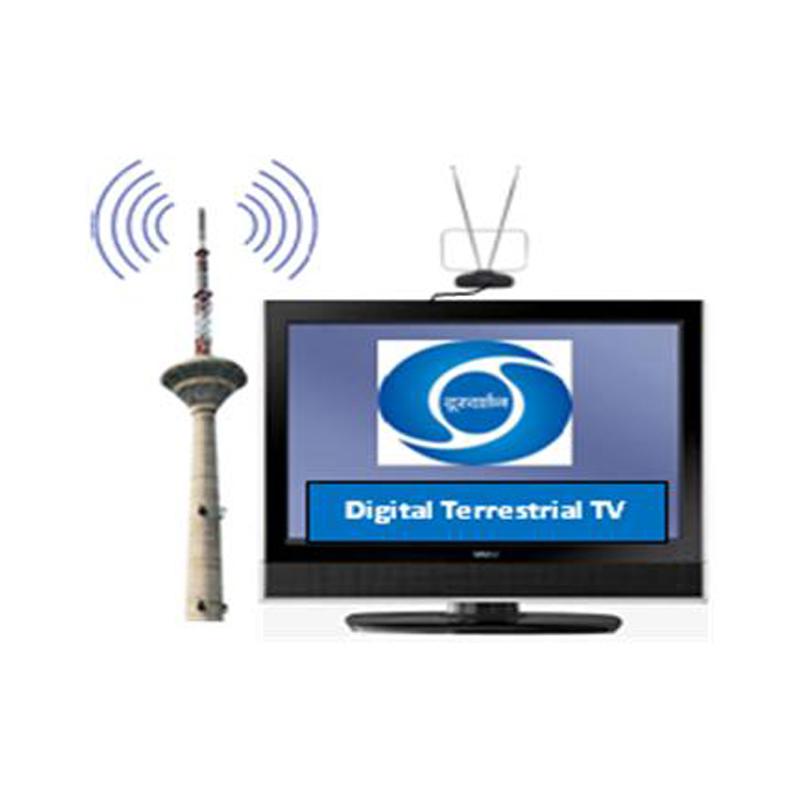
    NEW DELHI: An open house discussion will be held on 19 October 2016 on a Consultation Paper on “Opening Up Digital Terrestrial Transmission.” The OHD will be held in the PHD Chamber near Sirifort Auditorium at 10.00 am.

    The Paper by the Telecom Regulatory Authority of India was issued on 24 June 2016, about a year after Prasar Bharati – which is the only terrestrial broadcaster in the country – unanimously recommended that DTT should be opened up to the private channels. Apart from Prasar Bharati, several private channels have already responded to the paper, which was followed by a linked paper on sharing infrastructure issued on 21 September 2016.

    In its response to the DTT paper, the pubcaster said even as it supports the move, it feels that the potential of available distribution options need to be critically analysed to fulfill their requirements (for example coverage, capacity, reception mode, and type of service etc).

    The public broadcaster has also said that the terrestrial broadcast platform will be relevant in the long term if its usage offers veritable benefits to the broadcasters, the audiences and the society as a whole. Even in countries where cable, satellite or broadband hold a significant market share, terrestrial broadcasting is usually regarded as an essential, flexible and reliable way of delivering broadcast content to a mass audience.

    In its response to 11 questions asked by TRAI in its Consultation Paper on ‘Issues related to Digital Terrestrial Broadcasting in India,’ the pubcaster says that the terrestrial platform must be digital to remain viable in the long term.

    Prasar Bharati CEO Jawhar Sircar, who had told indiantelevision.com in an interview earlier that it had cleared DTT for the private sector more than a year ago, said at the recent Indian Digital Operators Summit (IDOS) that it was willing to give its infrastructure to the private TV and radio channels.

    Also read:

    http://www.indiantelevision.com/television/tv-channels/terrestrial/idos-2016-prasar-bharati-could-share-infra-with-private-players-sircar-161001

    http://www.indiantelevision.com/videos/event-coverage/one-on-one-discussion-with-jawhar-sircar-ceo-prasar-bharati-161004


  • Opening DTT to private sector; discussion planned

    Opening DTT to private sector; discussion planned

    NEW DELHI: An open house discussion will be held on 19 October 2016 on a Consultation Paper on “Opening Up Digital Terrestrial Transmission.” The OHD will be held in the PHD Chamber near Sirifort Auditorium at 10.00 am.

    The Paper by the Telecom Regulatory Authority of India was issued on 24 June 2016, about a year after Prasar Bharati – which is the only terrestrial broadcaster in the country – unanimously recommended that DTT should be opened up to the private channels. Apart from Prasar Bharati, several private channels have already responded to the paper, which was followed by a linked paper on sharing infrastructure issued on 21 September 2016.

    In its response to the DTT paper, the pubcaster said even as it supports the move, it feels that the potential of available distribution options need to be critically analysed to fulfill their requirements (for example coverage, capacity, reception mode, and type of service etc).

    The public broadcaster has also said that the terrestrial broadcast platform will be relevant in the long term if its usage offers veritable benefits to the broadcasters, the audiences and the society as a whole. Even in countries where cable, satellite or broadband hold a significant market share, terrestrial broadcasting is usually regarded as an essential, flexible and reliable way of delivering broadcast content to a mass audience.

    In its response to 11 questions asked by TRAI in its Consultation Paper on ‘Issues related to Digital Terrestrial Broadcasting in India,’ the pubcaster says that the terrestrial platform must be digital to remain viable in the long term.

    Prasar Bharati CEO Jawhar Sircar, who had told indiantelevision.com in an interview earlier that it had cleared DTT for the private sector more than a year ago, said at the recent Indian Digital Operators Summit (IDOS) that it was willing to give its infrastructure to the private TV and radio channels.

    Also read:

    http://www.indiantelevision.com/television/tv-channels/terrestrial/idos-2016-prasar-bharati-could-share-infra-with-private-players-sircar-161001

    http://www.indiantelevision.com/videos/event-coverage/one-on-one-discussion-with-jawhar-sircar-ceo-prasar-bharati-161004


  • IDOS 2016: Prasar Bharati could share infra with private players: Sircar

    IDOS 2016: Prasar Bharati could share infra with private players: Sircar

    GOA: Prasar Bharati has thrown an invitation to all private broadcasters and it reads: come and use our under-utilised resources and infrastructure to increase your reach in digital format terrestrially. What’s more, the Indian pubcaster will help in the distribution.

    According to Prasar Bharati CEO Jawhar Sircar, the best spectrum available for broadcasting was between 470-585  MHZ, which is with the pubcaster Doordarshan lying  highly underutilised. And, private TV channels can join hands as the organisation plans to make linear TV available to the public on their hand-held devices via digital terrestrial transmission (DTT).

    “Twenty  channels can be relayed per two antennas as such (via DTT) in four metros. All that people have to do with DVB-T2 is attach an affordable dongle on their mobile handsets and watch TV channels on the go. We can give it away free to consumers to experience it and then charge for it in the second year,” Sircar said while speaking at IDOS 2016 here on Friday.

    As Doordarshan has 1,400 broadcast towers and in the event of complete conversion to digital, DD may not need all those towers for the sake of broadcasting its own channels. The tower infrastructure could therefore be shared and private broadcasters could look at Prasar Bharati as an alternate delivery medium, Sircar explained. There would then be digitised cable, DTH and DTT on offer to the consumer.

    In conversation with indiantelevision.com founder CEO and editor-in-chief  Anil Wanvari, Sircar admitted that DD’s viewership may be falling and which was getting reflected in BARC’s audience measurement.

    “The grand days of DD happened not at the hands of DD’s personnel producing content but duringRamayan, Buniyaad, etc, all of which were made by private producers,” he said. “Hence DD should not make the content on its own. The people over here don’t know how to. The time slot sale to private producers is the best way to go,” he said, adding Prasar Bharati will primarily work on sharing its resources and reduce (in-house) content creation.

    To drive home his point on indifferent quality of present programming on DD, Sircar said the reach of the pubcaster’s resources hasn’t diminished and added, “We allowed private players to come on DD’s FreeDish platform. Yes, they are willing to pay from Rs 1.5 crore (Rs. 15 million) a year in the beginning to Rs 5.5 crore ( Rs. 55 million) today for a slot on FreeDish. That’s because it’s getting them viewership.”

    However, the former bureaucrat, now in the last lap of his present assignment, was evasive and forthcoming at the same time on FreeDish’s actual reach. “Nobody knows how many set top boxes for FreeDish are there, but the industry knows about missing subscribers of (private) DTH players. Those are our FreeDish subscribers. They could number 30 million or so,” he asserted, adding that DD had not initially put in CAS, but now  intends to do so with Indian CAS, take the boxes up to MPEG4 , and add more transponders for distribution, thereby increasing the DTH platform’s capacity to 250 channels in a phased manner.

    Asked about DD’s role as a pubcaster and obvious comparison with the BBC, Sircar was quick to point out that the British pubcaster gets thousands of crores of rupees every year from consumers  in licence fee, apart from government funding.

    Still, unable to restrain himself from taking a dig at the present Indian system regarding pubcasting, Sircar quipped, “They (BBC) know for sure what is expected from a pubcaster. The problem with DD is that we don’t know our real goal and mission.”

    Quizzed further on muddled policies and the pubcaster’s objectives, Sircar, with is tongue firmly in cheek, quipped, “I am Jawhar Sircar, not Bharat Sarkar.” The punning on his last name and Sarkar (Hindi for Indian government) was telling.

    Also read

    http://www.indiantelevision.com/regulators/trai/prasar-bharati-responds-to-trai-consultation-paper-open-to-sharing-dtt-infrastructure-160926

  • IDOS 2016: Prasar Bharati could share infra with private players: Sircar

    IDOS 2016: Prasar Bharati could share infra with private players: Sircar

    GOA: Prasar Bharati has thrown an invitation to all private broadcasters and it reads: come and use our under-utilised resources and infrastructure to increase your reach in digital format terrestrially. What’s more, the Indian pubcaster will help in the distribution.

    According to Prasar Bharati CEO Jawhar Sircar, the best spectrum available for broadcasting was between 470-585  MHZ, which is with the pubcaster Doordarshan lying  highly underutilised. And, private TV channels can join hands as the organisation plans to make linear TV available to the public on their hand-held devices via digital terrestrial transmission (DTT).

    “Twenty  channels can be relayed per two antennas as such (via DTT) in four metros. All that people have to do with DVB-T2 is attach an affordable dongle on their mobile handsets and watch TV channels on the go. We can give it away free to consumers to experience it and then charge for it in the second year,” Sircar said while speaking at IDOS 2016 here on Friday.

    As Doordarshan has 1,400 broadcast towers and in the event of complete conversion to digital, DD may not need all those towers for the sake of broadcasting its own channels. The tower infrastructure could therefore be shared and private broadcasters could look at Prasar Bharati as an alternate delivery medium, Sircar explained. There would then be digitised cable, DTH and DTT on offer to the consumer.

    In conversation with indiantelevision.com founder CEO and editor-in-chief  Anil Wanvari, Sircar admitted that DD’s viewership may be falling and which was getting reflected in BARC’s audience measurement.

    “The grand days of DD happened not at the hands of DD’s personnel producing content but duringRamayan, Buniyaad, etc, all of which were made by private producers,” he said. “Hence DD should not make the content on its own. The people over here don’t know how to. The time slot sale to private producers is the best way to go,” he said, adding Prasar Bharati will primarily work on sharing its resources and reduce (in-house) content creation.

    To drive home his point on indifferent quality of present programming on DD, Sircar said the reach of the pubcaster’s resources hasn’t diminished and added, “We allowed private players to come on DD’s FreeDish platform. Yes, they are willing to pay from Rs 1.5 crore (Rs. 15 million) a year in the beginning to Rs 5.5 crore ( Rs. 55 million) today for a slot on FreeDish. That’s because it’s getting them viewership.”

    However, the former bureaucrat, now in the last lap of his present assignment, was evasive and forthcoming at the same time on FreeDish’s actual reach. “Nobody knows how many set top boxes for FreeDish are there, but the industry knows about missing subscribers of (private) DTH players. Those are our FreeDish subscribers. They could number 30 million or so,” he asserted, adding that DD had not initially put in CAS, but now  intends to do so with Indian CAS, take the boxes up to MPEG4 , and add more transponders for distribution, thereby increasing the DTH platform’s capacity to 250 channels in a phased manner.

    Asked about DD’s role as a pubcaster and obvious comparison with the BBC, Sircar was quick to point out that the British pubcaster gets thousands of crores of rupees every year from consumers  in licence fee, apart from government funding.

    Still, unable to restrain himself from taking a dig at the present Indian system regarding pubcasting, Sircar quipped, “They (BBC) know for sure what is expected from a pubcaster. The problem with DD is that we don’t know our real goal and mission.”

    Quizzed further on muddled policies and the pubcaster’s objectives, Sircar, with is tongue firmly in cheek, quipped, “I am Jawhar Sircar, not Bharat Sarkar.” The punning on his last name and Sarkar (Hindi for Indian government) was telling.

    Also read

    http://www.indiantelevision.com/regulators/trai/prasar-bharati-responds-to-trai-consultation-paper-open-to-sharing-dtt-infrastructure-160926

  • DD allocates Rs 4.5 lakh for handloom programmes

    DD allocates Rs 4.5 lakh for handloom programmes

    NEW DELHI: Six kendras of Doordarshan will receive a total amount of Rs 4.5 lakh for telecast of programmes relating to National Handloom Day celebrated by the Textiles Ministry last month.
    The decision to reimburse the six stations for varying amounts was taken yesterday (22 September 2016).

    The ministry has already remitted a sum of Rs 16.38 lakh. The additional sanction follows a note sent by additional director-general (development communication division) Ranjan Mukherjee to director-general Supriya Sahu.

    The kendras and the amounts each will receive are: Mumbai and Hyderabad (Rs 1 lakh for two locations by each kendra); Varanasi (Rs 1 lakh for one local, studio and set); Chennai and Bhubaneshwar (Rs 50,000 each ); and Delhi (studio and set).

    A DD directive stated that it has to be ensured that the expenditure does not exceed the ceilings being allocated and each kendra has been asked to send in a report by the fifth of the next month.

  • DD allocates Rs 4.5 lakh for handloom programmes

    DD allocates Rs 4.5 lakh for handloom programmes

    NEW DELHI: Six kendras of Doordarshan will receive a total amount of Rs 4.5 lakh for telecast of programmes relating to National Handloom Day celebrated by the Textiles Ministry last month.
    The decision to reimburse the six stations for varying amounts was taken yesterday (22 September 2016).

    The ministry has already remitted a sum of Rs 16.38 lakh. The additional sanction follows a note sent by additional director-general (development communication division) Ranjan Mukherjee to director-general Supriya Sahu.

    The kendras and the amounts each will receive are: Mumbai and Hyderabad (Rs 1 lakh for two locations by each kendra); Varanasi (Rs 1 lakh for one local, studio and set); Chennai and Bhubaneshwar (Rs 50,000 each ); and Delhi (studio and set).

    A DD directive stated that it has to be ensured that the expenditure does not exceed the ceilings being allocated and each kendra has been asked to send in a report by the fifth of the next month.

  • DD media partner of Ziro Festival

    DD media partner of Ziro Festival

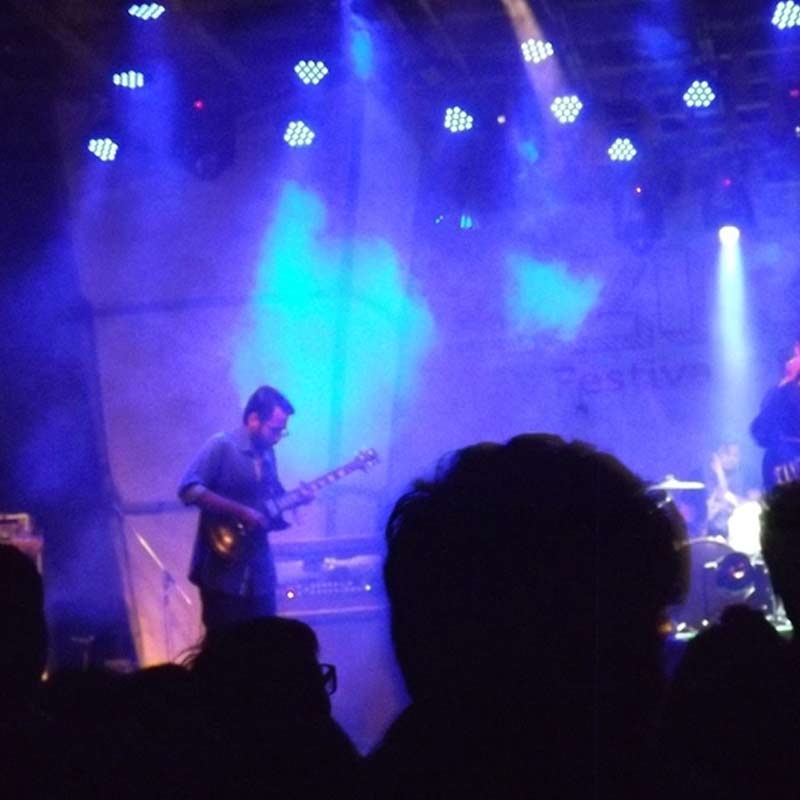
    NEW DELHI: Doordarshan is the media partner of the Ziro Festival of Music (ZFM) commencing today at the remote Ziro valley of Arunachal Pradesh.

    ZFM is a four-day festival organised by a cultural organisation with the support of Tourism Department of Arunachal Pradesh and Ministry of Development of North East region (DoNER). The festival will continue till 25 September.

    Doordarshan director-general Supriya Sahu said this was the first time that DD was associating with the unique festival, and it was a part of strengthening DD programmes in the north-east region.

    Doordarshan Kendra, Itanagar (Arunachal) and Programme Production Centre (NE) of the Guwahati Kendra will provide intensive coverage of the entire festival. It will be telecast on DD-National, DD-Bharati, DD-India, DD-North East and Doordarshan Kendra Itanagar. DD-News will also cover the festival.

    Sahu said that, as a public service broadcaster, Doordarshan hopes that it would promote local tourism at Ziro Valley through its national telecast. The festival, which started in 2012, attracts large numbers of tourists to the state.

    ZFM is one of the most popular outdoor festivals attracting artistes from the region as well as internationally-renowned artistes and travellers from across the world. Ziro Valley is a world heritage site and is home to the Apatani agrarian tribe.

  • DD media partner of Ziro Festival

    DD media partner of Ziro Festival

    NEW DELHI: Doordarshan is the media partner of the Ziro Festival of Music (ZFM) commencing today at the remote Ziro valley of Arunachal Pradesh.

    ZFM is a four-day festival organised by a cultural organisation with the support of Tourism Department of Arunachal Pradesh and Ministry of Development of North East region (DoNER). The festival will continue till 25 September.

    Doordarshan director-general Supriya Sahu said this was the first time that DD was associating with the unique festival, and it was a part of strengthening DD programmes in the north-east region.

    Doordarshan Kendra, Itanagar (Arunachal) and Programme Production Centre (NE) of the Guwahati Kendra will provide intensive coverage of the entire festival. It will be telecast on DD-National, DD-Bharati, DD-India, DD-North East and Doordarshan Kendra Itanagar. DD-News will also cover the festival.

    Sahu said that, as a public service broadcaster, Doordarshan hopes that it would promote local tourism at Ziro Valley through its national telecast. The festival, which started in 2012, attracts large numbers of tourists to the state.

    ZFM is one of the most popular outdoor festivals attracting artistes from the region as well as internationally-renowned artistes and travellers from across the world. Ziro Valley is a world heritage site and is home to the Apatani agrarian tribe.

  • Three television channels renew licences on Freedish in e-auction

    Three television channels renew licences on Freedish in e-auction

    NEW DELHI: Even as three television channels renewed their licences to remain on the country’s only free to air direct to home platform DD Freedish, the price went up to Rs 5.2 crore in the e-auction held yesterday.

    Interestingly, the 30th Auction was held on 15 September, which also coincides with the day when Doordarshan first started beaming in the year 1959.

    A DD source told indiantelevision.com that although the reserve price was Rs 4.3 crore, one of the three channels had bid Rs 5.2 crore.

    The three channels are IBN 7, WoW Cinema, and Bholjpuri Cinema.

    The slots were falling vacant as license period of three three TV channels on the platform was or had expired.

    Freedish has not raised its reserve price. The reserve price had been Rs 3.7 crore till last year but was raised to its present level for the 25th e-auction in January.

    The platform at present has space for eighty channels including its own channels and Lok Sabha and Rajya Sabha TV along with 24 All India Radio channels.

    These sources told indiantelevision.com that Freedish is being encrypted through Indian Conditional Addressable System (iCAS) to keep a tab on the number of subscribers, but it would remain free-to-air.

    The e-Auction will be conducted by M/s. C1 India Pvt. Ltd., Noida which also conducted the first stage of the FM Radio Phase III auctions on behalf of Prasar Bharati.