Category: Terrestrial

  • JioStar blitzes in FY 2025, clocks Rs 10,006 crore in revenue since merger

    JioStar blitzes in FY 2025, clocks Rs 10,006 crore in revenue since merger

    MUMBAI: JioStar is scripting a blockbuster success story, delivering a knockout performance since its merger launch on 14 November 2024. The entertainment juggernaut reported gross revenues of Rs 10,006 crore and an EBITDA of Rs 774 crore, posting a margin of 7.7 per cent — all while still ramping up operations.

    At the heart of this meteoric rise lies JioHotstar, the OTT powerhouse that debuted on 14 February 2025 and rapidly changed the game. Within just five weeks, JioHotstar crossed the milestone of 100 million paid subscribers — a feat unrivalled in the Indian streaming landscape. By March-end, monthly active users (MAUs) hit a staggering 503 million, thanks to a blockbuster calendar packed with the ICC Champions Trophy, IPL, and a digital library boasting over 320,000 hours of content.

    Sport was JioStar’s turbocharger with IPL 2025 opening with fireworks, clocking 1.4 billion digital views (a 35 per cent spike year-on-year), 253 million TV viewers (up 14 per cent), and a colossal 49.6 billion minutes of total watch time across platforms (up 33 per cent). JioHotstar alone posted a dazzling 38 per cent jump in digital viewership, buoyed by a 47 per cent surge in connected TV (CTV) audiences and a 60 per cent higher CTV watch time.

    The ICC Champions Trophy 2025 turned out to be another mega-hit, recording the highest TV ratings ever for a multi-nation cricket tournament in India. The tournament delivered a 4.3 TVR — a 23 per cent gain over the ICC ODI World Cup 2023 — and set a new peak concurrency record with a staggering 61.2 million live viewers during the final.

    JioStar also scored with the Tata WPL season 3, which posted a 19 per cent ratings lift and expanded its reach by 49 per cent. On JioHotstar, WPL viewership surged by 34 per cent, underpinned by a massive 130 per cent growth in CTV engagement.

    In a strategic brand play, all sports channels were unified under the Star Sports banner, now comprising 24 channels — with dedicated Hindi, Tamil, Telugu, and Kannada sports offerings to deepen regional footprints.
    Beyond cricket fever, JioHotstar is claimed to be reshaping entertainment with a new wave of digital experiences. The Mahashivratri night live-stream drew an impressive 39 million views, while Coldplay’s Music of the Spheres tour streamed live to 8.3 million fans, bringing global experiences closer to Indian audiences.

    A new content vertical, “Sparks,” featuring short, snappy segments from India’s top digital superstars, has tapped into the nation’s appetite for quick-binge entertainment — a strategic play to capture Gen Z and millennial attention spans.

    Coupled with its arsenal of premium OTT originals and international content, JioHotstar is fast positioning itself as the de facto platform for premium digital storytelling.

    While the digital frontier blazed ahead, linear TV continued to deliver knockout blows.

    Star Plus cemented its dominance as India’s top Hindi GEC, with six out of the top 10 shows under its belt. Star Gold’s premiere of Stree 2 garnered a reach of 41.2 million, further reinforcing its draw among movie buffs.
    Regional GECs — Star Pravah (Marathi), Star Jalsha (Bengali), Star Maa (Telugu), Star Vijay (Tamil), and Asianet (Malayalam) — retained their #1 spots across states, showcasing JioStar’s deep local connect.

    Meanwhile, niche genres — Kids, Youth, and English — remained the network’s unchallenged playgrounds, extending JioStar’s leadership across every major viewer segment.

    In less than six months post-merger, JioStar has not just delivered on audacious promises — it has rewritten the rulebook. With a dominant hold across digital and linear entertainment, record-breaking sports audiences, and an evolving playbook for new-age content, JioStar is emerging as India’s undisputed entertainment giant.

    As Reliance’s media empire keeps building momentum, it’s clear that for rivals, the chase is only getting harder.

  • Long live linear TV, courtesy of NextGenTV

    Long live linear TV, courtesy of NextGenTV

    MUMBAI: Las Vegas. Normally labelled as Sin City. But in April it was all about the future of entertainment technology with the NAB Show opening with a bang. And what a bang it was. It is a hard knock for those who continue to resist the frenetic pace of technological evolution. One of these is ATSC 3.0 which is coming. Yes, even as it is spreading gradually in the US, it is being planned to come to India. That is if Sankhya Labs, Sinclair Broadcast, Doordarshan and Prasar Bharti succeed in its rollout.

    I happened to see some trial broadcasts in the Las Vegas Convention Centre and it was awesome.

    At early stages yet, ATSC 3.0 endeavours to wirelessly transmit data, video and audio, over the air without using the traditional terrestrial frequencies or the 4G, 5G or 6G spectrum. Also known as NextGen TV, it is a digital television standard developed by the Advanced Television Systems Committee (ATSC), offering features such as ultra-high-definition video, high-efficiency video coding (HEVC), high dynamic range (HDR), immersive audio, and interactive capabilities.

    Sankhya Labs has been working on developing semiconductor solutions and software for ATSC 3.0-enabled devices. These solutions encompass various aspects of ATSC 3.0 technology, including receivers, modulators, demodulators, and related software stacks. Sankhya Labs aims to offer cost-effective and scalable solutions to enable the deployment of ATSC 3.0 infrastructure and consumer devices in India and other markets. Currently, it has developed – and continues to develop –  the PCB, the software, the receiver and dongle, and set-top box designs which will then be farmed out for local manufacture.

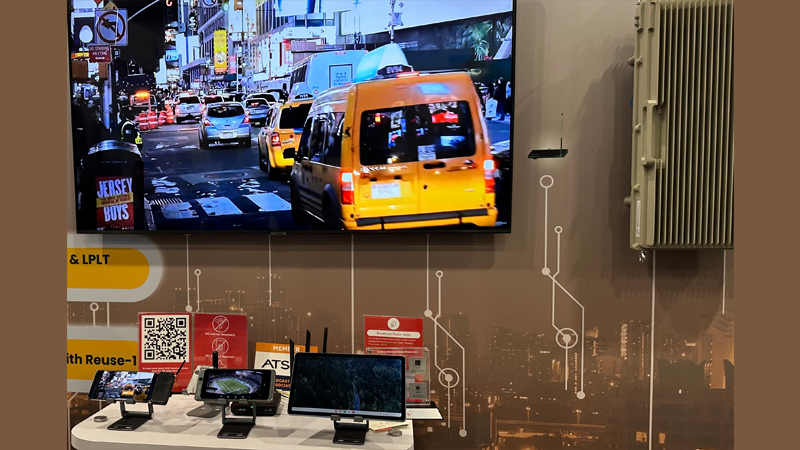
    I happened to see the transmitter developed by Sankhya at the NAB Show which will be mounted – when the service is ripe and ready to be rolled out – next to the cellular towers which dot Indian building terraces in urban and rural India. Then there is the dongle (looking like the early device we used to get connected to the internet) which will act as the receiver and can be attached to an ordinary smartphone with basic video capabilities and receive the transmitted video at almost no cost to the customer. (Remember there are more than 500 million smartphone users in this country and even if 10 per cent of them opt for ATSC 3.0 that will be a humungous base of 50 million viewers) For the home, users will have a set-top box (which Sankhya hopes to gradually decrease in size)  that will sit next to the TV set to receive the signals for family viewing.

    As it does for FreeDish, DD is likely to auction channels to private broadcasters who can reach viewers with another linear service, thus giving traditional TV a new lease on life and advertisers another medium to target the vast masses of television viewers.  This is at a time when YouTube video, Instagram reels, free-to-air TV, and streaming services have totally disrupted satellite and cable pay TV services in India with cord-cutters, cord nevers reaching record highs. The streamers need help to retain clever viewers who are sharing passwords as well as churning when they finish watching shows that interest them in one service or another.

    How long will ATSC 3.0  take to become a reality? Broadcasters, handset manufacturers, telcos have all blackballed it saying that it is a needless platform that is being created. 

    But Sankhya Labs and the NextGenTV committee would like it to spread tomorrow itself. Work has been going on for at least the past three to four years and it might take as much time for the government-owned broadcaster to give it a clear green signal. (I’m crossing my fingers DD moves fast once a government is formed at the Centre post the elections or a private company is given the responsibility of spreading ATSC 3.0 services in a public-private partnership.)  One can be optimistic and only hope that this exciting technology which can lead to the creation of zillions of local channels monitoring local traffic conditions, weather conditions, long-distance medicine, education, etc etc comes quickly enough.

    When it does arrive, it will come with the potential to revolutionise the way we consume our entertainment once again. And oodles of other services. 

  • Zeel Q2 PAT down by 58.3%; revenue up by 2.5%

    Zeel Q2 PAT down by 58.3%; revenue up by 2.5%

    Mumbai: Zee Enterprise Entertainment on Friday reported that second quarter revenue grew by 2.5 per cent to Rs 20,284 million compared to the same quarter in the previous fiscal. Q2 FY23 Ebitda (earnings before interest, taxes, depreciation, and amortisation) was down 28 per cent to Rs 2,973 million. It was impacted by slower growth in revenue and elevated investment in content, marketing, and technology. Ebitda margin was 14.7 per cent compared to 20.8 per cent for the same quarter in the previous fiscal. Profit after tax (PAT) fell by 58.3 per cent to Rs 1,128 million. Profit Before Tax fell by 50.7 per cent to $1,769 million.

    It said that a challenging macroeconomic environment continues to impact operating performance. Domestic ad revenues came in at Rs. 9,610 million, a decline of 7.7 per cent. Ad revenue growth was hampered by FTA withdrawal (Zee Anmol) and a difficult macroeconomic environment. Other sales and services revenue YoY is up 92 per cent aided by theatrical revenues and other syndication deals. Programming and technology costs increased due to higher theatrical releases, investments in Zee5 and higher programming hours in the linear business. Subscription revenue was up 4.2 per cent compared to the same quarter in the previous fiscal year.

    Q2 FY23 subscription revenues were aided by catch-up revenue from the previous quarter in the linear business and underlying organic growth in Zeee5 and music subscription revenues. Other sales and services revenue was up by 92 per cent aided by theatrical revenues and other syndication deals. The increase in marketing costs on a YoY basis is on account of new content launches and higher theatrical releases. Internationally, in Q2 FY23 ad revenue was Rs 518 million and subscription revenue was Rs 1,060 million.

    It stated that it would continue to invest in ZeeTV, Zee Marathi, Zee Tamil, and Movies in order to increase market share.

    Further, it strengthened its market position in Bangla, Odiya, Telugu and in the Kannada market. Q2 FY23 all-India TV network share was 16 per cent. QoQ it was up by 30 bps.

    Its OTT platform Zee5 reported Q2 revenues of Rs1,671 million, marking a 28 per cent growth over the same period in the previous fiscal. Zee5 global MAUs in Q2 FY23 were 112.4 million. This was an increase of 19 million over the same period in the previous fiscal year. The average watch time per month in Q2 FY23 was 198 minutes, an increase of 12 minutes over the same period in the previous fiscal. Over 66 shows and movies (including six originals) were released during the quarter.

    For Zee Studio, four Hindi and six regional movies were released during the quarter. Zeel also said that Zee Music Company is the second-largest music label with 89 million subscribers on YouTube.

  • Prasar Bharati inks deal with Yupp TV to expand DD India’s global reach

    Prasar Bharati inks deal with Yupp TV to expand DD India’s global reach

    Mumbai: Prasar Bharati has signed a memorandum of understanding with OTT platform Yupp TV to distribute DD India in USA, UK, Europe, Middle East, Singapore, Australia and New Zealand.  

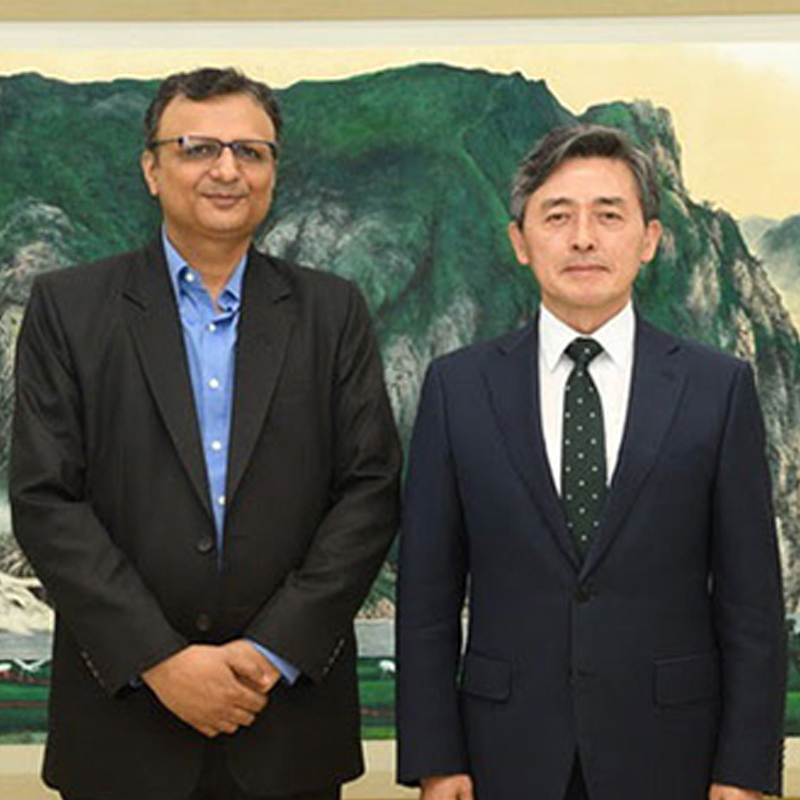
    The content hosting agreement was signed by Prasar Bharati CEO Shashi Shekhar Vempati and Yupp TV founder and CEO Uday Reddy.

    The deal was signed “to expand the global reach of DD India channel, to put forth India’s perspective on various international developments on global platforms and to showcase India’s culture and values to the world,” said the ministry of information and broadcasting in a statement.

    DD India is Prasar Bharati’s international channel. The channel through various programmes offers international viewers India’s perspective on all domestic and global developments. “DD India is available in more than 190 countries and acts as a bridge between India and the Indian diaspora spread across the world,” said the statement.

    The programming on the channel is presented in a thought-provoking manner with sharp analysis and commentary and cutting-edge visual presentation. One of the popular shows is “Bio-Quest,” a series that deals with the origin of Covid-19. Some of the other high viewership shows are “India Ideas,” “World Today,” “Indian Diplomacy,” “DD Dialogue,” “News Night” etc.

  • Presidential Fleet Review ’22: DD deploys multi-camera setup on land & sea

    Presidential Fleet Review ’22: DD deploys multi-camera setup on land & sea

    Mumbai: Doordarshan came up with several innovations to undertake the coverage of the Presidential Fleet Review of the Indian Navy this year. President Ram Nath Kovind reviewed the Indian Navy’s fleet at a ceremonial event at Visakhapatnam on Monday. 

    The event witnessed the participation of nearly 60 vessels of the navy, including ships from the Indian Coast Guard and Indian Merchant Marine, aircraft from the Navy and the Coast Guard. The Review also commemorated the 75th year of Independence with the theme ‘Indian Navy – 75 years in Service of the Nation.’

    Doordarshan’s coverage of the event this year included a vast array of multi-camera set up on land and water with at least 30 cameras in place. Drones with special lenses were used to streamline the broadcast from land and sea while ensuring seamless connectivity. Various elements of the Fleet Review consist of anchorage, a steam past in a mobile column, a flypast and parade of sails, different formations of large columns of vessels etc. All of this was captured by DD cameras deployed on land and sea.

    Doordarshan and All India Radio had been preparing for this mega coverage since October 2021. Teams did extensive site surveys and carried out recce around the venue prior to final deployment on land and sea.

    Multi-camera setup included special vantage points on the hills, high-rise buildings and near the shorelines of Visakhapatnam. DD crew was positioned at five such critical points to provide Live visuals. The entire coverage was done in HD format.

    Grappling with the challenging environment at the sea, the team of DD Engineers by identifying multiple and critical camera positions brought to life the Indian Navy’s full might and prowess. DD crew was deployed on five ships to provide live shots of the president’s yacht during the ceremony. Drones, backpacks, wireless, signal streaming, and satellite uplinks were done at the sea to ensure a seamless live broadcast of the event.

    HD camcorders and PTZ cameras were deployed on the President’s yacht. To enhance viewers’ experience, specialised lenses and state-of-the-art high-resolution PTZ cameras were installed.

    The grandstand master control room was set up at All India Radio Visakhapatnam to receive all the camera sources from the land and sea using RF, backpacks, data links and satellite down-linking.

    The high-definition visuals were made more engaging through graphics and a battery of professional commentators who elaborated upon every detail in Hindi and English as the event unfolded, from the AIR control room.

    Uninterrupted live coverage running for almost three hours was broadcast on DD National, DD News, DD India and multiple regional channels of DD, starting from 8.30 a.m on 21 February till the end of the events. The entire coverage is also available through live-streaming on DD’s YouTube platforms.

  • Den Networks posts consolidated revenues of Rs 294 cr in Q3 FY22

    Den Networks posts consolidated revenues of Rs 294 cr in Q3 FY22

    Mumbai: Den Networks has released its financial results for the third quarter of FY 2022. The company reported consolidated revenue of Rs 294 crore and consolidated EBITDA of Rs 50 crore. It reported a profit after tax of Rs 44 crore and cash and cash equivalents stood at Rs 2525 crore.

    The company saw subscription revenues at Rs 177 crore a decline of three per cent quarter-on-quarter and 12 per cent year-on-year. Its income from marketing/placement stood at Rs 86 crore, a decline of 12 per cent QoQ and 19 per cent YoY. Other operating income stood at Rs 12 crore a 52 per cent decline QoQ but a 70 per cent increase YoY. Its activation revenues stood at Rs 20 crore, a five per cent decline QoQ and 30 per cent decline YoY.

    The company’s content costs stood at Rs 149 crore, a seven per cent decline compared to the previous quarter and an eight per cent decline YoY. Personnel costs stood at Rs 20 crore and other operational expenses at Rs 70 crore.

    Den Networks operates a cable TV distribution business spread across 500+ cities/towns in 13 states and a broadband business that is available across 41 cities/towns in India. 

  • Supreme Court defers NTO 2.0 hearing to 15 February 2022

    Supreme Court defers NTO 2.0 hearing to 15 February 2022

    Mumbai: The Supreme Court bench of Justices UU Lalit, S Ravindra Bhat, and Bela Trivedi has deferred hearing in the New Tariff Order (NTO) 2.0 case to 15 February 2022. The matter pertains to a bunch of petitions filed by IBDF and certain broadcasters against the Bombay high court order on the implementation of the NTO 2.0.

    In October, the apex court had refused to consider the petitioners’ request for interim relief, and posted the case for final disposal on 30 November.

    The NTO 2.0 passed in January 2020 seeks to cap the pay channel price at Rs 12 from the existing Rs 19. After a legal tussle that lasted over a year, the Telecom Regulatory Authority of India (Trai) had managed to get a green signal from the Bombay high court on its implementation on 30 June. 

    The division bench of Bombay HC had upheld the constitutional validity of NTO 2.0, but partly struck down the second provision of the twin conditions as “arbitrary.” As per the second provision, the a-la-carte rates of each pay channel (MRP), forming part of a bouquet, shall in no case exceed three times the average rate of a pay channel of the bouquet of which such pay channel is a part.

    The Indian Broadcasting and Digital Foundation (IBDF), an umbrella organisation of private TV broadcasters and a couple of other private channels had moved the SC in July against the Bombay high court judgement which had upheld the constitutionality of the NTO 2.0.

    Earlier this month, Trai moved the deadline for implementation of NTO 2.0 to 1 April 2022 from 1 December 2021. Distribution platforms like DTH and cable will have to seek subscriber choice till 31 March 2022. 

    As per Trai, broadcasters will have to publish new reference interconnection offers (RIOs) to Trai by 31 December, and simultaneously publish the required information about channel and bouquet offerings and their MRPs on their websites. Broadcasters who have already submitted their RIOs in compliance with NTO 2.0 can revise it by 31 December, it said.

    Several large networks including ETV, Discovery Communications, Sun TV, Times Networks, Zeel, SPNI, and others had come out with their new RIOs in October-November.

  • DD, AIR go paperless with 100% adoption of e-Office

    New Delhi: Use of technology has turned the operations at Prasar Bharati around. It’s no more business as usual, as in less than two years, 577 Centers and 22,348 employees of Doordarshan (DD) and All India Radio (AIR) have embraced e-Office operations. The initiative has helped the public broadcaster to cut down its expenditure on paper by almost 45 per cent in the last two years.

    “Kudos to all 500+ field units of Prasar Bharti across DD and AIR as we cross a significant milestone with 100 per cent adoption of e-office. For an organisation which was 100 per cent paper-based till three years ago, it is a remarkable transformation,” tweeted Prasar Bharti CEO Shashi Shekhar Vempati.

    According to the public broadcaster, the IT enablement of routine office functions through e-Office on the Cloud came as a blessing during the pandemic with the flexibility to work remotely, keeping operational decision making going and reducing the need for unnecessary physical movement of files.

    Prasar Bharti had introduced e-Office in August 2019 a year before the pandemic spread across the world. The idea was to make operations more efficient and paperless. Of total 577 Prasar Bharati centers across the country, 10 per cent adopted e-Office in 2019 (Aug – Dec), 74 per cent in 2020 and the remaining 16 per cent have joined by 18 June, it said in a recent statement.

    The transformation has not only brought speed and transparency in the working of the organisation, but led to creation of more than 50,000 e-Files with the status of every file available online. Internally, concerned departments can trace their files, whether it is in movement or parked or closed.

    “On an average, the complete process of clearing one physical file used to take almost a week. Through e-Office, this has been drastically reduced to 24 hours on an average, sometimes even a couple of hours,” said the public broadcaster. As a result, the figures on total volume of cleared files over almost the last two years and average number of files cleared every month during the same period have jumped significantly, the statement added.

    Apart from reducing Carbon footprint, paperless work also enhanced the COVID safety during the pandemic through remote working, work from home, etc, thus reducing the chances of infections.

  • Phir Subah Hogi: Hope & hard-hitting reality in DD’s latest drama offering

    Phir Subah Hogi: Hope & hard-hitting reality in DD’s latest drama offering

    MUMBAI: If one were to chart the evolution of Hindi general entertainment in India, it would begin with Doordarshan. The genesis of small screen programming and its many and varied offshoots can all be traced back to the state-owned TV network. From depicting the struggles and aspirations of the emergent Indian middle-class, to socially conscious programs, the birth of the Indian soap opera, and the migration of viewers to newer channels with peppier programming, DD has seen it and withstood it all.

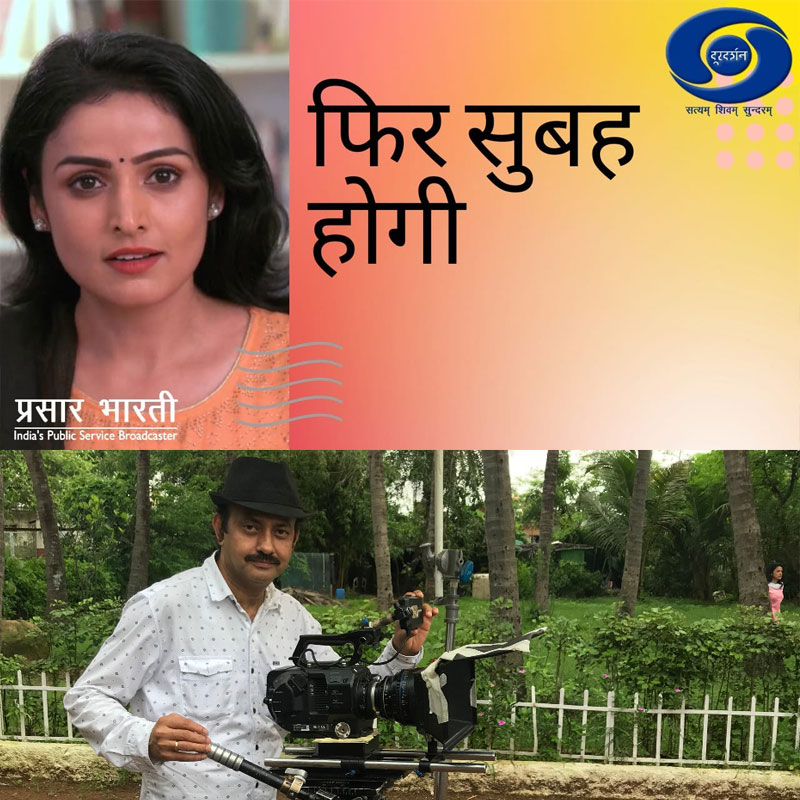
    As the nation became rapidly globalised, small screen directors started deviating from the melodramatic saas-bahu sagas to create something better, for a more discerning audience. A resurgent Doordarshan has started “weekend premiere programmes” on DD National that seek to tell stories with a difference. One such new series – Phir Subah Hogi –, produced & directed by Pinku Biswas, is striking chords with viewers for all the right reasons. The show have got accolades because of its variations and production quality and  is flying high with a slot in the ‘top ten programmes’  within the flagship channels of DD. According to BARC viewership data, the serial clocked the maximum viewership amongst all weekend premiere shows of DD and one of the top five shows of DD national.Phir Subah Hogi is produced by ‘Ayanaa Cinematics’. 

    Launched on 19 September 2020, Phir Subah Hogi examines the serious issue of malpractices in India’s medical sector. The plot revolves around Anupama, played by Shalini Vishnudev, a doctor with an indomitable will and a wish to live life to the fullest, while going against the tedious norms imposed on her by society. Armed with a strong moral compass, she aims to eliminate corruption, malpractices and other evils that are still rampant in many parts of India.

    Unlike conventional ‘heroines’ in Hindi serials, Anupama is bold, outspoken and believes in making her own way. She chooses to serve local people by opting for the noble profession of a doctor. She is openly critical of cases of misconduct in the medical profession, and goes to the extent of fighting against the goons who hoard or supply spurious medicines. The show also reminds us to value the doctors and hospital staff who are trying to save our lives. More importantly, the series emphasises on the importance of imparting proper education to women so they can be financially independent and gain respect and dignity. It also highlights social concerns like dowry, domestic violence and illiteracy. With a firm focus on the lived reality of women in India, the story follows various ups and downs in Anupama’s life and the way she deals with them.

    The cast and their natural acting, the camera work, tight direction and background score add to the overall high quality of production. Biswas has envisaged an out-of-the-box concept and is executing it skilfully with complete sincerity. The show is hard-hitting while simultaneously playing on the emotions of its viewers, and even as it presents a contemporary and progressive outlook, it’s rooted in family values. No surprise then, that it trends on social media whenever a new episode is telecast.

    Phir Subah Hogi provides renewed hope to many middle-class girls who aspire to stand on their own feet and make a difference in the society they live in. Without being blindly idealistic, the show depicts the experiences of career-oriented members of the fairer sex, the challenges they face and the sacrifices they must make – something that has been true for a while now and will resonate with the modern woman.

    Phir Subah Hogi airs every weekend on DD National from 8:30-9 pm.

  • “Most private broadcasters don’t give credit to live DD feed”: Prasar Bharati’s Shashi Shekhar Vempati

    “Most private broadcasters don’t give credit to live DD feed”: Prasar Bharati’s Shashi Shekhar Vempati

    NEW DELHI: Prasar Bharati CEO Shashi Shekhar Vempati is a little miffed with private broadcasters. The reason? While 200 TV channels carried Doordarshan’s live coverage of main events, most private channels didn’t give credit.

    “I asked my team to look at how many channels gave credit to Doordarshan. There were only a handful and the rest had cleverly masked the logo with advertisements. But as a public broadcaster, it's our responsibility to share content without any expectations,” he expressed in a conversation with Governance Now MD Kailashnath Adhikari.

    Vempati shared that over 160 million people watched the live telecast of foundation stone-laying ceremony of the Ram temple in Ayodhya, which resulted in viewership hike of more than seven billion viewing minutes across television in India. The event took place between 10.45 am and 2 pm on 5 August.

    Although it is a public broadcaster, Vempati believes there is a need for it to be monetised as well. “Monetisation is a priority because it improves our self-sufficiency and reduces dependence on public money."

    However, there are several constraints while monetising a public broadcasting channel. "Unlike a private broadcaster, I can't monetise everything and anything the way I want. I have certain obligations and responsibilities. And those are not necessarily commercial. So, to the extent that we do monetise, we also share a lot without any expectation of monetisation. One new area that we have been monetising is for digital especially our archival content,” he said.  

    He also mentioned that Doordarshan is planning to leverage the phenomenal success of Ramayana and Mahabharata.