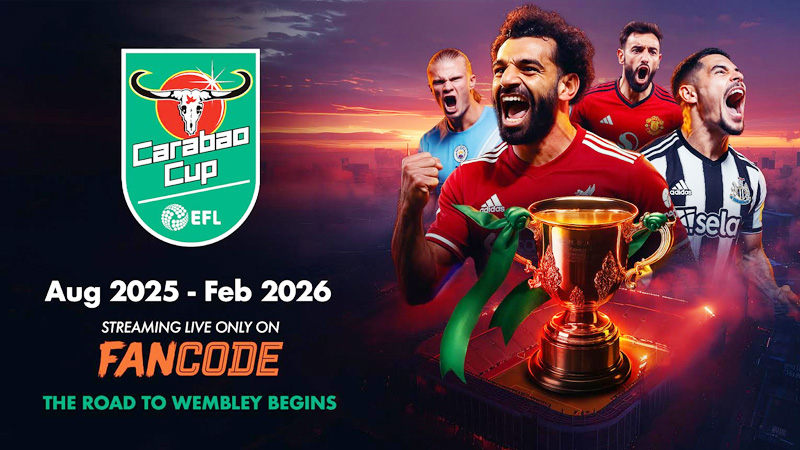
MUMBAI: Stormy seas or smooth sailing? The Carabao Cup’s second round promises a splash of drama as Manchester United head to League Two minnows Grimsby Town on 27 August, a fixture that already has the scent of a classic cup upset. United, still chasing their first win of the season under Ruben Amorim, are expected to hand new signing Benjamin Šeško his debut up front, while Harry Maguire could be thrown back into the starting XI. Kick-off at Blundell Park is set for 12:30 am IST and all eyes will be on whether the Red Devils can steady their shaky start.
The round features nine Premier League clubs, with Graham Potter’s West Ham seeking their first victory of the campaign against Wolves (12:00 am IST). Bournemouth and Brentford collide in the round’s only all-Premier League tie at 12:15 am IST, while Sunderland host Huddersfield and Burnley take on Derby at the same time. Sheffield Wednesday’s clash with Leeds United completes Wednesday’s opening batch at 12:30 am IST.
The next day, Brighton travel to Oxford United (12:15 am IST), Fulham welcome Bristol City (12:15 am), and Everton face League Two side Mansfield Town (12:15 am). But it’s Grimsby vs Manchester United that has captured the imagination, the kind of David vs Goliath script that has given this competition its fairytale reputation for decades.
All fixtures will stream live and exclusive on Fancode across web, mobile, and TV.
MUMBAI: Cricket advertising in India is a genre unto itself, but Sony Pictures Networks India may have just served up one of its most affecting innings yet. Its new Asia Cup promotional TVC, titled Asia Cup ka maha-muqabla, does not rely on pyrotechnics or overblown jingoism. Instead, it leans into something far more powerful: the lived reality of a billion-strong cricket nation.
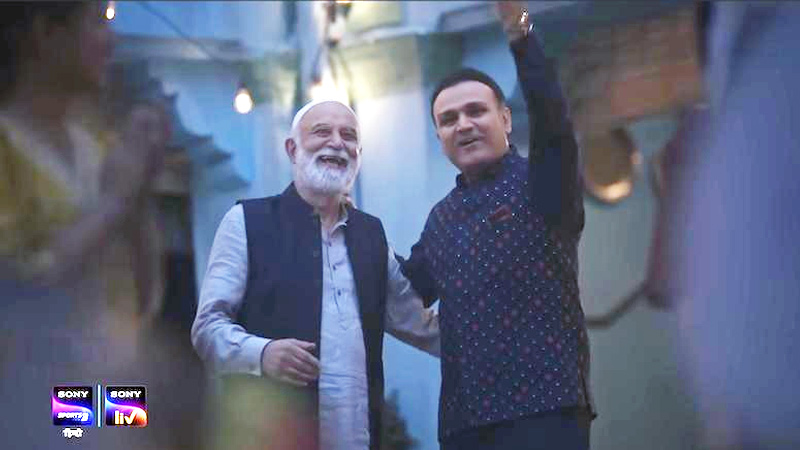
The spot opens in a middle-class household, the sort instantly recognisable to viewers across India — compact, cluttered, warm. A multi-generational family, representing the classic Indian joint household, is gathered around a television set. Their emotions run the gamut from tense expectation to barely-suppressed hope. In their midst sits Virender Sehwag, the retired swashbuckler whose effortless stroke play once embodied India’s batting swagger. His presence is casual, yet symbolic: cricket is family.
On screen unfolds the ultimate cliché of Indian sport — a last-ball thriller against Pakistan. Suryakumar Yadav, known for his 360-degree stroke-making but carrying the weight of a poor run against Pakistan, takes guard against Shaheen Shah Afridi, Pakistan’s fiery left-arm quick. India need three off the final delivery. The room holds its breath. Yadav unfurls his trademark flick-sweep off his pads. The ball soars over fine-leg, lands in the stands. India have won.
The family erupts. So do, by implication, the millions watching at home across the country. The genius of the commercial is that the victory is not just India’s, not just Yadav’s redemption, not just a nod to the India–Pakistan rivalry that remains cricket’s greatest theatre. It is framed as a shared triumph of nationhood.
Sony has laced the narrative with subtle social cues. The family members are deliberately cast without overt religious markers — no heavy-handed signifiers of Hindu, Muslim, Sikh, or Christian identities. Instead, their togetherness suggests an anonymous universality, a blend of every Indian home. When one family member remarks, “God has listened to your prayers,” the phrase resonates across religions. It could as easily be said in a temple, mosque, church, or gurdwara.
This inclusivity crystallises in the closing voiceover: “When it comes to Team India, 140 crore hearts beat as one.” It is more than a tagline; it is an assertion of secular nationalism, packaged through the one institution that cuts across fault lines of caste, creed, and community — cricket.
The choice of Sehwag is inspired. His image has long been that of the approachable great: less demi-god than street-cricketer made good. Sehwag in a living room, laughing along with ordinary Indians, works as shorthand for the collapsing of boundaries between the game’s elite and its fans. In a country where cricket stars are often deified, here is one being human.
The film also plays on nostalgia. For decades, Indian households have arranged their routines around cricket matches. The image of families huddled before television sets — chai cups rattling, grandparents muttering prayers, children imitating shots in the cramped corridor — is imprinted in the national psyche. By invoking that memory, Sony makes the Asia Cup not just about live sport, but about reliving a tradition.
The timing of the TVC is astute. The Asia Cup kicks off on 9 September, with India–Pakistan ties expected to draw record ratings. This is also India’s first major tournament after the passage of the Online Gaming Bill 2025, which banned betting and fantasy sports with cash stakes but emphasised “safe online gaming” and esports as cultural exports. Sony’s film neatly dovetails with the government’s rhetoric: cricket as a unifying, wholesome national obsession rather than a site of division.
Advertising scholars will note how Asia Cup ka maha-muqabla breaks from older tropes. Previous India–Pakistan promos often thrived on antagonism: taunts, satire, chest-thumping. Sony, by contrast, softens the edges. The rivalry remains fierce — the six off Afridi is fantasy fulfilment — but the messaging is inward-looking. The focus is not beating Pakistan as much as celebrating India.
For a tournament where sport often becomes geopolitics, this is a nuanced turn. In less than a minute, the campaign positions cricket as faith, family, catharsis, and national glue.
That, in the end, is why the spot works. It is not simply flogging a match, or a tournament. It is selling the idea that India itself is best understood when a billion-plus citizens are praying for the same thing, shouting at the same screen, and rejoicing together when the ball sails into the stands.
MUMBAI: Kabaddi isn’t just about raids and tackles anymore, it’s about brands charging onto the mat too. As Season 12 of the Pro Kabaddi League (PKL) gets ready to storm Visakhapatnam on August 29, official broadcaster JioStar has announced four marquee sponsors: Shriram Finance Limited (BFSI), UltraTech Cement (Infrastructure), Birla Tilestix (Tile Adhesive), and energy drink giant Red Bull.
The timing is a marketer’s dream. With the festive season around the corner, PKL offers advertisers a golden chance to ride the wave of India’s second-largest sporting league. Season 11 drew over 283 million viewers across TV and digital, including 140 million in Hindi-speaking markets alone numbers that outperformed reality shows and talent hunts. Fans weren’t just tuning in; they were hooked, watching 64 per cent of game time per match on average.
Season 12 promises to turn up the volume. Expect a revamped format, richer storytelling, deeper fan interactivity, and expanded coverage across 10 plus TV channels and seven language feeds on JioHotstar. JioStar is betting that this multi-platform blitz will take engagement to record levels.
“PKL has built a loyal and growing viewership, making it one of the most followed sporting leagues in the country,” a JioStar spokesperson said. “Season 12 will build on this momentum by offering brands high-impact visibility and strong engagement with premium audiences.”
The action begins with a high-voltage Southern derby Telugu Titans vs Tamil Thalaivas setting the stage for another season of bruising raids, flying tackles, and, now, brand battles. With more sponsors expected to pile in, Season 12 looks set to prove that kabaddi isn’t just India’s ancient sport, it’s also modern marketing’s new playground.
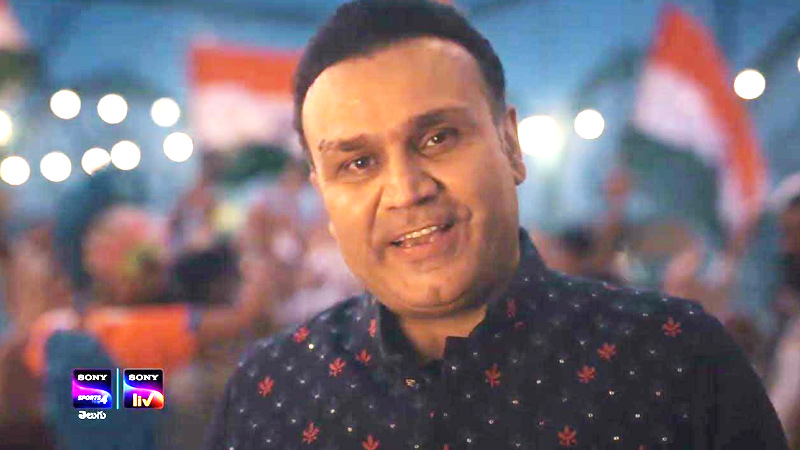
MUMBAI: When Suryakumar Yadav sends the ball sailing for six, India doesn’t just win a match 140 crore hearts leap together. That’s the pulse Sony Sports Network has bottled in its new campaign film, Rag Rag Mein Bharat, unveiled ahead of the Asia Cup 2025. Set in a small-town courtyard, the film captures the quintessential India-Pakistan cricket moment: neighbours huddled around a TV, silence stretching as the bowler runs in, before erupting into dhol beats, tricolour waves and unfiltered joy. And to seal the sentiment, none other than Virender Sehwag delivers the rallying cry: “When it comes to India, 140 crore hearts beat as one.”
Sony Pictures Networks India, chief revenue officer for distribution & international business and head of ports business Rajesh Kaul called the Asia Cup “one of the most iconic tournaments in world cricket.” He said #RagRagMeinBharat is a reminder of cricket’s power to transcend divides of age, gender, region and religion. “Having Sehwag embody that sentiment makes it even more powerful,” he added.
For Sehwag himself, the campaign is a throwback to his own Asia Cup days. “Walking into the dressing room, you could feel the buzz even before stepping onto the field,” he recalled. “The chants, the energy fans weren’t just watching; they were living it with you. That’s what this film gets spot on.”
The 17th edition of the Asia Cup, played in the UAE from 9–28 September 2025, will feature eight teams in a T20 format, with group stages leading into the Super Four and the final. India, the defending champions, enter the fray with a record eight Asia Cup titles under their belt.
Rolling out in Hindi, Tamil and Telugu across Sony’s broadcast network, Sony Liv and social media, the campaign is less an ad and more a rallying anthem. For a nation where cricket is religion, Rag Rag Mein Bharat might just be the battle cry echoing through every living room, street corner and stadium.
MUMBAI: Call it style with a storm surge Bengal Warriorz are charging into Pro Kabaddi League Season 12 with more than just tackles and raids. The founding franchise, which begins its campaign against Haryana Steelers on 31st August, has unveiled a new identity and a campaign that promises both tashan and toofan. Branded Tashan Toofani, the campaign fuses swagger off the mat with sheer force on it. Developed by Capri Sports and SI, it portrays the Warriorz as equal parts cool and combative, a team that treats kabaddi not just as sport but as cultural expression.
The storm’s soundtrack? An official team anthem, an upbeat rap track peppered with kabaddi jargon, trend-driven lingo and bass-heavy swagger. More than a hype song, it’s designed as a rallying cry for the next-gen fanbase, capturing the essence of the Warriorz effortlessly stylish, yet battle-hardened.
“We wanted something that mirrors the courage, energy and flair of this squad,” said Capri Sports director for Contact Sports Apurv Gupta. “Tashan Toofani is about fearlessness on the mat, but also about a bold lifestyle that speaks to the youth. These Warriorz aren’t just players, they’re redefining what it means to be a modern kabaddi icon.”
The young squad, sharpened for Season 12, enters with a dual mission: to continue the Warriorz legacy as one of PKL’s founding forces, and to carve out new cultural relevance by blending grassroots grit with Gen-Z cool.
With whistles set to blow, beats already thumping, and a storm brewing in Bengal blue, the Warriorz’ Tashan Toofani looks ready to rattle rivals and rally a generation.
MUMBAI: From Marvel fan to myth-maker, Sidharth Kedia is now set to script his own epic. Entertainment start-up Mythik, which has declared its ambition to be the “Disney from the East,” has appointed the seasoned media and gaming leader as its new chief operating officer. Kedia isn’t just another boardroom name, his résumé reads like a saga of scaling. At Nodwin, South Asia’s largest esports company, he grew revenue 10x, expanded the business from 1 to 8 countries, raised 50 million dollars, and boosted valuation a staggering 28x. At Jiogames, he spearheaded the growth of Reliance’s gaming arm. As chief strategy officer at Viacom18, he helped expand regional TV and strengthened OTT play.
His career highlights also include leading Mukesh Ambani’s project management office during Jio’s telecom launch, overseeing Network18’s integration into Reliance, and co-founding Ambit Pragma Ventures, where he raised 150 million dollars for media and entertainment investments.
Armed with a Chartered Accountancy degree, a six sigma black belt from GE, and an MBA from NYU’s Stern School of Business, Kedia brings both precision and creative flair to the role.
Mythik’s founder and CEO Jason Kothari, called Kedia a “rare combination of disruptive strategist and operator” with the breadth to reimagine how Eastern mythology can capture global audiences.
For Kedia, the mission is personal. “Since childhood, I’ve been captivated by these stories my grandparents told me. As a Marvel fan, I’ve often wondered why our superheroes never got the global spotlight they deserve. We plan to change that at Mythik,” he said.
With Kedia at the operational helm, Mythik isn’t just betting on myth, it’s gearing up to make Eastern legends the next big pop-culture phenomenon.
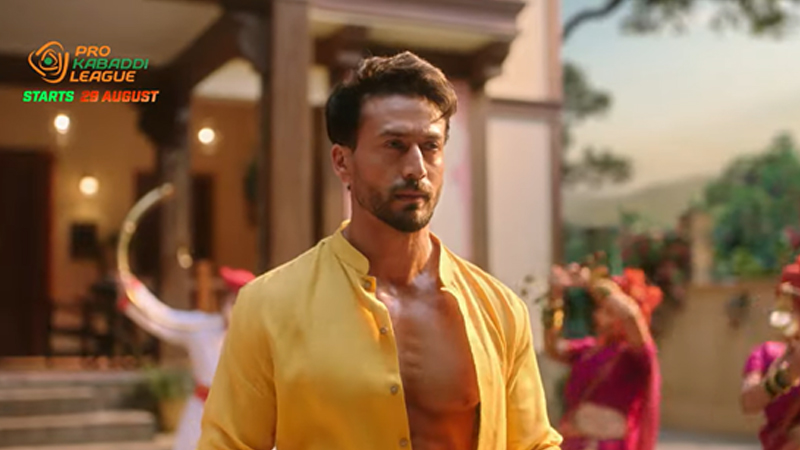
MUMBAI: When Tiger Shroff says “Ghus Kar Maarenge,” you know things are about to get physical on screen and on the mat. JioStar has dropped the second film of its high-octane Pro Kabaddi League Season 12 campaign, and the action star brings all the grit and swagger that mirrors kabaddi’s raw intensity.
Conceptualised by Zerofifty, the cinematic spot kicks off with Tiger facing down a mob of hostile neighbours at his gates. Instead of flinching, he walks out with a kabaddi player’s composure, serving up a line as fierce as a raid: “Ghus kar maarne ki baatein toh sab karte hain, par yahaan hum kar ke dikhate hain” (everyone talks of attacking, but here we do it and prove it).
The campaign, titled “Ghus Kar Maarenge,” doubles down on the league’s promise of fearless aggression and edge-of-the-seat drama. Released in Hindi and Marathi, the film highlights that kabaddi is not about bravado, it’s about backing it up, move for move.
“This is going to be the most exciting season of Pro Kabaddi League yet,” a JioStar spokesperson said, pointing to format changes and new rules designed to guarantee a result in every clash. “Tiger Shroff was the perfect face to embody this season’s intensity.”
For Tiger, the campaign is personal: “Kabaddi is raw, real, and Indian to the core. It’s not just strength but fearless conviction, and I can’t wait to see India’s toughest athletes rise again.”
Season 12 kicks off on 29 August 2025 with a southern derby between Telugu Titans and Tamil Thalaivas, broadcast live on JioHotstar and Star Sports Network. With a new format, guaranteed outcomes, and Tiger leading the war cry, the mat is set for kabaddi’s fiercest showdown yet.
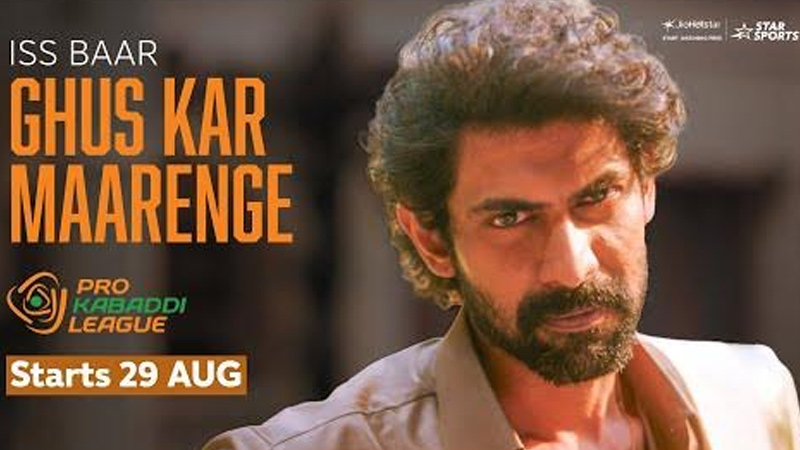
MUMBAI: When Rana Daggubati says Ghus Kar Maarenge, even the toughest villains step back. JioStar has kicked off its Season 12 Pro Kabaddi League (PKL) campaign with a high-octane film starring the Telugu star, setting the tone for what promises to be the most aggressive and competitive season yet. Released in Hindi, Tamil, and Telugu, the film opens with Daggubati confronting a hostile group outside a mansion. With a snap of his fingers, he flips the script summoning carpets, drums, and grandeur before marching forward to face them down, echoing kabaddi’s signature blend of poise and power. He seals the film with a line every Titan fan will remember: “Ghuss ke marne ki baatein toh sab karte hai, but hum Telugu Titans wale karke dikhaate hai.”
Season 12 arrives with new rules designed to guarantee results in every match, upping the stakes for fans and players alike. “The campaign reflects this shift in intensity,” a JioStar spokesperson explained, noting that Daggubati’s screen presence, composure, and authority made him the natural choice.
For Daggubati, the association is personal. “Kabaddi is not just a sport, it’s a battle of will, power, and fearless spirit. The Pro Kabaddi League has redefined how we look at home-grown sports in India. There’s something electrifying about the raw aggression on the mat every single match,” he said.
The action begins on 29 August, with a southern showdown between Telugu Titans and Tamil Thalaivas in the season opener. Every tackle, raid, and block will stream live and exclusive on JioHotstar and Star Sports Network, as kabaddi prepares to deliver yet another adrenaline-charged spectacle.
Raj Kamal Singh, known simply as RK to friends and protégés, never quite fit the mould he was born into. A Haryana-cadre bureaucrat with the air of a genial civil servant, he somehow found himself reshaping Indian broadcasting in the 1990s. First came DD Metro, conjured up with Rathikant Basu and Urmilla Gupta to inject a dash of freshness into the government-owned Doordarshan’s lumbering edifice Then came ESPN India, and later ESPN Star Sports — ventures that took him from government files to live sport, a journey no “babu” had probably attempted before.
At ESPN’s makeshift south Delhi office in the early days — a converted garment-export bungalow with half a floor to itself — Singh presided over what would become a generation-defining team. “He was the reason I found my calling in television,” recalls Anurag Dahiya, now the ICC’s chief commercial officer, who was one of the early recruits. RK, he said, was the avuncular figure in a scrappy start-up atmosphere, a mentor who mixed bureaucratic calm with private-sector mischief. He helped build up a pay television business for ESPN in cable television’s infant days.
“For us, he was an approachable CEO. (We could) walk into his cabin – just like a friend. (He was fond of) taking us for bowling…Opening his house for parties along with his loving wife and kids. (We went for) river rafting trips, His famous lassi During lunch that was open to all – endless memories that we all forever cherish with him – shining our careers,” adds NDTV special projects associate vice-president Rachna Oberoi.
Later came Zee Telefilms, where Singh sparred with cable operators, shrugged off boardroom spats and, with a trademark guffaw, told anyone who fretted: “It’s all part of business. You can’t take it very seriously. It will get sorted out.” It usually did.
Colleagues remember a man who taught by example rather than sermon. Many he hired went on to lead, or to found, sports businesses across the globe. His greatest legacy was not the channels he ran, but the people he groomed.
Eventually he walked away from the industry altogether, setting up a lodge in the forest (if we have got it right) — a suitably idiosyncratic ending for a man who had long made light of television’s supposed seriousness. On 15 August he died of a heart attack, aged 75.
The sports-broadcasting world owes him more than it realises. RK would probably chuckle at the thought, suited and booted as he was vaunt to be, dismiss the fuss, and pour another drink.
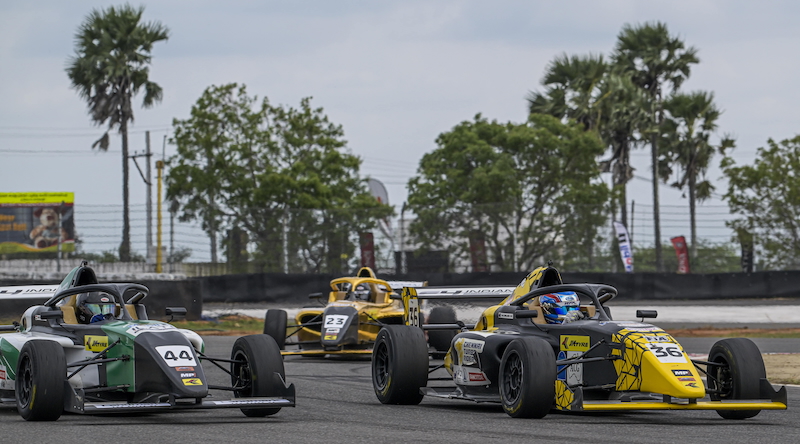
COIMBATORE: The Indian Racing Festival (IRF) – the country’s most ambitious motorsport showcase – tears off the starting grid this weekend at the Kari Motor Speedway, Coimbatore, promising a heady mix of raw pace, engineering finesse and fierce competition. Across 16–17 August, fans will witness three of India’s top championships sharing one high-octane stage: the franchise-led Indian Racing League (IRL), the FIA-certified Formula 4 Indian Championship (F4IC) and the FLGB4 class from the 28th JK Tyre FMSCI National Racing Championship.
The 2025 festival stretches over five race weekends across established circuits and select street tracks, pulling Indian motorsport closer to the global mainstream. It is as much a celebration of driving talent as it is of the deep bench of mechanics, engineers, data analysts and strategists who turn precision into performance.
This year’s IRL grid – a six-franchise, mixed-gender format – was set through the league’s first-ever official drivers’ draft in Mumbai. The process delivered a potent mix: international veterans, rising Indian stars and female racers competing on equal terms. Teams such as Speed Demons Delhi, Hyderabad Black Birds and Chennai Turbo Riders will campaign Wolf Thunder GB08 prototypes powered by Aprilia RSV4 1.0-litre engines producing 201 HP, capable of touching 290 km/h.
F4IC, the FIA-recognised feeder series, offers a rare chance for domestic drivers to earn FIA Super Licence points without leaving the country. Competitors will pilot the latest Mygale Formula 4 Generation 2 chassis fitted with Alpine engines prepared by Oreca – a platform designed to sharpen racecraft while meeting the highest global safety standards.
Anchoring the grassroots end is FLGB4, India’s longest-running national racing category. Powered by 1300cc Suzuki Swift engines and now in its 28th year, it has been the proving ground for names like Narain Karthikeyan, Karun Chandhok and the Maini brothers. The 21-driver grid features multi-team rivalries, from Sarosh Hataria’s Team Ahura Racing to Armaan Ebrahim’s MSport.
“Coimbatore has always been a key pillar of Indian motorsport – from grassroots karting to professional racing,” said Racing Promotions Pvt Ltd chairman and managing director Akhilesh Reddy. “The competitive bar is higher than ever, but what excites me most is the depth of the ecosystem – from race engineers to pit crews – ensuring racing that is fast, precise, safe and world-class.”
The festival will be broadcast live on Star Sports Select 2 and JioHotstar, with Round 2 heading to the Madras international circuit from 22–24 August, followed by further rounds in October and November.
With FIA points on the table, a mixed-gender franchise league and a national championship under one banner, IRF 2025 is not just starting its engines – it is accelerating India’s push into the global motorsport slipstream.