Category: Sports

  • Verizon Wireless, Univision team up for mobile World Cup content

    Verizon Wireless, Univision team up for mobile World Cup content

    MUMBAI: In an effort to beef up its Spanish-language content offering for its wireless customer base, Verizon Wireless has reached a deal with Univision for the exclusive rights to Spanish-language mobile video clips, recaps and highlights from the upcoming 2006 FIFA World Cup.

    Content will be based on Univision’s Spanish-language coverage of the 2006 FIFA World Cup Germany. Clips with Spanish-language commentary of goals in other games will be on V CAST within 30 minutes after halftime and customers will also be able to watch a recap of the match within one hour of the end of each match.

    The agreement will give V CAST customers wireless access to highlights from “Copa Mundial de la FIFA Alemania 2006” throughout the tournament, which runs from 9 June to 9 July 2006. Verizon Wireless is touting the deal as the first to deliver these highlights on wireless phones.

  • Eurasia Cup telecast to be split between SaharaOne, Filmy

    Eurasia Cup telecast to be split between SaharaOne, Filmy

    MUMBAI: Looks like Sahara is not about to let go the foothold it has got into the India cricket telecast game. After having aired the recently concluded series between India and England, SaharaOne has now acquired the rights for the next five years to a new offshore cricket event — the EurAsia Cricket series.

    The first edition of the event will be held in the Gulf Emirate of Abu Dhabi from 22 April to 5 May 2006 and is the result of an alliance between the Jawaharlal Nehru Sports Trust and the Abu Dhabi Cricket Council.

    SaharaOne CEO Shantonu Aditya says, “We are delighted to partner with Creative Eye (from whom Sahara got the rights) in promoting the EurAsia Cricket Series 2006.” Creative Eye had earlier acquired the rights for this VK Sports Management Group.

    BSNL is Sahara’s title sponsor for the event which will feature the A teams of India, Pakistan and Sri Lanka. Making up the numbers for this six-nation event are cricket “minnows” Holland, Ireland and UAE. The teams are divided into two groups. Sahara will simulcast the 14 day-night ODIs on SaharaOne and and recently launched movie channel Filmy. SaharaOne though will take a break between 8:30-10:30 pm to protect its prime time shows while Filmy will air the matches uninterrupted.

    The big question of course is what benefits Sahara expects to get out of a series at a time of serious cricket overload what with the national team literally ending one series and getting into another with barely a break in between. More so since Aditya confirmed that Sahara had no plans to launch a sports channel in the near future.

    According to Sahara One Television COO Purnendu Bose, the Subrato Roy-promoted network sees three clear opportunities that it would be exploiting from this property, for which it holds the global satellite rights as well as in stadia rights.

    First of course is the composition of the Indian team, captained by Venugopala Rao, which includes the latest star in the making and opener Robin Uthappa, pacemen RP Singh and VRV Singh, leg-spinner Piyush Chawla, all-rounder Reetinder Singh Sodhi, and wicketkeeper batsman Dinesh Kaarthick, all of whom have played for India. Opener Vidyut Sivaramakrishnan and middle-order batsman S. Badrinath also find a place.

    The team composition allows for Sahara’s marketing pitch for this series, which is that the network will be showcasing “today’s heroes” or the “Young Tigers” who will have a significant role to play in the Indian cricket scheme of things with the mantra being so much on youth. According to Bose, this event going forward had the potential to become a major property in itself.

    Explaining the programming strategy, Bose states that the event will “get me additional ratings during my graveyard shift (2:30 pm to 7:30 pm)”. The telecast on SaharaOne, in much the same way as national broadcaster Doordarshan does with its main channel DD1 when it telecasts India cricket, will pull away from cricket at 7:30 pm and hook back in at 10:30 pm to get in the “final hour of action”.

    Thirdly, says Bose, “whatever additional sampling that happens because of the cricket is good for the channel.”

    One wonders though that with the Rahul Dravid and the gang playing so much cricket whether there will be any interest left in watching an India A team. No matter how good India A is, the coverage devoted to it in the press indicates that there is a huge question mark over just how much interest the average cricket watcher will have in it.

    Having said that, cricket that does not feature the main eleven has generally been given step motherly treatment in this country. So it is encouraging to see SaharaOne at least try and push the cause of the sport beyond just the main eleven.


  • ‘We are targeting a 50% growth in 2006-07 on the back of the Fifa World Cup’ : Sricharan Iyengar – ESPN Software India Ltd vice president sales and marketing

    ‘We are targeting a 50% growth in 2006-07 on the back of the Fifa World Cup’ : Sricharan Iyengar – ESPN Software India Ltd vice president sales and marketing

    ESPN Star Sports (ESS), a monopoly in satellite sports broadcasting for years, has found challengers like Ten Sports, Max and Zee Sports with cricket content being fragmented. The latest thorn in the playing field is Harish Thawani who walked away with the coveted four-year India cricket rights from BCCI (Board of Control for Cricket in India) for a humungous $612 million.


    For ESPN and Star Sports, the running in the current fiscal has been particularly tough. India-Zimbabwe series was the only India-playing cricket property ESS had. Market observers say subscription revenues from cable TV have seen a substantial dip, with various estimates putting the fall in the region between Rs 1.3 billion to Rs 1.7 billion.


    But ESPN Software India Pvt Ltd vice-president, sales and marketing Sricharan Iyengar has strongly dismissed these as “baseless rumours” in the market. According to him, the two sports channels have become strong brands which consumers want because of their all-round sports content. The company has managed to sustain its subscription revenues from cable TV operators, he says. Besides, direct-to-home (DTH) has thrown up an added opportunity even as Dish TV has managed to gather close to one million subscribers.


    In an interview with Indiantelevision.com’s Sibabrata Das, Iyengar talks about the important properties that ESS has for the next two years including the Fifa football World Cup. Responsible for overseeing the marketing and distribution functions of ESPN and Star Sports across South Asia, he says ESS has a target of 50 per cent growth in revenues for the 2006-07 fiscal. He also elaborates on how ESS has created a wholesome sports network while pursuing with aggressive buying of cricket rights.


    Excerpts.

    Having lost sizeable amount of India-playing cricket, has ESPN Star Sports (ESS) entered into a phase of de-growth in subscription revenues?


    We have been able to sustain our revenues in the current fiscal (ended June, 2006) on the back of other sports like football and hockey. We have achieved this despite the absence of key driver programming. The only India-playing cricket property we had was the India-Zimbabwe series, but we had to share it with Doordarshan. This shows that the ESS brand stands for delivering all-round sports. And it is this that makes us optimistic about the future.

    Does this mean that you will return to the growth path in the coming year?


    There is no reason for us to feel that the business is unhealthy. We are, in fact, targeting a 50 per cent growth next year on the back of the Fifa World Cup and two India-playing cricket series. Actually, for the next two years, we have 9-10 driver events one behind the other (including India-South Africa, India-England, Natwest, Asia Cup, India-Australia, VB series and Euro Cup). We see healthy growth from the hotel business as well which we started two years ago. The peripheral markets like Pakistan, Bangladesh and Sri Lanka are also expected to grow. Significant contributions will come from direct-to-home (DTH) with the new operator, Tata Sky, preparing for launch by the middle of the year.

    But isn’t it hurting to be off several cable networks like ICC in Pune?


    The de-activation rate is just 7-8 per cent. The fact is that the viewer wants our channels because we have a spread of content across sports. Which is why in DTH, we are charging Rs 40 per month on a 100 per cent declaration. That is the power of the brand. As for our contract with ICC, we had certain commercial demands which were not agreed upon. We have consciously sold DTH in Pune. There are 20,000 people who have bought DTH in that market. For all the hoopla about we not having cricket content, all this seems to be negotiating talk. There are short term bottlenecks, but these are taken care of by total market economics.

    So what are the goals you have set to achieve with the World Cup?


    We expect the strong content will provide us the handle to get our channels back on some of the cable networks where we were off and drive in higher revenues. Besides, it will help us reduce the average credit period in the market. With the World Cup, we will also start focusing in rural markets. We have packages for these operators – starting from Rs 3,000 per month. What we need to do now is sell them.

    How will you use the World Cup to drive your other football properties?


    We plan to make the World Cup bigger than India cricket. That, at least, is what we will strive for. The frenzy has to flow into the rest of the football properties that we have and drive in more viewership for the English Premier League (EPL) and Spanish League. The World Cup will create a bunch of new superstars who audiences will follow even after the event is over. Undoubtedly, the two leagues where these superstars will play are the EPL and the Spanish League. We hope to improve the stickiness for that kind of football as well. The big challenge for us is to exploit the World Cup in driving a new spike for football in future.

    ‘We should have marketed EPL and PHL five years back when we dominated cricket content. As market leaders, we should have used the opportunity to popularise multiple sports as drivers’

    How are you promoting and marketing the World Cup?

    Consumer interest levels are high and the World Cup offers us a brilliant marketing opportunity. On the content front, we have designed special line of programming as a build up to the event. We have already started from 13 April a 13-episode series that will bring alive the magical moments from World Cup performances of Pele, Maradona, Platini and others. Starting from 22 April, we have Fifa Marathon which profiles the past and the present stars, the teams who have and will make a difference at the World Cup.


    And from 3rd-24 May, we will show Fifa Preview, a series that will profile stars, coaches and also analyse each nation’s prospects against teams within their groups. Then there is a series of six half-hour programmes that will feature stories on the most surprising and shocking results in the World Cup. (Fifa Stories from 25 May-1 June).


    We are also doing contests around the World Cup. We have a tie up with Adidas for identifying nine kids who will be sent from India to carry the Fifa flag. We will invest heavily in hyping up the World Cup – even in pubs and public screenings. It is a big bang product for us and we will do extensive marketing around it.

    Is ESS’s entire focus now on shifting from a cricket-led to a wholesome sports network?

    A very large part of our focus is on how to develop alternative sports and generate viewership for properties like football and Premier Hockey League (PHL). The challenge is to diversify into more driver sports. Like in the US which has a love for baseball, basketball, American football and ice hockey. As our content has a wide spread of leading sports events, we have to create value for the entire network. While we are broadbasing our channels in other sports as well, we recognise the value India-playing cricket has in this country. We will continue to follow an aggressive policy of buying this cricket so that we can drive our channels to greater growth in future.

    Does that explain why ESS made a desperate bid to grab the India cricket rights from the Board of Control for Cricket in India (BCCI)?

    There was no desperate bid from us. We are not in investment mode. We made our calculations and believed we would have made a profit on the amount that we bid had we bought it at that price. Perhaps, startups like Zee Sports have their own strategies and feel that they need to be in investment phase.

    Why then did you revise your bid from $230 million (global rights including India) to $308 million and subsequently to $400 million (just for India territory)?

    Since our first bid, the rates have gone up and new revenue streams of DTH have emerged which was not there two years back when we made our estimate. Even IPTV is emerging on the horizon.

    How big is DTH today?

    With Tata Sky coming in, we will see quicker absorption of new technologies. This will expand the market size for addressability. Already, we have Dish TV claiming close to one million DTH subscribers.

    Have you concluded deals with any IPTV players?

    We are in talks with Reliance Infocomm, Bharti, MTNL and BSNL. We expect some form of IPTV to launch by the year-end.

    ‘The Chennai experiment has killed the market with just five per cent of TV homes watching pay channels. Given our Pune experience, it is ridiculous to believe that such a small TV viewing population is wanting to watch sports’

    Why do you think no headway is being made on the conditional access system (CAS) front which will speed up the rollout of digital cable TV?

    The CAS meetings have become shouting matches with the main aim being to paint the other side black. All are bothered about their own selfish interests. Nobody has a genuine industry perspective.

    What is the perspective you have?

    Unless each value chain works, the system will crumble. There is no joint interest in pushing the technology. As long as the transition is seamless, we do not have a problem. But it should not become a fiasco like in Chennai. DTH is not mandated. So why have a mandated CAS? The way we see it is that a vast majority of consumers in these CAS cities are happy in paying their cable bills for the services that they currently enjoy. There is only a small minority who want to buy less channels and reduce their cable bills. Let these customers be given a choice of migrating to CAS and buying set-top boxes to pay for the channels they want to watch. Why disturb the entire city and create blackouts?

    Aren’t broadcasters unnecessarily worried about the lack of infrastructure for the smooth rollout of CAS?

    The Chennai experiment has killed the pay-TV market. I don’t want to get into who is responsible but the fact is that we have just five per cent of TV homes watching pay channels. And given our Pune experience, it is ridiculous to believe that such a small TV viewing population is wanting to watch sports.

    Aren’t the cable operators better prepared this time for CAS rollout than in 2003?

    Well, the last mile operators are certainly more open about CAS this time because of impending threat from new technologies like DTH and IPTV. But there are other issues and the entire industry has to get together.

    Are you in support of the downlink policy?

    It is the government of India who decides the policy for the country. All we are saying is that we should know in advance what events are going to be shared with the national broadcaster so that we can work out our business model accordingly.

    Wouldn’t you prefer exclusive content which you needn’t share with Doordarshan?

    Yes, exclusivity would help drive our affiliate revenues better.

    But doesn’t it compensate with the advantage that you would have by selling advertisements for DD as well?

    The incremental ad revenue from DD may not be enough to offset the subscription revenue downside that we would have to suffer throughout the year if we are to lose exclusivity. Yes, downlinking policy is going to limit my business. But we are willing to live with it, no issue on that. All that we want is more clarity and we don’t want it with retrospective but prospective effect.

    Have you worked on minimum guarantee (MG) as a model to ramp up subscribers from cable operators?

    We have not used it as a business model across the country except in a few markets like Bihar.

    Would you support cable networks in markets where your signals have been de-activated or is this weapon blunted by the truce on the ground among the operators?

    We will definitely do all that is possible to remain the most widely distributed channel. This includes supporting new technologies, providing decoder boxes to new operators wherever we can, and funding free-to-air (FTA) headends.

    Is ESPN Plus ready for a commercial launch?

    We are toying with the idea of a third channel but have put it on experimental mode. We are yet to decide on what final shape it should take.

    What are the lessons ESS has learnt over the last few years which has seen the fragmentation of sports properties like cricket?

    We feel that we should have marketed EPL and PHL five years back when we dominated cricket content. As market leaders, we should have used the opportunity to popularise multiple sports as drivers.

  • Zee Sports to telecast ONGC Cup NFL matches live

    Zee Sports to telecast ONGC Cup NFL matches live

    MUMBAI: Zee Sports will telecast five matches of the ONGC Cup National Football League, starting April 16, 2006 live and exclusive from Cooperage Stadium. The matches will involve Mumbai clubs Mahindra United and Air India.

    The schedule runs from 19 April to 23 April. The telecast will begin at 4:30 pm.

    To popularize the matches in Mumbai, Zee Sports is undertaking several multimedia marketing and promotional campaign across the city. The campaign will include several below the line activities including school contact programs, road shows, pub screenings, special BEST buses, railway platform activities etc will be undertaken in several parts of the cities.

    The Zeebras finally return to their hometown Mumbai to enthrall the local fans. In line with international concepts of cheerleaders backing major sporting spectacles and each sport club having their distinctive brand of cheerleaders, Zee Sports had introduced the Zeebras as their mascots of promoting Indian football.

    Former England International player Russell Osman and Zee Sports Debayan Sen will be the co-commentator and commentator respectively. Russell Osman is an ex-England International footballer, capped on eleven occasions. Also Zee Sports’ popular anchor Mayanti Langer along with noted football expert Novy Kapadia would be doing the preview, half time and review shows on every game from the studios in Delhi, states an official release.

    For the National Football League, Zee Sports has ONGC, National Insurance Company, Indian, Airtel, Tata Tiscon, Khadim’s, Coco- Cola, DS Group, and West Bengal IT Department among others as broadcast and on ground sponsors of for the coverage of the ONGC Cup 10th National Football League, the release adds.

  • New Zealand goes on an African Safari; play 3 test series against the Proteas

    New Zealand goes on an African Safari; play 3 test series against the Proteas

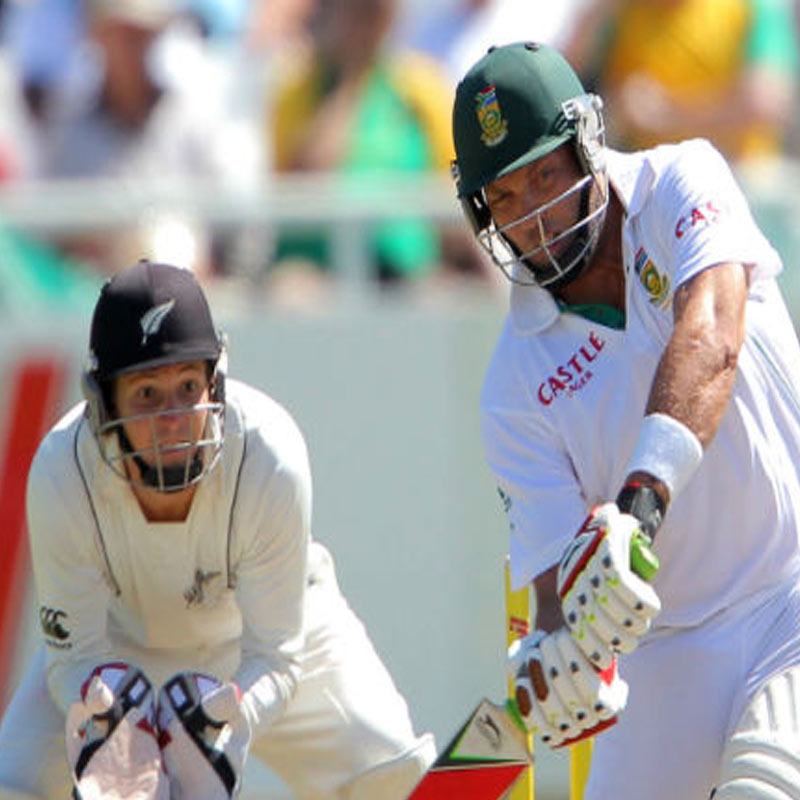
    New Delhi, April 14, 2006- ESPN STAR Sports, Asia’s number one broadcaster, will telecast Live and exclusive, New Zealand’s African Safari starting April 15, 2006. The islanders play a 3 test series against the Proteas in continuance to their 5 ODI series in October 2005. New Zealand is the second team from the pacific to tour the African country this month after Australia.

    Kiwi premier bowler, Shane Bond, has been cleared to play the First test despite a niggling knee injury that kept the fast bowler sidelined during warm up matches. The lanky bowler has been a proven match winner for the Kiwis with an impressive record of 64 wickets in 14 tests at an average of just 17.57 runs per wicket.

    On the other hand, South African skipper Graeme Smith is struggling with his finger injury to be fit for the first test. The young Proteas captain and opening batsman has been fighting to be in shape since the last test he played against Australia in the first week of April. Jacques Kallis, who captained South Africa in that test, is on stand by to lead them in case of Smith not being declared fit.

    Kallis or Smith, the Proteas will have a big task on hand after a demoralising first ever whitewash at home in tests by Australia. The Kiwis would be looking to take their chances with the master tactician Stephen Fleming marshalling his troops ever so effectively. Fleming is arguably best captain in the game today.

    The two sides have met each other 30 times in a test match with South Africa leading the head to head count 14-6. The Kiwis would be looking to set the record straight and would look to take the series to prove their cynics wrong. New Zealand has been one of the best ODI sides but still needs to put things in perspective in Tests and they will be counting on this opportunity in South Africa.

    Catch the action live and exclusive on ESPN STAR Sports

    Schedule of the Bangladesh Vs Australia Test series

    Date
    Time
    Event
    Channel

    April 15-20, 2006
    13.58
    South Africa Vs New Zealand, First Test Match, Centurion
    ESPN

    April 27- May 1, 2006
    13.58
    South Africa Vs New Zealand, Second Test Match, Cape Town
    ESPN

    May 5-9, 2006
    13.28
    South Africa Vs New Zealand, Third Test Match, Johannesburg
    ESPN

    For further information, contact ESPN Software India Pvt. Ltd at
    011-4154 4444 – 51:
    Sameer Bajaj, Manager – Corporate Communications, Email:
    sameerb@espnstar.co.in
    Or Tarundeep Singh, IPAN at 011- 42492100, 9811017310 Email:
    tarundeep.singh@ipan.com
    For the latest schedules and programme information visit
    <http://www.espnstar.com/> www.espnstar.com

  • Men’s handball Championship does well in TV ratings across Europe

    Men’s handball Championship does well in TV ratings across Europe

    MUMBAI: The Handball Euro 2006 which took place in Switzerland was the most extensively covered and viewed tournament in the history of Men’s European Handball Championships.

    More than 760 million cumulative viewers followed 707 hours of televised event coverage. The event took place from 26 January to 5 February this year and is the European Handball Federation’s (EHF) premier event.

    The championship was transmitted by close to 120 television and radio broadcasters worldwide and benefited from approximately 800 accredited journalists, photographers and technicians to deliver record media coverage.

    This result is based on an independent programme analysis including information provided by broadcast partners worldwide. The report was compiled by the German communication research agency Sport+Markt AG on behalf of Infront Sports & Media AG, the EHF’s television and marketing partner.

    The is seen as a conservative estimate for the event’s total coverage. This is due to several key markets — such as Russia, Turkey, Argentina and Brazil — not being able to provide audited audience data to meet the full criteria of the study. If the unaudited data from these markets were taken into account, the total figure of 760 million would increase to an estimated 850 million cumulative audience.

    The total transmission time grew by 20 per cent and the cumulative audience figures increased by more than 30 per cent (based on the audited cumulative audience) compared to the last Men’s Championship in 2004.

    The 2006 television report demonstrated that coverage reached virtually every European country. The victory of the French team over Spain in the final match benefitted from significant news coverage around the world. Extensive television coverage was also reported from countries not represented in the competition, e.g. Romania (25 matches), Belgium (16), FYR Macedonia (15), and Sweden (10). Live broadcasts of Euro 2006 matches were also shown in the Middle East and North Africa. Delayed transmissions and/or news coverage was available in several Asian and South American territories.

    The official tournament website, www.euro06.com/, which was jointly provided by the EHF, the Swiss Handball Federation and Infront, provided fans with extensive information about the event, participating nations and players. It received 74.6 million page impressions from the beginning of January through 5 February. The result more than tripled those compared to the 2004 event website – another tournament record.

    EHF president Tor Lian said, “We are proud of our deep-rooted partnership with Infront Sports & Media. It dates back many years and has played an absolute crucial role in the development of the EHF, especially in terms of the growth of its flagship event, the European Handball Championships. The innovative and close-knit partnership has made the European Handball Championships into a leading event on the sporting market, as the figures underline.

    “The 2006 Men’s European Championship, held in Switzerland in January, turned a corner and set a precedent for international, indoor sporting events. The EHF will continue its work with Infront for the next period to encompass the 2008 and 2010 European Championships to reach even greater heights.”

    Infront has acted as the EHF’s exclusive commercial partner for almost thirteen years. In 2004, both partners renewed their cooperation until 2010.

    The EHF and Infront are currently preparing to broadcast the Women’s European Championship from 7 to 17 December 2006 in Sweden, where TV4 Sweden will be acting as host broadcaster and offering live signals for all 47 games.

  • Zee Sports completes deals with foreign broadcasters for Abu Dhabi series

    Zee Sports completes deals with foreign broadcasters for Abu Dhabi series

    MUMBAI: Zee Sports has reached agreements with major international broadcasters and radio players for the DLF Cup, India-Pakistan One Day International series. The entire multimedia rights for all the major television territories have been finalised.

    For Pakistan, Zee Sports has signed agreements with PTV for their terrestrial network and on Ten Sports for C&S homes. Hum FM will provide the live radio commentary in Pakistan and the Middle East. In Singapore the matches will be available on Star Hub. For the Malaysian territory, Astro All Asia Network will broadcast the two-match series.

    For the USA, the channel has entered into agreement with Echostar Satellite for the DLF Cup. Zee will leverage its international network in the United Kingdom, Europe, Middle East and South Africa, where the matches will be broadcast through its own Zee International feeds in the respective countries.

    Commenting on the deals, Zee Sports business head Himanshu Mody offers, “We are pleased to enter into agreements with various international broadcasters for telecast of this series between India and Pakistan. Our internal syndication team has been able to do a very effective job in a very short span of time.”

    Zee Sports has acquired the global media rights for all matches that India will play in non-ICC member countries. As part of the deal 25 matches will be played over a period of 5 years with an average of 5 matches per year. The global media rights comprise television, radio and Internet rights. The rights are for a period of five years from 1 April 2006 to 31 March 2011.

  • ESPN launches 10th International edition of flagship show ‘SportsCenter’

    ESPN launches 10th International edition of flagship show ‘SportsCenter’

    MUMBAI: ESPN has launched the 10th international version of its news and information show SportsCenter. The Japanese edition will air on J Sports ESPN every Monday night.

    The show covers the major weekend sporting events relevant to Japanese viewers, as well as international sports with particular appeal to local fans. It is hosted by Yoko Umeda from the J Sports ESPN studios in Tokyo.

    ESPN Asia Pacific VP and GM Bernard Stewart said, “The Japanese version of SportsCenter is a perfect example of ESPN’s commitment to provide locally relevant news and information to sports fans in each region of the world.”

    SportsCenter is produced in English, Spanish, Portuguese, Hindi, Mandarin, Cantonese, Korean and now Japanese. The local SportsCenters air on ESPN and ESPN+ in Latin America, ESPN Dos Mexico, ESPN Brasil, TSN Canada, ESPN Star Sports (ESS) across Asia, ESS India, ESS Hong Kong, ESS Taiwan, MBC Korea and J Sports ESPN.

  • Total Sports Asia, Mountain Dew launch adventure reality show

    Total Sports Asia, Mountain Dew launch adventure reality show

    MUMBAI: Mountain Dew, the drink that celebrates the adventurous pulse of the youth, has launched an adventure reality show with Mountain Dew Himalayan Challenge 2006.

    Mountain Dew has partnered with Uttaranchal Tourism and associated with co-sponsors – Ten Sports, Mentos, Hercules TI and Weekender. The event is being managed by Total Sports & Entertainment India.

    The event will see 10 teams of 3 contestants each, pitted against each other amidst the mighty range of Himalayas to win prize money worth Rs 200,000 . The Challenge will comprise of teams participating in adventure sports such as rock-climbing, rappelling, GPS navigated cross-country, white-water rafting and mountain biking.

    The event will air over five episodes on Ten Sports, from May to June 2006. Besides this, the event will be promoted through heavy activation in press and outdoors to create awareness and build participation.

    Pepsi India executive VP, marketing – flavours Pratik Pota says, “The Mountain Dew Himalayan Challenge 2006 is designed for all adventure enthusiasts who dare to challenge and showcase their competitive streak. The event exemplifies Mountain Dew’s daring imagery and we are positive that this will help strengthen Mountain Dew’s association with adventure sports as well as enhance consumer connect in India”.

    Total Sports Asia director business development Shail Kapri says, “We are proud to associate with Mountain Dew and launch the mega ‘Mountain Dew Himalayan Challenge 2006’ in India. Adventure sports is fast gaining popularity in India and the event is a reflection of the adventurous spirit that has caught the attention of the youth. We are positive that such initiatives will give a boost to the competitive sport segment in India”.

    The event will be held in Auli and Rishikesh from 23 to 25 April. On the first day, the teams will compete across rock-climbing, rappelling and cross-country in Auli. On the 25th, they will raft down from Kaudiyala to Laxman Jhoola in Rishikesh, followed by mountain biking through Rajaji National Park till end at Rishikesh Barrage. The prize presentation ceremony will take place on the eve of 25 April, which will also see the winners of the ‘Runner-Up Trophy’ and the ‘Mentos Trophy’ for the ‘quick thinking’ team.

    To participate in the event consumers can fill entry forms, available at any of the 52 Weekender stores across the country. They can also log on to www.dewdares.com and enter the challenge. The last date for entries is 18 April. The teams will be selected from across 40 cities and will comprise of 3 members each. The nationwide selection will be on the basis of various parameters such as fitness, health, past experience etc. Entry is open to all above 18 years of age and is free of cost.

  • Mumbai to host ATP tournament in September

    Mumbai to host ATP tournament in September

    MUMBAI: Following a calendar switch, Mumbai is becoming the second city in India after Chennai to host an ATP tournament. Mumbai replaces the $380,000 Vietnam Open in Ho Chi Minh City, tennis’ governing body said in a statement issued Monday.

    The Mumbai Open will take place between 25 September and 1 October and will be held at the The Cricket Club. Ahead of the event, the CCI will be renovated to include a new 3,500-seat Centre Court plus two match courts and two practice courts.

    Globosport India, promoted by doubles ace Mahesh Bhupathi, will be responsible for the marketing, management and promotion of the Mumbai Open.

    The big question of course will be who gets the telecast rights for this event. With Zee Sports making its presence felt and even Sahara getting into the sports broadcast game, expect another bidding war.

    The telecast rights of the $400,000 Chennai Open were awarded to Star Sports by IMG, which owns and organizes the tournament. IMG’s television division, TWI, was responsible for producing the programming for the Chennai Open.

    Till now the Chennai Open was India’s and South Asia’s only ATP event. It was hosted at the Nungambakkam Stadium in Chennai from 2 – 8 January and was telecast on Star Sports in the India sub-continent, including India, Pakistan, Bangladesh, Sri Lanka, Nepal, Maldives, and Bhutan.