Category: Sports

  • Magic Square Entertainment has signed Chennai Rhinos deal for CCL

    Magic Square Entertainment has signed Chennai Rhinos deal for CCL

    MUMBAI: Magic Square Entertainment has bagged the Chennai Rhinos marketing deal for Celebrity Cricket League (CCL).


    Chennai Rhinos CEO Uday Sinh Wala said, “Magic Square Entertainment, we felt, was the best and most professional set-up to partner with us and to build the Chennai Rhinos franchise on a long-term basis.”


    The deal is pegged at around Rs 50 million.


    Magic Square Entertainment director and CEO Vijay Vishwanath in response said, “We are overwhelmed to sign up Chennai Rhinos for Celebrity Cricket League Season 4. We are fully geared up to market Chennai Rhinos Season 4. This season looks even brighter.”


    On the marketing plans for this activity, Vjay Vishwanath added, “We have rights to exploit all forms of branding options. Our expertise is in marketing and sales on various events and shows. Our team has drawn up extensive plans of exposure for clients on all the segments, viz stadia, merchandising, and all kinds of BTL activity, covering a wide spectrum and gamut of activities.”


    “I am sure this will be a great opportunity for the advertisers to showcase their brands. CCL is one of the most valuable entertainment properties with films stars adding a lot of fizz, entertainment value and brand recall,” Vishwanath added.


    The Celebrity Cricket League (CCL) is a non-professional men’s cricket league in India, contested by eight teams consisting of film actors from eight major regional film industries of Indian cinema.


    Chennai Rhinos is the most successful team in the CCL having won the tournament twice.

  • India Sports 2014 to promote sports among youngsters

    India Sports 2014 to promote sports among youngsters

    NEW DELHI: The Youth Affairs & Sports Ministry and the Federation of Indian Chambers of Commerce & Industry today launched the ‘India Sports 2014’ at the 5th Global Sports Summit in the presence Ministry Joint Secretary Dr. G S G Ayyangar.


    India Sports 2014’ would be organised at the iconic National Stadium and Federation House, FICCI. The event would be an umbrella programme, focusing on all aspects of sports and would bring the entire sports fraternity on one platform.


    The first edition would not only serve as a platform for the Indian sports industry to showcase their strength to the Indian and international sports fraternity but would also act as a catalyst in promoting sports among the youth.


    The event would include India Sports Expo 2014, an international exhibition on sports sector at the national stadium; TURF 2014, an international conference on sports sector; reverse buyer-seller meet by sports goods export promotion council; networking dinner and concurrent sports activities and tournaments.


    At the sports summit, Ayyangar spoke about the details of the ‘Scheme for Identifying and Nurturing Sports Talent in the Country’. Under the scheme, which has been taken up on a pilot basis, talents will be scouted and selected from the present Rajeev Gandhi Krida Abhiyan annual competitions; these sportspersons will be called Young Talent (YT) and they will be specially trained by Physical Education Teachers at every District Level Sports Center.


    A District Sports School (DLSS) will be set up in every district in the country in the next ten years. These schools will be set up as public private partnership except in remote and disturbed areas. In such districts, the existing Navodaya Schools are proposed to be upgraded and where it is not possible, new institutions will be set up.


    He said that the Ministry will supervise the training in sports and provide sports scholarships and the recurring expenses. The young talent (YT) will be assigned specific disciplines through a scientific process of determination, through a rigorous training programme and participation YT will be identified for center of excellence and YT who excel will be treated as high performers and given admission to a Centre of Excellence (COX).


    There will be approximately 25 centres for excellence. Twelve existing SAI centres will be upgraded. Thirteen new centres will be developed and funded by SAI. However, land for such centres will be provided by the State Government free of cost. These centers will be run by SAI.


    On the occasion, two reports, ‘Best 25 Ideas’ Sports Start up’s Business in India and ‘Vision 2014: Sector Skills Council, Way Forward’ were released.


    A Memorandum of Understanding (MoU) was also signed and exchanged between FICCI and the Southern Institute of Technology (SIT) in New Zealand to launch the Level 3 course in India under the SIT-John Wright Scholarship programme, which is recognised by NZQA to help athletes not only to harness their existing capability but also to provide an opportunity in getting higher qualification courses and good opportunity in New Zealand.


    FICCI will help SIT in connecting with premiere institutes as a partner for launching this pilot course. This course will be 100% sponsored by the John Wright – SIT Scholarship programme.  The John Wright – SIT Scholarship programme is founded by John Wright, Former New Zealand Cricketer and India Cricket Team Coach (2000-05).


    At the successful completion of this programme, students will have the required competencies to function successfully and effectively at operational levels within the sports training sector. A graduating student could be expected to undertake employment in areas such as coaching/retail sectors, or continue on to further study in Diploma in Spord Recreat antion, Diploma in Sport and Exercise (Level 5), Diploma in Sport and Exercise (Level 6) or Bachelor of Sport and Exercise in New Zealand.


    New Zealand High Commissioner Jan Henderson said the certificate obtained under the John Wright – SIT Scholarship programme will help students gain skills and knowledge for working or for further training in the sports training sector. The content gives athletes and coaches the knowledge to allow themselves and others to achieve their potential. The programme has a strong focus on sport psychology, nutrition and exercise prescription and finding out how the body becomes stronger, fitter and faster when stressed by exercise.


    New Zealand is passionate about sports and was happy to partner with India in the field of sports. Sports was a key pillar for strengthening bilateral relations between the two countries. She added that early next year, New Zealand will host the Indian Cricket Team and will co-host the Cricket World Cup in 2015, she said.


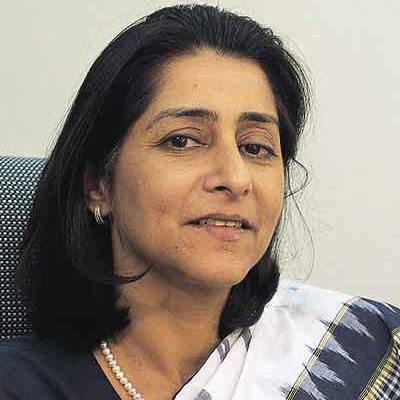
    FICCI President Naina Lal Kidwai represented to the Ministry the need to grant industry status to sports, and said that a committee under the chairmanship of Director General, Sports Authority of India (SAI) and FICCI prepared a report on ‘Granting infrastructure Status to Sports Sector’.


    She said, “It is a proud moment for FICCI to note that under new Companies Act 2013, sports infrastructure is part of ‘infrastructure facilities’ and ‘infrastructure projects’. Besides, there is a specific mention of sports related businesses to be registered as a type of ‘limited company’. FICCI is also closely coordinating with National Skills Development Corporation for setting up Sector Skills Council in Sports, Physical Education, Fitness and Leisure sector. According to our latest study, this sector will require more than 43 lakhs support personnel in various roles in sports by 2022.”


    FICCI Sports Committee Chairman and Managing Director, Tata Metaliks, Sanjiv Paul said that the sports sector is marching ahead as one of the fastest growing sector of the economy. The size of the sports industry is increasing, employment avenues are opening and money is coming in from all quarters. The exchange of ideas TURF 2013 should lead to the flourishing of sports business in India.


    He said that this year an SME-Academia-Investors Forum in Sports (SAI-FIS) is planned during TURF 2013 a collaborative effort amongst between FICCI, Indian Venture Capitalists Association (IVCA) and All India Council of Physical Education (AICPE). The objective is to stimulate SME-Academia-Investor partnership as it is critical for growth of sports sector in general and the stakeholders in particular.


     FICCI Sports Committee co-chairman Abhijit Sarkar and head-corporate communications, Sahara India Pariwar, said that the start-ups have added significant value in creating a sports culture across the country. They are the next generation of big corporations, who are supporting the growth of the sports industry in their own unique way. They are not only creating a brilliant ecosystem for budding talent to hone their talent and showcase their skills but are also creating employment opportunities for many others who want to develop career in sports.


    FICCI, director general, Arbind Prasad said, “FICCI welcomes The Prevention of Sporting Fraud Bill, 2013 to combat frauds in relation to domestic national and international sporting event developed after extensive consultation between Sports and Law Ministry. To aid the Ministry’s efforts in this direction, FICCI had organised a conference on ‘Regulating Sports Betting and Sports Law’. In this conference, experts suggested that the government should set up an Independent Regulatory Commission to study the various aspects of betting in-depth and come out with solutions to eliminate bookies and make sports betting fair.”
  • Starsports.com races ahead with McLaren Mercedes F1 team

    Starsports.com races ahead with McLaren Mercedes F1 team

    MUMBAI: After testing waters with badminton through IBL (Indian Badminton League) and football through the Barclays Premier League, the Star network is all set to build its portfolio by connecting with other sports and introducing Indian viewers to thrills other than cricket.

    The latest is a tie up between Star Network’s sports digital channel starsports.com and the Vodafone McLaren Mercedes team for the 2013 Formula 1 Indian Grand Prix that will be held between 25 to 27 October. As a part of the deal, the rear wings of the McLaren Mercedes cars will sport the logo of starsports.com.

    This apart, the website will also live stream the race live on 26 and 27 October (qualifying and final race) as well as develop programmes such as exclusive interaction with the team drivers Jenson Button and Sergio Perez as well as management including team principal Martin Whitmarsh and sporting director Sam Michael.

    Interviews with team engineers will help viewers understand the mechanics of the garage. ESPN Software COO Vijay Rajput says, “We believe this partnership will help in promoting starsports.com as the definitive destination for sports on digital. We will present an unrivalled live video experience as well as a place for replays and catch-up. The service will feature original content not screened on television, including outstanding video stories and insightful contributions from experts.”

    Although feature videos are free to watch, the live streaming is not. Viewers have to pay Rs 500 to watch the whole F1 series that includes already gone by Korean and Japanese Grand prix and upcoming Indian, US, Abu Dhabi and Brazil ones. Live streaming of other sports is also a paid privilege with the ongoing India-Australia series priced at Rs 100 for all the matches. There is no delay in the stream.

    “It is not just about putting a TV signal on the website but about giving viewers a fully different experience,” expounds ESPN Software India’s spokesperson. The live stream is accompanied by a video timeline to catch up on the event as well as ongoing statistics. F1 will also feature prominently on the site as well as be integrated into the ongoing cricket series between India and Australia. Star Sports plans to promote other sports through cricket since the Englishman’s game strikes a chord with Indian people like none other.

    Social media will also engage viewers but it is only complimentary to the actual experience of watching it on the website. The live telecast on the two days will see Petronas and Rolex as presenting sponsors while Samsung, Micromax, Pernord Ricard and Vodafone will be associate sponsors apart from several spot buyers. As of now, the channel does not plan to have any Hindi commentary.


    This year, the channel aims at expanding its portfolio by introducing a wide variety of sports to Indian viewers. The availability of live streaming for all kinds of sports is an effort to build the website as the only destination sports fans go to for catching live action in HD as well as provide additional data and analytics that are integrated into the video experience through their gadgets.

    “Over the years, F1 has developed a strong following in the country. The introduction of Indian Grand Prix has further helped in broad basing the fan following. The live telecast of India Grand Prix last year generated average TVTs which were more than double the average TVTs generated by other races. Even on reach front, Indian GP delivered far higher numbers as compared to other races,” says Rajput.
    Though Star India is aware that cricket is the dominant sport in the country, it feels that there is space for other sports to also grab eyeballs.

  • Discovery Turbo gears to give its audience thrill of Grand Prix 2013

    Discovery Turbo gears to give its audience thrill of Grand Prix 2013

    MUMBAI: Discovery Turbo is all set to give its viewers the thrill of Grand Prix of 2013 season even before the sporting event begins in India.  The 15-part series Inside Grand Prix 2013 highlights the Grand Prix scenario of upcoming event at Greater Noida and takes viewers behind the scenes of this year’s events in Australia, Malaysia, China, Monaco, Canada, Spain, Great Britain, Germany, Hungary, Belgium, Italy and Singapore.


    How long does the transportation of the full F1 equipment for an overseas race take? What happens during a pit stop? How do F1 fans celebrate in Monaco or South Korea? How and where do the stars have their parties?  Premiering every night at 9 pm on Discovery Turbo, Inside Grand Prix 2013 follows the Formula One teams around the world and prepares viewers for each Grand Prix in the best way possible.

    An informative and highly entertaining F1 magazine-format series, it gets behind the scenes of elite motorsport and to the heart of action.  Premiering Sunday, 27 October, the India episode takes viewers on track at Buddh International Circuit, Greater Noida to witness the preparations for the big sporting event.


    The viewers will follow their favourites like Lewis Hamilton (Mercedes AMG Petronas, England and Formula 1 world champion 2008), Sebastian Vettel (Infiniti Red Bull Racing, Austria and World Champion 2010, 2011 and 2012), Christian Danner (Formula One expert, Germany), and Michael Schumacher (Seven-time world champion, Germany) as they share curiosities and personal information from the mysterious F1 world.  The drivers also introduce their respective race tracks – with all its particularities, difficulties and key points.


    Travel to the Albert Park circuit in Australia where Nico Hülkenberg (Sauber F1 Team, Germany) and Sebastian Vettel (Red Bull Racing) explain the euphoria behind Formula One in the country.  The episode also celebrates Sauber F1, the Swiss team’s 20th anniversary in Formula One.  Debuting at the South African Grand Prix in Kyalami in March 1993, the team finished fifth and picked up two points with J.J. Lehto.  


    The show both informs and entertains viewers with exclusive interviews and stories of F1 sports celebrities and stars under various themes:


    In Close Up, the segment will take viewers to the drivers’ recommended places, restaurants, joints, hangouts and spots where one can have a blast and describes the culture of each country.


    Preview will showcase drivers and introduce the respective race track with all its accuracies, difficulties and key points such as the ideal line.


    Personal lets viewers hobnob with drivers, team chefs and engineers and will let them satiate their curiosity of the sports stars’ personal lives. Portraits of singular drivers, impressions from their childhoods, hobbies, motor sport careers, wishes, dreams, and successful moments form a part of each episode.


    Technology freaks can look forward to Techno section in which the complicated world of F1 is described in detail by F1 drivers, experts and animations leaving no questions unanswered.


    The Set Up will give the viewers a look at what goes on behind-the-scenes.
    The Legends will throw light on more than 60 years of F1 and share their moments from achieving milestones, world records, spectacular events, tragic accidents and overwhelming.


    The last segment News will provide the most important and updated information concerning F1 in a crisp format.

  • Should sports betting be made legal?

    Should sports betting be made legal?

    NEW DELHI: This year’s Indian Premier League proved to be an expose of the kind of rot that has set into what was once touted as the gentleman’s game. With the who’s who of cricket and entertainment dragged into the murky world of betting and spot-fixing, not to mention two cricketers banned for life, the focus has shifted to the possibility of legalising and regulating sports betting.

    At the two-day ‘Conference on Regulating Sports Betting and Sports Law’ organised by FICCI recently, experts from different walks of life, through a consensus resolution, called for stringent laws to curb fraud and doping in sports.

    Inaugurating the meet, former Punjab and Haryana Chief Justice and Chairman of the Supreme Court Probe Panel into the IPL 2013 Betting and Spot Fixing Scandal, Mukul Mudgal, said the time had come to stop debating whether there was a need to regulate sports betting or not. Justice Mudgal said that besides doping, one of the biggest threats to the integrity of sports was sporting fraud, which includes match fixing, spot fixing, tanking and point shaving among others.

    His reasons for favouring regulation included: the government would earn substantial revenue from taxing sports betting, the unauthorised manner in which betting was currently taking place was a threat to the integrity of sports and sportspersons, some grass root sports programs could very well use the money generated, unauthorised betting was a source of revenue for hardened criminals, and law-abiding citizens were getting unnecessarily exposed to such anti-social elements.

    Justice Mudgal opined that the rate at which winnings from betting were to be taxed could be decided by the government and that 20 per cent would not be high, considering that in some jurisdictions like Austria and UK, the taxation rate is up to 28 per cent and 25 per cent, respectively.

    olicitor General of India N Viswanathan added: “There are pros and cons involved in legalising and regulating betting but before that, the Government should set up an Independent Regulatory Commission to study the various aspects in depth and come out with a solution, keeping in mind the elimination of book makers.”

    Alex Ward, Vice President Commonwealth Lawyers Association said: “The concern in Australia about the results of gambling and betting isn’t as much as the concern about corruption, doping and match fixing. India should legalise and regulate rather than prevent betting. By regulating like in Australia, the central and state government can get more revenue for development of sports. In India, there are some social and ethical problems unlike in Australia.”

    Carl Rohsler, Partner in Squire Sanders (UK), LLP, and International Gambling Laws Expert said that India had a choice about whether to regulate certain forms of gambling or not. “One thing that I would like to see is a survey of gambling in India – to try to gain some understanding of the numbers involved. I would also recommend the creation of some kind of committee to formally address issues related to gambling – in order to be a repository of information and knowledge not only about gambling in India but gambling all around the world. FICCI has done a great deal to start the debate – but it cannot be expected to shoulder the whole burden. The time has come for more formal support. I stress that this is not support of gambling, but support of finding out about gambling,” he said. Among the reasons he gave for regulating gambling: the first was to protect society from harm; second to facilitate movement of money from the illegitimate to legitimate sector; third, the government was responsible for operating gambling in an honest, appropriate and transparent manner; fourth, match fixers and money launderers would find it difficult to operate in a regulated market; and finally, illegitimate operators would be kept out of such a market.

    Dr A Didar Singh, Secretary General, FICCI, pointed out that with an estimated $600 million betting market in India and a possible 20 per cent tax rate on profit from betting, it would rake in revenue to the tune of $ 120-190 million for the exchequer. He said the moot question of course was whether sports betting could be regulated in India like in other countries in order to aid sports development. Singh gave the example of lottery as a regulated business in India. “While there are no authentic figures about all the states in India because of the different methods adopted for accounting of lottery receipts, it is reliably learnt that a state like Kerala is getting net revenue of Rs 682 crores (FY 2012-13) through the medium of lotteries. It has been estimated that the potential revenue for all the states from lotteries would not be less than Rs10000 to Rs12000 crore a year,” he said.

    Meanwhile, Solicitor General of India Mohan Parasaran, in his key note speech during the session on ‘Threat to Integrity of Sports: Match Fixing and Doping’ said there had been extensive discussions between the ministries of sports, and law and youth affairs, regarding drafting modern laws on sports betting with a proposal to bring in stand-alone legislation on the subject. He said ‘The Prevention of Sporting Fraud Bill 2013’ was a step in that direction and had been drafted only after studying the laws of different countries including Denmark, Finland and Germany among others.

    Senior criminal advocate K T S Tulsi, in his key note address during the session on International efforts to curb sporting fraud:  Information gathering, Regulatory structure, Criminal Law and Courts said: “After the Indian Premier League fiasco, there is a big hue and cry regarding the amendments in sports law and inclusion of issues such as criminalization of sports, invoking criminal law for match fixing and betting, and strengthening of anti-doping laws but, in an effort to clean up sports, sportsmen should not be made scapegoats. Criminal law should be invoked only where a guilty intent is proved and players should not be liable of match fixing and doping on mere presumption. There should be strong evidence to prove a player’s involvement as once an allegation is made in the media, it has a tendency to stick even in the absence of any proof and the player becomes victim to a media trial even before being declared guilty by the courts. At the same time, legalizing betting would be a step in the right direction as this will ensure transparency and lead to removal of corruption from sports, which is the need of the hour.”

    Former Attorney General of India Soli Sorabjee said during the same session: “Betting is a natural human instinct, which is inherent to human beings – it should not be denied and time demands that it should be discussed seriously to come out with the solutions to match fixing.”

    Expectedly, former Sri Lankan Cricket Team Captain Arjuna Ranatunga, spoke on behalf of players: “There is a need for creating awareness and sensitising players on the consequences of doping and other sports frauds,” he said.  

    According to him, match fixers often do not catch top players but look out for smaller fish in top teams. On the subject of doping, he said that players coming from rural areas are not aware about the ill effects of doping and are innocent. So they need to be sensitised about various drugs and their consequences.

  • NEW DELHI: This year’s Indian Premier League proved to be an expose of the kind of rot that has set into what was once touted as the gentleman’s game. With the who’s who of cricket and entertainment dragged into the murky world of betting and spot-fixing,

    NEW DELHI: This year’s Indian Premier League proved to be an expose of the kind of rot that has set into what was once touted as the gentleman’s game. With the who’s who of cricket and entertainment dragged into the murky world of betting and spot-fixing,

    NEW DELHI: This year’s Indian Premier League proved to be an expose of the kind of rot that has set into what was once touted as the gentleman’s game. With the who’s who of cricket and entertainment dragged into the murky world of betting and spot-fixing, not to mention two cricketers banned for life, the focus has shifted to the possibility of legalising and regulating sports betting.


    At the two-day ‘Conference on Regulating Sports Betting and Sports Law’ organised by FICCI recently, experts from different walks of life, through a consensus resolution, called for stringent laws to curb fraud and doping in sports.


    Inaugurating the meet, former Punjab and Haryana Chief Justice and Chairman of the Supreme Court Probe Panel into the IPL 2013 Betting and Spot Fixing Scandal, Mukul Mudgal, said the time had come to stop debating whether there was a need to regulate sports betting or not. Justice Mudgal said that besides doping, one of the biggest threats to the integrity of sports was sporting fraud, which includes match fixing, spot fixing, tanking and point shaving among others.


    His reasons for favouring regulation included: the government would earn substantial revenue from taxing sports betting, the unauthorised manner in which betting was currently taking place was a threat to the integrity of sports and sportspersons, some grass root sports programs could very well use the money generated, unauthorised betting was a source of revenue for hardened criminals, and law-abiding citizens were getting unnecessarily exposed to such anti-social elements.


    Justice Mudgal opined that the rate at which winnings from betting were to be taxed could be decided by the government and that 20 per cent would not be high, considering that in some jurisdictions like Austria and UK, the taxation rate is up to 28 per cent and 25 per cent, respectively.


    olicitor General of India N Viswanathan added: “There are pros and cons involved in legalising and regulating betting but before that, the Government should set up an Independent Regulatory Commission to study the various aspects in depth and come out with a solution, keeping in mind the elimination of book makers.”


    Alex Ward, Vice President Commonwealth Lawyers Association said: “The concern in Australia about the results of gambling and betting isn’t as much as the concern about corruption, doping and match fixing. India should legalise and regulate rather than prevent betting. By regulating like in Australia, the central and state government can get more revenue for development of sports. In India, there are some social and ethical problems unlike in Australia.”


    Carl Rohsler, Partner in Squire Sanders (UK), LLP, and International Gambling Laws Expert said that India had a choice about whether to regulate certain forms of gambling or not. “One thing that I would like to see is a survey of gambling in India – to try to gain some understanding of the numbers involved. I would also recommend the creation of some kind of committee to formally address issues related to gambling – in order to be a repository of information and knowledge not only about gambling in India but gambling all around the world. FICCI has done a great deal to start the debate – but it cannot be expected to shoulder the whole burden. The time has come for more formal support. I stress that this is not support of gambling, but support of finding out about gambling,” he said. Among the reasons he gave for regulating gambling: the first was to protect society from harm; second to facilitate movement of money from the illegitimate to legitimate sector; third, the government was responsible for operating gambling in an honest, appropriate and transparent manner; fourth, match fixers and money launderers would find it difficult to operate in a regulated market; and finally, illegitimate operators would be kept out of such a market.


    Dr A Didar Singh, Secretary General, FICCI, pointed out that with an estimated $600 million betting market in India and a possible 20 per cent tax rate on profit from betting, it would rake in revenue to the tune of $ 120-190 million for the exchequer. He said the moot question of course was whether sports betting could be regulated in India like in other countries in order to aid sports development. Singh gave the example of lottery as a regulated business in India. “While there are no authentic figures about all the states in India because of the different methods adopted for accounting of lottery receipts, it is reliably learnt that a state like Kerala is getting net revenue of Rs 682 crores (FY 2012-13) through the medium of lotteries. It has been estimated that the potential revenue for all the states from lotteries would not be less than Rs10000 to Rs12000 crore a year,” he said.


    Meanwhile, Solicitor General of India Mohan Parasaran, in his key note speech during the session on ‘Threat to Integrity of Sports: Match Fixing and Doping’ said there had been extensive discussions between the ministries of sports, and law and youth affairs, regarding drafting modern laws on sports betting with a proposal to bring in stand-alone legislation on the subject. He said ‘The Prevention of Sporting Fraud Bill 2013’ was a step in that direction and had been drafted only after studying the laws of different countries including Denmark, Finland and Germany among others.


    Senior criminal advocate K T S Tulsi, in his key note address during the session on International efforts to curb sporting fraud:  Information gathering, Regulatory structure, Criminal Law and Courts said: “After the Indian Premier League fiasco, there is a big hue and cry regarding the amendments in sports law and inclusion of issues such as criminalization of sports, invoking criminal law for match fixing and betting, and strengthening of anti-doping laws but, in an effort to clean up sports, sportsmen should not be made scapegoats. Criminal law should be invoked only where a guilty intent is proved and players should not be liable of match fixing and doping on mere presumption. There should be strong evidence to prove a player’s involvement as once an allegation is made in the media, it has a tendency to stick even in the absence of any proof and the player becomes victim to a media trial even before being declared guilty by the courts. At the same time, legalizing betting would be a step in the right direction as this will ensure transparency and lead to removal of corruption from sports, which is the need of the hour.”


    Former Attorney General of India Soli Sorabjee said during the same session: “Betting is a natural human instinct, which is inherent to human beings – it should not be denied and time demands that it should be discussed seriously to come out with the solutions to match fixing.”


    Expectedly, former Sri Lankan Cricket Team Captain Arjuna Ranatunga, spoke on behalf of players: “There is a need for creating awareness and sensitising players on the consequences of doping and other sports frauds,” he said.  


    According to him, match fixers often do not catch top players but look out for smaller fish in top teams. On the subject of doping, he said that players coming from rural areas are not aware about the ill effects of doping and are innocent. So they need to be sensitised about various drugs and their consequences.
     

  • Wanted to become a soldier, became a cricketer: Dhoni

    Wanted to become a soldier, became a cricketer: Dhoni

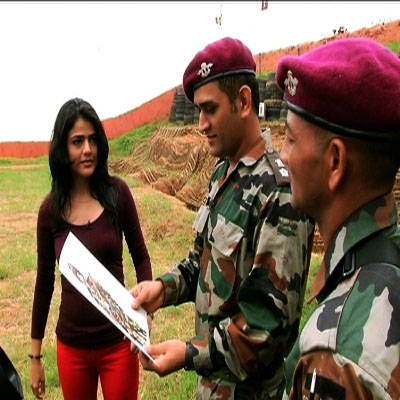
    MUMBAI: The Indian captain Mahendra Singh Dhoni is making news again, after getting a new Mohawk look, he now reveals that he wanted to become a soldier since childhood. He used to visit Ranchi Kent area but destiny intervened, and he became a cricketer.

    Dhoni spent a day with military personnel in the Parachute Regiment and AajTak captured these special moments. He spoke with soldiers, learned a lot from them; saw what kind of military attack during the turn lock on the front is conducted. Dhoni is fond of shooting targets at a shooting range and heavily planted. Every shot was perfectly fitted to Dhoni, Dhoni smiled but missed once. In these talks Mahendra Singh Dhoni said that he is very afraid of heights. He said it came from the bottom up, “The uniform is something special. Maybe this is all in the uniform, I was not afraid.”

    Dhoni after the evening tea party did some singing and dancing with the troops. On being asked how does he manage to keep his cool Dhoni joked, “The day I have to press conference, a day before that I go and sit in the fridge, that’s how I always remain cool.”

    Dhoni’s emotional side also came about, when he met with the widows and the children of the soldiers. Dhoni spent time with the children of military widows, and met with all their demands and also gave autographs and posed for pictures.

  • Kings XI Punjab joins hands with Events Experts for ACB 20-20

    Kings XI Punjab joins hands with Events Experts for ACB 20-20

    NEW DELHI: Kings XI Punjab, recently announced its association with Events Experts, a Chandigarh based full service events and marketing company for initiating ‘ACB 20-20’, an intra school, college and university tournament.

    The 20-20 big bash tournament will be played amongst the age group of 16 to 24 years across the catchment areas including Chandigarh, Punjab, Haryana, Himachal Pradesh, J&K, Delhi-NCR, Rajasthan, Uttrakhand and Uttar Pradesh. The registration for the tournament commenced 10 October.

    As a part of the tournament, trial sessions will be undertaken across 100 schools, 100 colleges and 20 universities in the catchment area. The distinguished selection panel consisting former Ranji players, IPL players and coaches like Amit Uniyal (IPL Fame), Sukhwinder Singh Bawa (Yuvraj Singh’s coach), etc will shortlist 120 players.

    The selected players will be divided amongst eight teams who will play a total of 15 matches (12 league matches, two semifinals and the Final) at Tau Devi Lal Stadium, Sector 3 Panchkula.

    The first round of trails was held at Malhan Cricket Academy, Jhajjar on 11 October followed by S.D. School, Rajiv Chowk Gurgaon on 13 October.

    Registration for Punjab region will commence on 16 October at S.D College Chandigarh followed by Rayat Bahra Group of Colleges on 17 October and SUSCET College Tangori on 18 October.

    Commenting on the occasion, Kings XI Punjab COO Col. Arvinder Singh said, “We are happy to partner with Event Experts to provide a suitable opportunity to budding cricketers from our catchment area to display their skills. We hope this activity goes a long way in providing a much needed platform to these cricketers. In the future too Kings XI Punjab shall continue to undertake such activities at various levels.”

    The winning team will be entitled for a cash prize, per player worth Rs 15,000 and runner-up per player Rs 10,000. Amongst other award categories, Man of the Match will be awarded with gift vouchers, best bowler & best batsman Rs 25,000 each and Man of the Series will be bestowed with Rs 50,000.

    Being a community driven team, Kings XI Punjab has undertaken this initiative to reach out to its discerning fans in the catchment area and give them a chance to realise their dreams into reality.

  • Trace Sports Stars to take on Indian Stars

    Trace Sports Stars to take on Indian Stars

    MUMBAI: Launched in June 2011, you could call it a niche-within-niche channel however Trace Sports, from the French media group Trace TV – a channel which focuses on sports celebrities – is now repositioning itself, starting with a recent name change to Trace Sports Stars.   

    As part of the spruce-up, from being a not-so-popular channel, Trace Sports Stars, distributed in the country by NDTV, now claims to have 10 million subscribers. “Having now got a substantial distribution for a channel catering to an entirely new segment of audience, we are looking at creating the eco-system of long term sustainability,” says NDTV Associate vice president Network Distribution and Affiliate Sales Rohit Jaiswal.

    More than 50 networks including Hathway, GTPL, Manthan, ICNCL, Ortel, Fastway and Airtel provide Trace Sports Stars as a pay HD only channel for Rs 30 (analogue). Plans are afoot to double the number of subscribers in coming months.

    As of now, the channel boasts shows such as Up Close With where sports celebs share their private lives, Just Fan where fans speak about their favourite celebs, Fighting Spirit where celebs reveal tricks of the trade, Body and Soul where celebs talk about their diet and fitness regime, Free Sports with prestigious events from extreme sports, Entourage where fans get to meet the celebs’ near and dear ones and Music Match which brings together a sports celeb and a famous artist for a day.

    However, Trace Sports Stars is yet to add some local flavour to interest Indian audiences. “We plan to introduce localisation based on some of the global formats, once we get a critical reach,” says Jaiswal. It would be interesting to see Indian sports celebs like Sachin Tendulkar (who recently announced his exit from Cricket), Kapil Dev, Vishwanathan Anand, Saina Nehwal, Baichung Bhutia, Dhanraj Pillai and Leander Paes among many others talking about their lives on screen.
    A channel like this will always be driven by a certain percentage of the audience and not necessarily mass market believes Jaiswal

    With the distribution part taken care of, the channel plans to focus on touch points to increase awareness among its audience. “A channel like this will always be driven by a certain percentage of the audience and not necessarily mass market,” says Jaiswal, adding, “Think of it as a sports channel one can watch with his girlfriend/wife and an entertainment channel one can watch with her boyfriend/husband.”
    How confident is the channel about its rather niche content? “There is a proliferation of sporting events now being broadcast which helps translate into more awareness and a diverse fan following across all these sporting events and like all fans, sporting fans also like to know more about their icons/idols outside their professional space,” says Jaiswal.

    Recently, Trace Sports Stars signed a deal with Remedy Productions on a commission basis to produce more than 100 hours of entertainment programming. Battle of the Bling will compare the biggies in the world of sport such as Christiano Ronaldo and Mike Tyson to their film and music counterparts.

    While the channel claims to cater to the age group of 15 to 35 years, it remains to be seen whether sports lovers in the country will want to know what made say a Saurav Ganguly rip his shirt after a win more than him as a player on the field.

  • NBA and Reliance Foundation hook up for basketball

    NBA and Reliance Foundation hook up for basketball

    MUMBAI: Earlier this year, NBA dived into the Indian sports market by introducing the first ever basketball championship called JAM for college students. Now it plans to go even deeper by making the sport attractive for young kids in order to get them engaged in it from school days through the newly launched Jr NBA.


    Three months ago, NBA announced its deal with Sony Six as its official broadcast partner in the country helping it promote the game on screen. It will telecast NBA matches live as well as repeats on the channel as well as its website.


    Now, NBA along with Reliance Foundation have signed a deal to get school kids between ages eight to sixteen years to join the game by giving them an opportunity to play under trained professionals. International coaches have been called to train local coaches from October to December this year who will in turn teach the sport to their students. The first year will see Mumbai and Kochi being targeted with five international coaches for each city. They are Ontario Lett, Vanja Cernivec, Bryan Gamroth, Billy Singleton and Sheika Ann Anbatali. Kochi will have a separate set of coaches.


    This year 108 schools in Mumbai have registered to be a part of this activity that will see basketball being introducing in the curriculum of the schools as well as training being provided post school hours. All of it will be absolutely free. An Indian centric manual has also been developed that will guide the local instructors on ways to train kids and know the game better. The ultimate aim is to reach a million students through 3,000 coaches in about 10 cities of the country in the next three years.


    According to NBA senior director basketball operations (international) Troy Justice India has a lot of scope for sport, especially basketball. “This programme will accelerate the growth and make children basketball friendly,” says Justice.


    The best shooters will be selected from each school and a citywide championship will be held. Apart from the sport they also plan to inculcate values such as sportsmanship, active lifestyle, health and teamwork.


    “This is the first time that such a comprehensive level of in-school and after-school program is being implemented in any sport in India,” says an emphatic NBA India MD Yannick Colaco. The activity will span from October 2013 to February 2014. Colaco adds that the whole programme is free for the participating schools and physical education teachers. Promotion campaigns for it are already being made. Mostly direct methods of communication will be used to reach out to students as well as parents through PTA meetings and the likes.


    Sony Six is also actively interacting with people on social media to get their attention. More promotional activities are lined up as per the deal. Plans for Hindi commentary for the game in the future are also being thought of.


    Apparently NBA JAM got an overwhelming response with over 1,000 teams wanting to participate when only 600 could be accommodated. Now it hopes to get more basketball rings into schools and more balls bouncing into the hoops.