Category: Sports

  • Hero Indian Super League to kick off at Salt Lake Stadium in Kolkata

    Hero Indian Super League to kick off at Salt Lake Stadium in Kolkata

    MUMBAI: Atletico de Kolkata will take on Mumbai City FC in the opening game of the Hero Indian Super League’s first season at the historic Salt Lake Stadium, Kolkata on Sunday 12 October 2014.


    All games will be played at 7 pm, including the semi-finals and finals. On days of double headers, i.e 9 and 10 December 2014, the first game will start at 5 pm followed by 7 pm game.


    Delhi Dynamos FC will host the League’s second game when they play FC Pune City on 13 October 2014. The action will move to Guwahati on 15 October 2014 for the home match of NorthEast United FC against Kerala Blasters FC and then to Goa next day for FC Goa’s game against Club Chennai.


    The maximum city Mumbai will see the first Hero ISL action on 17th October 2014 when Mumbai City FC will take on FC Pune City at DY Patil Stadium, New Mumbai. Club Chennai, FC Pune City and Kerala Blasters FC will host their first home matches on 19 October, 22 October and 27 October 2014, respectively.


    The semi-finals will start from 13 December 2014 with top four clubs qualifying for the knock-out stage to be played in a two-legged format with the winners moving onto the final.


    The Hero Indian Super League final would be played at a neutral venue on Saturday, December 20, 2014.


    IMG-Reliance and Star India who are the promoters of the League, today announced the fixtures for the much-anticipated inaugural edition, featuring eight clubs, 61 games spread across 70 days. The League stage will witness 56 games on home and away format, followed by a two-legged semi-finals and the final scheduled for 20th December 2014.

  • Volini announces partnership with Procam International

    Volini announces partnership with Procam International

    MUMBAI: Volini, India’s No. 1 doctor recommended and used pain reliever today announced its partnership with Procam International, India’s leading full-fledged sports management company involved in the promotion of national and international sporting events, sports consultancy and live television programming. Volini will associate with Procam International promoted running events – Standard Chartered Mumbai Marathon, Airtel Delhi Half Marathon, and TCS World 10K Bangalore – as Official Recovery Partner. This is the first year that Volini is partnering India’s leading running events.


    In 1988, with a vision to provide a more holistic spend to the advertising rupee and a burning desire to ameliorate the prevailing professional standards for sportsmen, Anil and Vivek B. Singh created Procam International. The organization has based its corporate philosophy on an open culture, with an emphasis on values and integrity. Procam International has promoted and conducted over 45 world events, which have elicited player participation of the highest caliber, as well as huge public interest.


    Speaking about the partnership, Vivek Singh, Jt. MD, Procam International said, “At Procam International, we continue to advance the professional standards of our events in order to be counted among the best road running competitions in the world. We are therefore glad to partner with Volini, one of India’s biggest pain relieving brands as Recovery Partner and welcome them to the world of distance running.”


    Over the years, India’s most respected brands have partnered Procam International’s running events for the transformational role they play in bringing individuals, organizations and institutions together. New and existing associations draw attention to the trust and belief partners place in the event on an ongoing basis.


    “Volini is delighted to be associated as the Official Recovery Partner of the leading marathons of the country, starting with the Airtel Delhi Half marathon. The association will further strengthen our position as the preferred choice of recovery for our consumers. Running is becoming increasingly popular from a fitness perspective and we are happy to be the recovery partner that provides instant and long lasting relief from pain and enables marathon runners to recover in no time at all”, said Subodh Marwah, Vice President & Head – Consumer Healthcare, Ranbaxy Laboratories Ltd.


    Since their inception, the Standard Chartered Mumbai Marathon, Airtel Delhi Half Marathon and TCS World 10K Bangalore have attracted the world’s top distance runners to India, sparking a glorious running revolution in the country.

  • “ISL teams to breakeven in two-four years”: Andy Knee

    “ISL teams to breakeven in two-four years”: Andy Knee

    International Management Group or simply known as IMG has been a world renowned leader in sports, fashion and media management with operations in more than 30 countries.

    In 2014, IMG was acquired by WME a global entertainment and media agency. In India, the company has formed a joint venture with Reliance Industries. The JV was formed between good buddies Mukesh Ambani and former IMG chairman Teddy Forstmann who died of brain cancer in November 2011.

    IMG Reliance has signed a 15 year partnership with the All India Football Federation (AIFF) to improve and popularise football in India beginning from the grassroots to the professional level. One of its initiatives is the Hero Indian Super League- an IPL styled tournament for football that is slated to begin from 12 October 2014.

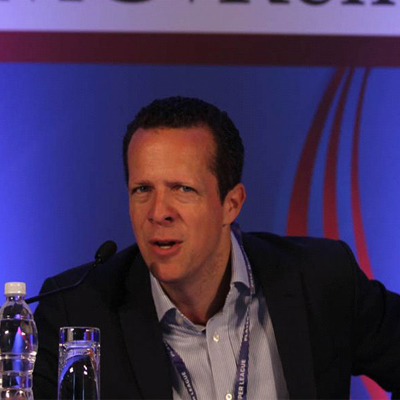
    Present at the international and domestic player draft was IMG football vice president Andy Knee.  His previous stint was at electronic giant Phillips where he was the head of sponsorship. In 2006 he was appointed as director of the Football Championship League where he was responsible to raise the profile for the 24 clubs and improving the competitions revenue.

    Though the league is highly pressurising, one will find Knee always at ease and silently observing team owners replying to hard hitting questions from journalists. On the day of the international player draft, Knee speaks exclusively to indiantelevision.com’s Herman Gomes.

    Excerpts

    The league will kick off in October this year. How is IMG-Reliance developing the league for the first time in India?

    We are doing something unique. We are taking a lot more risks than we typically do in a project. So we are investing in buying rights, in the infrastructure, marketing and putting up an expert team of football from India and abroad to help galvanize the league for the first time.  We want to make the Hero ISL an astounding success and generate value and return more importantly for our clubs and the league to be a catalyst for football to explode interest and participation here.

    In China, IMG has stake in the Chinese Football Association promoted Super League. Commercially the league there is secure and financially controlled by the government. Why have you chosen a private drive model here?

    What we do in China is very different. There we have a 10 year deal with the Association where we represent rights and sell those rights to sponsors. They have an existing league and therefore we do not have an ownership position in China.  IMG works with them to help generate more revenue from the league. We also advise them on how to improve their administration and governance of the sport. In India it is very different. It is not typical of what IMG normally indulges in. Usually we have clients or we work with or on the behalf of partners.  We have had business in India for a very long time and we have been successful in the creation of the IPL. We now looked at football and thought how is it possible that a country of this importance and size does not have advanced football infrastructure industry? So our former owner Ted Forstmann along with Mukesh Ambani discussed it together and decided to do something great in football by coming up with the ISL.

    China has certain advantages. They have got some great stadia and they are fortunate from that point of view, but China hasn’t been in the world cup in recent memory.  Japan and Korea have also risen fast and it proves it can be done. So I think if everyone is pulling in the same direction it will be a very big help.

    IMG has a presence in almost 30 countries. What are the global learnings you have put in to develop the sport in India?

    Globally, we have been representing TV, sponsorship and licensing rights. We have also worked with player business, TV production, hospitality, ticketing, commercialisation of stadia over multiple markets.  We bring that experience to India.  Frankly speaking only some of it is relevant here. For example we helped the financing and seat sale of the Wembley stadium. Is that relevant to India? Unfortunately not! Sadly we are away from our teams being in a position to invest in a significant new stadium. I hope that opportunity comes but that’s a little bit down the chain. So we take the expertise we have all gained through working many years in football and apply those bits that are relevant for India.

    Sports fans and analysts are of the opinion that the ISL will reduce the I-League tournament to an inconsequential format. What are your thoughts?

    I understand that when a new format is introduced it can be seen as a threat to the established leagues. My view is that it can’t be a threat to the I-League because the football pie in the country is very small at the moment. I do not know what is the size of the football industry here but all I know is that it is very small. We could all fight over a small slice of the football pie but actually there is just not much there to get there. We all need to make that pie 100 times bigger and there is plenty to go around. So it is about the game at the moment. It’s not about who gets what bit. Co existence can happen very easily but I hope the ISL will popularise the sport unbelievably. So people would want to watch Delhi Dynamos and then go and watch Mohun Bagan at different time of the year. They are just football fans who watch the Premiere League but they also love the fact that India has a real football league they can support and be proud of.

    How much will IMG-Reliance be investing for the infrastructure of the game in India?

    Well we are not spending too much money on the grassroots facilities. I would love us to be in a position to do so but we are not going around building pitches. We need some far better football facilities but we are not doing that. We hope that will happen organically because people are getting greater interest in football so more space is given to football. Whether its I-League or ISL teams there will be greater money coming for the sport but that money will be reinvested for the football ecosystem to grow, develop and expand.

    It is understood that each of the eight teams have to annually spend Rs 2 crore to invest in grassroots programme to develop football. How will that amount be utilised?

    This is what the teams have to do. Teams bought the rights to run their respective teams and the money they have paid is for a 10 year period and they pay it in 10 equal slices in one year. On top of that there is a requirement to invest in grassroots. This is the requirement we put on teams but at the same time actually we probably didn’t need to because all the teams understood how important this is. The teams know they have to invest in grassroots, in local football programmes in local communities. The teams have got to spend on two requirements-  grass roots and  marketing. The teams do not have to send us that money. Absolutely not! That’s for the teams to build their brand, popularity and love of the game in their local cities.

    IMG ran a three day Grassroots Developmental Programme in Kolkata where we conducted theory as well as practical sessions. We are going to roll that out farther to other cities and teams will do their bit in local cities.

    What is the age group you are planning to target through the Grassroots Developmental programme?

    Typically we look towards the age group of 11 or 12 year olds. This is not certain but we may go a little older because the U-17 World Cup is a very focal point. The teams and we would like to play our part in helping India to produce a team to be proud of in 2017.

    Will the Hero ISL have a league ambassador?

    We had talks if we wanted a league ambassador a big name who just works on the behalf of the league but we decided not to. The teams have got some great owners and some great marquee players so there is no magic celebrity we are planning to unveil. We want the league owners to stand out and the teams themselves. Yes we know we need some stardust but we have people like Ranbir Kapoor and Sachin Tendulkar to do that.

    How did the league go about deciding a fixed price for each of the players?

    Well we had a base price for each of the players that the teams agreed. There is pressure on the business models of the teams. They will lose money for the first couple of years but this is an investment. But we agreed on a price that will make the teams happy. This is the sport where if you want the best you have to spend eye watering sums of money. We found a point where we said not all of these guys are a big name but they are going to be of very good quality. So we will get great playing products and market these guys so that Indians appreciate. They might not be the Beckhams , Messis or Ronaldos but these guys are fantastic players in their own rights. But more importantly than that we need to showcase Indian talent and reassure the country and sports fans that we might be 150th in the FIFA rankings but there is talent here and reasons for real optimism about the future.

    India will be hosting the under 17 World Cup in 2017. What is the Indian government planning for the World Cup and how will it be contributing to the league?

    From what I have heard the government has some plans in terms of upgrading the stadia. I assume the stadia will be good. Well we have got some great team owners and known companies who are behind the league. We have got support of the government and so there will be greater investment in the sport from that point of view.  It’s funny how 20 to 30 years ago you could find the typical teams in an U 17 World Cup like England, East Germany, France and Spain. But now, those teams can come from anywhere. Everyone is developing football unbelievably fast and India has a big gap and it’s not like we can close it. With the third highest number of people playing football (I think only Germany and the States has more active footballer) Don’t tell me there is no talent here. Of course there is talent. We just need to put the processes and infrastructure in place in developing the talent.

    By when do you see the teams breaking even?

    We hope that will happen in two-four years and that depends on certain factors. If India properly embraces football and fans turn on their TV and come to the stadia, it will happen faster. If the reception takes a little bit longer to get warmed up it will happen a bit later. We realise this will not be a success overnight. We will love it if it explodes interest in the first year but at the same time there is the acceptance that Rome wasn’t built in a day. So every team and the league knows you have got to have some patience here. 

    How do you see Star’s association helping the league and will there be localisation of the sport in terms of commentary?

    This is a sport that must succeed on TV.  We have got the most powerful Indian TV network that is going to publicise the ISL across all its channels in different languages.  We have got a partner that really believes in it and has invested significant money. There will be some localization, I am sure, but I do not know how many languages. Star is desperate to take the game to people across India. They have got their skin in the game and their bosses in the states are looking at it closely and there is pressure on us too and we have a partner that is very committed for this league to succeed.

    On a parting note what message would you like to give to football fans in India?

    Tune in, come and have a look and enjoy it. I think this is going to be something that India has never seen from a quality and show point of view and I hope people embrace it, whether they watch 20 minutes of one game or whether every single game of the ISL.

  • MRF signs five-year agreement with BCCI

    MRF signs five-year agreement with BCCI

    MUMBAI: India’s premier pace bowling foundation, The MRF Pace Foundation has entered into a historic agreement with The Board of Control for Cricket in India (BCCI). The MoU includes a tie-up between India’s premier pace foundation and the BCCI for the next five years.


    The MRF Pace Foundation over the years has contributed to the success of fast bowlers from around the world. In terms of facilities, infrastructure and training talent, the MRF Pace Foundation has a lot to offer the Indian bowlers.


    BCCI will send current and upcoming pace bowlers to the academy to train under the director of the Pace Foundation, the legendary Glenn McGrath. The bowlers will be split into elite and probable’s categories and the training will be imparted in batches. 


    Elite category includes all those pace bowlers who have been selected by the BCCI to play official matches at different levels. There will be a maximum of 10 trainees per camp and the duration of the same will be two weeks. The selected pace bowlers can attend the camp during all three visits of Glenn McGrath in a year between – January to February; June to July and August to September. The first such training camp has begun on 1 September 2014.


    Speaking on the occasion MRF chairman and managing director K M Mammen said, “For the last 27 years, the MRF Pace Foundation has worked with a single minded focus of producing pace bowlers for India. Everything we have done at the Pace Foundation, in terms of the tie-ups we have entered into, the infrastructure we have invested in, the staff we have trained, has been planned with this single objective in mind. We are extremely proud of what we have achieved so far. 17 of our trainees have played for the country, taking over 2,000 international wickets. Today, we are proud to announce the official partnership between the BCCI and MRF Pace Foundation to train pace bowlers for India. This new agreement will help us work together even more effectively to produce great results.”


    Probables category includes upcoming pace bowlers, as identified and shortlisted by the national selectors. There will be a total of 20 probables, all of whom will undergo training for a period of 30 days. These 20 trainees will be split into two groups (ten each) and attend the camp in May to June and July to August.

    BCCI interim president Shivlal Yadav commented, “This is a great moment. The association between the BCCI and the MRF Pace Foundation will hugely benefit Indian cricket in the long run.”


    BCCI honourary secretary Sanjay Patel went on to add, “The BCCI is pleased to initiate this partnership with the MRF Pace Foundation, an institution where several outstanding pace bowlers have honed their skills over the past three decades. These individuals have done the country proud with their achievements in all forms of the game. We are confident that this partnership between the BCCI and the MRF Pace Foundation will help produce many more quick bowlers, who will bring glory to India, in the years to come.”


    MRF Pace Foundation director Glenn McGrath said, “It has been a wonderful couple of years for me at the MRF Pace Foundation. I now eagerly look forward to working with India’s best at the foundation. Our facilities compare favourably with the best in the world and I am eagerly looking forward to this challenge.”

    Some of the bowlers selected to train at the MRF Pace Foundation include Varun Aaron, Rahul Shukla, Ishwar Pandey, Ashok Dinda, Veer Pratap Singh, Deepak Chahar, Nathu Singh, Ankit Rajput, Anureet Singh, Shardul Thakur and CV Milind.

  • Sachin Tendulkar’s autobiography to launch on 6 November 2014

    Sachin Tendulkar’s autobiography to launch on 6 November 2014

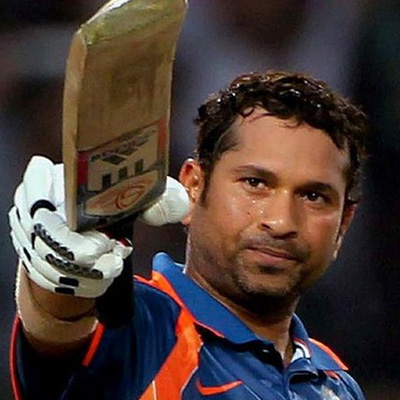
    MUMBAI: The highest run-scorer in the history of international cricket, Sachin Tendulkar who retired in 2013 after playing for an astonishing 24 years will be launching his autobiography on 6 November 2014.  The book has been titled ‘Playing It My Way – My Autobiography’.

    The most celebrated Indian cricketer of all time was conferred the Bharat Ratna – India’s highest civilian award – on the day of his retirement. Now Sachin Tendulkar tells his own remarkable story from playing in the by lanes of suburban Mumbai, to his first Test cap at the age of 16 to his 100th international century and the emotional final farewell that brought his country to a standstill.

    Speaking about the book, Tendulkar commented that “I knew that agreeing to write my story would need me to be completely honest, as that’s the way I have always played the game. It would require talking about a number of aspects I have not shared in public before.

    So here I am, at the end of my final innings, having taken that last walk back to the pavilion, ready to recount as many incidents as I can remember since first picking up a cricket bat as a child in Mumbai 35 years ago.”

    His many achievements with India include winning the World Cup and topping the world Test rankings. Yet he has also known his fair share of frustration and failure – from injuries and early World Cup exits to stinging criticism from the press, especially during his tenure as captain.

    Hodder and Stoughton editor Roddy Bloomfield said, “Over the past 25 years Sachin Tendulkar’s colossal batting triumphs for India have singled him out as one of the greatest players in cricket history. He is universally admired and respected and most impressively remains a very modest man.”

    “I can’t over-emphasise the pleasure it gives me to announce that Hodder and Stoughton will be publishing Sachin Tendulkar’s inspirational autobiography in November of this year,” he added.

    The book will be simultaneously released all over the world and in India will be represented by Hachette India.

  • When Kabaddi turned Pink!

    When Kabaddi turned Pink!

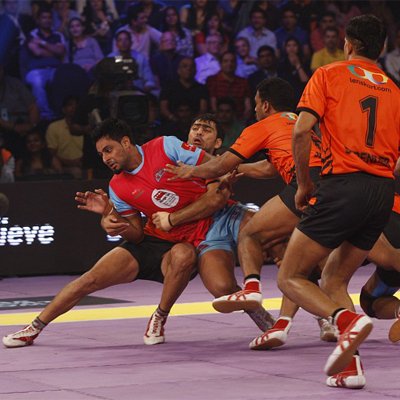
    Pink is the new colour of Kabaddi. The colour, associated with sensitivity, tenderness and femininity is definitely in stark contrast to the indigenous game which has its origins dating to the pre historic times. On 31 August,  when Jaipur Pink Panthers clawed U-Mumba during a nail biting finale of the Star Sports Pro Kabaddi League, the highly agile and contact sport was covered in Pink and announced its presence on the world stage.


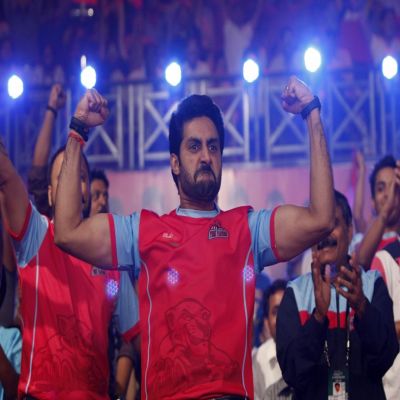
    The Star Sports Pro Kabaddi League (PKL) which spanned 37 days and 60 matches, finally culminated at the National Sports Complex of India, Mumbai, the very same venue where the seeds of the game were first sown. While the Abhishek Bachchan-owned Jaipur Pink Panthers lifted the coveted trophy, the Ronnie Screwvala-owned U-Mumba team had to be content with the second spot.


    While many, including advertisers were skeptical whether the league would be able to generate audience’s interest both at the stadiums and on TV, the results are all out for the world to see. Not just male audiences, but women and children lapped up the game as they came in full gear supporting their respective teams with flags and merchandise. Families from Patna to Vizag, filled the stadiums with not just their presence but also their loud chants, enthusiasm, glee and even disappointment when their teams had to bid farewell. People connected to every raid taken by the 24 year old Jaipur Pink Panthers’ captain Maninder Singh. Players like him and U-Mumba captain Anup Kumar have a new-found fan base now. The last time when such enthusiasm was showcased was probably at the Wankhede stadium for India’s first love-Cricket.


    During the opening night 66 million Indians tuned in to watch the games on Star Sports and Star Gold claims the channel. On the micro blogging site Twitter, Star said it had generated conversations that were trending for nearly two days.


    No one but Star India, businessman Anand Mahindra and promoter Charu Sharma could have augured the path that Kabaddi has taken today. When Star India COO Sanjay Gupta earlier said that the sport would fit their objective of transforming the sports landscape in India, he was right. India seems to have found its second sport.


    The league proves that with a balanced mix of corporate backing, government support, telecast backing combined with international quality production values and celebrity endorsement, a lost game can draw renewed crowds to the stadium or tune in their TV sets. Therefore, it’s hardly a surprise that restaurants, bars and lounges had their customers asking for Kabaddi to witness the performance of 96 of the world’s best Kabaddi players. A few parents who complained that their kids were turning into couch potatoes are smiling, since their kids are now in the open playing the game.


    This has been driven by celebrities/owners of teams including Aamir Khan, Amitabh Bachchan, Shahrukh Khan, Sachin Tendulkar and Aishwarya Rai Bachchan who pledged their support to the games by being present at the venue.


    All in all, we eagerly wait to wear our favourite T-shirts at the next edition of the league beginning in March 2015 (hope the advertisers are listening!).

  • India is now number-one ranked ODI side

    India is now number-one ranked ODI side

    MUMBAI: World champion India has been confirmed as the number-one ranked side in the Reliance ICC ODI team rankings after Zimbabwe’s three wickets victory over Australia  during the triangular series match in Harare held on Sunday.


    India had joined Australia on top of the table after winning the third ODI in Nottingham on 30 August with 114 ratings points, but took sole possession at the coveted number-one spot after Zimbabwe recorded its first victory over Australia in 31 years. This result meant Australia dropping three rating points and slipping behind South Africa and Sri Lanka into fourth position with 111 ratings points.


    South Africa, following its victories over Australia and Zimbabwe, is sitting in second spot with 113 ratings points, while Sri Lanka also has 111 ratings points but is ranked above Australia in third position by a fraction of a point.


    With five ODIs to be played this week, there is potential for further changes at the top of the table, depending how these matches pan out.


    For world champion India to finish as the number-one ranked side, it needs to win the remaining two matches against England and then hope Australia beats South Africa either on 2 September or 6 September (if both the sides clash in the final). In this scenario, India will be on 115 ratings points, followed by South Africa, Australia and Sri Lanka (depending on the outcome of the remaining matches in the triangular series).


    South Africa, which also leads the Reliance ICC Test Team Championship, can move to the top of the table if it wins its remaining two league matches as well as the potential final against Australia. If South Africa makes this happen and India also wins its last two matches, then South Africa and India will be on 115 ratings points each but South Africa will be ranked above India when the ratings are calculated beyond the decimal point.


    Australia may have slipped to fourth position but it too can finish the series in number-one position if England beats India in one of the two matches and Australia defeats South Africa on 2 September and then again in the final on 6 September. In this scenario, Australia will end up on 114 ratings points, followed by India in second position, and Sri Lanka and South Africa in third and fourth spots, respectively.


    Forthcoming matches are as follows:

    2 September – Australia vs South Africa at Harare

    2 September – Fourth ODI, England vs India at Birmingham

    4 September – Zimbabwe vs South Africa at Harare

    5 September – Fifth ODI, England vs India at Leeds

    6 September –  Final. Triangular series at Harare


    The Reliance ICC ODI Team Rankings (as on 31 August, after Zimbabwe-Australia ODI) is given below.

     Rank   Team              Rating     

    1          India                 114

    2          South Africa      113

    3          Sri Lanka           111

    4          Australia            111

    5          England             106

    6          Pakistan            100

    7          New Zealand       98

    8          West Indies         96

    9          Bangladesh         69

    10        Zimbabwe           58

    11        Afghanistan         42

    12        Ireland                 33

  • Jaipur Pink Panthers lifts Pro Kabaddi League trophy; season 2 in March 2015

    Jaipur Pink Panthers lifts Pro Kabaddi League trophy; season 2 in March 2015

    MUMBAI: The Indian audiences have been humming ‘Kabaddi Kabaddi’ for the past one month. And as Abhishek Bachchan’s Jaipur Pink Panther beat Ronnie Screwvala’s U Mumba to lift the Pro Kabaddi League season one trophy, the big announcement was made.


    Looking at the great response for Kabaddi in the country, the promoters have decided to bring back season two of Pro Kabaddi League in March 2015.  


    Conceptualised by Indian businessman Anand Mahindra and co promoter Charu Sharma through their venture, Mashal Sports, the Pro Kabaddi League has entertained audiences right from Mumbai to Patna. “We are very happy with the response for the league and Kabaddi and so will be back as early as March 2015,” said Mahindra.


    The day also saw Patna Pirates beat Bengaluru Bulls to grab the third position in the first season. Neither the heavy rain, nor the ongoing Ganapati celebrations deterred Mumbaikars to be at the National Sports Complex of India to cheer for not just their team, but the game.


    While Patna beat Bengaluru by 29-22, the finale between Jaipur and Mumbai, saw AB’s team winning 35-24 against Scewvala’s team.  


    Excited with the response from women audiences, the organisers are thinking of launching a women’s Kabaddi League too.


    Present at the mega clash were IMG-Reliance chairperson Nita Ambani, Bollywood actor Aishwarya Rai Bachchan, Abhishek Bachchan, Ronnie Screwvala, Zarina Mehta and singer Shankar Mahadevan among others.


    One thing which the Pro Kabaddi League has proved is that India is no longer just a cricket crazy nation.  Kabaddi truly has become the second sport for India.


    Kudos to team Pro Kabaddi League!


  • U-Mumba to clash against Jaipur Pink Panthers in Pro Kabaddi League finale

    U-Mumba to clash against Jaipur Pink Panthers in Pro Kabaddi League finale

    MUMBAI: As many as 218 million viewers tuned into the Star Sports Pro-Kabaddi Leagues’ opening game. The rustic, ancient and Indian contact sport game has finally found its due respect from Indian audiences and after a month of entertaining Indian audiences in a never seen before avatar, the finals are here.


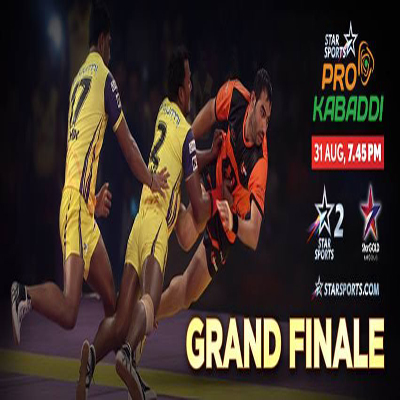
    The Leagues’ two giants; U –Mumba and Jaipur Pink Panthers will clash in the finals that will take place at the National Sports Club of India in Mumbai on 31 August at 7:45 pm. Ironically, it was these two teams that had kicked off the tournament wherein the Ronnie Screwvala owned U-Mumba team won over the Abhishek Bachchan owned Jaipur franchise at the very same stadium.


    Hoarding around the city and posts on social media have been announcing the big finale. The broadcast of Star Sports Pro Kabaddi is on Star Sports 2, Star Gold and starsports.com.


    In its glory days, the sport enjoyed a rich heritage where it was practiced during festivals and after harvest as a matter of celebration. Star’s endeavour to restore that festive air around Kabaddi and set it in today’s context with world-class production, modern indoor stadiums, mat surface courts, jazzy music along with celebrity engagement to make it more appealing to the youth seems to have truly worked its charm. 


  • Ranbir Kapoor officially launches Mumbai City Football Club

    Ranbir Kapoor officially launches Mumbai City Football Club

    MUMBAI: India’s metropolitan city Mumbai which is home to some of India’s greatest sporting talents has finally got its own football club for the upcoming Hero Indian Super League-Mumbai City Football Club.


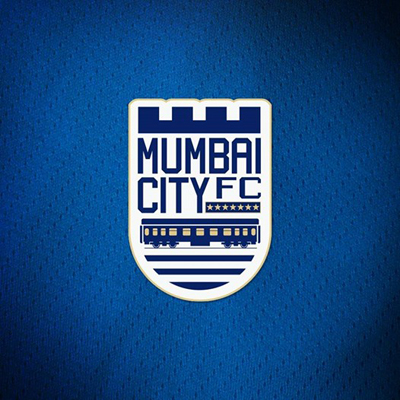
    Team owners Ranbir Kapoor and Bimal Parekh along with IMG-Reliance chairperson Nita Ambani and yesteryear actor Rishi Kapoor unveiled the logo of the new team and spoke about the teams’ grassroots programme. Mumbai’s D.Y Patil Stadium has been declared as the team’s home stadium.


    Explaining the new blue and white designed logo for the team, Ranbir Kapoor, who is the co-owner of the Club said, “A resilient fortress surrounding the logo signifies the determined spirit of the city. The seven stars symbolise the islands that form Mumbai. The trains meanwhile stand for the pulsating, beating a staccato rhythm and the vast distance these trains connect. They are the lifeline of the city.”


    He further added, “I couldn’t have asked for a better franchise to co-own.  It is the city I have grown up in and the city I love. This team will celebrate our unwavering spirit and like the city, fulfill the dreams of players and football fans.”


    When questioned if he will just be a face for the team or an active participant, the self proclaimed Barcelona fan said that he had financially invested in the team and was very passionate about football since he was 10-11 years old.


    Chartered Accountant and co-owner Bimal Parekh while speaking to indiantelevision.com said that he will be looking after the financial and administration aspect of the team, while his other co-owner Kapoor, would help in developing and promoting the team. “Our roles are clear cut and well defined,” he added.


    Parekh promises that his team will play a possession based free flowing brand of football while being technically sound, fast and tactically aware.


    The team has already devised its plan to reach out to the young fans at the grassroots level. Said the team’s technical director Nishant Mehra, “We have roped in around 100 schools to be a part of the developmental programme where we plan to target the age group of six to 10 years.”


     Commenting on the grassroots activation, IMG-Reliance chairperson Nita Ambani said, “The real excitement for the Hero ISL is the Young Champs programme, through which we will reach out to a number of schools.”


     A lot of emphasis is being laid on the grassroots programme, as it is understood that each of the teams are contractually bound to shell out approximately Rs 2 crore annually as part of developing the game in their respective team areas.