Category: Sports

  • Goafirst BRICS U17 live telecast on DD Sports today

    Goafirst BRICS U17 live telecast on DD Sports today

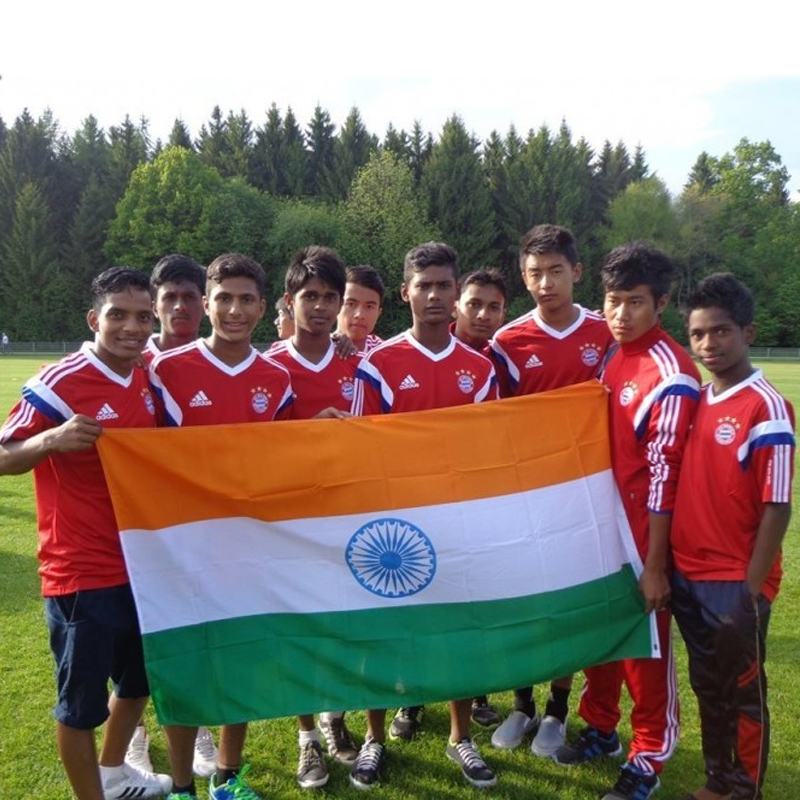
    NEW DELHI: The first-ever BRICS U-17 Football Tournament, being held in Goa this month, will be telecast live by DD Sports.

    The tournament kick-starts in Goa on 5 October and will see Brazil, Russia, India, China and South Africa in the challenge for the trophy. India will play Russia in the opener at the GMC Stadium, Bambolim, today.

    The tournament will witness two matches every alternate day which will be telecast live on DD Sports Channel.

    Doordarshan has made elaborate arrangements to telecast the tournament for its viewers on DD Sports. Around 60 officials have been drafted for a seamless broadcast. Doordarshan has deployed its high-tech OB vans to ensure crystal clear quality for its viewers.

    For the first time, Doordarshan has tied up with the local Kendras to broadcast the event in four languages (English, Hindi, Malayalam and Bangla).

    Apart from this, an added feature would be that viewers can watch free mobile TV using DVB-T2 dongles in OTG-enabled smart phones and tablets, Wi-Fi dongles for moving vehicles, besides the TV sets having built-in DVB-T2 tuner which are called Integrated Digital TV (iDTV).

    Earlier last week, the prime minister Narendra Modi had unveiled the trophy for BRICS U-17 football tournament. Modi reiterated the nation’s commitment to ‘Sports for All’ and ‘Khelo India’ and taking football to every corner of the country.

    The prime minister also wished the tournament a grand success, and said he was confident that it will meet its objective of facilitating greater understanding and friendship amongst all participants.

    The tournament aims at taking the ongoing interaction and cohesion among the BRICS nations to a new level of exchange between the youth of these countries in the field of sports.

  • Goafirst BRICS U17 live telecast on DD Sports today

    Goafirst BRICS U17 live telecast on DD Sports today

    NEW DELHI: The first-ever BRICS U-17 Football Tournament, being held in Goa this month, will be telecast live by DD Sports.

    The tournament kick-starts in Goa on 5 October and will see Brazil, Russia, India, China and South Africa in the challenge for the trophy. India will play Russia in the opener at the GMC Stadium, Bambolim, today.

    The tournament will witness two matches every alternate day which will be telecast live on DD Sports Channel.

    Doordarshan has made elaborate arrangements to telecast the tournament for its viewers on DD Sports. Around 60 officials have been drafted for a seamless broadcast. Doordarshan has deployed its high-tech OB vans to ensure crystal clear quality for its viewers.

    For the first time, Doordarshan has tied up with the local Kendras to broadcast the event in four languages (English, Hindi, Malayalam and Bangla).

    Apart from this, an added feature would be that viewers can watch free mobile TV using DVB-T2 dongles in OTG-enabled smart phones and tablets, Wi-Fi dongles for moving vehicles, besides the TV sets having built-in DVB-T2 tuner which are called Integrated Digital TV (iDTV).

    Earlier last week, the prime minister Narendra Modi had unveiled the trophy for BRICS U-17 football tournament. Modi reiterated the nation’s commitment to ‘Sports for All’ and ‘Khelo India’ and taking football to every corner of the country.

    The prime minister also wished the tournament a grand success, and said he was confident that it will meet its objective of facilitating greater understanding and friendship amongst all participants.

    The tournament aims at taking the ongoing interaction and cohesion among the BRICS nations to a new level of exchange between the youth of these countries in the field of sports.

  • Sports recognised as infrastructure sector, eligible for private investment

    Sports recognised as infrastructure sector, eligible for private investment

    NEW DELHI: Alarmed by India’s performance in the recent Rio Olympics, the Government appears to have pressed the panic button: which may help sports persons on the long run.

    After appointing two committees – one for pointing out why India failed, and the other to prepare for the next two Olympics, the Government included Sports in the harmonized master list of infrastructure sub-sectors.

    The proposal was mooted by the Sports Ministry so that the sports sector becomes eligible for obtaining long term financial support from banks and other financial institutions on the same principle as is available to other infrastructure projects.

    The Finance Ministry after a series of meetings and discussions with different agencies including Reserve Bank of India has decided that sports infrastructure will be included under the Harmonized Master List of Infrastructure Sub sectors and it “includes the provision of Sports Stadia and Infrastructure for Academies for Training / Research in Sports and Sports-related activities”

    In this connection Ministry of Finance, Department of Economic Affairs, had issued a Gazette Notification dated 9 September 2016.

    This inclusion would encourage private investment in a public good which has socio-economic externalities in a country with young population. It will also bolster investment in sports infrastructure sector which will contribute to the economy and help in promotion of health and fitness of the people of this country as also provide opportunities for employment in the new and exciting sectors. It goes without saying that investment of the private sector will widen the platform from where the country can become a sporting power in future.

  • Sports recognised as infrastructure sector, eligible for private investment

    Sports recognised as infrastructure sector, eligible for private investment

    NEW DELHI: Alarmed by India’s performance in the recent Rio Olympics, the Government appears to have pressed the panic button: which may help sports persons on the long run.

    After appointing two committees – one for pointing out why India failed, and the other to prepare for the next two Olympics, the Government included Sports in the harmonized master list of infrastructure sub-sectors.

    The proposal was mooted by the Sports Ministry so that the sports sector becomes eligible for obtaining long term financial support from banks and other financial institutions on the same principle as is available to other infrastructure projects.

    The Finance Ministry after a series of meetings and discussions with different agencies including Reserve Bank of India has decided that sports infrastructure will be included under the Harmonized Master List of Infrastructure Sub sectors and it “includes the provision of Sports Stadia and Infrastructure for Academies for Training / Research in Sports and Sports-related activities”

    In this connection Ministry of Finance, Department of Economic Affairs, had issued a Gazette Notification dated 9 September 2016.

    This inclusion would encourage private investment in a public good which has socio-economic externalities in a country with young population. It will also bolster investment in sports infrastructure sector which will contribute to the economy and help in promotion of health and fitness of the people of this country as also provide opportunities for employment in the new and exciting sectors. It goes without saying that investment of the private sector will widen the platform from where the country can become a sporting power in future.

  • BCCI’s cricket media rights bonanza

    BCCI’s cricket media rights bonanza

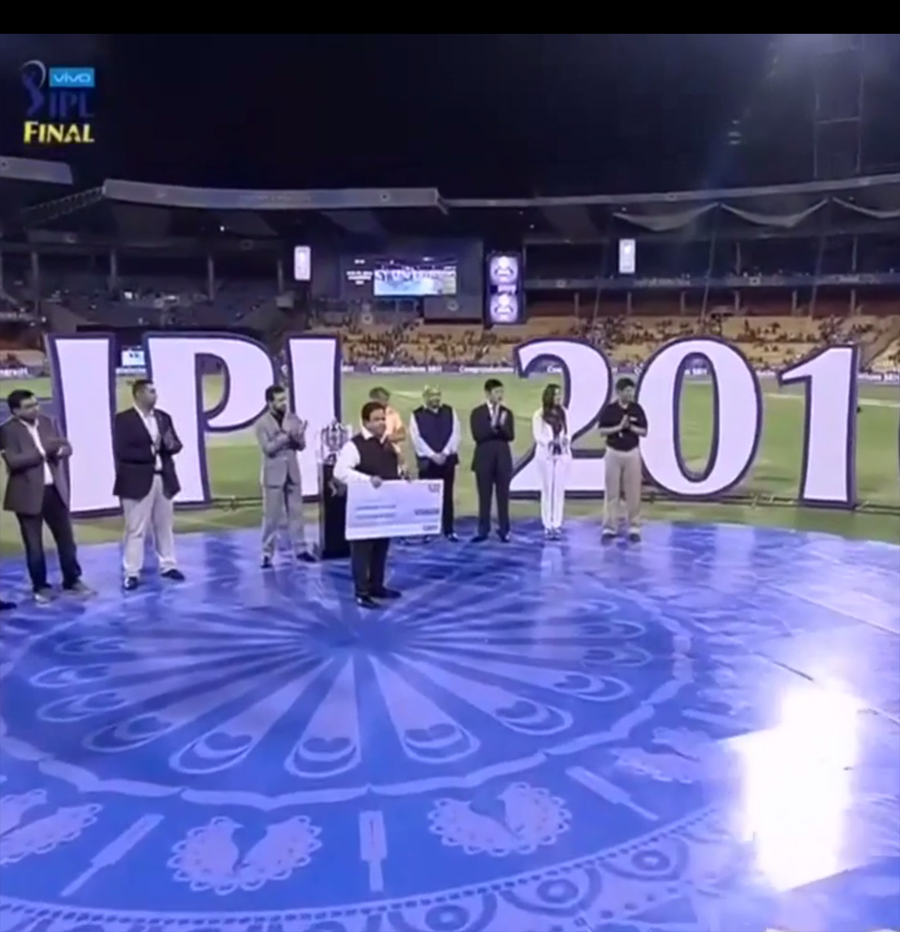
    MUMBAI: The Board of Control for Cricket in India (BCCI) has forecast that it is going to take home a whopping 60 per cent plus more media rights income from cricket in the financial year 2016-2017. The figure it has kept in its sights is Rs 1036.80 crore.

    In 2015-16, it had budgeted a figure of Rs 648 crore, and it easily got to it.

    The board generated gross media rights and franchisee consideration receipts of Rs. 1069.75 crore in 2015-2016 as against Rs. 999.6 crore in 2014-2015 from the mega bonanza Idian Premier League (IPL). The jump, the board, says is due to an increase in media rights income which went up to Rs 738.06 crore from Rs 689.10 crore in 2014-2015. Of this Rs 689.10 crore (Rs 620.23 crore), came courtesy Multi Screen Media Ltd (now Sony Pictures Networks- SPN- India) for the television rights within India. Rs 48.96 crore (Rs 47.68 crore) was contributed by Times Internet and sublicensees for righ.

    It generated Rs 25.31 crore from British Sky Broadcasting from the sale of its television, internet and mobile media rights for the UK, Ireland, Isle of Mann, Channel Islands and the European territories for the IPL. ESPN coughed up Rs 23.47 crore for the TV, audio, internet and mobile rights for the US and surrounding territories while Hotstar anted up Rs 48 crore for its delayed domestic streaming rights for India, and for audio and television, internet mobile and audio rights for some territories.

    The board has reported a surplus of Rs 210.51 crore from the IPL in 2015-2016.

    Additionally, BCCI’s gross media rights income from its international fixtures too went up has gone up from Rs. 388.80 crore last year to Rs. 648 crore in the current year, due to increase in the number of matches held in India, says BCCI honorary treasurer Anirudh Chaudhry, in the annual report.

    He adds: “The cricket board has a surplus of income over expenditure of Rs. 111.83 crore as against Rs. 166.87 crore in the earlier year. This decrease in surplus is mainly due to distribution of additional amount due to associations, additional payments to players and absence of income from CLT-20 Tournament, in spite of increase in total income as compared to previous year.”

    In the current financial year 2016-17, the BCCI’s budgeted surplus is estimated at Rs. 509.13 crore.

    The BCCI in its annual report has stated that the Indian IPL, which is going into its tenth season has been valued at $4.5 billion (Rs 27,000 crore) and its ninth edition generated 102 crore impressions according to the Broadcast Audience Research Council. The valuation of the IPL brand was done by appraisal firm Duff & Phelps.

    According to the board, the IPL clocked a cumulative reach of 361 Million viewers, making it a total of 52 per cent of TV viewing households who tuned into IPL 2016 on television. On top of that 1.5 million spectators turned up at the stadia to watch the action on the ground.

    Additionally, the IPL is the fastest growing sports league in the world on microblogging site Twitter even when compared to Major League Baseball, NBA, NFL and EFA. The IPL fan following grew at a scorching pace of 300 per cent.

    With the numbers that the BCCI is throwing up about the IPL one can really expect the TV rights slugfest between Star India, Sony Pictures Networks, Amazon (??) and Reliancd Jio (??) to get really fierce and set new benchmarks.

  • BCCI’s cricket media rights bonanza

    BCCI’s cricket media rights bonanza

    MUMBAI: The Board of Control for Cricket in India (BCCI) has forecast that it is going to take home a whopping 60 per cent plus more media rights income from cricket in the financial year 2016-2017. The figure it has kept in its sights is Rs 1036.80 crore.

    In 2015-16, it had budgeted a figure of Rs 648 crore, and it easily got to it.

    The board generated gross media rights and franchisee consideration receipts of Rs. 1069.75 crore in 2015-2016 as against Rs. 999.6 crore in 2014-2015 from the mega bonanza Idian Premier League (IPL). The jump, the board, says is due to an increase in media rights income which went up to Rs 738.06 crore from Rs 689.10 crore in 2014-2015. Of this Rs 689.10 crore (Rs 620.23 crore), came courtesy Multi Screen Media Ltd (now Sony Pictures Networks- SPN- India) for the television rights within India. Rs 48.96 crore (Rs 47.68 crore) was contributed by Times Internet and sublicensees for righ.

    It generated Rs 25.31 crore from British Sky Broadcasting from the sale of its television, internet and mobile media rights for the UK, Ireland, Isle of Mann, Channel Islands and the European territories for the IPL. ESPN coughed up Rs 23.47 crore for the TV, audio, internet and mobile rights for the US and surrounding territories while Hotstar anted up Rs 48 crore for its delayed domestic streaming rights for India, and for audio and television, internet mobile and audio rights for some territories.

    The board has reported a surplus of Rs 210.51 crore from the IPL in 2015-2016.

    Additionally, BCCI’s gross media rights income from its international fixtures too went up has gone up from Rs. 388.80 crore last year to Rs. 648 crore in the current year, due to increase in the number of matches held in India, says BCCI honorary treasurer Anirudh Chaudhry, in the annual report.

    He adds: “The cricket board has a surplus of income over expenditure of Rs. 111.83 crore as against Rs. 166.87 crore in the earlier year. This decrease in surplus is mainly due to distribution of additional amount due to associations, additional payments to players and absence of income from CLT-20 Tournament, in spite of increase in total income as compared to previous year.”

    In the current financial year 2016-17, the BCCI’s budgeted surplus is estimated at Rs. 509.13 crore.

    The BCCI in its annual report has stated that the Indian IPL, which is going into its tenth season has been valued at $4.5 billion (Rs 27,000 crore) and its ninth edition generated 102 crore impressions according to the Broadcast Audience Research Council. The valuation of the IPL brand was done by appraisal firm Duff & Phelps.

    According to the board, the IPL clocked a cumulative reach of 361 Million viewers, making it a total of 52 per cent of TV viewing households who tuned into IPL 2016 on television. On top of that 1.5 million spectators turned up at the stadia to watch the action on the ground.

    Additionally, the IPL is the fastest growing sports league in the world on microblogging site Twitter even when compared to Major League Baseball, NBA, NFL and EFA. The IPL fan following grew at a scorching pace of 300 per cent.

    With the numbers that the BCCI is throwing up about the IPL one can really expect the TV rights slugfest between Star India, Sony Pictures Networks, Amazon (??) and Reliancd Jio (??) to get really fierce and set new benchmarks.

  • CII Sports Summit: The role of corporate India

    CII Sports Summit: The role of corporate India

    MUMBAI: Profit is not a bad word which the sports ecosystem has awakened to and realised, seemed to be the essence of the discussion at the inaugural ‘Corporatization of Sports’ session at the CII summit on the business of sports and entertainment held in Mumbai on 21 September. The session sought to discuss how Indian sport could evolve and produce champions with the involvement of corporate India.

    The need for looking at the commercial aspect of sports, scope for public-private partnership in promotion, possibility of the government incentivising investments, supporting sports for the sake of business and branding, games packaging and cultivating viewership and media coverage were some of the ideas thrown up at the summit to which almost all the experts agreed.

    KPMG partner Jaideep Ghosh, GroupM business head – entertainment, sports and live events Vineet Karnik, IMG Reliance COO Ashu Jindal, PMG chairman Sam Balsara, YES Bank president and country head, media & entertainmemt, luxury & sports,Karan Ahluwalia and MICA professor Sanjeev Tripathi, were the panelists. Harsha Bhogle, commentator and journalist, moderated the session.

    Bhogle introduced the experts and sought some opinions on the subject. “It is indeed encouraging to see that lately sports was being promoted from the school and college level,” Jindal said. Ghosh said that consumption of sporting events in India has been on the rise, which mainly included online consumption. He underlined the importance and growth of digital media and social media rights for such events.

    Pointing at the international sporting leagues, Ghosh quoted an example of how La-Liga had tweaked its sports timing so as to suit the Indian viewership timings. He noted the positive trend of a worthwhile increase of 20-30% in female viewership of sporting events in India.

    Profit-making training academies and sports good manufacturing were other areas that get a boost with the promotion of sports, Ghosh remarked.

    Whether the Indian government will support sports, Bhogle sought to know from the panelists. Tripathi, quoting a government web site, said that the establishment’s self-declared role was creating infrastructure and capacity-building. “One needs to love sports to promote it,” quipped Bhogle referring to the government versus corporate role.

    Tripathi suggested the concept of public-private partnership in promoting sports. “If tollways can follow the PPP model, I don’t see any reason why sports can’t,” he seemed curious. Giving the example of a private company managing the commercial exploitation of swimming pools at Kendriya Vidyalayas after school hours, he said Sports Authority of India stadia could also be exploited along similar lines.

    “Almost 340-350 days in a year, the SAI stadia are unused,” he quipped. In metros, Bhogle said, because of the traffic snarls and other issues, people barely manage to reach the stadia. There is no time to play or practice. “Medals will hopefully come from small towns – where there is space and time,” Bhogle opined.

    Jindal agreed that the government builds infrastructure and corporates invest. Reliance Foundation, he said, was supporting sporting events in around 2000 schools in the country. “IMG sponsored two sportspersons to train at a US academy and one of them today is playing for the prestigious NBA,” Jindal said.

    Bhogle said it was very significant to reach the grassroots level to cultivate sporting talent. “Let under-16 boys and girls play their game at various levels – talent and technique will follow suit,” he felt.

    “There is no database of grassroots-level sporting events being played in the country,” Karnik remarked. There is no national-level academy for training budding talent, he said. Corporates, Karnik stated, were engaging in sports. Like broadcasters and distributors, etc. make money, he said, it was crucial that Indian companies sought RoIs (returns on investments). “But, are they looking at the long-term (say, five years) perspective? May be, no,” he felt.

    In almost 30 years, Balsara said, the business of sports (advertsing,etc.) in India has grown around 50 times which was far less than growth in other sectors/sub-sectors.

    Balsara said there was a need to see sports as a business. “And, in business, there are profits – however distant that may be.” Be a ‘lambi race ka ghoda’, he said. Balsara believed that corporates need to have more and better risk appetite to be in the business of sports promotion.

    Corporates, of course, support events for the sake of building their brands, said Ahluwalia. Given the demographics in India, advertising was done for more visibility. For the sake of going the whole hog into sports promotion, Ahluwalia said, the complete supply chain would need to be looked at – from scouting for talent to sports good manufacturing etc. to CSR

    We also need to support games other than cricket, Bhogle said. Tripathi agreed, and informed that he found 20 football academies in Ahmedabad but none for cricket.“The different leagues being played in India are creating dreams,” Bhogle said. There was a need for heroes.There were fewer heroes because federations used to dwarf them in the wake of retaining their own supremacy, Bhogle said.

    Balsara agreed on heroes and winners. The whole nation is watching sports. Winners at any level – state level or national level – are a good bet. “Only then, people and corporates would go after them,” he said.

    India needs a revolution in all sporting activities. “The revolution that the former world champion Grandmaster Vishwanathan Anand could bring about in chess, could not be replicated in the case of Mary Kom,” Bhogle lamented. “You need the power of media to establish and popularise a sport,” Balsara said. A strong medium like TV was very significant for sports promotion, he said.

    Bhogle agreed – TV creates heroes. “The digital medium in India, which does not need the help of airtime or printing, is also growing very well,” Bhogle said. Jindal nodded, saying, “All the school matches supported by IMG were published on the social media and uploaded on Youtube”. The influence of social media, especially the opinions and reactions, was very powerful, he said. Jindal said the social media helps in taking sports to the next level.

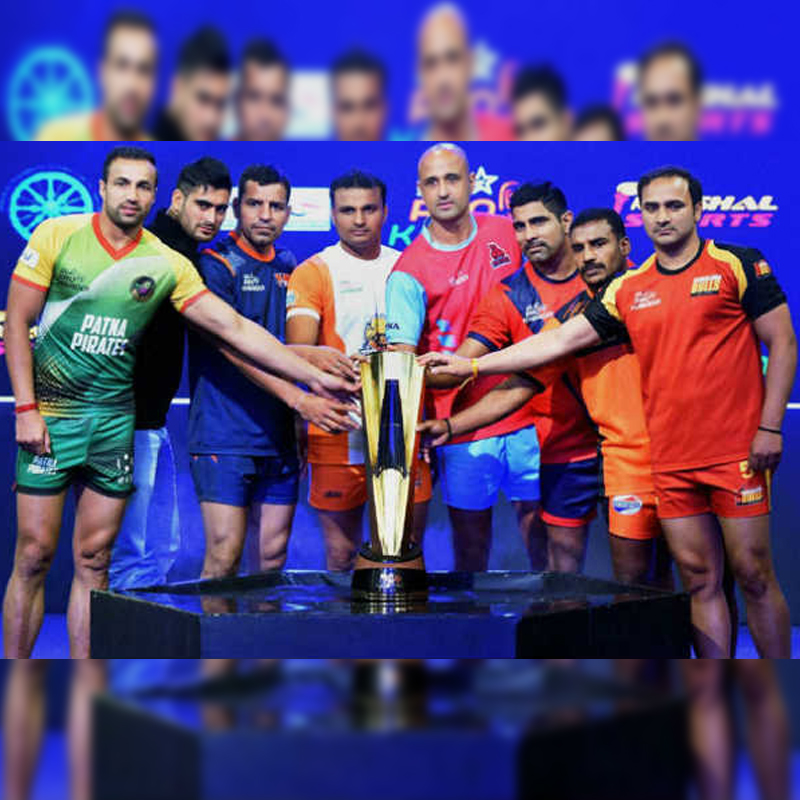
    Bhogle sought to analyse the success of ‘pro-kabaddi’ in India. “Apart from some tweaks to the game’s rules, did it succeed because there was no burden of legacy,” he asked. “The packaging was very good, although there were no top-level, known players,” Ghosh answered. “Each game, which helped release the regional pent-up demand, is short and held the viewers’ interest for 45-50 minutes,” he said. Half-jokingly, he said he found some DJ kind of effect at the ‘pro-kabaddi’ matches.

    “Kabaddi is a kind of revolution brought about with multimedia help.Players who were making Rs 2-5 lakh are now making 50-70 lakh,”Ahluwalia said. Regional brands and products are associating with the game. Sarpanchs etc. have become trainers, mentors and coaches.

    “Leading kabaddi players are earning more than the average IPL players,” Bhogle remarked. He said, as in the US, he could foresee regions in India playing against each other.

    Whether mega corporations can help sports and/or fund stadiums, Bhogle asked. To this, Karnik said that Hero, Pepsi and Vodafone (which supported 10 seasons of a game) were the examples of that phenomenon. “Casual relationships with sports doesn’t work,” Balsara agreed. Relationships over some years reaped a good harvest, he said.

    “Pepsi, for example, does not support only a few episodes of a TV serial,” Balsara said. Consistency of sponsorship in sports is critical, he said.

    However, with limited spending and maximum leverage, RoI is also possible. Balsara gave the example of Kent RO which sponsors non-live after-hours of games. On the other hand, he said, IPL sponsors Vivo was leveraging far less than it could have had. Everybody agreed.

    “Eventually, with low RoI, they may end up being unsatisfied,” said. Bhogle said some companies were quietly supporting potential winners so that they could leverage them when they triumph.

    The business of sports in India was merely worth $2 billion, whereas, in the developed countries, it was pegged at around $ 50-60 billion, Ahluwalia said. So, are we bullish on the business of sports in India, Bhogle asked. Almost all panelists answered in the affirmative, with Jindal adding, “India is growing at 7%, earnings are increasing and so is sports.”

    Bhogle concluded by saying that (sporting) opportunities well-packaged get investments. Begging bowls get pennies.

  • CII Sports Summit: The role of corporate India

    CII Sports Summit: The role of corporate India

    MUMBAI: Profit is not a bad word which the sports ecosystem has awakened to and realised, seemed to be the essence of the discussion at the inaugural ‘Corporatization of Sports’ session at the CII summit on the business of sports and entertainment held in Mumbai on 21 September. The session sought to discuss how Indian sport could evolve and produce champions with the involvement of corporate India.

    The need for looking at the commercial aspect of sports, scope for public-private partnership in promotion, possibility of the government incentivising investments, supporting sports for the sake of business and branding, games packaging and cultivating viewership and media coverage were some of the ideas thrown up at the summit to which almost all the experts agreed.

    KPMG partner Jaideep Ghosh, GroupM business head – entertainment, sports and live events Vineet Karnik, IMG Reliance COO Ashu Jindal, PMG chairman Sam Balsara, YES Bank president and country head, media & entertainmemt, luxury & sports,Karan Ahluwalia and MICA professor Sanjeev Tripathi, were the panelists. Harsha Bhogle, commentator and journalist, moderated the session.

    Bhogle introduced the experts and sought some opinions on the subject. “It is indeed encouraging to see that lately sports was being promoted from the school and college level,” Jindal said. Ghosh said that consumption of sporting events in India has been on the rise, which mainly included online consumption. He underlined the importance and growth of digital media and social media rights for such events.

    Pointing at the international sporting leagues, Ghosh quoted an example of how La-Liga had tweaked its sports timing so as to suit the Indian viewership timings. He noted the positive trend of a worthwhile increase of 20-30% in female viewership of sporting events in India.

    Profit-making training academies and sports good manufacturing were other areas that get a boost with the promotion of sports, Ghosh remarked.

    Whether the Indian government will support sports, Bhogle sought to know from the panelists. Tripathi, quoting a government web site, said that the establishment’s self-declared role was creating infrastructure and capacity-building. “One needs to love sports to promote it,” quipped Bhogle referring to the government versus corporate role.

    Tripathi suggested the concept of public-private partnership in promoting sports. “If tollways can follow the PPP model, I don’t see any reason why sports can’t,” he seemed curious. Giving the example of a private company managing the commercial exploitation of swimming pools at Kendriya Vidyalayas after school hours, he said Sports Authority of India stadia could also be exploited along similar lines.

    “Almost 340-350 days in a year, the SAI stadia are unused,” he quipped. In metros, Bhogle said, because of the traffic snarls and other issues, people barely manage to reach the stadia. There is no time to play or practice. “Medals will hopefully come from small towns – where there is space and time,” Bhogle opined.

    Jindal agreed that the government builds infrastructure and corporates invest. Reliance Foundation, he said, was supporting sporting events in around 2000 schools in the country. “IMG sponsored two sportspersons to train at a US academy and one of them today is playing for the prestigious NBA,” Jindal said.

    Bhogle said it was very significant to reach the grassroots level to cultivate sporting talent. “Let under-16 boys and girls play their game at various levels – talent and technique will follow suit,” he felt.

    “There is no database of grassroots-level sporting events being played in the country,” Karnik remarked. There is no national-level academy for training budding talent, he said. Corporates, Karnik stated, were engaging in sports. Like broadcasters and distributors, etc. make money, he said, it was crucial that Indian companies sought RoIs (returns on investments). “But, are they looking at the long-term (say, five years) perspective? May be, no,” he felt.

    In almost 30 years, Balsara said, the business of sports (advertsing,etc.) in India has grown around 50 times which was far less than growth in other sectors/sub-sectors.

    Balsara said there was a need to see sports as a business. “And, in business, there are profits – however distant that may be.” Be a ‘lambi race ka ghoda’, he said. Balsara believed that corporates need to have more and better risk appetite to be in the business of sports promotion.

    Corporates, of course, support events for the sake of building their brands, said Ahluwalia. Given the demographics in India, advertising was done for more visibility. For the sake of going the whole hog into sports promotion, Ahluwalia said, the complete supply chain would need to be looked at – from scouting for talent to sports good manufacturing etc. to CSR

    We also need to support games other than cricket, Bhogle said. Tripathi agreed, and informed that he found 20 football academies in Ahmedabad but none for cricket.“The different leagues being played in India are creating dreams,” Bhogle said. There was a need for heroes.There were fewer heroes because federations used to dwarf them in the wake of retaining their own supremacy, Bhogle said.

    Balsara agreed on heroes and winners. The whole nation is watching sports. Winners at any level – state level or national level – are a good bet. “Only then, people and corporates would go after them,” he said.

    India needs a revolution in all sporting activities. “The revolution that the former world champion Grandmaster Vishwanathan Anand could bring about in chess, could not be replicated in the case of Mary Kom,” Bhogle lamented. “You need the power of media to establish and popularise a sport,” Balsara said. A strong medium like TV was very significant for sports promotion, he said.

    Bhogle agreed – TV creates heroes. “The digital medium in India, which does not need the help of airtime or printing, is also growing very well,” Bhogle said. Jindal nodded, saying, “All the school matches supported by IMG were published on the social media and uploaded on Youtube”. The influence of social media, especially the opinions and reactions, was very powerful, he said. Jindal said the social media helps in taking sports to the next level.

    Bhogle sought to analyse the success of ‘pro-kabaddi’ in India. “Apart from some tweaks to the game’s rules, did it succeed because there was no burden of legacy,” he asked. “The packaging was very good, although there were no top-level, known players,” Ghosh answered. “Each game, which helped release the regional pent-up demand, is short and held the viewers’ interest for 45-50 minutes,” he said. Half-jokingly, he said he found some DJ kind of effect at the ‘pro-kabaddi’ matches.

    “Kabaddi is a kind of revolution brought about with multimedia help.Players who were making Rs 2-5 lakh are now making 50-70 lakh,”Ahluwalia said. Regional brands and products are associating with the game. Sarpanchs etc. have become trainers, mentors and coaches.

    “Leading kabaddi players are earning more than the average IPL players,” Bhogle remarked. He said, as in the US, he could foresee regions in India playing against each other.

    Whether mega corporations can help sports and/or fund stadiums, Bhogle asked. To this, Karnik said that Hero, Pepsi and Vodafone (which supported 10 seasons of a game) were the examples of that phenomenon. “Casual relationships with sports doesn’t work,” Balsara agreed. Relationships over some years reaped a good harvest, he said.

    “Pepsi, for example, does not support only a few episodes of a TV serial,” Balsara said. Consistency of sponsorship in sports is critical, he said.

    However, with limited spending and maximum leverage, RoI is also possible. Balsara gave the example of Kent RO which sponsors non-live after-hours of games. On the other hand, he said, IPL sponsors Vivo was leveraging far less than it could have had. Everybody agreed.

    “Eventually, with low RoI, they may end up being unsatisfied,” said. Bhogle said some companies were quietly supporting potential winners so that they could leverage them when they triumph.

    The business of sports in India was merely worth $2 billion, whereas, in the developed countries, it was pegged at around $ 50-60 billion, Ahluwalia said. So, are we bullish on the business of sports in India, Bhogle asked. Almost all panelists answered in the affirmative, with Jindal adding, “India is growing at 7%, earnings are increasing and so is sports.”

    Bhogle concluded by saying that (sporting) opportunities well-packaged get investments. Begging bowls get pennies.
  • FIA Formula One: Tata readies Sky for UHD telecast

    FIA Formula One: Tata readies Sky for UHD telecast

    LONDON: Tata Communications, the official connectivity provider of Formula 1®, Formula One Management, and Sky, have tested in action live ultra high-definition (UHD) broadcasting at the 2016 Formula 1 Singapore Airlines Grand Prix. Following this, the first ever end-to-end broadcast of an F1® race in UHD, Sky will show all races of the 2017 season in UHD.

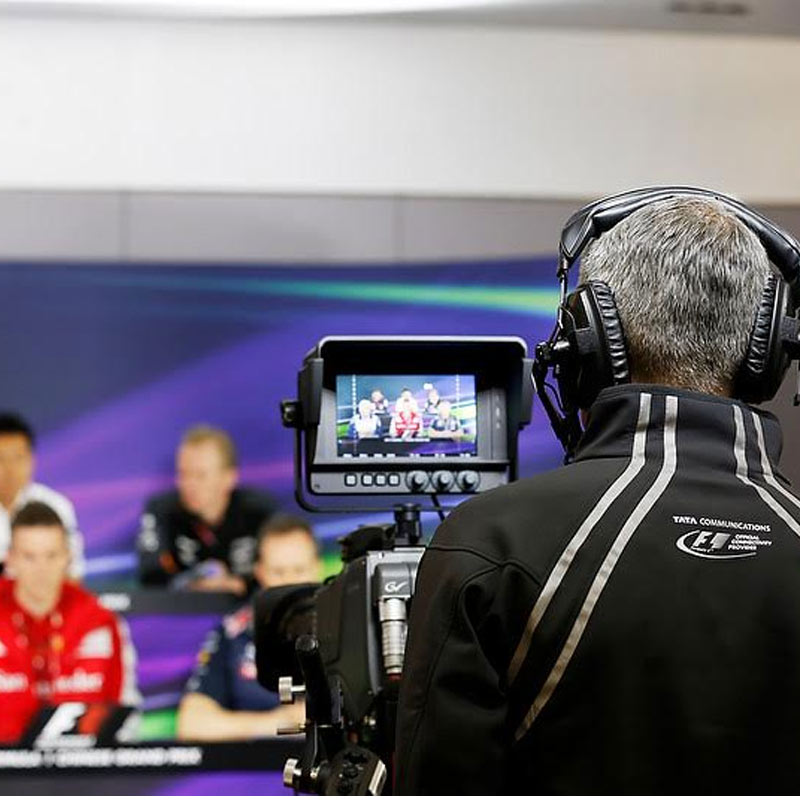
    The successful proof of concept involved the installation of multiple state-of-the-art UHD cameras at the Singapore circuit. The footage from these was mixed in the FOM Broadcast Centre onsite, and the UHD output distributed live to Sky’s HQ in Osterley in the UK using Tata Communications’ Video Connect service. Video Connect enables broadcasters to deliver live video feeds over the world’s largest wholly-owned subsea fibre network, ensuring the highest quality experience for viewers.

    “This proof of concept with Sky and Tata Communications demonstrates our ongoing commitment to make F1® the ultimate sports experience by harnessing the power of cutting-edge broadcasting technologies,” says John Morrison, chief technical officer of Formula One Management.

    “Delivering the race action seamlessly in UHD from any Grand Prix location to homes requires superfast, reliable connectivity on a global scale,” says Mehul Kapadia, managing director of F1® business at Tata Communications. “And, other game-changing technologies like virtual reality will rely on ubiquitous, superfast connectivity too. As the break-neck speed of technology innovation continues, we’ll work with the Formula One management to enable fans to experience the exhilarating world of F1® in new ways.”

    “We pride ourselves on being an extremely forward-thinking F1® broadcaster with a special focus on innovation,” says Keith Lane, director of operations at Sky. “UHD offers four times higher resolution than HD, making F1® a more powerful, immersive experience for fans than ever before. The success of this proof of concept in Singapore shows that we’re on track to show every race live in UHD next season using our next-generation Sky Q home entertainment service, and to continue to give our customers the action-packed F1® experiences that they crave.”

    The UHD test in Singapore follows a series of other ambitious proof of concepts by Tata Communications and Formula One management around live over the top content delivery and 4K broadcasting.

  • FIA Formula One: Tata readies Sky for UHD telecast

    FIA Formula One: Tata readies Sky for UHD telecast

    LONDON: Tata Communications, the official connectivity provider of Formula 1®, Formula One Management, and Sky, have tested in action live ultra high-definition (UHD) broadcasting at the 2016 Formula 1 Singapore Airlines Grand Prix. Following this, the first ever end-to-end broadcast of an F1® race in UHD, Sky will show all races of the 2017 season in UHD.

    The successful proof of concept involved the installation of multiple state-of-the-art UHD cameras at the Singapore circuit. The footage from these was mixed in the FOM Broadcast Centre onsite, and the UHD output distributed live to Sky’s HQ in Osterley in the UK using Tata Communications’ Video Connect service. Video Connect enables broadcasters to deliver live video feeds over the world’s largest wholly-owned subsea fibre network, ensuring the highest quality experience for viewers.

    “This proof of concept with Sky and Tata Communications demonstrates our ongoing commitment to make F1® the ultimate sports experience by harnessing the power of cutting-edge broadcasting technologies,” says John Morrison, chief technical officer of Formula One Management.

    “Delivering the race action seamlessly in UHD from any Grand Prix location to homes requires superfast, reliable connectivity on a global scale,” says Mehul Kapadia, managing director of F1® business at Tata Communications. “And, other game-changing technologies like virtual reality will rely on ubiquitous, superfast connectivity too. As the break-neck speed of technology innovation continues, we’ll work with the Formula One management to enable fans to experience the exhilarating world of F1® in new ways.”

    “We pride ourselves on being an extremely forward-thinking F1® broadcaster with a special focus on innovation,” says Keith Lane, director of operations at Sky. “UHD offers four times higher resolution than HD, making F1® a more powerful, immersive experience for fans than ever before. The success of this proof of concept in Singapore shows that we’re on track to show every race live in UHD next season using our next-generation Sky Q home entertainment service, and to continue to give our customers the action-packed F1® experiences that they crave.”

    The UHD test in Singapore follows a series of other ambitious proof of concepts by Tata Communications and Formula One management around live over the top content delivery and 4K broadcasting.