Category: Sports

  • Sony Networks looking to change face of Indian football in ’17

    Sony Networks looking to change face of Indian football in ’17

    MUMBAI: The year 2016 saw quite a bit of shake-up in the realm of Indian sports broadcasting. Zee signed a proposal with Sony to sell its sports channels, marketed under Ten Sports brand, to the latter; the Indian cricket broad’s fight with the Supreme Court putting a question mark on IPL and its broadcast and the arrival of some professional sports leagues in India that garnered viewers as well as on-ground audience. The developments also saw sports broadcasting turn primarily into a two-horse race Star India on one side and Sony-ESPN combine on the other, while Nimbus Sports remains a comparatively small player.

    Talking to indiantelevision.com on the changing sports broadcast dynamics, Sony Pictures Network India (SPNI) sports and distribution president Rajesh Kaul said, “2016 was a spectacular year for the sports cluster of Sony in terms of the growth. In January 2016, we launched the Sony ESPN channels, which scaled us up to a four-channel sports network. IPL 2016 exceeded expectations with a record viewership of 361.6 million viewers.

    “In addition to this, we also had the on-air and digital telecast of UEFA Euro 2016 on our network, one of the biggest and most watched international football tournaments in 2016. To amplify the viewing experience of the tournament, we continued our pioneering initiative of multi-language feeds and for the first time in India, there was a multi-language feed for an international football tournament with the telecast of Euro 2016 in English, Hindi, Bengali, Tamil, Telugu and Malayalam languages.”

    Acquisition of Ten Network by SPN, subject to regulatory approvals, in a deal worth US$385 million does add fire-power as the channels operate in several countries, including the Indian sub-continent, Maldives, Singapore, Hong Kong, Middle East and Caribbean.

    The Sony sports network grew majestically in 2016. From Sony Six, Six HD, Sony ESPN and Sony ESPN HD to a bouquet of nine sports channels (Ten Network) prove Sony is looking to be serious player.

    Asked about the most viewed sporting event on SPN in 2016, Kaul said, “2016 was a strong year for the sports cluster of SPN and we enjoyed an excellent response to a plethora of our properties in cricket, football, fight sports and basketball / NBA. Both our marquee sports events IPL 2016 and UEFA Euro 2016 got an unprecedented level of viewership. In addition to this, Ultimate Fighting Championship (UFC) and NBA in our breakfast viewing category have also seen a substantial growth in viewership this year. Over 100 million viewers sampled UFC this year and more than 140 million viewers sampled NBA season 2015-16.”

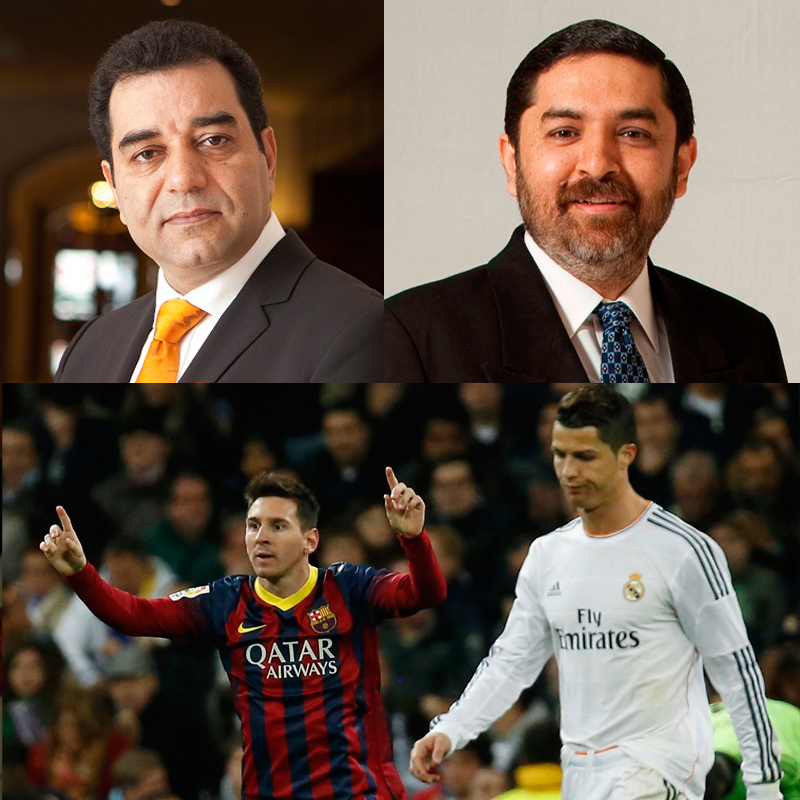
    To cash in on the growing popularity of football in India and give a contest to cricket viewership and English Premier League (still the most followed footlball league in the world), the network tried to change the Spanish La Liga playing timings for the Indian audience who are ardent followers of Cristiano Ronaldo, Lionel Messi, Real Madrid and Barcelona. The matches were scheduled to start at 4.30 pm local time in Spain (8 PM IST). This added a huge chunk of viewership to the Spanish League and with a new La Liga office in Delhi, the league and the region’s broadcaster is surely looking to tap into the South-Asian audience.

    Talking about viewership of foreign leagues in India, Kaul opined, “The sports cluster of SPN caters to a diverse spectrum of viewers with a wide range of sports. The variety of foreign sport on SPNI is widely followed by Indian viewers.

    La Liga made a blockbuster start to the 2016-17 season by trebling its reach compared to last season. El Clasico match between Barcelona & Real Madrid is the most watched international football league match of the year (4.1 million viewers).

    UFC has seen exponential growth in ratings in 2016 with over 100 million viewers this entire year. TNA is immensely popular in India with the property being sampled by over 185 million viewers this year.

    NBA is another sport which has a wide following among Indian fans last season NBA 2015-16 being watched by more than 140 million viewers and we are expecting a strong season showing for the 2016-17 season.”

    With the television rights of La Liga in India, SPNI also has the digital rights for the Spanish League. Showcasing important matches on Sony LIV, its digital platform, SPNI has been able to get its share of sports’ digital audience. Knowing its huge potential in the Indian market, the digital platform, beamed the El Clasico live on its website and garnered huge numbers.

    “Sport is one of our key focus areas and we have the best football action available with us. We have showcased big ticketing football events like Euro 2016, Copa America Centenario as well as the El Clasico,” SPNI EVP and digital business head Uday Sodhi said, adding with a strong event line-up that includes La Liga Santandar, Sony was “truly the (Indian) home of football.”

    The network also recently showcased Bangladesh Premier League 2016 and, according to Sodhi’s claims, it turned out to be most watched cricketing event so far on Sony Liv. “In all our marketing and brand communications, we have sports as a prime genre. We have done a 360-degree campaign for promoting Sony Liv as the one-stop for the best of sporting action,” he added, highlighting the digital platform’s attempts to ride the sports bandwagon.

    With the Internet’s reach increasing in India, which also ups the potential of products riding it, dwelling on digital platforms’ strategies in general, Sodhi said, “With 350 million internet users in India (65 per cent users being mobile only) and projections of crossing 700 million internet users by 2020, there is huge potential in India that’s yet to be tapped. Online video is thriving and 50 per cent of total mobile data traffic is video. Youth is driving the mobile data usage and sports is one of the top online video genres.”

    So, what’s in store for 2017? “For the sports cluster of SPN, 2017 would be one of the biggest years and epic too as IPL would have its 10th edition. In addition, Kaul elaborated, adding there will also be two major FIFA events (2017 FIFA Confederations Cup and 2017 FIFA U-17 World Cup). Since the juniors’ championship will be the first FIFA even to be hosted in India, there is lot of anticipation and it could, according to him, change the whole landscape of football as a sport in India.
  • Sony Networks looking to change face of Indian football in ’17

    Sony Networks looking to change face of Indian football in ’17

    MUMBAI: The year 2016 saw quite a bit of shake-up in the realm of Indian sports broadcasting. Zee signed a proposal with Sony to sell its sports channels, marketed under Ten Sports brand, to the latter; the Indian cricket broad’s fight with the Supreme Court putting a question mark on IPL and its broadcast and the arrival of some professional sports leagues in India that garnered viewers as well as on-ground audience. The developments also saw sports broadcasting turn primarily into a two-horse race Star India on one side and Sony-ESPN combine on the other, while Nimbus Sports remains a comparatively small player.

    Talking to indiantelevision.com on the changing sports broadcast dynamics, Sony Pictures Network India (SPNI) sports and distribution president Rajesh Kaul said, “2016 was a spectacular year for the sports cluster of Sony in terms of the growth. In January 2016, we launched the Sony ESPN channels, which scaled us up to a four-channel sports network. IPL 2016 exceeded expectations with a record viewership of 361.6 million viewers.

    “In addition to this, we also had the on-air and digital telecast of UEFA Euro 2016 on our network, one of the biggest and most watched international football tournaments in 2016. To amplify the viewing experience of the tournament, we continued our pioneering initiative of multi-language feeds and for the first time in India, there was a multi-language feed for an international football tournament with the telecast of Euro 2016 in English, Hindi, Bengali, Tamil, Telugu and Malayalam languages.”

    Acquisition of Ten Network by SPN, subject to regulatory approvals, in a deal worth US$385 million does add fire-power as the channels operate in several countries, including the Indian sub-continent, Maldives, Singapore, Hong Kong, Middle East and Caribbean.

    The Sony sports network grew majestically in 2016. From Sony Six, Six HD, Sony ESPN and Sony ESPN HD to a bouquet of nine sports channels (Ten Network) prove Sony is looking to be serious player.

    Asked about the most viewed sporting event on SPN in 2016, Kaul said, “2016 was a strong year for the sports cluster of SPN and we enjoyed an excellent response to a plethora of our properties in cricket, football, fight sports and basketball / NBA. Both our marquee sports events IPL 2016 and UEFA Euro 2016 got an unprecedented level of viewership. In addition to this, Ultimate Fighting Championship (UFC) and NBA in our breakfast viewing category have also seen a substantial growth in viewership this year. Over 100 million viewers sampled UFC this year and more than 140 million viewers sampled NBA season 2015-16.”

    To cash in on the growing popularity of football in India and give a contest to cricket viewership and English Premier League (still the most followed footlball league in the world), the network tried to change the Spanish La Liga playing timings for the Indian audience who are ardent followers of Cristiano Ronaldo, Lionel Messi, Real Madrid and Barcelona. The matches were scheduled to start at 4.30 pm local time in Spain (8 PM IST). This added a huge chunk of viewership to the Spanish League and with a new La Liga office in Delhi, the league and the region’s broadcaster is surely looking to tap into the South-Asian audience.

    Talking about viewership of foreign leagues in India, Kaul opined, “The sports cluster of SPN caters to a diverse spectrum of viewers with a wide range of sports. The variety of foreign sport on SPNI is widely followed by Indian viewers.

    La Liga made a blockbuster start to the 2016-17 season by trebling its reach compared to last season. El Clasico match between Barcelona & Real Madrid is the most watched international football league match of the year (4.1 million viewers).

    UFC has seen exponential growth in ratings in 2016 with over 100 million viewers this entire year. TNA is immensely popular in India with the property being sampled by over 185 million viewers this year.

    NBA is another sport which has a wide following among Indian fans last season NBA 2015-16 being watched by more than 140 million viewers and we are expecting a strong season showing for the 2016-17 season.”

    With the television rights of La Liga in India, SPNI also has the digital rights for the Spanish League. Showcasing important matches on Sony LIV, its digital platform, SPNI has been able to get its share of sports’ digital audience. Knowing its huge potential in the Indian market, the digital platform, beamed the El Clasico live on its website and garnered huge numbers.

    “Sport is one of our key focus areas and we have the best football action available with us. We have showcased big ticketing football events like Euro 2016, Copa America Centenario as well as the El Clasico,” SPNI EVP and digital business head Uday Sodhi said, adding with a strong event line-up that includes La Liga Santandar, Sony was “truly the (Indian) home of football.”

    The network also recently showcased Bangladesh Premier League 2016 and, according to Sodhi’s claims, it turned out to be most watched cricketing event so far on Sony Liv. “In all our marketing and brand communications, we have sports as a prime genre. We have done a 360-degree campaign for promoting Sony Liv as the one-stop for the best of sporting action,” he added, highlighting the digital platform’s attempts to ride the sports bandwagon.

    With the Internet’s reach increasing in India, which also ups the potential of products riding it, dwelling on digital platforms’ strategies in general, Sodhi said, “With 350 million internet users in India (65 per cent users being mobile only) and projections of crossing 700 million internet users by 2020, there is huge potential in India that’s yet to be tapped. Online video is thriving and 50 per cent of total mobile data traffic is video. Youth is driving the mobile data usage and sports is one of the top online video genres.”

    So, what’s in store for 2017? “For the sports cluster of SPN, 2017 would be one of the biggest years and epic too as IPL would have its 10th edition. In addition, Kaul elaborated, adding there will also be two major FIFA events (2017 FIFA Confederations Cup and 2017 FIFA U-17 World Cup). Since the juniors’ championship will be the first FIFA even to be hosted in India, there is lot of anticipation and it could, according to him, change the whole landscape of football as a sport in India.
  • Ratings make India-England ‘Biggest Test Series of the Year’

    Ratings make India-England ‘Biggest Test Series of the Year’

    MUMBAI: In a season, which will see India play 13 Tests in 2016-17, the longer format of cricket has seen a revival in terms of following and viewership. Owing to intense finishes, audience numbers in the last three games at Mohali, Mumbai and Chennai in the India versus England series was good. Following India’s good performance, broadcast rights holder Star India and its digital sibling Hotstar too gained.

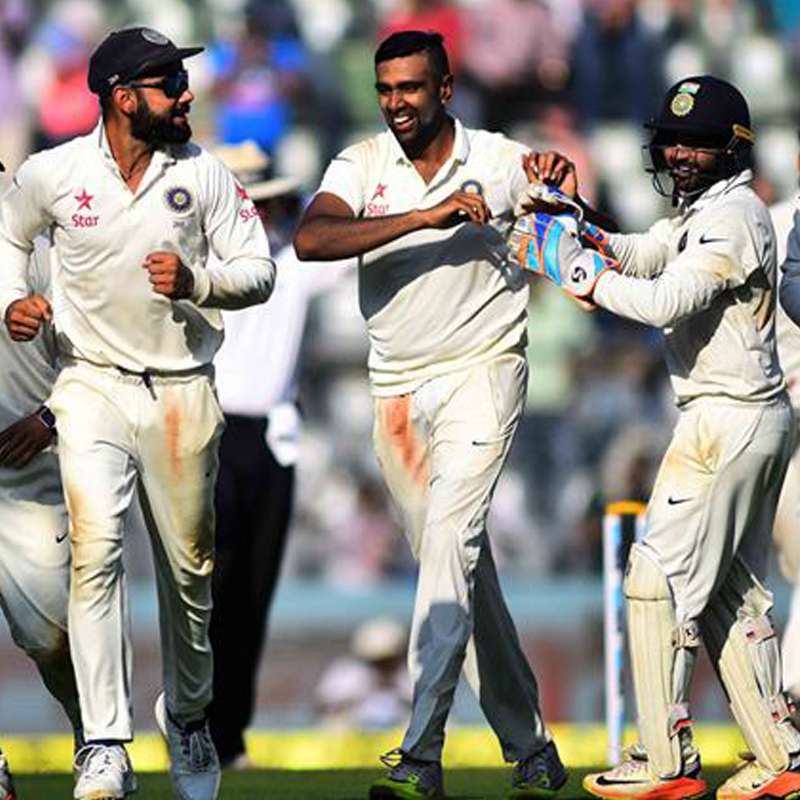
    While India defeated the England cricket team comprehensively 4-0 in the five-match Test series, it was clear that Captain Virat Kohli and his team’s exploits were getting back the mojo associated with Test cricket. Team India’s cricketing exploits reflected on the numbers too: a total of 572 million impressions in the first four Tests in the urban market and a total of 956 million impressions in the all-India market.

    The fourth Test saw Kohli hitting 235, his third triple century this year. According to Broadcast Audience Research Council (BARC) India ratings, the highest viewership, 246 million impressions, was garnered in the fourth Test, in which India defeated the visitors by an innings and 36 runs. This was also the highest rating for any Test featuring India in the last three years. Calculated on 4+ all-India pro-rata base, the data proves that it was indeed the ‘Biggest Test series of the Year’.

    With Dean Jones clearly suggesting that Asia, in general, and India, in particular, need to like the longer format of the game for its survival, the ratings prove that audiences are on the right track. With the next test series at home lined up against Australia, there’s surely no dearth of excitement for the fans of the longer version of the game. The four match Test series starts on 23 February 2017.

    Meanwhile, coming back to India vs. England series, the first Test got 244 million impressions in the all-India market and clocked 144 million impressions from the urban market. The second Test grew in numbers with 248 and 147 million impressions, respectively, in the all-India and urban market. The third Test saw a little lull, garnering 218 and 131 million impressions, respectively.

  • Ratings make India-England ‘Biggest Test Series of the Year’

    Ratings make India-England ‘Biggest Test Series of the Year’

    MUMBAI: In a season, which will see India play 13 Tests in 2016-17, the longer format of cricket has seen a revival in terms of following and viewership. Owing to intense finishes, audience numbers in the last three games at Mohali, Mumbai and Chennai in the India versus England series was good. Following India’s good performance, broadcast rights holder Star India and its digital sibling Hotstar too gained.

    While India defeated the England cricket team comprehensively 4-0 in the five-match Test series, it was clear that Captain Virat Kohli and his team’s exploits were getting back the mojo associated with Test cricket. Team India’s cricketing exploits reflected on the numbers too: a total of 572 million impressions in the first four Tests in the urban market and a total of 956 million impressions in the all-India market.

    The fourth Test saw Kohli hitting 235, his third triple century this year. According to Broadcast Audience Research Council (BARC) India ratings, the highest viewership, 246 million impressions, was garnered in the fourth Test, in which India defeated the visitors by an innings and 36 runs. This was also the highest rating for any Test featuring India in the last three years. Calculated on 4+ all-India pro-rata base, the data proves that it was indeed the ‘Biggest Test series of the Year’.

    With Dean Jones clearly suggesting that Asia, in general, and India, in particular, need to like the longer format of the game for its survival, the ratings prove that audiences are on the right track. With the next test series at home lined up against Australia, there’s surely no dearth of excitement for the fans of the longer version of the game. The four match Test series starts on 23 February 2017.

    Meanwhile, coming back to India vs. England series, the first Test got 244 million impressions in the all-India market and clocked 144 million impressions from the urban market. The second Test grew in numbers with 248 and 147 million impressions, respectively, in the all-India and urban market. The third Test saw a little lull, garnering 218 and 131 million impressions, respectively.

  • Poker Sports League to excite Indian minds in 2017

    Poker Sports League to excite Indian minds in 2017

    MUMBAI: Creating a unique platform for skilled ‘mind sports’, Amit Burman has announced the launch of an exciting new league – Poker Sports League. The Poker Sports League forays into the space of intellectual and mind challenges and aims to popularize mind skill games. This game changing league will offer a never before experience to poker players with varying degree of expertise but a passion for the game, to unite and celebrate their love for the game as well as hone their poker skills under the guidance of well-established professional poker players.

    In its first season, the Poker Sports League will consist of 12 teams, seven of which have already been sold and the remaining five shall be made available for sale shortly. These teams are associated with some of the well-known names from corporate India such as Kunal Shah (Co-Founder, FreeCharge), Mehul Shah (Original Promoter, Anchor Electrical), Rishi Kajaria (Joint MD, Kajaria Ceramics), Karan Bhagat (Co-Founder, IIFL Wealth), Purrshottam Bhaggeria (Joint MD, Filatex Group), Ankkit Bahadur (Co-Owner, Playboy North India) and Gaurav Mohan (Founder, Eventwala) who strongly believe in the potential of the game and its ability to harness the latent talent from across the nation.

    The 12 teams will consist of a total of 108 players who will play for the prize money of INR 3.36 crore. These teams will be selected through 70+ qualifying rounds held across various cities for a period of nearly 3 months, as well as through online tournaments that will begin early in 2017. The players who qualify to the 12 teams will then compete to play at the Mega Finals, where the best and the finest of India’s poker talent will be invited to a display of skill and entertainment.

    The league would include four amateur players, who would be selected through nationwide qualifiers which will be held both online and offline. Two wild cards players would make-up the team to nine players. The qualifiers would begin early 2017 and the finals are scheduled to take place in mid-2017.

    PSL founder Amit Burman said, “Poker is a popular mind sport across the globe and has gained tremendous traction within India, amongst individuals looking to challenge their mind, grit and decision making abilities. Although the game is played with cards and there is an element of luck – the vast majority of the game depends on pure skill, mathematics, probability and decision making strategy. With no entry fee and sizeable prize money to aim for, the Poker Sports League is a unique opportunity for players of the game to hone their skills as well as popularise the game that is set to be recognized by the International Mind Sports association along with Chess, Bridge and Draughts”.

    True to its vision of harnessing talent across India, the Poker Sports League will offer players an opportunity to play and learn from some of the best players in India. Every team will also have a professional poker player as a mentor and captain to develop team strategy and help young players sharpen their skills during the play.

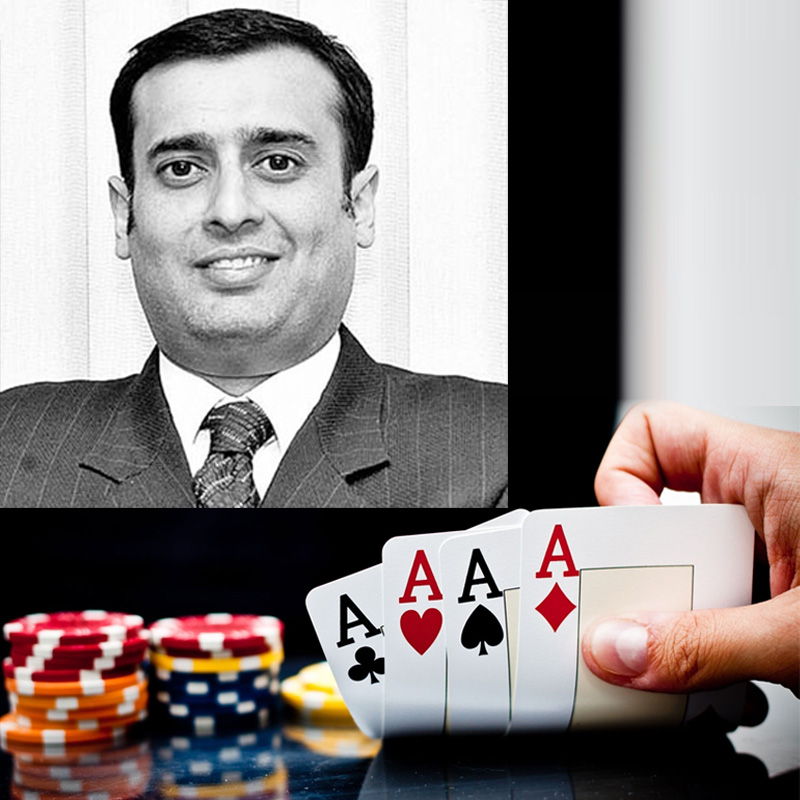
    At the helm of the Poker Sports League will be a core team that includes some of the well known names associated with poker in India, and known for their expertise, knowledge and passion for the game. The team includes India’s largest poker portal Adda52.com founder Anuj Gupta, who is also a co-founder of Poker Sports League.

    The team is further strengthened by India Poker founder Pranav Bagai. Besides, being the co-founder of the league, Pranav has also been appointed as the CEO of PSL, and Nikita Luther, who is India’s top female Poker professional, will take charge as COO for the league.

  • Poker Sports League to excite Indian minds in 2017

    Poker Sports League to excite Indian minds in 2017

    MUMBAI: Creating a unique platform for skilled ‘mind sports’, Amit Burman has announced the launch of an exciting new league – Poker Sports League. The Poker Sports League forays into the space of intellectual and mind challenges and aims to popularize mind skill games. This game changing league will offer a never before experience to poker players with varying degree of expertise but a passion for the game, to unite and celebrate their love for the game as well as hone their poker skills under the guidance of well-established professional poker players.

    In its first season, the Poker Sports League will consist of 12 teams, seven of which have already been sold and the remaining five shall be made available for sale shortly. These teams are associated with some of the well-known names from corporate India such as Kunal Shah (Co-Founder, FreeCharge), Mehul Shah (Original Promoter, Anchor Electrical), Rishi Kajaria (Joint MD, Kajaria Ceramics), Karan Bhagat (Co-Founder, IIFL Wealth), Purrshottam Bhaggeria (Joint MD, Filatex Group), Ankkit Bahadur (Co-Owner, Playboy North India) and Gaurav Mohan (Founder, Eventwala) who strongly believe in the potential of the game and its ability to harness the latent talent from across the nation.

    The 12 teams will consist of a total of 108 players who will play for the prize money of INR 3.36 crore. These teams will be selected through 70+ qualifying rounds held across various cities for a period of nearly 3 months, as well as through online tournaments that will begin early in 2017. The players who qualify to the 12 teams will then compete to play at the Mega Finals, where the best and the finest of India’s poker talent will be invited to a display of skill and entertainment.

    The league would include four amateur players, who would be selected through nationwide qualifiers which will be held both online and offline. Two wild cards players would make-up the team to nine players. The qualifiers would begin early 2017 and the finals are scheduled to take place in mid-2017.

    PSL founder Amit Burman said, “Poker is a popular mind sport across the globe and has gained tremendous traction within India, amongst individuals looking to challenge their mind, grit and decision making abilities. Although the game is played with cards and there is an element of luck – the vast majority of the game depends on pure skill, mathematics, probability and decision making strategy. With no entry fee and sizeable prize money to aim for, the Poker Sports League is a unique opportunity for players of the game to hone their skills as well as popularise the game that is set to be recognized by the International Mind Sports association along with Chess, Bridge and Draughts”.

    True to its vision of harnessing talent across India, the Poker Sports League will offer players an opportunity to play and learn from some of the best players in India. Every team will also have a professional poker player as a mentor and captain to develop team strategy and help young players sharpen their skills during the play.

    At the helm of the Poker Sports League will be a core team that includes some of the well known names associated with poker in India, and known for their expertise, knowledge and passion for the game. The team includes India’s largest poker portal Adda52.com founder Anuj Gupta, who is also a co-founder of Poker Sports League.

    The team is further strengthened by India Poker founder Pranav Bagai. Besides, being the co-founder of the league, Pranav has also been appointed as the CEO of PSL, and Nikita Luther, who is India’s top female Poker professional, will take charge as COO for the league.

  • FIFA: 48-team format could see US$ 640m jump

    FIFA: 48-team format could see US$ 640m jump

    MUMBAI: In a bid to add more excitement to the FIFA World Cup, the association president Gianni Infantino has hinted that a competition involving 48 teams could be the next step ahead. The Swiss-Italian also said FIFA’s in-house research team accepted that the current 32-nation format produces the highest quality of football.

    In a 64-page analysis, the former UEFA secretary-general hinted at five viable options for 2026 Football World Cup, the first being the timing of effecting the changes. In the document, FIFA has concluded that the 48-team (16*3) format would appear to have the most tangible and intangible value.

    The format would see extra knock-out games in a new Round of 32, which would ensure at least 80 matches are played over 32 days. This growth in the time-span appeals to broadcasters and sponsors and would help raise income, FIFA suggested. In another strategic plann, FIFA wants to schedule kick-offs in accordance to the playing countries prime-time rather than the host nation, garnering more viewership.

    Taking the projected US$5.5 billion income from the 2018 Russia World Cup in comparison, the revenue could see a growth of a massive 20 per cent to US$ 6.5 billion. Organising more matches would also see a rise in the costs from US$2 to US$ 2.3 billion, but the potential profit stills stands at US$ 640 million.

    The football governing body council meeting has been planned on 10 January. It has cautioned that the changes should not be financial and should focus more on the growth of the game and enhancing its reach and integrity.

    Debates have already started on how these new 16 slots would be shared among the six continental confederations. FIFA also acknowledged that the quality of the game could drop by adding 16 more members to the World Cup. The 2018 Russia and 2022 Qatar World Cups are to witness a competition with 32 teams.

    Infantino had promised a UEFA quota of 14 during his election campaign, and this new format is on similar lines. Infantino clearly pointed “16*3” as the most popular option in the times to come and said that the majority was in the same line of thought. The idea also supports a minimum of two matches per team- helping FIFA get wider viewership and reach.

  • FIFA: 48-team format could see US$ 640m jump

    FIFA: 48-team format could see US$ 640m jump

    MUMBAI: In a bid to add more excitement to the FIFA World Cup, the association president Gianni Infantino has hinted that a competition involving 48 teams could be the next step ahead. The Swiss-Italian also said FIFA’s in-house research team accepted that the current 32-nation format produces the highest quality of football.

    In a 64-page analysis, the former UEFA secretary-general hinted at five viable options for 2026 Football World Cup, the first being the timing of effecting the changes. In the document, FIFA has concluded that the 48-team (16*3) format would appear to have the most tangible and intangible value.

    The format would see extra knock-out games in a new Round of 32, which would ensure at least 80 matches are played over 32 days. This growth in the time-span appeals to broadcasters and sponsors and would help raise income, FIFA suggested. In another strategic plann, FIFA wants to schedule kick-offs in accordance to the playing countries prime-time rather than the host nation, garnering more viewership.

    Taking the projected US$5.5 billion income from the 2018 Russia World Cup in comparison, the revenue could see a growth of a massive 20 per cent to US$ 6.5 billion. Organising more matches would also see a rise in the costs from US$2 to US$ 2.3 billion, but the potential profit stills stands at US$ 640 million.

    The football governing body council meeting has been planned on 10 January. It has cautioned that the changes should not be financial and should focus more on the growth of the game and enhancing its reach and integrity.

    Debates have already started on how these new 16 slots would be shared among the six continental confederations. FIFA also acknowledged that the quality of the game could drop by adding 16 more members to the World Cup. The 2018 Russia and 2022 Qatar World Cups are to witness a competition with 32 teams.

    Infantino had promised a UEFA quota of 14 during his election campaign, and this new format is on similar lines. Infantino clearly pointed “16*3” as the most popular option in the times to come and said that the majority was in the same line of thought. The idea also supports a minimum of two matches per team- helping FIFA get wider viewership and reach.

  • Be patient with RoIs; may own & transfer players: Bhaichung Bhutia advises corporates

    Be patient with RoIs; may own & transfer players: Bhaichung Bhutia advises corporates

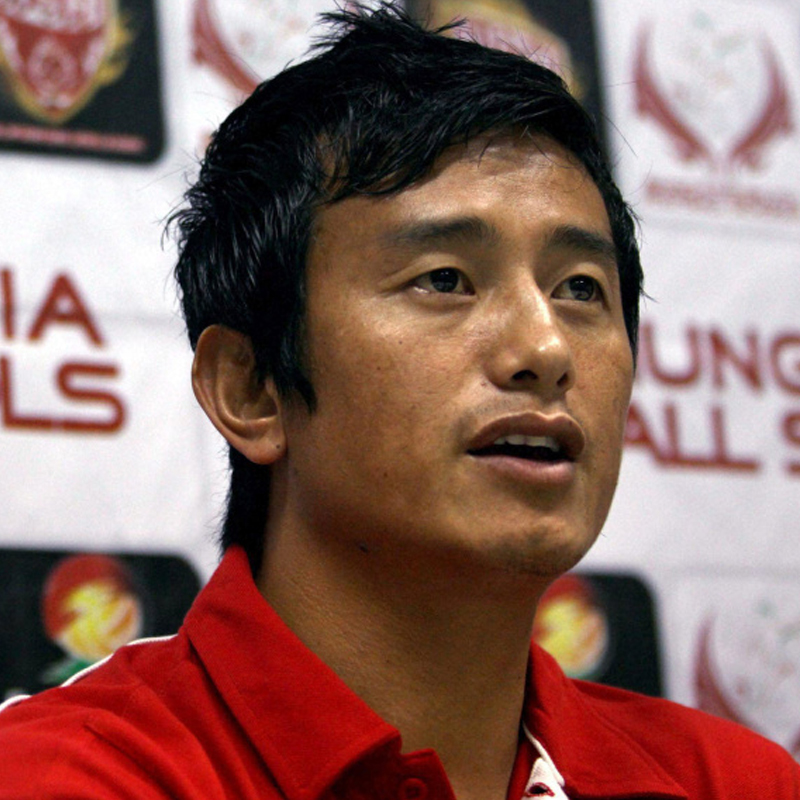
    MUMBAI: No footballer in India has had fanfare similar to Bhaichung Bhutia. The Sikkimese Sniper, as he’s known to the football world, changed the dynamics of the Indian game, went on to play for Bury FC, and has been one of the leading lights of Indian football.

    In a free-wheeling chat with indiantelevision.com, the former Mohun Bagan and East Bengal striker said that the corporate sector needs to join hands for development at the grassroots level. He added that the companies must be little more patient for their returns on investment.

    The former national captain also said the corporate sector could own players’ rights and had a transfer system similar to Europe, investing more into the game and earning more benefits. The founder of Bhaichung Bhutia Football School also added that sponsors were difficult to find in the Indian market and, thus, scouting for talent becomes tough. Excerpts:

    ISL Season III has disappointed you in terms of less goals and defensive coaching techniques. Where do you think we’re lacking and why do you think such tactics are being supported even by the foreign coaches?

    Because it’s a format in which coaches do not get much time to understand the players in the current format and give equal chances to them.

    Coming on board of an expert or famous coach cannot automatically guarantee a victory because he’s not dealing with the players for a reasonable period of time.

    Coaches such as Zico have also struggled and I think that’s why they have been on the defensive and tried to play safe. The number of goals (scored) came down and the number of Indian scorers came down (in the current season). The last season was very different from this season; there were a number of Indian stars, but, in this season, we’ve had only Vineeth in the second part and Kean Lewis ….to a certain extent.

    Bhaichung Bhutia has grown from being the Sikkimese Sniper to one of the most commendable brands in the Indian sporting market. You have been the ambassador of Nike, Adidas and various brands. How do you look to take the game forward with your credible image?

    I think the biggest thing that I’m doing is working at the grassroots level. It’s very challenging because you’ve to work and do everything on your own. Finding grounds for the kids to practice is in itself a big challenge. Sponsors are difficult to find and then scouting for talent becomes tough.

    Even after facing such challenges, I think the journey has been good and we’ve been able to produce capable players in different age-groups and we’re the biggest grassroots-level programme in India today. We’ve over 2000 kids and about 70-80 per cent licenced coaches associated with our programmes.

    With around 60,000 spectators turning up for the finals, the support this season has been overwhelming, and witnessed good numbers throughout the ISL matches. How do you think I- league can have similar numbers?

    Kerala has always been a football hub. A few years ago during the Nehru Cup that I played, we had over a million supporters throughout the tournament. It is great for Kerala and they’ve very passionate fans. I-League fans would have to connect with the fans and the audience and, without that, it would be very difficult to happen.

    Where do you think the corporate sector needs to chip in to help Indian football grow and what can they learn from Bhaichung, the footballer?

    I think the corporate sector just needs to come and support the game from the grassroots level. They look into the Return of Investment which I’m sure is very important. So, I think, they should start investing from the grassroots to the higher leagues, and wait a bit for returns to start coming in.

    Indian players, more often than not, have played fringe roles in the ISL. Do you see any change in this attitude of the coaches? What can be the important modifications to get the best out of the home-grown players?

    I think the duration of league has to be longer. If it keeps happening just for three months, everybody is going to struggle to get into the rhythm. The smaller league would be great viewership-wise, but the quality of the sport and the players might not be so great.

    What do you think about a successful merger between ISL and I-League and what can be a good business model for Indian football?

    I don’t know how they’re going to merge it but all I can say is that the league should be longer. Even if the ISL and I-League go on parallel, they have to be on for a longer period of time to ensure more Indian players can participate and concentrate on the respective tournaments. Right now, there’s also a huge unemployment crisis amongst Indian footballers and that’s very harmful for Indian football. This needs to change for us to have a realistic chance to improve.

    Ashique Kuruniyan’s stint with Villareal FC is a story which is few and far-between. How do you think Indian football can replicate this trend?

    I think India must do well in international tournaments to turn this trend into a winning spree. The countries and foreign clubs would then start taking you seriously. If the national team doesn’t do well, the changes of Indian players going out can be very challenging and look bleak. The ultimate goal should be strengthening the national team, and once that happens, the eyeballs of the clubs are sure to fall on India. It will not be just for marketing but also for getting the right kind of footballing talent.

    ATK has joined hands with Atletico Madrid and Delhi Dynamos have a tie-up with West Bromwich Albion. Why don’t these ISL clubs send their junior players to the foreign clubs for better training. And why is Bhaichung Bhutia Football Schools (BBFS) not tying up with any such club?

    The fee for such tie-ups is astronomical. We have tried to get such deals done, but with no major sponsorship, it gets difficult. Atletico de Kolkata has given 25 per cent of its shares to Atletico Madrid which could be around Rs 50-60 crore deal. It depends on the deal, and if they send their junior players to train, that’s certainly the best thing that can happen to Indian football.

    How are your football schools running? What’s the business model? When do we see the next Bhaichung shoot on the international scenario?

    It’s doing well. We’re one of the best grassroots programme despite a lot of challenges. Its all through the fees the kids pay and some of the money is generated from the foundation. We make very little profits and whatever profit is made, we pay it back through scholarships to kids who’re highly talented and then we’ve a team which plays in U-15 I-League and takes part in other tournaments too.

    Your wishes and suggestions to the Indian U-17 team?

    The players should enjoy and give their best. It is going to be a very difficult tournament for them, but a great learning curve. The quality is there, and they’re a talented side, so I think they should just enjoy and not take any undue pressure on their shoulders. (Winning) is asking a lot from them.

  • Be patient with RoIs; may own & transfer players: Bhaichung Bhutia advises corporates

    Be patient with RoIs; may own & transfer players: Bhaichung Bhutia advises corporates

    MUMBAI: No footballer in India has had fanfare similar to Bhaichung Bhutia. The Sikkimese Sniper, as he’s known to the football world, changed the dynamics of the Indian game, went on to play for Bury FC, and has been one of the leading lights of Indian football.

    In a free-wheeling chat with indiantelevision.com, the former Mohun Bagan and East Bengal striker said that the corporate sector needs to join hands for development at the grassroots level. He added that the companies must be little more patient for their returns on investment.

    The former national captain also said the corporate sector could own players’ rights and had a transfer system similar to Europe, investing more into the game and earning more benefits. The founder of Bhaichung Bhutia Football School also added that sponsors were difficult to find in the Indian market and, thus, scouting for talent becomes tough. Excerpts:

    ISL Season III has disappointed you in terms of less goals and defensive coaching techniques. Where do you think we’re lacking and why do you think such tactics are being supported even by the foreign coaches?

    Because it’s a format in which coaches do not get much time to understand the players in the current format and give equal chances to them.

    Coming on board of an expert or famous coach cannot automatically guarantee a victory because he’s not dealing with the players for a reasonable period of time.

    Coaches such as Zico have also struggled and I think that’s why they have been on the defensive and tried to play safe. The number of goals (scored) came down and the number of Indian scorers came down (in the current season). The last season was very different from this season; there were a number of Indian stars, but, in this season, we’ve had only Vineeth in the second part and Kean Lewis ….to a certain extent.

    Bhaichung Bhutia has grown from being the Sikkimese Sniper to one of the most commendable brands in the Indian sporting market. You have been the ambassador of Nike, Adidas and various brands. How do you look to take the game forward with your credible image?

    I think the biggest thing that I’m doing is working at the grassroots level. It’s very challenging because you’ve to work and do everything on your own. Finding grounds for the kids to practice is in itself a big challenge. Sponsors are difficult to find and then scouting for talent becomes tough.

    Even after facing such challenges, I think the journey has been good and we’ve been able to produce capable players in different age-groups and we’re the biggest grassroots-level programme in India today. We’ve over 2000 kids and about 70-80 per cent licenced coaches associated with our programmes.

    With around 60,000 spectators turning up for the finals, the support this season has been overwhelming, and witnessed good numbers throughout the ISL matches. How do you think I- league can have similar numbers?

    Kerala has always been a football hub. A few years ago during the Nehru Cup that I played, we had over a million supporters throughout the tournament. It is great for Kerala and they’ve very passionate fans. I-League fans would have to connect with the fans and the audience and, without that, it would be very difficult to happen.

    Where do you think the corporate sector needs to chip in to help Indian football grow and what can they learn from Bhaichung, the footballer?

    I think the corporate sector just needs to come and support the game from the grassroots level. They look into the Return of Investment which I’m sure is very important. So, I think, they should start investing from the grassroots to the higher leagues, and wait a bit for returns to start coming in.

    Indian players, more often than not, have played fringe roles in the ISL. Do you see any change in this attitude of the coaches? What can be the important modifications to get the best out of the home-grown players?

    I think the duration of league has to be longer. If it keeps happening just for three months, everybody is going to struggle to get into the rhythm. The smaller league would be great viewership-wise, but the quality of the sport and the players might not be so great.

    What do you think about a successful merger between ISL and I-League and what can be a good business model for Indian football?

    I don’t know how they’re going to merge it but all I can say is that the league should be longer. Even if the ISL and I-League go on parallel, they have to be on for a longer period of time to ensure more Indian players can participate and concentrate on the respective tournaments. Right now, there’s also a huge unemployment crisis amongst Indian footballers and that’s very harmful for Indian football. This needs to change for us to have a realistic chance to improve.

    Ashique Kuruniyan’s stint with Villareal FC is a story which is few and far-between. How do you think Indian football can replicate this trend?

    I think India must do well in international tournaments to turn this trend into a winning spree. The countries and foreign clubs would then start taking you seriously. If the national team doesn’t do well, the changes of Indian players going out can be very challenging and look bleak. The ultimate goal should be strengthening the national team, and once that happens, the eyeballs of the clubs are sure to fall on India. It will not be just for marketing but also for getting the right kind of footballing talent.

    ATK has joined hands with Atletico Madrid and Delhi Dynamos have a tie-up with West Bromwich Albion. Why don’t these ISL clubs send their junior players to the foreign clubs for better training. And why is Bhaichung Bhutia Football Schools (BBFS) not tying up with any such club?

    The fee for such tie-ups is astronomical. We have tried to get such deals done, but with no major sponsorship, it gets difficult. Atletico de Kolkata has given 25 per cent of its shares to Atletico Madrid which could be around Rs 50-60 crore deal. It depends on the deal, and if they send their junior players to train, that’s certainly the best thing that can happen to Indian football.

    How are your football schools running? What’s the business model? When do we see the next Bhaichung shoot on the international scenario?

    It’s doing well. We’re one of the best grassroots programme despite a lot of challenges. Its all through the fees the kids pay and some of the money is generated from the foundation. We make very little profits and whatever profit is made, we pay it back through scholarships to kids who’re highly talented and then we’ve a team which plays in U-15 I-League and takes part in other tournaments too.

    Your wishes and suggestions to the Indian U-17 team?

    The players should enjoy and give their best. It is going to be a very difficult tournament for them, but a great learning curve. The quality is there, and they’re a talented side, so I think they should just enjoy and not take any undue pressure on their shoulders. (Winning) is asking a lot from them.