Category: Sports

  • Sportel: Sports media’s power players converge in Monaco for dealmaking and AI debates

    Sportel: Sports media’s power players converge in Monaco for dealmaking and AI debates

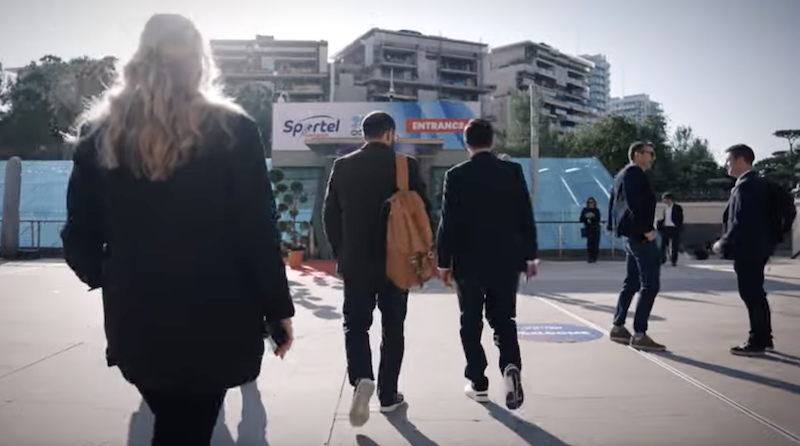
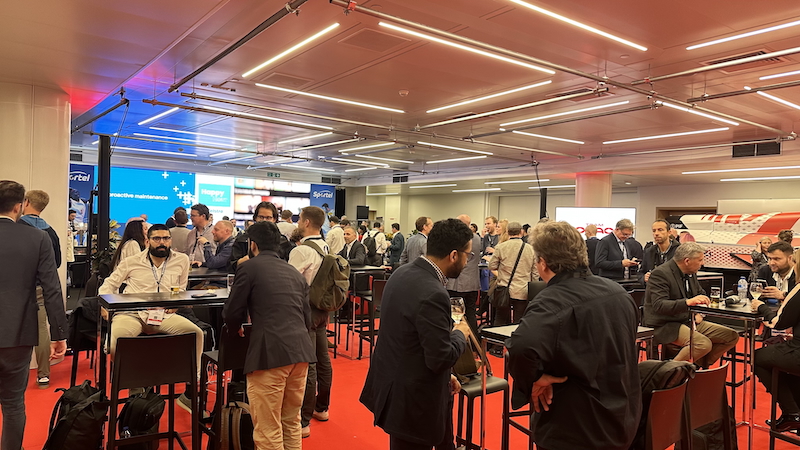
    MONACO: Monaco’s Grimaldi Forum became the epicentre of sports media wheeling and dealing this week as Sportel Monaco wrapped its 35th edition. Over three frenetic days, 2,000 executives from 70 countries—nearly half of them C-suite types—descended on 8,500 square metres of reimagined exhibition space to chase rights deals, scout technology and forge the partnerships that will define how the world watches sport.

    The numbers tell the story of an industry in flux: 795 companies turned up, including 155 newcomers, with content buyers making up a third of attendees. Americans showed up in force this year, breaking Europe’s traditional stranglehold on the event. The marketplace buzzed with talk of generative AI, cloud workflows and how to keep fans glued to screens in an age of infinite distraction.

    The conference summit brought heavy hitters to the stage. Javier Tebas, president of LaLiga, delivered a keynote whilst panels dissected everything from private equity’s invasion of sport to live broadcasting technology. Liverpool Football Club, Fox Sports Australia, the Bundesliga and upstart leagues like Kings League all sent their top brass to explain how they’re navigating the streaming wars and tech disruption.

    But Sportel isn’t just talk. Prince Albert II of Monaco showed up to unveil the RaceBird Monaco, the official boat of Team Monaco E1, alongside series founder Alejandro Agag. Hexagone MMA announced a €100,000 tournament series. Protocol Group launched a new consultancy arm for broadcast technology. Globecast, GlobalM and World Curling revealed a cloud-based collaboration. The deals kept coming.

    The event also made a splash with its revamped Sportel Sports Bar—an informal hub designed to turn casual chats into seven-figure contracts—and a well-attended women’s lunch featuring Alexis Ohanian of 776, marathon legend Paula Radcliffe and NBA executive Fiona Wong.

    “Sportel is not just a conference, it’s a global marketplace,” said executive director Loris Menoni summing up three days of handshakes, presentations and backroom negotiations. “We’re proud to have built an ecosystem where business flows naturally and future-defining partnerships are born.”

    The roadshow rolls on. Sportel Singapore takes over the Orchard Hotel on 24-25 March 2026, before the expo returns to Monaco next October. Expect more dealmaking, more disruption and plenty more sports executives nursing hangovers after late night networking.
  • Sportel 2025: Laliga’s Tebas declares war on football pirates

    Sportel 2025: Laliga’s Tebas declares war on football pirates

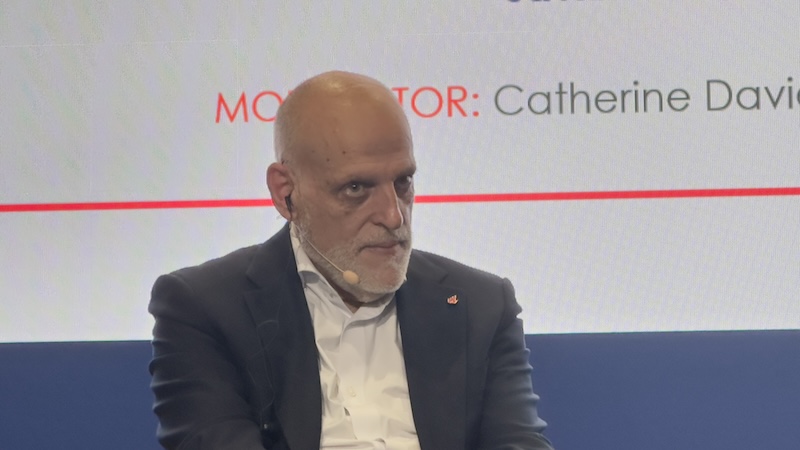
    MONACO: Piracy is theft, plain and simple. That’s the message Javier Tebas delivered with fire at Sportel Monaco, opening his remarks with a moral flourish: “When I was a young man I was taught not to steal because it’s a sin. This is stealing.” The LaLiga president wasn’t mincing words. He warned that illegal streaming remains one of the gravest threats to football’s future and demanded that rights holders stop being passive victims.

    “Rights holders need more awareness,” Tebas urged. “Broadcasters have to work on the protection of the service.” The enemy, he explained, is growing more sophisticated by the day. Pirates are deploying increasingly advanced technology to siphon content, forcing LaLiga to respond with its own arsenal. The league is pouring investment into anti-piracy systems designed to trace and block illegal streams in real time. “Pirates are extremely advanced,” Tebas said. “We’re blocking. It is like the NASA headquarters…but we need to be able to trace them.”

    The war on piracy wasn’t Tebas’s only battle. He also vented his frustration over UEFA’s reluctant approval of LaLiga’s plan to stage a match in the United States—the December 2025 fixture between Barcelona and Villarreal in Miami, Florida. “It is very frustrating,” he said of UEFA’s stance. “This is a very old-fashioned vision of professional football.”

    Tebas argued that taking one league match abroad is a natural step for a global sport, not some radical betrayal of tradition. “This is just one game, not twenty,” he pointed out, before deploying a cultural counterpunch: “We accepted Halloween from the US, why don’t they accept something from us?”

    But the LaLiga chief suggested there’s more lurking beneath the surface—secrets he’s saving for his memoirs. “I am going to write about it when I retire and talk about a lot of secrets,” he teased. Until then, he’ll keep fighting pirates, battling UEFA, and dragging Spanish football into the future—willing or not.

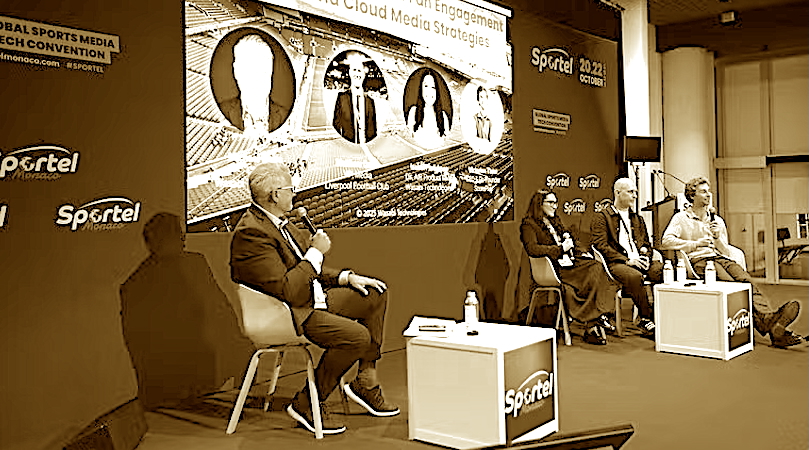
  • Sportel 2025: AI set to dominate sports content as clubs embrace fan-generated revolution

    Sportel 2025: AI set to dominate sports content as clubs embrace fan-generated revolution

    MONACO: Sports organisations have a decade at most before artificial intelligence swallows nearly all their non-live content whole. Scoreplay – the AI-powered asset management platform – chief executive and cofounder Victorien Tixier delivered that stark message at Sportel Monaco’s sports business conference.

    The technology has become the lifeline for clubs scrambling to flood time zones with content that keeps fans glued. Yet Tixier reckons sport has a fleeting chance to rise above the tidal wave of AI dreck—provided it doubles down on storytelling and authenticity whilst deploying AI to dub content, chase trends and turbocharge workflows.

    “Sport has a unique opportunity to differentiate itself from all that huge flow of AI-generated content by helping organisations invest time and effort on storytelling, authenticity, and capitalise on what makes sport emotional, very human, and then globalise that,” Tixier told the panel.

    Liverpool FC vice-president of media Matthew Quinn detailed how the English football giants ditched physical infrastructure for cloud storage, enabling content creation from anywhere. The club had “years of images stored under a person’s stairs at home that were unsearchable,” he said. Cloud technology let Liverpool scatter content teams across training grounds and away fixtures whilst keeping them connected.

    Liverpool now deploys regional agencies in MENA and southeast Asia to run social media feeds round the clock. “Whilst we sleep in Liverpool, they will be awake in Thailand and those guys can be creating content, jumping on a trend,” Quinn explained. But his real obsession is user-generated content—fans capturing trophy lifts can tell stories “a million times more authentic than the clubs can do,” he said, though AI must do the heavy lifting to process footage in real time.

    Quinn sketched Liverpool’s business model: create centrally, distribute by audience. Different age groups and locations devour content differently—linear TV, YouTube, membership platforms. The setup lets clubs pounce when new platforms materialise. “A few years ago, TikTok didn’t exist,” he noted.

    Tixier stripped the monetisation playbook bare: “You sell tickets, you sell licensing, you sell brand partnerships, and you’re a content business.” Content must power every revenue stream, whether plastering Mo Salah across the website to shift tickets or exploiting international players to crack new markets culturally.

    Wasabi Technologies product marketing manager Isabel Freedman spotted another angle: sponsorship. Brands can trumpet partnerships that matured alongside the sport using archived footage—a compelling pitch.

    Quinn imagines AI linking fan-shot videos to match moments, creating hundreds of perspectives on the same goal. It’s a seductive vision: supporters as storytellers, clubs as enablers, AI as the glue. The sceptics worry about job losses and hidden agendas. The believers see magic. Either way, the revolution isn’t pending. It’s live.

  • Olympic films triumph at Monaco’s glittering Sportel Awards

    Olympic films triumph at Monaco’s glittering Sportel Awards

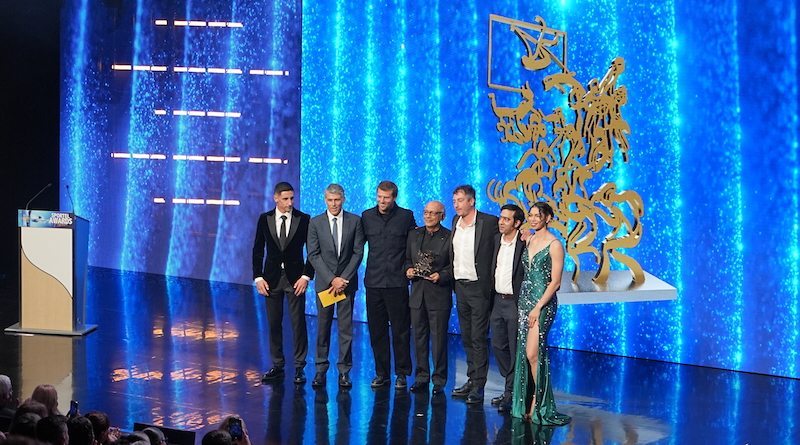
    MONACO: Monaco pulsed with sporting glamour on 20 October as the 36th Sportel Awards crowned this year’s finest films at the Grimaldi Forum. Two Olympic Channel productions—Personal Best and I’m Carl Lewis—walked away with coveted golden podiums, the ultimate accolade in sports broadcasting.

    Personal Best, a South African production by Anant Singh, claimed best thematic documentary. The film shadows eight athletes through their Olympic Games Paris 2024 journey, offering a raw glimpse into medal-chasing drama. I’m Carl Lewis, produced by Noah Media Group for Olympic Channel, secured best biopic honours. The British production explores the uncompromising life of the nine-time Olympic champion whom the International Olympic Committee declared “Sportsman of the Century” in 1999.

    Prince Albert II presided over the ceremony, broadcast live on TV Monaco, before a packed Salle Prince Pierre. The prince personally handed athletics legend Marie-José Perec the autobiography award for her book Ma Vie Olympique, whilst motor racing icon Jacky Ickx received the lifetime sport achievement award.

    Other winners included NBC Sports, which took best slow motion for Ilia Malinin: Relatable Awe, and Welcome to Wrexham, which won best docu-series. France’s Comme tout le monde claimed best report, whilst Canal+’s La Quête secured best advertising. ESPN Deportes’ Las Amazonas de Yaxunah won the Peace and Sport documentary prize.

    Tennis star Henri Leconte presided over a jury featuring handball champion Allison Pineau, cyclist Masomah Ali Zada and footballer Lonsana Doumbouya. Marine Picoulet, executive director of Sportel Awards, called the 2025 edition “one of the most powerful and inspiring” yet.

    Both winning Olympic films are currently streaming free on Olympics.com—territorial restrictions permitting. For once, the podium finish comes without the sweat.

    GOLDEN PODIUMS
    Best Slow Motion Georges Bertellotti
    Supported by Comité National Olympique et Sportif Français
    Ilia Malinin: Relatable Awe
    Eric Hamilton, Max Rahamin, Ryan Yeager, Eric Girgash, Sam Tydings, Jack Felling – NBC Sports
    USA

    Best Thematic Documentary
    Supported by TVMONACO
    Personal Best
    Ady Walter & Amal Doghmi – Videovision Entertainment – Distant Horizon
    South Africa

    Best Report
    Supported by
    Comme tout le monde
    Pierre-Etienne Léonard et Mohammed Khouadja – WAA ULTRA
    France

    Best Biopic
    Supported by
    I’m Carl Lewis!
    Julie Anderson & Chris Hay – Noah Media Group for Olympic Channel
    United Kingdom

    Best Docu-Series
    Supported by Les Barbagiuans de Monaco
    Welcome to Wrexham
    Bryan Rowland, Josh Drisko and Jeff Luni – NEO Studios / Boardwalk Pictures
    United Kingdom

    Best Advertising – Christian Blachas
    Supported by A.S.Monaco Basket-Roca Team
    La Quête
    Sébastien Bovier – CANAL+
    France

    Jury Special Prize
    Laure ! Laure ! Laure !
    Guillaume Priou & Laurie Delhostal – CHENGYU
    France

    SPECIAL PRIZES
    Peace and Sport Documentary Prize
    Las Amazonas De Yaxunah
    Alfonso Algara – ESPN Deportes
    USA

    Sports book Prize  Renaud de Laborderie
    Supported by Comité Olympique Monégasque
    Rainer W. Schlegelmilch – Porsche racing moments
    Switzerland

  • Apple takes pole position as Formula 1’s exclusive U.S. broadcaster

    Apple takes pole position as Formula 1’s exclusive U.S. broadcaster

    MUMBAI: Start your engines Formula 1 is speeding into Apple’s fast lane. In a landmark five-year deal starting 2026, Apple will become the exclusive U.S. broadcast partner for the world’s premier racing series, bringing together two global icons with a shared obsession for innovation, precision, and performance.

    The partnership marks a major acceleration for both brands, following the roaring success of F1The Movie, the Apple original film that grossed nearly 630 million dollars worldwide, making it the most successful sports film in history. Released in cinemas and IMAX in June, the film will zoom onto Apple TV screens globally on 12 December 2025 and the collaboration clearly wasn’t just a one-lap affair.

    Apple’s winning streak with Formula 1 underscores its ambition to turn streaming into a front-row experience for fans. The deal will give Apple TV subscribers access to every practice, qualifying, Sprint, and Grand Prix session, with select races and practice rounds available for free on the Apple TV app. F1 TV Premium will remain available through an Apple TV subscription and free for subscribers.

    But Apple’s racing ambitions don’t stop at the chequered flag. The tech giant plans to weave Formula 1 into its wider ecosystem across Apple News, Apple Music, Apple Sports, Apple Maps, and Apple Fitness+ transforming the sport into a full-throttle digital experience.

    Formula 1 president and CEO Stefano Domenicali said the partnership “will maximise our growth potential in the U.S. with the right content and innovative distribution channels.” He added, “After three years of working together on F1 The Movie, we share a vision to bring this amazing sport to our fans and attract new ones through live broadcasts and engaging content.”

    That growth is already gathering pace. According to the 2025 Global F1 Fan Survey, 47 per cent  of new U.S. Formula 1 fans those who’ve followed the sport for five years or less are aged 18–24, and over half are female. With Apple’s reach across younger, digital-first audiences, the partnership could prove a masterstroke in expanding the sport’s appeal.

    Apple senior vice president of services Eddy Cue added: “We’re thrilled to expand our relationship with Formula 1 and offer Apple TV subscribers in the U.S. front row access to one of the fastest-growing sports on the planet. 2026 marks a transformative new era from new teams to new regulations and we’re ready to deliver premium, fan-first coverage in a way that only Apple can.”

    The deal couldn’t come at a better time for the sport. As Formula 1 gears up for its next chapter with new teams, new cars, and new regulations, Apple’s precision-engineered storytelling and seamless tech ecosystem could turbocharge how fans experience every race.

    If F1 The Movie was the trailer, this five-year partnership is the full feature. And come 2026, when Apple’s broadcast lights go out, the race for the future of sports entertainment will truly be on.


  • Monaco’s Grimaldi Forum turns into a high-stakes sports-tech power play as Sportel 2025 starts

    Monaco’s Grimaldi Forum turns into a high-stakes sports-tech power play as Sportel 2025 starts

    MONACO: The sports industry’s deal-makers have flooded into Monaco this week, and the energy is electric. Nearly 70 countries have sent their sharpest minds to Sportel 2025, a three-day collision between legacy sports titans and maverick tech disruptors that kicks off today and runs through 22 October. This is where real money gets moved and genuine innovation gets showcased.

    The Grimaldi Forum is heaving with some of sport’s biggest names exhibiting: Fifa, La Liga, the World Cup of Hockey 2028, alongside a glittering roster of tech firms like Qualcomm, AWS, and Wasabi. But Sportel is no mere trade show—it’s a strategic summit where the next generation of sports media gets hammered out.

    The conference programme cuts straight to the chase. Javier Tebas, La Liga’s president, will deliver a keynote spelling out how the world’s most compelling league is monetising itself. But the real fireworks come in a masterly panel on investment: “Where is the next $1bn coming from?” features the CEOs of Surj Sports Investment, Kings League, and the Professional Fighters League, all circling the same question—which markets are still hungry, and where will private equity and sovereign wealth funds actually deploy capital?

    There’s more. A panel on Formula 1’s storytelling prowess asks whether authentic sport crossed with entertainment star power can turbocharge sponsorship and rights values. Then comes the tech avalanche: sessions on generative AI reshaping everything from content creation to the fan experience; on new live-streaming tools that personalise what viewers see; on how Liverpool FC is harnessing AI and cloud infrastructure to deepen loyalty across the globe.

    The Ligue 1+ case study is particularly clever—a league building its own direct-to-consumer platform, hoarding first-party data, and cutting out the middleman to capture fresh revenue. That model is spreading. So too is the adoption of ad-supported streaming as the default for OTT platforms. World Rugby, via the platform WURL, is showcasing exactly how.

    The conference even has a competition worth caring about: “Pitch Perfect Innovation Contest” will see start-ups including Pendular, FalconHQ, and Camb.ai each get three minutes to convince industry heavyweights that their solution deserves backing. And a Women’s Lunch (by invitation) will celebrate female leaders redefining the sport-media nexus—expect Alexis Ohanian from Seven Seven Six, Lauren Pedersen from SportAI, Fiona Wong from the NBA, and marathon world record holder Paula Radcliffe to set the room ablaze.

    The message from all sides is unambiguous: artificial intelligence, cloud technology, and direct fan relationships aren’t the future anymore. They’re the present—and if you’re not moving now, you’re already behind.

  • Old shows, new sparks as Waves OTT lights up Diwali nostalgia

    Old shows, new sparks as Waves OTT lights up Diwali nostalgia

    MUMBAI: Some memories never buffer. Waves OTT, India’s national freemium streaming platform powered by Prasar Bharti, is taking viewers down memory lane this festive season with its heartwarming campaign, “Diwali ki Yaadein”. Conceptualised by Creativeland Asia, the film rekindles India’s shared nostalgia through the glow of old screens and the warmth of family bonds.

    The campaign tells a tender story of a daughter and her mother separated by distance but united by memory who rediscover their emotional connection through the superhit classics they once watched together. Now streaming on Waves OTT, those timeless shows Fauji, Byomkesh Bakshi, Malgudi Days, and more return as the heartbeat of an era, inviting both long-time fans and first-time viewers to experience their charm anew.

    Through this campaign, Waves OTT captures the emotional essence of Diwali as more than a festival of lights, it’s a season of belonging, of sitting together, of laughter echoing through living rooms. The film’s warm, nostalgic tone taps into the collective memory of an India that grew up around a single TV set, waiting eagerly for its favourite evening show to begin.

    Crafted with an old-world charm, “Diwali ki Yaadein” shows that while technology has changed how we connect, the emotions remain timeless. Whether it’s Fauji’s youthful energy or Byomkesh Bakshi’s cerebral intrigue, Waves OTT brings back the spirit of Indian storytelling that once defined national evenings.

    The campaign extends across social media, with the film streaming on Instagram, Facebook, X, and Youtube, allowing audiences everywhere to join in the collective celebration of India’s television heritage.

    By bridging the old with the new, Waves OTT is not just reviving nostalgia, lighting up memories, one classic at a time. Because this Diwali, it’s not just about lights, camera, action, it’s about lights, connection, affection.


  • Zee hits it out of the park with Baseball United broadcast partnership

    Zee hits it out of the park with Baseball United broadcast partnership

    MUMBAI: It’s not just cricket calling the shots anymore baseball is stepping up to the plate. Zee Entertainment Enterprises limited (‘Z’) has teamed up with Baseball United, the first professional baseball league focused on the Middle East and South Asia, to bring the crack of the bat and the roar of the crowd to Indian screens this festive season.

    In a historic move, Zee will air all 21 games of Baseball United’s Season One this November and December, including primetime matches featuring the Mumbai Cobras, India’s first professional baseball franchise. For the first time, Indian audiences will have a homegrown team to root for, complete with six Indian players sharing the field with global stars.

    The games will stream live on Zee5, and be broadcast across Zee Café SD, &Flix SD, and &Pictures HD, in both English and Hindi, ensuring fans from every corner of India can catch the action.

    The lineup for Baseball United’s debut season reads like a continental all-star card Arabia Wolves, Mid East Falcons, Karachi Monarchs, and Mumbai Cobras will battle it out across 21 games in 30 days, with the season finale set for 12–14 December in Dubai.

    Beyond the matches, Zee5 will hit a content home run with player features, ballpark highlights, Baseball 101 explainers, and even a documentary chronicling the making of the league. Zee will back the partnership with a four-week promotional blitz, featuring teasers, ad spots, and social media campaigns to introduce baseball’s flair to India’s massive fanbase.

    “At Zee, we’re committed to bringing world-class international sports to Indian audiences,” said Zee Entertainment Enterprises head of advertisement revenue (broadcast and digital), Laxmi Shetty Ltd. “With ILT20, we celebrated international cricket talent; now, we’re expanding that vision with baseball. India already has a deep bat-and-ball culture, this partnership brings speed, strategy, and spectacle in a whole new form.”

    The collaboration isn’t just about sport, it’s about scale. Zee’s combined digital and linear platforms reach over 800 million viewers across India, positioning it perfectly to help Baseball United tap into the country’s 50 million baseball fans and ignite curiosity among millions more.

    For Baseball United, India is more than just a market, it’s a cornerstone. “This is a major milestone in our mission to bring professional baseball to India and the broader region,” said Baseball United chairman, CEO, and co-founder Kash Shaikh. “For the first time, fans will have their own team to cheer for with Indian players inspiring a new generation.”

    The league’s ambitious debut season, backed by 20 Major League Baseball legends including Mariano Rivera, Barry Larkin, Adrián Beltré, and Albert Pujols, aims to grow the sport across one of the world’s most populous and passionate sporting regions.

    And when the Mumbai Cobras take the field on 14 November in Dubai, it won’t just mark the start of a season, it’ll mark the moment India’s love for bat-and-ball takes a bold, new swing.


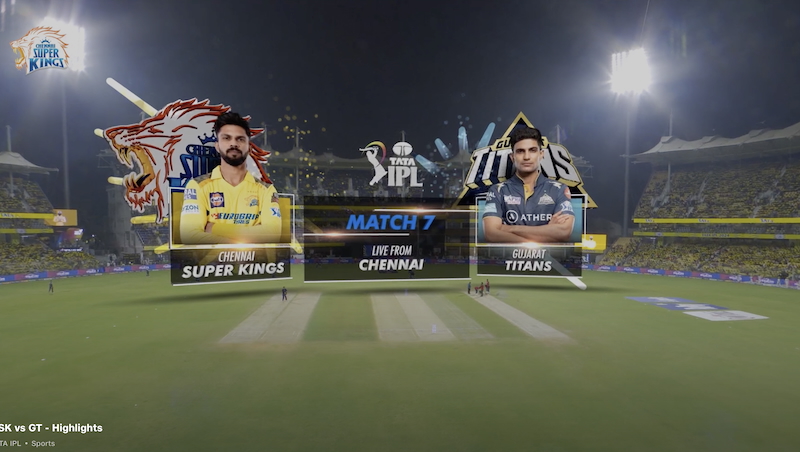
  • IPL’s  surging IPL valuation slides back as gambling ban and media merger collide

    IPL’s surging IPL valuation slides back as gambling ban and media merger collide

    MUMBAI: The Indian Premier League, the commercial behemoth that has redefined cricket economics, is experiencing something unprecedented: contraction. After years of relentless upward momentum, the IPL’s valuation has plummeted to Rs 76,100 crore in 2025—a staggering Rs 16,400 crore collapse over two years. The league that once seemed destined to become sport’s most valuable franchise now faces an altogether different reality: the era of exponential growth has ended.

    Two seismic forces have conspired to puncture cricket’s golden goose. First, India’s crackdown on real-money gaming has eviscerated the advertising market, stripping an estimated Rs 1,500–2,000 crore from annual sponsorship revenues. Second, the 2024 merger of Disney Star and Viacom18 into JioStar eliminated the competitive media rights bidding war that had inflated valuations for over a decade. Together, these shocks have shattered the financial architecture upon which the IPL’s boom was built.

    Fantasy and gaming platforms were the IPL’s most profligate sponsors, lavishing Rs 1,500–2,000 crore annually across league, franchise, and broadcaster deals. Dream11’s Rs 358 crore national jersey sponsorship exemplified this era: premium pricing underpinned by what amounted to speculative betting cash. Then the Promotion and Regulation of Online Gaming Act descended like a guillotine. The gaming sponsors evaporated overnight, leaving franchises scrambling to replace lost revenue with comparatively cheaper deals from fast-moving consumer goods, banking, and electric vehicle makers.

    The vacuum revealed an uncomfortable truth: gaming sponsorship wasn’t additional revenue flowing into cricket’s ecosystem. It was unsustainable froth, inflating numbers on spreadsheets rather than building durable commercial value. When it disappeared, so did the illusion of inexhaustible growth.

    For years, competing broadcasters—Star Sports, Sony, Amazon, others—bid ferociously for IPL rights, each convinced that exclusive access to India’s cricket audience justified premium prices. In 2023, with two strong bidders and whispers of global tech giants entering the fray, valuations soared to Rs 92,500 crore. But the promised tech invasion never materialised. Netflix, Amazon, and Apple pivoted away from sports streaming. Disney and Viacom18 merged, eliminating one bidder entirely. The competitive tension that had driven rights auctions simply evaporated.

    D&P Advisory managing partner Santosh N summarised the revised reality: media rights will no longer deliver the 40–50 per cent appreciation once confidently projected. The IPL’s “fundamentals remain strong,” he insisted, but “the pricing environment will remain under pressure.” Translation: viewers will watch, advertising inventory will sell, but sponsors will pay less.

    The Women’s Premier League, still in its formative years, has already buckled. Its ecosystem value fell 5.6 per cent to Rs 1,275 crore in a single year. Unlike the IPL’s entrenched commercial machinery, the WPL lacks pricing resilience. Dream11’s sponsorship withdrawal and the gaming ban have left the BCCI scrambling to secure title sponsors before the next season—a predicament that would have been unthinkable two years ago.

    Amidst the financial carnage, audience enthusiasm remains robust. The 2025 IPL season crossed a billion cumulative viewers, with digital viewership surpassing television for the first time. JioStar recorded 1.19 billion unique viewers and 514 billion minutes watched. Stadium attendance remained strong; travel searches spiked across Bengaluru, Mumbai, and Lucknow during matches. In short, Indians remain obsessed with cricket. They’re simply less willing—or able—to pay premium prices for the privilege.

    The road forward demands what the boom years never required: structural innovation. Subscription bundles, regional packages, commerce integrations, and renewed competitive tension from global streaming platforms must replace the twin engines of gaming sponsorship and auction-driven bidding wars. 

    If they don’t materialise, the IPL faces not terminal decline but permanent diminishment: a mature, cash-generative business rather than the exponential growth machine it once promised to be. For a league built on the premise that tomorrow would always dwarf today, that’s a bitter recalibration indeed.
     

  • Jindal Stainless backs IIS athletes, forging India’s champions of tomorrow

    Jindal Stainless backs IIS athletes, forging India’s champions of tomorrow

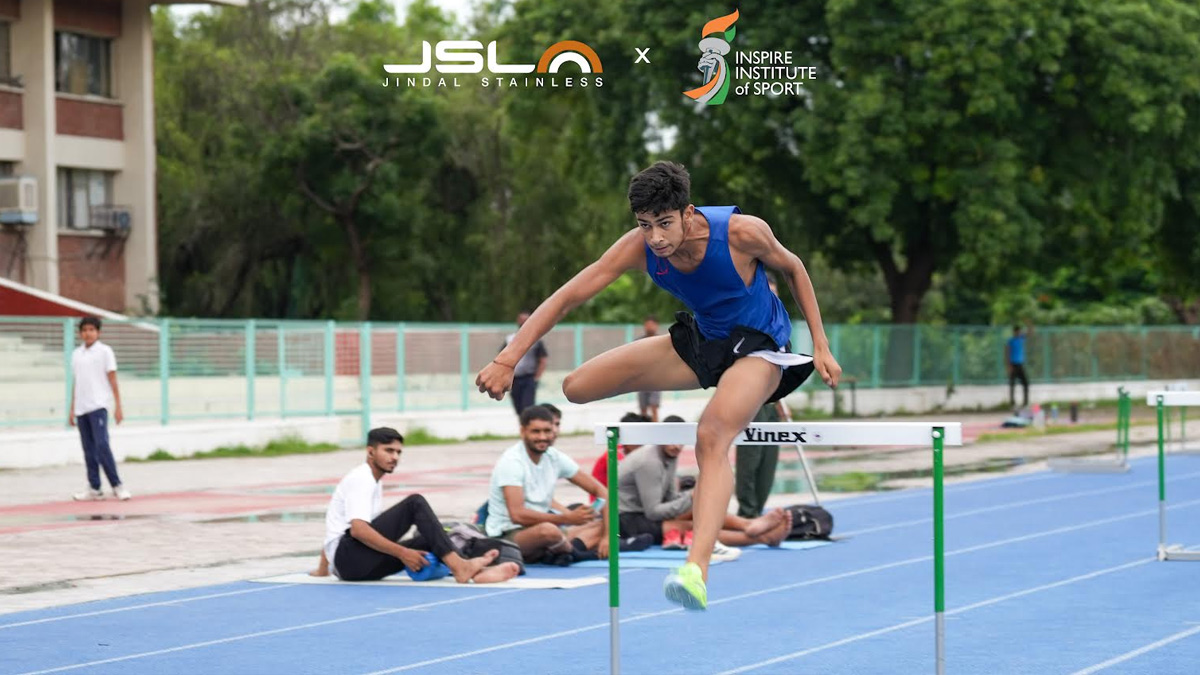
    MUMBAI: When steel meets speed, champions are forged. Jindal Stainless is turning this mantra into reality by partnering with the Inspire Institute of Sport (IIS) to nurture India’s next generation of track and field stars. Through its CSR arm, the Jindal Stainless Foundation, the company has become the key sponsor of IIS’ Track & Field Development program at Hisar for FY 25-26, supporting aspiring athletes on their journey to national and international success.

    The Hisar centre is a crucial talent hub, scouting promising athletes aged 18–25 from across India and channeling them into a structured training ecosystem. This year, the program is mentoring 39 athletes, providing them with a holistic environment that spans world-class facilities, expert coaching, sports science support, nutrition guidance, and financial assistance for travel to competitive events. A standout feature of the initiative is the involvement of Klaus Bartonietz, former coach of Olympic javelin champion Neeraj Chopra, who brings cutting-edge biomechanics expertise to the budding athletes.

    “Supporting IIS’ track & field development program is our way of ensuring young athletes can compete with confidence on the global stage,” said Jindal Stainless managing director Abhyuday Jindal. “Through this collaboration, we aim to nurture India’s future champions and empower talent where it matters most.”

    IIS president Manisha Malhotra added, “Jindal Stainless’ partnership allows us to strengthen our program, giving young athletes access to state-of-the-art facilities, scientific guidance, and competitive opportunities essential for national and international success. This support is pivotal in helping India create a world-class sports ecosystem.”

    Athletes in the program represent a diverse pool of talent, including budding javelin throwers like Aditya and Manpreet Singh, who are training under this rigorous system. The initiative spans sprints, hurdles, and throws, equipping participants with the skills and discipline required to excel in global competitions.

    Jindal Stainless has supported IIS for several years, and by acting as the key sponsor for 2025-26, the company reaffirms its commitment to sports, youth empowerment, and social impact. This collaboration not only provides a platform for emerging athletes but also strengthens the broader goal of positioning India as a hub of athletic excellence, demonstrating that with the right infrastructure and support, world-class champions can emerge from any corner of the country.

    With steel backing speed and science guiding skill, the Hisar centre is shaping up as a launchpad for India’s athletic dreams, ensuring the next generation of track and field stars is fit, fast, and future-ready.