Category: Sports

  • IPL auctions set to kick off 2019 cricket bonanza for brands, marketers

    IPL auctions set to kick off 2019 cricket bonanza for brands, marketers

    MUMBAI: Indian fans are in for a rollercoaster ride in 2019 thanks to an action-packed cricket calendar. Virat Kohli’s men have major challenges – tough and exciting in equal measure – lined up right through the year. The Indian side is set to play 12 Tests, 22 ODIs, 17 T20Is and the all-important World Cup in June. That’s in addition to the two-month-long cricket party – the Indian Premier League (IPL).

    The mouth-watering prospect of the star-studded Indian cricket team taking on some of the most formidable cricketing nations offers an exciting proposition for fans, marketers, and brands. From a broadcast perspective, it obviously is a golden opportunity for ensuring maximum viewership and revenue. While Indian broadcasters are now investing in emerging sports along with a growing interest from audiences, nothing captures the hearts and minds of India’s public like a hotly contested cricket match.

    Dentsu Aegis Network South Asia chairman and CEO Ashish Bhasin says cricket always commands premium price purely because of the consistency of viewership that it ensures.

    “I think cricket is always a good opportunity for brands particularly those who want to reach a wide range of audience because it is one of those properties that reaches to each and every corner of the country and has got the universal appeal. If you look at the last few years, cricket hasn’t let any advertisers down because the interest has only gone on increasing. So I do think it’s a good opportunity and every opportunity comes at a price. Advertisers pay for eyeballs and cricket gets you consistent eyeballs. So it will always command a good price,” he feels.

    According to the 2018 KPMG media and entertainment report, television is expected to grow at a CAGR of 12.6 per cent owing to growing TV penetration, strong advertising demand on the back of domestic consumption and major events (two cricket world cups and a general elections on the next five years) supported by better distribution realisations due to operationalisation of TV digitisation.

    Season 11 of the IPL saw a spike of 15 per cent in viewership from 1.2 billion impressions in 2017 to 1.4 billion impressions in 2018. On the other hand, Star India’s OTT platform Hotstar hit a world record for concurrent online viewing with 10.7 million viewers for the final. The 2015 ICC World Cup garnered 635 million viewers till the India versus Australia semi-final. A total of 309 million Indians (TAM Panel CS4+ extrapolated to the universe using a standard conversion factor) tuned in to watch India’s semi-final clash against the Aussies on their television sets.

    Syska Group marketing head Amit Sethiya is looking forward to all the opportunities the upcoming year is likely to throw up to his brand.

    “Definitely there are a lot of opportunities that are going to come because of a whole range of experiences in 2019. But I think the main concern is that advertisers and brands need to check what kind of integration they are going ahead with. Three things that we are fundamentally repeating that it’s Bollywood, politics and cricket and these things still stand true,” he adds.

    Sports advertising expenditure is largely driven by cricket with other sports contributing a minor share. According to India Sports Sponsorship report 2018 by ESP properties and SportzPower, media spending in sports as a whole grew 15.8 per cent from Rs 3511 crore ($ 516 million) to Rs 4065 crore ($ 616 million), driven even more strongly in 2017 by Television On Air, which grew an incredible 42.7 per cent from Rs 2376 crore ($ 348 million) to Rs 3379 crore ($ 512 million). The other reason for sports adex increase is the annual increase in ad rates, especially on IPL.

    Broadcasters have started investing heavily in regional feeds, the likes of which were witnessed in the last IPL season. Star India leveraged 17 of its channels, including Star Plus and Star Gold to make the finals a runaway success. It was aired in eight languages including Hindi, English, Tamil, Telugu, Bengali, Kannada, Marathi and Malayalam.

    At the time, Star India aired all the regional feeds apart from Hindi and Tamil on GEC and movies channels, but in the recent past, it has launched a new channel for Telugu feed called Star Sports 1 Telugu. The network is also ready to launch its fourth regional channel on 30 December for the Kannada audience named Star Sports 1 Kannada.

    Fashion brand fbb’s marketing head Prachi Mohapatra said that cricket now reaches more demographic segments than before and therein lies its true power.

    “Our association with IPL has been positive from a view of fbb’s brand visibility and subsequent in-store traction. We were confident about the partnership and believed in the strength of the association. Cricket stays a superior property and now has a wider consumption that cuts across demographic segments than what it had earlier. Hence, association with the same will remain high on the agenda for many participating brands,” she adds.

    The ad expenditure on IPL increased from Rs 228 crore in 2008 to Rs 1204 crore in 2017. Sports advertising across all media accounted for Rs 4065 crore, 6.6 per cent of the total ad spends in the country. While the bulk of this advertising is on cricket though, other sports like kabaddi, football and badminton are now gaining traction from both the viewers and advertising.

    Eros Digital COO Ali Hussein highlights how his platform’s partnership with Kohli’s IPL franchise helped him drive their subscriber numbers.

    “It has been an interesting collaboration with Royal Challengers Bangalore as it was an industry first. No other OTT player in India has sponsored an IPL team. This association helped us reach a larger audience for Eros Now and we were able to leverage great synergies with content that we created for the platform and value that we were able to drive to our subscribers via match tickets and exclusive merchandise,” he said.

    While cricket has been the country’s most loved sport for a while, the explosion of the IPL has added another dimension to the sport. Apart from helping the Board of Control for Cricket in India (BCCI) to further propagate the game, the cash-rich league has aided brands in unlocking new markets and tapping more consumers.

    “Consumer-focussed brands are always seeking for various mediums & opportunities to reach out to their target audience. Given the kind of viewership these cricketing events enjoy in India, they would always serve as potential platforms for partnerships. Cricket and Bollywood are the two most followed headlines in the country and hence provide for a great association for a brand like Eros Now,” Hussein adds.

    Earlier this in January, IPL teams spent a mind-boggling Rs 431.7 crore in a two-day auction in Bengaluru, with pacer Jaydev Unadkat bagging a Rs 11.5 crore contract to earn the top Indian grosser’s tag.  The salary cap of Rs. 80 crore then was 33 per cent higher than the Rs 60 crore available in the 2014 auctions.

    Franchises have witnessed a windfall due to the renegotiated broadcast rights (won by Star India for Rs 3270 crore per year, four times higher than what Sony Pictures Network India paid per year during from 2008 to 2017) and title sponsorship rights (acquired by Vivo for Rs 440 crore per year).

    Indian cricket has set global benchmarks in the past couple of years, with the IPL rights being awarded for a record Rs 16347 crore to Star India for the period 2018 to 2022 and Oppo snapping up the Indian cricket team’s sponsorship rights for Rs 1079 crore till 2022.

    As the IPL money-spinner returns for its 12th edition, the auction on 18 December is where all the action commences before the players battle it out on the field.

    While 1003 players had initially registered but the final auction list is out with a total pool of 346 cricketers set to undergo the hammer in Jaipur. In a sense, the IPL auction is likely to end 2018 with a big and set the agenda for a thrilling season of cricket in 2019.
  • Ranjana Mangla joins Star Sports as VP – emerging sports

    Ranjana Mangla joins Star Sports as VP – emerging sports

    MUMBAI: Ranjana Mangla has joined Star Sports as vice president – emerging sports, Indiantelevision.com has learnt. Mangla, who took charge of her new role on Monday, was the national revenue head of India Today TV in her last gig.

    Mangla has previously worked with Discovery Jeet where she served as director – ad sales, India. Other than sales responsibilities, she also managed content partnerships for the entire network. She has also been part of Viacom18 as vice president – sales, spending more than four years with the media and entertainment conglomerate.

    Mangla has over fifteen years of experience in large and medium sales team management, complex commercial deal negotiations with expertise in revenue strategy, large scale product launches and C-level market relations.

    Starting her career as a marketing and PR specialist in Visionaire India, she has also worked with NDTV Lifestyle, NDTV Imagine, Star India, and the Dainik Bhaskar Group of Publications.

    Mangla’s appointment seems to be in line with Star India’s vision of driving growth with sports as a big pillar. Apart from cricket the Star Sports bouquet of channels broadcasts Pro Kabaddi, Indian Super League, I-League, Super Cup, Premier League, Bundesliga, Badminton World Federation events, Premier Badminton League, Ultimate Table Tennis, and other premium sports such as Formula 1, Wimbledon, The French Open and US Open.

    Earlier this week, the Ministry of Youth Affairs and Sports along with Star Sports kick started the countdown to Khelo India Youth Games with an appeal to encourage India to play more- with the evocative ‘#5MinuteAur’ campaign.

    Khelo India Youth Games, which are a part of the Khelo India programme, will be held from 9 to 20 January 2019 in Pune, Maharashtra. The games will be telecast live across Star Sports Network and Hotstar in five languages – English, Hindi, Tamil, Telugu and Kannada.

    Mangla was named national revenue head of India Today TV in July this year.

    India Today Group CEO Vivek Khanna too called it quits last month in a letter dated 30 November 2018. The resignation was informed to the Bombay Stock Exchange on the same date stating that he plans to pursue other professional opportunities by the company.

    Khanna joined India Today Group in November 2017.  

  • Khelo India Youth Games, Maharashtra 2019 is Bigger and Better!

    Khelo India Youth Games, Maharashtra 2019 is Bigger and Better!

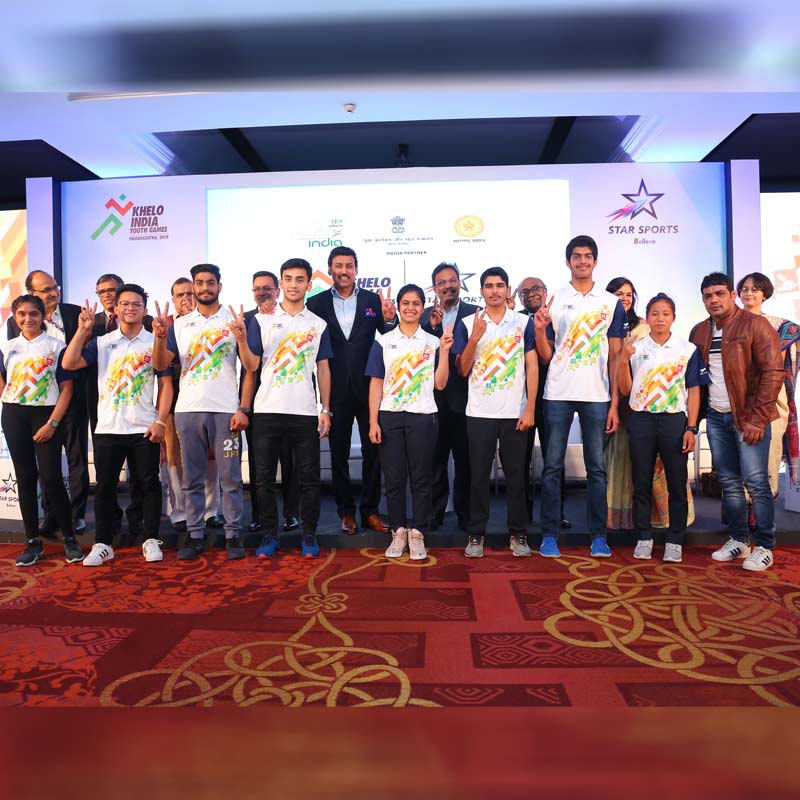
    MUMBAI: Building on the roaring success of the inaugural edition of the Khelo India School Games, Ministry of Youth Affairs and Sports along with Star Sports kick started the countdown to Khelo India Youth Games, Maharashtra 2019 with an appeal to encourage India to play more- with the evocative ‘#5MinuteAur’ campaign.

    The campaign has a strong call to action, taking the Khelo India movement forward, featuring – Manu Bhaker, Jeremy Lalrinnunga, Saurabh Chaudhary, Lakshya Sen, Esha Singh, Tababi Devi, Srihari Natraj and champions Mary Kom, Sushil Kumar amongst others bringing childhood playground memories to life. The #5MinuteAur campaign created this year has a simple insight, we are all born with an inherit instinct to play, kids and adults alike.

    In its inaugural edition, Khelo India had a strong message “Kheloge Kudoge Banoge lajawaab” encouraging more kids to play every day, it was an effort towards changing an age-old belief. Building on the core of this message through the #5MinuteAur campaign, Star Sports and the ministry want India to encourage kids to play for those extra 5 minutes.

    The 5 minutes is symbolic, with an assumption that if each child plays a little bit longer, we will add a billion minutes of play everyday, that has the potential to translate into 50 medals for the country.

    Portraying this five-minute agreement between a mother and a child, the aim with #5MinuteAur is to spark a fire in every enthusiast in India to strive for better through sports. Establishing the message that sports builds and defines our personalities, the more we play the better we get. The manifesto, “Hum Aaj Aur Khelenge Toh Kal Aur Jeetenge” is true not just for the sport we play, but for life itself.

    Scheduled to take place at Shree Shiv Chhatrapati Sports Complex in Pune from 9th to 20th January 2019, Khelo India Youth Games, Maharashtra 2019 will see over 10,000 participants from 29 states and 7 Union Territories. The games will bring to life by over 6200 athletes, 1800 Technical Officials, 1000 volunteers and 1000 personnel working behind the scenes.

    Conceptualised to revive the sports culture in India at grass-root level by building a strong framework for all sports played in our country, the upcoming season of Khelo India Youth Games will be held across 18 sporting disciplines in the Under-17 and Under– 21 age categories.

    “The success of Khelo India School Games is a testimony to the hunger and multitude of sporting talent in India. Buoyed by the terrific response for Khelo India School Games and with an aim to increase participation in sports across all age groups, we have not just added two sports this year but the games will also be played under two age categories U-17 and U-21 to allow even more enthusiasts to participate and flourish. The ‘5 minute aur’ campaign for the Khelo India Youth Games 2019 to be hosted in Pune, Maharashtra is a reflection of the immense strides we’ve made and the journey that lies in front of us to make India a truly sporting nation. We hope it will inspire India to work towards incorporating sports as a way of life.”  Said, Col.  Rajyavardhan Singh Rathore, Minister for Sports and Youth Affairs (IC)."

    To support the Khelo India initiative by the Ministry of Youth Affairs & Sports, Star India has doubled the level of promotion and broadcast coverage for Khelo India Youth Games, Maharashtra 2019. The coverage of the upcoming season will include live telecast in 5 languages (Hindi, Tamil, Telugu, Kannada and English) and telecast of all 18 disciplines for both age groups.

    Mr. Sanjay Gupta, Managing Director, Star India said, “The first edition of Khelo India exceeded expectations and instilled an aspiration for sports amongst the youth in India and now, with “5 minute aur”, we are aiming to trigger more pro sport conversations to make India adopt sports as a way of life. The campaign calls for the Indian sports enthusiast to not only support their heroes, but also work towards emulating their feats.”

    “Staying true to our commitment of bringing the best in class sports experience to the passionate Indian sports fan, we will broadcast Khelo India Youth Games in 5 languages this season along with LIVE telecast of 9 disciplines, he further added.”

    Khelo India Youth Games, which are a part of the Khelo India programme, will be held from 9th to 20th January 2019 in Pune, Maharashtra. The games will be telecast live across Star Sports Network and Hotstar.

  • Star Sports 1 Kannada to launch on 30 December

    Star Sports 1 Kannada to launch on 30 December

    MUMBAI: After announcing the launch of Star Sports 1 Telugu, Star India is all set to unveil its fourth regional channel after Star Sports 1 Hindi, Star Sports 1 Tamil and Star Sports 1 Telugu (launching on 7 December). The next language market of focus for the company is Kannada and the channel is likely to go on air on 30 December 2018, a source close to the development informed Indiantelevision.com.

    Star Sports 1 Kannada testing is in process on AsiaSat 7 at 105 degree east. Star Sports 1 Telugu is also being tested on the same satellite.

    Star India's attempt at securing an exclusive sports channel for its Kannada viewers didn’t see the light of day for the 11th season of IPL. Regulatory hurdles made the broadcaster switch the Kannada feed to Star Suvarna Plus.

    In an interview with Indiantelevision.com, Star Sports CEO Gautam Thakar had said that Kannada and Telugu were going to be priority language markets.

    Under the new tariff order, Star Sports 1 Kannada (30 December) and Star Sports 1 Telugu (7 December) have been priced at Rs 19 for TV consumers.

    In September this year, Star Sports also launched Star Sports 3, a multi-lingual channel in place of Channel V.

    Towards the end of last year Star India contemplated taking Channel V off air, with Star Sports 1 Kannada as its substitute, with 16 November 2017 having been fixed as the launch date.

    However, the broadcaster was unable to get the necessary approval from Ministry of Information and Broadcasting (MIB).

    Star Sports currently boasts of 14 channels, including Star Sports 1 Telugu, in its bouquet, with nine Standard Definition (SD) and five High Definition (HD) channels. Star Sports 1 Kannada will increase the count to 15.

  • Kabaddi comes home to Andhra Pradesh and Telangana on Star Sports 1 Telugu

    Kabaddi comes home to Andhra Pradesh and Telangana on Star Sports 1 Telugu

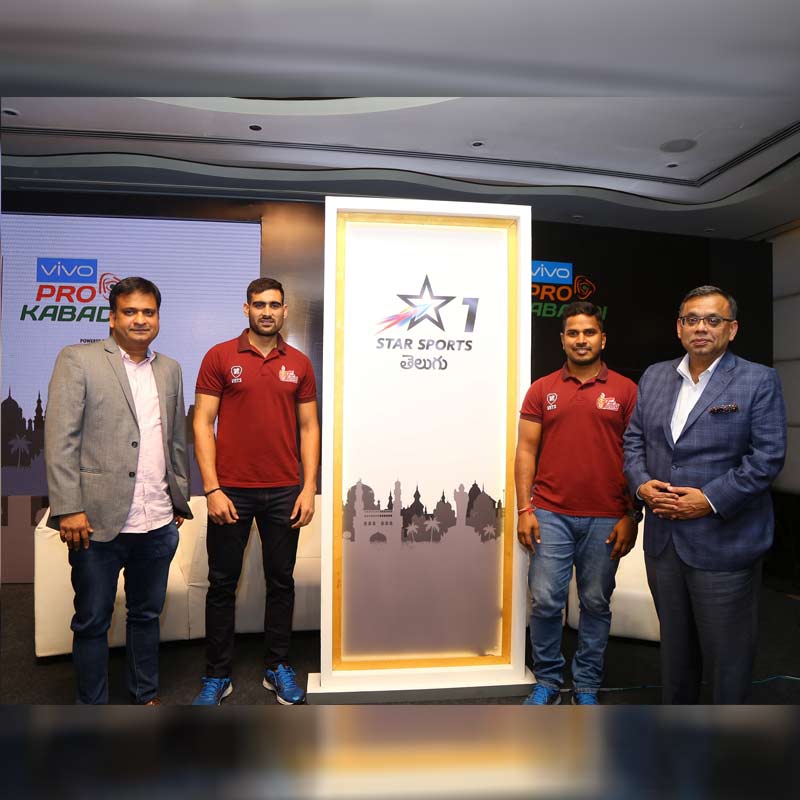
    MUMBAI: Star Sports – India’s leading sports broadcaster, today announced the launch of Star Sport 1 Telugu, a dedicated sports channel for sports lovers in their mother tongue. The channel will offer multiple sporting events in Telugu, starting with the VIVO Pro Kabaddi League. The channel launch is In-line with Star Sports’ commitment to foster a multi-sports culture in the country while bringing fans closer to the sporting ecosystem. Providing live and non-live content, Star Sports 1 Telugu will have onboard, experts, commentators and players building a strong compelling offering for Telugu speaking sports audiences.

    Superstar Rana Daggubati, the ambassador for VIVO Pro Kabaddi in Andhra Pradesh and Telangana features in the new TVC, where he compares sports to action packed cinema. He draws parallels on the similarities between sports and cinema, emphasizing on the ability each of them possess to capture audience attention always. 

    Speaking at the launch of Star Sports 1 Telugu, a Star Sports spokesperson said, “Andhra Pradesh and Telangana are unique markets with a substantial demand for specific language content and have distinct viewing habits, this has helped us at Star Sports understand the pulse of the Telugu sports fan. Star Sports 1 Telugu is a unique product offering catering to core Telugu sports fans in the region and outside. With the launch of Star Sports 1 Telugu, we are exemplifying our endeavor of providing relevant regional sports content to fans across the country. We are committed to constantly strengthen our portfolio across markets, with the growing number of diverse requirements, Star Sports 1 Telugu launch is a key milestone in that journey to curate a compelling offering for fans across regions.”

    On the caravan moving to Andhra Pradesh, Anupam Goswami, League Commissioner, VIVO Pro Kabaddi league, said, “The initiative with Star Sports 1 Telugu exemplifies the value created by Star India for sports in the country, with its belief and commitment to take it deep into the lives of fans across India in their own language.   VIVO Pro Kabaddi has been a big gainer owing to the role created by the broadcaster; the launch of Star Sports 1 Telugu will deepen great following that the League has in both Andhra Pradesh and Telangana.”

    Present at the press conference was, Rahul Chaudhari, Telugu Titans – Leading Raider, who said, “Over the past few seasons we have received immense support from fans in the region, they have cheered for Telugu Titans and been there to support us for every match. The affection we receive in the region has been unmatched so far. I thoroughly enjoy watching sports in Hindi, and with this new destination, I am confident Star Sports 1 Telugu will make fans come together to watch their favourite sport in their language, starting with our home games here.”

    Andhra Pradesh and Telangana have been markets where the consumption of sports has been high, we have seen a flurry of sportspersons emerge from the region, including VVS Laxman, Sania Mirza, PV Sindhu, Saina Nehwal amongst others. The region has embraced several teams, VIVO IPL – Sunrisers Hyderabad, PBL – Hyderabad Hunters, VIVO PKL – Telugu Titans, giving them immense support.  With a strong affinity for sport in the region, Star Sports 1 Telugu will amplify this by offering fans their favourite sports in their language.

    Star Sports 1 Telugu will feature live and non-live content packaged into a line-up with distinguished Telugu hosts and commentators from the sports fraternity including, Venkatpathy Raju, Venkatesh, Kalyan Krishna and Kaushik Nallan Chakravarthy for Cricket and Madhavi Bhandari, Radhika Reddy and Kalyan Kollaram for Kabaddi. Star Sports 1 Telugu will be available on leading DTH and Cable Operators across Andhra Pradesh and Telangana as well as the rest of India. The channel will be LIVE 7th December 2018 onwards.

    Fans can catch the VIVO Pro Kabaddi action LIVE, 7:30 pm onwards, on Star Sports 1 Telugu, the Star Sports Network and Hotstar. Fans can also watch the match live at Rajiv Gandhi Indoor Stadium, Vizag, starting 7th December 2018 onwards.

  • Comment: Is there light at the end of the tunnel for broadcasters?

    Comment: Is there light at the end of the tunnel for broadcasters?

    The period between August 2017 and September 2018 will be remembered by the Indian broadcasting sector for more reasons than one. Interestingly, the main protagonists seem to be common – Star India and the Supreme Court of India – and this combination has worked well to lay down a roadmap for the sector. Only time will tell whether it is for the good or bad!

    Before we go further, let’s fact check the status of the Indian broadcasting sector.  According to Ministry of Information & Broadcasting that as on 31 October 2018 there are 866 permitted TV channels in India.

    As per FICCI-EY Report, “Re-Imagining India’s M&E Sector” the broadcasting industry “grew from Rs 594 billion to Rs 660 billion in 2017, a growth of 11.2 per cent”. This includes the advertising revenue of Rs 267 billion comprising 40 per cent of revenues and the distribution revenue of Rs 393 billion comprising 60 per cent of total revenues. The broadcasting sector generates millions of jobs directly and indirectly, contributes to economic growth with a rate almost twice the GDP and provides an immeasurable ancillary contribution by serving a platform for the growth of several other industries.

    This proves that television in India – even in the age of digital media explosion – remains a mass medium and plethora of stakeholders from content creators, broadcasters, teleport operators, satellite operators, advertisers, distributors and a larger television audience viewing audience are involved in one way or other.

    Is it time to nationalise sports?

    Let’s now examine some of the stunning reverses suffered by the broadcasters before the judiciary in this period.

    First amongst them is the judgement delivered by the Supreme Court in 2017 in the Sports Broadcasting Signals (Mandatory Sharing with Prasar Bharati) Act, 2007 which involved Star India and Prasar Bharati.

    In a long-drawn battle of more than ten years, the Supreme Court finally confirmed the Delhi High Court’s finding when it adjudicated that the original intent of the act was to achieve twin purposes of making available a live feed of a sporting event of national importance to economically weaker section of the society and consequently, the same should be made available on a free or no cost basis. 

    The Supreme Court whilst allowing the sporting events of national events to be shared mandatorily with Prasar Bharati ruled that the public broadcaster cannot utilise it on a notified channel which has to be compulsorily carried by private distribution platforms. Although the ruling of the Supreme Court was not followed by letter and spirit by Prasar Bharati, it put the onus on sports broadcasters to take legal action against erring private commercial platforms carried “live” sports feeds. Rather than encrypt Doordarshan’s feed, the Ministry ordered the distribution platform operators to run a ticker stating that “the match/game can be viewed in free-to-air mode on DD Sports Channel, on DD Free Dish and DD’s terrestrial network”. 

    Whilst the Supreme Court put away any confusion on the Sports Act and a private commercial sporting event like IPL anyway ought not to be considered as sporting events of national importance, Smriti Irani who was piloting the I&B Ministry in April 2018 had other ideas.

    During her time in Shastri Bhawan it seemed Star India was wrong when it fiercely bid to acquire long-term exclusive media rights for the Indian Premier League along with BCCI international and domestic matches for an approximate value of Rs 16,350 crore and Rs 6,150 crore respectively.

    2017 was the first year for Star India after it acquired rights for the IPL and the Ministry inexplicably made them sweat out before granting temporary live uplinking permission for live broadcast of the IPL matches on their channels till the very last moment. This was nothing else but to arm-twist Star India to share all the live matches of Indian Premier League with Doordarshan for free, even though IPL, which is a privately-owned club cricket league and can no way be considered as a sporting event of national importance.  In the end, Star India had no other option but to give something to the power that be and they gave in to share with Prasar Bharati the inaugural, the playoffs held on weekends and the last four matches of IPL, with a deferred live feed of at least 60 minutes. No surprise, Smriti Irani claimed victory for bringing IPL for the first time ever on Doordarshan.

    Not getting the “live” feed of IPL matches and unable to make legislative moves to amend the judgement of the Supreme Court as she did not find support amongst her ministerial colleagues the Irani-led Ministry issued a notice mandating all sports channels broadcasting live sports of “national importance” to display a ticker stating the same match was also available on DD’s free-to-air platform squirming sports broadcasters. Not only are the rights holders required to give live sports content free to DD as per the Sports Act, but they are also required to run a marketing campaign for Doordarshan to drive audiences away from themselves to go somewhere else to watch it!

    Now, if the broadcasters believed that the Supreme Court’s decision on the Sports Act in August 2017 had finally settled the issue, unfortunately, it was not to be. On 24 October the Ministry released a notice seeking feedback/comments on draft Sports Broadcasting Signals (Mandatory) sharing with Prasar Bharati (Amendment) Bill, 2018.  The ministry wants to amend Section 3(1) of the Sports Act to ensure mandatory sharing of the signals of such sporting events with “other networks, where it is mandatory to show the Doordarshan channels as per the Cable Television Networks (Regulation) Act, 1995”. 

    Here's a suggestion : rather than doing it in a piecemeal manner in forcing sports broadcasters to share more sporting events why doesn’t the government nationalise at one go so there is clarity on sports broadcasting?  This will also make Doordarshan the only sports broadcaster in the country and thus can ring-fence them from competition from private sports broadcasters!

    Changing landscape?

    However, the biggest one of all is the Supreme Court judgement on 30 October dismissing the plea of Star India challenging the jurisdiction of TRAI in regulating the broadcasting sector through Tariff Orders.

    The Supreme Court judgement has far-reaching consequences for the broadcast industry since it settled the long pending debate of who is the regulator of the Indian broadcasting sector.  Star India had challenged TRAI’s jurisdiction to frame the tariff order arguing that the exploitation of intellectual property (IP) rights are covered under Copyright Act.  The Supreme Court whilst refusing to entertain Star India’s challenge by 2:1 majority held that (1) the Copyright Act had nothing to do with the inter se relationship between the broadcaster and the distributor in the activity of broadcast and (2) it also does not deal with the price of a channel that an end consumer pays to the broadcaster.

    Whilst the Supreme Court empowered the end-consumer through its order but the implementation is not going to be smooth.  Although TRAI proposed to bring DTH, cable TV, HITS, IPTV operators under unified quality of service framework way back in 2015, poor implementation at the ground level means, the cable operators have still not put in place any consumer redressal mechanisms nor will they issue any bill or invoice.  Worse still, many distribution platform operators (DPOs) have not even fulfilled technical requirements under the DAS mandate or installed subscriber management systems to inform the authorities how many subscribers they service in their areas of operation even though the new tariff order is going to become effective from 1 January 2019.

    According to industry experts, although the new Tariff Order is expected to benefit the consumer as he can now pick and choose his channels rather than being saddled with hundreds of them but the cost of monthly cable bill may go up.  In other words, a new concept of ‘pay less for less, pay more for more’ is going to be a reality for Indian broadcast consumers.

    The moot question is after the Supreme Court empowering the consumer vis-à-vis broadcasters, has TRAI empowered the consumer vis-à-vis DPOs?  The quality of service (QoS) by the DPOs has always been a bone of contention because of its implementation on the ground by the licensor, MIB or its authorised officers at the district level or by the regulator, TRAI.

    Even after the implementation of the Digital Addressable System (DAS), the analogue transmission is still transmitted in many parts of the country and the cable operators have not yet fulfilled the technical requirements to meet the DAS mandates.  Even today in many parts of the country kutcha bill is the norm and no sign of any kind of customer care.  When it is brought to the notice of the policymakers they don’t want to see the reality.

    Although TRAI notified the Telecommunication (Broadcasting and Cable) Services Standards of Quality of Service and Consumer Protection (Addressable Systems) Regulations, 2017 the experience so far shows it will be a tall order to implement on the ground on issues such as establishment of customer care centre, website, consumer care channel and publication of manual of practice, etc.

    As a result, there will never be an end to the disputes amongst stakeholders which is the bane of the Indian broadcasting sector and where is the possibility of changing landscape?

  • Star Sports 1 Telugu to launch on 7 December

    Star Sports 1 Telugu to launch on 7 December

    MUMBAI: Star Sports is all set to unveil its third regional channel after launching Star Sports 1 Hindi and Star Sports 1 Tamil. The next language market of focus for the company is Telugu and the channel will go on air on 7 December 2018 i.e. Friday, a source close to development informed Indiantelevision.com. As the Vizag leg of Pro Kabaddi League (PKL) starts on 7 December at Rajiv Gandhi Indoor stadium.

    Star Sports 1 Telugu testing is in process on AsiaSat 7 at 105 degree east.

    The formal launch of the channel will be done at a press conference at Taj Krishna, Banjara Hills in Hyderabad on 5 December.

    In an interview with Indiantelevision.com, Star Sports CEO Gautam Thakar in September had said that Telugu and Kannada were going to be priority language markets for him.

    Telugu feed of the sports event like IPL was aired on Star Maa Movies this season.

    Under the new tariff order, Star Sports 1 Telugu and Star Sports 1 Kannada (yet to be launched) have been priced at Rs 19 for the TV consumers.

    In September this year, Star Sports also launched Star Sports 3, a multi-lingual channel in place of Channel V.

    Towards the end of last year Star India contemplated taking Channel V off air, with Star Sports 1 Kannada as its substitute, with 16 November 2017 having been fixed as the launch date.

     However, the broadcaster was unable to get the necessary approvals from Ministry of Information and Broadcasting (MIB).

    Star Sports currently boasts of 14 channels, including Star Sports 1 Telugu, in its bouquet, with nine Standard Definition (SD) and five High Definition (HD) channels.

  • Football viewership up 7% in 2018 from 5% in 2016

    Football viewership up 7% in 2018 from 5% in 2016

    MUMBAI: After Star India took the initiative to boost a variety of sports in India, other broadcasters also picked up their shovels to dig deep. It has made a sincere effort in the turnaround of Indian football with participation (to build culture), incentivisation (to build careers), and commercialisation model (to drive in viewership) which are the three building blocks to development.

    Delivering a keynote address at the Star Sports India Football Forum 2018, an initiative by SportzPower, Star Sports head marketing Rajiv Mathrani said, “The best way to predict the future is to dream it. India is not too far from playing FIFA World Cup with the increase in the number of teams, the ranking in which we are and the young talent which is coming along.”

    All India Football Federation (AIFF) general secretary Kushal Das said that AIFF will very soon launch a school-level project along with the game’s world governing body FIFA.

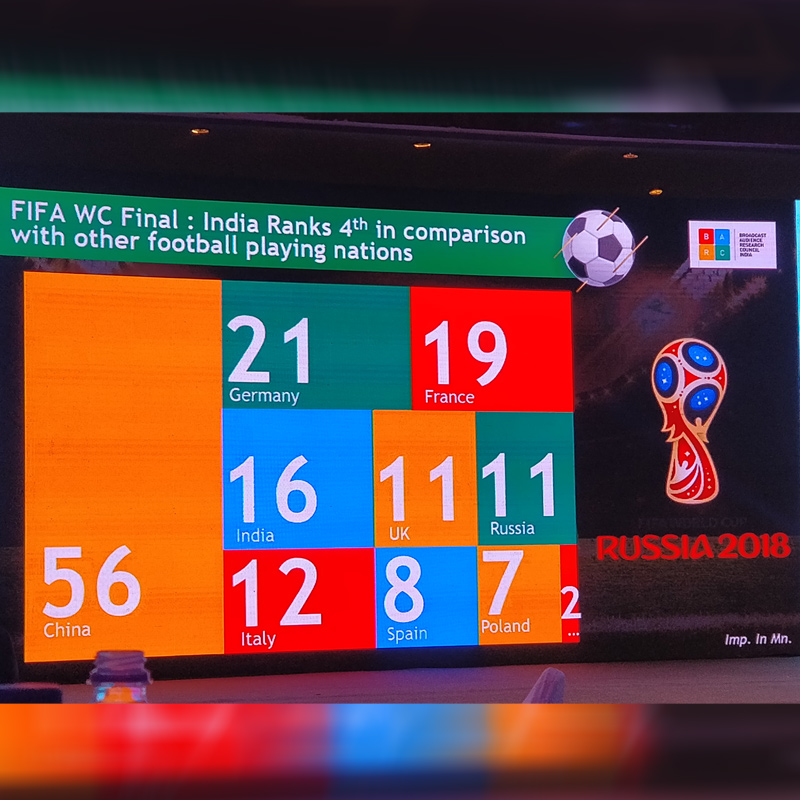
    According to BARC data, FIFA WC final garnered 16 million impressions in India and stood at fourth place. China (56 million impressions), Germany (21 million impressions) and France (19 million impressions) were ahead of India.  

    BARC India head- partnerships Elbert D’Silva said, “If we look at football, in 2016 the sport garnered 2 billion impressions and now till October 2018, it has garnered 3 billion impressions.”

    Football viewership has gone up from five per cent in 2016 to seven per cent in 2018.

    As of now, there are 836 million viewers who watch television across India. Out of these 836 million viewers who have access to television, 791 million or 95 per cent have consumed some sporting content across multiple TV channels. If we look at football numbers, 498 million people have sampled some content related to football in the country.

    According to D’Silva, the movement of Cristiano Ronaldo from Real Madrid to Juventus has affected the viewership. El Clasico’s impressions dropped down from 4 million to 2 million, but on the other hand, Serie A viewership doubled.

    The sports revenue in India has increased from $0.9 billion in 2016 to $1.1 billion in 2017, whereas North America has seen a spike in the revenue from $15.7 billion in 2016 to $16.2 billion in 2017.

    SPN India EVP and head digital business Uday Sodhi thinks that this year’s FIFA WC has really made football mainstream in India. “The only difference for OTT is that this is a newer medium, the forms of monetisation and the way you monetise will take more time to get established,” Sodhi added.

    ESP Properties business head Vinit Karnik said, “With multiple services coming in one set top box, the day is not too far when the gap between traditional TV and OTT will change.”

    SonyLiv has a large sports footprint, football is growing 150 per cent y-o-y, basketball is growing 3-5X. Sodhi believes that India will have a freemium business going forward to a large extent. There will be a significant amount of advertising play and subscription will then be able to create a niche for itself for premium content.

  • ESPN launches ‘Beyond the Boardroom’ video series

    ESPN launches ‘Beyond the Boardroom’ video series

    MUMBAI: Sport-content provider ESPN has announced the launch of a new video series called ‘Beyond the Boardroom’ to showcase stories depicting the powerful role sports has played in the lives of industry leaders and celebrities. The series aims to inspire viewers to explore and pursue their sporting passions. The series will debut on 29 November 2018 and continue week on week.

    ‘Beyond the Boardroom’ will show the sporting journeys of eight select leaders from different industries pursuing a range of sports, from cycling to cricket, in form of engaging conversations and real-life visuals. The video series will be hosted on ESPN.in and also amplified through ESPN and ESPNcricinfo’s social media handles.

    Among leaders who have shared stories of how following their passion for a particular sport has changed their life on ‘Beyond the Boardroom’ are Red Chillies Entertainment CEO Venyky Mysore, Titan Company Limited CEO – Jewellery C.K. Venkataraman, Tourism Australia country manager Nishant Kashikar, Isobar group managing director – south asia Shams Jasani, and DAN Performance Group CEO Vivek Bhargava.

    ESPN India director, business development and head of marketing Gaurav Thakur said, “At ESPN, we take great pride in our tradition of honoring inspirational talent, whether on field, off-field or even in the boardroom. ‘Beyond the Boardroom’ is very special because it has real potential for large scale influence, as high-level leaders serve as inspiration to their employees, respective industry members and followers. As these Industry leaders recount their connect with sports and how it made a big impact in their lives, we believe this will become a memorable platform to many and inspire them to pursue their sporting passions in order to enjoy the great energy called ‘sport’.”

  • ESPNcricinfo launches short-film series as part of its 25th Anniversary celebration

    ESPNcricinfo launches short-film series as part of its 25th Anniversary celebration

    MUMBAI:  As part of the 25th anniversary celebration, ESPNcricinfo, the go-to digital destination for cricket, has created a series of five short films called ‘ESPNcricinfo films’ – exploring gripping tales from the world of cricket. The series covers a range of intriguing topics from the transformation of the game over the past decade including the onset of the T20 format, the fierce rivalry of India and Australia over the years, and the recent cheating scandal in the context of similar ball-tampering controversies over the years.

    The films will be hosted on ESPNcricinfo.com and the ESPNcricinfo app and will be released every Wednesday over a course of five weeks. The films will also be published natively on YouTube and Facebook.

    The five short films are based on stories created using ESPNcricinfo’s powerful storytelling capabilities built over 25 years. The topics deal with issues that continue to be widely debated and have been tailored to appeal to both entrenched fans and those who are less seasoned followers of the game. The stories feature insights from past and present cricket stars, including former New Zealand captain Brendon McCullum and former Australia opening batsman Simon Katich, through to former Australia captain and renowned commentator Ian Chappell. The films take viewers to the grounds of India where cricket meets Bollywood, through to the recent cheating controversy in South Africa, and one of the most anticipated face-offs currently taking place in Australia as they host India.

    ESPN general manager Southeast Asia Lance Peatey said, “At ESPN we pride ourselves on setting the benchmark for the best sports storytelling in the world, so it seemed a very natural fit to create five ‘ESPNcricinfo films’ to mark the 25th anniversary of ESPNcricinfo. The topics are lively, thought-provoking and relevant to all fans, and launching them across a Test series between Australia and India is very fitting.”         

    http://www.espncricinfo.com/video/clip?id=25337920                                            

    ESPNcricinfo and ESPN South Asia editor-in-chief Sambit Bal said, ‘ESPNcricinfo continues to harness the power of storytelling and this time, we decided to expand our cricket-loving unit to filmmakers who are looking at the game from an unconventional lens. We are delighted to introduce this five-short films series to cricket fans across the world through our platforms. Going beyond regular cricket updates and analysis, ESPNcricinfo films will engage viewers with compelling, often unknown or previously unseen, narratives that capture the power, emotion and profoundness of cricket.”

    The series debuted with The Bollywood Game: Is the Indian T20 League celebrity first and then cricket? and tells the story of cricket’s transition into the T20 format which has changed the face of the sport over the last decade, with the booming Indian T20 League leading the way. Delving deeper into the steady rise of Indian T20 League, it tries to answer the question – while cricket was the catalyst for the tournament, is it still the main reason for it to exist?

    The series will continue with Cheats: Does the gentleman’s game have a problem? to be released on 28th November which tells the gripping story of how Australian cricket was rocked earlier this year, when captain Steven Smith admitted to a premeditated plan to tamper with the ball at Newlands. It dives into the long history of Australian sledging and competitiveness that played a part in causing the meltdown, and what impact has it had on the game and how far back does cheating, or attempting to cheat, go in the sport?

    The 3rd film in the series is Australia v India: Is this the fiercest relationship in cricket? To be released on 5th December, as one of the biggest rivalries in world cricket – Australia v India – comes to play again in one of the most eagerly anticipated contests of the year. Every time the two teams have met for a contest, the world has seen stunning performances on the field and also its fair share of controversies. The film attempts to decipher the rivalry – do the two teams and its supporters really not get along or is it stemming only from passion for the sport and the burning desire for victory?

    Following this is an interesting take on managing risks and players’ safety, captured in the fourth film, Gearing Up: Keeping cricket safe, will be released on 12 December. The film looks back at the past when batsmen had little or no protection against some of the game’s fastest bowlers and at the present when the game looks to be ever more accessible and how it manages potential risks?

    The last in the series is called T20 Rockstars: How does the game adapt to the growth of T20? being released on 19th December, explores how T20 is changing the game, and if it is for the better or worse. Players are starting to look at T20 leagues as fortune-making opportunities, shunning the other formats, in turn presenting a challenge for the game at large. However, the format is anticipated to only get bigger with a growing audience for the sport. Will cricket just continue to adapt?