|
The International Emmy Awards have been growing in strength from year to year. These recognise the best in television from around the world. This time around The International Academy of Arts and Sciences (Iatas) wants India to be a bigger part of the awards and the Academy. With that aim in mind Iatas president and CEO Bruce Paisner is coming down to India next month to meet with the top television industry professionals. He will be assisted in this by Anil Wanvari a member of the Academy.
In an interview with Indiantelevision.com, Paisner talks about the role the Academy plays in recognising the best of global television, country participation, the importance of having digital media awards.
Excerpts:
What role does The International Academy of Television Arts & Sciences play in facilitating awareness of global television programming?
We pride ourselves in offering every year, a unique cultural showcase of the best television currently produced around the world. When a producer or broadcaster enters a programme or performance into our competition, they open themselves up to many wonderful opportunities: being nominated or winning an Emmy of course, but also, having their programme watched by jurors from all over the world.
Additionally, our network of over 600 Members from 50 countries who represent all sectors of the television industry including mobile and Internet, plays a major role in promoting our activities and the importance of entering into our competition. In light of this, we are doing more activities with our Members and more international outreach.
How has your flagship event, The International Emmy Awards, grown over the past five years?
The buzz around the awards has grown. Last year we gave Special Awards to Lorne Michaels and Simon Cowell. Past award recipients in the last five years have included Steven Spielberg, Al Gore and Oprah Winfrey. The global publicity and excitement around the event is rising every year and we are thankful to our Gala Partners, Phoenix Satellite Television, TV Globo, Microsoft, Dori Media Group, Ascent Media, Ernst & Young, Variety, Mip TV and Sofitel Luxury Hotels for their continued support.
How does the selection process work? Has country participation increased?
We have a total of 15 programme categories. Nominees are selected through a lengthy and rigorous judging process which takes place over a period of six months and three rounds of judging. Over 720 independent jurors, who are selected because they are experts in their category, participated in this process in 2010. There are four nominees in each category that make it to the final round
Regarding increase in country participation, in the past five years we’ve seen significant increase in participation in the competition from companies and countries from Asia and Latin America. Entries from Latin America have doubled and those from Asia, the Middle East and Africa have grown by more than 50 per cent. Unfortunately, India’s quality programming is vastly underrepresented so far. We look forward to that changing.
We also have a quarterly newsletter that goes to over 10,000 industry contacts worldwide and a Facebook and Twitter following. And as you know, since you have been hosting a semi-final round of judging for us for several years, we are present in over 15 countries every summer with local semi-final rounds of judging events organised by member companies. These events are strategic in creating awareness about the competition because they involve content producers directly. Once they see how the competition works, they are more likely to enter their programmes.
You added the digital Emmys a few years back. Was that done to acknowledge changes happening in a rapidly changing media landscape?
The International Digital Emmy Awards recognise excellence in programming and content created and designed for viewer interaction and/or delivery on a digital platform (i.e. mobile, internet, interactive TV, etc.) originating outside the United States. We have three categories: Fiction; Non-Fiction and Children & Young People. The competition has been growing over the past five years and we’re looking forward to more entries every year.
Our competition also stays one step ahead. One example is the digital Emmy awards, with the three categories which have evolved over the years and the presentation of a Pioneer Prize, which recognizes the outstanding contributions of an individual or organisation to the field of digital entertainment. Another example is separating the news categories to News & Current Affairs and presenting them at a separate News Emmy awards ceremony presented by the National Academy in New York.
Also, the Telenovela category was created three years ago because of the global nature of the phenomenon and the need for our competition to recognise this important genre became imperative.
Also, if you are involved in international television, you should consider becoming a Member. Our team in New York will be happy to help with any questions regarding Membership, they can email iemmys@iemmys.tv.
India is such a prominent player in the television industry and unfortunately, this is not reflected in the International Emmy Awards competition. We hope more Indian television professionals will get involved with us and thanks to the wonderful platform offered by Indiantelevision.com and Anil Wanvari, we hope this will be possible. |
Category: Specialised and Niche
-
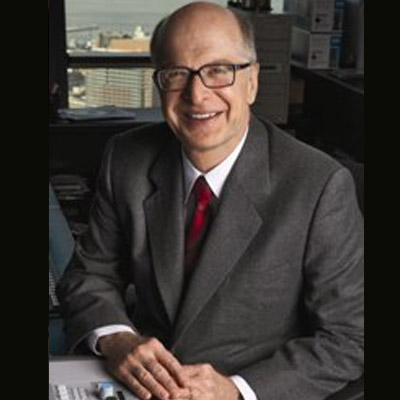
‘There is significant increase in competition from companies and countries from Asia and LA’ : Iatas president and CEO Bruce Paisner
-
Dharm’s original content mantra
NEW DELHI: The recently launched religion-based channel Dharm claims to be the only channel in the genre to have original programming including serials and films.
Channel founder and head Prajanan Bhattacharya told indiantelevision.com that the channel has a 470-episode series on Ramakrishna Paramhans, and other shows like Bharat ke Mandir, Shaktipeeth, Teerthsthal, Mera Dharm Mera Karam, A day with a Saint, Satsang, Siddha, Utsav ke Rang and Ahaar (on vegetarianism).
Bhattacharya said that the channel will also telecast selected devotional feature films in Hindi to begin with and later go on to other languages as well. Weekend specials also include programmes like Dharmyatra, Reeti Rivaj and Vidhi Vidhan. Apart from this Pravachan, Panchang, Yoga and Astrology will also be part of the channel‘s daily shows.
He said the channel is the only one among religious/spiritual channels to have a talent hunt show, Bhajan Sangram, on religious music in India.
Launched by Dharm Media Ventures, the channel will delve into the ancient Sanatan Dharma, Vedic period and Gurus and Godmen of modern India, apart from covering sacred temples and festivals throughout the country.
He claimed that though the channel is generally seen only in parts of north India, it is on INSAT 4A and can be downloaded on the D/L 3725(H) S/R 26.666FEC3/4 frequency.
Dedicated to religious awakening, the channel is presently beamed by cable operators in Delhi NCR, Uttar Pradesh, Uttrakhand, Gujarat, and parts of Mumbai, Madhya Pradesh and Bihar.
Refusing to divulge the sources of funding, he said it was being run by “a few friends as promoters” and denied any risk of closing down or not breaking even. In fact, Bhattacharya claimed that the number of channels being run by the group would grow to six in the next two years.
He said that slot selling and advertising had already commenced to increase the popularity of the channel. The entire programming was being done on a 24X7 sold slots system.
-
Religious channel Dharm launched
NEW DELHI: Dharm Media Ventures has launched a religion-based channel, Dharm, joining others in the same genre such as Aastha and Sanskar.
The channel will delve into the ancient Sanatan Dharma, Vedic period and Gurus and Godmen of modern India, apart from covering sacred temples and festivals throughout the country.
Some of the shows going on air include the classic serial Ramakrishna Paramhans, along with other documentary-based programmes like Bharat ke Mandir, Shaktipeeth, Teerthsthal, Mera Dharm Mera Karam, A day with a Saint, Satsang and Utsav ke Rang.
A religious movie will be aired every week. Weekend specials also include programmes like Dharmyatra, Reeti Rivaj and Vidhi Vidhan. Apart from this Pravachan, Panchang, Yoga and Astrology will be part of the channel‘s daily shows.
Dharm also will have a unique show, Bhajan Sangram, that will be the first talent hunt programme on religious music in India.
Dedicated to religious awakening, the channel will be beamed by cable operators in Delhi NCR, Uttar Pradesh, Uttrakhand, Gujarat, and parts of Mumbai, Madhya Pradesh and Bihar.
-
Obama gives public broadcasting higher rating than Bush
MUMBAI: Public broadcasting is finding greater support from the Obama administration than it did under former President George Bush.
PBS chief Paula Kerger said the Corporation for Public Broadcasting‘s $430 million budget for this year has been left untouched by President Barack Obama, an approach contradictory to Bush administration’s repeated bids to reduce or eliminate the federal subsidy. PBS hopes to receive a further increase to $450 million next year.
PBS has been hit hard by the economic downturn and recently downsized by 10 per cent “We are trying to be quite realistic about the resources we have available,” Kerger said, adding that the network wants to pay for and offer only “extraordinary content.”
Clearly, Kerger finds Obama more inclined to public broadcasting than Bush. “I guess the best way to answer that question is that coming out of the administration, we received full funding for public broadcasting, which is the first time in eight years,” Kerger said. “So I think that says something.”
According to the annual Roper poll, Americans rank public broadcasting as the second most important use of funds after defence.
PBS is planning three religious documentaries for next year. This includes God in America, The Buddha and The Calling.
“For many Americans, exploring religion and faith is one of life’s biggest and most central questions, and PBS offers some of the most compelling, wide-ranging programming on this subject anywhere on television,” said PBS chief programming executive John Wilson.
God in America is a six-hour series for fall that examines 500 years of American religious history from the voyage of Christopher Columbus to the 2008 presidential election.
The Buddha, a two-hour documentary from Emmy winner David Grubin slated for spring, tells the story of the enlightened Indian sage and tracks his biography aided by paintings and sculptures.
The Calling, from independent producer Danny Alpert, is a four-hour documentary following eight people on their journey into the clergy of different faiths — Islam, Catholicism, Evangelical Christianity and Judaism.
-
Seven FM radio stations slammed in Pakistan
MUMBAI: Seven FM radio stations in Pakistan have been shut down on account of illegal operations.
A directive from the federal government prompted the Charsadda District Administration to block the radio stations on Sunday (29 March).
The radio stations were used as a medium to telecast speeches of religious figures. They were used in mosques and for various religious conferences.
The stations were reported to be actively working for the last four years in areas of Hussainabad, Sharnab, Charsadda Town, Charsadda Bosakhail Station and Tangikhail.
-
No entry for states, political parties, religious bodies into broadcasting: Trai
NEW DELHI: The Telecom Regulatory Authority of India today ruled out the entry of political parties into broadcasting, and also said religious bodies may not be permitted to own their own broadcasting stations and teleports.
Similarly, state governments, urban and rural local bodies etc should not be allowed entry into broadcasting, noting that their interests can be adequately met by Prasar Bharati by imposing certain public service broadcasting obligations on private broadcasters. Trai has also recommended that the state governments and their organs should stay away from distribution activities.
Trai also said certain public service broadcasting obligations be imposed on broadcasters in the country. The preparation of content for public service broadcasting may be done by individuals including private broadcasters, NGOs, social action groups, in addition to Prasar Bharati, DAVP, state governments and their organs.
The Central Government (Ministry of Information and Broadcasting) may set up a regular body to approve and certify programmes as being fit for broadcast as part of the public service broadcasting obligation.
To begin with, every private broadcaster may be mandated to carry such approved programmes at least for a total duration of 30 minutes in a week.
Trai took this decision after considering the relevant Constitutional provisions, the Constituent Assembly debates, the recommendations of the Sarkaria Commission and the judgments of the Supreme Court, and feedback received from the stakeholders.
These recommendations have been made by Trai in its report on “Issues relating to entry of certain entities into Broadcasting and Distribution activities”. It said in order to provide funds for such public service broadcasting programmes, a Fund known as the Public Service Broadcasting Obligation Fund should be established on lines similar to the Universal Service Obligation (USO) Fund in the telecom sector, and by imposing an annual Public Service Broadcasting Obligation levy on the private broadcasters in the country and a predetermined share from the percentage of gross revenue being paid by the identified stakeholders in the broadcasting sector.
With reference to political parties, Trai said broadcasting channels provide “reasonable access” to recognized political parties during the run up to elections to Parliament and to the State Legislative Assemblies.
The Ministry of Information and Broadcasting may seek the guidance of the Election Commission and may frame appropriate guidelines in this regard, having regard to the importance of the free flow of information to the public during the electoral process.
In case permission has earlier been granted to any religious body for a television channel, provisions should be made for “an appropriate exit route within a time limit of three to four years to such religious bodies.”
Denial of entry to religious bodies would be in conformity with the secular fabric of the Constitution. Trai has recommended that the disqualifications as contained in the relevant provisions of the Broadcasting Bill 1997 (which could not be enacted into law) regarding disqualification of religious bodies may be incorporated in the proposed new legislation on broadcasting.
However, such disqualification should not be construed to mean that religious contents in the broadcasting channels is to be disallowed. Such religious content should be in conformity with the appropriate content code or programme code as prescribed from time to time by the government.
The Ministry of Information and Broadcasting had requested Trai, by its reference dated 27 December, 2007, to examine the matter of allowing certain entities including State Governments, urban and local bodies, 3-tier Panchayati Raj bodies, publicly funded bodies, political bodies and religious bodies to enter into broadcasting activities which may include starting of broadcast channels or entering into distribution platforms such as cable services and DTH.
Trai released a Consultation Paper on 25 February 2008 on the issues arising out of the reference. The Consultation Paper covered issues as to whether it would be in the interest of the broadcasting sector and in the interest of the public at large to permit the Union government and its organs, the state governments and their organs, urban and rural local bodies, political bodies, religious bodies etc. to enter into broadcasting and distribution activities like cable TV and DTH. The consultation paper also raised the issue whether permitting the state governments and their enterprises to enter into broadcasting sector would have impact on the Centre-State Relationship and the inter-se relationship among the states.
This was followed by an Open House Discussion (OHD) held in New Delhi on 16 April 2008. The Authority has, after carefully examining several Constitutional and legal issues arising out of the reference and after carefully considering the views of stake-holders and the prevailing international practices, arrived at these final recommendations.
As far as entry of state governments into distribution platforms such as cable TV, DTH, etc. is concerned, the Authority says the country already has six DTH operators, about 6000 multi-system operators, and nearly 60,000 cable operators. In the interest of fair competition and a level playing field, and considering the need to ensure proper enforcement mechanism equally applicable to all the players in the field, suitable provisions for exit route within three to four years have been provided wherever state governments and their organs have entered such distribution activity.
For similar reasons and the need to prevent misuse of distribution platforms by any of the players on political or other considerations and also the need to prevent any problems relating to enforcement measures against the service providers involved, Trai has recommended that urban and local bodies, political bodies, religious bodies and other publicly funded bodies may not be permitted into distribution activities like cable television and DTH.
-
FM operators demand lower import duty, 8-year tax holiday

MUMBAI: Given that the radio industry is still at its infancy and has great employment and media opportunities in the semi-urban and rural markets, the FM operators are expecting a reduction in service tax in the forthcoming Budget 2008.
Since fringe benefit tax is a non-deductible expense, FM industry is looking for a concession in the qualifying rates to radio operators. They feel that would provide a competitive advantage and a boost to the radio Industry. Besides, they are looking for an eight-year tax holiday to FM radio operators.
Big FM COO Tarun Katial said, “Radio broadcasting should be removed from the ambit of service tax, just like print media. Print media is kept outside the ambit of service tax and the same benefit should be extended to radio as well, if we want to establish a level-playing field. If not, the local advantage extended by radio as a medium will diminish. Additionally, radio operators are required to pay licence fees on 4 per cent of gross revenues wherein, gross revenues include service tax, resulting in double taxation.”
The FM industry is stressing reduction of customs duty for import of equipment. This would particularly help FM stations lower their infrastructure costs and positively impact their margins especially in Tier II and III cities as the third phase of FM bidding is coming up.
Radio City CEO and AROI president Apurva Purohit said, “Last year in the budget, the government had reduced the customs duty for import of equipment for the radio industry from 40 to 20 per cent. Given the further expansion of FM stations post phase III later this year, one expects this to be further reduced.”
Likewise, the industry wants the government to look at reducing the excise duties on the items made domestically.
Radio broadcasters feel the current customs duty, countervailing duty (CVD), additional duties and educational cess are too high as the total import duties reach nearly 35 per cent. Nearly all of the capex of setting up studios and transmission infrastructure is incurred on imported items.
Radio Mirchi CEO Prashant Panday said, “Considering that radio projects in the future will come up in small towns (with population between 100000 and 500000), the government should look at totally removing additional duties and educational cess and significantly reducing the CVD on these items.”
Panday feels that the government must allow the loans given by banks to the radio sector (in B, C and D category towns as classified by the Ministry of I&B) to be classified as “priority sector lending.” This will make it easier for potential broadcasters to access funds when setting up radio stations in these small towns.
The government must extend the backward areas benefits to radio stations launched in B, C and D category towns – giving all advantages to radio broadcasters, similar to what other industries enjoy.
Highlights of FM radio‘s Budget 2008 wishlist
- 8-year tax holiday to FM Radio operators. Radio Broadcasting should be removed from the ambit of service tax, just like print media.
- Fringe benefit tax is a non-deductible expense. If a concession in the qualifying rates is provided to radio operators, it would really provide a competitive advantage and a boost to the radio industry.
- The government must look at reducing the total burden of imported equipment. It is well known that nearly all of the capex of setting up studios and transmission infrastructure is incurred on imported items. The current customs duty, CVD, additional duties and educational cess are too high – total import duties reach nearly 35 per cent.
- Likewise, the government must look at reducing the excise duties on the items made domestically.
- The government must allow the loans given by banks to the radio sector (in B, C and D category towns as classified by the I&B ministry) to be classified as “priority sector lending.” This will make it easier for potential broadcasters to access funds when setting up radio stations in these small towns.
- The government must extend the backward areas benefits to radio stations launched in B, C and D category towns – giving all advantages to radio broadcasters that are given to other industries.
- 8-year tax holiday to FM Radio operators. Radio Broadcasting should be removed from the ambit of service tax, just like print media.
-
Radio listenership growth slowing down in metros
The message is loud and clear: growth of radio listenership in the two metros of Mumbai and Kolkata is slowing down. Even Delhi is seeing single-digit growth.
Mumbai has seen a marginal 0.7 per cent quarter-on-quarter rise at 5 million while Kolkata grew 1.14 per cent at 4.24 million.
Delhi beat this trend with listenership jumping 8.1 per cent to stand at 6.23 million.
This is the latest findings of the Media Research Users Council (MRUC) commissioned Indian Listenership Track (ILT).
The MRUC listenership data takes into account the age group above 12 years. The field work was conducted between 17 February and 28 April, 2007, covering a sample size of 4500 in each metro. The research firm uses the day-after-recall (DAR) method.

What is particularly disturbing is that listenership is tending to stagnate in the advertisement-rich market of Mumbai. FM radio operators promote their stations heavily in the Mumbai market.
Radio Mirchi Deputy CEO Prashant Panday contributes the overall slowdown to the absence of differentiated content. “The listeners can not differentiate one radio channel from the other. There is need for us to provide them with a varied programme mix. Niche radio station is required to widen the listenership base.”
Agrees Red FM COO Abraham Thomas, “Segmentation of content is the only solution for speeding up listenership growth.”
AC Nielson director client service ND Badrinath, however, attributes the slow growth to no adequate efforts from radio broadcasters to ‘shake up.’ He explains ‘shaking up’ as aggressive marketing and brand promotion. This is despite new players entering into the marketplace, he adds.
How the players stack up?
In Mumbai and Delhi, the big gainers are Radio City 91.1 FM and Radio One 94.3 FM. While Radio City has seen a 19 per cent quarter-on-quarter rise of listeners in Mumbai and 3.6 per cent in Delhi, Radio One’s listenership has gone up 23.8 per cent and 10.7 per cent in these two metros. Both these broadcasters have no operations in Kolkata.

“Despite having no marketing actvities, our growth is relatively stronger. After the shift of Radio One’s frequency, there was a huge set back in our listenership. But we have come back,” says Radio One VP programming and brand Vishnu Athreya.
Radio Mirchi, however, stays at the top. In Delhi it has 3.65 million listeners. Red FM lags behind at 2.11 million while Radio City is at 1.66 million.
The gap is narrower in Mumbai with Radio Mirchi having 1.97 million listeners followed by Radio City at 1.85 million.
Radio Mirchi, however, has lost a good amount of listenership in Mumbai and Kolkata. The number of Radio Mirchi listerners in Mumbai declined from 2.23 million to 1.97 million (11.73 per cent fall). In Kolkata, Radio Mirchi lost 16.94 per cent from 2.53 million to 2.10 million listeners. But in Delhi it has achieved a growth of 4.5 per cent.
Admits Panday, “We have recognised the decline, but we never look at a single city data. We are the largest network and with the widest coverage. One reason for the dip could have been because we overplayed on cricket during the World Cup. Nobody was really interested after India’s exit. Listeners basically want music from FM stations.”

Big 92.7 FM, a late entrant, has something to cheer about in Mumbai with a quarter-on-quarter growth of 31.1 per cent (1.22 million). But the disturbing trend is in Delhi and Kolkata where it has slipped by 8.2 per cent and 14.5 per cent respectively, according to the ILT data. Delhi, in fact, is one market where it has still to make a major impact with 0.6 million listeners.
Big FM COO Tarun Katial dismisses such conclusions, “I am not aware of any such data. We do not subscribe to MRUC. I am waiting for the RAM ratings from TAM Media Research which will use the diary method. Only then we will get a clear picture.”
A big gainer in the Delhi market has been Red 93.5 FM which has seen a 17.5 per cent rise. While in Mumbai it has gone up 8 per cent (1.56 million), it has shed 1.4 per cent in Kolkata.
Industry observers, however, feel that this may be a temporary setback. Listenership can expand in the three metros with heavy marketing, they say.
And many, like Katial, are waiting for the diary radio measurement system before they come to any hasty conclusions. Till then, they would like to believe that they are growing radio listenership in the three metros.
-
FremantleMedia looks to push the boundaries of factual storytelling
MUMBAI: Television format creator and distributor FremantleMedia Enterprises (FME) has announced a deal securing worldwide television distribution rights for five brand new documentaries from UK factual film makers Atlantic Productions.
This has launched at the on-going television trade event MipTV in Cannes, France. Each of the one hour programmes provides an insight, based on new research, into iconic events that have shaped our world.
The first documentary reveals the story behind the undercover mission that exposed the west’s most prolific and dangerous double agent. Superspy: The Man Who Betrayed The West is the story of Robert Hanssen, the FBI double agent responsible for the West’s worst ever security breach, selling secrets worth billions of dollars that were passed on to Osama Bin Laden and used to facilitate the planning of 9/11.The dramatised documentary uses dramatic reconstruction, first hand testimony from key figures involved in Hanssen’s arrest, original FBI footage and KGB voice recordings to recount the inside story of the hunt to trap the most damaging spy of all time. Among those taking part in the film is Eric O’Neill, the FBI agent tasked with discovering the truth about Hanssen’s espionage activities, who talks about his involvement in the case for the first time.
O’Neill’s story is also the basis for the current Hollywood film Breach starring Chris Cooper, Laura Linney and Ryan Phillippe. Also taking part in the documentary, which is a co-production with Discovery, La7 and FremantleMedia, are Hanssen’s psychiatrist and the former CIA operative who, for many years, was considered the traitor in the midst.
As Nasa outlines its plans to return to the moon for the first time in over 30 years, Apollo 11: The Untold Story and Apollo 13: The Inside Story reveal the untold stories of the two most famous space missions. Apollo 11: The Untold Story goes behind the public story of this legendary mission to reveal the untold account of how close the first moon landing came to disaster. Through first-hand testimony from Buzz Aldrin and key mission personnel, this critically acclaimed documentary presents a tale of primitive computer technology, human errors and mechanical failures that nearly resulted in the loss of the crew.
Apollo 13: The Inside Story uses first hand testimony and archive footage to reveal what really happened when Nasa mounted the most dramatic rescue operation in the history of human exploration. When a violent explosion tore through the fragile skin of the Apollo 13 spacecraft 200,000 miles from earth in April 1970, the lives of the crew hung by a thread, with the oxygen supply running out.
In this film astronauts James Lovell and Fred Haise, along with their flight controllers, reveal the ultimate survival story and the truth about a mission which gripped the world over four tense days.
The next of the documentaries acquired by FME examines man’s ongoing battle with the threat of infectious disease. In the age of Sars, Bird Flu, the Ebola Virus and Aids some experts are looking for help in the most unlikely of places – the past. The Great Plague swept through London in 1655, killing a third of its population. But why were some mysteriously resistant to the deadliest disease then known?
Secrets of the Great Plague follows medical detective Dr. Stephen O’Brien as he undertakes a series of experiments and archaeological discoveries to reveal how the Great Plague could hold the key to surviving infectious diseases in the 21st century.
The final documentary included in the deal re-opens the case of the notorious serial killer Jack The Ripper. For more than a century, his crimes have inspired both horror and intrigue and theories abound as to the identity of the killer, but few are based on the facts. To this day his reign of terror remains one of history’s greatest mysteries: motiveless, unmatched in brutality, and still unsolved.
Now, in Jack The Ripper: The First Serial Killer Laura Richards of Scotland Yard’s Violent Crime Directorate re-examines the case, completely changing our understanding of the killer. Utilising modern criminology and psychological analysis, plus the aid of Britain’s best detectives, Richards uses 21st century techniques to understand a 19th century killer, providing a detailed psychological study of the kind of person he was, where he lived and even what he looked like.
FME VP programming Mark Gray says, “We are delighted to have the opportunity to bring these fascinating documentaries to international broadcasters at MipTV. Atlantic Productions are a world renowned team who have a strong track record in making incredibly detailed and complex subjects accessible to viewers worldwide. Equally strong in subject and innovative approach, we are confident audiences will find them extremely appealing.”
-
Thomas Geitner joins BBC Worldwide board
MUMBAI: Thomas Geitner has joined the board of UK pubcaster the BBC’s commercial arm BBC Worldwide as a non-executive director. Geitner joined Vodafone in 2000 as an executive director with responsibility for global business integration. He left the company at the end of last year.
As a non-executive member of the BBC Worldwide board, Thomas Geitner will be particularly advising on new media developments, investments and international growth as BBC Worldwide gears up for some major digital business launches over the coming months.
He said, “I am delighted to join the board of BBC Worldwide at this point where the business is setting out to expand its global brand and the range of its products into new media opportunities.”
BBC Worldwide CEO John Smith said, “Thomas’s appointment means we now have our full complement of non-executive directors. His vast experience in telecommunications, particularly mobile services, will be highly valuable as we look to launch more direct to consumer businesses.”
Geitner had held his most recent post at Vodafone from April 2006 and had been a Board director there since May 2000. He was responsible for establishing Vodafone as a global brand, for the creation and successful launch of Vodafone live! in 2002 and the establishment of a global supply chain organisation.