Category: Specialised and Niche

  • Fashion One launches in Germany on KabelKiosk

    MUMBAI: Fashion One, the international channel for fashion, entertainment and lifestyle television, has launched in Germany on Eutelsat‘s digital cable platform KabelKiosk.

    The channel has concluded an agreement with Eutelsat‘s German subsidiary (Eutelsat Germany) for distribution of the channel to cable operators in continental Europe.

    The channel will be available in high definition to cable networks in the KabelKiosk digital television platform provided by Eutelsat Germany. KabelKiosk will carry Fashion One starting 2 January.

    After capitalizing in Germany, Fashion One is now equipped with the potential to continue its expansion on the viewer base in Europe by further distribution on platforms in Austria, Switzerland, Liechtenstein, Luxembourg and Alto Adige.

    The international television network caters to a female audience with content covering the very latest in fashion, entertainment, and lifestyle news, profiles of A-list celebrities, luxury brands, holiday destinations, and red carpet events. Fashion One also delivers a strong lineup of original programming from reality shows, documentaries, beauty tips and street styling.

    “We are excited to be launching Fashion One in Germany with KabelKiosk. The channel will be broadcasted in crystal clear high-definition for the sophisticated audience in the region. This launch supports our drive for continuous growth in the Western European market following our launch of European headquarter last year and marks the start of a new era in the company‘s operations in Germany,” said Fashion One CEO Ashley Jordan.

    “Fashion One HD delivers pictures in a crisp HD-quality, building a bridge between fashion, luxury and travelling. This unique mixture makes Fashion One HD a real benefit for all of our modern, open-minded KabelKiosk viewers and connect them with an international community,” says Eutelsat Germany MD Martina Rutenbeck.

    The channel will debut with two original programmes Fashion One Correspondence Search: London and Front Row Season 2. Viewers could also enjoy on-going documentary series Eco Fashion and lifestyle series Yoga, Health and Well-being.

  • Umesh Pradhan joins Zee Learn as CFO

    MUMBAI: Zee Learn Limited (ZNL) has appointed Umesh Pradhan as the chief financial officer of the company with effect from 2 January.

    Pradhan replaces Arun Kabra who had quit the company on 5 December.

    As the CFO of ZNL, Pradhan will be responsible for all the companies and the trust associated with the education sector for the Essel Group.

    Zee Learn is also looking after content and channel management of the recently launched edutainment channel ZeeQ. The channel is housed under Zee Entertainment Enterprises Ltd.

  • ZeeQ acquires broadcast rights for ‘Sid the Science Kid’

    MUMBAI: Zeel-owned kids broadcaster ZeeQ has acquired the four-time Daytime Emmy nominated preschool series ‘Sid the Science Kid’ from US-based Jim Henson Company.

    ZeeQ has acquired the license of all 66×30 minutes episodes of the preschool series, Sid the Science Kid, for four years.

    ZeeQ business head Subhdarshi Tripathy says, “ZeeQ wants to bring school lessons to life through entertainment. Hence, whether it is based on art, science or history, the whole programming bouquet of ZeeQ is mix of education and entertainment.

    While informing about the relevance of the show, he adds: “This show fosters curiosity about Science amongst kids, hence we were very keen to have it on ZeeQ for Indian kids.” Sid the Science Kid is an acclaimed preschool series.

    Sid, the key character in this show, is an inquisitive kid who explores the principles of Science and tries to solve the problems with the help of his schoolmates.

    ZeeQ, the edutainment channel focused on four to 14-year-old viewers, started beaming in India on Dish TV and Videocon d2h from early November. It is committed to strike a balance between acquired and locally produced programming content.

    Tripathy says, “Digitisation in India is widening the demand plate for quality content. Hence it is crucial for channels to ramp up its select content offering, especially when it is meant as a daily fix of entertainment for kid viewers.”

  • Zeel plans to invest Rs 1 bn in edutainment channel ZeeQ

    MUMBAI: Zee Entertainment Enterprises Limited (Zeel) plans to invest Rs 1 billion over three years in its edutainment channel ZeeQ which launches on 5 November.

    Targeted at the 4-14 age group, Zee Q will be the 32nd channel from Zee network and mark its entry into the fast growing Indian kid’s broadcasting market.

    The bilingual channel will have 70 per cent content in Hindi and 30 per cent in English. Zee Q will be a pay channel and have a mix of home produced and acquired content.

    Zeel MD & CEO Punit Goenka said, “Zee as a group stands by its principle of improvement of human capital and so is the initiative ZeeQ. It is a step ahead in fostering the curiosity amongst children through fun and entertainment.”

    The channel will also draw synergy from Zee Group’s education business, Zee Learn. “During production and acquisition of content, we took into consideration the learnings from the 18 years that Zee Learn Limited has been interacting with as many as 300000 students, parents and teachers across India. And this has helped us make its edutainment content engaging and relevant to the needs of Indian children,” Goenka said.

    Zee Learn Design Head (Communication/IT/Content & Academics) Subhadarshi Tripathy has been named as the business head of the channel.

    “Zeel will invest close to Rs 100 crore (Rs 1 billion) of money that will be pumped in primarily into content, people, and marketing,” Tripathy tells Indiantelevision.com.

    Tripathy was confident that the channel will break-even in five years. “We will break-even in five years,” affirms Tripathy.

    “The content is divided into two parts. The animated content is for the age group between 4-7 years. The second part of the content is locally produced and tailor-made for Indian kids for the 8-14 age group,” said Tripathy.

    Indiantelevision.com had earlier reported that Zee would be launching a kids channels called Zee Q.

    Tripathy said subscription income is important since the channel has decided not to show cola or junk food ads. This will limit Zee Q‘s advertiser pool but the objective is to gain the confidence of parents that nothing on the channel will have negative impact on kids.

    “We have a nutritionist on board who tells us what we can take and what we can’t. That’s phenomenal because we won’t have ads that harm child’s safety. We will stay away from cola or processed food ads,” said Tripathy.

    The content strategy for Zee Q is simple: to make it fun and educative at the same time. However, it will be a tough road ahead for Zee Q as it will be pitted against well-entrenched kids broadcasters like Cartoon Network, Disney, and Nick who currently enjoy loyalty of the age group that Zee Q is eyeing.

    The broadcaster will air four hours of original content daily which includes three to three and half hours of animated content and one hour of locally produced live action shows. Going forward, half of the original content will be local productions which have been commissioned.

    “We acquired content that is good to go for about six months which includes three and a half hour acquired and one hour of produced content which will eventually become 50-50 once the produced shows start coming in,” he added.

    Some of the shows on Zee Q include specially produced programs like: Teenovation , a show in association with The National Innovation Foundation about Children innovators who display brilliance and create utility items for problems they see around them; Wordmatch — a National level Hindi game show for children, which enhances their knowledge of English spelling, word usage, sentence construction and vocabulary; and Brain Café — a super cool café with anything and everything to do with Science. Brain Café is the perfect hang out to learn all about science theories, concepts and their applications in a fun way among others.

    The above mentioned show formats will be owned by Zee Learn.

    Another important part of the Zee Q programming is its acquired shows which are carefully handpicked by the programming team from amongst numerous available concepts. The acquired programmes have been carefully handpicked and adapted to keep in line with the philosophy of the channel that it is for the Indian kids.

    “We conducted a survey with IMRB for all India and we found that participative content is preferable to 4-14 age group. We have travelogues, quiz shows and science by learning programmes. We have taken extensive care to make them interesting and engaging,” said Tripathy.

    Tripathy feels that the interesting part of Zee Q’s programming strategy will be that it will have parental approval. The broadcaster had conducted a survey with IMRB which had clearly stated that there is high level of anxiousness among parents about the kind of content that kids are exposed to on television.

    “To a kids mind the content won’t be boring because it has to be as engaging as the shows that he is watching. But to the parents mind we are making sure that the content we are showing is good for your child’s developmental needs hence I get an approval of parents and push from parents for the kids to watch it,” he averred.

    Zee Q, Tripathy believes, will have a positive impact on Zee Learn’s business. Zee Learn will get exposure on the channel and hence will be noticed by its target audiences frequently. Certain school solutions aired on Zee Q as a show from Zee Learn are content like Brain Café.

    “The Zee Learn chain of preschools and schools will also help Zee Q in understanding kids behaviour. Programming can be accordingly tailored for the channel,” Tripathy said.

    Also Read: Zee to launch kids channel, readies for future growth

  • Russia gets its first Muslim TV channel

    MUMBAI: Coinciding with the occasion of Eid-ul-Fitr, Russia saw the launch of its first ever public TV channel for Muslims, broadcasting 24×7 in the Russian language on Sunday.

    The channel is called Al RTV and is funded primarily by the support of the private sector.

    The channel‘s chief editor is Rustam Arifdzhanov who is also the vice president of the Eurasian Academy of Television and Radio Broadcasting.

    Founded by three ethnic Muslims, the channel aims to raise awareness and understanding of Islamic religious traditions and Muslim culture. The channel covers eight Russian regions Republics of Bashkortostan and Tatarstan and six in the North Caucasus territory.

    “Al RTV is not state-funded, it‘s an answer to hopes and needs of the believers, our country‘s Muslims,” Russian Muslim‘s Religious Directorate for European Regions deputy chairman Damir Mukhetdinov told Voice of Russia.

    He further told the media that in his knowledge all the leading Islamic states of the Persian Gulf, Iran and Turkey have expressed a huge interest in the project. He said he is confident that when people realise that the channel features a positive outlook and is not serving the interests of separate Islamic groups or movements but has a humanistic and educating angle, there would be no problems with financing whatsoever.

  • ZeeQ brings internationally – acclaimed animated shows to India

    ZeeQ brings internationally – acclaimed animated shows to India

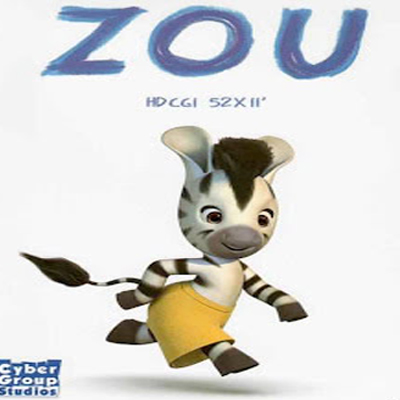
    MUMBAI: ZeeQ, India’s first edutainment channel is all set to launch the animated seriesDinosaur Train and Zou in India. The channel has acquired the Indian rights for these series which cater to the preschooler audiences.

    Dinosaur Train has been honored by the Parents’ Choice Silver Honor TV series award, which is a mark of acceptance by parents as a preferred choice for their toddlers’ TV viewing. The half-hour show features two animated episodes with a real paleontologist interacting with kids who love to explore the world around them. Dinosaur Train, the Emmy nominated series, starting today, will air every Monday to Thursday at 4:30 pm on ZeeQ.The second offering is Zou, a French hit animated preschool series, which follows the adventure of a lovable five-year-old Zebra. The show subtly touches every theme of early childhood and aims to inculcate family values in children. Zou has been broadcasted in more than 140 territories and in 24 different languages around the world. The series became a worldwide success within a year of its telecast in the UK. Starting 28 August, Zou will air every Wednesday and Thursday at 2:00 pm on ZeeQ.

    With the launch of Dinosaur Train and Zou, ZeeQ aims at strengthening its preschooler program portfolio. Some of the other well-known preschooler animated series that air on ZeeQ are from the CBeebies brand namely Teletubbies, Charlie and Lola and 3rd & Bird.
    Commenting on the development, ZeeQ business head Subhadarshi Tripathy says, “ZeeQ has been working towards bringing in content that is in the best interest of children and their parents. Both the series provide clean and safe content for preschool children. While Dinosaur Train helps in building scientific thinking through the content of the show, Zou aims to inculcate lessons about growing up and family values. Such educative series help in early childhood brain development and instill moral values at their tender age.”

    ZeeQ caters to the 0-14 year age segment. The channel currently airs a mix of live-action and animated shows. Some of its prominent shows include Teenovation, Science with BrainCafé, Word Match and M.I. Four – The Multiple Intelligence Quiz.

  • ZeeQ acquires rights of Amar Chitra Katha

    MUMBAI: Edutainment channel ZeeQ has acquired 26 episodes of Amar Chitra Katha (ACK) from Ideas Box Entertainment, an independent subsidiary of Amar Chitra Katha.

    ACKs episodes capture the Indian heroes from the comics of Amar Chitra Katha and create a first-of-its-kind comic format which is fresh and interesting. This program will help children develop values and harbour integrity in edutainment way.

    To name a few, the bouquet of 26 episodes on ZeeQ will consist of Birbal the wise, Ashoka, Prithviraj Chauhan, Chanakya, Shivaji, Vivekanand, Subhash Chandra Bose, Bhagat Singh, Mother Teresa and the likes. Every episode will explore two heroes and Itihaas, the voice of history, will tell the tale.

    ZeeQ Business Head Subhadarshi Tripathy says, “ZeeQ has acquired this property of ACK from Ideas Box for three years. ZeeQ had planned to bring the class room lessons of history in engaging animated format on small screen and ACK is the first step in that direction.”

    Created by Anant Pai, Amar Chitra Katha is available in 20 Indian languages and is one of the largest selling book series. In a comic book format, it has captured the great Indian epics, mythology, history, folklore, and fables.

  • ‘Food chnnls have tremendous potential to grow’ : FoodFood COO Karthik Lakshminarayan

    ‘Food chnnls have tremendous potential to grow’ : FoodFood COO Karthik Lakshminarayan

    FoodFood, one of the three recently launched food specialty channels in India, is completing six months on 24 July. With Sanjeev Kapoor and Astro as promoters and Madhuri Dixit as the lifestyle promoter, the channel took up the challenge of growing a new genre in India.


    Indiantelevision.com‘s Gaurav Laghate caught up with FoodFood COO Karthik Lakshminarayan to talk about the plans ahead and the journey so far.


    Excerpts:

    FoodFood is completing six months of operations. Has it been a bumpy or a smooth ride for a channel that is exploring a new genre in India?
    We are on track as per our business plan. We launched in January and as we are completing our first phase, we are seeing a healthy growth in terms of ratings as well as revenues.


    Being a speciality channel in Hindi, our connectivity in the Hindi speaking markets is approximately 60 per cent, which is quite good. Also if you see our reach, we have a 5.7 per cent reach in C&S households, while in the core TG of Female 25+ Sec ABC, our reach is almost 9 per cent.

    Isn‘t the ratings too narrow at this stage?
    Our reach is growing and in the core TG we are in the 8-12 GRPs (gross rating points) band. We are more than double of the competition (Zee Khana Khazana and Food First) in terms of ratings as well as time spent on the channel. Our weekly average time spent is over 30 minutes per user, which is extremely healthy.


    So, you see, there is no immediate competition. However, having said that, we do feel there is more potential for the genre to grow. But there is no benchmark as such. If you see the US market, the food channels are doing really well, and we see similar potential here also.

    So are you planning to take the channel overseas?
    There are definitely plans to take the channel to the international markets. We have already signed carriage deals in the Middle East and will launch FoodFood there soon. We are a Hindi food channel and will cater mainly to the Indian diaspora.

    FoodFood seems to be the only channel in this genre that is spending on distribution. How big is your carriage payout?
    I do not call it spend. It is an investment me make for distributing the channel. And as far as our position on the cable platform is concerned, we try to get in the Hyper-band and we are also available on S-band in certain markets.


    The industry is very dynamic and one has to always fight for the right band.


    Having said that, we are now entering into the second phase of growth. We will step up our investments in distribution, marketing and content.

    We are now entering into the second phase of growth. We will step up our investments in distribution, marketing and content.

    And in content?
    When we launched the channel, the buzz generated by Bollywood actress Madhuri Dixit (lifestyle ambassador of the channel), and Sanjeev Kapoor (promoter, celebrity chef) took us to a certain level. Now with our programming, we are going to cash on it.


    Very soon, you will see the launch of our biggest reality show – Maha Challenge which will have both Dixit and Kapoor and their teams of women and men battling it out to answer who is the better cook – men or women. It is a battle of sexes in its true sense. The 13-part series is being produced by Fremantle India. We will launch it in September and you will see Dixit for the first time in this role on television.


    We will also launch another reality show Secret Recipes in which people will come with their recipes and will cook with Kapoor.

    How many advertisers do you have on board now?
    We have over a dozen advertisers right now including Amul and Samsung. Most of them are either kitchen appliances or food related clients, who get perfect exposure on FoodFood.


    And all these get integrated seamlessly in the shows that we air. We do not want to clutter our shows with advertisements at this time and we have only 4-5 minute ads in the half-hour slots.

  • BBC announces religious programming this Easter

    MUMBAI: BBC has announced that this Easter BBC Religion and Ethics reflects on the life and legacy of Jesus through major documentaries, sacred music, readings and live worship.

    BBC One will broadcast The Royal Maundy Service on 21 April live from Westminster Abbey, presented by Huw Edwards. The service coincides with Her Majesty Queen Elizabeth II‘s 85th birthday, the first time this has happened during her reign.

    The service will see some of Her Majesty‘s subjects receive the gift of Maundy money as recognition of the work they have done in their communities. Music during the service will include Praise To The Holiest In The Heights, Give Almes Of Thy Goods and Handel‘s Zadok The Priest.

    For Holy Week, BBC One presents a special documentary does Does Christianity Have A Future? Ann Widdecombe looks at the changing face of Christianity in the UK and asks if there is still a role for an established church.

    Also during Holy Week, BBC One will broadcast The Story Of Jesus, a two-part series that explores the life and teaching of Jesus, using the very latest archaeological, historical and theological research with dramatic reconstructions of key moments in the Gospels.

    The Story Of Jesus is a co-production for BBC One between CTVC and Big Book Media.

    On BBC Radio 3, Joan Bakewell explores the beliefs of artists, thinkers, religious leaders and other public figures in a returning series of Belief, broadcast Monday to Friday during Holy Week. Guests for the week are: comedian Omid Djalili, philosopher Raymond Tallis, novelist Salley Vickers, composer Tarik O‘ Rega, and American theologian Stanley Hauerwas.

    To mark Good Friday, BBC One presents What Is The Point In Forgiveness? Historian Bettany Hughes explores the notion of forgiveness throughout history. Bettany undertakes a journey through more than 2,000 years to find out whether and how forgiveness has benefited humankind.

    Just after 3 pm, as Christians mark the hour of Christ‘s suffering in words of prayer, readings and music, BBC Radio 4 presents Good Friday Liturgy. Professor Tina Beattie, Director of the Digby Stuart Research Centre for Catholic Studies at Roehampton University, visits Jerusalem and what may have been the actual places of trial, suffering and resurrection in the story of Christ‘s Passion.

    On BBC Radio 2, Aled Jones presents At The Foot Of The Cross. St Albans Cathedral is the glorious setting for meditation in words and music for Good Friday. Music, poetry and readings from the Bible read by Hugh Bonneville and Emma Fielding tell the story of the crucifixion with, at its centre, a complete performance of Fauré‘s Requiem.

    On the Saturday of Holy Week (Easter Eve), Radio 4 provides an early start to the day with spiritual comment and prayer on Prayer For The Day with the Bishop of London, the Rt Rev Richard Chartres.

    And in The Lamentations Of Jeremiah, on Radio 3, Catherine Bott looks at the poems in the Book Of Jeremiah and considers what inspired so many composers to set these dark texts to music. Music features includes pieces by Brumel, Heinichen, Durante, Byrd, Tallis, White, Palestrina, Lassus, Victoria and Zelenka.

    Choruses and hymns will also reflect the emotions and power of the gospel later on Easter Eve, with the welcome return on BBC Two of Easter From King‘s which tells, in words and music, the story of the last days of the earthly life of Jesus and his resurrection. Music sung by the world-famous Chapel choir, directed by Stephen Cleobury, includes Lotti‘s Crucifixus, pieces from Handel‘s Messiah and Mozart‘s Ave Verum Corpus.

    On Easter Morning, worship on the BBC begins in the Sunrise Service on Radio 4. The Dean of Liverpool Cathedral Metropolitan Cathedral Canon Anthony O‘Brien presents a service for the beginning of Easter Day. Joyful Easter carols include: Ye Sons And Daughters, Walking In A Garden, I Know That My Redeemer Lives and Thine Be The Glory.

    Sunday Worship, Easter Day, also on Radio 4, will come live from St George‘s Chapel Windsor Castle. The joy of Easter is celebrated in a communion service from the Book Of Common Prayer, live from St George‘s Chapel, Windsor Castle. Hymns include Jesus Christ Is Risen Today, This Joyful Eastertide, and Thine Be The glory. The Preacher and celebrant: The Revd Dr Hueston Finlay.

    BBC One will show live Easter Day Eucharist from Salisbury Cathedral. The service will be introduced by the Dean of Salisbury, the Very Rev. June Osborne, who will also preach and the President is the Rt Rev. Dr Christopher Herbert. The programme opens with the lighting of the Paschal Candle, symbolising the Light of Christ, which will be lit from a bonfire outside the Cathedral just before dawn on Easter morning.

    BBC One will also transmit Pope Benedict XVI‘s traditional Easter message and blessing Urbi Et Orbi, “to the city and the world”.

    Songs Of Praise on BBC One celebrates Easter Day with traditional hymns from Wesley Memorial Church in Oxford, plus songs from tenor Wynne Evans and mezzo-soprano Melanie Marshall. Actors Bill Paterson and Tamsin Greig read the Easter Story from the King James Bible.
  • ‘We deliver natural history with a powerful brand at a global level’ : National Geographic Wild senior VP, Development Janet Han Vissering

    ‘We deliver natural history with a powerful brand at a global level’ : National Geographic Wild senior VP, Development Janet Han Vissering

    A new entrant in the infotainment space, Nat Geo Wild launched in India last year to cater to the need for high quality wild life and natural history content.


    The channel, which is on two DTH platforms, is looking to push distribution with a clear focus on digital. It is also doing an India specific show called Wild India which goes on air next year.


    National Geographic Wild senior VP, Development Janet Han Vissering is responsible for commissioning over 250 hours of original programming per year for broadcast in 166 countries, 330 million homes and 34 languages worldwide.


    Vissering manages a team to source and develop all original programming for Nat Geo Wild. Previously she was SVP of Strategic Development and Co-finance for seven years. As part of Development, she has been responsible for developing key programmes such as Engineering Connections, Big Bigger Biggest and Animal Autopsy among other highly rated shows.


    Prior to acquiring her current position, Vissering served as vice president of International Acquisitions at NGCI from August 1998 to March 2000. She joined NGCI from Discovery Networks International, where she was Head of Program Acquisitions and Development from 1995 to 1998.


    In an interview with Indiantelevision.com‘s Ashwin Pinto, Vissering talks about the challenges of creating unique content in an increasingly competitive television environment.


    Excerpts:

    What challenges do you face as a content production executive with more lifestyle and entertainment channels launching?
    It is the same challenge in India as it is around the world. The expansion of technology and bandwidth is allowing more channels to live together.

    How do you make programming different?
    My job is made easier as we deliver a channel that serves an audience that is begging for animals and natural history. They want family friendly content.


    We deliver natural history with a powerful brand at a global level. That is how we differentiate ourselves. At NGC we deliver by expanding genres like science, adventure, history and exploration.

    In terms of how Nat Geo Wild is programmed and scheduled, is there a difference between India and other countries like Singapore and Malaysia?
    It is independent. It is scheduled differently. We do shows to the viewers‘ choice which are relevant. People in Hong Kong love fish based shows. Here shows on snakes and big cats do really well. People are used to seeing these animals. Indians empathise with shows featuring these animals better. It is easier to identify with Wild even if it is not India specific. The flagship is harder as there are more genres.


    We have different genres of wildlife film. We leave it to our regions as to how they schedule to conform to the local needs.

    For Nat Geo Wild, what have been the learnings from NGC?
    You learn logistical things. We also learned the priority of customisation. We know what animals have rated better in each region. We know what animals do not rate. It was a great way for Nat Geo Wild to dip its toes into the water to find out what works and what does not. This is not just from a content basis but also from a logistical point of view. We know what the lead time is in terms of scheduling shoots.

    What response has Nat Geo Wild received in India and globally since launch?
    We are number one in our genre in Hong Kong, Singapore and Malaysia. We also had record ratings in the UK last week. We are a successful young network. In India we are on two DTH platforms – Dish TV and Tata Sky. Our focus is on digital. It is still young days here.

    Nat Geo Wild is programmed & scheduled differently. In India, shows on snakes & big cats do really well. People in Hong Kong, on the other hand, love fish based shows

    What is its USP vis-a-vis other channels and shows dedicated to animals and wildlife?
    We have a foundation of scientific, factual research. No other network offers this perspective. Being part of Nat Geo offers us access to many places that other filmmakers do not gain access to. I think that also we feature scientists that are a part of the National geographic Explorer base. Heinrich Sala is a marine biologist and we are making a show on sharks that features his work. Access and scientific research are our USPs.


    We have the foundation of all our shows on factual research and science. We are the only network that has this guarantee. We are always about animals and the wild world. The main goal is to bring viewers closer to that natural world.

    Why didn‘t National Geographic launch a show for wildlife earlier?
    We launched the channel as wildlife is only one of many genres that National Geographic Channel has. Wildlife was a small part of their lineup but it consistently delivered ratings. We looked across the market and saw the channel that would meet viewer needs for high quality natural history content. This need was not being met. Viewers want programming that is safe that everybody in their family can watch. They want a channel that will always deliver high quality visuals, information and be a destination channel. We look at launching later as a benefit. We saw what was not there.

    Could you give me an overview of how the production process works at Nat Geo Wild?
    I work out of the DC office. As part of this, we have eight executives that reach out to over 300 production companies around the world. They work with outsourcing ideas. We also have a global website where anybody can actually submit their projects into. I on behalf of Wild meet with the National Geographic team to sift through the best ideas every two weeks. On a monthly basis, we have greenlight meeting with all departmental heads and the head of programming Jeff Daniel. This is where projects are greenlit and put into production.

    Before giving an idea the go ahead, what do you look for?
    I look for a myriad of things. I look for exclusivity. What is the USP? Why are we doing this show now and why are we using this filmmaker? There has to be great cinematic value. The market is competitive. There are a lot of options. I have to give a show that nobody can do anywhere else. This is key for me. Our shows are shot 100 per cent in HD.

    How much research goes into making a successful show like Engineering Connections on NGC?
    This is a show that I really pushed for. It involved a UK star Richard Hammond. He has passion for engineering. What we wanted to do was show all collections of how a guitar vibrating in a room can relate to an oil platform. The show builds a bridge between different subject matters. It took over a year to do. We picked ideas which were iconic like a Formula One vehicle but had really good connection an odd connection. A+B has to equal C.


    Every step of production including the music was important to me. Hammond was immersive. We had to make sure that he was okay in doing stunts. There was one moment where he was strung up on a bridge and he was scared. That made great television.

    Could you talk about the upcoming ‘Wild India‘ series on Nat Geo Wild?
    This goes on air early next year. This will be a three hour special. It is a coffee table celebration of India and its wildlife. We felt that there hadn‘t been a really good natural history series on India for ten years. The last good show was Land Of The Tiger that the BBC has made. Things have moved on since then. A whole new young audience is interested in India‘s natural history. The technology has also moved on.


    We have more interesting camera techniques to capture intimate animal behaviour. We have HD cameras, night film cameras, infra red and thermal cameras. We can, thus, film in the night. We want people to experience a much more personal wildlife.

    Did the economic downturn put pressure on budgeting?
    The global economic situation has made everyone think twice. But we continue to do projects. I scrutinise every penny more. It is up to us and the filmmakers to make sure that the investment being made is sound. So we rely on reliable production companies like Icon Films. The production team on Wild India is largely Indian. The crew is from Tamil Nadu, Karnataka and Gujarat. So cameramen can be on the field for longer. We do not have long haul flights to pay for. We can be more responsive.


    You have to respond to the natural environment. This is a homegrown product which is important. With any film whether it is from Russia, Asia, Japan or Scandinavia, I want to make sure that filmmakers can get access and give viewers the feeling of being right there next to the environment.

    What have been the learnings from localisation in terms of what works and what does not globally?
    I am in a lucky position that wildlife has few cultural barriers. Everyone loves tigers, big cats, snakes. There are few cultural issues I have to worry about.
    Is it a collaborative effort working with production companies?
    Yes! We always have one of our Nat Geo Wild or NGC executive producers who is working in partnership with an executive producer from the production company side by side all the way through the film. We have an internal production group from National Geographic television that make shows with us often featuring our own scientists.

    How long does it take for a show to be made?
    It depends. Wild India will take a year to make. They will shoot in March and April. It takes at least six months but most shows take nine months. We can do a quick turnaround on a topical subject matter, though. When the Gulf oil spill happened in the US, we did a show within four weeks of that accident.


    But natural history does not work on human timelines. We have to work hand in hand with Mother Nature. A tiger will show up when it wants to. Animals are unpredictable. If they were predictable, my life would be easier bur probably less exciting. It is the moment of capturing that bit of footage that makes it worthwhile. To give you an idea of how challenging making wildlife content can be, on Wild Mississippi the temperature was minus 30 degrees Fahrenheit. We had to use urine to prevent the camera from freezing.

    What are the trends we are seeing in environmental and wildlife film making?
    Having a first point of view, less narration and giving the impression that people are there next to the cameraman is very important now. Less is more. Beautiful cinematic images are important. Having characters that can deliver adventure and the journey of exposition in a very visceral way is also important. People want to be vowed.
    What role is HD playing in boosting the documentary genre?
    Each show is on HD. This is a non negotiable discussion with any show going on air. This is a must before we commission anything. From a visual aspect it is different and an enhancement from Standard Definition. When you watch Wild India, you will feel that you are flying on a plane over India on your own. On Standard Definition images are cloudy. It is like looking through muddy waters. On HD you get the true essence of where you are. You can almost smell where you are. We will deliver 100 hours of premiere HD content every year.
    Balancing traditional story telling techniques with technical innovation is key for the success of factual content. How does NGC manage this?
    We have the ability to film wildlife in HD at night. This gives you the perspective of three cameras that allow you to see how animals work at night.
    What other recent commissions have been done?
    Following Wild India we also have Wild Mississippi, Secret Brazil. These are three part specials like Wild India. That will celebrate the journey into natural areas. We also have hosted shows that are young and contemporary. We will have a show featuring a heli cowboy in Australia. At the end of the year we have our annual Big Cat Week to bring awareness about conservation. We will have shows on the Jaguar, American Cougar and the Indian Cloud Leopard.
    How does NGC use new media platforms like YouTube to leverage its brand?
    We have our site, links and blogs. This is additional information for viewers. We will expand on this as our network grows. As we send filmmakers to exotic places, we will look for conversations on Twitter and other media.
    Are you looking at long term projects?
    Absolutely. We are still in negotiations though. We are also a young network.