Category: Specialised and Niche

  • Q2-2014: ZMCL holds ground despite economic downturn

    BENGALURU: Zee Media Corporation Limited (ZMCL) unaudited results for Q2-2014 reveal that though advertising revenue for Q2-2014 at Rs 59.92 crore showed a growth of 20.5 per cent as compared to the Rs 43.92 crore for Q2-2013, it kept pace with the Rs 59.9 crore for the immediate preceding quarter (Q1-2014). ZMCL’s advertising revenue in Q4-2013 was Rs 52.19 crore.

    “The economy may have sputtered a bit but it is expected to be on track soon. What is important is that we continue to base our strategy on a sound understanding of our consumers and provide them with relevant and unique content experiences in the news domain,” said ZMCL non executive chairman of the board Subash Chandra.

    Let us take a look at ZMCL’s other Q2-2014 figures

    Operating revenue for Q2-2014 grew by 18.5 per cent to Rs 83.02 crore from Rs 70.03 crore in Q2-2013 and by 6.9 per cent from the Rs 77.68 crore reported in Q1-2014 (immediate preceding quarter).

    ZMCL’s subscription revenue for Q2-2014 at Rs 24.9 crore grew by 11.9 per cent y-o-y from the Rs 22.26 crore in Q2-2013, and by 18.6 per cent from the Rs 18.6 crore in Q1-2014. Revenue from Other Sales and Services for Q2-2014 at Rs 5.2 crore grew more than a third (35.1 per cent) as compared to the Rs 3.85 crore in Q2-2013 and by 37.6 per cent as compared to the Rs 3.78 crore in Q1-2014.

    Total expense at Rs 75.54 crore for Q2-2014 was 21.5 per cent more than the Rs 62.17 crore for Q2-2013 and 10.5 per cent more than the Rs 68.37 crore in Q1-2014.https://mail.google.com/mail/u/0/images/cleardot.gif

    ZMCL’s recorded a fall in PBT of (-7.8 per cent) to Rs 6.47 crore in Q2-2014 from Rs 7.02 crore in Q2-2013. However PBT of Rs 14.99 crore for the half year ended 30 September 2013 was higher by 35.8 per cent as compared to the PBT of Rs 11.04 crore for the corresponding period of the previous year. Q2-2014 EBITDA also fell by (-4.8 per cent) to Rs 74.8 crore from Rs 78.6 crore reported in Q2-2013. However, ZMCL says that its existing news channels grew their EBITDA by 25.2 per cent on YTD basis at Rs 30.83 crore improving their EBITDA margins from 18.6 per cent to 21 per cent.

    Added Chandra, “Our company has embarked to consolidate our news media presence by bringing together our television, print and internet content under a single umbrella. This will enable us to reach out to our consumers in seamless and anytime, anywhere mode. Our commitment to grow larger in size, impact and shareholder value remains as is and we continue to take steps towards the same.”

    ZMCL group CEO news cluster Bhaskar Das said, “We launched Zee Rajasthan Plus in Rajasthan in early July and will soon launch in other regional markets. Furthermore with sustained push for cable digitisation, we expect more and more of our viewers to get associated with us. New media, which has been another focus area for us, has continued to show strong growth numbers.”

    ZMCL whole time director Alok Agarwal said, “Our network wide initiative Bharat Bhagya Vidhata has received tremendous feedback and social media engagement from the viewers, thinkers and the political fraternity alike by reaching a sum total of over 100 million television viewers cumulatively and having over 11.5 million reach for #BBV for the campaign. In addition we continue to leverage our network synergies to create further operational efficiencies in gathering and packaging our content and at the same time grow our revenues by providing creative sales solutions to our clients.”

  • IRF 2013: James Cridland: Indians love their radio II

    IRF 2013: James Cridland: Indians love their radio II

    This is the second part of the excerpts/summary of radio futurologist James Cridland’s session on “How People Are Listening to Radio in Today’s Multiplatform World – and what your station needs to do about it” at the recently concluded International Radio Festival 2013 in Zurich (IRF 2013) by The Indian Television Dot Com Pvt. Ltd. South India Head Tarachand Wanvari. You can read the first part here: IRF 2013: James Cridland: Indians love their radio.

    “In Norway, a little piece of research was done where a man called Gunnar listened to internet radio on a full battery charge of his exciting Android device. He got six hours 53 minutes worth of radio streaming on 3G through his mobile phone until his battery ran down. He used it for nothing else, just streaming and then you look at how much he got in terms of FM – he got 48 hours out of the same battery. FM on mobile is a pretty good thing as compared to radio on mobile phone internet on the same device,” opined Cridland.

    “My definition of radio is a live simulcast, Pandora is a not a radio station. My definition of approved mobile phones is that they are a little more than a transmitter-receiver which put the cord in touch with the personalised operator who dials up the number you want and then connects your remote radio extension with the rest of the telephone network.”

    Who is using mobile phones to tune in to radio?

    “In the UK, there is a growth of adult population from a little more than 10 per cent in 2010 to 20 per cent now. If you look at young people then it is considerably higher from about 30 per cent in 2010 to about 40 per cent. Radio on the mobile is definitely a young person’s thing and that’s good news for the future of radio because younger people are by and large tuning into less radio than they ever have. Over 50 per cent of the adults in the UK own smart phones and that number is similar for most other European countries.”

    “They are listening to FM mobile radio on their mobile phones by streaming. Back in 2010, 53 per cent of the listeners tuned into FM on their mobile phones, while 16 per cent ran a branded radio ad from a radio station. If only Apple would listen and included radio into its iPhones, there would be a lot more.”

    “There are discussions in the US about many mobile phones not having FM radio. Many of the US mobile cell operators don’t want to put FM radio into phones because they sell bandwidth and they think its competing. That is a perception that is changing there, partially because of the work that Next Radio has been doing. Now you find less and less mobile phone companies deliberately taking out the FM from phones. I don’t really understand why Apple has not put FM into the iPhone.  One story that I have heard is that Apple do not consider the user experience of FM on a mobile phone to be good enough.”

    Apple v/s Android

    “53 per cent of the mobile applications downloads are happening on the Apple iPhone and 31 per cent on Android devices because most of the Android devices are of poor quality and cheap. So people are not installing too many apps on their Android phones.”

    “In terms of usage in the US, they say that Apple and Android have very similar usage patterns, but Android delivers more users on the apps. Apple delivers more average time spent listening, almost twice the amount of time spent on listening.”

    “I talked to a few research companies about this and one of them said that probably because Apple phones are premium, and are likely to be in peoples’ pockets while they are at work and they are more likely to be at work in an office with Wifi. Androids, which are sometimes cheaper and might be used by construction workers or people who are not necessarily in the office and do not have as much access to Wifi.”

    Understanding the listening habits

    “UK listeners tune into radio for roughly three hours per day across all platforms.  I asked three different mobile phone app manufacturers how long people tune into the radio through their mobile phone? One came back and said 12 minutes 46 seconds. Another one came and said its between 12 and 16 minutes and the third one came back and said that it depends and could be anywhere between 14 to 45 minutes.”

    “But when you look at other research for example O2, one of the large mobile companies in the UK, they say that 15 minutes a day is spent listening to music.”

    “It is interesting to know what’s happening in the Indian market now, because it’s exploding with the amount of new commercial licenses, India has been relatively late in getting 3G as well, so what will that do in terms of consumption of media as a whole? India is very different in terms of culture of music and news and everything else.”

    “As I have said earlier, radio has a future in India because 94 per cent of the listeners in Mumbai who tune into radio do on a mobile phone; only 16 per cent is on radio receiver. By the way all of this is FM, and it’s a really very amazing thing.”

    “Absolute Radio published figures for July 2013- they have 232,000 active users that use 1,040,000 app sessions per month which means that people are using their mobile phone apps once a week, which probably means 15 minutes a week. Now, we listen to 23 hours of radio a week and 15 minutes of that is through a mobile device and it could be potentially quite expensive for people as well in terms of data and bandwidth. In the UK, 26 TB of radio a month is steamed over mobile.”

    Where are people tuning in on mobile phone?

    “In Germany they call the mobile phone ‘Handy’, I think that’s a brilliant name. In the UK, the European Union and Australia, 70-75 per cent of the listening requests are on Wifi of which 25 per cent is over 3G. That shows where people are actually tuning in.”

    When to advertise Mobile Apps?

    “If you want to know when to advertise your apps – advertise them at the end of the week because most people will install them on a Sunday when they have the time to do that.”  “Here is some research -What do people do with their mobile phones? The first thing that they do is to change the background.  Secondly is click on sponsors and ads, which is really surprising.”

    Here are a few takeaways that I have:

    (1)    The majority of app users are not ‘mobile’ but on Wifi at home or at work.

    (2)    Usage is similar to a spare radio when you don’t have anything better – not a replacement to a radio receiver.

    (3)    Apps may increase audience recall of your brand (because of app on home screen) but unlikely to have a massive effect on audience figures right now. Having your radio station logo is going to do very good things to your audience figures.

    (4)    Advertising on them appears to work; but it simply hides the app. Time to add more to your app than just audio? I think you can earn quite significantly from that.

    (5)     Consumers want FM (and HD and DAB+) chips on their phones because that will save them battery life, save them bandwidth and a variety of other things.
    “Even if we get all this stuff, you also have to remember content, because without the content, we won’t make our audiences smile,” concluded Cridland.

  • Vogue celebrates six years in India with Frieda Pinto

    Vogue celebrates six years in India with Frieda Pinto

    MUMBAI: Vogue India completes six years in India this October, marking the milestone with a special issue dedicated to the infinite magic of black.
    The anniversary issue has actress Freida Pinto as the cover girl, playing the perfect muse to the theme.

    The magazine shares adventures of interesting personalities that start their work shift post 6:00 pm in ‘Midnights children’. ‘A study in black’ has the world’s most renowned designers share their love for black. Other than the ode to black in fashion, celebrities throw light on must-see hangouts in popular cities for the story, ‘Bright lights big city’. The anniversary issue also features a list of 50 selected scary movies and books over time for enthused readers.

    Vogue launched in India in 2007 as the country’s ultimate fashion bible, helmed by editor Priya Tanna. The magazine has grown from strength to strength over the years and the success story is evident by the increase in print run from 50,000 to 60,000 copies.

    Speaking on spearheading Vogue in India over the last six years, Priya Tanna said, “The last six years have been enthralling, inspiring and gratifying. Launching Vogue in India has been a journey that’s nothing short of incredible. We have evolved from amagazine to a multi-media brand through the years and even in our new avatar we endeavour to curate the best of Indian and international fashion for our readers. I am particularly excited about this Anniversary issue- our tribute to black. In the past we’ve surveyed many themes, but never one that has elicited as varied a range of interpretations, discussions and opinions as this one. From dark to decadent and from mysterious to magical, the issue celebrates fashions most ubiquitous hue.”

    Vogue India’s foray in the digital space took place with the launch of vogue.in in 2010, offering its readers the best in fashion and lifestyle in the virtual world at their fingertips. The launch of mobile applications like Vogue 365 and Vogue Stylist further enhanced the magazine’s digital footprint. The digital edition is available on Magzter, Zinio and Readwhere.

    The magazine’s Twitter and Facebook pages are equally popular with almost 66k followers and about 45k likes respectively to date.

  • Essel plans to raise $500 mn to fund growth of its companies: Bloomberg

    NEW DELHI: Media baron Subhash Chandra’s Essel Group is understood to be seeking to raise as much as $500 million to fund expansion and pay debt at some of its companies.

    The group may use the funds for DTH service provider Dish TV India Ltd, multi-system operator (MSO) Siti Cable Network Ltd. and schools operator Zee Learn Ltd, according to sources quoted by Bloomberg.

    Essel joins Indian media companies including Network 18 Group and Living Media India Pvt. in seeking capital. It is understood that Essel has approached private equity firms for this purpose.

    Dish TV, India’s biggest provider of DTH services, and Siti Cable are expanding as the nation makes digital television services mandatory. Advertisement and subscription revenue is forecast by G2Mi Research to increase 87 per cent by 2015.

    “There is a heightened interest among investors in two media segments, broadcaster and cable companies, owing to a structural change that’s anticipated in the country through digitization,” Vivekanand Subbaraman, an analyst at MF Global Sify Securities India in Mumbai, told Bloomberg.

    Essel is not in “active dialogue” with buyout firms, said Himanshu Mody, group head for finance and strategy, in an interview to Bloomberg. “We from time to time keep raising expansion capital for various entities within the group.”

    According to the report, the money raised will not be used for Zee Entertainment Enterprises Ltd., Essel’s largest publicly traded unit. With a market capitalisation of 164.3 billion rupees ($3 billion), Zee Entertainment had 3.3 billion rupees in cash at the end of March, data compiled by Bloomberg showed.

    Apart from its television business, Essel manages firms that build roads, runs a newspaper and makes packaging for toothpaste and food companies.

    Dish TV had total debt of 12.1 billion rupees as of March 31 and Siti Cable, which sells cable services to about 10 million households in India, had 3.5 billion rupees of debt at the time, data compiled by Bloomberg show.

    Siti Cable plans to raise Rs 3.2 billion selling warrants convertible into equity to its owners including Essel.

  • “Regional channels with food shows are our competitors”

    “Regional channels with food shows are our competitors”

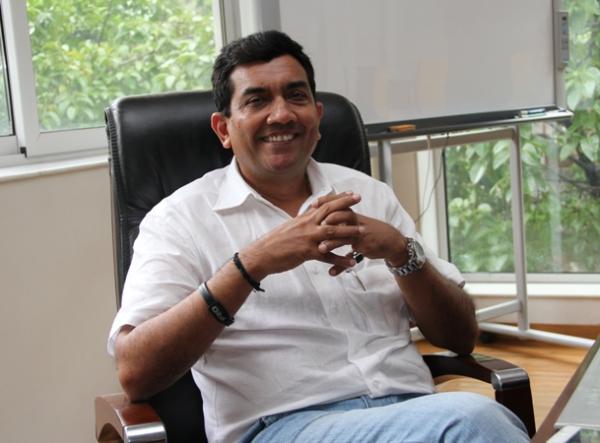
    He‘s belied the oft-stated misconception that cooks don‘t make great businessmen. And he is someone who feels fortunate enough to have done things he really likes doing. His contended smile describes his success. Well-known celebrity chef Sanjeev Kapoor (remember Khana Khazana?) today has moved from being a famous cooking show host to an entrepreneur and director of India‘s first homegrown food related channel FoodFood.

    But the good looking Sanjeev Kapoor, who sees opportunities where others see challenges, dismisses his achievement by saying: “I feel I am still in the kitchen and this is my favourite part.”

    In a conversation with Indiantelevision.com‘s Seema Singh, Kapoor speaks his heart out on his journey which started from people laughing at his dreams for a food channel to earning their respect today as an entrepreneur who is building a solid business. Excerpts: 

    How did Turmeric Vision (TVPL), Astro All Asia Networks (Astro) and Sandeep Goyal‘s Mogae Groupa come together to start the channel Food Food? How has the association been?

    The first thought of doing a 24-hour channel on food came to me in 2003. But I was not sure I could do it on my own. And hence, I started pitching the idea to others. People thought I was mad. They thought how can a category, which is a half hour afternoon slot, become a full time channel.

    When I initiated the talks, I didn‘t think that I could start a channel. There were channels in all genres, so why not have a 24 hour food channel? But I had decided I would do this with someone else. Sadly, no one thought of it as being an opportunity.I chatted with Scripps Network‘s Food Network internationally, but they were not interested. I also approached the BBC, which already was already airing lots of food programming. It did show some interest in the beginning, but after the meeting was fixed in London, BBC cancelled.

    It was then that I decided that I would start the channel on my own. It was out of sheer anger. I thought this was something I really wanted to do and so started thinking, working on and understanding it. At that time, the then Sony Entertainment Television CEO Kunal Dasgupta, was someone who understood what I was envisioning and thought that food as a category will grow, which was very encouraging.

    In 2006, I set up TVPL. I applied to ministry of information & broadcasting for an uplinking licence and started building the channel. At around this time I met up and discussed my plans with Sandeep Goyal who was then the CEO of Zee TV. Being a foodie himself, he was in sync with my thoughts. It was he who suggested the name of Astro Networks as a possible partner for this venture. Sandeep also joined us as a notional partner.

    I had lost about three years in between ideating and finally setting up the company and the channel. I lost ; one because of the unfavourable market scenario from 2007 to 2009 and secondly because we were in active discussion with several media groups in India which didn‘t work out.

    But when we launched it, it was at the right time!

    Who is your core target audience? How have you been able to redefine the food content in India? Do you programme the channel based on the time of the day?

    Most people would imagine food content being more women-centric. But, times have changed, and now one can see more men walking in even in a category like food, especially in the evening slot. We are also attracting a lot of younger audiences. When we started, our core target audience (TG) was women 35-years and above. We have been able to bring that down to about 25 years and our TG will continue to get younger.

    In terms of cities, the channel is available in all the HSMs (Hindi speaking markets). North, of course is big in terms of numbers for us. Maharashtra, Gujarat and other bigger cities also have great traction. Most of our numbers comes from the metros, Delhi and Mumbai being the greatest contributors.

    Ours was the first HD ready channel, with all content being HD ready since the channel‘s inception. This helped us add good quality households from the top cities to our viewership. Our presence on Tata Sky, Airtel and Videocon has also helped us reach good quality homes.

    It was when I first started doing TV that people started understanding the meaning of food content. With Food Food, people expect good quality content not just boring shows. Our content concentrates on the core Indian market, with our content being 100 per cent relevant to the Indian ethos.

    We have been able to set trends for shows on other channels. They through us understand what is accepted in India. We do not only concentrate on adding numbers to our viewership, but we see it as our responsibility to define the direction of food in Indian. We now have a lot more healthy wholesome content.

    As for the programming, the early morning slot is more vegetarian, the afternoon slot focuses on learning, but not boring learning. As we move to early evening, it‘s more of Bollywood and games. And evening and late evenings we have lifestyle. We keep trying and testing with our content.

    If you are a leader, you have to learn, define and teach your viewers what to watch as per the time.

    How does the channel conduct its research?

    Food Food is a specialty channel. We work with research agencies for qualitative and quantitative research. Also we are constantly in touch with our viewers through various viewers connect events. We do close to 90 events, which gives us a fair idea of what people want and what we should do or not do.


    I would say the regional channels, which have started building loyalty on food programmes are some of our closest competitors. The lavish and expensive cooking reality shows on the general entertainment channels are no competition for us; in fact they help us in building a category.

    What is your reach internationally?

    We are currently available in the Gulf and Canada. We are also in the process of finalising our reach in US. We are looking at other markets internationally through Jadoo boxes. We are working on opening up to more markets.

    Who are your competitors? How do you look at handling them?

    I would say the regional channels, which have started building loyalty on food programmes, are some of our closest competitors. The lavish and expensive cooking reality shows on the general entertainment channels are no competition for us; in fact they help us in building a category.

    We are by far the number one lifestyle channel in the country. We don‘t have to worry about competitions. Most channels are in fact following us. As long as this trend continues, we are happy. But naturally, we keep a watch on what is happening and ensuring that we stay ahead.

    What are the shows that are being aired on the channel currently? Any plans of launching a new one soon?

    Currently Food Food has shows like Soki, Tea Time, Health Maange More, Style Chef, Mummy ka Magic and several health-based shows. We keep doing new seasons of our popular shows.The How to Cook series, Sanjeev Kapoor‘s Kitchen and Maa ki Daal are big hits. We are continuously looking at new concepts for our shows. We do have plans for some exciting new ones. What is good is that even today the early shows, which were launched when the channel was, still interest viewers and advertisers.

    The big challenge is when you have popular shows how do you bring in new shows! For example, if the IPL is a hit and excites and engages audiences, you don‘t shut it down; you come with several seasons of the format. Same is the case with us.

    What are the mediums you use for reaching out to audiences? Do you invest in digital as well? How much is your ad spent?

    Marketing and other promotional activities not only to create a recall but also build a bond. One of the good things we have seen for Food Food is that the average time spent by viewers is very high. We want to ensure that people who walk into the channel stay longer, along with getting newer sets of viewers.

    We work in two areas; firstly we market ourselves to the viewers and then to advertisers. You are as good as your shows and numbers are important.

    For our initial marketing campaign, we roped in Madhuri Dixit as the channel‘s brand ambassador. This was to create the buzz. Now most of the marketing is done through our shows.

    We use all mediums like outdoor, print, digital, radio and television, but the key marketing tool for us is on-ground activities. Plus we also work as partners with different brands and also with communities such as chefs and hotels.

    Our website www.foodfood.com is very active. Our interaction with viewers on Facebook and Twitter is very helpful. We have started a Food Food channel on Youtube. We are also working on an app for the channel. Digital reach is important and we are constantly working towards making it useful for different sets of generations. Youngsters are glued to our telecasts, so we focus on what will attract them.

    Our marketing budget is as high as 20 per cent of our total budget. But I would say, we give a lot of weightage to consumer connect programmes.

    How large is the food show genre? Does it get enough traction?

    If we look at the GECs, the total contribution to the kitty is significant, and this significance can be translated into something which can have four to five channels. So we understand the consumption pattern, but not all may come in a focused way. At times the usage is too scattered, and that is the case right now.

    But whenever there is maturity in the market, there is consolidation and now we are beginning to see that. If you have a heart problem you will not go to a general physician, but to a heart specialist.

    This is going to happen in media too. Currently advertisers are going to everyone. They just look at the number of viewers, no matter what quality.

    This is not the way it works in mature markets. This maturity is coming into agencies, viewers and brands. Initially there were no solutions, but solutions are there now. Digital has been able to show that solution. TV was more in the air. Whatever agencies said was being accepted. Advertisers never delved into how people were reacting. Consumption was not being tracked. But, now it is beginning to happen. In the next few years, more specialty channels will come in and they will benefit.

    Is there enough bandwidth amongst audiences for so many food shows? What is the channel‘s GRP?

    India in some sense has three religions: Bollywood, cricket and food. If we want to entertain ourselves we use these three. While Bollywood and cricket is well represented on TV, food is under-served. Slowly we are getting to see entertainment with food, and this will only grow.

    There is 100 per cent bandwidth for a specialty channel like Food Food. We have to just understand viewers‘ needs and then we have to translate that demand and see if this is pan India. If the show is executed well, it is consumed easily.

    We continuously stay at around 10 GRPs. Delhi and Mumbai gives us the maximum numbers.

    It is a food channel with all shows on food, so then how do you decide on the content? What is the difference in the theme of each show? With three partners, how do you come to a consensus on the content of the channel?

    This is our full time job. We constantly keep our ears to the ground. People always tell you what they want, and I realised it when I was writing my book. We are just serving a need. It is a fairly simple task. Just listen to people. We are currently at a stage where we have to just listen and react.

    We continuously have our executive committee and board meetings. The team presents ideas and concepts to the executive committee and they approve or disapprove. It is how you live in a house, you have different members and yet you stay together. We may have our individual preferences, but what finally goes out on TV is something is that the family wants.

    Is it difficult to sustain a channel based only on food?

    If cooking is inherent or food is inherent to Indians, then for a channel like Food Food there is no question of survival. People will consume what they can relate to. And when it comes to us Indians, we can relate to food, made in our style. And this is what Food Food is all about. And so we are the highest rated.

    Even news channels are coming up with food shows, how do you cope with this competition?

    Naturally, when there is something on food which takes away from us, it is a problem, but, if it helps us its good. Larger shows are no competition. I see them as category builders. Smaller shows, if they can take away from us, can pose some competition, but I don‘t see that happening.

    For the shows on news channels, the core target is men and also the time slot is different, so they don‘t harm us. We see such shows as an opportunity that someone else has created for us.

    Do you want to foray into reality shows as well?

    We did a reality show before Master Chef. We had Maha Challenge with Madhuri Dixit. As and when the time is right, we will do reality shows. But I think the noise that one needs to create need not be through noisy shows. It can be done in a smart way. For instance a comedy show with Kapil Sharma gets more numbers than the bigger shows at one-sixth the cost of a big show. So my belief is that if we are able to get higher GRPs through smarter and smaller shows, we will go with that.

    GECs need to have bigger shows, so a show like Master Chef works perfectly on Star Plus. What is good is that the understanding of Food Food is being used by shows like Master Chef.There is increased understanding of what and how the food genre works.

    For us if it is about reality show it has to be something which is very real. Unfortunately in India, reality shows are associated with big budget shows. For Food Food, a reality show is about real people cooking every day not for only for 13 weeks. It may be a daily contest, which is conducted in six cities having six winners every day. This is bigger and more relevant for Food Food. We are constantly debating, and if you ask us if we will be doing reality shows, of course we will be.

    Will the 12 min ad-cap affect the advertisement in the channel? How will the channel deal with it? There are talks in the industry of increasing ad rates after the ad-cap is implemented? By how much will the ad rates go up? What is the current ad rate?

    It‘s something the whole industry is facing. If that has to be followed, the whole industry will follow. This means that someone will have to pay for it. If the broadcast industry has to pay, I don‘t think they can afford it. So either the viewers will pay or the brands will. As of now it is tricky and painful and hope there is some resolution.

    As I see it, there could be a 25 per cent increase in either the ad rate or subscription charges. Fortunately for us, it‘s not much of a problem because we are a new channel. In a new channel the inventory consumption doesn‘t start at 100 per cent utilisation; it builds over time. And we are in the process of building that. So the impact on us will be lower than those players whose inventory consumption may be 100 per cent.

    There were reports of the company breaking even in two years from its launch? How far have you reached as far as this objective is concerned?

    It‘s on track. Our understanding of the business is much deeper than what it was. So I don‘t see a reason for not achieving it.
  • Zee Learn raises $20 million through GDRs

    MUMBAI: It’s gone the global depository receipts (GDR) route. On 21 May, Essel Group education company Zee Learn Ltd, informed the stock exchanges that it had has raised $20 million (Rs 110 crore) through GDRs,

    The company said the GDR issue was fully subscribed and an allotment of 5.6 million GDRs at a price of $3.56 per GDR is to be made. Each GDR represents 10 underlying equity shares and the GDRs are to be listed on the Luxembourg Stock Exchange.

    Zee Learn runs India‘s largest chain of pre-schools under brand Kidzee with more than 900 centres in more than 330 cities. It also acts as a consultant to local entrepreneurs who wish to set up K-12 schools, under its brand name Mount Litera Zee Schools. It operates vocational education under Zee Institute of Media Arts (ZIMA) – a TV and film training institute and Zee Institute of Creative Art (ZICA) – a classical and digital animation training academy.

  • ZeeQ to present second edition of the World Children Expo

    MUMBAI: The second edition of ‘World Children Expo 2013’ (WCE) will be held in Gurgaon. The three day event will start from 17 May and go on till 19 May. The expo is conceptualised by Creative Children Media Pvt and presented by ZeeQ.

    WCE 2013 is a platform showcasing children centric consumer brands catering to kids up to 15 years. The carnival gives an opportunity to the kids and their families to meet popular cartoon characters like Doraemon and Chhota Bheem. The ZeeQ kid zone will have games like Balloon Maths, Puzzle games, Larger than Life Scrabble, English Wordmatch and Multiple Intelligence quiz.

    WCE 2013 has been divided into three parts: WCE – The Business Conclave, Kidzooka – India‘s first ever recognition awards for children centric brands on 17 May at the Crowne Plaza, Gurgaon; WCE – The KiddZone – A carnival like expo area for kids to be held over the weekend of May 18-19 (10 am- 7 pm) at The Island, Ambience Mall, Gurgaon.

    Creative Children Media and World Children Expo founder Rahul Gupta said, “WCE is now being acknowledged nation-wide as India‘s biggest and most formidable kids’ expo catering to the ecosystem of children and children centric brands. It is gratifying to see that our exhibitor brands range from top corporates to upcoming start-ups. The philosophy of WCE is essentially to be a platform for start-ups to launch and the top brands to expand their offerings and interact with children through one singular event.”
    ZeeQ business head Subhadarshi Tripathy said, “We are very happy to associate with WCE. WCE is one of the largest engagement platforms for kids in India. Kids being ZeeQ’s focus as well, this is an ideal for us to connect and engage with children and their parents and communicate how learning can be fun.”

    Interactive Entertainment Business Microsoft India business group head Anshu Mor added, “Microsoft is delighted to leverage the opportunity to showcase the upcoming technology it has to offer to children. Through the Interactive Entertainment Business which comprises the gaming console Xbox 360 with Kinect, Microsoft aims at establishing an environment of playful learning for children.”

    TNS Consult executive director Rima Gupta says, “India is one of the youngest countries and for us as marketers, understanding teenagers is very key. We are pleased to partner with WCE to develop and share a customized report on Indian teenager’s lives, hopes & attitudes. This will provide insights for both marketing and communicating with young ones.”

  • Colors associates with Lakme Fashion Week; to air the event from 1 April

    Mumbai: Colors has announced its association with India‘s premier fashion and trade event, Lakme Fashion Week (LFW).

    Titled ‘Lakme Fashion Week – Colors Ka Jashn‘, the channel will air the event from 1-5 April at the afternoon time-slot of 3 pm.

    Taking fashion to the viewers, this season of Lakme Fashion Week Summer/Resort 2013 will have artists from Colors‘ popular shows in a whole new designer avatar.

    The show will be hosted by Rohit Roy.

    Presenting a blend of style and drama a la Colors style, the channel will showcase all the behind the scenes action from the fashion week in a half an hour special episode. Colors‘ artists like Shamim Manan (Bhoomi), Gaurav Chopra (Rathore), newcomers in the Colors family such as Shefali Sharma (Gurbani), Toral Rashputra (Anandi) and Aakansha Singh (Megha) will be seen in a new avatar as they prepare to charm the audiences.

    This special association will see Colors‘ artists interacting with the top notch designers of the country.

    Colors weekday programming head Manisha Sharma said, “Colors has always persevered to bring new and innovative content for our audiences. With this association, we aim to further strengthen our perseverance and bring to them different type of content with a glimpse into the fashion industry. We hope to open doors and diversify to a new set of audiences that are looking for a mixture of fashion and entertainment – fashiontainment.”

  • Zoom to launch a fashion reality show on 8 March

    MUMBAI: Zoom is launching a reality show titled ‘Fashion Drill – Model of Honour‘ on 8 March.

    The show will air every Friday and Saturday at 8:30 pm.

    Presented by Pepe Jeans London and powered by Yamaha, renowned stalwarts in the industry like Alison Kanuga, Subi Samuel and Nethra Raghuraman will guide the contestants on the passion, dedication and technique needed to make it “big” in the industry.

    With Samuel, Raghuraman and Kanuga, the twelve contestants will be mentored and tested through a series of rigorous regime be it the photo-shoots, ramp-walk, ad film shoots, print ad shoots and everything else possible to bring out the best in them.

    The episodes promise to give viewers their fill of glamour with surprise visits from celebrity judges that range from well-established models and designers.

    Only one male and one female contestant will stand a chance to win modelling contracts worth Rs 500,000 each with Toabh, a wardrobe from Pepe Jeans London and bikes from Yamaha. These models will also be a part of the special feature in Elle magazine.

    ET Now, Times Now and Zoom CEO Avinash Kaul said, “Zoom is seen by the youth as the go-to destination for current fashion trends and glamour updates. The Zoom Fashion Drill – Model of Honour is by far one of the biggest platforms that takes aspirants a step closer to understanding the world of fashion. Having roped in industry stalwarts and celebrities for this show we aim to give our audiences an exciting show with interesting insights on what it takes to make it big in the industry.”

  • ‘We are looking at a break-even in five years’ : ZeeQ Business Head Subhadarshi Tripathy

    ‘We are looking at a break-even in five years’ : ZeeQ Business Head Subhadarshi Tripathy

     The year 2012 saw the entry of Indian media conglomerate Zeel in the kids TV broadcasting with the launch of ZeeQ. The channel with bi-lingual content in English and Hindi has been positioned as India‘s first edutainment channel.

    The pay-driven channel priced at Rs 82 has been launched with the intention of filling in the gap in the market. Its USP is the content that it believes will help in developing life skills amongst 4-14 kids at the same time fulfilling their entertainment needs through a mix of animation and live action content.

    Subhadarshi Tripathy, the Business Head of ZeeQ, is driving Zeel‘s efforts as it seeks to establish foothold in a genre dominated by foreign networks like Disney, Nickelodeon and Turner. Tripathy is responsible for developing brand strategy, programming and content acquisition strategy.

    In a conversation with Indiantelevision.com‘s Javed Farooqui, Tripathy shares his views about the opportunities in the kid‘s genre, ZeeQ‘s content strategy and how it plans to drive the pay-TV business in a market where business model is still loaded heavily in favour of ad sales.

    Excerpts:

    Q. Why couldn‘t ZeeQ fully be owned and managed by Zee Entertainment Enterprises Ltd (Zeel)? Who has the management of the channel?

    The channel is owned by Zeel because it is the home for all the entertainment broadcast business of Zee. The operations of the channel are managed by Zee Learn as this company specifically runs the education business of children. We have an in-house ad sales team while distribution is being managed by Media Pro. So in that sense ZeeQ is a completely different set-up.

    Q. Since multinational companies dominate the kids broadcasting business, what has been the initial feedback you have got about the channel since its launch?

    The content strategy has been designed in such a way that we get more and more participative content. We believe that people who participate are eventually going to subscribe to the channel.


    The content strategy has been designed in such a way that we get more and more participative content. We are already getting good response since the letters that we have received have been very engaging and have gone to the extent of even suggesting us to tweak particular elements of some shows. Teenovation, for example, is a show which has got fantastic response.


    But since this is a ‘free view period‘ (till March), we wouldn‘t know how many people would subscribe to us. ZeeQ is a pay channel. We are not chasing TAM ratings because how many people subscribe to the channel will define how many people like it.

    Q. Has the distribution of the channel been settled on the digital platforms?

    We are currently available on Dish TV and Videocon d2h. Tata Sky should happen soon. We are also on digital cable TV.


    We have planned out our distribution strategy. As there are 38 cities that are coming up for digitisation in the second phase (by 31 March according to government mandate), we have selected 20 cities out of them where we run our schools. We see synergy develop between our schools and our television business. So we do this filtering process. We are on about 16 digital headends.

    Q. What are your immediate priorities for the channel?

    Our priority is to impress the parents. So the programme mix is designed in such a way that they like the channel because they are the ones who will decide whether or not to subscribe the channel. Once they decide, our task is to continuously keep them engaged so that they don‘t keep going back to the Japanese animation that is currently being aired.

    ‘The channel is priced at Rs 82 on a la carte and I don‘t think it will be a deterrent. If you want a safe environment, if you want content that is developed and tested by childhood experts, you will be willing to pay a price‘

    Q. Tell us about your content offering?

    The core of the channel is that we provide content which is right for children and which does not provide any incidental learning which will spoil the child. There are academicians in the panel who decide what content goes on the channel.

    Q. How do you decide on the content?

    Content is broadly divided into categories. For the 4-8-year-olds, we have animated content and for those who are in the 4-9 age group, we have live-action content purely based on the research that we did with IMRB and Taalim. The live-action content is something that we produce over here while animated content is something that we have so far acquired globally.


    The international edutainment content is very engaging while the Indian academic content is very instructional. The content that we take pains to produce is the live action content. After the concept comes in, the panel of academicians and programme team look into it before it goes into production. The animated content also goes through the academicians; the filtering is done on the basis of knowledge, life skills and core values. So if the content does not have knowledge, life skills and core values, it becomes kid‘s general entertainment stuff which we are interested in.

    Q. Since you have clear distinction for the content that you will offer to the two age-groups, how do you decide on the scheduling?

    The scheduling is designed around their school timings and what time they watch what. However India being that vast, school timings are also that different. If you look at preschoolers, there are two times that they tend to watching TV. One is when parents are getting the kids ready and they have to feed them to get them to school; they just plunk the kid in front of the TV and the TV works as a nanny. Second is when the kids come back and have to eat again. These are the times when most channels across the globe use them as prime-time.


    The 9-14-year-olds are people who are more of weekend viewers; and during weekday‘s it‘s mostly post school and early evenings till about 7 pm.

    Q. Will your content offering undergo change after the freeview period?

    Not much. Because when the freeview period ends, what I am telling viewers is that they will be getting the same experience and they better pay for it. So I cannot change the mix drastically there. We are, however, going to keep a very close watch on the geographical skew like who all are watching me, subscribing to the channel, and what they are wanting. So our strategy is going to be based on that.

    Q. But kids at the end of the day also want to be entertained?

    The fun part is that you have to make it knowledgeable content where they learn something but are also kept engaged. So for a kid, ‘Sid the Science Kid‘ is as engaging as any other animated content. But what goes subtly into it is pure educational or ‘life skill‘ kind of content. They are very smartly made programs where kids actually respond to the questions and do it.

    Q. Do you think the pay model will work?

    Firstly, I think parents wouldn‘t mind paying for a channel that will help in the holistic development of their child and which is not like a coaching class. Secondly, I am not an ad-free channel, so I will have some money coming from there as well. We are an a la carte channel and carriage is not something that will be an issue for us.

    Q. Will you be selective in picking up ads?

    We will have ads but the ones which we think are right for the child. The ads will go through a nutritionist if it‘s in the food category. If it is something else, it will go through a child expert. Ad will form a small component of the total revenues. I would rather need subscriber funded programmes wherein they come in as partners and do brand integration. In a fitness programme, I wouldn‘t mind if a Nike comes and works with me. The biggest thing I can give brands is touch points in 330 cities through brick and mortar structures – which no other channel can give.

    Q. Don’t you think the pricing of the channel will be a deterrent?

    The channel is priced at Rs 82 on a la carte and I don‘t think it will be a deterrent. If you want a safe environment, if you want content that is developed and tested by childhood experts, you will be willing to pay a price. ZeeQ is a premium content provider in this space (edutainment); it will deliver what it promises – and we have been doing it for 17-18 years on-ground (through our schools).

    Q. How much will the channel invest?

    We will be investing Rs 1 billion over a period of three to three and a half years. We are looking at a break-even in five years.

    Q. Digital consumption among kids is increasing. What is the plan there?

    For the online medium, we have a completely different vertical. ZeeQ for us is not a broadcast channel only; it was conceived as a content platform for a holistic development of the child. We have big online plans and are going to come up with an app and games as well. So we are trying complete 360 degree touch points for content which will be on television.