Category: Regional

  • Bengali TV industry witnesses an uptick

    Bengali TV industry witnesses an uptick

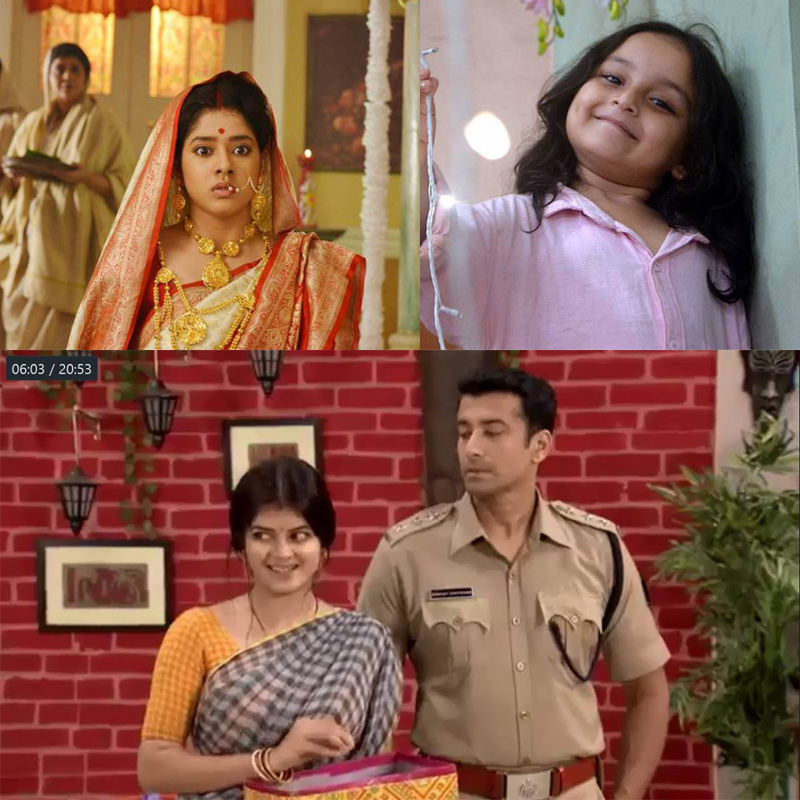
    MUMBAI: West Bengal has been one of the strong bastions of the film and TV industry in India. While fears of the regional industry facing tough financial times are not unfounded, Bengal’s TV industry is well and truly in the black despite the speculation that viewership of TV shows is dipping.

    Both local and national names have set themselves up in the state. Viewership allows them to rake in the moolah to survive. Moreover, top brands and advertisers choose regional TV channels to reach particular audiences.

    Bengali dramas aren’t immune to the age-old mix of shows and the saas bahu sagas reign even today. Despite content experimentation, soap operas continue to thrive because of their ability to pull viewers and, in turn, advertising revenue.

    For instance, many shows such as Bhutu, Icchenodi started with the promise of different content but soon kitchen politics took centre stage. A popular show, Ganer Opare, also succumbed to family politics despite being committed to the main idea. The dramatic element can be termed as a necessary evil as they can bring in good viewership that channels desperately need. If producers don’t agree to change the story’s plot, there are several instances of being moved to a different time slot. 

    Giving a tough fight to family dramas, however, is the highly popular Kusum Dola, Rasmoni, a periodic drama and Saat Bhai Chompa, a fantasy drama, topping many viewership charts. A Bengali show named Taranath Trantrik has even been dubbed for an Odia channel.

    Other than dubbing, many Bengali shows are being remade in several languages. “Almost 8 of our shows are being remade in different languages.  Star Plus next big launch “Kulfi Kumar Baajewala is a remake of one of our path breaking show on Star Jalsha “Patol Kumar Gaanwala”, SVF Entertainment’s director and co founder Mahendra Soni commented when he was asked about Bengali content’s potential to be marketed to other regions. 

    The Bengal entertainment industry has a large number of production houses. The big production houses are SVF, Magic Moments Motion Pictures, Surinder Films and Raj Chakraborty Production House which invest for both films and television shows. SVF invests 2.5 lakh per episode for a daily soap from the house. ” We have done shows at as high as 4 lakh per episode too. In fact our last limited series “Mahanayak” was costlier,” Mahendra Soni said.

    However, few players have a good control over the industry. The medium level and small production houses are not able to compete with the biggies and sometimes the big production houses buy a slot for whole year.

    Over the top (OTT) has taken hold of people’s imaginations in West Bengal as well. Everyone is trying to catch the young audience by investing in web-series. In a short time, Hoichoi, and Addatimes have gained a good amount of popularity. New shows are constantly on the launch. Many theatre groups are starting to enter the OTT industry with their own content.

    With the ongoing changes in the entertainment industry, regional players are also embracing new technology and new media content. The TV industry in Bengal, despite facing a potential threat from OTT platforms, has gained viewership in spite of all the odds.

    Also Read :

    Regional to be at the forefront of content

    COLORS Bangla launches new period drama ‘Prothom Protisruti’
  • Regional to be at the forefront of content

    Regional to be at the forefront of content

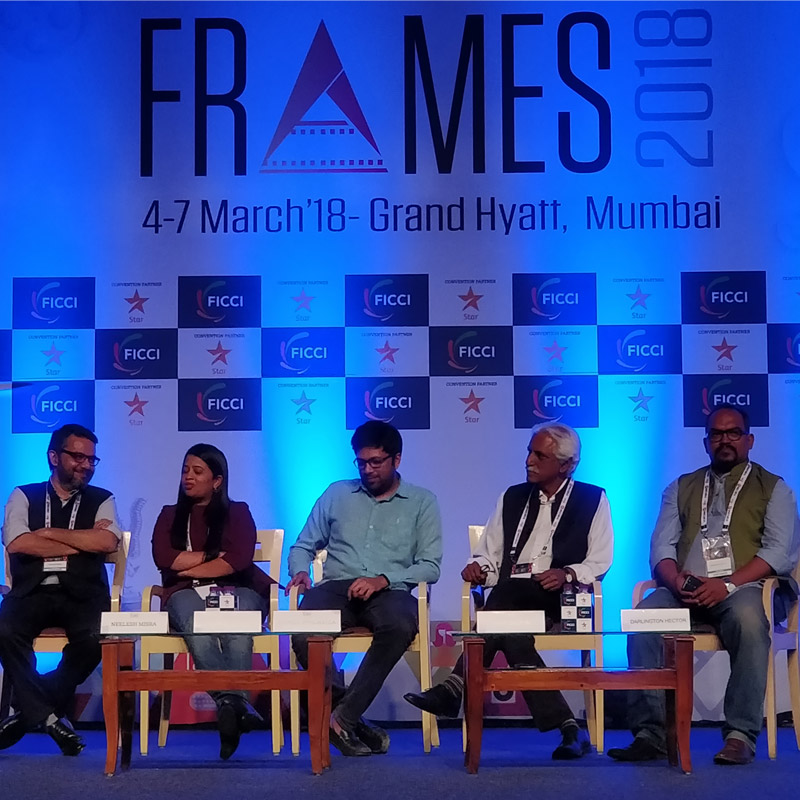
    MUMBAI: The regional space in India is the new target for everyone. But what exactly is it that pulls content creators to divide themselves into India’s varied languages and will this fad stay in the future, too? The question was discussed in a FICCI Frames 2018 session titled ‘regional is the new mass media.’

    The News Minute managing editor Dhanya Rajendran said that any market outside of Mumbai and Delhi is considered regional, which the national media has ignored for a long time while underestimating its potential. “In the last two years, with the advent of digital media, more and more media houses have started realising that there is a lot of readership not because of good journalism, but because they know that there are consumers in places such as Bengaluru, Vijayawada, Madurai and Vishakhapatnam consuming all kinds of content,” he said adding that he hoped that more digital spaces would spring up in Goa, Maharashtra, Gujarat and Bihar in the next two to three years. “Our mainstream media will be forced to follow-up news stories that they were keeping in the backburner and looked down upon as regional stories,” he said.

    Eminent sports columnist and journalist Ayaz Memon pointed out that sports was the classic example of a mass media product. “Football is the biggest sport in Europe, but there is a difference between the French, the Dutch and the English viewing the same match. Look at the regional newspapers like Manorama, Matrabhumi and Anand Bazaar Patrika. At one time, they were larger selling newspapers than the English ones. The easiest to penetrate has been sports because the language of sports is universal. The language of consumption of sports may differ from Tamil, Telugu and Kannada and consumers enjoy consuming the content in the language they easily understand.”  

    Network18 has been prominent in venturing into the digital space. Its group president Avinash Kaul said, “Regional is dominating the entire space, the regional wave is here to stay and will continue to grow. We have around 270 regional channels out of 500 channels overall in BARC. The regional viewership is higher than the Hindi viewership and has a market share of 47 per cent. General entertainment channels (GEC) being the biggest attraction, regional GECs have 30 per cent more viewership than Hindi GECs. If we take a look at the advertisers, the regional market has seen an increase of 20 per cent in the last two years and around 3500 advertisers are exclusive to the regional market.”

    Your Story managing editor Darlington Hector said that the news platform decided to branch out into the regional market in 2012-13 with Hindi, Tamil and Bangla. He said that in the late 90s, the English content consumption was around 80 per cent globally and the next decade around 2007-08 it dropped to about 27 per cent. English as a preferred language of consumption has been dropping in importance every decade and he sees that happening in the future as well. “The reason for this is the loss of credibility in the last few years and a good opportunity now for online digital platforms to express better. People do connect emotionally with the regional media today, which I am not seeing with the national media today. The television anchor has played a big role in destroying the credibility. The next 25 years will be the golden period for the regional languages of India, especially online,” he concluded.

    Both broadcast and online platforms are vehemently marching into the country’s various languages. Hindi and English, which till now were the holders of the mediums, will slowly see viewership shift to people’s language of choice.

    Also Read :

    Stakeholders highlight need for sports education

    OTT platforms discuss need for regulation

  • Will increase ads after sampling phase of Colors Tamil: Ravish Kumar

    Will increase ads after sampling phase of Colors Tamil: Ravish Kumar

    MUMBAI: Viacom18 has forayed into yet another regional language with the launch of Colors Tamil on 19 February 2018. Within 10 days, the network claims to have garnered positive response from the viewers on social media, advertisers and the agencies.

    Viacom18 head-regional entertainment Ravish Kumar, in an interaction with Indiantelevision.com, says that among Kannada, Marathi, Gujarati, Bengali and Odia, Kannada GEC market has more than 30 per cent share of the market share.

    Viacom18 already has five general entertainment channels in regional languages under the name Colors, Tamil is the another language that the network is betting on with crossed fingers. The region has a strong TV broadcast market, one of the biggest in the country.

    Edited excerpts:

    How has the response been to Colors Tamil?

    While it’s early in the day to comment on the feedback, the response from the viewers on social media, advertisers, agencies and the industry per se has been very positive and encouraging. People are appreciating the strong connect, the fabulous production values, the choice of stories and the manner of storytelling. Viewers have gone overboard, online, advising Arya on his endeavor to choose his soulmate. We are keeping our fingers crossed and hoping for the best.

    Are you looking at a phased launch of new shows?

    We have launched three and a half hours of weekday programming and two hours of weekend programming and we intend to increase those hours basis viewer reaction.

    What has been the advertisers’ response post the channel launch?

    We have Nippon Paints and India Gate Basmati Rice on Arya’s show (Enga Veetu Mapilla). Nippon Paints has come onboard as channel partners as well. Plenty of advertisers, both national and retail, have shown interest in partnering with us. Currently, we want to optimise the sampling of the channel amongst the viewers and hence are onboarding advertisers in a phased manner. Once we move past the initial launch phase, you will see a lot more ads on the channel.

    Is Colors Tamil a part of the base pack of all the DTH operators?

    Colors Tamil is free for an introductory period. The channel is widely distributed across key players both on DTH platforms as well as cable operators.

    How different is your content compared to the other players in the market?

    It’s different on two levels – both at the conceptual and the production levels. We are not only doing shows which are engaging and socially relevant but also bringing cinematic value on television through Alexa camera, top quality sound, enhanced production value and real locations resulting in an unprecedented never-seen-before look and feel.

    Of all your regional channels, which language has the highest viewership? 

    We are a strong No. 1 player in the Kannada GEC market and have more than 30 per cent share of the market pie. The huge surge of advertisers and love from the viewers prompted us to launch a second GEC – Colors SUPER, which is one of the fastest growing and already counted in the top tier channels.

    How big is the overall regional GEC market according to you? 

    The overall regional GEC ad market is at Rs 6100 crore currently.

    According to BARC data, the viewership of Marathi GECs witnessed a spurt in the latter half of 2017. Do you think this phenomenon reflects the larger trend of viewers shifting to regional GECs?

    India is an ‘and’ market. What we are seeing is an increase in the overall television viewership and this growth is reflected in the increasing affinity to local / regional content. The regional channels have been producing a lot of quality content and hence are attracting a good number of new viewers. Colors Marathi, for instance, introduced quite a few good concepts last year like Ghadge & Suun, Sur nava dhyaas nava, Tumcha saathi kaypan, Radha Prem Rangi Rangli etc. which saw a jump in viewership for us.

    What genre of programming is liked by the Tamil audience?

    The Tamil viewers are progressive. They look forward to content that resonate with their culture and ethos. They look forward to quality content, something that reflects their strong connect with their land as well as allows them to expand their horizons.

    What do you make of Hindi shows being dubbed in regional languages and vice-versa?

    In our experience, good content always cuts across markets and languages. If the story has local connect or viewers identify with the content, dubbing does work. Viewers are waiting to discover good content. Great stories will work anywhere in the world. Our endeavor is to provide the viewers larger than life content, whether its originally produced or dubbed. Dubbed South Indian movies work big on our Hindi movie channels. Likewise even good Hindi shows dubbed in South Indian languages have great potential to resonate with the viewers. Our ambition is to make a show in Tamil that will go global.

    Is the dubbing and subtitling cost significant? 

    In order to do quality work, you have to pay a premium. As I’ve said before, some stories are universal and can connect with viewers across languages. The advantage of having a network play is that, based on regional synergies, we can cross-pollinate content. And of-course, the dubbing quality has to be in sync with the premium production quality that we offer.

    Also read:

    Viacom18 rolls up its sleeves for Tamil market share

    Viacom18 widens regional reach, to launch Colors Tamil in Q4

  • COLORS Bangla launches new period drama ‘Prothom Protisruti’

    COLORS Bangla launches new period drama ‘Prothom Protisruti’
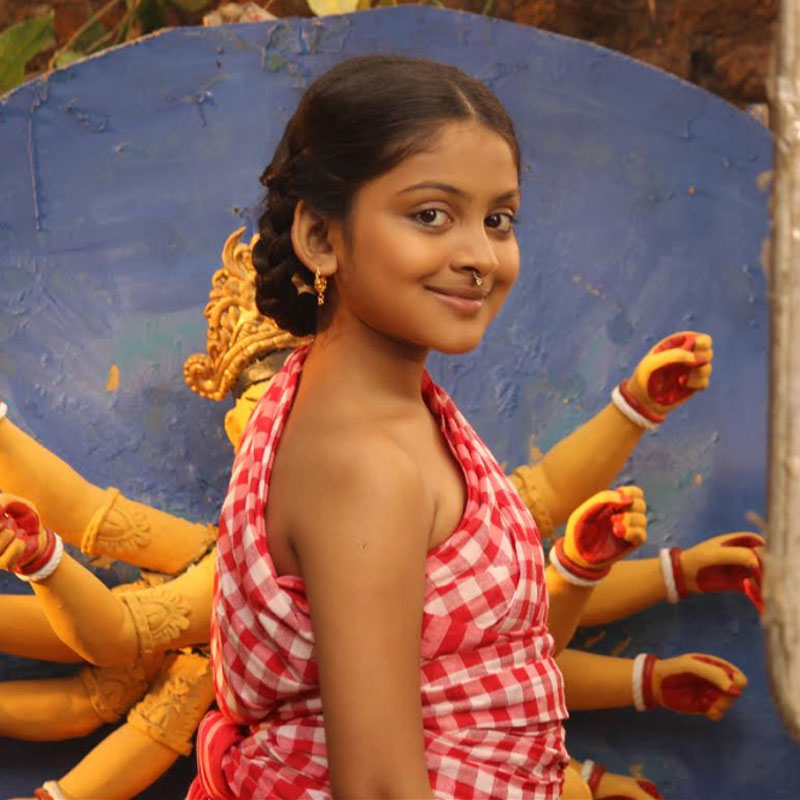
    MUMBAI: Stirring thoughts and perceptions, Bengali stories and literature are prominent in society for provoking rational thinking amongst readers. COLORS Bangla is proud to recreate the magic of Prothom Protisruti – one of the most riveting tales penned by author Ashapoorna Debi through a period drama that will bring to life the revered and distinguished ideals of the author. Premiering on Monday, March 5 Prothom Protisruti airs from Monday – Sunday at 9:30 pm only on COLORS Bangla.

    The first installment of the trilogy, Prothom Protisruti invokes a deep notion on the slow yet gradual evolution of society in Bengal through the viewpoint of three generations of women. The protagonist Satyabati’s journey on the show will take the viewers through various stages of liberation and finding her true identity. During the post-independence era, society was facing drastic changes, and Satyabati faced insufferable struggles trying to survive while living by her principles.

    Commenting on the concept of the show,  Colors Bangla and Colors Odia – Business Head, Rahul Chakravarti said, “Bengali literature has played a pivotal role in bringing about a revolution in mindset of the society. Revitalizing these glorious pieces of art through the medium of television, we aim to satiate the demand of the viewers for meaningful content. The story of Saytabati in Prothom Protisruti encapsulates a rousing and spirited journey of a woman striving to make her place in post-independence India. The eloquent ensemble cast complimenting the riveting story will make the show a must-watch for all television viewers.”

    Produced by DAAG Creative Media, Prothom Protisruti will see the lead role of Satyabati portrayed by Sushmili Acharjya, and supported by a stellar cast including Prerona Bhattacharya (Bhubaneshwari), Manasi Sinha (Elokeshi), Mallika Majumdar (Mokkhoda), Sujan Mukherjee (Ramkali), Falguni Chattopadhay (Kunjokali), Laboni Bhattacharya (Sankari) and Biplab Bandopadhyay (Nilambar).

  • Surya TV set to launch first celebrity couple show

    Surya TV set to launch first celebrity couple show

    Surya TV, leading Malyalam channel is launching “Super Jodi” its first Malayalam television reality couple show.The first episode will go on air on February 18th 2018. The show is scheduled to be aired every Sunday at 9:00 pm. Super Jodi would be the faceoff from the reel image to the real image of a star couple

    The reality show will have nine glorious heroines with their partners as the contestants. Famous cine artist Manikuttan will be hosting the show and prominent actress Swetha Menon is the celebrity judge.

    The episodes will capture behind the scenes emotions of the couples which they  undergo. Each couple would be facing various tasks every week which would test their unity, intimacy, consideration, caring and other qualities based on which the winner will emerge.

    The fun filled entertainment show would bring out the essence of relationships and also hundreds of tales from the celebrity home.

  • Sun TV reports improved numbers, declares third interim dividend

    Sun TV reports improved numbers, declares third interim dividend

    BENGALURU: Sun TV Network Ltd (Sun TV) reported improved numbers across all important parameters for the quarter ended 31 December 2017 (Q3 2018, the quarter under review) as compared with the corresponding quarter of the previous year (yoy, Q3 2017). The company said in its earnings release that subscription revenue for the quarter increased by 16.5 per cent yoy to Rs 281.81 crore from Rs 241.94 crore while advertisement revenue grew by approximately 22 per cent yoy. The board of directors of Sun TV has declared a third interim dividend of the year of Rs 2.50 per equity share of face value of Rs 5 each (50 per cent).

    Sun TV reported 13.4 per cent higher consolidated total income in the quarter under review at Rs 712.39 crore as against Rs 628.36 crore in Q3 2017. Operating revenue increased by 15.9 per cent yoy to Rs 683.28 crore in Q3 2018 from Rs 589.43 crore in Q3 2017.

    Sun TV’s EBITDA during the quarter was Rs 492.04 crore (72 per cent of operating revenue), 11.9 per cent higher as compared against Rs 439.66 crore (74.6 per cent of operating revenue) in Q3 2017.

    The company’s profit after tax or PAT in Q3 2018 improved by 11.2 per cent to Rs 267.03 crore (39.1 per cent of operating revenue) as compared with Rs 240.09 crore (40.7 per cent of operating revenue) in Q3 2017.

    Total expenditure in Q3 2018 increased by 17.1 per cent to Rs 305.76 crore (44.7 per cent of operating revenue) as against Rs 261.09 crore (44.3 per cent of operating revenue) in the corresponding quarter of the previous year.

    Operating expense in Q3 2018 soared by 50.7 per cent yoy to Rs 81.05 crore (11.9 per cent of operating revenue) from Rs 53.78 crore (9.1 per cent of operating revenue) in the corresponding quarter of the previous year.

    Employee benefits expense in Q3 2018 increased by 20.6 per cent to Rs 72.70 crore (10.6 per cent of operating revenue) as compared with Rs 59.86 crore (10.2 per cent of operating revenue) in Q3 2017.

    Other expenses in Q3 2018 grew by 5.1 per cent to Rs 37.99 crore (5.6 per cent of operating revenue) as compared with Rs 36.13 crore (6.1 per cent of operating revenue) in the corresponding quarter of the previous year.

    Also Read :

    Sun TV reports improved numbers, declares third  interim dividend

    Viacom18 rolls up its sleeves for Tamil market share

    Sun Direct may add 20 HD, 100 SD channels

  • Viacom18 rolls up its sleeves for Tamil market share

    Viacom18 rolls up its sleeves for Tamil market share

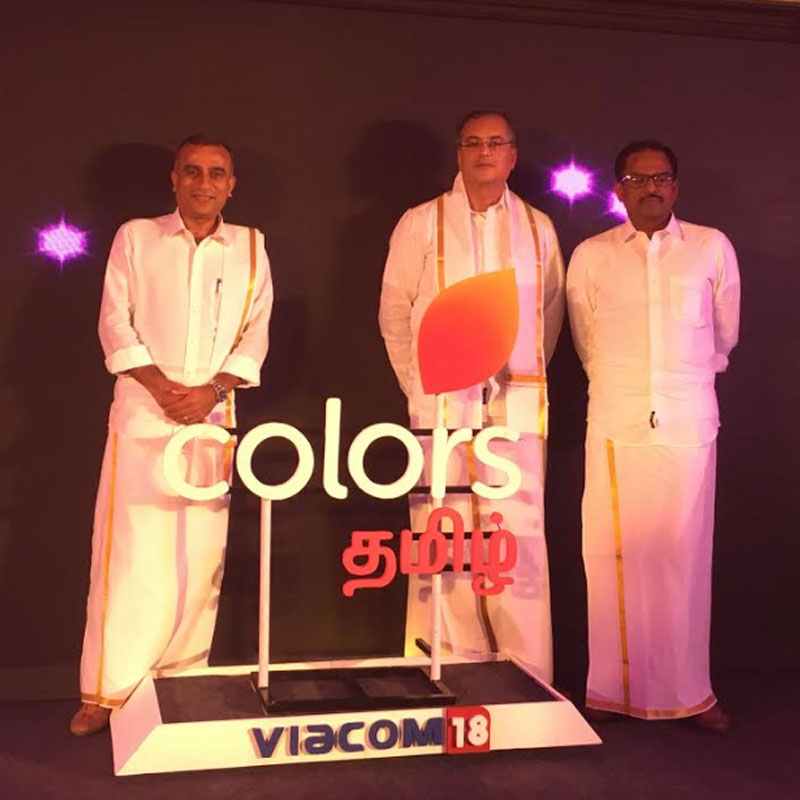
    MUMBAI: Viacom18 has set for itself the task of taking a big bite out of the Tamil general entertainment channel (GEC) market, a stronghold of long-reigning Sun Network. The network is all set to launch its channel Colors Tamil into a large and important entertainment market of India. 

    Scheduled to go on air on 19 February 2018 in Tamil Nadu, the channel will be the conglomerate’s first foray into the state. Viacom18 already operates general entertainment channels in five regional languages, under the brand name Colors Kannada, Marathi, Gujarati, Bengali and Odia.

    Despite big players emptying their coffers in the Southern Indian market, the region has been strongly captivated by the Sun Network.

    Speaking at the launch, Viacom18 Group CEO Sudhanshu Vats says, “After spreading our wings across seven languages, India’s flagship general entertainment brand – Colors is entering the lucrative, fast growing and discerning Tamil entertainment market in line with our stated strategy to drive regional growth aggressively. Our proven ability to break the clutter and disrupt the status quo will help us tell endearing stories to over 20 million TV households in the state and a large global audience in the coming months and years.”

    Tamil Nadu is the country’s sixth most populous state as per census 2011 and is among the bigger television content consuming markets, with a per capita daily viewership of 3 hours which is more than that of the Hindi speaking markets which is 2.5 hours. With an estimated base of 1150 advertisers, Tamil Nadu is among the more lucrative broadcast entertainment markets in India. 

    In order to cater to the market, Viacom18 head of regional entertainment Ravish Kumar reveals the company’s biggest drive is to deliver new and never before seen content to the Tamil audience. “We have invested big in conceptualising programs that are inspiring, innovative, experimental and technically sound. With 22 hours of original content at launch, we are more than confident of Colors Tamil becoming a blockbuster hit here,” he says. 

    With a robust content strategy developed after thoroughly studying the consumer patterns of the region, Colors Tamil offers several original shows in both the fiction and the non-fiction categories. Foraying into a market with existing predominant players, the channel aims at bringing together a range of shows spanning a diverse variety of entertainment genres catering to all demographics.

    Colors Tamil business head Anup Chandrasekharan adds,“Idhu Namma Oru Coloru… the Colors of our land. Our tagline encapsulates our vision of Colors Tamil. It is a platform that aims to entertain, enrich and engage individuals across the length and breadth of the state. Our study of the existing broadcast entertainment market suggests that there is a need gap between what the audience wants to watch and the kind of content that is available to them. Therefore, our focus is on content that is differentiated, thought provoking and socially conscious. Colors Tamil is a promise of optimism, celebration and hope.”

    The channel will offer a range of fiction and non-fiction programs spanning from family drama, reality TV, comedy to fantasy to name a few. The four original shows of the channel will set new standards in the industry with its distinct content and sound technology. The network will also remake the famous show Naaagin from the Hindi GEC Colors for the new Colors Tamil. Naagin has been a huge hit property of the network.

    At launch, Colors Tamil will be available in all leading cable networks catering to an estimated 3.5 million homes in Greater Chennai through SCV, TCCL among others and 11 million homes in the rest of Tamil Nadu through Tamil Nadu Arasu Corporation. 

    Furthermore, the channel will be available on all DTH platforms including Sun Direct, Tata Sky, Airtel, Dish TV & Videocon d2h reaching out to 5.5 million households. Additionally, the entire content library of Colors Tamil will also be available digitally on the network’s OTT platform – Voot.

    As part of its fiction lineup, the channel has curated three striking shows that portray strong women protagonists breaking the shackles of the society. Shot in native locations of Tamil Nadu with top-notch equipment, the shows are set to offer a movie-like experience to the viewers. 

    Offering a refreshing break from the common soap operas, Velunachi is an inspirational story of young girl who transforms herself into a strong woman carrying her father’s lineage in Silambattam. 

    Sivagami show is a transforming tale of courage of a young woman tackling conflicts in society to bring up her daughter as a successful IPS officer. The story is set in rural Tamil Nadu with nativity and rustic aims to create a positive change in mindset among people. 

    Another show, Perazhagi, is an uplifting drama that breaks the stereotype around skin colour featuring a small girl who fights against all odds to become a celebrity.

    Created as the flagship show of Colors Tamil, the reality show Enge Veetu Maapilai will feature the hunt for the ideal match for brand ambassador & Kollywood superstar Arya. Spanning over 40 episodes, the show will telecast the search for the heartthrob’s perfect match. 

    Catering to the young ones, Colors Super Kids is a one of a kind talent show for children, offering them an equal and well-deserved platform to showcase their talents without the concept of competing against each other.

    public://TAMIL.jpg


    Also Read:

    Viacom18 widens regional reach, to launch Colors Tamil in Q4

    TV18 to increase Viacom18 stake to 51%

    Viacom reports lower revenue for Q1 2018

  • India leads growth for regional pay-TV networks in Asia

    India leads growth for regional pay-TV networks in Asia

    MUMBAI: New research on the pay-TV channel ecosystem shows India powering revenue and profit growth for regional pay-TV broadcasters in Asia Pacific. Revenue for pay-TV channel groups owned by global media companies expanded by 4 per cent in 2017 to reach USD 5 billion across the region, while ebitda grew by 9 per cent year-on-year (yoy) to reach USD 1 billion according to leading industry analysts Media Partners Asia (MPA).

    India continues to make a massive contribution to this pie, led by large local channel businesses owned and operated by 21st Century Fox, Sony and Viacom. MPA’s figures show India comprising 65 per cent of revenue for regional pay-TV channel groups in 2017, followed by Southeast Asia with 15 per cent, Japan with 7 per cent and Australia with 5 per cent.

    Media Partners Asia executive director Vivek Couto said, “Success in a large-scale market such as India shows that regional broadcasters that invest in IP and local businesses can create a lot of long-term value.”

    Excluding large local pay channel businesses in India, pay-TV channel revenue for regional broadcasters declined by 1 per cent across the region in 2017, inching down to USD 2.2 billion while ebitda contracted by 4 per cent yoy to USD560 million. The performance reflects a more challenging wholesale and retail market for pay-TV in Southeast Asia as well as in Australia and New Zealand, Japan and Hong Kong and Taiwan. Nonetheless, Southeast Asia still leads the top-line contribution for this revenue segment at 33 per cent, followed by India (20 per cent), Japan (16 per cent), Australasia (11per cent) and Hong Kong and Taiwan (11 per cent).

    Ex-India, declines have been evenly spread across most genres. The notable exception is sports, wherein the growth of BeIN Media has helped boost the category. Together, factual, lifestyle, kids, news, music, movie and Asian entertainment channels experienced an aggregate contraction of close to US$150 million in affiliate and advertising sales ex-India in 2017.

    Nonetheless, a number of global broadcasters with investments in Asia are still seeing sustained growth in the region on the back of licencing deals and partnerships with online video and telecom platforms, growth of consumer products and nascent online video advertising. Leading broadcasters will also accelerate development of their own branded online video services in the region, a trend already underway with the launch of key entertainment and sports OTT platforms over 2016-17. Partnerships with streaming and telecom services will also proliferate over 2018.

    In India, macro hurdles as well as competitive and regulatory pressures will impact near-term performance for foreign-owned pay channels, MPA said.

    Nonetheless, major players should still outperform the market with strong double-digit growth along with longer-term upside from the growth of branded online video networks.“Success in a large-scale market such as India shows that regional broadcasters that invest in IP and local businesses can create a lot of long-term value,” said Couto. “These bets are starting to percolate across Southeast Asia, Korea and Japan. At the same time, businesses are starting to tap more growth from streaming platforms, including partnerships with online video and telco services.”

    Also Read:

    Indian pay-TV expanding by 10.6 pc, 77 pc to be digitised, ARPUs to rise by ’22: MPA

    Pay-TV in vital stage; service providers must innovate: Study

  • BARC ratings: 3 Telugu channels among top 10 across genres

    BARC ratings: 3 Telugu channels among top 10 across genres

    BENGALURU: Three Telugu GEC channels–Star India’s Star Maa, Sun Network’s Gemini TV and the Network 18 associated  ETV Telugu—were present in Broadcast Audience Research Council of India’s (BARC) list of top 10 channels across genre: All India (U+R) : 2+ Individuals list for week 3 of 2018 (Saturday, 13 January 2018 to Friday, 19 January 2018). Besides one Tamil GEC–Sun Network’s Sun TV–the other six channels, including four free-to-air (FTA), were Hindi GECs.

    Three channels from Star India, two channels each from Zee Entertainment Enterprises Ltd (Zeel), Network 18 and Sun Network and one channel from Sony Pictures Network India (SPN) made up the top-10 channels across genre list for week 3 of 2018.

    Sun TV was at its regular first place in the across genres list for week 3 of 2018 with 1,147.85 million weekly impressions. Sun TV also topped BARC’s top 5 Tamil channels (Tamil Nadu/Puducherry (U+R): NCCS All: 2+ Individuals) list and all the five top Tamil programmes in the same markets during primetime were from Sun TV. Sun TV was the most watched GEC across the country.

    Zeel’s FTA Hindi GEC Zee Anmol was ranked second in week 3 of 2018 with 738.873 million weekly impressions and was the most watched Hindi GEC across genres. Zee Anmol topped BARC’s top 10 Hindi GEC channels in the Hindi-speaking urban and rural or HSM (U+R) and the HSM (R) markets. Balaji Telefilms-produced Kumkum Bhagya aired on Zee Anmol was among the top 5 Hindi GEC programmes during primetime in these markets.

    Star India’s FTA Hindi GEC Star Bharat was ranked third in week 3 of 2017 with 697.496 million weekly impressions. Qissago Telefilms-produced Nimki Mukhiya, which aired on Star Bharat, was among the top-five Hindi GEC programmes during primetime in HSM (U+R).

    Star Maa was ranked fourth in week 3 of 2018 with 649.550 million weekly impressions. The channel was placed second in BARC’s top-five Telugu channels list in Andhra Pradesh and Telangana and the world television premiere of Telugu feature film Raja the Great aired on it was the most watched Telugu programme during primetime in the week.

    Zeel’s flagship Hindi GEC Zee TV was ranked fifth in week 3 of 2018 with 643.361 million weekly impressions. Kumkum Bhagya and its spinoff Kundali Bhagya aired on Zee TV were among BARC’s top 5 Hindi GEC programmes during primetime in HSM (U+R) and HSM (U).

    Network 18’s flagship Hindi GEC, Colors, was ranked sixth in week 3 of 2018 with 642.897 million weekly impressions. The grand finale of Endemol Shine India’s Bigg Boss season 11 aired on Colors on January 14 was among BARC’s top 5 Hindi GEC programmes list during primetime in HSM (U+R) and

    HSM (U).

    Gemini TV was ranked seventh in BARC’s across genre list in week 3 of 2018 with 642.270 million weekly impressions. The channel topped BARC’s top-five Telugu channels list and the world television premiere of the Telugu feature film Jai Lava Kusa was the second most watched Telugu programme during primetime during the week according to BARC data.

    SPN’s FTA women focused channel Sony Pal was ranked eighth in week 3 of 2018 with 616.602 million weekly impressions. The sitcom Tarak Mehta Ka Ooltah Chashma and C.I.D aired on Sony Pal were among BARC’s top Hindi GEC programmes list in HSM (R).

    Another Star India FTA Hindi GEC–Star Utsav was ranked ninth in week 3 of 2018 with 553.165 million weekly impressions in BARC’s across genre list.  ETV Telugu completed the top 10 channels across genre list in week 3 of 2018 with 513.852 million weekly impressions. The channel was ranked third in BARC’s top 5 Telugu channels list. Two programmes aired on ETV Telugu, Swati Chinukulu and Manasu Mamata were among BARC’s top-five Telugu programmes list during primetime.

  • COLORS Bangla sees an upswing, jumps to number 3 position across genres

    COLORS Bangla sees an upswing, jumps to number 3 position across genres

    MUMBAI: Week 1 on the BARC ratings chart has brought in good news for COLORS Bangla. According to the last BARC report Week 01’18 (30th Dec’17 – 5th Jan’18) Colors Bangla has soared to the No.3 spot with 139 GRPs keeping behind Jalsha Movies (85 GRPs). This is the highest ever that the Channel has achieved under the BARC measurement system. The channel launched a new show SUBHO DRISHTI on 1st Jan 2018 which opened with 2.2 Rat% and weekly avg. of 1.7.  In the West Bengal Rural Market, the show launched with Rat% 2.9 and AVG Rat% 2.0.

    For the last 11 weeks COLORS Bangla has been maintaining 100+ GRP’s and has maintained an average rating of 132 GRP’s in the last 4 weeks. The channel had planned extensive marketing, PR activities for the launch of new show SUBHO DRISHTI which propelled the reach to 42.6% Week 01’18 (30th Dec’17 – 5th Jan’18) this week from 39.2 % (last week).

    Among the top-rated shows of COLORS Bangla Subho Drishti @ 19.30 Hrs (1.7 Avg. Rat%) lead the flock followed by Kajallata @ 18:00 Hrs (1.5 Avg. Rat%) and Mahaprabhu Shree Chaitanya @ 18:30 Hrs (1.5 Avg. Rat%). COLORS Bangla viewership has also increased by 13%.

    COLORS Bangla continues to be the fastest growing channel in the Bangla genre (across GEC, News, Music, etc) and has recorded a growth of 3.8X in terms of GRP’s (April’17 to January’18). The official Facebook platform has a total fanbase of almost 2 million with a reach of 1.07 million.

    Talking about this Colors Bangla and Colors Odia, Business Head – Rahul Chakravarti said, “While our endeavor is to keep pushing the numbers, we are delighted to have become the No 3 channel. Our hard work has paid off and viewers have appreciated our new show, SUBHO DRISHTI. This admirable performance can be attributed to the team’s efforts to get our loyal viewers constant innovations in concepts and an engaging programming line-up. Our aim is not only to entertain but to also bring the best of content to viewers, and we are committed to continue this endeavor.”

    The channel has an exciting line-up of stories and concepts for the coming months. A show on Goddess Manasa will be launched on 29th January which certainly promises to be a visual treat for the audience with outstanding VFX and a gripping storyline.