Category: Regional

  • The era of regional music dawns in India

    The era of regional music dawns in India

    MUMBAI: From Guru Randhawa dominating music charts or DJs belting out Zingaat , one thing’s for sure – the wave of regional music has well and truly arrived in India. No wonder, making headway into the Indian regional market seems to be every broadcasters latest target.

    The overall music genre on Indian television has been an under-indexed genre (in terms of advertising revenues) for a very long time. The genre commands a mere three to four per cent of the total TV advertising revenue against a six to seven per cent it contributes to the total TV viewership impressions. While ITV network recently launched a Punjabi music channel, the regional music space in general is yet to pick up pace in terms of its business.

    Times Music COO Mandar Thakur says the regional space is massive and growing, attributing 20-23 per cent odd share to it. He adds that audiences prefer Punjabi, Telegu, Tamil, Bhojpuri, Bengali and Oriya music. “Some languages are developing like Marathi etc.,” he said.

    Commenting on the same, Travelxp CEO Prashant Chothani, who has Bengali, Bhojpuri and Marathi music channels under his company’s umbrella, says “South music channels are also strong, wherein if you see in North, Bengali and Marathi languages are very prominent. As you know, we have a Bhojpuri music channel as well, so the Bhojpuri audience is scattered everywhere like in Mumbai, Punjab, Gujarat and all over India.”

    According to the media reports, Network18, COO, Avinash Kaul said that regional is dominating the entire space. “We have around 270 regional channels out of 500 channels overall in BARC. The regional viewership is higher than the Hindi viewership and has a market share of 47 per cent. General entertainment channels (GEC) being the biggest attraction, regional GECs have 30 per cent more viewership than Hindi GECs. If we take a look at the advertisers, the regional market has seen an increase of 20 per cent in the last two years and around 3500 advertisers are exclusive to the regional market.”

    When it comes to the preference of Indian audiences towards regional music over Hindi music channels, choices and topicality matter a great deal.

    Chothani feels one cannot compare two markets. He says, “If you look at Bengali and ask whether or not Bengali music channel is doing well in comparison to GEC, the answer is yes. Is the Marathi music channel doing well in comparison to Marathi gec? The answer is yes.”
    According to him if the regional and film industry is active, the local culture will be intact.

    He further adds, “For example, there is no Guajarati music channel, we know that it took time to start, it has just been a while that it started to make movies, but there are no known singers in Guajarati market. Moreover, audiences have a mindset; they consume more of Hindi music rather than Gujarati music, whereas in other regional markets such as Bengali, they want to consume content of their language, so in HSM market there are 3-4 languages where there is an affinity that I want to consume content of my language in preference to Hindi.”  

    Given the influence of digital platforms these days, Thakur says everything works on a smart phone and competes with it. “It’s about the future of music TV v/s Internet / mobile streaming of video: not about regional channels v/s the smart phone”.

    Chothani feels linear TV is where you push your content to the consumers, whereas OTT is a place where audience will pull content. “A consumer goes to the app and finds the content, but how does he come to know about it? You will see traction on digital once you have consumed that content on television. If you go by BARC data, linear tv content consumption is also increasing. If both OTT and TV consumption is growing, it is good for the business,” he says

    Talking about the sustainability of the music genre, Sri Adhikari Brothers (SAB) group CEO Manav Dhanda, who has ‘Mailboli’, a Marathi music channel under his company’s umbrella, has said in the past that his regional channels are growing at 18-19 per cent and HSM is growing at about 14-15 per cent. “I don’t see sustainability to be a problem in the genre. It is about being a serious player. Rather, this is a low entry and high yield genre.”

    The regional music industry has been under-indexed in terms of advertising revenues.
    “The 10-sec ad rate falls in the range of Rs 100 to 1000 Rs. It depends on the popularity of channel. Regional music channel is actually very under priced, if you look at advertising rates, they are severely under priced,” a media expert informs us.

    The regional music space does seem to have a wide scope for growth. But, considering the influence of digital platforms these days, it would be interesting to observe how music channels in general will compete in a tricky market place. 

    Also Read:

    Is it the end of the road for anime in India?

    ‘Bigg Boss’ holds appeal across languages: Viacom18’s Ravish Kumar

    Will launch two OTTs before end of this year: Discovery India’s Karan Bajaj
  • Inside India’s dubbing and subtitling industry

    Inside India’s dubbing and subtitling industry

    MUMBAI: The dubbing and subtitling industry in India was founded due to the television business’ need to leverage a variety of content from within different markets in the country. Indian viewers first tasted dubbed content thanks to Discovery World. In the early 90’s, dubbing was predominantly restricted to kids’ animation content by Disney. This was then picked up by private broadcasters as a fixed slot for kids that later evolved into a dedicated kids channel available in multiple languages. The first dub theatrical hit was Jurassic Park, which opened the Pandora’s box for cult South Indian films like Roja. Thus, a degree of variety and freshness was injected into Indian programming.

    Demand for localised content has grown

    Today, dubbing and subtitling is a flourishing business in India with Hollywood films, animation films and regional content at the heart of it. This wasn’t the case few years ago when only international content was dubbed for the Indian market. In India dubbing mostly happens in three Indian languages- Hindi, Tamil and Telugu. Spider-Man 3 was dubbed in Bhojpuri in addition to Hindi, Tamil and Telugu. A Good Day to Die Hard, the most recent instalment in the Die Hard franchise, was the first ever Hollywood film to receive a Punjabi language dub as well.

    In 1983, PA Krishnan founded the Dubbing Artistes Union of South India, an association for dubbing artistes. The union, which is now called South Indian Cine and Television Artistes and Dubbing Artistes Union, has over 2,000 artistes and more than 30 voice co-ordinators or dubbing agents (people who choose dubbing artistes) as its members. It is also affiliated to the Film Employees Federation of South India (FEFSI). 

    The surge and infusion of international content entering India and demand to watch it in native language has witnessed a steady rise. Serials and small-format shows from Tamil and Bengali are now being dubbed and subtitled in many Indian and foreign languages.

    Major dubbing companies have now given way to smaller players like BOL Media, Native Ninja, VSI Group, etc. UTV shut down five years back, while Crest Animation pulled the plug on its operations almost 10 years ago. In terms of corporate players only Prime Focus still exists. 

    Amazon Prime and Netflix are spending big on content localisation. They are also producing original Indian content that is being dubbed for international markets. Among the global OTT players, a major growth driver is Netflix, which launched its global video on demand (SVOD) service in January 2016. It has now 104 million paid subscribers in 190 countries and the service supports 24 languages.

    “ZEEL has a Bollywood movie pay television channel in Spanish language called ZEE Mundo. So, a lot of Indian content is travelling overseas now. Recently Aamir Khan’s movie also got dubbed in China and people over there loved it,” says BOL Media Founder and CEO Rahul Bhatia highlighting the evolution of India’s dubbing and subtitling industry.

    Economics of dubbing and subtitling industry

    The dubbing industry in India is valued anywhere between Rs 100-120 crore. Interestingly, the bigger companies are now giving way to smaller ones. The key reason behind this development has been the exodus of influential executives from major players setting up their own dubbing businesses.

    The mushrooming of smaller companies has greatly benefited broadcasters and production houses that now have access to more technical resources at pocket-friendly prices. For instance, it now costs Rs 15,000 to dub a television episode as compared to Rs 80,000 in the past. Today, a three-hour movie costs Rs. three lakh when dubbed for a television audience and around Rs. 15 lakh for the theatres.

    In the general entertainment space, dubbing and executing one episode takes four days while subtitling of one hour content takes two days. However, a movie for the television audience is dubbed in approximately 15 day while that for a theatre could need up to 30. While dubbing has become cheaper, content translation charges have witnessed a spike.

    Translators charge Rs. 1 per word for an Indian movie and Rs. 10 for a foreign film, while dubbing costs vary between Rs. 80 to Rs. 130 per minute for one movie.

    “There are very few corporate structures having an entire team of dubbing directors, sound engineers, quality controllers in house with defined SLA and workflows. Rest of the dubbing companies are owned and operated by studio owners, voice actors or dubbing producers with a niche clientele. Majority of the companies assemble the team and work on a project-to-project basis,” says Native Ninja founder Sanjeev Das.

    The road ahead

    Dubbing companies acquire customers organically. The major chunk of the business is comes from the television industry. But going forward, OTT platform could be the biggest source of business. Around 60 percent of the business comes from the television industry, 30 per cent from movies and remaining 10 per cent from OTT. In the future, OTT is likely to contribute 60 percent of the dubbing business.

    The business will be on a steady growth path due to the increased volume of content being created with a focus on localisation. Dubbing, subtitling, and closed captioning for English and major international languages could be taken over by technology such as artificial Intelligence, machine learning, automated captioning and auto-translation. However, precise and accurate translation, adaptation, interpretation and translation will always require a human touch. That’s where localisation companies need to be at the top of their game. With such advancements, the industry is bound to witness a shake up in the next five years, with only those prepared to adapt to the challenges likely to survive and thrive.
     

  • Malayalam market to get more diverse with launch of a news channel, Bigg Boss

    Malayalam market to get more diverse with launch of a news channel, Bigg Boss

    MUMBAI: Insight Media City, the owner of Malayalam general entertainment channel- Flowers TV, will launch a Malayalam news channel named Twenty Four on August 4.
    Insight Media City India was founded by a group of investors during March 2013 with the aim of putting up a media city in Kochi. Inside Media City Managing Director R Sreekandan Nair has over three years of experience in this space. The senior management consists of people with plenty of experience in the industry, having worked with various other TV broadcasting companies.

    Launched on 12 April 2015, Flowers TV, within a span of three years, has gained immense popularity among the Malayalam audience with programs like family comedy drama Uppum Mulakum, comedy reality show Comedy Uthsavam.

    Star India’s Malayalam GEC Asianet is set to launch the first season of Bigg Boss, which will go on air from June 24. The show will be hosted by Malayalam actor Mohanlal.

    Bigg Boss is already doing well in the regional languages- Tamil, Kannada, Bengali and Marathi. So the makers of the show, Endemol Shine, wanted to explore another big market- Malayalam. The show will have 15 celebrities who will be locked inside the house for 100 days.

    Some of the participants who are been expected to join the Bigg Boss house are S Sreenath, Ramesh Pisharody, Archana Suseelan, The Enga Veetu Mapilai girls, Govind Padmasoorya, Ranjini Haridas and Priya Varrier, whose winking scene in Oru Adaar Love movie has gone viral and she became a sensation overnight.

    Also Read:

    Bigg Boss Kannada is a success story

    Bigg Boss set to enter Marathi homes

    Star Maa gears up for second season of bigg boss telugu

  • Star Maa gears up for second season of bigg boss telugu

    Star Maa gears up for second season of bigg boss telugu

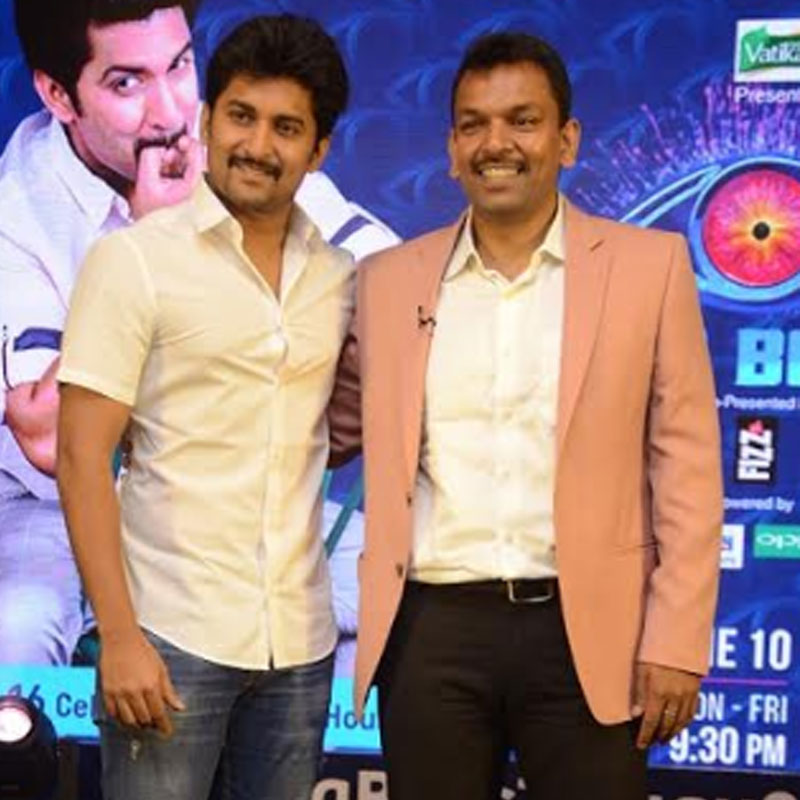
    MUMBAI: After the super success of Bigg Boss Season one, Star MAA is set to launch with season two. The channel, which currently enjoys  top spot in the viewership ratings, plans to further consolidate its position riding on the popularity of the Bigg Boss brand. The new season will be hosted by Natural Star- Nani, who will be seen on the small screen for the very first time.The show will premier on June 10 and will come on air every weekdays at 9:30 p.m. and weekends at 9:00 p.m.

    “We are excited to present Bigg Boss two with variety of new elements and refreshing content that will entertain our audience. This second season has many firsts. Longer season, new location at Hyderabad, bigger house, interesting mix of contestants and commoners for the first time. Our ambition will remain surpassing audience expectation with surprises keeping the Telugu sensitivities and the family viewership. With Nani as host and amazing contestants, the audience will be hooked on to their TV sets starting 10th June,” said Star Maa Network Business Head Alok Jain.

    The 106-day drama will have 16 celebrities locked in a house under the vigilance of 70 cameras. Ever since the promos have been out, they are creating a heavy buzz on both TV and social media, garnering more than two million views with nationwide trending on second place.

    Also Read:

    Star Maa offers Telugu viewers for the first time to be part of Bigg Boss (Season 2)

    Barc India: Star Maa No. 1 telugu entertainment TV channel

    Bigg Boss Kannada is a success story

  • Raj TV aims to climb ratings chart with 5 new primetime shows

    Raj TV aims to climb ratings chart with 5 new primetime shows

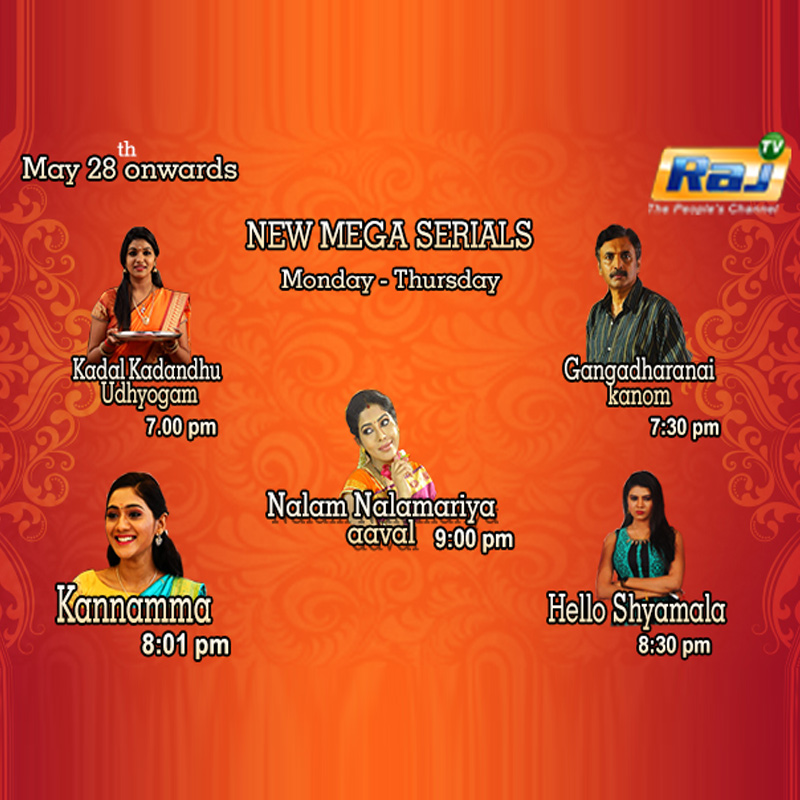
    MUMBAI: Tamil general entertainment channel (GEC) Raj TV has given the channel a makeover by introducing five new shows in its primetime starting today, 28 May.

    The five new fiction shows will air between 7 pm to 9.30 pm starting with Kadal Kadanthu Udhyogam followed by Gangadharanai Kanoam at 7.30 pm, Kannamma and Hello Shyamala at 8 pm and 8.30 pm respectively and Nalam Nalam Ariya Aaval at 9 pm.

    All the shows are women-centric and relay how the empowered protagonists put up a brave face and bounce back in their lives.

    Very soon, the channel will add two more shows with ‘extensively rich’ production values. These two, however, will be periodical and fantasy genres and the launch will coincide with the channel’s 25th anniversary celebration.

    The channel aims to climb the ranks of the ratings chart with the slew of new launches and the refreshed show concepts. It has a tough competitor in Sun TV which not only dominates the Tamil speaking genre but even leads ratings in some sections on a national level.

    A 360-degree marketing campaign has also been assigned to each of the shows for the Tamil audience.

    Kadal  Kadanthu Udhyogam : The story revolves around an extended family comprising of an aged couple that wants its USA settled son’s family to get back to India and live with him and his daughter’s family. The constant efforts made by the other members of the family and the emotions of love, longing, anger and frustration makes the story interesting.

    Gangadharanai Kanoam: Kasthuri, a young widow raises her child Aswini as well educated girl, by crossing many financial struggles, Gangadharan who is also a widower enters as a tenant in Kasthuri’s house, along with his daughter Kavitha. As days pass by, the attitude of both the daughters change and they get greedy about money which makes them feel their respective parents a burden to them. At this juncture something unexpected happens leaving everyone in a state of shock and that is the twist in the story and has to be watched on screen.

    Kannamma : The protagonist is a beautiful and intelligent girl is a school dropout due to her poor family situation.  Kannamma is made to work in a fashion garment store where she shines and earns everyone’s appreciation. Kannamma gets caught in a delicate situation and in a very crucial and unexpected circumstance in the life of Karthik her boss, she marries him to save his respect and the prestige of his family. However Karthik acts reluctant about this marriage and disrespects his wife. The struggles Kannnamma faces, to convince her husband, forms the rest of the story.

    Hello Shyamala : The story revolves around a family with four daughters, out of which the first daughter gets married and expecting her first child. The real drama begins when her mother realises she is pregnant too. This situation disturbs the rhythm of the family and the way the other members of the family handle the situation is the story.

    Nalam Nalam Ariya Aaval : Childhood friends Paari and Sandhya are very close even after getting married and having their own families. In a turn of events, Paari happens to witness a murder and in an attempt to rescue her Sandhya gets trapped by the murderers and is used as a bait to trace Paari. How the childhood friends free themselves from this.

  • Star Suvarna to telecast ‘Kannadada Kotyadhipati 2018’ the Kannada version of ‘Who wants to be a Millionaire’ as part of its revamp

    Star Suvarna to telecast ‘Kannadada Kotyadhipati 2018’ the Kannada version of ‘Who wants to be a Millionaire’ as part of its revamp

    May 21, 2018: The third season of Kannadada Kotyadhipati, the Kannada version of ‘Who wants to be a Millionaire’, which sets the stage for a revamps of Star Suvarna, the Kannada GEC channel of Star Network will premiere in June’18. Since January 2018, the channel has gained viewership share in Kannada GEC, led by new fiction launches; Muddu Lakshmi and Bili Hendthi and daily reality show Pyate Hudugir Halli Life – S4.

    To further strengthen its consumer offering, Star Suvarna is launching the 3rd season of Kannadada Kotyadhipati, the Kannada language series of the format “Who Wants To Be A Millionaire”, popularly known as KBC (Kaun Banega Crorepati) in India. In its first 2 seasons in 2012 and 2013, it was the most-watched show in Kannada. Star Suvarna is planning to further strengthen the line-up with 2 new fiction launches along with Kannadada Kotyadhipati’s launch. 

    Mr. Kevin Vaz, CEO of South Entertainment Channels for Star India Pvt Ltd commented: “Star Suvarna is known to provide differentiated and wholesome family entertainment and we are excited to bring Kannadada Kotyadhipati back to the viewers. We are confident that with Mr. Ramesh Aravind as the host and the new feature, ‘Play Along’, this show will engage viewers very well, and Star Suvarna will flourish to become Kannadigas favorite channel yet again.” 

    The 3rd Season of ‘Kannadada Kotiyadhipathi’ will be hosted by the versatile actor, Mr. Ramesh Aravind, who has worked in movies across 5 languages as an actor, producer, and director. Beyond films, Ramesh has also won people’s hearts as TV show anchor, motivational speaker, TEDx presenter and social worker. 

    Speaking about the show host, Mr. Ramesh Aravind said “I am really honored to host Kannadada Kotyadhipati. This show touches a deep chord in the viewer. It holds the promise of change, the ability to carve out a life one desires. This show is not about money, but hope and I’m humbled to be a part of the process.”

    With a promise of making common man a ‘Kotyadhipati’, the show has been a big draw among viewers across markets irrespective of gender and age groups. This season, with the advent of technology and features like ‘Play along’, the show gets closer to its viewers as never before as it gives viewers an opportunity to participate and get rewarded from the comfort of their homes.

    The show is being produced by Mr. Siddharth Basu of Big Synergy, widely known as the Father of quiz on Indian TV. 

    Mr. Siddharth Basu opines “KannadadaKotyadhipati remains the most loved show as anyone can win here irrespective of background, education, caste, provided (s)he is empowered by knowledge. The stringent processes are practiced to ensure fairness, which enhances the credibility of the show”.

    “Kannadada Kotyadhipati” has the power to change people’s lives forever. The show is in line with Star Suvarna’s commitment towards providing thought-provoking and entertaining content to its viewers. The registration lines to participate in the show now closed were open for 10 days, receiving an overwhelming response from the aspirants.

  • Priyanka Chopra takes up the cause of water in her next production

    Priyanka Chopra takes up the cause of water in her next production

    MUMBAI: Priyanka Chopra’s Purple Pebble Pictures (PPP) announced the details of their latest Marathi film production. Titled ‘Paani’, the film, helmed by first time director Adinath Kothare, is based on a true story that deals with an insurmountable crisis affecting an entire region. This is the 4th Marathi production for PPP and is in line with their objective to promote regional cinema and provide a platform for new talent.

    Inspired by the true story of a common man and his village, Nagdarwadi, situated in the drought prone Marathwada region of Maharashtra; the film is a beautifully woven tale of human struggle and true love, and aims to drive home a key message, critical to the world we live in today.  

    The film starring Adinath Kothare, Rucha Vaidya, Subodh Bhave, Kishor Kadam, Girish Joshi and Rajit Kapoor, went on floors on 10th May .

    Speaking about the film, Priyanka Chopra said, “At Purple Pebble Pictures, we want to tell good stories, give new talent a chance and provide the audience with an entertaining experience.  There are many stories that reflect the realities of the world we live in and I believe it’s very important to showcase them and bring that message to more people in a way that they can connect with.  Paani is one such story and we’re looking forward to working with Adinath.”

    Purple Pebble Pictures’ previous Marathi productions include Ventilator (2016), directed by Rajesh Mapuskar; Kaay Re Rascala (2017), directed by Giridharan Swamy and the upcoming release ‘Firebrand, directed by Aruna Raje.  PPP stands committed to support stories that are content-driven, irrespective of language or any boundaries and has produced films in Bhojpuri, Punjabi, Sikkimese and Assamese. 

  • ‘Bigg Boss’ holds appeal across languages: Viacom18’s Ravish Kumar

    ‘Bigg Boss’ holds appeal across languages: Viacom18’s Ravish Kumar

    MUMBAI: Viacom18’s punt on Bigg Boss, the biggest reality show in the country, has paid off in a big way over the last ten years with an astronomical number of viewers on TV as well as the company’s digital platform Voot. After entertaining the Hindi masses, Colors launched the show in Kannada, Bengali and Marathi in order to garner regional audiences.

    “We were the first to pioneer Bigg Boss in Kannada and that expanded the franchise beyond. At that time, it was huge because we didn’t know how it would work and it was a big chunk of the budget for a market that has always shown an appetite for reality shows,” Viacom18 head of regional entertainment Ravish Kumar told Indiantelevision.com.

    While Bigg Boss Hindi usually has an hour-long episode, some of the regional slots stretch as much as an hour and a half. “The beauty of the show is, no matter what language you do it in, the moment you put new people in the house, it becomes an entirely new show,” he said.

    Colors, according to Kumar, shares a great overall working relationship with Endemol, the producer of the show, although, at times, there are creative differences. The duo has utilised its respective experience in markets effectively. “They were good in listening to us especially in the regional space, where their expertise was low and together we have built that. They, on the other hand, have a lot of learning from the other markets internationally,” he added.

    With over 331 million viewers hooked on to the show across India, the first ever edition of Bigg Boss in Marathi premiered with a grand launch event on 15 April at 7 pm. The show, anchored by actor-director-producer Mahesh Manjrekar has Dabur Red Paste as presenting sponsor.

    Prior to joining Viacom18 in 2011, Kumar was the executive VP and business head – regional channels at Star TV and a global category director at Reckitt Benckiser. He brings more than 23 years of experience in building brands, driving innovation, creating high-performance teams and delivering superlative business results across leading Fortune 500 companies in the US, the UK and India.

    In the latest episode of Indiantelevision.com’s Executive Dossier, Viacom18 head of regional entertainment Ravish Kumar spoke about the show’s success in Kannada, his experience of working with Endemol Shine and plans for other languages.

    Also Read :

    No reason for GECs to panic as IPL grabs eyeballs

    The era of dance reality shows

    Owning IP not priority for Big Synergy

  • Sun TV FY 2018, Q4 numbers grow

    Sun TV FY 2018, Q4 numbers grow

    BENGALURU: Sun TV Network Ltd (Sun TV) reported improved numbers across all important parameters for the year ended 31 March 2018 (FY 2018, year or the year under review) as compared with the previous year (FY 2017). The company reported 10.9 per cent higher consolidated total income of Rs 3,105.29 crore as against Rs 2,799.52 crore in FY 2017. Consolidated operating revenue increased by 12 per cent to Rs 2,963.02 crore from Rs 2,645.72 crore.

    The company has stated in its earnings release that standalone subscription revenue at Rs 1,141.21 crore was up 18.7 per cent as against Rs 961.41 crore in the previous year. Advertisement revenue in the year under review was up by around 12 per cent year on year (yoy) at Rs 1,309.33 crore.

    Consolidated FY 2018 numbers

    The company’s consolidated profit after tax (PAT) in FY 2018 improved by 10.2 per cent to Rs 1,135.31 crore as against Rs 1,030.66 crore in FY 2017.

    Sun TV’s consolidated EBITDA for the year under review was Rs 2,003.76 crore (67.6 per cent of operating revenue), 13.2 per cent higher as against Rs 1,769.84 crore (66.9 per cent of operating revenue) in FY 2017.

    Consolidated total expenditure (TE) in FY 2018 increased by 10.4 per cent to Rs 1,410.33 crore as compared with Rs 1,276.36 crore in the previous year. Operating expense in FY 2018 rose by 29.6 per cent to Rs 302.86 crore from Rs 233.77 crore in the previous year. Employee benefits expense in FY 2018 increased by 15 per cent to Rs 314.54 crore as against Rs 273,51 crore in FY 2017. Other expenses (OE) in FY 2018 were 9.4 per cent lower at Rs 256.38 crore as compared with Rs 283.12 crore in the previous year.

    Sun TV has paid franchisee fees for its IPL team Sun Risers Hyderabad (SRH) of Rs 85.48 crore in Q1 2018 and Q1 2017.

    Standalone Q4 2018 numbers

    Sun TV reported improved numbers across all important parameters for the quarter ended 31 March 2018 (Q4 2018, the quarter under review) as compared with the corresponding quarter of the previous year (yoy, Q4 2017). The company says in its earnings release that subscription revenue for the quarter increased by 27.7 per cent yoy to Rs 308.84 crore from Rs 241.94 crore.                   

    Sun TV reported 21.6 per cent higher standalone total income in the quarter under review at Rs 753.79 crore as compared to Rs 619.85 crore in Q4 2017. Operating revenue increased 23.1 per cent yoy to Rs 716.95 crore in Q4 2018 from Rs 582.50 crore in Q4 2017.

    The company’s profit after tax or PAT in Q4 2018 improved 22.8 per cent to Rs 289.76 crore as compared to Rs 235.91 crore in Q4 2017.

    Sun TV EBITDA in Q4 2018 was Rs 522.40 crore (72.9 per cent of operating revenue), 32.7 per cent higher as compared to Rs 393.64 crore (67.6 per cent of operating revenue) in Q2 2017.

    Total expenditure (TE) in Q4 2018 increased 18.3 per cent to Rs 314.47 crore as compared to Rs 265.72 crore in the corresponding quarter of the previous year.

    Operating expense in Q4 2018 increased 17.8 per cent yoy to Rs 72.73 crore from Rs 61.74 crore in the corresponding quarter of the previous year. Employee benefits expense in Q4 2018 increased 18.4 per cent to Rs 76.09 crore as compared to Rs 64.28 crore in Q4 2017. Other expenses (OE) in the Q4 2018 reduced 27.2 per cent to Rs 45.73 crore as compared to Rs 62.84 crore in the corresponding quarter of the previous year.