Category: Regional

  • Viacom18 solidifies regional presence with Colors Kannada Cinema

    Viacom18 solidifies regional presence with Colors Kannada Cinema

    MUMBAI: Hot on the heels of its foray into the Tamil market, Viacom18 is all set to launch the third channel in the lucrative Kannada market, Colors Kannada Cinema.

    Viacom18 group CEO Sudhanshu Vats said that the network’s top priority is to complete its portfolios in the regions that it already exists. “We will continue to dial up our library in the slate as well because this business is a lot about availability,” he said.

    He added that this move would help the network to increase its market share, both in terms of viewership and revenue, in the country’s third biggest regional market.

    Furthermore, Viacom18 head- regional entertainment Ravish Kumar said that the only reason to enter the Kannada market is that it is the strongest market and the movies genre contributes about 11 per cent of the total television viewership in Karnataka. “While we continue to strengthen our regional bouquet with strategic channel launches in multiple languages, we are also committed to expanding vertically to offer a more segmented and wholesome entertainment to our loyal viewers,” he added.  

    As far as the reach of the regional space is concerned, Vats said that people communicating in the regional languages outside of Hindi is close to 59 per cent. He added, “The growth rates in regional are far in excess. As we measure deeper and measure more of India and what India watches, you will see that the indexation of regional will go up further. You will also continue to see more investments as we go forward and as I have also said when we look at deepening, we look forward at doing in the same geographies.”

    After Rishtey Cineplex, Colors Kannada Cinema, a 24-hour movie channel, highlights the network’s expansion within the movies broadcast category while reinforcing the network’s objective of strengthening its regional presence. It reaffirms Viacom18’s leadership position in the Kannada space along with its GECs – Colors Kannada and Colors Super – which currently occupy about 46 per cent viewership share in the market. Equipped with blockbuster movies, the channel will unfold its FPC from 24 September 2018.

    Giving further details about the channel, Viacom18 business head- Kannada entertainment cluster Parameshwar Gundkal said, “With a robust library of over 450 films, we have strategically curated our movie line-up to appeal to a wide range of audience.”

    Apart from films, the channel will also have an interesting mix of programmes like behind the scenes, trivia around the film and sneak peeks into houses of stars giving all the more reason to our loyal patrons to sit back and enjoy a good film with their family.

    While Star, Zee and Sony are all present in the English movies space, Viacom18 is visibly absent. On asked about the network’s presence here, Vats said, “We need to play a role which cuts across TV and digital rather than just trying to do something in television particularly in the English space. We are now looking at the content very comprehensively; let it be on TV screen or digital.”

  • Viacom18 dials up its Movies Broadcast Portfolio with the Launch of COLORS Kannada Cinema

    Viacom18 dials up its Movies Broadcast Portfolio with the Launch of COLORS Kannada Cinema

    MUMBAI: Viacom18, India’s fastest growing media and entertainment company, today, announced the launch of its second movie channel – COLORS Kannada Cinema. The network’s foray into movie broadcast space was through Rishtey Cineplex in the year 2016. Hard on the heels of its foray into the Tamil market, the network’s third channel in the lucrative Kannada market, COLORS Kannada Cinema, underlines Viacom18’s aggressive expansion in the growing regional broadcast entertainment space. Equipped with blockbuster movies, the channel will unfold its FPC from 24th September, 2018.

    Speaking on the occasion, Sudhanshu Vats, Group CEO, Viacom18 said, “COLORS Kannada Cinema is an important addition to our offering and a first in genre expansion in the Regional space. This demonstrates our strategic commitment to deepen and widen our presence as we drive Regional growth aggressively. This move would help us to increase our market share, both in terms of viewership and revenue, in the country’s 3rd biggest regional market. Finally, as we look to leverage synergies across our brands, COLORS Kannada Cinema complements our portfolio play across our forays into filmed entertainment production and filmed entertainment broadcast.”

    Adding to that, Ravish Kumar, Head – Regional Entertainment, Viacom18 said, “At Viacom18, our strategy has always been to make significant inroads to achieve market leadership, especially with our regional portfolio. Movies contribute about 11% of the total television viewership in Karnataka and COLORS Kannada Cinema is launching at the opportune time with the regional cinema industry witnessing an exponential growth in consumption, across screens. While we continue to strengthen our regional bouquet with strategic channel launches in multiple languages, we are also committed to expanding vertically to offer a more segmented and wholesome entertainment to our loyal viewers.” 

    After Rishtey Cineplex, COLORS Kannada Cinema, a 24-hour movie channel highlights the network’s expansion within the movies broadcast category while reinforcing the network’s objective of strengthening its regional presence. It reaffirms Viacom18’s leadership position in the Kannada space along with its GEC’s – COLORS Kannada and COLORS Super – which currently occupy ~46% viewership share in the Kannada market.

    Giving further details about the channel, Parameshwar Gundkal, Business Head – Kannada Entertainment Cluster, Viacom18, “With a robust library of over 450 films, we have strategically curated our movie line-up to appeal to a wide range of audience. Going by the Brand philosophy – Mane Maneya Chitramandira (Har ghar ka theatre) the family entertainment movie channel will usher a fresh in-home cinematic experience for Kannadigas as it celebrates 84 years of the Sandalwood film industry with iconic classics, blockbusters, award-winning and latest films making it a premiere movie destination. The vast library catering to all, encompasses films across genres like romance, action, comedy, mythology, thriller, drama, etc. Backed with strong programming and promotion strategy, the channel will also air unique content around Kannada cinema like behind the scenes, film reviews, interviews and more, thus creating a stronger appeal for movie buffs.”

    Be it the latest hits like Gultoo or timeless classics like Gandhada Gudi and Sampattige Saval, COLORS Kannada Cinema is here to create a lasting impression with our viewers. Apart from films, the channel will also have an interesting mix of programmes like; behind the scenes, trivia around the film and sneak peeks into houses of stars giving all the more reason to our loyal patrons to sit back and enjoy a good film with their family.

  • Sun TV Network announces new channel pricing

    Sun TV Network announces new channel pricing

    MUMBAI: While broadcasters are still waiting for the Supreme Court hearing on the TRAI tariff order, most of them are publishing their reference interconnect offer (RIO) already in compliance with the order. Sun TV Network has also announced its RIO almost one week after the TRAI deadline of 31 August.

    The broadcaster has also stuck to a maximum 15 per cent MRP discount to distributors. Earlier, Madras High Court chief justice did not uphold TRAI’s proposal of allowing highest 15 per cent cap on discounts despite giving the go-ahead to all other proposals. As any clarification did not come from TRAI, all the broadcasters are adhering to the order to avoid any further confusion.

    Sun TV Network’s 25 standard definition channels will be available on a-la-carte basis under Rs 19, as required by regulations. For HD channels, the a-la-carte rate has been fixed at Rs 19. The network has also announced thirteen SD bouquets and three HD bouquets. Targeting the entire belt of South India, Sun Ultimate SD and HD bouquet have been priced at Rs 65.

    While most of the broadcasters have published their RIOs, Supreme Court is yet to decide the final destiny of the digital television pricing. It again deferred the hearing of Star India’s petition filed against TRAI tariff and interconnect order to 11 September 2018. The case was first contested in Madras High Court and the high court upheld the tariff order with certain riders.

    However, while the supreme decision is still awaiting, major broadcasters have already come up with channel prices. TV18 Broadcast Ltd (TV18), Zee Entertainment Enterprises Ltd (ZEEL) and Sony Pictures Networks India Private Ltd (SPNI), Disney India have made available several bouquets targeting audiences of different natures. The first three broadcasters have also highly focused on regional bouquets. ZEEL was the only broadcaster to publish its RIO before the given deadline. Star India, one of the petitioners against the tariff order has not filed its RIO yet.

    Sun TV Network channels have good viewership across all markets in South India. In Tamil market, Sun TV retained its first position with 938999 impressions ‘000s, as per BARC data week 35. The network’s Malayalam GEC Surya TV retained third position in the market with 127136 impressions ‘000s. In Kannada and Telugu markets also, the network’s channels retained positions among top 5 channels.

  • Star Maa initiative of girl children promoting self-made clay Ganesh for the development of their school (Zilla Parishad High School)

    Star Maa initiative of girl children promoting self-made clay Ganesh for the development of their school (Zilla Parishad High School)

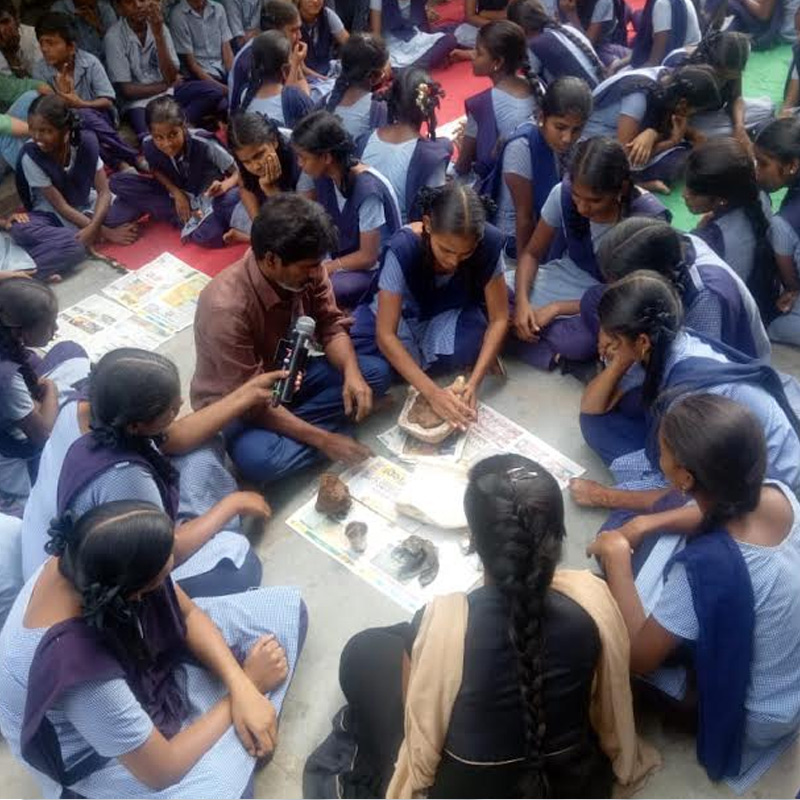
    MUMBAI: Star Maa, the leading Telugu entertainment channel which is part of Star India, an integrated activity of girl children promoting self-made clay Ganesh for the development of their school (ZPHS) at Prasad’s IMAX which is the initiative of the upcoming serial Mouna Raagam in Hyderabad

    The initiative has found support from Star Maa leading celebrities purchased the clay Ganesh idols from the girls and felt the need to implore people to treat our girl children more sensitively. These activations are been organized at ZPHS Alwal, Moosapet, Malkagiri and Dilsukhnagar Schools.

     Star Maa believes in entreating with a purpose. Mouna Raagam is a story of a girl born into a family which did not want girl child. This story is reflection of the dark side of our society and how hope and determination still prevails and eventually wins !.    

    Drawing attention to the fact that most commonly available idols are created from non-degradable material and the paints used contain a high amount of toxins, Star Maa has helped generate awareness and gained steady momentum during the last few years by creating a sense of responsibility among communities and delivering significant value to its partners.

  • Zee Telugu launches new fiction show – Bava Maradallu

    Zee Telugu launches new fiction show – Bava Maradallu

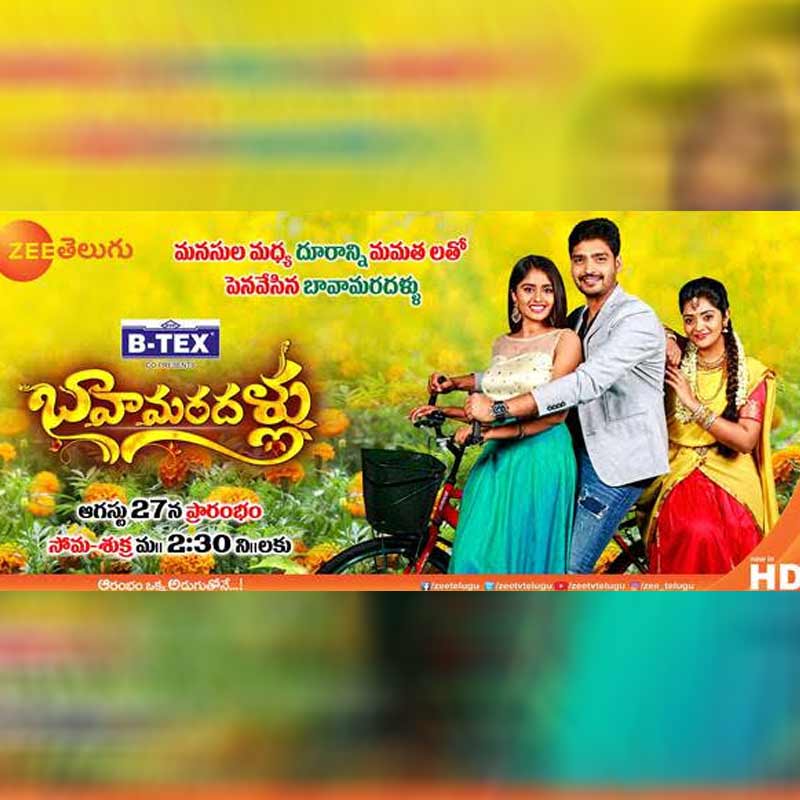
    MUMBAI: An offbeat concept of storytelling, Zee Telugu adds-on to the entertainment by launching Bava Maradallu, a new fiction show. The story of a family’s bifurcation due to social class and the measures taken to make things right once again is bound to equip the viewers to rethink their relationships. Watch Bava Maradallu every weeknight at 2.30PM only on Zee Telugu and Zee Telugu HD.

    The story begins with Balaramayya, the brother of Subhadra, refusing to accept her marriage with Sridhar, who he believes to be below their social class and acceptance. Balaramayya’s wife, Janaki, who is supportive of Subhadra, ends up fostering two children while she gave birth to one, post the occurrence of electrical accident in the hospital which was survived by both the new born babies. Promising her daughter to become Subhadra’s daughter-in-law one day gives them hope and courage of their families reconciling. Venkateshwarlu enters Balaramayya’s house and their lives as the Town’s Bank Manager, as a tenant, with an aim to reunite the family! Watch the love story unfold between Venkateshwarlu and Balaramayya’s daughters Padmavathi and Alivelu as the story moves ahead.

    Commenting on the launch, a Zee Telugu spokesperson said, “At Zee Telugu, we tell stories of ordinary people in an extraordinary manner. With Bava Maradallu, we throw light on the importance of a family. The theme of the show resonates with our refreshed brand image, Aarambham Okka Aduguthone, where Venkateshwarlu takes that one small step that could prove the irrelevance of social class and reunite the family.”

  • Colors Marathi adds traditional sports with Kusti Champions League

    Colors Marathi adds traditional sports with Kusti Champions League

    MUMBAI:  The local sports scenario in India is taking off on TV. Colors Marathi, Viacom18’s regional GEC, along with Maharashtra Wrestling Championship League (MWCL) Sports and Maharashtra State Wrestling Association together announced the launch of Kusti Champions League (KCL) – Apla Banda, Khel Zinda.

    Organised by MWCL Sports in association with Maharashtra State Wrestling Association, the live telecast of KCL will be aired exclusively on Colors Marathi and OTT app Voot. The league will premiere on 7 October 2018 and conclude its inaugural season with the grand finale on 28 October 2018. KCL will serve as a mega platform for the sport by inspiring and creating opportunities for local Maharashtrian players in the field. 

    Talking to Indiantelevision.com, Viacom18 head regional entertainment Ravish Kumar said, “Colors Marathi is delighted by the opportunity and down the road, we will continue to look forward to sports which are rooted and are a part of our tradition. This is first of its kind we are getting into, especially in the regional space.”   

    KCL will be played by six teams consisting of 72 players in total. KCL has selected over 300 players from across Maharashtra for an auction process.  Each team will consist of eight men and four women who are professionally trained in kusti. The cities participating in KCL are Mumbai, Pune, Nashik, Aurangabad, Nagpur and Kolhapur. A total of 90 matches across 21 days will be played on mat and soil at Balevadi Stadium, Pune in Maharashtra. 

    “If you look at the sport, it is very deep rooted throughout Maharashtra, with a long history and tradition and present at grassroot levels. It’s a great partnership as Colors Marathi is also rooted in terms of its content, being a regional channel we really appeal to the length and width of the state,” he added.

    “To uplift the sport further with an international approach towards mat wrestling, Kusti Champions League collectively aims to bring contenders from six regions of Maharashtra on one platform and establish them as strong contenders for Olympic 2020,” said KCL founder Pushkaraj Kelkar. “We want to take wrestling to every nook and corner of Maharashtra, give it the deserved fame and subsequently, create an international platform for the sport,” he added.

    Talking about the ad rates of KCL, Kumar said, “As the matches will be telecast at early prime-time from 5:30 to 6:30 pm, we are also waiting to see how the market will respond as we are doing it for the first time. The ad rates will be lower than that of primetime.”

    The six teams are Jigarbaaz Nashik, Kolhapur Shahu, Jaabaaz Aurangabad, Narveer Nagpur, Zunzaar Pune and Ranayoddha Mumbai. Each franchise will be given a salary purse of Rs 30 lakh in which it has to buy a minimum of 12 players.

    Maharashtra State Wrestling Association and Maharashtra Olympic Asociation General secretary Balasaheb Langdesaid, “Kusti, the most ancient sport of Maharashtra will now be presented to the audience through Colors Marathi. Prior to this, kabaddi has been viewed in league format which was a commercial success for both the players and organisers. Similarly, to ensure that this Kusti League is a successful initiative, we would require the support of the people of India. This league will play a vital role in the player’s morale for the 2020 Olympics.” 

    KCL COO Pradeep Iyengar said, “Wrestling has been one historical sport that has always contributed to India’s sporting prowess, and we are proud to be associated at the state level to take it into the next phase of upliftment and are keenly looking at least five medals from the state at the 2020 Olympics. Kusti Champion League is committed to bringing out the best from the state’s best.” 

    The official radio partner for Kusti Champion League Season 1 is Radio City.

    Earlier this year, DSport acquired the rights for Nidahas trophy, a tri-nation series tournament featuring India, Sri Lanka and Bangladesh. The channel joined hands with Viacom18 to live telecast the series in Hindi commentary on its mass entertainment channels Rishtey Cineplex and Cineplex HD. 

    In BARC week 10, Rishtey Cineplex climbed to the first position in the Hindi-speaking market with 545,931 impressions (000s) sum. It managed to match pubcaster DD Sports viewership leaving behind DSport in the urban plus rural (U+R) category. “This viewership was very impressive and it also brought to light that if people like a channel they expect to see everything on it,” Kumar concluded.

  • In second coming, Ajay Bhalwankar attempts renaissance of Marathi TV

    In second coming, Ajay Bhalwankar attempts renaissance of Marathi TV

    You either get it right, or you don’t. And if you’re Ajay Bhalwankar, you tend to get it right more often than not. Or at least that’s what his past record suggests. “Let’s not talk about my past,” he quips. But his past is not just important but also relevant in the context of his current job – business head Sony Marathi. Bhalwankar’s past was perhaps a determining factor in his boss and Sony Pictures Networks (SPN) India topper NP Singh handing him the daunting task of spearheading Sony Marathi as the latest entrant in the regional general entertainment television sweepstakes.

    In a sense, it is impossible to delink Bhalwankar’s past from his present for two reasons. He built the Zeel juggernaut in this sphere; a consistent domination of the likes is virtually unmatched across regions. Bhalwankar and his band of merry programmers helped craft a brand that commands over 60 per cent of the viewership today. Much of what he accomplished with Zee Marathi has shaped popular culture for the genre and set a benchmark.

    Yet, it is this standard Bhalwankar no longer strives to match or raise. In his second coming, the bearded executive intends to break stereotypes through clever and disruptive programming. His 10-year self-imposed exile from Marathi television was a catalyst in Bhalwankar propagating the idea of launching a GEC to his bosses. “Marathi television was at the same place I had left it at,” he says. The opportunity and potential to push the envelope in the Rs 1000 crore market in terms of the content play excited SPN, ultimately leading to the birth of its newest entity.

    Marathi television is solely driven and dependent on content. Hence, taking a bet on a new channel involved identifying consumption patterns and preferences purely from a storytelling perspective. Bhalwankar seems convinced that there exists a definite mismatch between the content on offer and consumer expectations. He believes there is a gap between what society is and what television is currently portraying society as. Addressing that gap is Sony Marathi’s raison d’etre.

    The resurgence of Marathi cinema as a force to be reckoned with appears to have played its part too. Bhalwankar, who leads a team of around 26 people at Sony Marathi, is now bidding to deliver unique yet mass content (that works commercially too) for the audience.

    The former journalist, however, has his task cut out as he attempts to shake up the business with sensibilities that he believes are in sync with the present. Fresh on the back of the channel launch on 19 August, we caught up with Bhalwankar at SPN’s Malad headquarters to decode his process and philosophy as he mounts an audacious challenge to the existing Marathi GEC order.

    What was the rationale behind launching the channel and why were you picked for the job? Can you give us a sense of what the conversation behind closed doors was like?

    We at SPN were looking at launching a Marathi channel for some time and I part of my responsibilities (SET chief creative director) I was looking at what we should be doing as a network. And this came naturally to me. This space has great potential with maximum number of television households in the entire country. 23.7 million households have a television in the state. So, cable and satellite have grown vastly in the state. Secondly, the number of channels are very few. There are just three GECs here. So there is a huge amount of scope – three-player market, which is dominated by one player. So it’s almost like a single player market. Thirdly, we have always stood for progressive, sophisticated and contemporary content. That’s something that wasn’t happening on Marathi television. So it was the right time for us to make this move.

    Why was I picked for it? My boss should be answering this. I have been involved with the Marathi genre right since its inception. Also, this was an idea propagated by me as part of my network portfolio responsibility.

    How has the landscape changed since your last tryst with Marathi television?

    I was away from Marathi television for 10 years. Despite that, it feels like I’m starting from the same point again. While films have witnessed a renaissance, television somewhere has been time warped. The faces have changed, artists have changed, but the content hasn’t. And that’s where I saw an opportunity. Hence there is a certain degree of freshness to the content on Sony Marathi.  We are creating content that is contemporary.

    Content on Marathi television isn’t escapist. It’s rooted and relatable. Is it possible to redefine the nature of storytelling in such a scenario?

    Our competitors are doing a good job. However, the content is stereotypical. Look at the themes that are being treated in Marathi cinema, that hasn’t happened on television. Breaking stereotypes is our objective. That’s what we stand for. Our shows will deal with newer themes. Our female protagonists will be strong. We will go beyond the spectrum of Marathi content that is being dished out to audiences currently. We are exploring spaces that haven’t been explored so far.

    Why should we watch Sony Marathi? What makes you different?

    Weaving unbreakable bonds is what we stand for. Breaking stereotypes will be our differentiation. And I’m happy consumers have welcomed our content thought. We are focussed on creating a clear-cut brand proposition instead of indulging in a TRP slugfest. A brand proposition that reflects positivity, togetherness and inspiration. We want to highlight today’s time instead of an age-old world. We are about today and tomorrow.

    What can you tell us from the early feedback? Is any particular show working?

    Early feedback is more on the channel than a particular show. They are talking about the colours, freshness, themes – this is what is being picked up by our consumers. As a channel proposition, people are excited about it. That’s the large picture.

    Ultimately, running a channel is about business goals and milestones. You know the challenges on offer. What would you say is a realistic target?

    If we manage to create a distinct identity and brand for ourselves in one year, I think that would define success for us. The brand imagery will matter more than anything else to us. Numbers and money follow with a clear-cut audience set. 

    When you started out on your Marathi television journey, you didn’t have reference points. Today you seem to influenced by the content on Marathi cinema. Are you limiting yourself in any way?

    The creative aspects of television and films are absolutely different. If you see any of my shows, they have no influence of films. But it is a good reference point for us to understand how audiences are receiving that content and the kind of hunger they are showing. Film content on TV has never worked, even internationally. What is comforting for us is that this new-age content has been commercially successful for the film industry. Films and TV are two different worlds and I have realised that in my long career. I have dabbled in film production as well, successfully. Both worlds are different.

    You’ve found yourself in this place before. What’s at stake for you?

    This is the first step that we are taking in the Marathi GEC world. Creating a remarkable brand and an impact on minds of people is what’s at stake for me. That is the critical part. Culturally enriching the audience is something that has always been my endeavour. If that happens, I’ll be very glad.

    As someone who has a deep understanding of content creation in this domain, what is your vision for this genre?

    I have largely been independent in terms of thought process. If people start following our ideas and I start seeing copies of our shows, I will be happy.

    You have nine fiction and two non-fiction shows on air. Why didn’t you introduce them in phases?

    Nine to two isn’t the real ratio. It is 20 hours to four hours. That’s a very healthy ratio. People come together bit by bit. I don’t expect them to watch Sony Marathi from the first day. I have to invite them on each and every second of the day. Beyond this, there will also be films and events. I want to bring in people in every way possible. We don’t want to take the audience for granted. Audiences will come by their own choice. I’m just widening their options.

    How are you acquiring movie content? How big is your movie library?

    Nearly 100-125 Marathi films get made every year. Not many people are buying them. There was enough inventory available in the industry. We have around 100 films in our library. Currently, we have a film every day on the channel and on Sunday we’ll have the bigger ones of course. Library content will go up in the afternoons, late afternoons.

    What do films and events bring to the table?

    Films and events bring in people other than those who regularly consume GEC content. These are the additional people that come and if they find your shows interesting, they end up converting into your loyal audience.

    What about dubbed content?

    We won’t have a lot of dubbed content except the few experiments we have been doing with Hollywood films. It is predominantly going to be original content.
  • Zee Telugu Kutumbam’s women get together to celebrate the month of Sravana in ‘Sravana Lakshmi’

    Zee Telugu Kutumbam’s women get together to celebrate the month of Sravana in ‘Sravana Lakshmi’

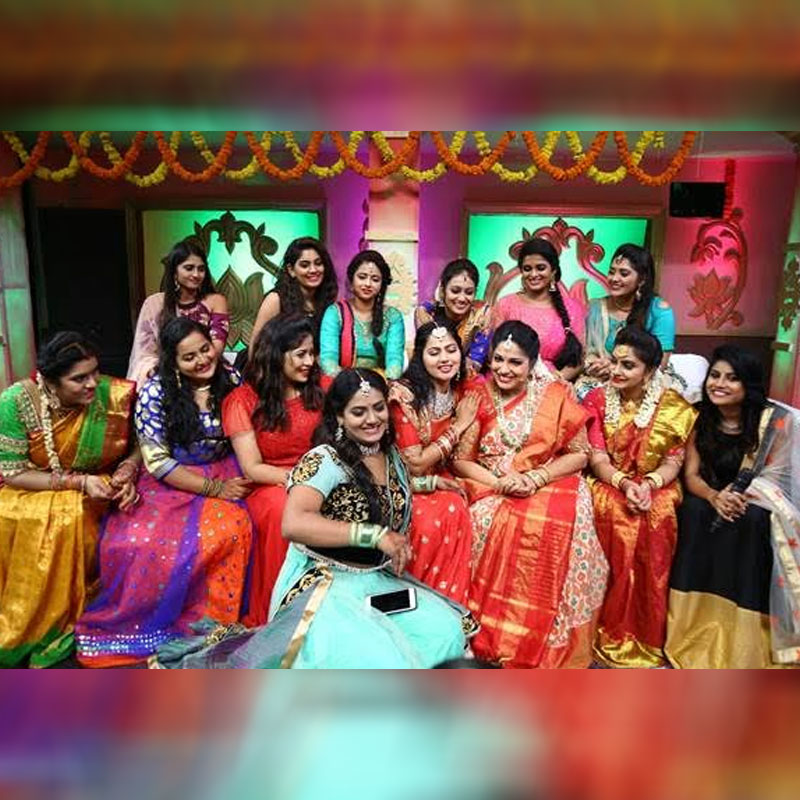
    MUMBAI: Zee Telugu’s Sravana Lakshmi, a special programme by the channel for the occasion of celebrating the auspicious month of Sravana, is being telecasted on 26th August 2018, between 10.00 AM and 2.00 PM. Tune-in to watch some of Zee Telugu Kutumbam’s most celebrated artists participate in a variety of activities and games; the participants will be split into two teams – ‘Pedda Kodalu’ Parvathy from Mudda Mandaram and ‘Chinna Kodalu’ Siri from Na Kodalu Bangaram form two teams with their common mother-in -law in both the shows Haritha, who plays the roles of Akhilandeswari and Bhanumathi respectively.

    Don’t miss out on the sizzling performance by Tridha Choudhury and the fun antiques by actor and anchor Navdeep! Not to forget the special appearance to a popular Telugu number by actors Ravi Krishna and Pranavya from Zee Telugu’s yet-to-be-launched fiction show, Bava Maradallu!

  • Relief for broadcasters as WB govt ends impasse between artist forum, production houses

    Relief for broadcasters as WB govt ends impasse between artist forum, production houses

    MUMBAI: The Bengali TV Industry, one of the major hubs of India’s entertainment ecosystem, was in the middle of a major crisis since Saturday. The tussle between the production house guild and artist forum had stalled the shooting of almost 30 mega serials aired on major GECs in the state. With no new episodes in the bank, broadcasters were compelled to air repeat telecasts of shows. With the two warring parties refusing to budge, West Bengal chief minister Mamata Banerjee intervened, calling on a meeting involving both factions in the presence of three major broadcasters – Zee Bangla, Star Jalsha and Colors Bangla.

    The decision to set up a joint conciliation committee was taken at the meeting, which was also attended by renowned actors like Prosenjit Chatterjee, Soumitra Chatterjee, representatives of Welfare Association of Television Producers. After the meeting, Banerjee told the media that problems concerning all the parties were discussed and the shooting would now resume.

    “The shoot of the mega serials will be resumed tomorrow morning. Our telly industry holds a very respectable place in our state. There will be a Joint Conciliation Committee that will look over all the issues,” she said after breaking the deadlock between the two groups.

    Representatives from production houses, channels, artists, technicians will be a part of the committee, which will be headed by minister Arup Biswas. The committee is expected to meet every month to resolve any conflict and ensure the smooth functioning of the industry. 

    With shooting set to resume today, the entire ecosystem can now breathe a sigh of relief.

    This, however, wasn’t the first time the artist forum and production houses were involved in a stand-off. But the scale of the conflict this time around certainly had the Bengali TV industry worried and the audience frustrated.

    The demands of the artist forum were two-fold – one was about timely payments, the second was with regards to shoot timings. The artists wanted to receive their payment by the 15th of every month. A source close to the development told Indiantelevision.com that there were several artists whose payments have been due for long. The source added that the delay in payments hasn’t necessarily hampered lead actors, but the supporting casts. 

    As per the directive of the forum, actors, some of whom had put their make up on, refused to continue shooting till their dues were cleared. The artist forum also called for overtime payment after ten hours of work.

    The television division head of a leading production house we spoke to blamed some artists for not being present on the floor at the scheduled call time, countering the demand for overtime payment. According to him, some actors did not shoot for more than six hours as they juggled between two projects at the same time. This inflicted monetary losses on the production houses, which pay a monthly rent for floors, he added.

    Many people involved in the issue feared that it could hurt viewers’ interest and that they would gravitate towards Hindi GECs. For the younger audience, there’s already an option of digital content.

    On Star Jalsha, Colors Bangla, Zee Bangla popular shows like Fagun Bou, Ke Apon Ke Por, Debi Choudhurani, Kusum Dola, Om Namah Shibay, Krishnokoli, Joyee, Andarmahal, Rani Rasmoni, Reshom Jhanpi, Subho Drishti, Aloy Bhubon Bhora did not have fresh episodes. Only two new serials Bajlo Tomar Alor Benu and Bhumikonya on Star Jalsha, along with a few reality shows on Zee Bangla and Colors Bangla were aired properly. However, Bengali GEC Akaash Aath survived the crisis without any disruption in telecasting new episodes.

    Had the deadlock not been broken, the entire local entertainment industry in the state could have suffered a great deal of financial damage. With so many people across the state employed in the industry, a prolonged problem between the two parties could have severely crippled the family economy of several households.

    It now remains to be seen how the newly formed committee functions in a bid to ensure there is no repeat of such a situation.

  • Kerala Floods: GEC viewership falls, news channels witness rise

    Kerala Floods: GEC viewership falls, news channels witness rise

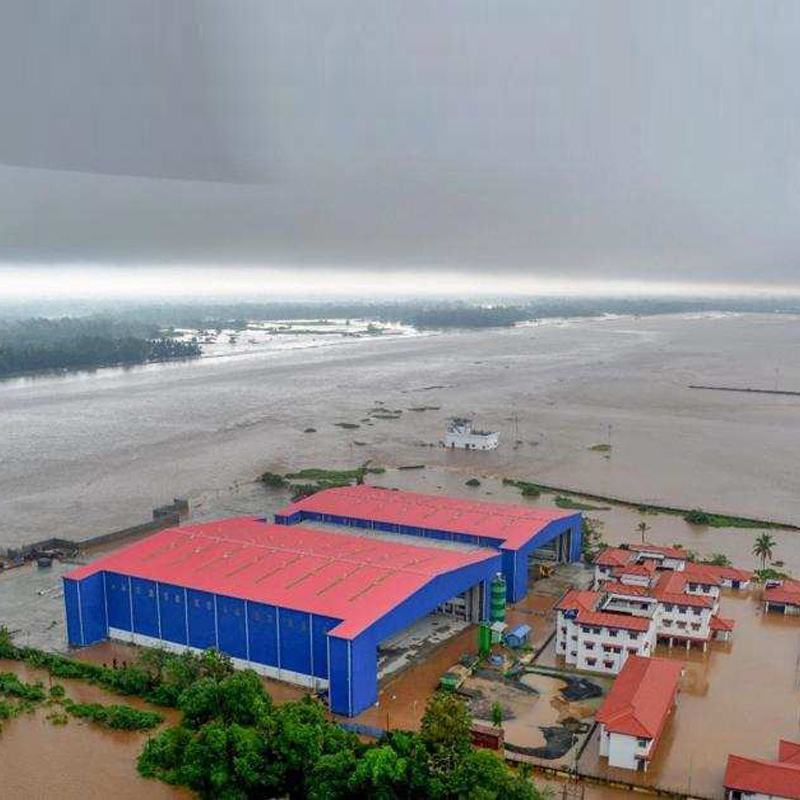
    MUMBAI: The Kerala cable and broadcast industry is just about keeping its head above the water, quite literally! The industry has been crippled due to the recent floods. We wrote about how cable operators bore the brunt of the calamity yesterday. Needless to say, broadcasters were also not unaffected.

    Kerala Vision Digital TV general secretary Rajan KV said that there is no infrastructure loss for TV channels and 500-600 cable networks are still under water. “The viewership has seen 30-35 per cent downfall as many homes were not able to see a single channel both on DTH and cable networks,” he added.

    According to BARC data, the incessant rains that derailed Kerala kept viewers hooked to their television sets that were relying on the medium to keep track of the situation. With 214.1 million impressions, week 32 (4-10 August) saw the highest peak for Malayalam news genre in 2018. The genre saw a 98 per cent growth in the week compared to the average of the previous 4 weeks.

    In a letter dated 21 August 2018, Cable TV Operators Associations (COA) stated that the cable operators have been the worst affected because of their extensive presence in the flood-affected areas. The affected include human lives and damage to property across the state while power and cable lines have suffered extensive damage and distribution has been totally disrupted.

    Mathrubhumi head-distribution Thampi P Joseph said, “Cable TV was the most affected industry by this natural calamity. No monetary losses have been faced by the news broadcasters. In the past two weeks, the GEC rating has gone down and a tremendous growth has been seen for the news channel. We saw a good spike in viewership ever since the floods had started.”

    Kerala has a total TV population of close to 31.3 million, out of which, around 25.8 million people watched Malayalam news in week 32. This means that 8 out of 10 people in the state sampled news in this week. Out of the state’s total TV viewership, 17 per cent came from Malayalam news genre alone, with every viewer spending an average of 1 hour 3 minutes watching news.

    Manorama director news Johny Lukose also believes that there was no substantial loss for the news channels and no channel in the Kerala market faced any infrastructural damage. “The news channels cancelled all the advertisements from the ad inventory to cover the disaster. Two of our channels, Manorama News and Mazhavil Manorama, have lost Rs 10 crore,” he said.

    However, there is still some financial loss that has been felt. According to Insight Media City MD R Sreekandan Nair, the TV broadcasting industry across the state has been set back by more than Rs 50 crore. “We have stopped production of shows for our channels. Apart from the news channel, other players in the market are shifting or repeating the programs. Flower TV has lost almost Rs 10 crore in the disaster. News channels are not affected much because of less tariff, but the entertainment channels have faced huge losses because of the big productions,” Nair said.

    Friday (17 August 2018) alone accounted for 34 per cent of the total news viewership for the week at 72.8 million impressions.

    Asianet News stood at the top with 36 per cent of total news viewership.

    Mathrubhumi News output editor Abi T Abraham said, “By and large, the facilities for the coverage were going as planned. As far as Mathrubhumi is concerned we had about seven Digital Satellite News Gathering vans and 10-15 reporters on the field with live units, except in the case of remote areas where network and electricity were not available. All the channels also did well in terms of covering the disaster but did not face any major damage of technology.”

    It will be a challenge to restore conditions in the state and work to make up for the losses that companies have suffered.