Category: Regional

  • Amagi Media Labs enables ETV to generate custom feed for Singapore

    Amagi Media Labs enables ETV to generate custom feed for Singapore

    MUMBAI: Geo-targetted advertising was started in India by Amagi Media Labs that enabled channels to have particular ads in particular regions. But it didn’t just stop there. It has also started creating local feeds for channels that want to air in other countries.

    According to Amagi, at times, certain shows are not allowed to be aired in other countries due to broadcast regulations, so it is replaced with regional shows. Local content to cater to local audiences can also help in getting targeted advertising in the country.

    In the latest move, the channel has partnered with Eenadu Television to provide custom feed for ETV Telugu in Singapore through Amagi’s cloud enabled broadcast solution. Amagi’s localisation platform at SingTel’s Mio TV will be doing the job for the channel. Earlier, another Telugu network had done the same in Singapore. Maa Network’s Maa TV and Maa Movies also aired local shows to its viewers in Singapore earlier this year.

    ETV Telugu wanted to bring their linear feed to Singapore and it was asked to opt out of two hours of its programming. Using Amagi’s cloud based platform, they have been able to create a local feed for Singapore audiences. “We had a requirement to replace couple of hours of programming on every day basis for our distributor in Singapore while justifying the RoIs,” said Eenadu TV vice president Bapineedu.


    Amagi’s technology helps channels save a lot of resources of creating a new feed using satellite or fiber.

     “The system is designed in a manner such that the content masking process works in parallel to the satellite broadcast’s processes and scheduling,” said Amagi co-founder and CTO Srividhya S. “Unlike the traditional triggering mechanism used, Amagi’s barcoding based approach offers workflow flexibilities and 100 per cent accuracy in identifying and replacing content assets.”

    Recently Amagi has perked up on its geo targeted advertising for Nickelodeon and HUL as well as Zee TV.

  • Regional television struggles to find its voice

    Regional television struggles to find its voice

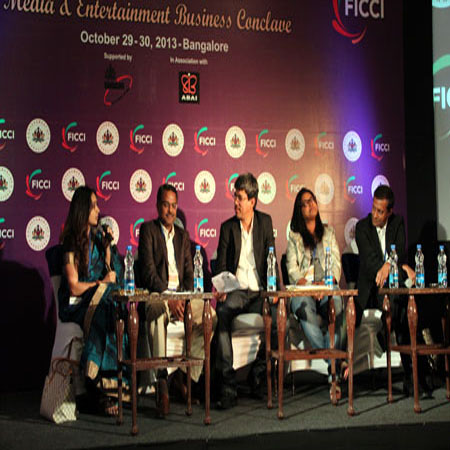
    BENGALURU: What good would a FICCI MEBC event be in Bengaluru without a discussion on the current status of regional TV, ratings, content and formats? The session moderated by indiantelevision.com CEO and editor in chief Anil Wanvari saw four personalities – TAM CEO L V Krishnan, Asianet and Star Suvarna Business Head Anup Chandrashekaran, TV serials director Shruthi Naidu and actress Malavika Avinash – talk about the evolving genres in the south TV market and the tussle that that the industry has with the TAM ratings.

    According to the FICCI Deloitte report, the south Indian TV industry was valued at Rs 13, 470 crore in FY 2013 and is set to grow at an estimated CAGR of 20 per cent over the next four years. TAM’s Krishnan added that it also accounts for 20 per cent of national viewership. To top it all, south Indian viewers are glued to their TV sets almost 30 per cent more than their northern cousins. The former spend 150-200 minutes a day watching soaps, series, movies, drama and non-fiction as compared to HSM viewers who spend 100-110 minutes disclosed Krishnan.


    Kannada TV is in a strange predicament and its viewership is eroded because of the fact that the state shares its borders with others such as Tamil Nadu, Andhra Pradesh, Kerala and Maharashtra which means viewers in these regions watch TV shows in the languages prevalent in those states. To make matters worse, only 35-40 per cent of Bengaluru’s populace speaks Kannada. This despite, Krishnan is optimistic that Kannada TV will do well. “It has grown by 25 to 30 per cent in the last five years in terms of engagement and the next four years will see the viewership increase by 20 to 25 per cent,” he says.

    Chandrashekaran said that the south TV industry is experiencing changing consumption patterns. “Fiction consumption is growing here as compared to HSM where non-fiction is taking over,” he said. “There has been de-growth of film consumption in the states of Karnataka, Andhra Pradesh and Kerala. Movies are unviable on TV today everywhere else except in Tamil Nadu,” he said. “We pay Rs 2.5 crore to acquire a title; but we spend around Rs 70,000 to Rs 80,000 an episode for fiction and we get the same or better viewership. Then, big ticket formats are also slowly spreading such as the Kannada and Tamil versions of KBC,” he added. “Then ETV produced Bigg Boss in Telugu and Kannada.”

    Both Avinash and Naidu bemoaned the fact that budget restrictions in Kannada have led to creativity and innovation being stifled in the region. “The protagonists in most shows are becoming younger – in their late teens or early twenties, which leaves limited scope for actors like us who have been around for 15 years,” wailed Avinash. She, however, added that her Oprah Winfrey-like conflict resolution show has given her a good platform for her to exploit her creativity.

    Chandrashekaran said that the younger protagonist strategy is being resorted to because broadcasters are trying to draw in younger audiences – apart from the plus 45 year olds – to watch television. Krishnan pointed out that the broadcasters strategy is on the button as TAM Media research has shown that boys 14 and above tend to follow what their fathers are watching, mainly sports while girls follow their mothers and watch serials.

    Chandrashekaran said the economics of programming dictate that higher budgets for shows will work in a broadcast network scheme. “If we can produce and amortise our costs over various languages like Tamil, Telugu, Malayalam and Kannada it will make our shows viable,” he explained.


    Naidu agonised over the fact that Kannada broadcasters are increasingly resorting to making adaptations of successful Hindi shows rather than encouraging and experimenting with original stories from Karnataka. Chandrashekaran said that this was happening because there is a paucity of scriptwriters in the region and the novelists and literature writers from the state tend to look down on TV as below their creative dignity. “We do a lot of interactions with our viewers and we only focus on filling whatever our focus group studies throw up as viewing need-gap.” Avinash pointed out that emotion and drama work very well with TV audiences which is why adaptations of Hindi shows in the form of soap, drama and series are working on regional television.

    The topic also shifted to the credibility of TAM with her asking whether TAM data is rigged due to inconsistent ratings as compared to the popularity and visibility of shows. To this, Krishnan said that they have checks and balances in place to prevent any penetration or doctoring of the data. “Yes, I am honest enough to say, one can reach out to our people meter sample, but we have policing mechanisms in place which will immediately penalise anyone who is trying to do that,” he emphasised.

    Niche genres are missing in the south with most of the channels being GECs or film channels. But Chandrashekharan says that the potential to harvest niche genres is there.

    “With the 10+2 ad cap coming in, we will see a lot of advertiser funded programs (AFPs) specially in Tamil Nadu because its base is huge,” he said. “I am very optimistic about our future and I can only see rosy pickings for everyone.”

  • Will Mahabharatham walk the talk?

    Will Mahabharatham walk the talk?

    MUMBAI: Not very long ago, Star Plus launched its magnum opus, Mahabharat, a contemporary retelling of the ancient Indian epic, on a scale never-seen-before and amidst huge fanfare.

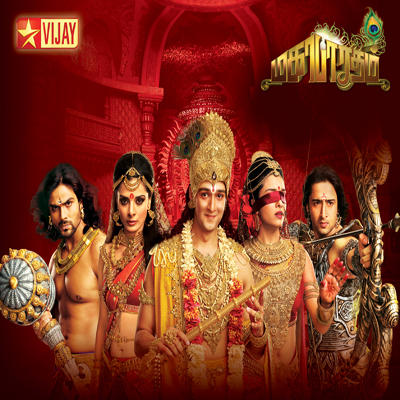
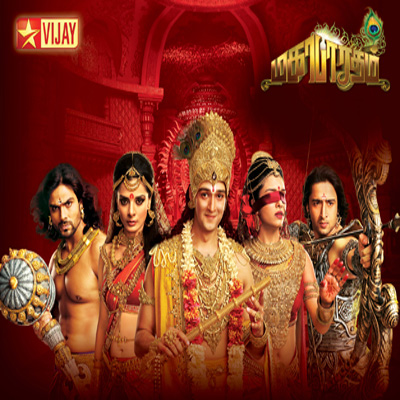
    Soon after, a dubbed-in-Tamil version of the show named Mahabharatham was aired on 7 October on Star Vijay, Star TV’s Tamil GEC.

    Not only did Mahabharatham take over the 7:00 pm slot, earlier reserved for a kids’ show titled 7 C, which was anyway about to end, two weeks prior to the show’s launch, a high decibel marketing campaign comprising TV, radio, digital, on-ground, and to a large extent, outdoor, was undertaken to publicise its arrival.

    As part of this endeavour, life-size posters of the show characters were put up across Tamil Nadu; TV celebrities were brought in at the end of every show on Star Vijay to promote the series; monologues were staged on streets to grab attention; and hoardings were put up across 500 locations including Chennai, Madurai, Tiruchirrapalli, Erode and Tirunelveli. A staggering Rs 1 crore – Rs 1.5 crore was spent on the campaign, with separate plans for merchandising during Diwali.

    Promotions apart, Star Vijay ensured Seventh Channel Communications did a neat job of the dubbing. “Seventh Channel Communications has dubbed on a 50 episode contract, with each episode costing up to Rs 1 lakh. We have ensured the dubbing is so tight that the lip movements match with the Tamil words the characters are speaking. People were thoroughly impressed with the grandeur on watching the promos. The feedback on production value was positive,” elaborates Star Vijay general manager K Sriram.


    Now, with the show well past its launch, Star Vijay faces the big question whether all the investment and effort has been worth the channel’s while.

    While there are no clear answers, it is true that the first two weeks of Mahabharatham have garnered 422 and 440 TVTs (average), respectively, and its opening show has got 415 TVTs unlike 7C, which was just about managing 169 TVTs weekly (average). What’s more, close competitor Raj TV’s Sindhu Bhairavi (Uttaran dubbed in Tamil), which airs at the same time (7:00 pm), has garnered only 251 TVTs (average).

    As a media planner from Chennai-based Group M puts it: “For Star Vijay, these are good numbers and now – Mahabharatham – for which they did huge promotions, is their best show as well.”

    However, the picture is not entirely rosy. Sun TV, another rival, has its own version of Mahabharatham which airs every Sunday morning and garners more TVTs than Star Vijay’s show. To this, the planner only says that it is wrong to compare any other channel with a player like Sun TV which enjoys strong loyalty.

    The planner reasons that Tamilians are attached to such shows because they are conservative and dedicated to religious beliefs and that is why epic shows work well down south. At the same time, he is quick to point out it would be best to wait for another week to see if Star Vijay’s Mahabharatham sustains its ratings before taking any call on the show.

    In fact, readers may recall that the original Mahabharat (Hindi version on Star Plus) too dropped from 8,445 TVTs to 5,518 TVTs in its second week… So, Star Vijay will have to wait to see the returns of its investment…

  • Will Mahabharatham walk the talk?

    Will Mahabharatham walk the talk?

    MUMBAI: Not very long ago, Star Plus launched its magnum opus, Mahabharat, a contemporary retelling of the ancient Indian epic, on a scale never-seen-before and amidst huge fanfare.


    Soon after, a dubbed-in-Tamil version of the show named Mahabharatham was aired on 7 October on Star Vijay, Star TV’s Tamil GEC.


    Not only did Mahabharatham take over the 7:00 pm slot, earlier reserved for a kids’ show titled 7 C, which was anyway about to end, two weeks prior to the show’s launch, a high decibel marketing campaign comprising TV, radio, digital, on-ground, and to a large extent, outdoor, was undertaken to publicise its arrival.


    As part of this endeavour, life-size posters of the show characters were put up across Tamil Nadu; TV celebrities were brought in at the end of every show on Star Vijay to promote the series; monologues were staged on streets to grab attention; and hoardings were put up across 500 locations including Chennai, Madurai, Tiruchirrapalli, Erode and Tirunelveli. A staggering Rs 1 crore – Rs 1.5 crore was spent on the campaign, with separate plans for merchandising during Diwali.


    Promotions apart, Star Vijay ensured Seventh Channel Communications did a neat job of the dubbing. “Seventh Channel Communications has dubbed on a 50 episode contract, with each episode costing up to Rs 1 lakh. We have ensured the dubbing is so tight that the lip movements match with the Tamil words the characters are speaking. People were thoroughly impressed with the grandeur on watching the promos. The feedback on production value was positive,” elaborates Star Vijay general manager K Sriram.


    Now, with the show well past its launch, Star Vijay faces the big question whether all the investment and effort has been worth the channel’s while.


    While there are no clear answers, it is true that the first two weeks of Mahabharatham have garnered 422 and 440 TVTs (average), respectively, and its opening show has got 415 TVTs unlike 7C, which was just about managing 169 TVTs weekly (average). What’s more, close competitor Raj TV’s Sindhu Bhairavi (Uttaran dubbed in Tamil), which airs at the same time (7:00 pm), has garnered only 251 TVTs (average).


    As a media planner from Chennai-based Group M puts it: “For Star Vijay, these are good numbers and now – Mahabharatham – for which they did huge promotions, is their best show as well.”


    However, the picture is not entirely rosy. Sun TV, another rival, has its own version of Mahabharatham which airs every Sunday morning and garners more TVTs than Star Vijay’s show. To this, the planner only says that it is wrong to compare any other channel with a player like Sun TV which enjoys strong loyalty.


    The planner reasons that Tamilians are attached to such shows because they are conservative and dedicated to religious beliefs and that is why epic shows work well down south. At the same time, he is quick to point out it would be best to wait for another week to see if Star Vijay’s Mahabharatham sustains its ratings before taking any call on the show.


    In fact, readers may recall that the original Mahabharat (Hindi version on Star Plus) too dropped from 8,445 TVTs to 5,518 TVTs in its second week… So, Star Vijay will have to wait to see the returns of its investment…

  • Now ‘Mahabharat’ on Star Pravah

    Now ‘Mahabharat’ on Star Pravah

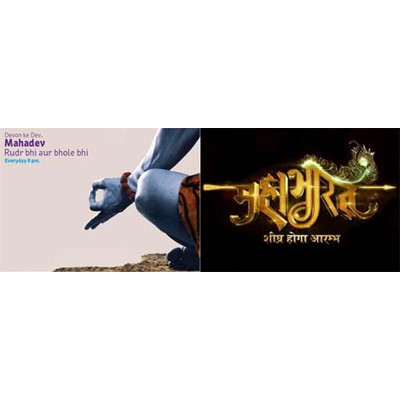
    MUMBAI: Marathi GEC viewers are set to be taken back into time. Marathi viewers will soon be introduced to two popular mythological shows for the first time. Come 21 October, between 6:00 pm and 7:00 pm, a new slot has been created on Star Pravah called Mahaparv that will start airing two of Star India’s biggest properties in this genre – Star Plus’s magnum opus Mahabharat and Life OK’s Devon Ke Dev… Mahadev. The difference being both the shows will be telecast, dubbed in Marathi.


    “The Marathi space has been missing this genre and these two shows are the network’s prime properties. The whole idea behind spending so much is that the whole network gets to share it,” explains Star Pravah programming head Jayesh Patil, pointing out that the astronomical costs involved in producing such shows was the very reason they hadn’t been tapped so far by the Marathi GEC space.


    Mahaparv will also serve as an experiment in how well (or otherwise) mythology is received by the Marathi audience. The question however remains whether Marathi GECs will be willing to spend several times more on original mythological shows.


    “We are spending a lot on dubbing to establish them. Once the market is open for mythology, we can shell out more,” replies Patil, adding that there’s a lot of scope for showcasing mythological tales from Marathi literature. As it is, each episode of either of the two shows takes nearly a day for dubbing in Marathi, with costs ranging between Rs 1.5 to Rs 2 lakh per episode, according to industry sources.


    According to Patil, 6:00 -7:00 pm is a good time to air these shows however Madison Media COO Karthik Lakshminarayan feels prime time would have been more suitable.


    So will these shows work for the Marathi audience? Life OK GM Ajit Thakur believes that mythological shows are universal so they will work everywhere. Mahadev has already been aired on the Star network’s Kannada, Oriya, Malayalam and Tamil channels, he points out.


    Lakshminarayan however feels Mahadev might fare better in the Marathi space. “Mahabharat has been treated like a movie and Marathi audiences are unused to such grandeur on TV shows. In terms of set and costumes, it may just be a bit too much for them,” he opines.


    Star Pravah is in the midst of negotiations to get advertisers on board and Lakshminarayan feels that shouldn’t be a problem considering both the shows are established.


    Will this time travel work for the Marathi audiences?

  • New Tamil GEC Pudhu Yugam to go live on 23 October

    New Tamil GEC Pudhu Yugam to go live on 23 October

    MUMBAI: A new channel is about to enter the Sun TV-dominated GEC space of South India.


    Pudhu Yugam, from the Chennai-based New Generation Media Corporation stable, is slated to go on air from 23 October. It is the second TV offering from the company after news channel Puthiya Thalaimurai TV.


    An internal launch has already taken place on 5 October, when the channel’s programming was unveiled to the New Generation Media Corporation. Whereas an official launch has been planned on 18 October at Chennai’s Leela Palace where everything about the baby channel will be revealed. The ad sales are being handled by Fourth Dimension Media Solutions while the media and creative duties will be handled by Mindshare Chennai and Disha Communications respectively. The channel logo will be unveiled on the day of the launch.


    Nearly Rs 100 crore has been invested in the channel, which plans to air about 100 hours of in-house content per week including serials, reality and non-fiction shows, with the rest commissioned to producers. Popular Tamil film celebrities such as Simran, Sonia Agarwal and Ambika are expected to grace the shows with their presence.


    New Generation Media Corporation CEO R B U Shyam Kumar couldn’t have been happier as the launch is happening before Diwali as he’d wanted.


    As of now, each hour will see about seven to eight minutes of advertising. Fourth Dimension has recently opened up an office in Mumbai to attract more advertisers for the channel. “I have travelled extensively across India and the response to the channel has been terrific,” says Fourth Dimension Media Solutions CEO Shankar B.


    Digitally speaking, all the shows will be available on the channel’s website plus viewers will be able to live stream them with a delay of just one or two minutes.


    Plans are afoot to launch an application for Android and iOS that will be free for the first three months, post which it will be made subscription based. Viewers will be able to see live TV on the application as well.


    “We tried the application with our news channel Puthiya Thalaimurai TV, and we realized people want to view us wherever they are,” says Pudhu Yugam convergence head Manikanda Boopathi. The channel will be available as a pack with PT TV for a price of Rs 250-Rs 300 per annum. Apart from that, it has also tied up with Yupptv for showing live TV and VOD.


    “We know where the world is heading and we want to be ahead of everyone else,” says an optimistic Boopathy. The PT TV application has had over 80,000 downloads that gives viewers three options- live TV, just live audio (for low bandwidth) and live tickr. All this with just under four minutes of delay.


    There are plans to have live streaming in HD for Tamilians in US in phase II considering Indian bandwidth is too low to allow HD on the internet.


    Like in the case of Puthiya Thalaimurai, the marketing campaign will focus more on outdoor than TV. Closer to the launch, events such as flashmobs have also been planned to generate buzz.


    Pudhu Yugam plans a breakthrough in the GEC space by positioning itself as a General Engagement (and not Entertainment) Channel with domestic as well as foreign-based Tamil viewers as its target audience.


    Only time will tell if Pudhu Yugam can give established networks like Sun and Jaya a run for their TVTs…

  • ETV Marathi: Changing the rules of the game

    ETV Marathi has been one of the pioneers in regional entertainment and to our credit, we‘ve been visionaries.

    The way I see it there have been three phases of content. The first was the evolution of content. ETV Marathi, when it started out, was not on par with national TV channels but it was locally unique and culturally closer. The next phase was when Star Pravah came into being, and the quality and nature of programming took a leap. The third phase is what ETV Marathi has done since Viacom 18 came into the picture. We‘ve taken the current entertainment to its next phase.

    KHMC gets a lot more visibility and helps signify that change at multiple levels such as scale of programming, quality, production values or benchmark impacts the kind of audiences we draw.
    _____****_____

    Kon Hoyil Marathi Crorepati (KHMC) was one of the first steps to signify that. The kind of shows we were doing before and after KHMC signify the extent of change in the genre.

    KHMC gets a lot more visibility and helps signify that change at multiple levels such as scale of programming, quality, production values or benchmark impacts the kind of audiences we draw.

    The kind of programming that we have lined up is going to bring in more audiences from outside the genre. These are audiences that were not watching much of our Marathi programming but because of the quality and diversity, they would be looking at it. These are the younger audiences or more contemporary and educated in English or Hindi medium schools and therefore, are not watching regional Marathi entertainment. So it has to be the language and content that has to appeal to them. The content more than the emotional attachment to their language should pull them in.

    ETV Marathi‘s legacy is very strong but we were stuck in the past where it pulled in a certain kind of audience. We are now bringing in content that is far more vibrant, younger, contemporary and fresh in order to pull in a whole new segment of audiences to Marathi GEC.

    We had to change our FPC (Fixed Point Chart) but we didn‘t have the luxury to create content and wait because it was a running channel. We started replacing shows in a certain priority. We started by replacing some fiction shows. We brought contemporary drama on the channel. We created a completely original show called Vivah Bandhan while another was a remake of the popular show Uttaran called Asawa Sundar Swapnache Bandhan. We thought of taking something that worked nationally and serving it in a regional language with a setting that‘s closer home.

    Post that, we worked on the fiction vs. nonfiction mix. Previously, E TV Marathi had nonfiction during a late night time band post 9:30 pm or 10:00 pm, which we pulled to the 9:00 pm to 10:00 pm band. We launched three shows; one was Natya Rang, another was Comedy Expressthat we reworked on and third was another popular ETV Marathi show called Crime Diary that we brought back in a new avatar.

    E TV‘s legacy is very strong but we were stuck in the past where it pulled in a certain kind of audience.
    _____****_____

    Traditionally, ETV Marathi was not known for marketing. Now we have changed that and there is cross-channel marketing; outdoor, print, ground activities-pretty much 360 degree. We used KHMC to amplify our marketing because in a GEC space, a channel is never marketed, the show is. We did many on-ground activities for KHMC. We had vans going from city to town and organising a game play on the ‘hot seat‘. So people in a small town would gather and get an opportunity to answer five questions and get the feel of it. So we did a lot of these things that may not ultimately give an ROI on a specific show but will help to create a lot of buzz for the channel. KHMC did manage to shake people up as it came as a disrupter.

    Incidentally, KHMC is just about 20 per cent of our ratings while the rest comes from our other shows.

    We‘ve not only started doing a lot of marketing but we started just letting people know that ETV Marathi was undergoing a change.

    The consumer would take time to realise a change was happening. After carrying out some changes till March, we launched KHMC in May as our flagship program. That brought us a lot more visibility. What we have noticed is that every new show‘s launch has beaten the record of the previous show‘s launch. We brought on board better quality and differentiated nonfiction programs this year. The channel now has something for everybody.

    As a channel, for us, it is important to know what is happening in every age group. We track that by age or by SEC. Every single age group is showing growth in reach and time spent on ETV Marathi . We want to make sure that a lot of our old and loyal audiences have reason to stay on the channel as well as the younger audiences come back to the channel because our audiences don‘t sit in Mumbai and Pune. So we target the rest of Maharashtra in both ground activities and print.

  • “Regional channels with food shows are our competitors” : FOOD FOOD PROMOTER AND DIRECTOR SANJEEV KAPOOR

    “Regional channels with food shows are our competitors” : FOOD FOOD PROMOTER AND DIRECTOR SANJEEV KAPOOR

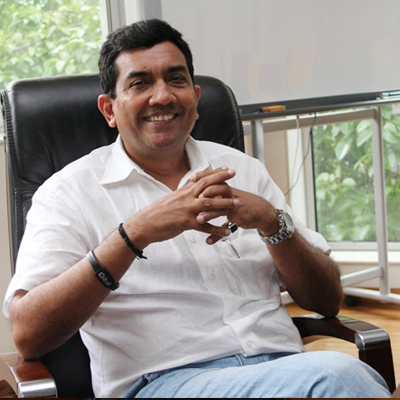
    He’s belied the oft-stated misconception that cooks don’t make great businessmen. And he is someone who feels fortunate enough to have done things he really likes doing. His contended smile describes his success. Well-known celebrity chef Sanjeev Kapoor (remember Khana Khazana?) today has moved from being a famous cooking show host to an entrepreneur and director of India’s first homegrown food related channel FoodFood.

    But the good looking Sanjeev Kapoor, who sees opportunities where others see challenges, dismisses his achievement by saying: “I feel I am still in the kitchen and this is my favourite part.”

    In a conversation with Indiantelevision.com’s Seema Singh, Kapoor speaks his heart out on his journey which started from people laughing at his dreams for a food channel to earning their respect today as an entrepreneur who is building a solid business.

    Excerpts:

    How did Turmeric Vision (TVPL), Astro All Asia Networks (Astro) and Sandeep Goyal’s Mogae Groupa come together to start the channel Food Food? How has the association been?

    The first thought of doing a 24-hour channel on food came to me in 2003. But I was not sure I could do it on my own. And hence, I started pitching the idea to others. People thought I was mad. They thought how can a category, which is a half hour afternoon slot, become a full time channel.

    When I initiated the talks, I didn’t think that I could start a channel. There were channels in all genres, so why not have a 24 hour food channel? But I had decided I would do this with someone else. Sadly, no one thought of it as being an opportunity.I chatted with Scripps Network’s Food Network internationally, but they were not interested. I also approached the BBC, which already was already airing lots of food programming. It did show some interest in the beginning, but after the meeting was fixed in London, BBC cancelled.

    It was then that I decided that I would start the channel on my own. It was out of sheer anger. I thought this was something I really wanted to do and so started thinking, working on and understanding it. At that time, the then Sony Entertainment Television CEO Kunal Dasgupta, was someone who understood what I was envisioning and thought that food as a category will grow, which was very encouraging.

    In 2006, I set up TVPL. I applied to ministry of information & broadcasting for an uplinking licence and started building the channel. At around this time I met up and discussed my plans with Sandeep Goyal who was then the CEO of Zee TV. Being a foodie himself, he was in sync with my thoughts. It was he who suggested the name of Astro Networks as a possible partner for this venture. Sandeep also joined us as a notional partner.

    I had lost about three years in between ideating and finally setting up the company and the channel. I lost ; one because of the unfavourable market scenario from 2007 to 2009 and secondly because we were in active discussion with several media groups in India which didn’t work out.

    But when we launched it, it was at the right time!

    Who is your core target audience? How have you been able to redefine the food content in India? Do you programme the channel based on the time of the day?

    Most people would imagine food content being more women-centric. But, times have changed, and now one can see more men walking in even in a category like food, especially in the evening slot. We are also attracting a lot of younger audiences. When we started, our core target audience (TG) was women 35-years and above. We have been able to bring that down to about 25 years and our TG will continue to get younger.

    In terms of cities, the channel is available in all the HSMs (Hindi speaking markets). North, of course is big in terms of numbers for us. Maharashtra, Gujarat and other bigger cities also have great traction. Most of our numbers comes from the metros, Delhi and Mumbai being the greatest contributors.

    Ours was the first HD ready channel, with all content being HD ready since the channel’s inception. This helped us add good quality households from the top cities to our viewership. Our presence on Tata Sky, Airtel and Videocon has also helped us reach good quality homes.

    It was when I first started doing TV that people started understanding the meaning of food content. With Food Food, people expect good quality content not just boring shows. Our content concentrates on the core Indian market, with our content being 100 per cent relevant to the Indian ethos.

    We have been able to set trends for shows on other channels. They through us understand what is accepted in India. We do not only concentrate on adding numbers to our viewership, but we see it as our responsibility to define the direction of food in Indian. We now have a lot more healthy wholesome content.

    As for the programming, the early morning slot is more vegetarian, the afternoon slot focuses on learning, but not boring learning. As we move to early evening, it’s more of Bollywood and games. And evening and late evenings we have lifestyle. We keep trying and testing with our content.

    If you are a leader, you have to learn, define and teach your viewers what to watch as per the time.

    How does the channel conduct its research?

    Food Food is a specialty channel. We work with research agencies for qualitative and quantitative research. Also we are constantly in touch with our viewers through various viewers connect events. We do close to 90 events, which gives us a fair idea of what people want and what we should do or not do.


    I would say the regional channels, which have started building loyalty on food programmes are some of our closest competitors. The lavish and expensive cooking reality shows on the general entertainment channels are no competition for us; in fact they help us in building a category.

    What is your reach internationally?

    We are currently available in the Gulf and Canada. We are also in the process of finalising our reach in US. We are looking at other markets internationally through Jadoo boxes. We are working on opening up to more markets.

    Who are your competitors? How do you look at handling them?

    I would say the regional channels, which have started building loyalty on food programmes, are some of our closest competitors. The lavish and expensive cooking reality shows on the general entertainment channels are no competition for us; in fact they help us in building a category.

    We are by far the number one lifestyle channel in the country. We don’t have to worry about competitions. Most channels are in fact following us. As long as this trend continues, we are happy. But naturally, we keep a watch on what is happening and ensuring that we stay ahead.

    What are the shows that are being aired on the channel currently? Any plans of launching a new one soon?

    Currently Food Food has shows like Soki, Tea Time, Health Maange More, Style Chef, Mummy ka Magic and several health-based shows. We keep doing new seasons of our popular shows. The How to Cook series, Sanjeev Kapoor’s Kitchen and Maa ki Daal are big hits. We are continuously looking at new concepts for our shows. We do have plans for some exciting new ones. What is good is that even today the early shows, which were launched when the channel was, still interest viewers and advertisers.

    The big challenge is when you have popular shows how do you bring in new shows! For example, if the IPL is a hit and excites and engages audiences, you don’t shut it down; you come with several seasons of the format. Same is the case with us.

    What are the mediums you use for reaching out to audiences? Do you invest in digital as well? How much is your ad spent?

    Marketing and other promotional activities not only to create a recall but also build a bond. One of the good things we have seen for Food Food is that the average time spent by viewers is very high. We want to ensure that people who walk into the channel stay longer, along with getting newer sets of viewers.

    We work in two areas; firstly we market ourselves to the viewers and then to advertisers. You are as good as your shows and numbers are important.

    For our initial marketing campaign, we roped in Madhuri Dixit as the channel’s brand ambassador. This was to create the buzz. Now most of the marketing is done through our shows.

    We use all mediums like outdoor, print, digital, radio and television, but the key marketing tool for us is on-ground activities. Plus we also work as partners with different brands and also with communities such as chefs and hotels.

    Our website www.foodfood.com is very active. Our interaction with viewers on Facebook and Twitter is very helpful. We have started a Food Food channel on Youtube. We are also working on an app for the channel. Digital reach is important and we are constantly working towards making it useful for different sets of generations. Youngsters are glued to our telecasts, so we focus on what will attract them.

    Our marketing budget is as high as 20 per cent of our total budget. But I would say, we give a lot of weightage to consumer connect programmes.

    How large is the food show genre? Does it get enough traction?

    If we look at the GECs, the total contribution to the kitty is significant, and this significance can be translated into something which can have four to five channels. So we understand the consumption pattern, but not all may come in a focused way. At times the usage is too scattered, and that is the case right now.

    But whenever there is maturity in the market, there is consolidation and now we are beginning to see that. If you have a heart problem you will not go to a general physician, but to a heart specialist.

    This is going to happen in media too. Currently advertisers are going to everyone. They just look at the number of viewers, no matter what quality.

    This is not the way it works in mature markets. This maturity is coming into agencies, viewers and brands. Initially there were no solutions, but solutions are there now. Digital has been able to show that solution. TV was more in the air. Whatever agencies said was being accepted. Advertisers never delved into how people were reacting. Consumption was not being tracked. But, now it is beginning to happen. In the next few years, more specialty channels will come in and they will benefit.

    Is there enough bandwidth amongst audiences for so many food shows? What is the channel’s GRP?

    India in some sense has three religions: Bollywood, cricket and food. If we want to entertain ourselves we use these three. While Bollywood and cricket is well represented on TV, food is under-served. Slowly we are getting to see entertainment with food, and this will only grow.

    There is 100 per cent bandwidth for a specialty channel like Food Food. We have to just understand viewers’ needs and then we have to translate that demand and see if this is pan India. If the show is executed well, it is consumed easily.

    We continuously stay at around 10 GRPs. Delhi and Mumbai gives us the maximum numbers.

    It is a food channel with all shows on food, so then how do you decide on the content? What is the difference in the theme of each show? With three partners, how do you come to a consensus on the content of the channel?

    This is our full time job. We constantly keep our ears to the ground. People always tell you what they want, and I realised it when I was writing my book. We are just serving a need. It is a fairly simple task. Just listen to people. We are currently at a stage where we have to just listen and react.

    We continuously have our executive committee and board meetings. The team presents ideas and concepts to the executive committee and they approve or disapprove. It is how you live in a house, you have different members and yet you stay together. We may have our individual preferences, but what finally goes out on TV is something is that the family wants.

    Is it difficult to sustain a channel based only on food?

    If cooking is inherent or food is inherent to Indians, then for a channel like Food Food there is no question of survival. People will consume what they can relate to. And when it comes to us Indians, we can relate to food, made in our style. And this is what Food Food is all about. And so we are the highest rated.

    Even news channels are coming up with food shows, how do you cope with this competition?

    Naturally, when there is something on food which takes away from us, it is a problem, but, if it helps us its good. Larger shows are no competition. I see them as category builders. Smaller shows, if they can take away from us, can pose some competition, but I don’t see that happening.

    For the shows on news channels, the core target is men and also the time slot is different, so they don’t harm us. We see such shows as an opportunity that someone else has created for us.

    Do you want to foray into reality shows as well?

    We did a reality show before Master Chef. We had Maha Challenge with Madhuri Dixit. As and when the time is right, we will do reality shows. But I think the noise that one needs to create need not be through noisy shows. It can be done in a smart way. For instance a comedy show with Kapil Sharma gets more numbers than the bigger shows at one-sixth the cost of a big show. So my belief is that if we are able to get higher GRPs through smarter and smaller shows, we will go with that.

    GECs need to have bigger shows, so a show like Master Chef works perfectly on Star Plus. What is good is that the understanding of Food Food is being used by shows like Master Chef. There is increased understanding of what and how the food genre works.

    For us if it is about reality show it has to be something which is very real. Unfortunately in India, reality shows are associated with big budget shows. For Food Food, a reality show is about real people cooking every day not for only for 13 weeks. It may be a daily contest, which is conducted in six cities having six winners every day. This is bigger and more relevant for Food Food. We are constantly debating, and if you ask us if we will be doing reality shows, of course we will be.

    Will the 12 min ad-cap affect the advertisement in the channel? How will the channel deal with it? There are talks in the industry of increasing ad rates after the ad-cap is implemented? By how much will the ad rates go up? What is the current ad rate?

    It’s something the whole industry is facing. If that has to be followed, the whole industry will follow. This means that someone will have to pay for it. If the broadcast industry has to pay, I don’t think they can afford it. So either the viewers will pay or the brands will. As of now it is tricky and painful and hope there is some resolution.

    As I see it, there could be a 25 per cent increase in either the ad rate or subscription charges. Fortunately for us, it’s not much of a problem because we are a new channel. In a new channel the inventory consumption doesn’t start at 100 per cent utilisation; it builds over time. And we are in the process of building that. So the impact on us will be lower than those players whose inventory consumption may be 100 per cent.

    There were reports of the company breaking even in two years from its launch? How far have you reached as far as this objective is concerned?

    It’s on track. Our understanding of the business is much deeper than what it was. So I don’t see a reason for not achieving it.

  • MEASAT elevates Vishal Mathur to senior sales director

    MEASAT elevates Vishal Mathur to senior sales director

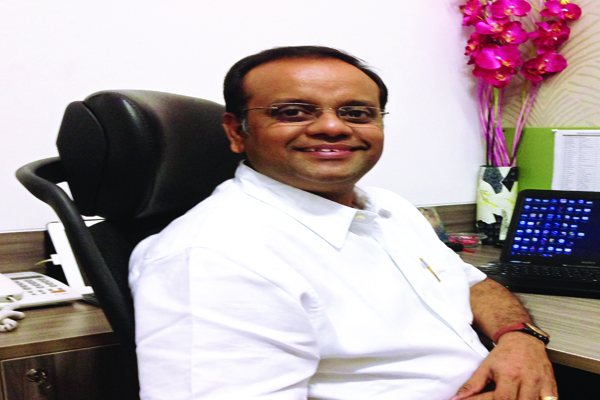
    MUMBAI: MEASAT Satellite Systems Sdn. Bhd. (MEASAT) has elevated Vishal Mathur from director (south Asia) to senior director, sales and marketing.

    In his new role, Vishal will be responsible to build the MEASAT’s customer base with a focus in the broadcasting and DTH customer segments.

    Vishal will be responsible to build the MEASAT’s customer base with a focus in the broadcasting and DTH customer segments

    Vishal joined MEASAT in 2006. During his seven years with MEASAT, he has been instrumental in expanding the company’s position across south Asia.

    Prior to joining MEASAT, Vishal has also served as assistant VP at Zee Telefilms – international division, ESPN Star Sports and Ten Sports channels handling the affiliate sales business in India.

    Vishal holds a Bachelor of Commerce and a post graduate diploma in Business Management from the University of Rajasthan, Jaipur

    MEASAT is a premium supplier of satellite communication services to leading international broadcasters, DTH platforms and telecom operators. With capacity across five satellites, the company provides satellite services to over 150 countries representing 80 per cent of the world’s population across Asia , Middle East, Africa, Europe and Australia.

  • Q1-2014: Den Networks continues to rake in the moolah albeit with some hiccups

    Q1-2014: Den Networks continues to rake in the moolah albeit with some hiccups

    BENGALURU: Indian cable TV distribution company Den Networks Limited (Den Networks) seems to be on a roll. Its cable business PBT in Q1-2014 was Rs 32.77 crore despite a 22 per cent rise in depreciation and finance costs as against Rs 36.81 crore in Q4-2013.


    Den Networks cable business PBT in Q1-2014 was Rs 32.77 crore as compared to Rs 18.40 crore in Q1-2013, up 78 per cent y-o-y. The company’s PAT (before mark to market forex losses, exceptional one-time and ESOP expense) for Q1-2014 was Rs 19.22 crore versus Rs 17.04 crore in Q1-2013, a 13 per cent rise as compared to Q4-2013. After these adjustments, Den Networks cable business PAT stood at Rs 9.22 crore.


    Den Networks cable business EBITDA for Q1-2014 was Rs 85.84 crore as against. Rs 43.82 crore in Q1-2013, a 96 per cent y-o-y jump, and was seven per cent more than the Rs 80.33 crore in Q4-2013.


    The company’s consolidated EBITDA for Q1-2014 was Rs 87.68 crore, almost double (up by 95 per cent) the Rs 45.06 crore in Q1-2013, but only 3.22 per cent more than the Rs 84.94 crore in Q4-2013.


    Let us look at Den Networks other figures for Q1-2014


    Den Networks’ consolidated revenue for Q1-2014 was Rs 275.42 crore as compared to the Rs 200.60 crore in Q1-2013, up by 37 per cent y-o-y, but was slightly lower (by 1.04 per cent) than the Rs 278.31 crore for Q4-2013.


    The cable distribution company’s consolidated PBT for Q1-2014 was Rs 34.49 crore while consolidated PAT for the quarter stood at Rs 10.15 crore which included the impact of mark-to-market forex losses of Rs 10 crore and higher depreciation and finance costs compared to Q4-2013.


    Den Networks cable business revenue for Q1- 2014 was Rs 262.85 crore as compared to the Rs 264.93 crore in Q4-2013. Revenues in Q4-2013 included Rs 15.10 crore on account of a one-time sale of Set Top Boxes (STBs). Excluding the impact of this sale, Den Networks cable business revenues grew by 5.2 per cent q-o-q (as compared to Q4-2013).


    Den Networks’ consolidated expenditure for Q1-2014 at Rs 187.74 crore was up 20.9 per cent as compared to the Rs 155.54 crore in Q1-2013, but was 2.9 per cent lower than the Rs 193.37 crore for Q4-2013.


    Consolidated operation, administrative and other costs for Q1-2014 at Rs 160.70 crore were up 20.4 per cent as compared to the Rs 133.52 crore in Q1-2013 but 2.4 per cent lower than the Rs 164.68 crore in Q4-2013.


    Den Networks consolidated Personnel cost for Q1-2014 at Rs 27.04 crore was 28 per cent more than the Rs 22.02 crore for Q1-2013, but 5.75 per cent lower than the Rs 28.69 crore in Q4-2013. Consolidated depreciation for Q1-2014 at Rs 33.22 crore was more than double (more by 113.5 per cent) as compared to the Rs 15.56 crore in Q1-2013 and 21.8 percent higher than the Rs 27.27 crore in Q4-2013.


    Consolidated interest and other financial charges of Rs 19.97 crore were more than double the Rs 9.97 crore for Q1-2013 and 22.1 per cent more than the Rs 16.36 crore in Q4-2013.


    Den Networks CEO S N Sharma said, “With the successful implementation of digitisation in Phase II cities, India is now firmly in the digital era. The overall response from consumers is extremely positive as they can now clearly perceive the benefits of digital and the superior experience associated with it. The major focus areas now are the completion of package selection by subscribers, collection of KYC data and the start of retail consumer billing, which are being spurred on by MSOs with a strong regulatory backing. These steps will truly complete our industry’s transformation into a B2C model. We are also drawing up plans for digitising our analog base in Phase III and IV cities while gearing up for our broadband foray.”


    Den Networks recently launched two digital cable channels – DEN Movies and DEN Classic, available to Den Network subscribers in selected areas. The company says that it sees the local cable channel segment become a potential growth area along with the spread of digitisation.