Category: People

  • Viacom18 promotes Soumen Ray as CFO; appoints Narayan Rajan as chief of staff

    Viacom18 promotes Soumen Ray as CFO; appoints Narayan Rajan as chief of staff

    MUMBAI: Viacom18 has appointed Narayan Ranjan to a new and strategic role of Viacom 18 chief of staff. In his new role, Narayan Ranjan would be responsible for mergers & acquisition, internal audit, internal control as well as the admin function while continuing work on improving group level governance.

    Viacom18 has also promoted Soumen Ray as the Chief Financial Officer of the company. Soumen joined as the Deputy CFO at Viacom18 in 2013 and has played a pivotal role in the company’s growth trajectory. Both the managerial changes have been made with effect from April 15, 2016.

    Commenting on the management restructuring, Viacom18 Group CEO Sudhanshu Vats said, “With a 30X growth in topline since inception, we are one of India’s fastest growing M&E companies. As we gear up for a more streamlined growth phase, it is imperative to align our corporate functions so that we can leverage both the experience and the expertise that our leaders possess. Narayan Ranjan, one of our more experienced and senior leaders, will now take on a more strategically aligned role that streamlines our business and administrative processes across the ever-growing brands of Viacom18. Soumen Ray, who as the Deputy CFO, has been pivotal in streamlining the network’s financial performance, will now take over as the Chief Financial Officer.”

    Ranjan had joined Viacom18 twelve years back to head the finance function after having successfully managed critical roles within the broadcast industry and outside and was part of the team that forged this JV back in 2007. He has been a recipient of numerous awards including the “CFO100” awards in 2016 and 2015; winner of 100 “Most Influential CFOs in India” award in 2015 and the “Best Finance Team of the Year” award in 2015 by Chartered Institute of management accountants.

    With close to 2 decades of experience in financial planning, Soumen Ray had joined Viacom18 three years ago after successful stints at HUL, ITC and Eveready Industries. A Chartered Accountant by qualification, Ray has played a pivotal role in the network’s meteoric growth, over the last few years.

  • Viacom18 promotes Soumen Ray as CFO; appoints Narayan Rajan as chief of staff

    Viacom18 promotes Soumen Ray as CFO; appoints Narayan Rajan as chief of staff

    MUMBAI: Viacom18 has appointed Narayan Ranjan to a new and strategic role of Viacom 18 chief of staff. In his new role, Narayan Ranjan would be responsible for mergers & acquisition, internal audit, internal control as well as the admin function while continuing work on improving group level governance.

    Viacom18 has also promoted Soumen Ray as the Chief Financial Officer of the company. Soumen joined as the Deputy CFO at Viacom18 in 2013 and has played a pivotal role in the company’s growth trajectory. Both the managerial changes have been made with effect from April 15, 2016.

    Commenting on the management restructuring, Viacom18 Group CEO Sudhanshu Vats said, “With a 30X growth in topline since inception, we are one of India’s fastest growing M&E companies. As we gear up for a more streamlined growth phase, it is imperative to align our corporate functions so that we can leverage both the experience and the expertise that our leaders possess. Narayan Ranjan, one of our more experienced and senior leaders, will now take on a more strategically aligned role that streamlines our business and administrative processes across the ever-growing brands of Viacom18. Soumen Ray, who as the Deputy CFO, has been pivotal in streamlining the network’s financial performance, will now take over as the Chief Financial Officer.”

    Ranjan had joined Viacom18 twelve years back to head the finance function after having successfully managed critical roles within the broadcast industry and outside and was part of the team that forged this JV back in 2007. He has been a recipient of numerous awards including the “CFO100” awards in 2016 and 2015; winner of 100 “Most Influential CFOs in India” award in 2015 and the “Best Finance Team of the Year” award in 2015 by Chartered Institute of management accountants.

    With close to 2 decades of experience in financial planning, Soumen Ray had joined Viacom18 three years ago after successful stints at HUL, ITC and Eveready Industries. A Chartered Accountant by qualification, Ray has played a pivotal role in the network’s meteoric growth, over the last few years.

  • Star India is one of the very few to get its design right: Kyoorius’ Rajesh Kejriwal

    Star India is one of the very few to get its design right: Kyoorius’ Rajesh Kejriwal

    At a time when content and disruption are mentioned in the same breath in every digitally charged summit, design often takes a backseat. It’s an open secret that several marketers, be they traditional or digital, neglect design. In fact, a couple of years ago the understanding of the subject or its importance in driving brands was practically not there.  Very little was done in the country to drive conversations around design and innovation.

    Things would have remained the same, were it not for Kyoorius, a one stop place that connects designers, brands, creatives and every stakeholder in between. Kyoorius founder and CEO Rajesh Kejriwal welcomed the change that his endeavour brought to the industry. Its flagship awards show, Kyoorius Creative Awards and design and innovation conference Kyoorius Designyatra have set benchmarks year after year. Now the Kyoorius Creative Awards is in its 3rd edition and has the likes of R. Balki, Kartik Sharma, and Fergus O’Hare on board as jury members, while Kyoorius Designyatra celebrated ten years during its last edition. Kyoorius has also expanded with a marketing and communication division with MELT, where it focuses on emerging technology and digital marketing.

    In a candid chat with indiantelevision.com’s Papri Das, Rajesh Kejriwal opens up on the state of design in the industry, what to expect from Kyoorius Creative Awards and MELT 2016 and how most of the media brands haven’t cracked the design code.

    Excerpts:

    Is there anything new that we can expect at MELT 2016?

    This year at MELT we will have 14 halls with parallel sessions. The content itself is massive compared to last year with almost 60 speakers on board. We don’t like to emulate the whole ‘panel’ system as that gives the audience an information overload with no real crux.

    We have reached out to GroupM, SAP, Kinetic and Happy Finish who we expected to participate in this year’s MELT in Delhi. Now that we have postponed MELT and we are likely to hold it in August, we are actually looking at two expo areas. One would be heavy on new  technology that might interest marketers such as Gear from Samsung etc., and the other would have the GroupMs’ and Genesis, etc., of the industry.

    Why was MELT 2016 postponed?

    In every event we do, we ensure that the content we put out is very strong. I have to hand it to the curation team that felt the content and line-up for MELT, which was scheduled earlier this year, didn’t match up to standards, and therefore we rescheduled it.

    What have been the game changers in the design and creative industry?

    Digital was no doubt the biggest game changer. From the Indian perspective, in the last five years, the major change has been the acceptance of design by corporate India as a strategic tool, not an aesthetic one.  It is not looked at with a fresh perspective by business leaders now. Consider this as an immense change in the mindset of people. This has led to designers being treated with a lot more respect and seriousness. Because it is only when you have good clients with big budgets can you work wonders for them. If you are paid peanuts there is only so much you can do.

    According to you, which brand in India has made the best use of design in recent times?

    In the FMCG sector, I would say Paperboat is a success story when it comes to brilliant use of design. Right from the material it uses for packaging, its layout and how it is branded, Paperbaot has paid attention to detail, not just in terms of looks, but what that look conveys to its consumers. I am glad to see a newcomer in the field understanding and using design creatively. Fastrack from Titan has always stayed ahead of the design curve. It has nailed it down perfectly well.

    Royal Enfield India is currently using design very strategically. Flipkart and Myntra too have done a good job. But these are all what I call the new Indian businesses.

    What about the media brands?

    When it comes to media and broadcaster channels, I feel all of them really need to redo their designs except for Star India. If you look at their packaging logo and interface from a visual perspective, Star has got it right. All the other broadcasters do not understand how important a cohesive language branding identity is. Design defines the DNA of a channel, and its identity. It surprises me that they don’t understand its importance, because some of these networks have global reach. One would expect them to see how international media use their design.

    If you look at the packaging, and everything, it doesn’t reflect the brand identity of the channels. If one were to take away all text and show the channel to us, I can tell which one Star is, but any other brand would be a hard guess, because the visual language is missing. It is sad because that is what binds the consumers to the brand. Being in a mass consumer industry, broadcasters should get their design right.

    There is a tendency amongst some media organisations to rebrand themselves, and while they are at it, they change it in parts and pieces. I would hear from them that they have changed their show packaging without changing their identity branding. I think that is the wrong way to go about it. Design can’t be done in bits and pieces.

    What according to you is going wrong with the design industry in India?

    Where most designs go wrong is when the company or CEO decides what design suits the company. Design isn’t an opinion, it’s a solution. The right design isn’t as per the CEO’s fancy, but as per the consumer needs.

    Let me tell you the difference between the old India and new India. For old India designers, you would go to them as a client and ask for a logo. They would show you a logo and tell you it’s the best for you as it was ‘fresh’. Has any client in the world has asked for a stale logo? It clearly means the designers created a good looking logo, and told a story to fit the logo with the company, whereas a good designer will find that story before designing the logo. A good designer will figure out the strategy, the positioning, the brand identity, the target group and manifest that into a design. New India does it the latter way. But there is still a lot of India stuck to the old ways.

    You initially were from the paper and printing industry. What made you take interest in the design and creative field?

    Predominantly we were paper merchants who would purchase paper manufactured in other markets, bring it to India, brand it and sell it here. One of the ways to fuel these purchases was to influence the decision makers, i. e., the creatives and designers. Designyatra was first thought of to reach out to our clients and start a design revolution in India.

    To fuel this design movement, we had to expose the industry prevalent in India to what was happening globally, and make them feel proud of being designers. To do away with the bureaucracy involved in the entire system, I decided to go with the non-profit format.  Suddenly from being a vendor to the industry I was their friend, so Designyatra and Kyoorius definitely helped my paper business.

    From being a promotional method to becoming the actual business; tell us how did Kyoorius evolve?

    It happened soon after the paper industry slid downhill, though it didn’t happen overnight. Gradually the entire set up changed. While being a business man it wasn’t too difficult for me, it was a difficult transition for Kyoorius. Earlier it acted as promotion for my paper business. Now when the model changed, Kyoorius had to be sustainable or profitable.

    When it really came down to making a difference in the industry, Kyoorius actually had to be profitable, not run up losses. It had to be actually profitable and use that profit to make a positive difference in the industry. So that transition from not caring whether it made money or not to making Kyoorius sustainable was the real challenge.

    How did you manage this transition?

    Prior to this realisation we didn’t have sponsors. When we decided to make it sustainable, one of the obvious means for any conference to be functional is to have a sponsor. So we looked for one. This wasn’t easy because no one believed in the design industry in 2008 and 2009. In those days if you did something in the advertising sphere, major broadcasters would easily come on board. But design was an offbeat road to travel on that only a small breed of people was interested in.

    We were lucky in 2011, we managed to get Zee to take cognizance of the fact that design was important for the industry and the country and that’s how it came on board. And since then, Zee has remained a partner for Kyoorius and signed on year after year. We also started looking at pricing the tickets right, something which we didn’t pay attention to earlier.

    Post transformation what is the current structure of Kyoorius now?

    Currently we have two sides to Kyoorius. One is the marketing and communication section where advertising, media and digital, social media and emerging technologies or MarTech is covered, and the second is the design and innovation side.

    These are the two broad headers under which we operate, mostly because if you have a capable team, you can’t have a single event a year to keep it occupied.

    What is your take on sponsorship for events?

    For the creative awards, we have Colors, HT, Rishtey Happy Finish and Kinetic. Apart from this we have supporting partners like Addikt.tv etc.

    If an award show has to sustainably exist for a long period of time, in an ideal scenario, 80 per cent of the revenue should come from the ticketed sales or entries in guest registration. In India it is actually the reverse. Sponsorship is between 70 to 80 per cent while the rest is maybe tickets or miscellaneous.

    In our case thankfully, we have struck a healthier ratio with 60 per cent from sponsorship and 40 per cent from ticket sales. I hope we can soon invert this ratio for Kyoorius Creative Awards, as we have done for Designyatra.

    MELT is a difficult IP when it comes to ticket sales as it will always be about partners. I can’t charge each person Rs 20,000, so the prices for MELT tickets will always be lower. Given the content we showcase in MELT, the budget can only be met through sponsors.

    Last year it was Rs 8,000, and this year we are planning to have another optional ticket without dinner included that will be sold for  much less. It’s for those newcomers in the industry or students who want to attend, but for whom budget is an issue.

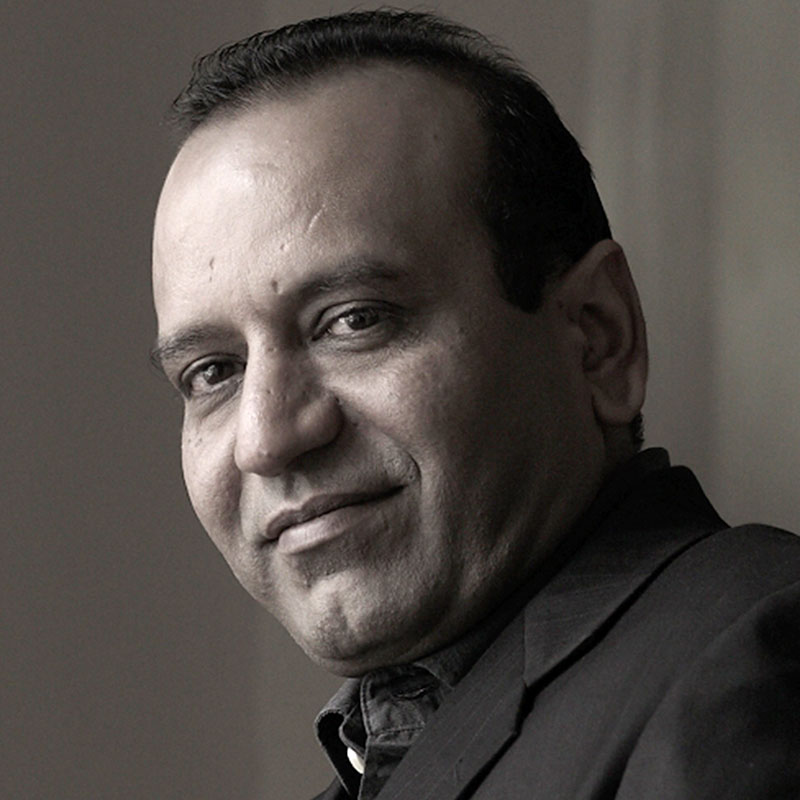
  • Star India is one of the very few to get its design right: Kyoorius’ Rajesh Kejriwal

    Star India is one of the very few to get its design right: Kyoorius’ Rajesh Kejriwal

    At a time when content and disruption are mentioned in the same breath in every digitally charged summit, design often takes a backseat. It’s an open secret that several marketers, be they traditional or digital, neglect design. In fact, a couple of years ago the understanding of the subject or its importance in driving brands was practically not there.  Very little was done in the country to drive conversations around design and innovation.

    Things would have remained the same, were it not for Kyoorius, a one stop place that connects designers, brands, creatives and every stakeholder in between. Kyoorius founder and CEO Rajesh Kejriwal welcomed the change that his endeavour brought to the industry. Its flagship awards show, Kyoorius Creative Awards and design and innovation conference Kyoorius Designyatra have set benchmarks year after year. Now the Kyoorius Creative Awards is in its 3rd edition and has the likes of R. Balki, Kartik Sharma, and Fergus O’Hare on board as jury members, while Kyoorius Designyatra celebrated ten years during its last edition. Kyoorius has also expanded with a marketing and communication division with MELT, where it focuses on emerging technology and digital marketing.

    In a candid chat with indiantelevision.com’s Papri Das, Rajesh Kejriwal opens up on the state of design in the industry, what to expect from Kyoorius Creative Awards and MELT 2016 and how most of the media brands haven’t cracked the design code.

    Excerpts:

    Is there anything new that we can expect at MELT 2016?

    This year at MELT we will have 14 halls with parallel sessions. The content itself is massive compared to last year with almost 60 speakers on board. We don’t like to emulate the whole ‘panel’ system as that gives the audience an information overload with no real crux.

    We have reached out to GroupM, SAP, Kinetic and Happy Finish who we expected to participate in this year’s MELT in Delhi. Now that we have postponed MELT and we are likely to hold it in August, we are actually looking at two expo areas. One would be heavy on new  technology that might interest marketers such as Gear from Samsung etc., and the other would have the GroupMs’ and Genesis, etc., of the industry.

    Why was MELT 2016 postponed?

    In every event we do, we ensure that the content we put out is very strong. I have to hand it to the curation team that felt the content and line-up for MELT, which was scheduled earlier this year, didn’t match up to standards, and therefore we rescheduled it.

    What have been the game changers in the design and creative industry?

    Digital was no doubt the biggest game changer. From the Indian perspective, in the last five years, the major change has been the acceptance of design by corporate India as a strategic tool, not an aesthetic one.  It is not looked at with a fresh perspective by business leaders now. Consider this as an immense change in the mindset of people. This has led to designers being treated with a lot more respect and seriousness. Because it is only when you have good clients with big budgets can you work wonders for them. If you are paid peanuts there is only so much you can do.

    According to you, which brand in India has made the best use of design in recent times?

    In the FMCG sector, I would say Paperboat is a success story when it comes to brilliant use of design. Right from the material it uses for packaging, its layout and how it is branded, Paperbaot has paid attention to detail, not just in terms of looks, but what that look conveys to its consumers. I am glad to see a newcomer in the field understanding and using design creatively. Fastrack from Titan has always stayed ahead of the design curve. It has nailed it down perfectly well.

    Royal Enfield India is currently using design very strategically. Flipkart and Myntra too have done a good job. But these are all what I call the new Indian businesses.

    What about the media brands?

    When it comes to media and broadcaster channels, I feel all of them really need to redo their designs except for Star India. If you look at their packaging logo and interface from a visual perspective, Star has got it right. All the other broadcasters do not understand how important a cohesive language branding identity is. Design defines the DNA of a channel, and its identity. It surprises me that they don’t understand its importance, because some of these networks have global reach. One would expect them to see how international media use their design.

    If you look at the packaging, and everything, it doesn’t reflect the brand identity of the channels. If one were to take away all text and show the channel to us, I can tell which one Star is, but any other brand would be a hard guess, because the visual language is missing. It is sad because that is what binds the consumers to the brand. Being in a mass consumer industry, broadcasters should get their design right.

    There is a tendency amongst some media organisations to rebrand themselves, and while they are at it, they change it in parts and pieces. I would hear from them that they have changed their show packaging without changing their identity branding. I think that is the wrong way to go about it. Design can’t be done in bits and pieces.

    What according to you is going wrong with the design industry in India?

    Where most designs go wrong is when the company or CEO decides what design suits the company. Design isn’t an opinion, it’s a solution. The right design isn’t as per the CEO’s fancy, but as per the consumer needs.

    Let me tell you the difference between the old India and new India. For old India designers, you would go to them as a client and ask for a logo. They would show you a logo and tell you it’s the best for you as it was ‘fresh’. Has any client in the world has asked for a stale logo? It clearly means the designers created a good looking logo, and told a story to fit the logo with the company, whereas a good designer will find that story before designing the logo. A good designer will figure out the strategy, the positioning, the brand identity, the target group and manifest that into a design. New India does it the latter way. But there is still a lot of India stuck to the old ways.

    You initially were from the paper and printing industry. What made you take interest in the design and creative field?

    Predominantly we were paper merchants who would purchase paper manufactured in other markets, bring it to India, brand it and sell it here. One of the ways to fuel these purchases was to influence the decision makers, i. e., the creatives and designers. Designyatra was first thought of to reach out to our clients and start a design revolution in India.

    To fuel this design movement, we had to expose the industry prevalent in India to what was happening globally, and make them feel proud of being designers. To do away with the bureaucracy involved in the entire system, I decided to go with the non-profit format.  Suddenly from being a vendor to the industry I was their friend, so Designyatra and Kyoorius definitely helped my paper business.

    From being a promotional method to becoming the actual business; tell us how did Kyoorius evolve?

    It happened soon after the paper industry slid downhill, though it didn’t happen overnight. Gradually the entire set up changed. While being a business man it wasn’t too difficult for me, it was a difficult transition for Kyoorius. Earlier it acted as promotion for my paper business. Now when the model changed, Kyoorius had to be sustainable or profitable.

    When it really came down to making a difference in the industry, Kyoorius actually had to be profitable, not run up losses. It had to be actually profitable and use that profit to make a positive difference in the industry. So that transition from not caring whether it made money or not to making Kyoorius sustainable was the real challenge.

    How did you manage this transition?

    Prior to this realisation we didn’t have sponsors. When we decided to make it sustainable, one of the obvious means for any conference to be functional is to have a sponsor. So we looked for one. This wasn’t easy because no one believed in the design industry in 2008 and 2009. In those days if you did something in the advertising sphere, major broadcasters would easily come on board. But design was an offbeat road to travel on that only a small breed of people was interested in.

    We were lucky in 2011, we managed to get Zee to take cognizance of the fact that design was important for the industry and the country and that’s how it came on board. And since then, Zee has remained a partner for Kyoorius and signed on year after year. We also started looking at pricing the tickets right, something which we didn’t pay attention to earlier.

    Post transformation what is the current structure of Kyoorius now?

    Currently we have two sides to Kyoorius. One is the marketing and communication section where advertising, media and digital, social media and emerging technologies or MarTech is covered, and the second is the design and innovation side.

    These are the two broad headers under which we operate, mostly because if you have a capable team, you can’t have a single event a year to keep it occupied.

    What is your take on sponsorship for events?

    For the creative awards, we have Colors, HT, Rishtey Happy Finish and Kinetic. Apart from this we have supporting partners like Addikt.tv etc.

    If an award show has to sustainably exist for a long period of time, in an ideal scenario, 80 per cent of the revenue should come from the ticketed sales or entries in guest registration. In India it is actually the reverse. Sponsorship is between 70 to 80 per cent while the rest is maybe tickets or miscellaneous.

    In our case thankfully, we have struck a healthier ratio with 60 per cent from sponsorship and 40 per cent from ticket sales. I hope we can soon invert this ratio for Kyoorius Creative Awards, as we have done for Designyatra.

    MELT is a difficult IP when it comes to ticket sales as it will always be about partners. I can’t charge each person Rs 20,000, so the prices for MELT tickets will always be lower. Given the content we showcase in MELT, the budget can only be met through sponsors.

    Last year it was Rs 8,000, and this year we are planning to have another optional ticket without dinner included that will be sold for  much less. It’s for those newcomers in the industry or students who want to attend, but for whom budget is an issue.

  • The rationale behind Star India’s reorganization

    The rationale behind Star India’s reorganization

    MUMBAI: The buzz had been gathering pace since Ficci Frames in Mumbai at the beginning of this month. Change is  afoot at India’s leading media and entertainment major the 21st Century Fox owned Star India. But nobody was willing to say what. The company’s executives murmured that its businesses had developed octopus like and CEO Uday Shankar along with 21st Century Fox CEO James Murdoch was planning a managerial rejig.

    Management firm The Boston Consulting Group had been given the mandate of coming up with an organizational structure that would empower Star India’s senior executive team, unleash their expertise to execute and monetise the business strategy that Uday has put in place for the group to the fullest.

    The reorganization would allow Uday, who has been leading Star India at a frenetic pace over  the past few years to have some breathing space to further evolve the business plans that the Murdochs have for their Asian jewel and also get a helicopter view of the goings-on.

    And today’s announcement at a town hall within Star India seems to be a master stroke of sorts, according to several Star observers. A former Star India executive went as far as to say that it is a stroke of genius.  According to him, the entire burden of steering the company into the behemoth that it has become had fallen on Uday.

    When he was handpicked out of nowhere by the then News Corp COO Peter Chernin and Star group boss Paul Aiello to run Star India as its COO – a terrain he was not really familiar with – it was a market leader which had lost its way and was a much smaller operation: focused on simple general entertainment with a small interest in regional languages and sport. There was very little strength in senior management. Uday first went about tweaking the programming and took the network gradually to the No 1 spot. He simultaneously brought in senior professionals from the best companies to strengthen his core team. Over the years, he offloaded  investments Star India had made in other ventures, pumped in money into acquiring other regional networks,  made big bets on  sports and sports television, steered the media and entertainment major into the digital VOD ecosystem. And he roped in even more professionals to incubate these forays.

    The Star India of today is a very different beast from the one it was when he first stepped into its offices.

    Observers say that by elevating  himself  as chairman and CEO he has taken the load off his shoulders and is sharing the burden with his fellow professionals.  “He’s done the hard work with the various executive teams putting together all these verticals,” says a management consultant. “Now he’s empowering them allowing them to function like intrapreneurs. Which is the best thing he could do.”

    Thus Sanjay Gupta, the current COO has been elevated to managing director-Star India and K. Madhavan to managing director-South. Both Gupta and Madhavan will continue to report to Uday Shankar. Madhavan will have Kevin Vaz reporting to him as his CEO and looking after all of Star India’s southern interests.

    Sanjay on his part has a clutch of CEOs reporting into him responsible for key silos:

    empowered business units each with its own CEO reporting to Sanjay Gupta:

    · Amit Chopra, CEO of Entertainment, which spans drama and movie channels across national and regional channels in Hindi, English, Bengali and Marathi

    · Nitin Kukreja, CEO of Sports, which includes a leading portfolio of channels under the Star Sports banner

    · Ajit Mohan, CEO of Digital, which oversees Hotstar.  

    · Vijay Singh, CEO of Fox STAR Studios, which produces and distributes Bollywood and regional films

    * A Pan Indian content studio headed by Gaurav Banerjee to produce cutting edge innovation in programming.

    “This is a world class team that has powered Star  to the No. 1 position in the Media and Entertainment industry in India,” said Uday in a press release issued today on the reorganization. “We have set ourselves a bold growth agenda and these changes will deepen the leadership bench, unlock entrepreneurial energy and position Star better to deliver on its ambitions.”

    Top of that ambition heap is the target to attain an operating profit of $1 billion plus by  from 21st Century Fox’s Indian offshoot by 2020. With that rock solid team in place, Uday and James  will have more energetic legs to race to the finishing post.

  • The rationale behind Star India’s reorganization

    The rationale behind Star India’s reorganization

    MUMBAI: The buzz had been gathering pace since Ficci Frames in Mumbai at the beginning of this month. Change is  afoot at India’s leading media and entertainment major the 21st Century Fox owned Star India. But nobody was willing to say what. The company’s executives murmured that its businesses had developed octopus like and CEO Uday Shankar along with 21st Century Fox CEO James Murdoch was planning a managerial rejig.

    Management firm The Boston Consulting Group had been given the mandate of coming up with an organizational structure that would empower Star India’s senior executive team, unleash their expertise to execute and monetise the business strategy that Uday has put in place for the group to the fullest.

    The reorganization would allow Uday, who has been leading Star India at a frenetic pace over  the past few years to have some breathing space to further evolve the business plans that the Murdochs have for their Asian jewel and also get a helicopter view of the goings-on.

    And today’s announcement at a town hall within Star India seems to be a master stroke of sorts, according to several Star observers. A former Star India executive went as far as to say that it is a stroke of genius.  According to him, the entire burden of steering the company into the behemoth that it has become had fallen on Uday.

    When he was handpicked out of nowhere by the then News Corp COO Peter Chernin and Star group boss Paul Aiello to run Star India as its COO – a terrain he was not really familiar with – it was a market leader which had lost its way and was a much smaller operation: focused on simple general entertainment with a small interest in regional languages and sport. There was very little strength in senior management. Uday first went about tweaking the programming and took the network gradually to the No 1 spot. He simultaneously brought in senior professionals from the best companies to strengthen his core team. Over the years, he offloaded  investments Star India had made in other ventures, pumped in money into acquiring other regional networks,  made big bets on  sports and sports television, steered the media and entertainment major into the digital VOD ecosystem. And he roped in even more professionals to incubate these forays.

    The Star India of today is a very different beast from the one it was when he first stepped into its offices.

    Observers say that by elevating  himself  as chairman and CEO he has taken the load off his shoulders and is sharing the burden with his fellow professionals.  “He’s done the hard work with the various executive teams putting together all these verticals,” says a management consultant. “Now he’s empowering them allowing them to function like intrapreneurs. Which is the best thing he could do.”

    Thus Sanjay Gupta, the current COO has been elevated to managing director-Star India and K. Madhavan to managing director-South. Both Gupta and Madhavan will continue to report to Uday Shankar. Madhavan will have Kevin Vaz reporting to him as his CEO and looking after all of Star India’s southern interests.

    Sanjay on his part has a clutch of CEOs reporting into him responsible for key silos:

    empowered business units each with its own CEO reporting to Sanjay Gupta:

    · Amit Chopra, CEO of Entertainment, which spans drama and movie channels across national and regional channels in Hindi, English, Bengali and Marathi

    · Nitin Kukreja, CEO of Sports, which includes a leading portfolio of channels under the Star Sports banner

    · Ajit Mohan, CEO of Digital, which oversees Hotstar.  

    · Vijay Singh, CEO of Fox STAR Studios, which produces and distributes Bollywood and regional films

    * A Pan Indian content studio headed by Gaurav Banerjee to produce cutting edge innovation in programming.

    “This is a world class team that has powered Star  to the No. 1 position in the Media and Entertainment industry in India,” said Uday in a press release issued today on the reorganization. “We have set ourselves a bold growth agenda and these changes will deepen the leadership bench, unlock entrepreneurial energy and position Star better to deliver on its ambitions.”

    Top of that ambition heap is the target to attain an operating profit of $1 billion plus by  from 21st Century Fox’s Indian offshoot by 2020. With that rock solid team in place, Uday and James  will have more energetic legs to race to the finishing post.

  • Major restructuring in Star India; Uday Shankar, chairman & CEO, Sanjay Gupta, MD

    Major restructuring in Star India; Uday Shankar, chairman & CEO, Sanjay Gupta, MD

    MUMBAI: Star India announced a series of leadership changes as part of an organizational shift to strategic business units where Uday Shankar will be chairman and CEO.The current COO Sanjay Gupta has been elevated to Star India’s managing director and K. Madhavan will be managing director-South.

    Both Gupta and Madhavan will continue to report to Shankar. These changes position the organization to meet its future growth ambitions on the back of a decade of rapid growth.

    “Star India consistently sets the standard for innovation and growth in one of the world’s most exciting markets,” said 21st Century Fox chief executive officer James Murdoch. “Uday, Sanjay, Madhavan and the entire Star India team have built a world-class business that has grown at double the industry rate. We are proud of its success and look forward to the next chapter of growth under Uday’s transformational leadership.”

    Star has established empowered business units each with its own CEO reporting to Sanjay Gupta. Amit Chopra appointed as CEO of entertainment, which spans drama and movie channels across national and regional channels in Hindi, English, Bengali and Marathi. While, Sports CEO Nitin Kukreja, which includes a leading portfolio of channels under the Star Sports banner.

    Ajit Mohan is now CEO digital, which oversees Hotstar, Star’s revolutionary digital platform which recently surpassed 50 million downloads and Vijay Singh has also been upped as the CEO of Fox Star Studios, which produces and distributes Bollywood and Regional films.

    Kevin Vaz has been appointed as South CEO and will be reporting to K. Madhavan. The South business unit incorporates all of Star’s business interests in the Southern states of Kerala, Tamil Nadu, Karnataka, Andhra Pradesh and Telangana.

    In another first, a pan-India content studio will be set up to drive cutting edge innovation in programming under Gaurav Banerjee who will report into Sanjay Gupta. The corporate centre will continue largely unchanged.

    “I congratulate Sanjay, Madhavan and the CEOs on their elevation. This is a world class team that has powered Star to the No. 1 position in the media and entertainment industry in India. Now, I personally and the entire team are even more dedicated to the cause of using Star’s reach in India to inspire the imaginations of a billion Indians. To do this, we need to continuously innovate and disrupt. We have set ourselves a bold growth agenda and these changes will deepen the leadership bench, unlock entrepreneurial energy and position Star better to deliver on its ambitions,” said Star India chairman & CEO Uday Shankar.

  • Major restructuring in Star India; Uday Shankar, chairman & CEO, Sanjay Gupta, MD

    Major restructuring in Star India; Uday Shankar, chairman & CEO, Sanjay Gupta, MD

    MUMBAI: Star India announced a series of leadership changes as part of an organizational shift to strategic business units where Uday Shankar will be chairman and CEO.The current COO Sanjay Gupta has been elevated to Star India’s managing director and K. Madhavan will be managing director-South.

    Both Gupta and Madhavan will continue to report to Shankar. These changes position the organization to meet its future growth ambitions on the back of a decade of rapid growth.

    “Star India consistently sets the standard for innovation and growth in one of the world’s most exciting markets,” said 21st Century Fox chief executive officer James Murdoch. “Uday, Sanjay, Madhavan and the entire Star India team have built a world-class business that has grown at double the industry rate. We are proud of its success and look forward to the next chapter of growth under Uday’s transformational leadership.”

    Star has established empowered business units each with its own CEO reporting to Sanjay Gupta. Amit Chopra appointed as CEO of entertainment, which spans drama and movie channels across national and regional channels in Hindi, English, Bengali and Marathi. While, Sports CEO Nitin Kukreja, which includes a leading portfolio of channels under the Star Sports banner.

    Ajit Mohan is now CEO digital, which oversees Hotstar, Star’s revolutionary digital platform which recently surpassed 50 million downloads and Vijay Singh has also been upped as the CEO of Fox Star Studios, which produces and distributes Bollywood and Regional films.

    Kevin Vaz has been appointed as South CEO and will be reporting to K. Madhavan. The South business unit incorporates all of Star’s business interests in the Southern states of Kerala, Tamil Nadu, Karnataka, Andhra Pradesh and Telangana.

    In another first, a pan-India content studio will be set up to drive cutting edge innovation in programming under Gaurav Banerjee who will report into Sanjay Gupta. The corporate centre will continue largely unchanged.

    “I congratulate Sanjay, Madhavan and the CEOs on their elevation. This is a world class team that has powered Star to the No. 1 position in the media and entertainment industry in India. Now, I personally and the entire team are even more dedicated to the cause of using Star’s reach in India to inspire the imaginations of a billion Indians. To do this, we need to continuously innovate and disrupt. We have set ourselves a bold growth agenda and these changes will deepen the leadership bench, unlock entrepreneurial energy and position Star better to deliver on its ambitions,” said Star India chairman & CEO Uday Shankar.

  • Tauquir Zaidi appointed as SVP on Chrome Data Analytics & Media

    Tauquir Zaidi appointed as SVP on Chrome Data Analytics & Media

    MUMBAI: Tauquir Zaidi has been appointed senior vice president-revenue in the Pankaj Krishna led Chrome Data Analytics & Media.

    An industry veteran with over 17 years in the broadcast industry, Zaidi has had an integral role in organizations such as STAR, NDTV Media, Times Television and Doordarshan.

    After expanding the market base for Star India, Zaidi joined NDTV Media as AVP, Ad Sales, and went on to head the team for NDTV 24×7 and NDTV India. :Later, Zaidi spearheaded Ad Sales in the North and West Markets as the Regional Head at Times Television.

    Zaidi will focus on growth and expansion of the organization by driving several new initiatives. He will be reporting directly to Pankaj Krishna.

    Commenting on his appointment, Krishna said, “Tauquir comes to us with over 17 years of experience in the media industry, and he will be an important figure in our journey to become the most respected media audit and intelligence company. We are happy and excited about having him on board.”

    Zaidi added, “Working with Pankaj is an opportunity I could not have passed on, having followed his career over the years. Chrome DM is at an exciting juncture, poised to take the leap to the next level with a well laid out diversification plan.  As they grow their stable of products, leveraging their already established market standing, I look forward to the challenge of driving revenue growth and the excitement of working with a young, talented team.”


  • Tauquir Zaidi appointed as SVP on Chrome Data Analytics & Media

    Tauquir Zaidi appointed as SVP on Chrome Data Analytics & Media

    MUMBAI: Tauquir Zaidi has been appointed senior vice president-revenue in the Pankaj Krishna led Chrome Data Analytics & Media.

    An industry veteran with over 17 years in the broadcast industry, Zaidi has had an integral role in organizations such as STAR, NDTV Media, Times Television and Doordarshan.

    After expanding the market base for Star India, Zaidi joined NDTV Media as AVP, Ad Sales, and went on to head the team for NDTV 24×7 and NDTV India. :Later, Zaidi spearheaded Ad Sales in the North and West Markets as the Regional Head at Times Television.

    Zaidi will focus on growth and expansion of the organization by driving several new initiatives. He will be reporting directly to Pankaj Krishna.

    Commenting on his appointment, Krishna said, “Tauquir comes to us with over 17 years of experience in the media industry, and he will be an important figure in our journey to become the most respected media audit and intelligence company. We are happy and excited about having him on board.”

    Zaidi added, “Working with Pankaj is an opportunity I could not have passed on, having followed his career over the years. Chrome DM is at an exciting juncture, poised to take the leap to the next level with a well laid out diversification plan.  As they grow their stable of products, leveraging their already established market standing, I look forward to the challenge of driving revenue growth and the excitement of working with a young, talented team.”