Category: People

  • Highest-paid TV actress Sofia retained small screen queen with $43 million

    Highest-paid TV actress Sofia retained small screen queen with $43 million

    MUMBAI: TV is said to be seeing its best era. Audiences have sea of quality content to pick from, be it from cable networks, broadcast television, or a streaming service. But, how far does that monetarily help those on the screen?

    For the fifth year running, Sofia Vergara has topped the list of the world’s highest-paid TV actresses, with her most significant take yet of $ 43 million. The Colombian actress led the list of the highest-paid TV artistes, bringing in $ 43 million in the 12 months to June.

    The vital part of her pay is ironically not for her role as Gloria Delgado-Pritchett that is responsible for her 66% earnings jump over the last year. It’s licensing and endorsement deals she struck – for products including dandruff shampoo Head and Shoulders and a line of furniture, and nurse scrubs –which have turned out to be most beneficial.

    Kaley Cuoco, the runner-up, however, made the most as her performance fee. She pocketed $ 24.5 million in the same period, mostly from her role as Penny on Big Bang Theory.

    Between June 2015 and June 2016, the 15 highest-paid female stars of the small screen earned a combined $ 208.5 million, almost $ 43.5 million more than last year’s.

    This growth can be attributed to new worthwhile endorsement deals (such as Julia Louis-Dreyfus’ with Old Navy and Vergara’s with the Ninja Coffee Bar).

    A crucial new entry in the list is Priyanka Chopra, who stars on ABC’s Quantico. While Chopra is relatively new to an American audience, she is one of the most well-known actresses in India. In 2015, she featured in two leading Bollywood films (Jai Gangaajal and Bajirao Mastani). Later this year, she will be seen in one of the lead roles in Baywatch alongside Hollywood leading lights such as the world’s best-paid actor Dwayne Johnson.

    But, like most actresses, her millions were not made from acting alone. Chopra recently bagged a seven-figure deal with the juice brand Appy Fizz.

    Stana Katic, the lead of ABC’s mystery series Castle, has lately been added to the list. The network received consistent ratings although the show saw little critical attention. Katic returned for the final season after haggling a handsome deal.

  • Highest-paid TV actress Sofia retained small screen queen with $43 million

    Highest-paid TV actress Sofia retained small screen queen with $43 million

    MUMBAI: TV is said to be seeing its best era. Audiences have sea of quality content to pick from, be it from cable networks, broadcast television, or a streaming service. But, how far does that monetarily help those on the screen?

    For the fifth year running, Sofia Vergara has topped the list of the world’s highest-paid TV actresses, with her most significant take yet of $ 43 million. The Colombian actress led the list of the highest-paid TV artistes, bringing in $ 43 million in the 12 months to June.

    The vital part of her pay is ironically not for her role as Gloria Delgado-Pritchett that is responsible for her 66% earnings jump over the last year. It’s licensing and endorsement deals she struck – for products including dandruff shampoo Head and Shoulders and a line of furniture, and nurse scrubs –which have turned out to be most beneficial.

    Kaley Cuoco, the runner-up, however, made the most as her performance fee. She pocketed $ 24.5 million in the same period, mostly from her role as Penny on Big Bang Theory.

    Between June 2015 and June 2016, the 15 highest-paid female stars of the small screen earned a combined $ 208.5 million, almost $ 43.5 million more than last year’s.

    This growth can be attributed to new worthwhile endorsement deals (such as Julia Louis-Dreyfus’ with Old Navy and Vergara’s with the Ninja Coffee Bar).

    A crucial new entry in the list is Priyanka Chopra, who stars on ABC’s Quantico. While Chopra is relatively new to an American audience, she is one of the most well-known actresses in India. In 2015, she featured in two leading Bollywood films (Jai Gangaajal and Bajirao Mastani). Later this year, she will be seen in one of the lead roles in Baywatch alongside Hollywood leading lights such as the world’s best-paid actor Dwayne Johnson.

    But, like most actresses, her millions were not made from acting alone. Chopra recently bagged a seven-figure deal with the juice brand Appy Fizz.

    Stana Katic, the lead of ABC’s mystery series Castle, has lately been added to the list. The network received consistent ratings although the show saw little critical attention. Katic returned for the final season after haggling a handsome deal.

  • Essel chairman pays tribute to India’s  official language on ‘Hindi Diwas’

    Essel chairman pays tribute to India’s official language on ‘Hindi Diwas’

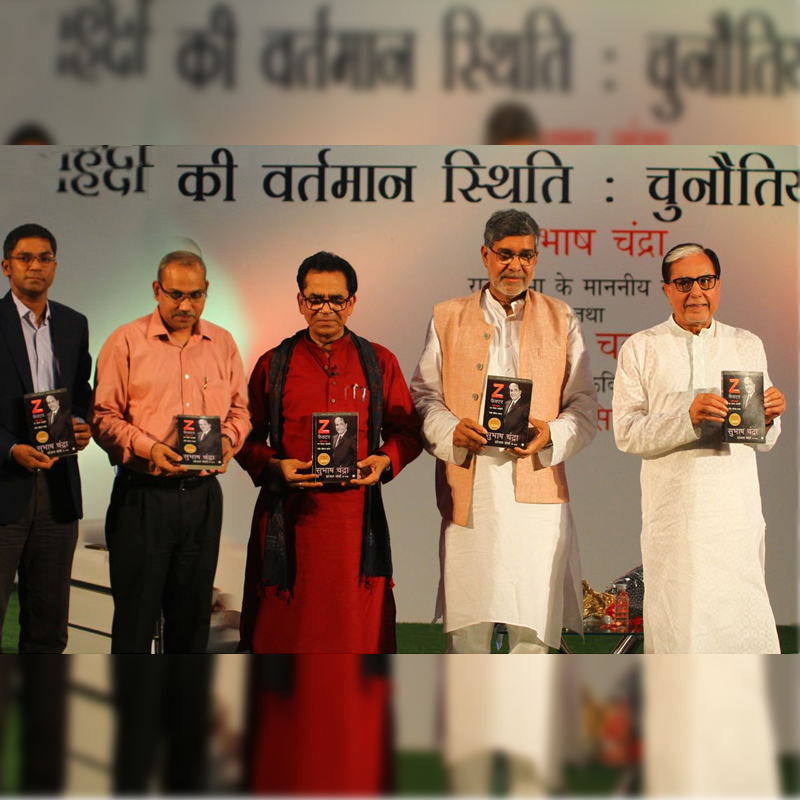
    NEW DELHI: On the occasion of Hindi Diwas on Wednesday, Member of Parliament, Rajya Sabha and Chairman, Essel Group, Subhash Chandra engaged in a thought-provoking discussion with eminent Hindi Poet and renowned scholar, Ashok Chakradhar on the ‘Present Status of Hindi: Challenges and Solutions’ at the Sahitya Akademi in New Delhi.

    The Hindi edition of Chandra’s autobiography ‘The Z Factor – My Journey as the Wrong Man at the Right Time’ was launched by the Nobel Peace Prize recipient and Chief Guest, Kailash Satyarthi.

    Chandra said, “English cannot replace Hindi as the language of communication in this country. In India, the language of the common man is Hindi and will continue to remain so. Over the years, by adopting words from various languages, the Hindi language has become rich and is growing on its own strength. Today, Hindi is spoken and understood all over the globe.”

    “If our higher education system is imparted in Hindi or the mother tongue, we can create more experts in every field. For example, in Ludhiana, there are uneducated but skilled workers, who, if they were given education, would do even better,” Chandra added.

    Chakradhar said, “It is not correct to say that we are serving the Hindi language, rather we should be saying that we are working for the Hindi language. Hindi has reached its highest levels and in coming years, it will continue to grow even further. To keep the purity of this beautiful language, scholars from the literature community should be mindful of not misusing Hindi words or using English words deliberately”.

    Satyarthi said, “The mother tongue of a person is the most respected and no other language can take it away. Hindi and English are separate languages which are not competing with each other. However, to leave one’s own mother tongue and speak disrespectfully about it, is a shameful act. We should be open to learning all languages but should not criticise our own mother tongue. I remember when I went to receive the Nobel Prize, I purposely spoke in Hindi.”

    From the book:

    It was 14 December 1991 when Ashok Kurien of Ambience ad agency and I reached Star TV’s office in Hong Kong. There were ten to twelve senior and junior executives in the room. Richard Li, head of Star TV, was not there. So we waited awhile. It was like waiting for the king to come in and give his blessings.

    Richard walked in suddenly and sat opposite me. ‘OK, Indian channel…
    Hindi channel. Where is the money in India?’ Richard was very dismissive. ‘I am not interested in a joint venture.’

    So I addressed him directly. ‘Mr Li, if you are not interested in the joint venture, can you consider leasing the [satellite] transponder to us?’ ‘There is no transponder available for less than $5 million per year,’ Richard said. It was a haughty statement to put me off.

    ‘That is fine. I will pay $5 million!’ It was a spur-of-the-moment decision. I did not realize the implication of what I had said…

  • Essel chairman pays tribute to India’s  official language on ‘Hindi Diwas’

    Essel chairman pays tribute to India’s official language on ‘Hindi Diwas’

    NEW DELHI: On the occasion of Hindi Diwas on Wednesday, Member of Parliament, Rajya Sabha and Chairman, Essel Group, Subhash Chandra engaged in a thought-provoking discussion with eminent Hindi Poet and renowned scholar, Ashok Chakradhar on the ‘Present Status of Hindi: Challenges and Solutions’ at the Sahitya Akademi in New Delhi.

    The Hindi edition of Chandra’s autobiography ‘The Z Factor – My Journey as the Wrong Man at the Right Time’ was launched by the Nobel Peace Prize recipient and Chief Guest, Kailash Satyarthi.

    Chandra said, “English cannot replace Hindi as the language of communication in this country. In India, the language of the common man is Hindi and will continue to remain so. Over the years, by adopting words from various languages, the Hindi language has become rich and is growing on its own strength. Today, Hindi is spoken and understood all over the globe.”

    “If our higher education system is imparted in Hindi or the mother tongue, we can create more experts in every field. For example, in Ludhiana, there are uneducated but skilled workers, who, if they were given education, would do even better,” Chandra added.

    Chakradhar said, “It is not correct to say that we are serving the Hindi language, rather we should be saying that we are working for the Hindi language. Hindi has reached its highest levels and in coming years, it will continue to grow even further. To keep the purity of this beautiful language, scholars from the literature community should be mindful of not misusing Hindi words or using English words deliberately”.

    Satyarthi said, “The mother tongue of a person is the most respected and no other language can take it away. Hindi and English are separate languages which are not competing with each other. However, to leave one’s own mother tongue and speak disrespectfully about it, is a shameful act. We should be open to learning all languages but should not criticise our own mother tongue. I remember when I went to receive the Nobel Prize, I purposely spoke in Hindi.”

    From the book:

    It was 14 December 1991 when Ashok Kurien of Ambience ad agency and I reached Star TV’s office in Hong Kong. There were ten to twelve senior and junior executives in the room. Richard Li, head of Star TV, was not there. So we waited awhile. It was like waiting for the king to come in and give his blessings.

    Richard walked in suddenly and sat opposite me. ‘OK, Indian channel…
    Hindi channel. Where is the money in India?’ Richard was very dismissive. ‘I am not interested in a joint venture.’

    So I addressed him directly. ‘Mr Li, if you are not interested in the joint venture, can you consider leasing the [satellite] transponder to us?’ ‘There is no transponder available for less than $5 million per year,’ Richard said. It was a haughty statement to put me off.

    ‘That is fine. I will pay $5 million!’ It was a spur-of-the-moment decision. I did not realize the implication of what I had said…

  • Network18 braces up revenue function with new appointments

    Network18 braces up revenue function with new appointments

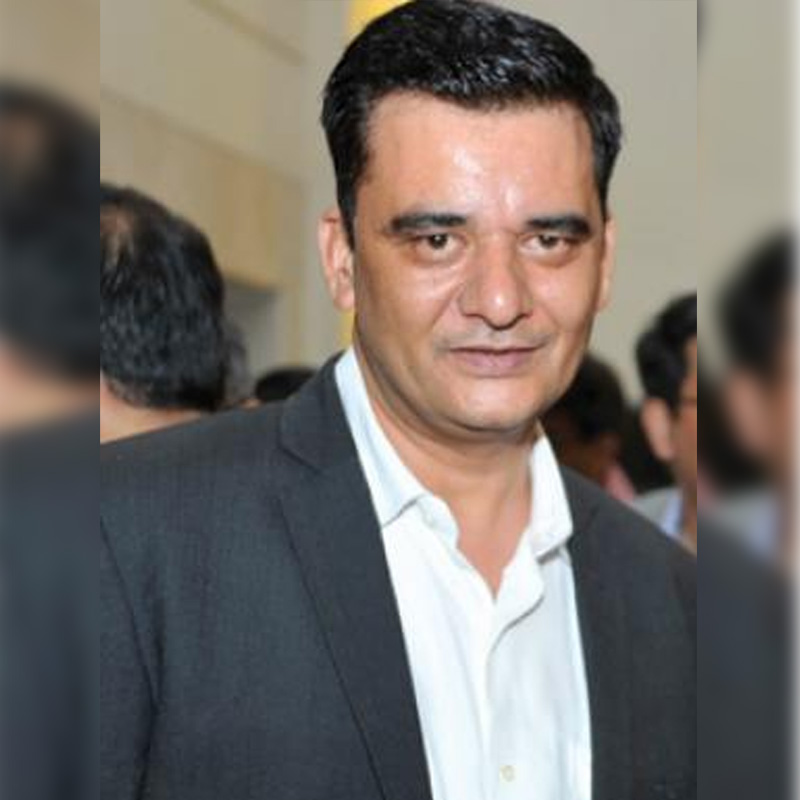
    MUMBAI: Network18, one of India’s most diversified media conglomerates, has been strengthening its revenue team since the past few months after Joy Chakraborthy took over as the President – Revenue for TV18 and CEO-Forbes India in May 2016.

    Moving forward, it has appointed Amit Tripathi as the national revenue head for government sales & non-metro markets, and Sandhya Dhar as the vice president – focus sales (branded content of the network).

    Chakraborthy said, “I believe that such talent will continue to strengthen the revenue proposition, and provide greater momentum to the sales function.”

    Tripathi has over 21 years of experience in sales, marketing & business development. Prior to joining Network18, he was the COO and national sales head at Focus News. He also served as the national sales head at Zee News in the past.

    Dhar has over 17 years of experience in sales. She was the asst. vice president & sector head (BFSI & HealthCare) at ET Edge (Times Conferences Limited). She was associated with Bennett Coleman & Company for over a decade into brand-building and sales.

    Tripathi will report to Chakraborthy.

    Network18 is a media and entertainment group with interests in television, internet, films, e-commerce, magazines, mobile content and allied businesses. Through its subsidiary, TV18 Broadcast Ltd., the group operates news channels such as CNBC-TV18, CNBC Awaaz, CNBC-TV18 Prime HD, CNN-News18 and IBN7. TV18 also operates a joint venture with Viacom called Viacom18.

  • Network18 braces up revenue function with new appointments

    Network18 braces up revenue function with new appointments

    MUMBAI: Network18, one of India’s most diversified media conglomerates, has been strengthening its revenue team since the past few months after Joy Chakraborthy took over as the President – Revenue for TV18 and CEO-Forbes India in May 2016.

    Moving forward, it has appointed Amit Tripathi as the national revenue head for government sales & non-metro markets, and Sandhya Dhar as the vice president – focus sales (branded content of the network).

    Chakraborthy said, “I believe that such talent will continue to strengthen the revenue proposition, and provide greater momentum to the sales function.”

    Tripathi has over 21 years of experience in sales, marketing & business development. Prior to joining Network18, he was the COO and national sales head at Focus News. He also served as the national sales head at Zee News in the past.

    Dhar has over 17 years of experience in sales. She was the asst. vice president & sector head (BFSI & HealthCare) at ET Edge (Times Conferences Limited). She was associated with Bennett Coleman & Company for over a decade into brand-building and sales.

    Tripathi will report to Chakraborthy.

    Network18 is a media and entertainment group with interests in television, internet, films, e-commerce, magazines, mobile content and allied businesses. Through its subsidiary, TV18 Broadcast Ltd., the group operates news channels such as CNBC-TV18, CNBC Awaaz, CNBC-TV18 Prime HD, CNN-News18 and IBN7. TV18 also operates a joint venture with Viacom called Viacom18.

  • Ang Lee awarded IBC2016 International Honour for Excellence

    Ang Lee awarded IBC2016 International Honour for Excellence

    LONDON: Sunday night at IBC saw the most exciting and engaging awards ceremony yet. From the presence of not one but two Oscar winners, to a special message from the International Space Station, this was an unforgettable occasion.

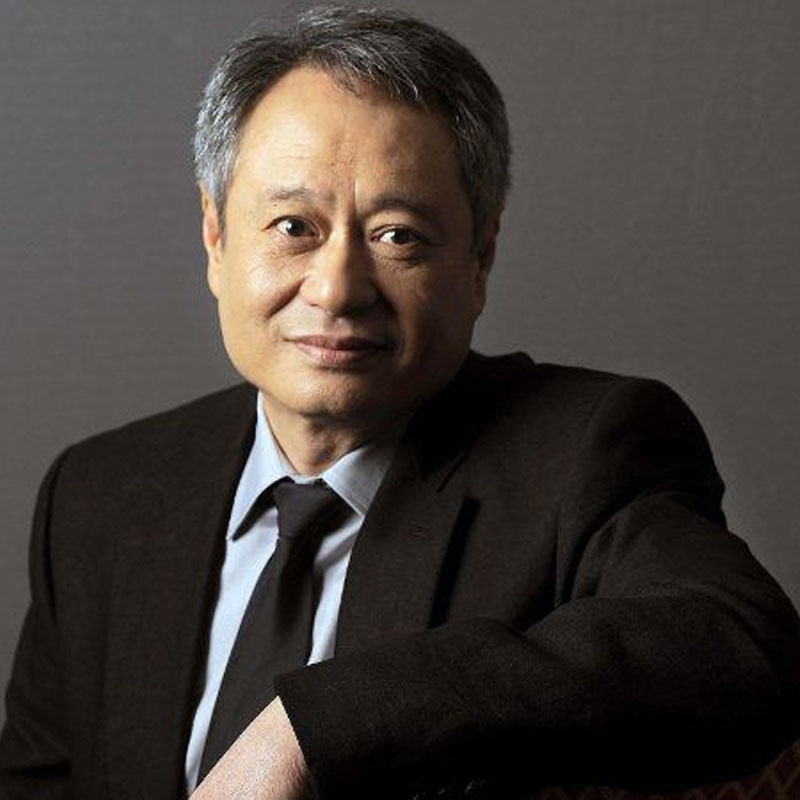
    The IBC2016 International Honour for Excellence, IBC’s highest accolade, went to the movie director Ang Lee. A brief retrospective looked at five of his most famous films, from 1995s — Sense and Sensibility to Life of Pi in 2012, before the audience was treated to the trailer from his latest movie, Billy Lynn’s Long Halftime Walk.

    “In the past few years, I have come strongly to believe that new technology will upgrade film-making in terms of story-telling,” Lee said. “In Billy Lynn’s Long Halftime Walk, the use of high frame rate and high dynamic range will provide, I hope, a unique opportunity to feel the realities of war and peace through the protagonist’s eyes.”

    “IBC has done so much to bring together new technology and old-fashioned creativity,” he added. “I am delighted to be part of this exciting dialogue, and I am honoured to receive this award.”

    It was one hundred years ago that the first meeting of the Society of Motion Picture Engineers was called, to drive forward standards in the emerging industry. With the addition of television in 1950, it became SMPTE, one of the partner bodies of IBC and still the guardian of the key standards which support our industry.

    Perhaps the most memorable acceptance speech of the evening came not from the stage but from the International Space Station. NASA received the IBC2016 Judges’ Prize for its long history in bringing the wonders of space exploration to our screens, despite huge technical considerations.

    Astronaut Kate Rubins greeted IBC from the International Space Station, saying “Living and working here 250 miles above our beautiful planet, we’re lucky enough to enjoy stunning views of the world below. We’re honoured to bring this fresh perspective in the images and video we collect.”

    Summing up the evening, Michael Crimp, CEO of IBC, said “Our awards programme is a vital part of IBC. It gives us the chance to recognise real leadership, but it is also the opportunity to reflect on the way that the whole industry contributes to the success through its constant innovation and co-operation. That sense of collaboration and creativity, in turn, is in the DNA of IBC.”

    IBC Innovation Awards

    The LiveIP Studio project took the award for content creation, with trophies presented both to the EBU and the host of the project, Flemish broadcaster VRT. The judges admired the way the project had taken a practical approach to using IP for live production, involving a large number of vendors and solving the interoperability issues.

    The other two finalists in this category were both from the world of sports. BT Sport received a highly commended certificate for its work in augmented reality as a means of engaging and informing sports fans. ESPN was also honoured, for Pylon Cam, putting four cameras inside a 3D printed corner post for American football.

    Two of the entries in content management were around reality television. Endemol Shine Germany took the trophy for its production management on Wild Island, which split the post between the location – two islands off the coast of central America – and the company’s base in Cologne.

    Highly commended was The 15 of Us, a year-long reality experiment made by Tencent in China, which generated 3,000 hours of content a day. VRT made a return to the stage, this time to honour its children’s channel Ketnet with its engaging app for children from two to 12.

    Also returning to the stage, this time to collect the trophy for content delivery, was BT Sport. It launched an Ultra HD channel last year, and the audience at the IBC Awards ceremony was treated to some stunning 4k sports footage on our state-of-the-art screen.

    BT Sport’s Ultra HD channel features the UEFA Champions’ League, and UEFA itself was a competitor for the award. Its highly commended entry focused on increasing engagement through add-on services and second screen apps. The other highly commended entry came from Swisscom, with its imaginative new look at content discovery across a large number of channels.

    IBC Best Conference Paper Award

    The IBC Best Conference Paper Award is presented to the authors of the paper which presents important new research in a clear and engaging way. This year it went to Erik Stare of Teracom in Stockholm, Dr Jordi Giménez of Universitat Politècnica de València in Spain and Dr Peter Klenner of Panasonic Europe, based in Frankfurt for their paper ‘WIB – a new system concept for digital terrestrial television’.

    Exhibition Stand Design Awards

    Each year IBC gives three awards for the most attractive, practical and effective exhibition stands. This year the award for the best use of shell scheme space went to Pliant Technologies. The judges said the design “takes the use of shell scheme to a new level with good use of space, excellent lighting and fantastic graphics, all presenting a chic but not cheap effect. A most attractive and inviting stand.”

    Highly commended in the category for smaller free design stands (up to 100 square metres) were Viaccess-Orca and Nokia, but the award went to Ooyala for its design which relied heavily on wood: even the apparently steel construction beams were actually made of wood. The judges felt the stand was “fun, with playful visuals, presented by a young-minded team.”

    Two exhibitors were also highly commended in the larger free design category: Skyworth and Vestel. The winner, though, was Cisco, for “an open and inviting stand, with plenty of space on two levels for multiple meetings. It’s stunning, and is a fresh approach.”

  • Ang Lee awarded IBC2016 International Honour for Excellence

    Ang Lee awarded IBC2016 International Honour for Excellence

    LONDON: Sunday night at IBC saw the most exciting and engaging awards ceremony yet. From the presence of not one but two Oscar winners, to a special message from the International Space Station, this was an unforgettable occasion.

    The IBC2016 International Honour for Excellence, IBC’s highest accolade, went to the movie director Ang Lee. A brief retrospective looked at five of his most famous films, from 1995s — Sense and Sensibility to Life of Pi in 2012, before the audience was treated to the trailer from his latest movie, Billy Lynn’s Long Halftime Walk.

    “In the past few years, I have come strongly to believe that new technology will upgrade film-making in terms of story-telling,” Lee said. “In Billy Lynn’s Long Halftime Walk, the use of high frame rate and high dynamic range will provide, I hope, a unique opportunity to feel the realities of war and peace through the protagonist’s eyes.”

    “IBC has done so much to bring together new technology and old-fashioned creativity,” he added. “I am delighted to be part of this exciting dialogue, and I am honoured to receive this award.”

    It was one hundred years ago that the first meeting of the Society of Motion Picture Engineers was called, to drive forward standards in the emerging industry. With the addition of television in 1950, it became SMPTE, one of the partner bodies of IBC and still the guardian of the key standards which support our industry.

    Perhaps the most memorable acceptance speech of the evening came not from the stage but from the International Space Station. NASA received the IBC2016 Judges’ Prize for its long history in bringing the wonders of space exploration to our screens, despite huge technical considerations.

    Astronaut Kate Rubins greeted IBC from the International Space Station, saying “Living and working here 250 miles above our beautiful planet, we’re lucky enough to enjoy stunning views of the world below. We’re honoured to bring this fresh perspective in the images and video we collect.”

    Summing up the evening, Michael Crimp, CEO of IBC, said “Our awards programme is a vital part of IBC. It gives us the chance to recognise real leadership, but it is also the opportunity to reflect on the way that the whole industry contributes to the success through its constant innovation and co-operation. That sense of collaboration and creativity, in turn, is in the DNA of IBC.”

    IBC Innovation Awards

    The LiveIP Studio project took the award for content creation, with trophies presented both to the EBU and the host of the project, Flemish broadcaster VRT. The judges admired the way the project had taken a practical approach to using IP for live production, involving a large number of vendors and solving the interoperability issues.

    The other two finalists in this category were both from the world of sports. BT Sport received a highly commended certificate for its work in augmented reality as a means of engaging and informing sports fans. ESPN was also honoured, for Pylon Cam, putting four cameras inside a 3D printed corner post for American football.

    Two of the entries in content management were around reality television. Endemol Shine Germany took the trophy for its production management on Wild Island, which split the post between the location – two islands off the coast of central America – and the company’s base in Cologne.

    Highly commended was The 15 of Us, a year-long reality experiment made by Tencent in China, which generated 3,000 hours of content a day. VRT made a return to the stage, this time to honour its children’s channel Ketnet with its engaging app for children from two to 12.

    Also returning to the stage, this time to collect the trophy for content delivery, was BT Sport. It launched an Ultra HD channel last year, and the audience at the IBC Awards ceremony was treated to some stunning 4k sports footage on our state-of-the-art screen.

    BT Sport’s Ultra HD channel features the UEFA Champions’ League, and UEFA itself was a competitor for the award. Its highly commended entry focused on increasing engagement through add-on services and second screen apps. The other highly commended entry came from Swisscom, with its imaginative new look at content discovery across a large number of channels.

    IBC Best Conference Paper Award

    The IBC Best Conference Paper Award is presented to the authors of the paper which presents important new research in a clear and engaging way. This year it went to Erik Stare of Teracom in Stockholm, Dr Jordi Giménez of Universitat Politècnica de València in Spain and Dr Peter Klenner of Panasonic Europe, based in Frankfurt for their paper ‘WIB – a new system concept for digital terrestrial television’.

    Exhibition Stand Design Awards

    Each year IBC gives three awards for the most attractive, practical and effective exhibition stands. This year the award for the best use of shell scheme space went to Pliant Technologies. The judges said the design “takes the use of shell scheme to a new level with good use of space, excellent lighting and fantastic graphics, all presenting a chic but not cheap effect. A most attractive and inviting stand.”

    Highly commended in the category for smaller free design stands (up to 100 square metres) were Viaccess-Orca and Nokia, but the award went to Ooyala for its design which relied heavily on wood: even the apparently steel construction beams were actually made of wood. The judges felt the stand was “fun, with playful visuals, presented by a young-minded team.”

    Two exhibitors were also highly commended in the larger free design category: Skyworth and Vestel. The winner, though, was Cisco, for “an open and inviting stand, with plenty of space on two levels for multiple meetings. It’s stunning, and is a fresh approach.”

  • …and journalism just happened to Bhupendra Chaubey

    …and journalism just happened to Bhupendra Chaubey

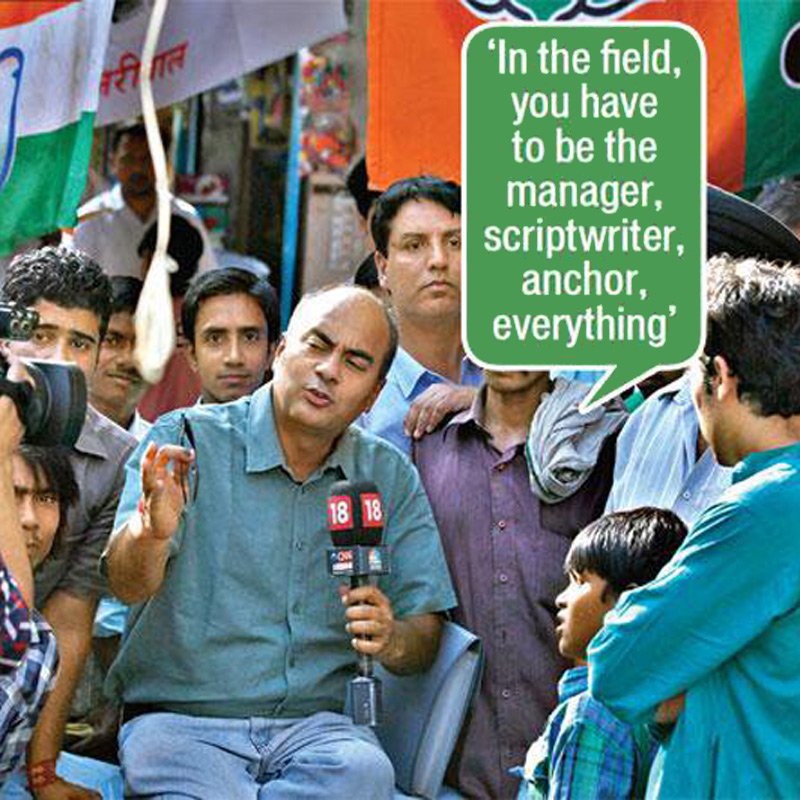
    Sometimes the best things in life which make you stand out are unplanned. Mapping his way from a postgraduate in films to senior journalist in CNN-News18 is Bhupendra Chaubey. Set out to become a filmmaker in life, journalism just happened to him. Being good at theatre, public speaking, essay-writing and elocution, etc, cinema is something that still excites him.

    The Delhi-based graduate heard about Dr Prannoy Roy looking for bilingual people to come on board. Although not too excited by the news to boost his friend’s confidence who was applying for a job at NDTV, Chaubey went along and dropped his CV as well.

    As they did not know anyone working there, the duo randomly dropped their CVs a couple of times at NDTV and forgot about it.  After a few days, not the other guy but Chaubey received a call from the HR for a meeting scheduled with Dr Roy. Declining to meet would have looked mean, and so Chaubey decided to meet him just to convey his regards. The co-founder of NDTV, after going through Chaubey’s CV, immediately offered him a job right there. But, Delhi was not the place where this young budding journalist’s heart was. He wanted to work in Mumbai.

    Bhupendra Chaubey’s resume

    Chaubey has been a TV journalist since 2000, when he started his career with NDTV. In 2005, he left NDTV and was a part of the team that started CNN IBN. As a political journalist, he has travelled the length and breadth of the country and has covered three general elections and assembly elections in a majority of Indian states.

    A graduate in Mathematics and a postgraduate in films, Chaubey has been among the finest political journalists of his generation. He has that unique ability to grasp things at a micro level, and then present them with a macro-level understanding. He is amongst those journalists who depend more on (political) awareness on the ground supplementing it with academic awareness of issues that confront the nation.

    Chaubey moved up the ladder by becoming the executive editor of CNN News18. Today, he hosts the prime-time broadcast Big5 at 10pm. He also hosts a weekend interview show Hot Seat where he puts tough questions to key newsmakers and regularly writes columns for various English and Hindi newspapers, magazines and digital media. He lives in the national capital with his wife and two children.

    Chaubey till date remembers what Dr Roy told him that day: “I think I am seeing a journalist in you. You should give it a shot. If you think you can’t fit in, there is always an option to leave”.

    Thus started his journey with New Delhi Television. One thing led to the next which caught Chaubey’s interest and there was no stopping, then. Dating a girl then who is now his wife, going to Mumbai was still on the cards. “Working with NDTV was phenomenal and an enriching experience. Imagine a newsroom working alongside Rajdeep Sardesai, Barkha Dutt and Arnab Goswami under one roof. Today, they all are in different companies but I have learnt a lot from them,” shares Chaubey.

    Chaubey preferred putting himself as the third generation of TV journalists in India considering Dr Roy and Vinod Dua as the first generation, and Rajdeep, Barkha, Arnab and Ravish as the second generation. “The beauty of entering a different profession is that you start as a novice. As I did not know what was coming my way, each day was a new day. Barkha was an outstanding scriptwriter, and I also learnt a lot about storytelling formats from her. Arnab was a great political mind; all the conversations with him were enriching. Rajdeep was a big superstar even in those days.”

    Remembering his tough days and working in various shifts, the curious reporter credits three people in his life. His wife, who knew a bit about journalism, the one who trained him to think in 10 different ways. “In school, you debate at an elementary level. But, the ability to speak on a topic in multiple ways is something I learnt from her. (The second) Prannoy, the head of NDTV, was my ideal, but I made it a point to hang around Rajdeep (Sardesai) to see what he was doing”. Rajdeep handheld Chaubey and was always a dear friend and editor to him.

    Mentioning the time of during the Coffingate, the then defence minister George Fernandes was the main target of the critics accused in supplying coffins to the Indian army jawans. “One fine afternoon, on a weekday, as I was climbing down the stairs of NDTV office, Sardesai was seated in his car heading to some place”. He asked Chaubey to join him. In the next few minutes, they were right in front of Fernandes’s house opposite to Arun Jaitley’s place without any camera. Sardesai, being a star at that time, the duo was allowed to enter the minister’s house. Fernandes was not giving interviews to anybody because of the heat around the allegations. Sardesai, positioning himself completely on his side by saying a few things about Fernandes which made him feel very comfortable, sectretly messaged a cameraman. While, he was having the conversation with Fernandes, the man with a single camera entered. Sardesai convinced Fernandes to be patient with only five questions and got a 25-minute interview with him. “Rajdeep was sitting behind the camera. So, after George answered his last question, the cameraman was asked to focus only on Rajdeep and he repeated the questions which he had put to Fernandes. He was blessed with a photographic memory. That was my first encounter wherein I learnt how to convert a single cam entity to two cam entity”.

    “He has always motivated and helped me. There is a certain kind of bond and friendship that I have with him. He made me understand the nuances of journalism. That is why when he left NDTV, I too left.”

    “Bhupendra is a dynamic and bright journalist. I wish him all the best for whatever he does in future,” says Sardesai.

    Right after that Arnab Goswami made an exit from NDTV. “Arnab was very keen on me working with him. But, I joined Rajdeep. So, for some time, he was not happy with it.”

    “Now the person who is really helping me and encouraging me to create, enhance and carve a niche for myself is Rahul Joshi. He is an absolutely great guy to work with completely different from any TV editor. I am enjoying working with him.”

    With Google not being efficient in those days, on several occasions, Chaubey has worked under pressure. Not knowing where political parties office were, he used to often dial AskMe service at that time to figure out addresses. It has led him to several wrong addresses, nonetheless. “Pressure and dilemma are there in every work life, every profession, and journalism is no different. The only point is that journalism allows you to take decisions completely on your own. What you do in your journalistic career, only you are accountable for that.  While it is a team game, it is often enormously an individualistic game where it enables you to own your individual skills”.

    One crazy experience that Chaubey cites during his tenure with NDTV was back in 2003 when Uma Bharti was the chief minister of Madhya Pradesh. The day he was supposed to meet her for an interview, Bharti resigned as she wanted to surrender herself in the court of law. She decided to undertake a train journey from Bhopal to Hooghly; it was a two-day long journey. While preparing to return to NDTV, he got a call from Sardesai asking to interview her during the jounery, and there was no option but to accept. “Rajdeep has a peculiar way of talking. I got on the train without a ticket. I remember, at some station, Bharti wanted to take a bath. Being in an express train, one of her followers came arrived with two buckets full of water for her. She simply took the buckets, went inside the loo and poured it on her person and came out in the same clothes”.

    At the Jim Corbett National Park, there was a story of dying elephants which smacked of corporate poaching. Chaubey was asked to follow up, and he obeyed. On reaching there, he recorded an interview with the forest conservator who game some interesting viewpoints. “At that time, we did not have OB vans. The park is 300 kms from Delhi. In my great enthusiasm, I sent the tape back to Delhi with the driver and asked him to return. Rajdeep got so angry with me for this two-way journey.”

    Chaubey’s journey with NDTV was full of twists and turns. He left the network in 2005 and was a part of the team that launched CNN IBN. He joined CNN-IBN (now, CNN-News18) as the chief political correspondent. Before joining CNN IBN, he got a call from Prannoy Roy. He said, “Only a stupid person would think of leaving The New York Times to join The Tribune hinting that NDTV is the NY Times and CNN-IBN is The Tribune.”

    “He comes with abundant energy to work everyday. His energy is infectious and sometimes gets transmitted to those working with him,” says IBN18 Network chief executive producer Rajen Garabadu about Chaubey. “You tend to work harder when you see him work so hard. He reaches on time for an early morning shoot even if he has worked till late the previous day. He remains fully charged and his energy does not fade through the day. Having spent more than two decades in news television, I can say there aren’t too many journalists who can match his energy,” Garabadu said.

    Always hoping to anchor ‘The Big Fight’ which Sardesai used to do, it was a difficult task for Chaubey to leave NDTV. “Prannoy Roy did not like it when I bid adieu to him. But, that is the way some of our media barons are. They expect extreme loyalty, and he thought it was disloyal on my part to be moving away with Rajdeep”.

    Chaubey went back and told this to Sardesai, to which he replied, “One day, we will make it bigger than the New York Times”.

    “Bhupendra is good for his place. There are few editors who can decide and put entertainment in primetime slots which Bhupendra understands well. Earlier, Rajdeep’s blue-eyed boy and now Rahul Joshi’s lad,” says a senior media expert.

    Chaubey has been termed as Rajdeep’s blue-eyed boy on various occasions. Contradicting this remark, Garabadu says, “I don’t think he is. I have worked very closely with Rajdeep for more than 11 years. The editor-in-chief of a channel will work closely with his senior journalists. Anyone who breaks big stories becomes the editor’s blue-eyed boy. And, in that sense, Bhupen did break stories from time to time”.

    Leading a team of bright reporters, Chaubey recollects how challenging it was for him to work with his peers. But, it came out well for him. Always believing in leading by example, he does not consider himself like a studio anchor. “I cannot sit in an AC office and ask everyone else to do the job”.

    One more instance that comes to his mind is when Sardesai wanted Ram Jethmalani as a guest for a primetime show. Chaubey barged into Jethmalani’s car without his permission. “I was not permitted to talk on the phone. So, I went to a place where he was a speaker and parked myself next to his car. When he arrived to board the car, I opened the other door and got inside his car. I requested him to speak to me”.

    On one occasion, Chaubey caught hold of Murli Manohar Joshi when he was passing by, at which he got furious. “Today, he is a good friend of mine. These events toughen you, and CNN-IBN has toughened me even more. Through the years, one improves through the experiences of various kinds,” he observes.

    Chaubey believes that there has been a complete change in the approach to journalism. The entire concept of journalism has been turned upside down. “News has been replaced by views, and the feeling right now is like views are news. Some channels have converted it into a fine art wherein you can just say what you want to and will present only one side of the truth. You would convert it into an opportunity, a scenario where no one else can question you which is a dangerous trend and should not be taking place. These dangers are the result of falling standards of journalism reflected in various forms now”.

    Chaubey himself became news after his CNN IBN interview with the Bollywood star Sunny Leone for which he received a lot of flak. After the drama post telecast, he explained that he was simply doing his job by questioning her. “If anyone felt offended, I am sorry. That was not my intention. My focus was to get, try and figure out who the real Sunny Leone was. In this country, people can object to anything. Viewers thought that my tone was not in good taste but this is the way it is. They just expect filmstars to be treated differently.”

    “In my opinion, he spoilt the interview with Sunny Leone. It was a bit awkward and in bad taste. But, soon enough, he felt it and apologised which was appreciated. The interview was certainly a miscalculation and he realised, adds a senior journalist.

    “The interview became more than what he said. His manner of asking questions, his expression, the tone, etc., made the issue bigger than its actual content. I am sure he did not mean to offend Sunny or belittle her. It was just the manner and a few wording which upset some people. In hindsight, he could have chosen his words better,” adds another senior reporter.

    For people who admire Chaubey and want to be successful, one thing that he follows is “be patient because if there is any profession that will check your patience, it is journalism.” Making a film is definitely on the agenda that Chaubey wishes to pursue. Writing a book is also his plan going forward.

    “Journalism should not be restricted to one platform or source, it should be across sources. I will be very keen if it works out well,” concludes Chaubey.

    “For Bhupendra, keep up the same level of energy as you bring to the newsroom everyday. Keep rocking. For others, there is much more to Bhupendra than what you see on screen. He puts in a lot of hard work which might not be visible on TV,” voices Garabadu.

  • …and journalism just happened to Bhupendra Chaubey

    …and journalism just happened to Bhupendra Chaubey

    Sometimes the best things in life which make you stand out are unplanned. Mapping his way from a postgraduate in films to senior journalist in CNN-News18 is Bhupendra Chaubey. Set out to become a filmmaker in life, journalism just happened to him. Being good at theatre, public speaking, essay-writing and elocution, etc, cinema is something that still excites him.

    The Delhi-based graduate heard about Dr Prannoy Roy looking for bilingual people to come on board. Although not too excited by the news to boost his friend’s confidence who was applying for a job at NDTV, Chaubey went along and dropped his CV as well.

    As they did not know anyone working there, the duo randomly dropped their CVs a couple of times at NDTV and forgot about it.  After a few days, not the other guy but Chaubey received a call from the HR for a meeting scheduled with Dr Roy. Declining to meet would have looked mean, and so Chaubey decided to meet him just to convey his regards. The co-founder of NDTV, after going through Chaubey’s CV, immediately offered him a job right there. But, Delhi was not the place where this young budding journalist’s heart was. He wanted to work in Mumbai.

    Bhupendra Chaubey’s resume

    Chaubey has been a TV journalist since 2000, when he started his career with NDTV. In 2005, he left NDTV and was a part of the team that started CNN IBN. As a political journalist, he has travelled the length and breadth of the country and has covered three general elections and assembly elections in a majority of Indian states.

    A graduate in Mathematics and a postgraduate in films, Chaubey has been among the finest political journalists of his generation. He has that unique ability to grasp things at a micro level, and then present them with a macro-level understanding. He is amongst those journalists who depend more on (political) awareness on the ground supplementing it with academic awareness of issues that confront the nation.

    Chaubey moved up the ladder by becoming the executive editor of CNN News18. Today, he hosts the prime-time broadcast Big5 at 10pm. He also hosts a weekend interview show Hot Seat where he puts tough questions to key newsmakers and regularly writes columns for various English and Hindi newspapers, magazines and digital media. He lives in the national capital with his wife and two children.

    Chaubey till date remembers what Dr Roy told him that day: “I think I am seeing a journalist in you. You should give it a shot. If you think you can’t fit in, there is always an option to leave”.

    Thus started his journey with New Delhi Television. One thing led to the next which caught Chaubey’s interest and there was no stopping, then. Dating a girl then who is now his wife, going to Mumbai was still on the cards. “Working with NDTV was phenomenal and an enriching experience. Imagine a newsroom working alongside Rajdeep Sardesai, Barkha Dutt and Arnab Goswami under one roof. Today, they all are in different companies but I have learnt a lot from them,” shares Chaubey.

    Chaubey preferred putting himself as the third generation of TV journalists in India considering Dr Roy and Vinod Dua as the first generation, and Rajdeep, Barkha, Arnab and Ravish as the second generation. “The beauty of entering a different profession is that you start as a novice. As I did not know what was coming my way, each day was a new day. Barkha was an outstanding scriptwriter, and I also learnt a lot about storytelling formats from her. Arnab was a great political mind; all the conversations with him were enriching. Rajdeep was a big superstar even in those days.”

    Remembering his tough days and working in various shifts, the curious reporter credits three people in his life. His wife, who knew a bit about journalism, the one who trained him to think in 10 different ways. “In school, you debate at an elementary level. But, the ability to speak on a topic in multiple ways is something I learnt from her. (The second) Prannoy, the head of NDTV, was my ideal, but I made it a point to hang around Rajdeep (Sardesai) to see what he was doing”. Rajdeep handheld Chaubey and was always a dear friend and editor to him.

    Mentioning the time of during the Coffingate, the then defence minister George Fernandes was the main target of the critics accused in supplying coffins to the Indian army jawans. “One fine afternoon, on a weekday, as I was climbing down the stairs of NDTV office, Sardesai was seated in his car heading to some place”. He asked Chaubey to join him. In the next few minutes, they were right in front of Fernandes’s house opposite to Arun Jaitley’s place without any camera. Sardesai, being a star at that time, the duo was allowed to enter the minister’s house. Fernandes was not giving interviews to anybody because of the heat around the allegations. Sardesai, positioning himself completely on his side by saying a few things about Fernandes which made him feel very comfortable, sectretly messaged a cameraman. While, he was having the conversation with Fernandes, the man with a single camera entered. Sardesai convinced Fernandes to be patient with only five questions and got a 25-minute interview with him. “Rajdeep was sitting behind the camera. So, after George answered his last question, the cameraman was asked to focus only on Rajdeep and he repeated the questions which he had put to Fernandes. He was blessed with a photographic memory. That was my first encounter wherein I learnt how to convert a single cam entity to two cam entity”.

    “He has always motivated and helped me. There is a certain kind of bond and friendship that I have with him. He made me understand the nuances of journalism. That is why when he left NDTV, I too left.”

    “Bhupendra is a dynamic and bright journalist. I wish him all the best for whatever he does in future,” says Sardesai.

    Right after that Arnab Goswami made an exit from NDTV. “Arnab was very keen on me working with him. But, I joined Rajdeep. So, for some time, he was not happy with it.”

    “Now the person who is really helping me and encouraging me to create, enhance and carve a niche for myself is Rahul Joshi. He is an absolutely great guy to work with completely different from any TV editor. I am enjoying working with him.”

    With Google not being efficient in those days, on several occasions, Chaubey has worked under pressure. Not knowing where political parties office were, he used to often dial AskMe service at that time to figure out addresses. It has led him to several wrong addresses, nonetheless. “Pressure and dilemma are there in every work life, every profession, and journalism is no different. The only point is that journalism allows you to take decisions completely on your own. What you do in your journalistic career, only you are accountable for that.  While it is a team game, it is often enormously an individualistic game where it enables you to own your individual skills”.

    One crazy experience that Chaubey cites during his tenure with NDTV was back in 2003 when Uma Bharti was the chief minister of Madhya Pradesh. The day he was supposed to meet her for an interview, Bharti resigned as she wanted to surrender herself in the court of law. She decided to undertake a train journey from Bhopal to Hooghly; it was a two-day long journey. While preparing to return to NDTV, he got a call from Sardesai asking to interview her during the jounery, and there was no option but to accept. “Rajdeep has a peculiar way of talking. I got on the train without a ticket. I remember, at some station, Bharti wanted to take a bath. Being in an express train, one of her followers came arrived with two buckets full of water for her. She simply took the buckets, went inside the loo and poured it on her person and came out in the same clothes”.

    At the Jim Corbett National Park, there was a story of dying elephants which smacked of corporate poaching. Chaubey was asked to follow up, and he obeyed. On reaching there, he recorded an interview with the forest conservator who game some interesting viewpoints. “At that time, we did not have OB vans. The park is 300 kms from Delhi. In my great enthusiasm, I sent the tape back to Delhi with the driver and asked him to return. Rajdeep got so angry with me for this two-way journey.”

    Chaubey’s journey with NDTV was full of twists and turns. He left the network in 2005 and was a part of the team that launched CNN IBN. He joined CNN-IBN (now, CNN-News18) as the chief political correspondent. Before joining CNN IBN, he got a call from Prannoy Roy. He said, “Only a stupid person would think of leaving The New York Times to join The Tribune hinting that NDTV is the NY Times and CNN-IBN is The Tribune.”

    “He comes with abundant energy to work everyday. His energy is infectious and sometimes gets transmitted to those working with him,” says IBN18 Network chief executive producer Rajen Garabadu about Chaubey. “You tend to work harder when you see him work so hard. He reaches on time for an early morning shoot even if he has worked till late the previous day. He remains fully charged and his energy does not fade through the day. Having spent more than two decades in news television, I can say there aren’t too many journalists who can match his energy,” Garabadu said.

    Always hoping to anchor ‘The Big Fight’ which Sardesai used to do, it was a difficult task for Chaubey to leave NDTV. “Prannoy Roy did not like it when I bid adieu to him. But, that is the way some of our media barons are. They expect extreme loyalty, and he thought it was disloyal on my part to be moving away with Rajdeep”.

    Chaubey went back and told this to Sardesai, to which he replied, “One day, we will make it bigger than the New York Times”.

    “Bhupendra is good for his place. There are few editors who can decide and put entertainment in primetime slots which Bhupendra understands well. Earlier, Rajdeep’s blue-eyed boy and now Rahul Joshi’s lad,” says a senior media expert.

    Chaubey has been termed as Rajdeep’s blue-eyed boy on various occasions. Contradicting this remark, Garabadu says, “I don’t think he is. I have worked very closely with Rajdeep for more than 11 years. The editor-in-chief of a channel will work closely with his senior journalists. Anyone who breaks big stories becomes the editor’s blue-eyed boy. And, in that sense, Bhupen did break stories from time to time”.

    Leading a team of bright reporters, Chaubey recollects how challenging it was for him to work with his peers. But, it came out well for him. Always believing in leading by example, he does not consider himself like a studio anchor. “I cannot sit in an AC office and ask everyone else to do the job”.

    One more instance that comes to his mind is when Sardesai wanted Ram Jethmalani as a guest for a primetime show. Chaubey barged into Jethmalani’s car without his permission. “I was not permitted to talk on the phone. So, I went to a place where he was a speaker and parked myself next to his car. When he arrived to board the car, I opened the other door and got inside his car. I requested him to speak to me”.

    On one occasion, Chaubey caught hold of Murli Manohar Joshi when he was passing by, at which he got furious. “Today, he is a good friend of mine. These events toughen you, and CNN-IBN has toughened me even more. Through the years, one improves through the experiences of various kinds,” he observes.

    Chaubey believes that there has been a complete change in the approach to journalism. The entire concept of journalism has been turned upside down. “News has been replaced by views, and the feeling right now is like views are news. Some channels have converted it into a fine art wherein you can just say what you want to and will present only one side of the truth. You would convert it into an opportunity, a scenario where no one else can question you which is a dangerous trend and should not be taking place. These dangers are the result of falling standards of journalism reflected in various forms now”.

    Chaubey himself became news after his CNN IBN interview with the Bollywood star Sunny Leone for which he received a lot of flak. After the drama post telecast, he explained that he was simply doing his job by questioning her. “If anyone felt offended, I am sorry. That was not my intention. My focus was to get, try and figure out who the real Sunny Leone was. In this country, people can object to anything. Viewers thought that my tone was not in good taste but this is the way it is. They just expect filmstars to be treated differently.”

    “In my opinion, he spoilt the interview with Sunny Leone. It was a bit awkward and in bad taste. But, soon enough, he felt it and apologised which was appreciated. The interview was certainly a miscalculation and he realised, adds a senior journalist.

    “The interview became more than what he said. His manner of asking questions, his expression, the tone, etc., made the issue bigger than its actual content. I am sure he did not mean to offend Sunny or belittle her. It was just the manner and a few wording which upset some people. In hindsight, he could have chosen his words better,” adds another senior reporter.

    For people who admire Chaubey and want to be successful, one thing that he follows is “be patient because if there is any profession that will check your patience, it is journalism.” Making a film is definitely on the agenda that Chaubey wishes to pursue. Writing a book is also his plan going forward.

    “Journalism should not be restricted to one platform or source, it should be across sources. I will be very keen if it works out well,” concludes Chaubey.

    “For Bhupendra, keep up the same level of energy as you bring to the newsroom everyday. Keep rocking. For others, there is much more to Bhupendra than what you see on screen. He puts in a lot of hard work which might not be visible on TV,” voices Garabadu.