Category: People

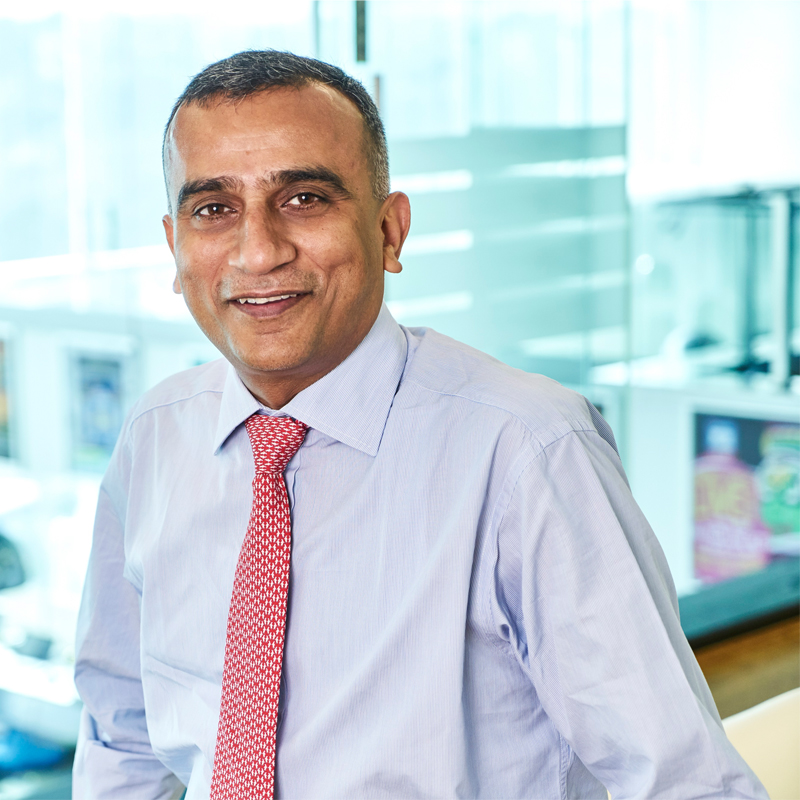
  • We are becoming more platform and screen agnostic: Sudhanshu Vats

    We are becoming more platform and screen agnostic: Sudhanshu Vats

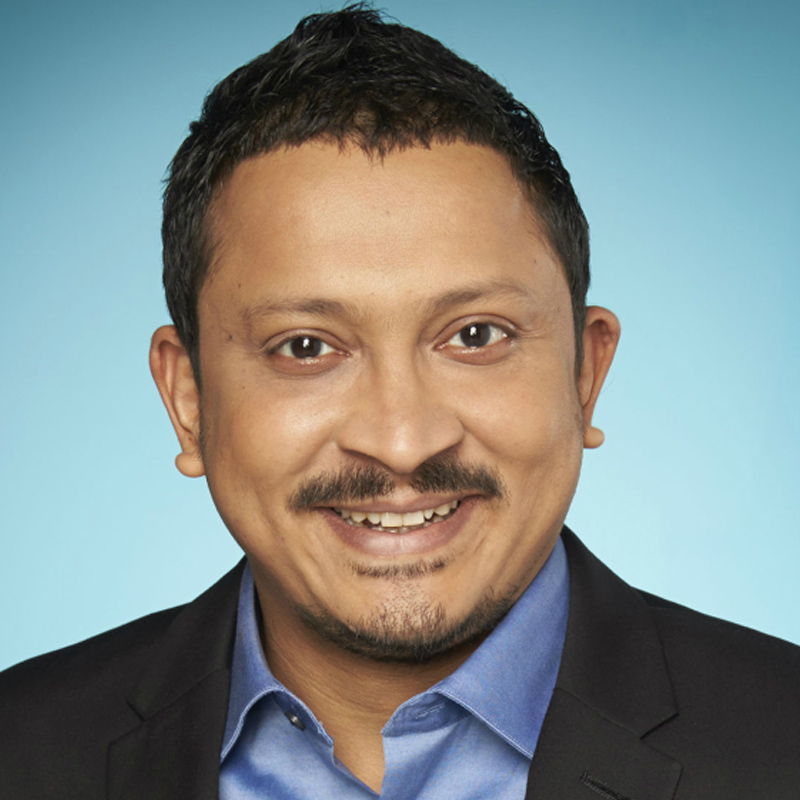
    He heads the youngest Indian network engaged in general entertainment television. Sudhanshu Vats, group CEO, has, over the past six years, steered Viacom18 India into launching a clutch of new channels catering to the different regions of India as well as niche segments. He has built a rock-solid leadership team to run the services, which have been growing at a rapid clip.

    Vats, a former long-serving Hindustan Lever (Unilever India) executive, has also seen the company transition from being a joint venture with global media major Viacom to one which is now majority owned by Mukesh Ambani’s Reliance Industries.

    A thought leader in the industry, he is constantly propagating the message that India is rich with media and entertainment potential at both domestic and international confabs. Vats was at the Media Partners Asia-run APOS in Bali late last month. On stage having a conversation with Vivek Couto, Vats spoke freely on a range of topics right from Viacom18, the Reliance ownership, Voot and the pay TV ecosystem in India. Excerpts from the interview.

    Your views on the pay TV ecosystem in India?

    At one level, the pay TV ecosystem is not developing as well as it should. Partly, all of us, as part of the ecosystem, are to blame. There is lack of addressability. There is lack of customer centricity and customer service attitude with the distribution partners. India being a poor country there will also be a pressure on free to air up to a particular stage.

    My view of the country is that it will be a hybrid ecosystem of both pay and free to air. And, in my opinion, both can exist. But for pay to exist, pay will have to earn its right. And as content players, we are concerned because it’s not going the way we would like it to.

    Free to air is growing and will grow and we need to find models, largely advertising-led models, to make that happen–that piece is okay. But the pay subscription growths are not commensurate–the addressability is not there. Recognition of change of viewership; change of pattern is not there today.

    And I think no better than us, we have leading channels in almost all genres; but our ability to get subscription income is very little. Because it is all dependent on this. Pick up a genre and we have a leading channel. We are not recognising the changes; we are not addressing the customer and not being customer specific.

    How is the Indian television ecosystem faring overall?

    There were two events in India in the last couple of years—GST and demonetisation. They affected ad sales in my opinion. But the good news is that in the last two or three months, it is coming back. We are clearly seeing certain sectors performing very well—FMCG is back and very strongly. Automobile is back in a reasonably big way. Consolidation in telecom will lead to more telecom spends. Handsets are there, they have always been there. Rural economy is also doing quite well. We are seeing a surge in the regional rural pieces quite a lot within our portfolio.

    If you look at Viacom18 per se – I think we have had a pretty good year in FY18, which we closed. We delivered 20 per cent top line growth led by our performance in films as well with Toilet ek Prem Katha. But even in ad sales, we have delivered a mid-teen growth for the year.

    And interestingly this has come at a time when our leading channel Colors was slightly muted because of the impact properties on Colors that came in. It’s the portfolio, which we built that has helped us—its regional, it’s FTA, it’s niche. I personally feel, moving forward, the ad sales will rebound to the levels that India has been used to seeing.

    The ad market will go to mid-teens and some of the better companies may look at doing even high teens.

    How has the change of majority ownership impacted the organisation you head?

    The advantage for us with the consolidation with Reliance is two-fold. Ambition and the things we can do is one big thing today. The second big thing is the resources that can come in which could be of a different level. Because, as a joint venture, we were balancing some of those pieces. Now perhaps we can take concurrent bets as we go forward. So that’s fantastic news for Viacom18. We need to continue to motor on what we have built as a culture that is critical for us. So, if we retain that culture and we bring in that ambition and resources, it’s good news.

    Your digital piece, Voot, how is that faring?

    Voot has been primarily advertising led. The good news here is that we have been growing quite rapidly. We exited March of 2018 at 3X the number we were at March of 2017 on almost all parameters.  So, today, according to App Annie, we are number two in everything which you see after Hotstar. We are number two in downloads; we are number two in active users. We are actually number one sometimes in time spent. We are between one and two in time spent. We have about 35-40 million monthly actives and close to about 45 minutes of watch time.

    The Voot service is doing very well. Interestingly, there is a lot of work which we are doing which is tailored for it. If you look at our content: the breakup of our viewership – if I were to give you an order of magnitude – would be about 60 odd per cent of what you have on television – that’s catchup maybe 60 to 65 per cent. About 20-odd per cent or sometimes 20-22 or 25 per cent is what we call Voot exclusives or content around content. So it is content which is running on television, that is the theme is running on TV – especially non-fiction – and there is a lot of content which is not on television which is shown here. That’s gaining a lot of traction. And finally there are originals and kids. That stacks up the full piece.

    What plans do you have for Voot?

    Our thinking moving forward is that this is just the beginning. It’s an AVOD piece, again advertising is coming in reasonably well from a very small base – we are doubling every year. But what we also do is we’ve built in a freemium layer, for people who are at the higher end where we offer them an ad free environment, maybe additional services—that is the thinking that is there.

    The second thinking that is there is that we are going to do something for Voot Kids. That’s a space we are very bullish on. We want to go well beyond video, we want to well beyond watch, we will go into spaces of watch, learn, play and all that. We are looking at the edutainment piece. You will come into it for entertainment, but you will have light gaming, some number of e-books, some amount of learning or options available to you particularly at the pre-school stage. We are not getting into pedagogy or hard-core education. That’s not the space we want to be in.

    We are looking four to five million daily active users currently. The kind of data you are seeing now is pretty rich. And we are just about beginning to learn to mine that data.
    On the original front, it has been part of our journey. This year you will see us going into overdrive or at least accelerate our originals. You will see a lot more of them in Hindi, you will see them in regional. And as we speak, there is work happening on many of them. We may use some of them to go behind our freemium service as well.

    You seem to have changed your mind on sports as a piece of content? Will Viacom18 drive deeper into sports?

    We have dabbled a bit in sports. We piloted a few things. We actually did the Nidahas Trophy on our channel. We are looking to see if there is a way of putting sports together that may not have cricket. Cricket, as you may know, is with Uday now. We are continuously looking at areas that might be of interest to us.
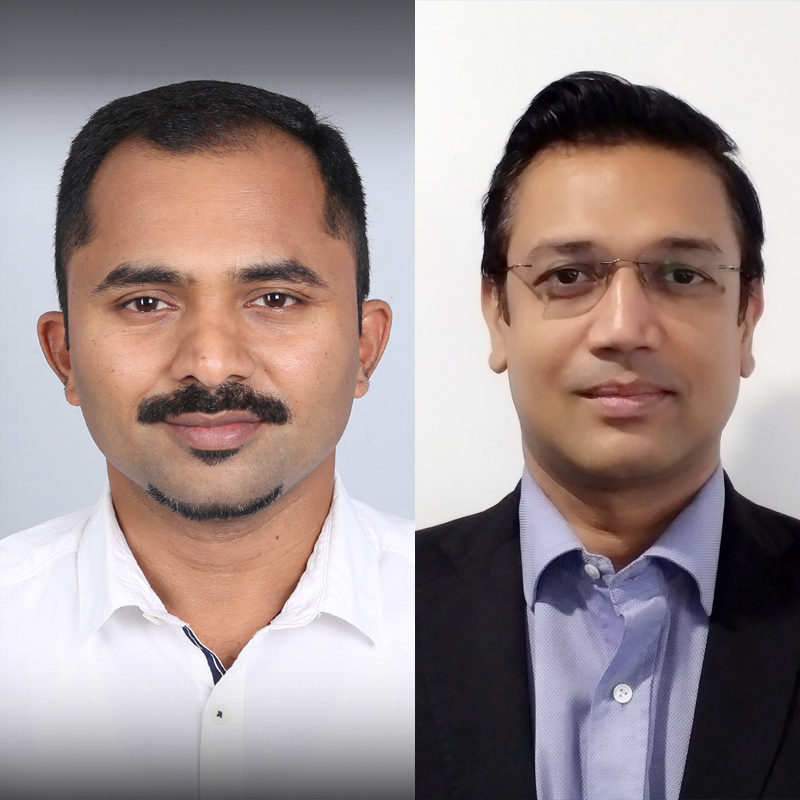
     

  • News18.com Brings Ashish Naik OnBoard As The National Sales Head

    News18.com Brings Ashish Naik OnBoard As The National Sales Head

    National, 23 April, 2018: News18.com, India’s leading digital news platform, expands its top management with the addition of Ashish Naik as National Sales Head. He comes with over 17 years of experience in media sales and has formerly worked with organizations such as Tata Infomedia, BCCL, Business Standard and NDTV Media Ltd. Prior to joining News18.com, Ashish has been a part of Times Internet Ltd, where he served in the capacity of Regional Manager West, and was eventually promoted to National Sales Head. 

    A Science graduate from Mumbai University, he has done his post graduation in Marketing Management from MET Mumbai. In his current role at News18.com, Ashish aims to bring onboard a maximum number of advertising partners and consolidate the network’s position as a leader in the space. 

    News18.com has recorded 50 million monthly users, which is an (outstanding) increase of 249% in comparison to last year. The growth numbers recorded by the platform stand testimony to the network’s lazer-sharp focus on delivering extensive and quality political news coverage supplemented by new-age technology and consistent updates to the platform. In only two years, the platform has also touched another milestone – that of 30 million monthly users on mobile, a significant 170% increase in comparison to last year. The platform also (transcended/surpassed) its own high benchmark, with the Budget Day witnessing a record total of 5.2 million users, in a single day, on the platform.            

    Speaking about the platform’s growth and expansion, Rajiv Singh, Business Head News18.com and CricketNext said, “Last year has been great for News18.com with the platform touching new milestones and setting higher benchmarks in terms of audience engagement and reach. Now, after Gujarat and HP elections we are looking forward to Karnataka elections. And now, with Ashish as the new addition to the team, we are looking at taking things a step ahead and bringing in more and more engaging and captivating formats for our consumers.”

    Commenting on the occasion Ashish Naik – News18.com’s National Sales Head said, “I am certainly excited to begin a new chapter in my career with News18.com. With the digital boom still in its nascent stages in the country, it is certainly a great time to be a part of the sector. In my new role at the company, I intend to promote innovative 360 degree properties, which tend to result in higher audience reach and engagement. At the same time, I also intend to adopt a more consultative approach in grasping the requirements and needs of the clients, since a property is a complete success when it appeals to all the stakeholder involved including the consumers.”

    About NEWS18.com

    NEWS18.com (formerly known as ibnlive.com) is the digital destination of CNN News18 (formerly known as CNN IBN) with hard news as its core offering and interactivity as its key component. Along with a bevy of mobile- and multimedia-enabled content, News18.com is a multi-platform offering that, for the first time, provides viewers/users an opportunity to contribute to the news process and interact with editors and reporters. Manned 24×7, NEWS18.com is powered not just by NEWS18 journalists but also by Network18’s team of over 1,000 news professionals. NEWS18.com is also recognized for its one-of-the-kind offerings such as CricketNext, Compare India, and Indiwo amongst others.

    About Network18 Digital
     
    Network18 Digital (N18D) is the digital arm of Network18, one of India’s most diversified media conglomerates with interests in television, Internet, films, e-commerce, magazines, mobile content and allied businesses. N18D is among the largest multi-platform destinations for objective breaking news, opinions, financial data and infotainment for the evolved digital news consumer. Network18 Digital houses assets such as moneycontrol.com, firstpost.com, news18.com etc., and is constantly seeding new ideas to be the dominant force in the digital space. It caters to all sections of society, especially to the digital savvy consumer, the millennials and Generation Z users who access and consume content on the go. 

  • Shemaroo Entertainment announces two new appointments

    Shemaroo Entertainment announces two new appointments

    MUMBAI: In an order to strengthen its leadership team, Shemaroo Entertainment has announced two new appointments. Vivek Koka has been appointed as Assistant Vice President for the New Business Development division and Rajesh Kathuria as Assistant Vice President for the IT division. 

    “With a clear focus on strengthening the organisation for the next phase of growth and raising the bar in terms of its capacity and capability, Shemaroo is continuously scouting for exceptional talent from the industry.  We are pleased to welcome Vivek and Rajesh in the Shemaroo family.  Both Vivek and Rajesh come with rich experience and their expertise in understanding bollywood content and technology respectively, will definitely help Shemaroo climb milestones in our transformation journey,” Shemaroo Entertainment CEO Hiren Gada has commented on the new appointment.

    Vivek Koka, an alumnus of IMDR, has an overall work experience of over 15 years. Prior to this role, he also worked as the Marketing Head of AndPictures and ZEE Classic. He will be responsible for creating new and alternate revenue streams for Shemaroo and also maximize the existing Bollywood business.

    Rajesh Kathuria, the new assistant vice president, has an overall experience of around 29 years. He was previously associated with Rediff.com and along with that he has a technology expertise in IT Assets.

    Also Read :

    Shemaroo appoints Hiren Gada as CEO in leadership rejig

    Shemaroo launches Hindu devotional app ‘HariOm’

  • Countdown begins for APOS 2018

    Countdown begins for APOS 2018

    BALI: And so it’s time for another Asia Pacific Operators Summit (APOS) in Bali’s now famed Ayana Resort. The team at Singapore-based Media Partners Asia has drawn up another power-packed three days with the main opening Disney-backed reception planned for 24 April evening.

    Among the big names slated to speak at APOS this year are India’s minister of electronics and information technology and law and justice Ravi Shankar Prasad, Viacom president and CEO Bob Bakish, Discovery International president and CEO Jean Briac Perrette, Kudelski group chairman and CEO Andre Kudelski,  Emeral Media managing director Paul Aiello, Blue Ant Media co-founder and CEO Michael MacMillan,  20th Century Fox TV Distribution global distribution president Gina Brogi, Astro Malayasia executive director and group CEO Rohana Rozhan and BBC Studios director Mark Linsey.

    For those wanting an insight into the Asian market, APOS has been proving to be a good starting point. This year’s sessions cover a broad swathe of topics right from the role of content for telcos, the changing face of China’s network and content landscape, a focus on how Amazon is dealing with two markets–India and Japan (Ritiesh Sidhwani is on this panel with James Farrell–the head of content for APAC), how YouTube is monetising the mobile opportunity in Asia, how entertainment and broadband will shape up in future; the role of gaming; the new wave of digital content; how online video advertising is evolving in Asia; live sports; among many others.

    Special country sessions have been planned as well with one on how India is measuring up in the age of digital convergence and feature Hathway’s Rajan Gupta, Tata Sky MD & CEO Harit Nagpal and Viacom18 CEO Sudhanshu Vats. Other country focuses include: Korean TV and entertainment, telcos in Taiwan, Indonesia’s broadcast transition; Australia’s strategic shifts; Singapore TV, and one on the media in the Philippines.

    A gaggle of sponsors and partners have hopped on to be a part of MPA’s APOS. Stay tuned for updates.


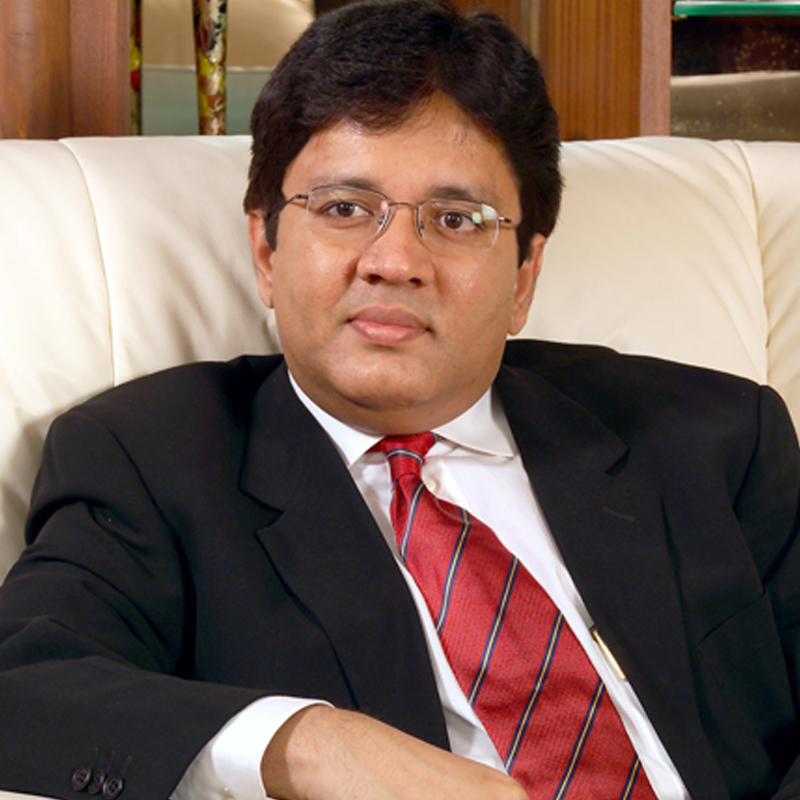
  • Kalanithi Maran, Sun TV: the evolution

    Kalanithi Maran, Sun TV: the evolution

    MUMBAI: In the late eighties, a scrawny young man returned to India from the US having completed his MBA from the University of Scranton. He had lights in his eyes, fascinated as he had become by television in the US during his management freshman and graduation days.

    But television in India was a domain restricted to only state-owned Doordarshan. For a while, he dabbled in the print media that his family owned but the lure of the moving image proved too strong. So, he did the next best thing: he started producing a video magazine in Tamil.

    Kalanithi Maran had bigger ambitions; he wanted to start a TV channel in Tamil; not just a TV channel; TV channels in the various south Indian languages. With that goal in mind, he approached the then-emerging TV baron Subhash Chandra whose Zee TV had caught the imagination of the nation with edgy fast-paced general entertainment programming.

    The young man wanted a slot (one in the afternoon) on Zee TV’s service to start his own TV channel; but a Zee TV executive saw no merit in the plan and turned it down. He never got a chance to meet the goateed Chandra.  It was to prove to be a colossal mistake. However, another cable TV operator–Siddhartha Srivastava–who has the distinction of launching the first Indian private TV channel (not Subhash Chandra as many commonly believe) called ATN was more giving and provided him with a slot.

    Kalanithi cobbled together his savings and also got his father the late Murosali Maran to guarantee a bank loan for him. The same 25 friends who were working on the video magazine–Poomalai (which was by then plagued by piracy) and the cable TV programme Tamizh Maalai–stood by him and drew up the programming for the to-be-launched channel.

    Thus, Sun TV was born on 14 April 1993 beaming off the wobbly Russian satellite called Gorizont. The programming was primarily film entertainment-based. Kalanithi and his team had to work hard to build cable TV distribution infrastructure in the state, coaxing shop owners to become cable TV operators and set up headends and distribute Sun TV  so that it could be seen by Tamilians who had little else to watch in the comfort of their homes.

    His efforts bore fruit: cable TV operators soon thereafter popped up all over Tamil Nadu, courtesy consumer demand for the channel. Both fuelled each other and, by 1996, Sun TV was notching up revenue of Rs 450 million with a penetration of 86 per cent in the state. Apart from Zee TV, it was the only other channel that was sporting a black bottom line at that time.

    Kalanithi went about fulfilling his dream to have a southern Indian language network, just as Chandra was expanding his Zee Network. The aggressive young entrepreneur launched Udaya TV in Karnataka in 1994, took over Gemini TV soon thereafter and Surya TV followed.  There has been no stopping him and, today, the group runs 33 channels and another nine are being added. His portfolio covers the genres of entertainment, news, comedy, music, movies, kids and classic.

    Along the way, Kalanithi appears to have shed his inhibitions of foraying outside his comfort zone of the south–Tamil, Telugu, Kannada and Malayalam. For some time now, the Sun group has been gestating Bengali and Marathi language channels. Six to eight months from now, the two are slated to be launched and teams have been hired in Kolkata and in Mumbai. Hectic parleys are going on to decide the programming, the positioning, the distribution and marketing of the two channels.

    Kalanithi also owns 42 FM radio stations, the second-largest Tamil-circulated daily newspaper in India Dinakaran, and five other magazines, DTH platform Sun Direct and the Sunrisers Hyderabad IPL cricket team. Then, there is the cable TV network SCV, which has presence in Chennai. The Sun group made an ill-informed dash to acquire and run an airline SpiceJet, which Kalanithi found challenging to do and quickly did a volte face and sold it to Ajay Singh who has since been doing a better job. And then there is the network’s new OTT offering Sun Nxt.

    Recently, the group celebrated 25 years of its television existence with full front-page ads across select newspapers and a week of celebrations with its 1,500 employees nationwide. The ads crowed about Sun TV’s no 1 status in India and then went on to thank everyone saying it would not have been possible without “your support.” Silver coins, plates were given out to long-serving employees during the celebrations. Print ads aside, the Sun network did no press or public relations blitz–in the mainline nor the trade media.

    That’s in keeping with Kalanithi’s innate tendency to stay away from the limelight. He and the group have been publicity shy to the T. The company does not have any media relations to speak of or have a structured communications department like the other big four networks do. Star India, Zee, Viacom18, Sony Pictures Networks Television, do. Zee TV, Viacom18 and Sony Pictures all celebrated lavishly during their individual anniversaries inviting important partners, clients, and vendors.

    The shunning of the media probably stems from the fact that his roots are in one of the most important political families in the country. His grand uncle M Karunanidhi heads the DMK party, his uncles are politicians while his late father Murosali Maran held ministerial positions in various political regimes and his brother, Dayanidhi Maran, has been a minister, too.

    This apart, the group also owns powerful print media titles, which serve as a very strong platform to communicate the messaging Kalanithi wants to convey.

    All along, mutters have been doing the rounds that the Sun network got several benefits and favours courtesy Kalanithi’s political lineage. Allegations have also been hurled that Sun TV Network misused the clout and used strong-arm tactics with Tamil film producers demanding movie titles for broadcasting on his network to the exclusion of other television stations. And at surprising prices.

    Additionally, most media went to town alleging that the Sun TV network worked as a strong supporter of the DMK party. But which news channel in India does not have political backing, leaning or favourites? And Kalanithi’s DMK leaning was probably at a time when the AIADMK was going hammer and tongs against the DMK with its own party mouthpiece Jaya TV. Even then, Sun TV’s reportage at times caused heartburn to DMK supporters as Kalanithi worked on maintaining a balance.

    Moreover, over the years, most Indian TV news channels have become more blatant in their support of specific political agendas and parties–whether national or state wise or region wise. So, singling out Kalanithi as a political beneficiary is like the pot calling the kettle black.

    Finally, that myth must have been totally exploded following the distancing of grand-nephew from grand uncle and the launching of a competing television network by the DMK patriarch. Also, oodles of trouble followed with Kalanithi and Dayanidhi in relation to the 2G telecom scandal. Both have been since absolved and freed of the charges by the courts.

    The fact is that it is not political equations that have allowed Kalanithi to build his Sun group. It has been his savvy ability to see opportunity where others don’t, grab it and diligently make it successful. And he has done this fearlessly time and again–with the exception of SpiceJet. His radio stations are some of the more innovative ones and attract a wide demographic with a lot of it being youth. They are profitable. His newspapers give him wide reach and coverage and, in the process, media clout. And they make money.

    What’s above all this is the fact that Sun is highly profitable and its stock price has been holding strong when others have not. That itself speaks highly of the confidence the investor community has in him. As a businessman and as an innovator. No other media enterprise has come even close to breaking the stranglehold he has on viewers in the south; the programmers seem to understand the pulse of the Sun Network viewers. Several have tried including smaller players and the big four. But none has managed to race ahead of the Sun network.

    The Sun TV stock appears to be an investor’s darling, often times being talked of being undervalued. Both investors and shareholders have come to terms and have accepted the high pay cheques Kalanithi hands out to himself and his wife Kavery every year, ranking him among the top-paid CEOs in India.

    Many scions of political leaders have been given similar silver spoons but none have been able to scale up their ventures to the level that Kalanithi and the team Sun TV have. Clearly, credit should be given to his business acumen rather than just the political lineage.

    Clearly, it’s about time–during its silver jubilee year–Kala be given his due place in the media sun as an entrepreneur who has made it big. On his own steam.

  • Vishnu Athreya elevated to SVP programming at Cartoon Network

    Vishnu Athreya elevated to SVP programming at Cartoon Network

    MUMBAI: There’s good news for Vishnu Athreya’s fans amidst Indian animation studios. The man who gave a fillip to domestic animation production, when he ran Indian programming at Cartoon Network (CN), has got a promotion in Atlanta.

    Athreya has been promoted to senior vice president programming at Cartoon Network, an expanded role. The new title was announced by Cartoon Network chief content officer Rob Sorcher.

    He will add series development for Boomerang while continue to oversee scheduling, acquisitions, and the strategic positioning of programming content across all branded linear and non-linear program platforms for Cartoon Network and Boomerang. Athreya is based in Atlanta and will still report to Sorcher.

    Earlier in 2014, Athreya had been named the vice president, programme scheduling for CN and Boomerang. He was responsible for overseeing the day-to-day scheduling and strategic positioning of programming content for Cartoon Network, Boomerang and branded non-linear programme platforms.

    He served as departmental lead for long-range calendar planning along with developing creative strategies for on-air stunts and special events surrounding the networks’ growing library of original, acquired and classic animated programming.

    He first joined Turner Broadcasting’s kids’ channels Cartoon Network, Toonami, POGO, Boomerang and Cartoonito in Asia Pacific, where he was instrumental in driving CN to a leadership position in the market. He joined CN in 2014, acting as the departmental lead for long-range calendar planning. He was also charged with developing creative strategies for on-air stunts and special events surrounding the networks’ growing library of original, acquired and classic animated programming.

    Athreya earned a post graduate diploma in communications from the Mudra Institute of Communications in Ahmedabad, India. He also holds a bachelor’s of science in chemistry from St Stephens College in Delhi, India.

    Also Read :

    Sony Yay banks on originals with a slew of fresh content

    Japanese kids’ content going strong despite home-grown onslaught

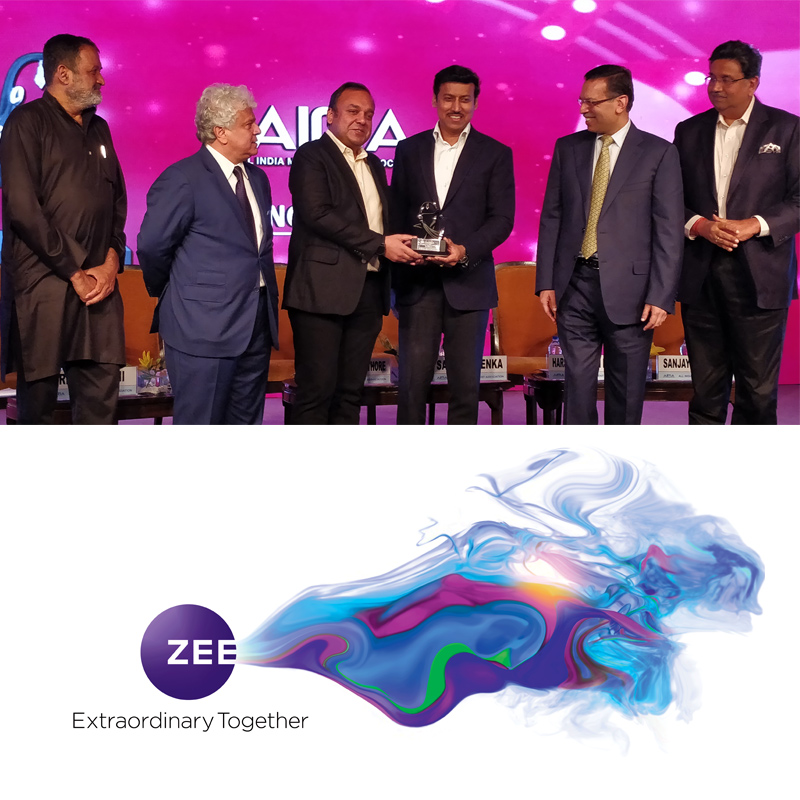
  • Mr. Punit Goenka honoured with ‘Outstanding Contribution to Media’ Award at AIMA Managing India Awards 2018

    Mr. Punit Goenka honoured with ‘Outstanding Contribution to Media’ Award at AIMA Managing India Awards 2018

    19 April 2018, New Delhi: One of the most coveted leadership honours in the country, AIMA Managing India Awards, today awarded Mr. Punit Goenka, MD & CEO, Zee Entertainment Enterprises Ltd. (ZEEL) with the ‘Outstanding Contribution to Media’ Award.

    The 8th edition of the Award ceremony was held today in New Delhi in the presence of Rajyavardhan Singh Rathore, Minister of State (Independent Charge) for Sports and Youth Affairs. Chaired by Mr. Sanjiv Goenka, Chairman, RP-Sanjiv Goenka Group, the jury nominated eminent personalities who are awarded under various categories The AIMA Awards facilitates outstanding achievers who have made a fundamental difference in the industry setting new benchmarks and created an edge above peers for others to emulate.

    On being recognised for his contribution, Mr. Punit Goenka said, “I dedicate this award to our Chairman, Shri. Subhash Chandra. It was his pioneering vision, which has sparked up an entire industry in itself, creating millions of jobs across the nation. With the advent of enhanced bandwidth and connectivity, the screens might multiply, their dimensions might change, the prime time might change, but ZEE’s focus on creating extraordinary content, will never change. As pioneers in many aspects than one, ZEE’s entrepreneurial spirit will never let us pause, in taking innovative steps in the realm of media & entertainment.”

    Since its inception in 2010, the AIMA Awards have been conferred on leading icons from the Indian industry, media, sport and entertainment. Over the years, AIMA Managing India Awards have become one of the most coveted leadership honours in the country and are greatly value.

    Notes to Editors:

    About Zee Entertainment Enterprises Limited (ZEEL)

    Zee Entertainment Enterprises Ltd. (ZEEL) is a worldwide media brand offering entertainment content to diverse audiences. With a presence in over 173 countries and a reach of more than 1.3 billion people around the globe, ZEEL is among the largest global content companies across genres, languages, and platforms.

    With its new brand ideology and purpose – “Extraordinary Together”, ZEEL aspires to provide a unified brand experience and to delight consumers across the world by creating extraordinary entertainment and experiences that inspire to transcend the ordinary and become extraordinary.

    ZEEL is present across broadcasting, movies, music, digital, live entertainment and theatre businesses, both within India and overseas. ZEEL has more than 250,000 hours of television content and houses the world’s largest Hindi film library with rights to more than 4,200 movie titles across various languages. ZEEL has also produced several movies for theatrical release and is the fastest growing music label in India. It has presence in the digital space with ‘dittoTV’ and ‘OZEE’ and has also ventured into live events.

    More information about ZEE and its businesses is available on www.zeetelevision.com.

  • Andrew Jordan resigns as AsiaSat’s ED & CEO

    Andrew Jordan resigns as AsiaSat’s ED & CEO

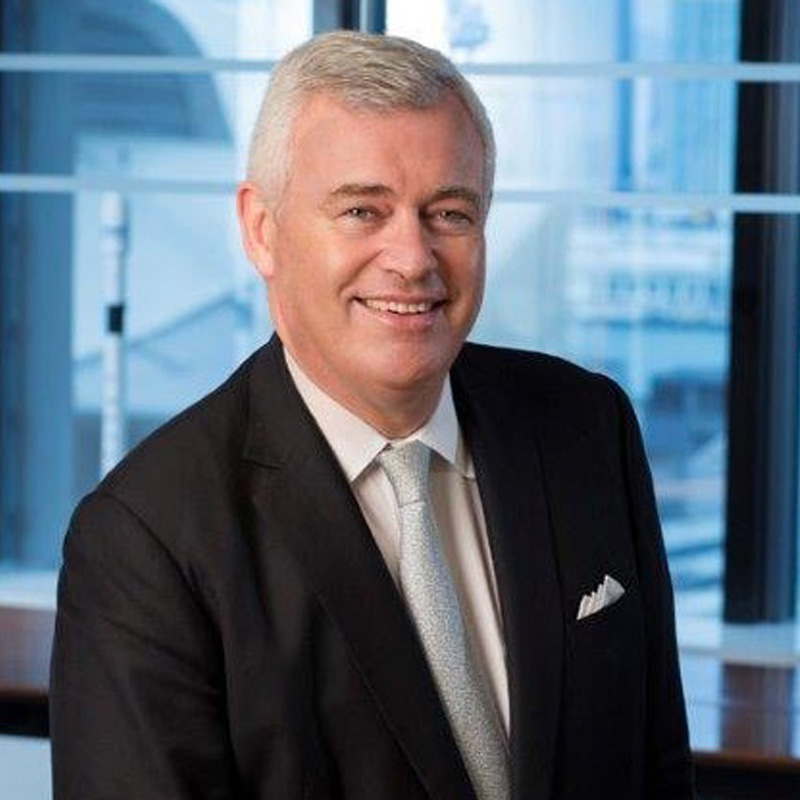
    MUMBAI: Andrew Jordan has resigned as executive director (ED) and chief executive officer (CEO) of Asia Satellite Telecommunications Holdings Ltd (AsiaSat), one of Asia’s leading satellite operators, effective 16 April 2018. He will serve as the senior advisor of AsiaSat until 31 October 2018.

    Roger Tong has been appointed by the board to succeed Jordan as ED and CEO with effect from 16 April 2018. Prior to the appointment, Tong served as vice president (engineering and operations) and chief technical officer of AsiaSat and has led various satellite and teleport programmes since joining AsiaSat in March 2008. Tong has over 33 years’ experience in the satellite and telecommunications industry and has worked in Canada, Mainland China and Hong Kong. He has also held various senior management positions at COM DEV International, Allen Telecom Inc and Mark IV Industries Ltd.

    AsiaSat’s chairman Gregory Zeluck said, “On behalf of the board of directors, I would like to express my gratitude to Jordan for his service. We look forward to his continued contribution as Senior Advisor to the Company.”

    “I would also like to welcome Tong, an industry veteran with extensive knowledge, experience and network of contacts across the satellite communications, broadcast and telecom industries who has served the Company for more than 10 years to join the board. We are confident that he has the strategic vision, capability and experience to continue to build AsiaSat’s leadership in this rapidly changing environment and to steer the company to its next phase of growth,” Zeluck added.

    Also Read :

    AsiaSat 9 set for 28 September launch

    DTH satellite GSAT 9 (South Asia Sat) blasts off today

  • The rise and rise of Uday Shankar the gambler, the decisive risktaker  who does not flinch

    The rise and rise of Uday Shankar the gambler, the decisive risktaker who does not flinch

    MUMBAI: The Great Gambler. The Decisive Risk Taker. If there are sobriquets, which can be attached to Fox Asia president and Star India CEO Uday Shankar, they are these two. And when the next chapter in the history of Indian television is written thaese two labels will aptly fit him. 

    When the once-journo bid an audacious $2.37 billion to bag the IPL global media rights last year, many thought he had bitten off more than he could chew; that he had stretched his bid too far. At Rs 43 crore per IPL match, many felt that Uday and team Star India would be hard-pressed to recover that kind of expense per match, and that Star India would have red ink splattered all over its balance sheet.

    Media observers believed that India’s largest TV network in terms of revenue — surprisingly not yet listed on the Indian bourses even after almost over two decades of presence here — would take time to digest the huge bill Uday had agreed to pay for a prestigious cricket property, which Sony Pictures had earlier valued at half of what Star India agreed to pay to the Board  of Control for Cricket in India (BCCI). And for double the period. 

    Clearly, everyone thought that the odds were stacked against him, and that he would be struggling just to get his act together on the IPL bid. 

    But you can’t keep Uday down for too long. He is a man with a vision and in a hurry to achieve that.  And building India’s sports ecosystem is what excites him, apart from expanding Star network’s reach in India further. The former is a challenge many – including the Indian government over decades – have balked at taking up.  

    Hence, when the bidding for BCCI’s India home turf cricket media rights came up, Uday was actually licking his chops, itching for the scrap that was to come. In the fray were much larger players with supposedly deeper pockets like Reliance Jio, Facebook, Google and, of course, old time rival,  the NP Singh-headed Sony Pictures Networks India. As day one moved into day two, and the price went from the stratosphere to outer space, crossing unimaginable levels, one heard media reports that the network had walked out of the game. That Star India had lost the stomach for the ferocious battle that was being waged. That it was licking its wounds in a corner.

    But actually, Uday and his teammates were playing wait and watch. Both Sony and Jio scrapped and took the rates even higher and higher. Many old timers were nodding their heads wondering whether the world had gone crazy. 

    Then in one fell swoop, Star India came in from nowhere and made one last bid, which would result in it paying up Rs 60.1 crore per match, giving a cumulative Rs 6138.10 crore for the 102 international matches team India would play domestically. 

    That offer proved to be something both Sony and Jio could not better, despite the data-pricing disrupter’s deep pocketed owner Mukesh Ambani. For Star India, it proved to be the winning offer. BCCI officials were of course grinning from ear to ear. In less than eight months, Star India had made the world’s richest cricket board even richer by Rs 22,500 crore. 

    By ratcheting up the price tag for the media rights, Uday has ensured that cricket as a sport has caught the world’s – especially the non-cricketing nations’ – attention. And probably put BCCI in a different league of sports association or bodies. Sports such as football and the English Premier League command around Rs 80 crore to Rs 95 crore per match. 

    It also raises questions: Will Uday and Star India be able to recover and  profit from the property they have just acquired?  What will BCCI do when the next term comes up? Is Rs 60.1 crore a match the peak or will the rates rise to newer levels or sink to another adjusted level depending on the general economy? What if the BCCI cannot command the same rate next time around? 

    The bespectacled humble professional is, however, quite sanguine hat he has not overpaid and that cricket has been severely underpriced in India.  As have been television advertising sticker prices. The only way to get a sport, which is a religion for a billion plus people, its true value is to raise the bar and get advertisers to pay more. At the same time lay out the pathway for  subscribers who are willing to cough up a few hundred rupees extra a month to do so. Offer them a package, a deal, they cannot refuse. Additionally, get the south Asian diaspora worldwide to do the same. Finally, add a new bunch of viewers  – whether on OTT or on TV – in newer nations to experience the sport and pay for it. 

    Uday has built a reputation for himself as the executive who can make happen what others think impossible. Industry observers scoffed when he was made CEO of Star India. What could a journo know about entertainment and sports and running a TV network?

    But he proved them all wrong. Not only did he build Star India into India’s No 1 media and entertainment company – through a mix of mergers acquisition and new launches —  with a bouquet of channels in several languages, he has also pioneered many initiatives and fought tooth and nail for what he believes in. Like bringing in programming with a purpose. Like creating a writer’s room where young talents from the hinterland are trained to write television and digital shows under the expert guidance of international trainers. Like battling the regulator TRAI in the courts for trying to dictate pricing of channels, and stalling a regulation, which he thinks is unfair.  Like investing thousands of crores of rupees in building an OTT Hotstar, which has earned the respect of much better pocketed global rivals like Netflix. Like launching a league for an indigenous sport like kabaddi and several other sports leagues that will over the years give a boost to Indian sports and yield profits to the Star Network. 

    Will Uday Shankar’s  IPL gamble work? Will the BCCI home rights bet prove a winner? Well we for one at indiantelevision.com believe that Uday and team Star India will emerge triumphant by year three and will be laughing all the way to the bank by year five. (Our earlier prediction that the BCCI home cricket rights would go for between $800 million to $1 billion proved true; hopefully this one will too.)

    And Uday will have another chapter to write in his autobiographical book – when he does choose to do so –about how he and his team made it happen. 

    Also Read:

    Comment: The rise and rise of Uday Shankar

    Uday Shankar sole media exec in top-100 powerful Indians list

    Star’s Uday Shankar on distribution challenges, IPL, FTA vs. pay TV, innovations, Made in India content…and much more

  • Ekta Kapoor Receives The Flo Icon Award From The President Of India

    Ekta Kapoor Receives The Flo Icon Award From The President Of India

    MUMBAI: Ekta Kapoor undoubtedly is the queen of entertainment in India, contributing immensely to all the mediums – be it television, films and now even the digital space. She has indeed transformed the entertainment industry with her spectacular content and has also bagged several respectable awards for her commendable achievements.

    And now, Ekta Kapoor, who is the joint Managing Director and Creative Director of Balaji Telefilms, has been honoured with yet another prestigious award, a first of its kind – for The FICCI Ladies Organisation (FLO) Icon Award.

    The award was presented to Ekta by none other than the honourable president of India – Ram Nath Kovind.

    Every year FLO recognizes the achievements of women who have excelled in their respective fields and are icons of inspiration for the society. The theme for their 34th Annual Session this year was – WOMEN TRANSFORMING INDIA. Ekta has truly transformed the entertainment industry of India and rightfully deserved the award.

    Speaking about the honours, the content Czarina said, “I am truly humbled and honoured”.